Gluten-Free Lemon Herb Shrimp Rice
A bright, one-skillet gluten-free lemon herb shrimp rice dinner with toasted rice, Italian herbs, and tender shrimp — ready in under 25 minutes.
The first time I made a one-pot rice-and-shrimp dinner, I ended up with a sticky, gummy mess that tasted like nothing but salt and regret. I’d dumped everything in at once, cranked the heat, and hoped for the best. The rice was crunchy in the middle, the shrimp were rubbery, and I scraped the whole pan into the trash.
That failure taught me two things about Gluten-Free Lemon Herb Shrimp Rice that changed every batch I’ve made since. First, you toast the rice before adding liquid — it creates a nutty base flavor and keeps each grain separate. Second, the shrimp go in last, right on top, so they steam gently instead of turning into little rubber erasers.
Well… once I figured out that sequence, this became the weeknight dinner I make more than any other. Why would you wrestle with multiple pots and complicated sauces when one skillet, 25 minutes, and a handful of pantry staples can give you a lemon herb rice pilaf loaded with plump shrimp and sweet peas?
Table of Contents
Why You’ll Love This Gluten-Free Lemon Herb Shrimp Rice
- Bright, layered flavor: Toasted rice builds a nutty base, Italian herbs add warmth, and fresh lemon juice cuts through with a clean citrus finish that makes the whole dish taste like a sunny afternoon.
- True one-skillet simplicity: Everything cooks in a single non-stick pan — no boiling pasta in one pot and sauteing protein in another. This easy seafood meal is genuinely beginner-friendly.
- Naturally gluten-free: Long grain white rice, simple spices, and whole shrimp — no specialty flours or gums required. Just real food that happens to be safe for gluten-free diets.
- Weeknight fast: From cold skillet to plated shrimp dinner in roughly 20-25 minutes, making it realistic for busy Tuesday nights and last-minute company.
The Secret to the Best Gluten-Free Lemon Herb Shrimp Rice
- Toasting the rice in butter first is the single most important step. When raw rice hits hot fat, the outer starch layer seals slightly, which prevents grains from clumping and releases a subtle nutty aroma. Two to three minutes of stirring is all it takes — you’ll hear a faint crackling sound and smell something warm and toasty.
- Adding lemon juice with the water instead of after cooking allows the acid to permeate every grain as it absorbs liquid. According to the USDA FoodData Central nutrition database, lemon juice adds negligible calories but delivers vitamin C and bright acidity that balances the richness of the butter.
- Steaming the shrimp on top of the rice rather than stirring them in prevents overcooking. Shrimp go from translucent to opaque in just 3-5 minutes of gentle steam heat. Stirring them into the rice would expose them to direct skillet heat and almost guarantee a chewy texture.
- Frozen peas go in with the shrimp because they need only 3-5 minutes to heat through. Adding them earlier would turn them army-green and mushy. Timed correctly, they pop with sweetness and stay vibrant.
Ingredients
Lemon Herb Shrimp Rice
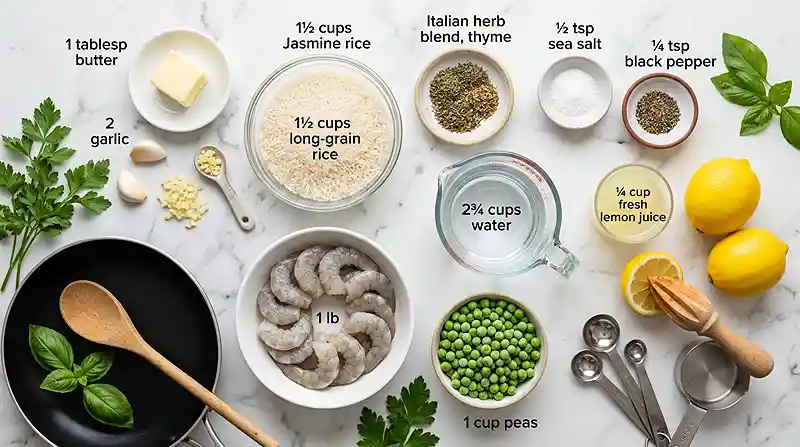
- 1 tablespoon butter
- 2 cloves garlic, minced (or 1 teaspoon garlic powder)
- 1 and 1/2 cups long grain white rice
- 2 teaspoons dried Italian herbs
- 1/2 teaspoon fine sea salt
- 1/4 teaspoon black pepper
- 2 and 3/4 cups water
- 1/4 cup lemon juice
- 1 lb uncooked shrimp, peeled and deveined
- 1 cup frozen peas (no need to thaw)
A note on the Italian herbs: most dried Italian seasoning blends — the kind with oregano, basil, thyme, and rosemary — are naturally gluten-free. However, some store brands add anti-caking agents processed on shared equipment. If you follow a strict celiac diet, the Celiac Disease Foundation’s guide to gluten-free foods is a reliable resource for checking labels.
Step-by-Step Instructions
Build the Base
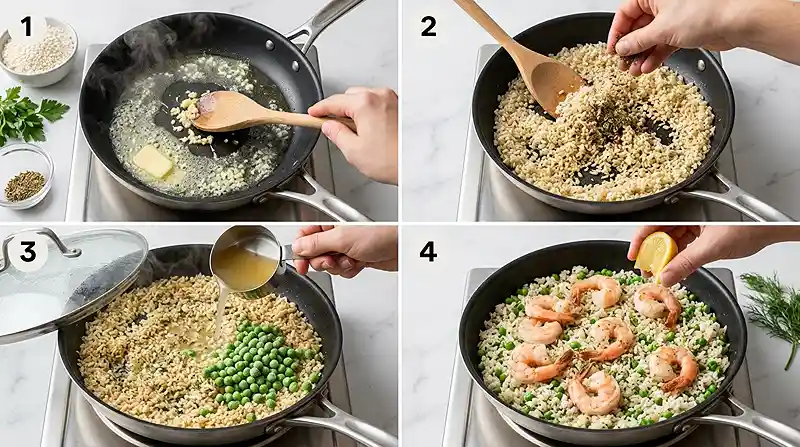
Step 1: Heat a non-stick skillet over medium heat and add 1 tablespoon of butter. Let it melt completely and start to foam — this takes about 30-45 seconds and tells you the pan is at the right temperature.
Step 2: Add the 2 cloves of minced garlic and stir until fragrant, about 1 minute. You’ll smell that sharp garlic aroma soften into something sweet and toasty. If you’re using garlic powder instead, skip this step and add it with the herbs later.
Step 3: Add the 1 and 1/2 cups of long grain white rice to the skillet. Stir constantly for 2-3 minutes until the grains are lightly toasted. You’ll notice the rice turns slightly translucent at the edges and releases a warm, nutty scent — like fresh popcorn just starting to pop.
Pro Tip: Don’t rush the toasting. Those 2-3 minutes create a protective starch barrier on each grain that prevents the gummy, clumped texture that plagues most one-pot rice dishes.
Simmer and Finish
Step 4: Stir in the 2 teaspoons dried Italian herbs, 1/2 teaspoon fine sea salt, and 1/4 teaspoon black pepper. Let the spices bloom in the hot butter for about 15 seconds — you’ll see the herbs darken slightly and smell them intensify.
Step 5: Pour in the 2 and 3/4 cups water and 1/4 cup lemon juice. The liquid will bubble immediately when it hits the hot pan. Give everything one good stir to distribute the herbs evenly, then cover with a tight-fitting lid.
Step 6: Let the rice simmer over medium-low heat for 10 minutes, stirring occasionally to prevent sticking on the bottom. The liquid should be gently bubbling, not aggressively boiling — adjust your heat if needed.
Step 7: After 10 minutes, stir in the 1 cup of frozen peas and place the 1 lb of shrimp in a single layer on top of the rice. Do not stir the shrimp in. Cover and cook for 3-5 more minutes until the shrimp are pink, opaque, and curled into a loose C-shape. The rice should be tender and have absorbed nearly all the liquid.
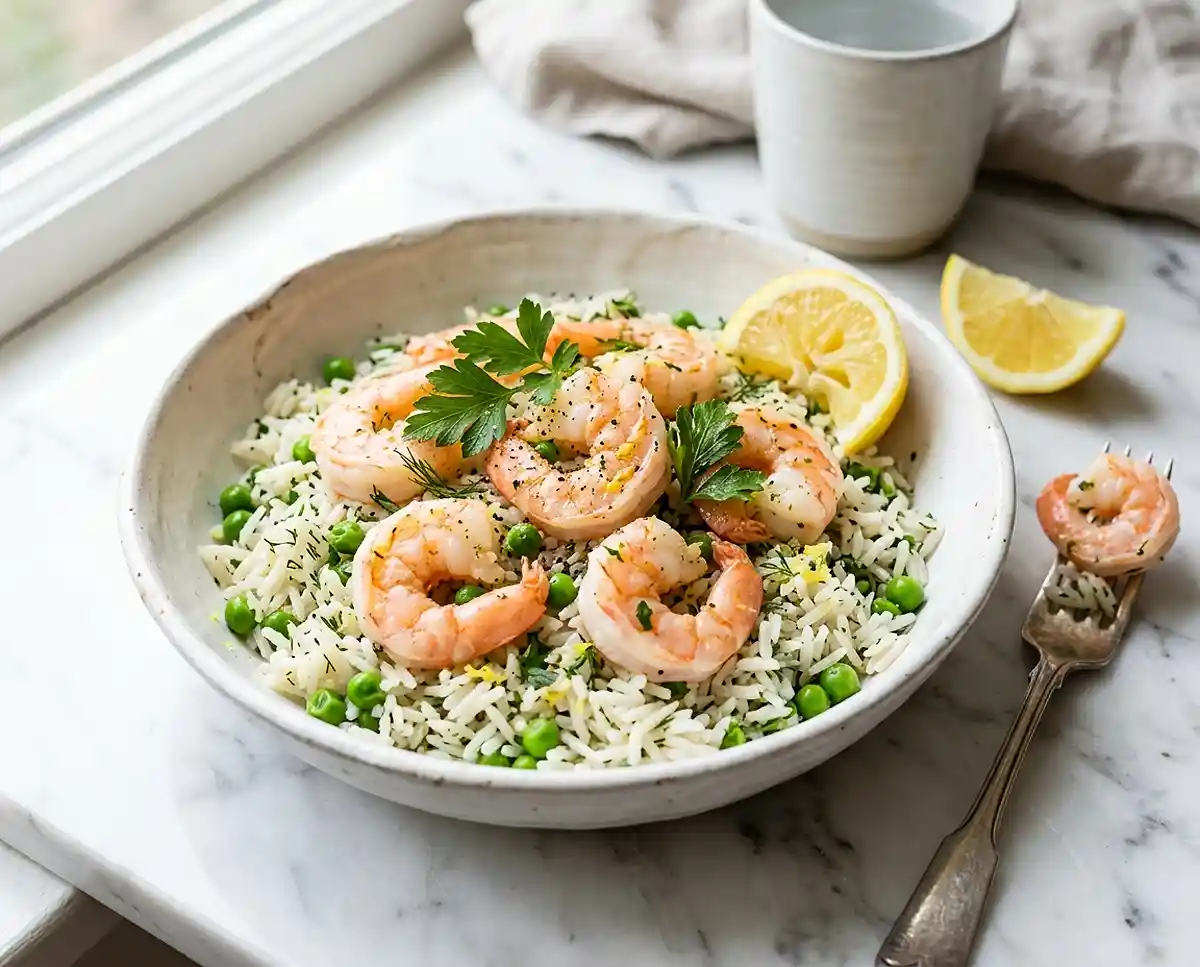
Step 8: Remove the lid, fluff the rice gently with a fork, and serve immediately. The finished dish should glisten with butter and lemon, with each shrimp sitting plump and coral-pink on a bed of fluffy, herb-flecked rice.
Make It Your Own
Swap the protein: Boneless chicken thighs cut into 1-inch cubes work beautifully here — just add them at the same time as the water and lemon juice so they have the full simmer time to cook through. Diced firm tofu is another solid option for a plant-based version of this easy seafood meal.
Change the grain: Jasmine rice or basmati rice can replace long grain white rice with no changes to liquid amounts. Brown rice needs significantly more water and a longer cook time, so I’d only recommend it if you par-cook it for 15 minutes first, then add it to the skillet.
Man, oh man… if you want to take the lemon flavor up a notch, add 1 teaspoon of lemon zest right before serving. The zest releases aromatic oils that hit your nose before the fork even reaches your mouth — it’s a small move that makes the whole plate smell like a lemon grove.
Make it dairy-free: Replace the 1 tablespoon of butter with olive oil or avocado oil. You’ll lose a little richness, but the lemon juice and herbs carry the flavor beautifully on their own. This no-bake summer treat of a swap keeps the dish safe for dairy-free diets without sacrificing much.
Common Problems and How to Fix Them
Problem: The rice is gummy and clumped together. You likely skipped the toasting step or stirred too aggressively during the simmer. Toasting seals the outer starch on each grain, and gentle simmering with the lid on allows steam — not stirring — to do the cooking. Next time, toast for the full 2-3 minutes and resist the urge to over-stir.
Problem: The shrimp are tough and rubbery. They cooked too long or were exposed to direct heat instead of steam. Shrimp need only 3-5 minutes of steaming on top of the rice. The moment they curl into a C-shape and turn opaque, they’re done. An overcooked shrimp curls into a tight O — that’s your visual cue that you’ve gone too far.
Problem: The rice is still crunchy after the full cook time. Your lid may not be sealing tightly, letting steam escape. You know… even a small gap in the lid can add 5-10 minutes to cook time. Try wrapping a clean kitchen towel around the lid to create a tighter seal, or add 2-3 tablespoons of extra water and continue simmering for another 3-5 minutes.
Problem: The dish tastes flat. Season in layers. Add a pinch more sea salt after cooking and squeeze an extra wedge of fresh lemon over each serving. Acid and salt are flavor amplifiers — a squeeze of lemon at the table can transform a bland plate into a bright, balanced one.
Storage and Meal Prep
| Method | Duration | Notes |
|---|---|---|
| Counter | Up to 2 hours | Cover tightly; discard if left longer |
| Refrigerator | 3-4 days | Store in airtight container; rice and shrimp together is fine |
| Freezer | Up to 2 months | Freeze in individual portions; shrimp texture may soften slightly |
To reheat, add 1-2 tablespoons of water to the container, cover loosely, and microwave in 60-second bursts, stirring between rounds. This re-steams the rice and prevents it from drying out. Alternatively, reheat in a skillet over medium-low heat with a splash of water and a pat of butter for a fresher taste.
For meal prep, cook the rice and shrimp together, then divide into four individual containers. The lemon juice acts as a mild preservative that helps keep the rice tasting bright even after a day or two in the fridge.
FAQs About Gluten-Free Lemon Herb Shrimp Rice
Can I use frozen shrimp straight from the freezer?
Yes, but thaw them first for the best texture. Place frozen shrimp in a colander and run cold water over them for 5-7 minutes until they’re flexible. Cooking from frozen adds unpredictable timing and can release excess water into the rice, making it soggy.
What’s the best rice for this recipe?
Long grain white rice gives the fluffiest, most separate results. Its lower starch content compared to medium or short grain varieties means less clumping. Jasmine and basmati also work well and add their own subtle floral aromatics.
How do I know when the shrimp are done?
Look for two visual cues: the shrimp should be pink and opaque throughout, and they should curl into a loose C-shape. If you have an instant-read thermometer, the internal temperature should reach 120 degrees Fahrenheit. Anything past a tight curl means they’re overcooked.
Why did my rice stick to the bottom of the pan?
Your heat was likely too high during the simmer phase. After adding the water and lemon juice, reduce the heat to medium-low so the liquid gently bubbles rather than aggressively boils. A non-stick skillet also helps enormously — stainless steel requires more fat and more vigilance.
Can I add vegetables besides peas?
Absolutely. Diced bell peppers, asparagus tips, or baby spinach all work well. Add sturdy vegetables like peppers with the water so they have time to soften. Delicate greens like spinach should go in during the last 2 minutes, right when you add the shrimp.
Serving Suggestions
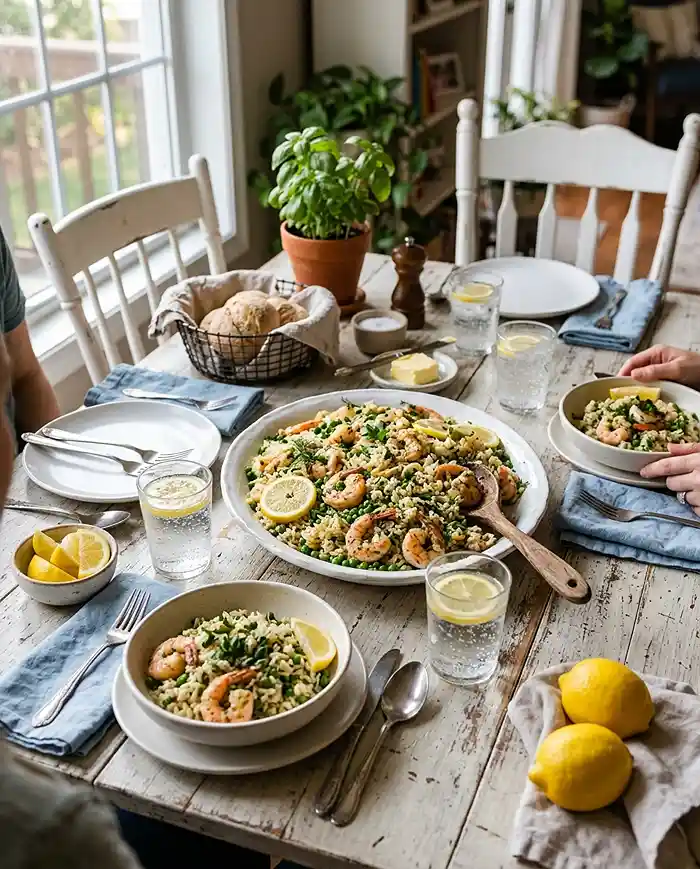
This Gluten-Free Lemon Herb Shrimp Rice is a natural fit for Easter dinner when you want something lighter than a heavy roast but still feel like you’ve put a real meal on the table. The bright lemon and herb flavors pair beautifully with a crisp green salad or roasted asparagus on the side.
For a full spread, start with a warm batch of gluten-free hot honey goat cheese dip as an appetizer. If you’re building a meal-prep lineup, pair it alongside sweet chili chicken lettuce wraps for variety throughout the week. And for dessert, keep it light with gluten-free blueberry lemon coconut pops — the lemon in both the dinner and dessert creates a lovely flavor thread across the whole meal.
Go Make This Tonight
If you’ve been searching for a shrimp dinner that’s fast, naturally gluten-free, and actually has flavor, this is the one to try. One skillet, 25 minutes, and you’ll have a lemon herb rice pilaf loaded with tender shrimp that tastes like it took real effort — even though it didn’t.
I’d love to hear how yours turns out. Drop a comment below with your favorite add-ins or any tweaks you tried, and if this recipe earns a spot in your weeknight rotation, save it to your Pinterest board so you can find it again next time you need dinner in a hurry.
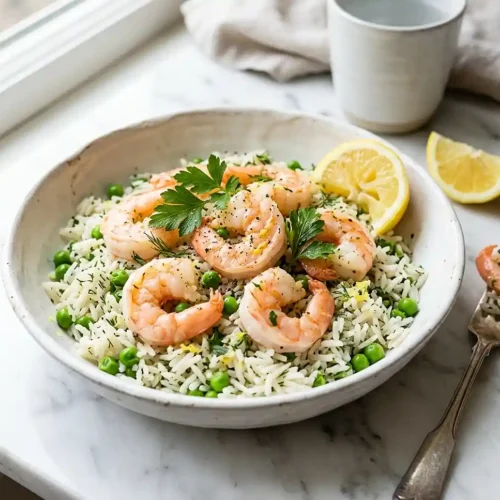
Gluten-Free Lemon Herb Shrimp Rice
Equipment
- Non-stick skillet with tight-fitting lid
- Wooden spoon or spatula
- Fork for fluffing
Ingredients
Lemon Herb Shrimp Rice
- 1 tablespoon butter
- 2 cloves garlic minced, or 1 teaspoon garlic powder
- 1 ½ cups long grain white rice
- 2 teaspoons dried Italian herbs
- ½ teaspoon fine sea salt
- ¼ teaspoon black pepper
- 2 ¾ cups water
- ¼ cup lemon juice fresh preferred
- 1 lb uncooked shrimp peeled and deveined
- 1 cup frozen peas no need to thaw
Instructions
- Heat a non-stick skillet over medium heat and add 1 tablespoon of butter. Let it melt completely and begin to foam, about 30-45 seconds.
- Add the 2 cloves of minced garlic and stir until fragrant, about 1 minute. If using garlic powder, skip this step and add it at the same time as the dried herbs.
- Add the 1 1/2 cups of long grain white rice to the skillet and stir constantly until lightly toasted, about 2-3 minutes. The grains will turn slightly translucent at the edges and release a warm, nutty aroma.
- Stir in the 2 teaspoons dried Italian herbs, 1/2 teaspoon fine sea salt, and 1/4 teaspoon black pepper. Let the spices bloom in the hot butter for about 15 seconds until darkened slightly and fragrant.
- Pour in the 2 3/4 cups water and 1/4 cup lemon juice. Stir once to distribute the herbs evenly, then cover with a tight-fitting lid and reduce heat to medium-low. Let the rice simmer for 10 minutes, stirring occasionally to prevent sticking.
- After 10 minutes, stir in the 1 cup of frozen peas and place the 1 lb of shrimp in a single layer on top of the rice. Do not stir the shrimp in. Cover and cook for 3-5 more minutes until the shrimp are pink, opaque, curled into a loose C-shape, and the rice is tender and has absorbed nearly all the liquid.
- Remove the lid, fluff the rice gently with a fork, and serve immediately. The finished dish should glisten with butter and lemon, with each shrimp sitting plump and coral-pink on a bed of fluffy, herb-flecked rice.