
Gluten-Free Miyoko’s Oat Butter Recipe
Make this Gluten-Free miyoko’s oat butter recipe at home with simple ingredients. Step-by-step instructions, substitutions, storage tips, and troubleshooting included.
The first time I ran out of Miyoko’s butter mid-bake, I panicked. I was halfway through a Thanksgiving pie crust, guests arriving in three hours, and the nearest store was forty minutes away.
That crisis pushed me into the kitchen to figure out this gluten-free Miyoko’s oat butter recipe from scratch—and honestly, I never went back to buying it. What I blended that day tasted just as rich, spread just as smoothly, and cost a fraction of the store price.
Have you ever wondered if homemade vegan butter could actually hold up in real baking? It absolutely can, and this recipe proves it.
Table of Contents
Why You’ll Love This Miyoko’s Oat Butter Recipe
- Creamy texture from day one: When chilled, this butter sets firm and spreadable—it melts like ribbon on warm toast.
- Beginner-friendly in under 15 minutes: If you own a blender, you can make this. No special equipment needed.
- Naturally dairy-free and gluten-free: Made entirely from plant-based oils and oat milk, with zero hidden allergens.
- Endlessly customizable: Make it salted, herbed, tangy, or golden with simple add-ins you likely already have.
The Secret to Perfect Gluten-Free Miyoko’s Oat Butter
Temperature control is everything here. Refined coconut oil that’s too hot will break the emulsion before it starts—lukewarm is your target, not steaming.
- Chilled liquid oil prevents separation: Cold avocado or sunflower oil keeps the fat mixture stable as it emulsifies with the plant milk.
- Slow drizzle builds structure: Adding oat milk gradually—not all at once—is what creates that thick, creamy consistency similar to loose mayonnaise.
- Refined coconut oil = neutral flavor: Unrefined coconut oil carries a distinct tropical taste. Refined keeps the butter clean and buttery-tasting.
- Cold plant milk is non-negotiable: Warm milk breaks the emulsion instantly. Pull your oat milk straight from the fridge before blending.
According to trusted celiac research from the Celiac Disease Foundation, oat products labeled gluten-free are safe for most people with celiac disease when they’re certified and uncontaminated—so always check your oat milk label before using it in this recipe.
Ingredients For Gluten-Free miyoko’s oat butter recipe
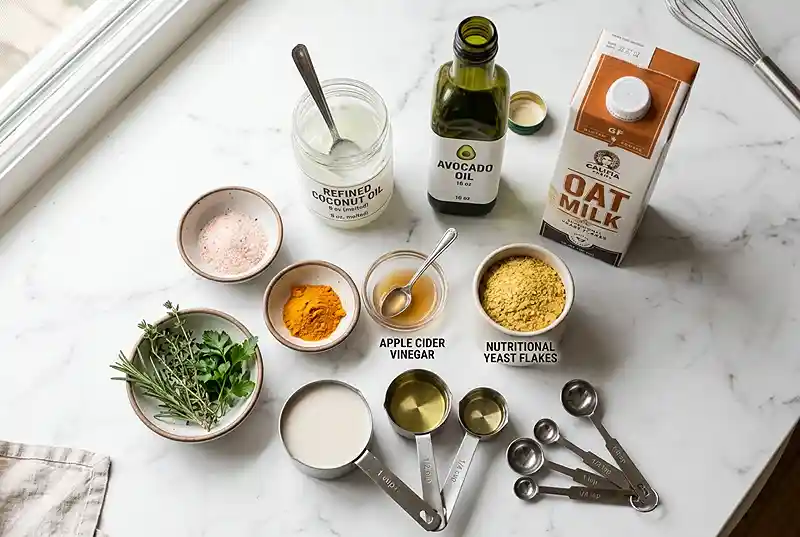
This recipe makes 32 tablespoons (about 2 cups) of butter. Here’s exactly what you’ll need:
Solid Fat
| Ingredient | Amount | Notes |
|---|---|---|
| Refined coconut oil, melted | 3/4 cup | Melted but not hot; refined for neutral flavor |
Liquid Fat
| Ingredient | Amount | Notes |
|---|---|---|
| Avocado oil, sunflower oil, or safflower oil | 1 cup | Chilled; avocado oil recommended for silky neutral result |
Plant Milk
| Ingredient | Amount | Notes |
|---|---|---|
| Oat milk, soy milk, or cashew milk | 1/2 to 1 cup | Cold; unsweetened, unflavored, full-bodied oat milk for closest Miyoko’s-style result |
Seasoning
| Ingredient | Amount | Notes |
|---|---|---|
| Salt | 1/2 to 1 teaspoon | Optional, to taste |
Optional Flavor Additions
| Ingredient | Amount | Notes |
|---|---|---|
| Turmeric | 1 pinch | For golden butter color |
| Apple cider vinegar | 1/2 teaspoon | For a cultured tang |
| Plain vegan yogurt | 1 small spoonful | Alternative for cultured tang |
| Fresh herbs (chives, rosemary, or dill) | To taste | Finely minced, for herb butter |
| Nutritional yeast | To taste | Small amount for savory depth |
Instructions For Gluten-Free miyoko’s oat butter recipe
Gently melt the refined coconut oil until just liquid. It should be lukewarm—not hot or steaming—before you move to the next step.
Make sure the liquid oil is well chilled in the refrigerator. It should be cold but still pourable. Don’t skip this step—temperature matters.
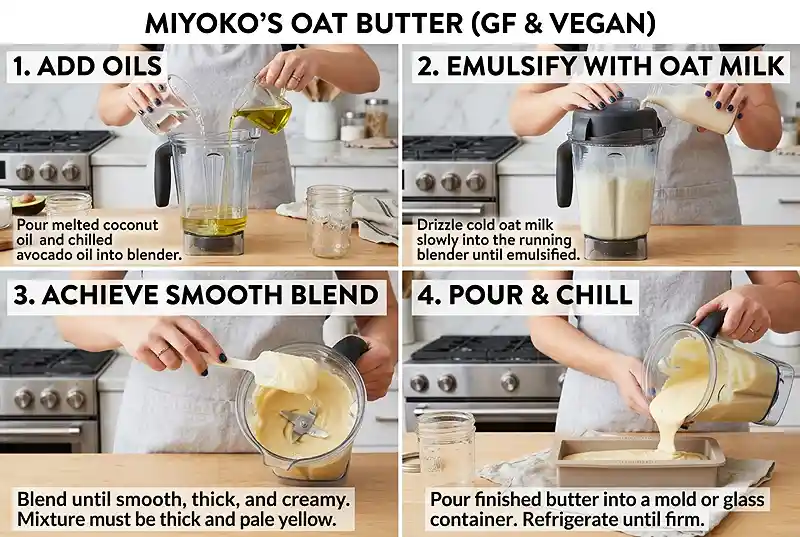
Add the melted coconut oil and chilled liquid oil to a blender. You want both fats together before any milk goes in.
Blend briefly, just until the oils are fully combined and slightly opaque. Do not over-blend at this stage—you’re not emulsifying yet, just combining.
With the blender running on medium speed, slowly drizzle in 1/2 cup of cold plant milk. The key word here is slowly—a steady thin stream builds the best texture.
Continue blending until the mixture thickens and turns creamy, similar to a loose mayonnaise. You’ll notice the color shift from clear to pale and opaque.
Pro Tip: If you want a softer, more spreadable butter, add more cold plant milk a splash at a time. Watch for a creamy, smooth consistency before adding more.
Add salt to taste while blending, if using. Blend for just a few seconds after adding it so it incorporates evenly.
For optional flavor variations, blend in a pinch of turmeric for color, apple cider vinegar or vegan yogurt for tang, or nutritional yeast for savory depth. Add each one individually and taste as you go.
Pour the blended butter into an airtight container, silicone butter mold, or small loaf pan lined with parchment paper. Smooth the top with a spatula.
Refrigerate for 1 to 2 hours, or until firm and spreadable. Patience here gives you that satisfying, sliceable texture.
Once set, use like store-bought vegan butter for spreading, sautéing, baking, or finishing vegetables and toast. It performs beautifully in all of these applications
.
Make It Your Own
Well… one of the best things about this miyokos oat milk butter recipe is how easy it is to customize. You’re not locked into one version—this base is incredibly flexible.
Swap the Plant Milk
Full-fat oat milk gives you the closest result to store-bought Miyoko’s oat milk butter, but soy milk works wonderfully if you want a slightly richer, higher-protein base. Cashew milk produces an ultra-silky result that’s worth trying if you don’t have an oat sensitivity.
Just remember: whatever milk you choose, it must go in cold. Warm plant milk will break the emulsion and leave you with an oily mess instead of creamy butter.
Choose Your Oil
Avocado oil is my top pick for this miyokos oat butter recipe because it blends into a perfectly neutral, silky result without any detectable flavor. Sunflower oil is a budget-friendly alternative that works nearly as well.
Safflower oil is another solid option—light, neutral, and easy to find in most grocery stores. Avoid olive oil here; its strong flavor competes with the butter taste you’re building.
Try Herb Butter
Fold in finely minced fresh chives, rosemary, or dill after blending for a compound herb butter that’s stunning on bread, grilled corn, or baked potatoes. This version is a showstopper at summer cookouts and holiday dinners.
If you love the idea of easy dairy-free treats for entertaining, check out my dairy-free key lime pudding cups—they pair beautifully with herb butter on the side.
Make a Cultured Version
Adding 1/2 teaspoon of apple cider vinegar or a small spoonful of plain vegan yogurt introduces a subtle tang that mimics the slightly fermented flavor of cultured dairy butter. It’s a small touch that makes a noticeable difference, especially on toast or crackers.
This cultured version is particularly good in recipes where butter flavor is front and center—think pan sauces, compound butters, or spread directly on biscuits.
Common Problems & Solutions
Man, oh man… I’ve made every mistake possible while perfecting this recipe. Here’s what I learned so you don’t have to repeat them.
Problem: The Butter Won’t Emulsify
Solution: Check your temperatures first. If your coconut oil was too hot or your liquid oil wasn’t cold enough, the emulsion breaks before it forms. Start over with properly temperatured oils and drizzle the plant milk in even more slowly this time.
Sometimes a high-speed blender runs too fast at the start—try beginning on low speed before moving to medium when you add the plant milk.
Problem: The Butter Turned Out Too Soft
Solution: Reduce the plant milk. If you added too much liquid, the butter won’t firm up properly in the fridge. Next time, start with just 1/2 cup of cold plant milk and only add more if the texture looks too thick while blending.
You can also try chilling the mixture overnight rather than just 1-2 hours—some batches need a longer set time depending on your refrigerator temperature.
Problem: The Butter Tastes Oily or Flat
Solution: Season more generously. Plant-based butter without enough salt can taste hollow and one-dimensional. Add salt gradually while blending and taste frequently until it tastes satisfyingly rich.
A pinch of nutritional yeast also adds savory complexity that rounds out the flavor significantly—especially helpful if you’re using the butter for cooking rather than just spreading.
Problem: The Butter Separated After Chilling
Solution: Re-blend it. This can happen if the emulsion wasn’t fully set before you poured it into the mold. Let it come to room temperature for about 10 minutes, then return it to the blender and re-blend before chilling again.
Using a full-fat, unflavored plant milk with higher protein content helps stabilize the emulsion and prevents this from happening in the first place.
Storage & Meal Prep
| Method | Duration | Notes |
|---|---|---|
| Counter | 2-3 days | Airtight container; warm kitchens may soften it quickly |
| Fridge | 5-7 days | Bring to room temperature for 10 minutes before spreading |
| Freezer | 2-3 months | Wrap individually in parchment and store in a freezer bag |
To freeze, pour the blended butter into silicone ice cube trays or a parchment-lined loaf pan and freeze solid before transferring to a freezer bag. Pre-portioned cubes are especially handy for cooking—just drop one directly into a hot pan from frozen.
For spreading straight from the fridge, let your butter sit on the counter for about 10 minutes—it softens quickly and spreads beautifully without tearing bread.
Gluten-Free miyoko’s oat butter recipe FAQs
Can I use this gluten-free oat butter recipe for frying and sautéing?
Yes, this butter works well for sautéing over medium heat. Keep the heat at medium or lower since the coconut oil base can brown quickly at high temperatures. It adds a rich, buttery flavor to vegetables, eggs, and pan sauces.
How long does homemade Miyoko’s oat butter last in the fridge?
Stored in an airtight container, this butter keeps well in the refrigerator for 5 to 7 days. For longer storage, freeze it in individual portions for up to 2 to 3 months and thaw in the fridge overnight before using.
Can I make this recipe without coconut oil?
Coconut oil is key to helping the butter firm up when chilled, since it solidifies at cool temperatures. Replacing it entirely will result in a softer, more sauce-like texture rather than a spreadable butter. If you need a coconut-free version, cacao butter is the closest alternative with similar solidifying properties.
Why does my butter taste bland even after adding salt?
A flat taste is usually fixed by adding a small amount of nutritional yeast and a splash of apple cider vinegar. These two ingredients add savory depth and a subtle tang that makes plant-based butter taste much more complex and satisfying. Start with small amounts and taste as you go.
Is this recipe safe for people with celiac disease?
Yes, as long as you use certified gluten-free oat milk and verify that all other ingredients are produced in gluten-free facilities. Cross-contamination is the main risk with oat products, so always check labels carefully and choose brands that specifically certify their oats as gluten-free.
Serving Suggestions

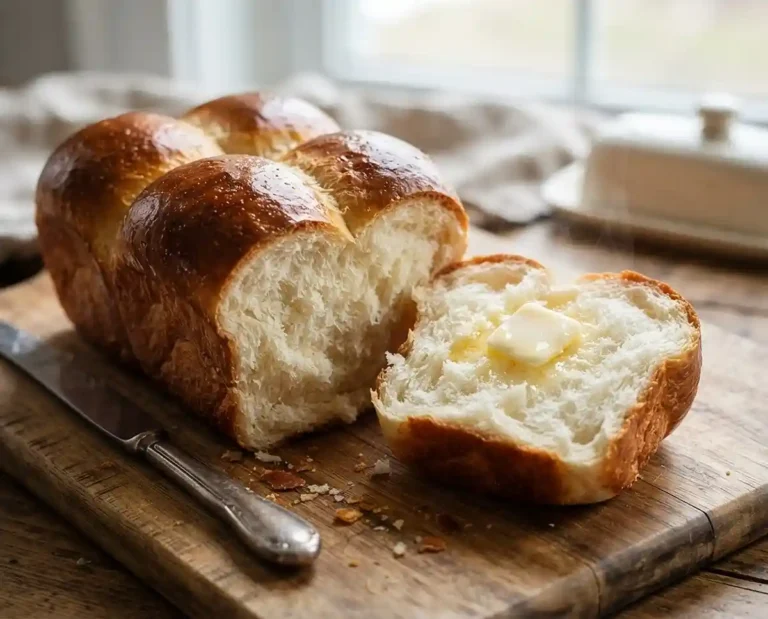
This butter shines on warm gluten-free sourdough or freshly baked sweet potato biscuits. You know… it’s the kind of spread that makes even a simple slice of toast feel special on a lazy Sunday morning.
It’s also a natural match for summery fruit desserts—try spreading a little on the crust of my blackberry peach upside-down cake before baking for an extra-golden finish.
For something refreshing alongside, pair this butter with a plate of my gluten-free blueberry peach yogurt bark—it’s a perfect combination for warm-weather gatherings or a 4th of July spread.
The herb butter variation works beautifully melted over grilled vegetables, stirred into mashed potatoes, or used as a finishing touch on roasted corn. Bring a log of it to your next potluck and watch it disappear.
If you tried this recipe, I’d love to hear how it turned out. Drop your experience in the comments below—did you add herbs, use a different oil, or find a clever shortcut? Share it on Pinterest too so more people can discover how easy homemade vegan butter can be.

Gluten-Free Miyoko’s Oat Butter
Equipment
- High-speed blender
- Airtight Container or Silicone Butter Mold
- Small Loaf Pan (optional)
Ingredients
Solid Fat
- ¾ cup Refined coconut oil, melted Melted but not hot; refined is best for neutral flavor
Liquid Fat
- 1 cup Avocado oil, sunflower oil, or safflower oil Chilled; avocado oil is recommended for a silky neutral result
Plant Milk
- ½ to 1 cup Oat milk, soy milk, or cashew milk Cold; use unsweetened, unflavored, full-bodied oat milk for the closest Miyoko’s-style result
Seasoning
- ½ to 1 tsp Salt Optional, to taste
Optional Flavor Additions
- 1 pinch Turmeric Optional, for golden butter color
- ½ tsp Apple cider vinegar Optional, for a cultured tang
- 1 Plain vegan yogurt Optional, a small spoonful for a cultured tang
- Fresh herbs (chives, rosemary, or dill) Optional, finely minced for herb butter
- Nutritional yeast Optional, a small amount for savory depth
Instructions
- Gently melt the refined coconut oil until just liquid. It should be lukewarm—not hot or steaming—before you move to the next step.
- Make sure the liquid oil is well chilled in the refrigerator. It should be cold but still pourable. Don’t skip this step—temperature matters.
- Add the melted coconut oil and chilled liquid oil to a blender. You want both fats together before any milk goes in.
- Blend briefly, just until the oils are fully combined and slightly opaque. Do not over-blend at this stage—you’re not emulsifying yet, just combining.
- With the blender running on medium speed, slowly drizzle in 1/2 cup of cold plant milk. Add it in a steady, thin stream to build the best texture.
- Continue blending until the mixture thickens and turns creamy, similar to a loose mayonnaise. You’ll notice the color shift from clear to pale and opaque.
- If you want a softer, more spreadable butter, add more cold plant milk a splash at a time until the texture looks creamy and smooth.
- Add salt to taste while blending, if using. Blend for just a few seconds after adding so it incorporates evenly.
- For optional flavor variations, blend in a pinch of turmeric for color, apple cider vinegar or vegan yogurt for tang, or nutritional yeast for savory depth. Add each one individually and taste as you go.
- Pour the blended butter into an airtight container, silicone butter mold, or small loaf pan lined with parchment paper. Smooth the top with a spatula.
- Refrigerate for 1 to 2 hours, or until firm and spreadable.
- Once set, use like store-bought vegan butter for spreading, sautéing, baking, or finishing vegetables and toast.