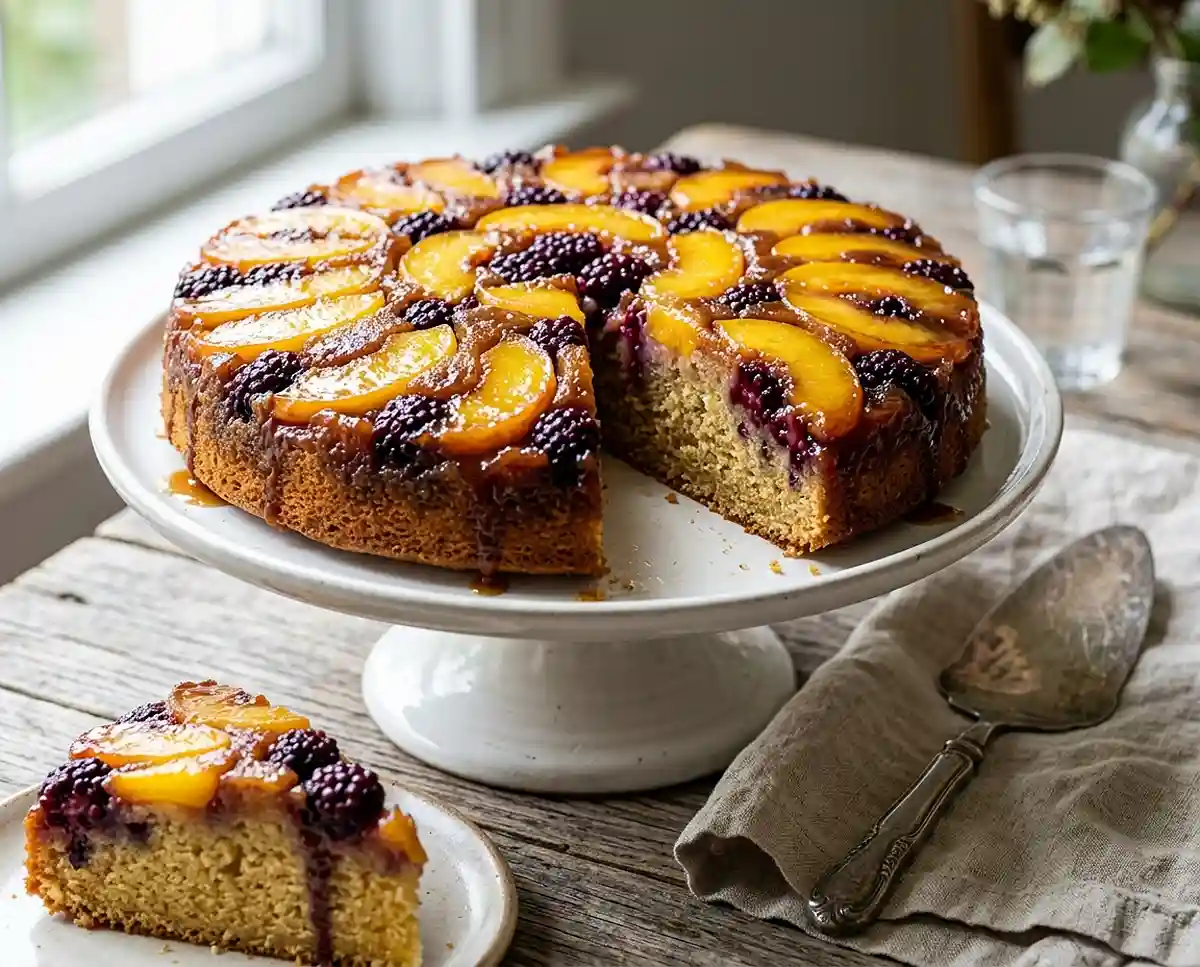
Blackberry Peach Upside-Down Cake
A buttery gluten-free blackberry peach upside-down cake with caramelized summer fruit, tender crumb, and clear step-by-step instructions for stress-free baking.
The first time I made a gluten-free blackberry peach upside-down cake, I flipped the pan too soon and watched half the fruit slide onto the counter like a slow-motion movie scene. Well… I scooped the warm berries back onto the cake, served it to my sister anyway, and she still asked for the recipe before she left.
That kitchen flop taught me everything I needed to know about timing, pan prep, and trusting the cool-down window. Have you ever rushed a dessert and learned the hard way that patience is the real ingredient?
This version is the one I’ve been baking every summer since—juicy peaches, jammy blackberries, and a buttery crumb that holds together without a single dry pocket. It’s the dessert I bring to every Fourth of July picnic because it looks stunning on the platter and tastes even better the next morning with coffee.
Why You’ll Love This Blackberry Peach Upside-Down Cake
- Caramelized fruit topping with jammy blackberries and tender peach slices that bake into a glossy, ruby-purple crown
- Beginner-friendly one-pan method—no fancy techniques, no folding meringues, no chilling steps
- Naturally gluten-free with a tender, moist crumb that holds together without crumbling
- Works beautifully for summer cookouts, birthday brunches, or as a make-ahead dessert for weeknight company
The Secret to Perfect Gluten-Free Blackberry Peach Upside-Down Cake
The caramel layer is the secret weapon here, and it’s simpler than it looks. Brown sugar and melted butter create a self-saucing topping that bakes into the fruit, locks in moisture, and gives the cake its signature glossy finish when you flip it.
- Parchment lining prevents fruit disasters: A round of parchment under the fruit guarantees a clean release every time—gluten-free batters are stickier than wheat batters because they rely on starches and gums for structure, so this step is non-negotiable.
- Room-temperature dairy and eggs emulsify properly: Cold ingredients seize the butter and create a curdled batter that bakes dense and gummy. According to King Arthur’s gluten-free baking guide, temperature consistency matters even more in gluten-free baking than in traditional recipes.
- The 10-20 minute cool-down is critical: Flip too soon and the cake falls apart; flip too late and the caramel sets like concrete. That short window lets the structure firm up while the sugar is still molten enough to release cleanly.
- Xanthan gum in the flour blend mimics gluten’s stretch: It traps the carbon dioxide from baking powder and soda, giving you a crumb that’s tender but not crumbly—the gluten-free baker’s holy grail.
Table of Contents
Ingredients
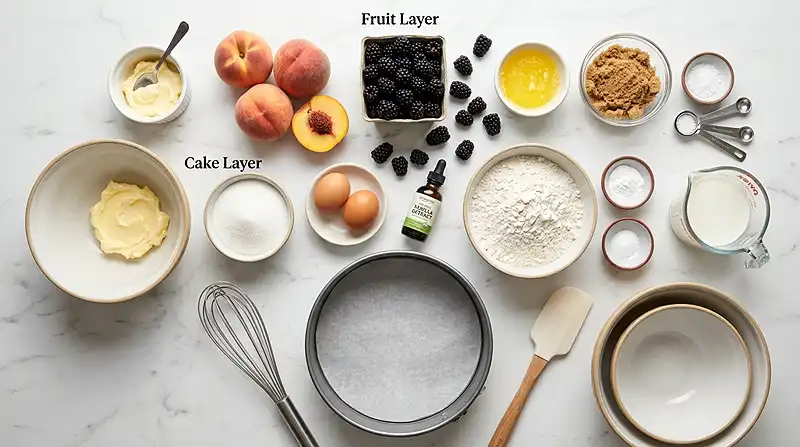
For the Fruit Layer
- 1 tbsp butter, softened (for greasing the pan)
- 3 peaches, sliced into ½-inch slices
- 6 oz fresh blackberries
- ¼ cup unsalted butter, melted
- ½ cup brown sugar
- ½ tsp salt
For the Cake
- ½ cup unsalted butter, softened
- ¾ cup granulated sugar
- 2 large eggs, room temperature
- 1 tsp vanilla extract
- 2 cups gluten-free all-purpose flour blend (with xanthan gum—King Arthur Measure for Measure or Bob’s Red Mill 1-to-1 work well)
- 1 tsp baking powder
- 1 tsp baking soda
- 1 tsp salt
- ¾ cup milk, room temperature
Instructions
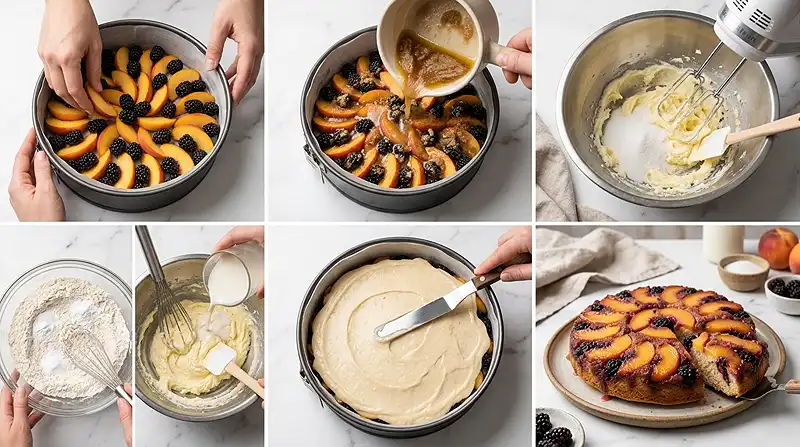
1. Assemble the Fruit Layer
Preheat your oven to 350°F (175°C) and grease a 9-inch springform pan or cake pan generously with the softened butter. Line the bottom with a round of parchment paper, pressing it flat against the buttered surface so it stays put. Arrange the peach slices and blackberries evenly over the parchment in a single layer—any pattern works, but a slight overlap on the peaches looks gorgeous after the flip.
In a small bowl, whisk together the melted butter, brown sugar, and salt until smooth and syrupy. Pour the mixture evenly over the fruit, making sure every berry and slice gets a glossy coat.
Pro Tip: Use peaches that yield slightly to gentle pressure—rock-hard peaches won’t soften enough in 40 minutes, and overripe ones turn to mush.
2. Make the Cake Batter
In a large mixing bowl, beat the softened butter and granulated sugar for 4-5 minutes until pale, fluffy, and almost as airy as whipped cream. This long creaming step incorporates air, which is what gives gluten-free cakes their lift since they can’t rely on gluten development.
Add the eggs one at a time, beating well after each addition until fully incorporated, then stir in the vanilla extract. In a separate bowl, whisk together the gluten-free flour, baking powder, baking soda, and salt.
Pro Tip: If your eggs are cold, set them in a bowl of warm tap water for 5 minutes—cold eggs will seize the creamed butter and create a lumpy batter.
3. Combine Wet and Dry
Add the dry ingredients to the butter mixture in three additions, mixing on low just until incorporated after each. Pour in the milk and mix until you have a smooth, ribbony batter—do not overmix, or the cake will turn tough.
4. Assemble the Cake
Carefully spoon the cake batter over the fruit layer in dollops around the pan, then gently spread it into an even layer with an offset spatula. Smooth the top so the cake bakes flat, which makes for a cleaner flip.
5. Bake
Bake for 40-45 minutes, or until the top is golden brown, the edges pull slightly from the pan, and a toothpick inserted into the center comes out clean or with a few moist crumbs. You’ll smell warm butter, vanilla, and jammy berries about 25 minutes in—that’s your cue it’s coming along beautifully.
Allow the cake to cool in the pan for 10-20 minutes on a wire rack. This is the window where structure sets but caramel stays liquid.
6. Flip the Cake
Run a thin knife around the edges of the pan to loosen the cake, then place a serving plate or cooling rack upside down over the top. Carefully invert the whole thing in one confident motion—hesitating is what causes the dreaded mid-flip slide.
Gently lift off the pan and peel away the parchment paper. If any fruit sticks to the parchment, simply scoop it back onto the cake with a spoon. Let the cake cool an additional 40-50 minutes before slicing so the caramel can set into a glossy glaze.
Make It Your Own
Dairy-Free Version: Swap the butter for a high-quality plant-based stick butter (Miyoko’s or Earth Balance both work) and use full-fat coconut milk or unsweetened almond milk in place of the dairy milk. The cake will bake slightly denser, but the caramel layer hides any minor texture differences—it’s my go-to for guests with multiple dietary needs.
Berry Swaps for This Gluten-Free Upside-Down Cake: Raspberries, blueberries, or even halved cherries all work in place of blackberries. Man, oh man—the cherry-peach version is what I make for late-July birthdays when stone fruit is at its peak.
Stone Fruit Variations: Nectarines, plums, or apricots can stand in for peaches at a 1:1 ratio, no other adjustments needed. For a richer summer fruit cake, try a mix of two stone fruits with the blackberries on top.
Lower-Sugar Adjustment: Reduce the brown sugar in the fruit layer to ⅓ cup and the granulated sugar to ½ cup. The cake will be less sweet but still tender—just don’t go lower or you’ll lose the caramelization that makes the topping shine.
Spiced Fall Variation: Add ½ teaspoon ground cardamom and ¼ teaspoon cinnamon to the dry ingredients for a cozier flavor profile. This swap turns the recipe into a Thanksgiving-worthy dessert when fresh peaches give way to pears and cranberries.
Common Problems & Solutions
Problem: The cake stuck to the pan when I flipped it.
Solution: Always line the bottom with parchment paper and run a knife around the edges before flipping. Gluten-free batters cling harder than wheat batters because of the starches in the flour blend—skipping parchment is the #1 reason home bakers lose their fruit layer.
Problem: The center is gummy or undercooked.
Solution: Bake an additional 5-8 minutes and tent loosely with foil if the top is browning too quickly. Well… gluten-free cakes often need longer bake times than traditional recipes because the starches absorb moisture differently—trust the toothpick test over the timer.
Problem: The cake is dry and crumbly.
Solution: Check that your gluten-free flour blend contains xanthan gum (or add ½ teaspoon if it doesn’t) and that your milk and eggs were truly at room temperature. Cold ingredients prevent proper emulsification, which leads to a dry, sandy crumb.
Problem: The fruit released too much liquid and made the cake soggy.
Solution: Pat extra-juicy peaches dry with a paper towel before arranging them in the pan. Slightly underripe fruit holds up better than overripe—if your peaches are very soft, reduce to 2 peaches instead of 3.
Storage & Meal Prep
| Method | Duration | Notes |
|---|---|---|
| Counter | 2-3 days | Airtight container, away from direct sun |
| Fridge | 5-7 days | Bring to room temp before serving |
| Freezer | 2-3 months | Wrap individually in parchment, then foil |
To revive a refrigerated slice, microwave for 15-20 seconds to soften the caramel and bring back the just-baked texture. Leftover slices crumble beautifully over Greek yogurt with a drizzle of honey for next-morning breakfast—it’s how I use up the last two slices every single time. A scoop of vanilla ice cream over a warmed slice also makes leftovers feel brand new.
Gluten-Free Blackberry Peach Upside-Down Cake FAQs
Can I use frozen peaches and blackberries?
Yes, but thaw and drain them thoroughly first. Pat the thawed fruit dry with paper towels to remove excess moisture, then proceed with the recipe as written. Frozen fruit releases more liquid than fresh, so skipping this step results in a soggy cake bottom.
How do I know when the cake is fully baked?
A toothpick inserted into the center should come out clean or with a few moist crumbs. The top should be golden brown, the edges should pull slightly from the pan, and the cake should spring back lightly when pressed. Gluten-free cakes can look done on top while still being raw in the center, so always rely on the toothpick test.
What’s the best gluten-free flour blend for this cake?
A 1-to-1 baking blend that includes xanthan gum gives the most reliable results. Brands like King Arthur Measure for Measure, Bob’s Red Mill 1-to-1, and Cup4Cup are all tested favorites for cakes. Single-flour substitutions (like almond or coconut flour alone) will not work in this recipe.
Why did my cake sink in the middle?
Sinking usually means the cake was underbaked or the oven door was opened too early. Gluten-free cakes are more sensitive to temperature drops because their structure relies on starches that need consistent heat to set. Avoid opening the oven before the 35-minute mark, and verify your oven temperature with an oven thermometer.
Can I make this cake a day ahead?
Yes, this cake actually tastes better the next day. Cover it loosely with foil once fully cooled and store at room temperature overnight. The flavors meld, the caramel deepens, and the crumb stays moist for up to 3 days.
Serving Suggestions
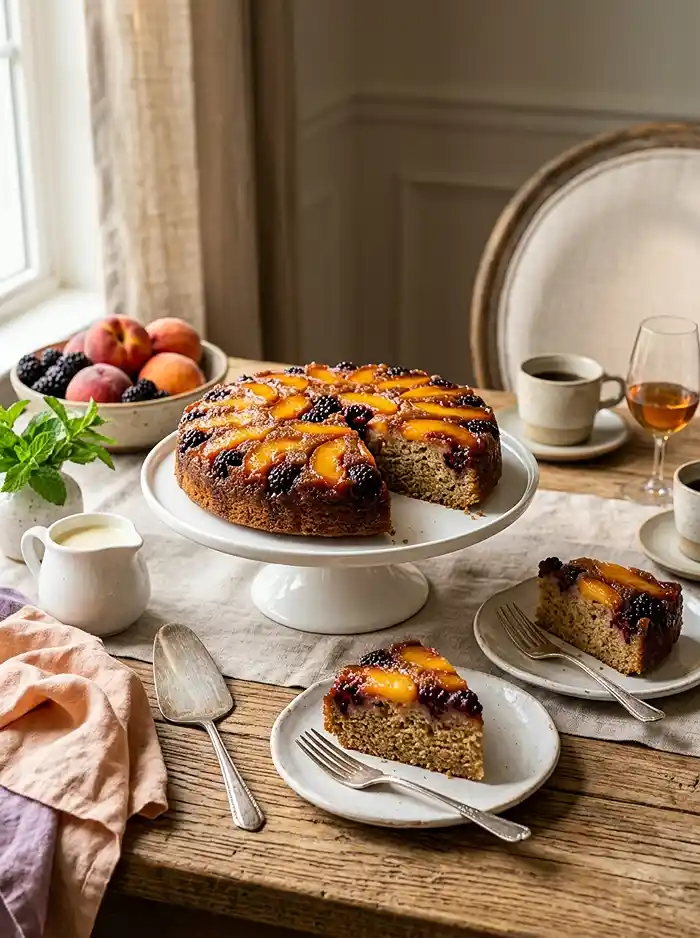
Serve thick slices slightly warm with a scoop of vanilla bean ice cream or a dollop of softly whipped cream that melts into the caramel like butter on warm toast. For brunch or a baby shower, pair it with a fresh fruit salad and strong coffee for a spread that feels effortlessly elegant.
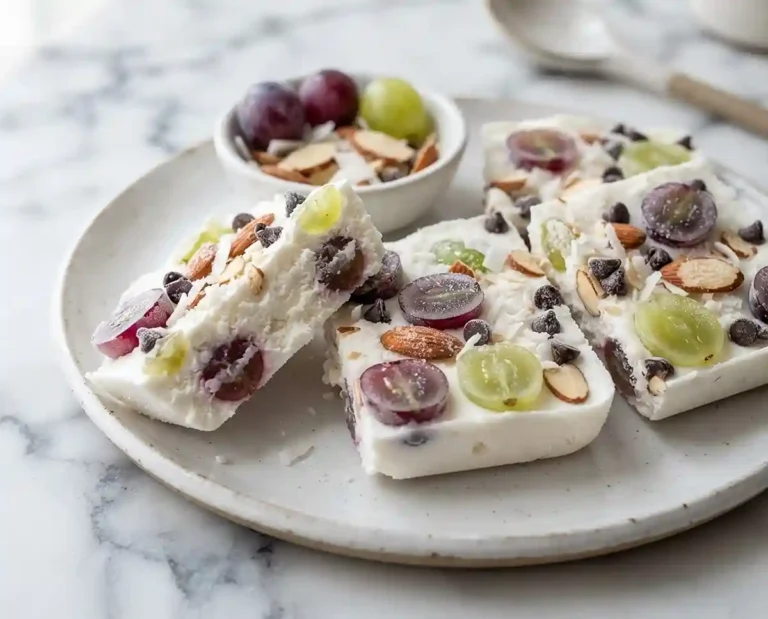
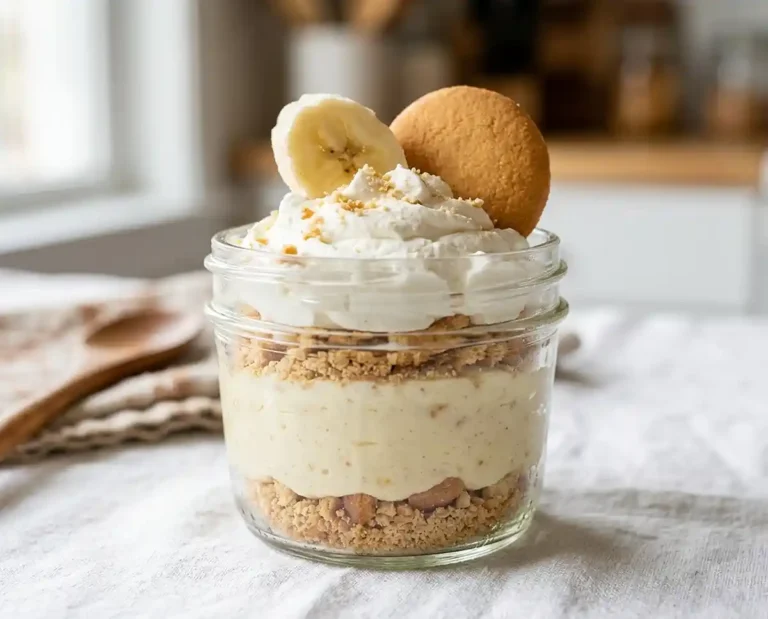
If you’re building a full summer menu, start with crispy chickpea Caesar lettuce cups as an appetizer, then end with this cake alongside dairy-free key lime pudding cups for guests who prefer a no-bake option. And if you want a make-ahead snackable treat for the cookout cooler, my blueberry peach yogurt bark uses the same summer fruits in a totally different way.
If this becomes the cake you bring to every summer gathering, drop a comment below and tell me what fruit combo you tried—I love seeing your spins. Pin the recipe for peach season and share it with a friend who’s been searching for a gluten-free dessert that actually holds together. Rate it below if it earned a spot in your baking rotation!
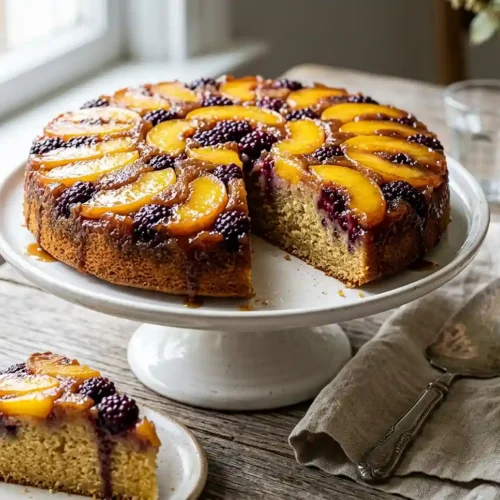
Gluten-Free Blackberry Peach Upside-Down Cake
Equipment
- 9-inch springform pan or cake pan
- Parchment paper
- Mixing bowls
- Whisk
- Electric mixer
- Offset spatula
- Wire rack
- Knife
Ingredients
Fruit Layer
- 1 tbsp butter softened, for greasing the pan
- 3 peaches sliced into 1/2-inch slices
- 6 oz fresh blackberries
- ¼ cup unsalted butter melted
- ½ cup brown sugar
- ½ tsp salt
Cake
- ½ cup unsalted butter softened
- ¾ cup granulated sugar
- 2 large eggs room temperature
- 1 tsp vanilla extract
- 2 cups gluten-free all-purpose flour blend with xanthan gum
- 1 tsp baking powder
- 1 tsp baking soda
- 1 tsp salt
- ¾ cup milk room temperature
Instructions
- Preheat oven to 350°F (175°C). Grease a 9-inch pan with softened butter and line the bottom with parchment paper. Arrange peach slices and blackberries evenly over the parchment. Mix melted butter, brown sugar, and salt until smooth, then pour evenly over the fruit.
- In a large bowl, beat softened butter and granulated sugar for 4–5 minutes until pale and fluffy. Add eggs one at a time, beating well after each addition, then mix in vanilla extract. In a separate bowl, whisk together the flour blend, baking powder, baking soda, and salt.
- Add the dry ingredients to the butter mixture in three additions, mixing on low speed just until combined. Pour in the milk and mix until a smooth batter forms.
- Spoon the batter over the fruit layer and gently spread into an even layer. Smooth the top with a spatula.
- Bake for 40–45 minutes, or until golden brown and a toothpick inserted in the center comes out clean or with a few moist crumbs. Cool in the pan for 10–20 minutes.
- Run a knife around the edges, place a serving plate over the pan, and carefully invert the cake. Remove the pan and peel away the parchment paper. Let cool for an additional 40–50 minutes before slicing and serving.