Gluten-Free Peanut Chicken Noodle Bowls
Make gluten-free peanut chicken noodle bowls in one skillet with rice noodles, fresh vegetables, and a 6-ingredient peanut sauce. Ready in 25 minutes.
The first time I made these bowls, it was a Tuesday night with a half-empty fridge, a bag of rice noodles I’d almost forgotten about, and exactly zero energy left after a long day. My family needed dinner, not an experiment.
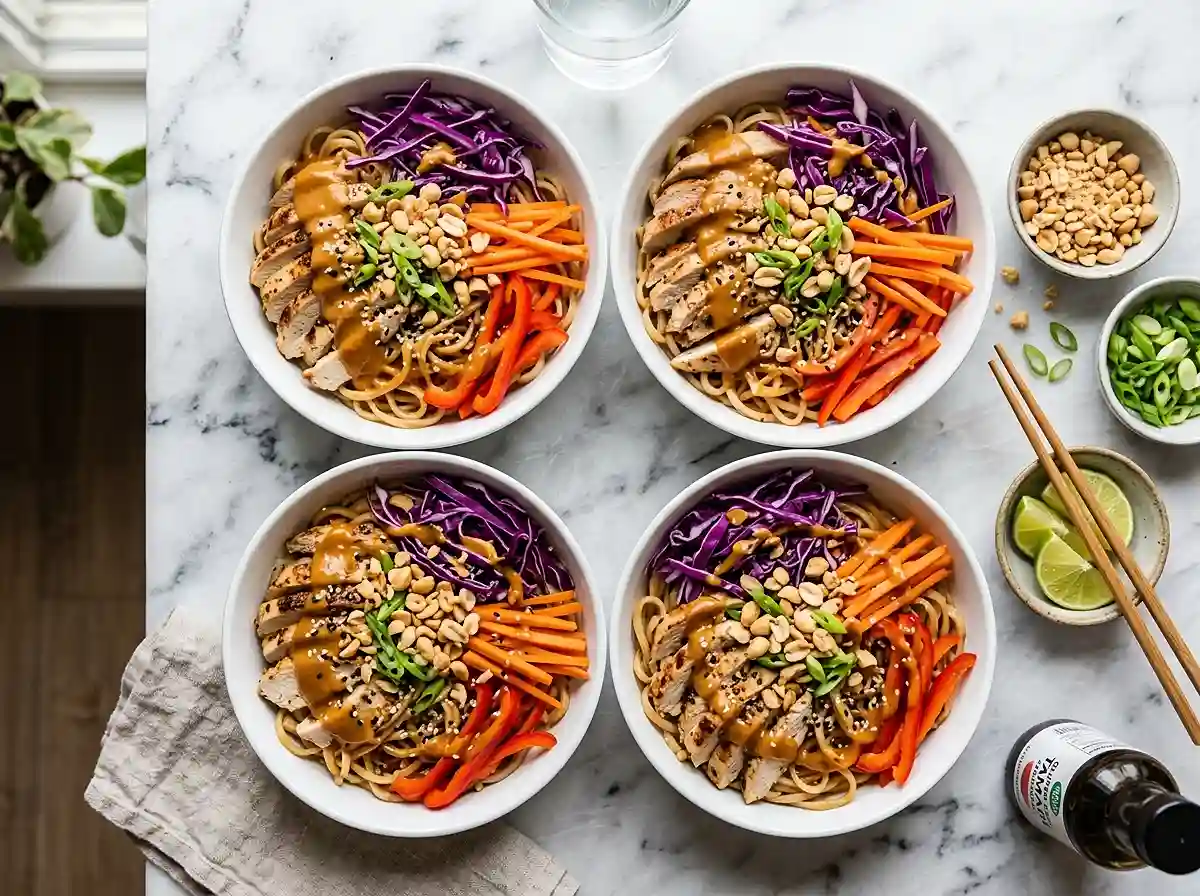
Twenty-five minutes later, we had a skillet full of gluten-free peanut chicken noodle bowls that everyone cleaned out without a single complaint — and my teenager asked if we could have them again on Friday. That’s the real test.
Well… how often does a budget weeknight dinner actually taste like something you’d order at a restaurant? That’s the question this recipe answers every single time.
Table of Contents
Why You’ll Love This Gluten-Free Peanut Chicken Noodle Bowl
- Peanut sauce that clings to every noodle: The combination of natural peanut butter, tamari, sesame oil, and lime juice creates a sauce that coats rice noodles like a silky glaze — savory, nutty, and just bright enough to keep you going back for more.
- One skillet, 25 minutes: Everything after the noodles cooks in a single pan, which means minimal cleanup and a fast path from fridge to table.
- Budget-friendly protein: One pound of chicken breast stretches across four generous bowls, making this one of the most cost-effective high-protein gluten-free meals you can put together on a weeknight.
- Meal prep ready: This recipe holds up beautifully in the fridge for several days, making it a reliable choice for gluten-free noodle meal prep on Sunday afternoons.
The Secret to Perfect Gluten-Free Peanut Chicken Noodle Bowls
- Whisk the sauce before anything hits the skillet: Peanut butter needs time to fully emulsify with the tamari, lime juice, and warm water. Making the sauce first means it’s ready to pour the moment the noodles and vegetables are done — no last-minute scrambling.
- Slightly undercook your rice noodles: Rice noodles continue to absorb liquid and soften when tossed in the hot skillet with the sauce. Pull them from the boiling water about 1 minute early so they finish cooking in the sauce without turning mushy.
- High heat for the chicken: Medium-high heat creates a lightly golden exterior on the chicken slices through the Maillard reaction — that same browning process that makes seared proteins taste so much more complex than simply cooked ones. Don’t crowd the pan or it steams instead of sears.
- Gluten-free tamari, not soy sauce: Regular soy sauce contains wheat. As celiac safety research from Beyond Celiac confirms, tamari is the correct gluten-free substitute — and it’s actually richer in flavor than standard soy sauce, which makes the peanut sauce even better.
Ingredients
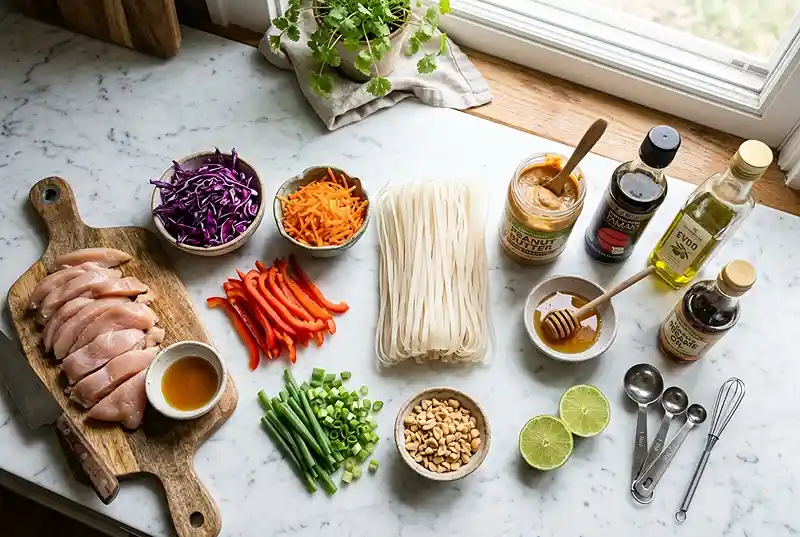
Prep all vegetables before you start cooking — this recipe moves quickly once the skillet is hot. Have your sauce whisked and ready to go before the chicken goes in.
| Group | Ingredient | Amount | Notes |
|---|---|---|---|
| Noodles & Protein | Gluten-free rice noodles | 8 oz (225 g) | Medium width works best; follow package directions |
| Boneless skinless chicken breasts, thinly sliced | 1 lb (450 g) | Slice against the grain for tender pieces | |
| Olive oil | 1 tbsp | Or avocado oil for a higher smoke point | |
| Vegetables | Shredded cabbage | 2 cups | Green or purple; pre-shredded bag works fine |
| Shredded carrots | 1 cup | Pre-shredded saves prep time | |
| Red bell pepper, thinly sliced | 1 | Orange or yellow also work well | |
| Garnish | Green onions, sliced | 2 | Add at the end — don’t cook them |
| Chopped peanuts | ¼ cup | Adds crunch; roasted unsalted preferred | |
| Peanut Sauce | Natural peanut butter | ¼ cup | Natural, not sweetened — stir well before measuring |
| Gluten-free tamari | 2 tbsp | San-J or Kikkoman gluten-free tamari recommended | |
| Lime juice | 1 tbsp | Fresh squeezed gives the brightest flavor | |
| Honey | 1 tbsp | Maple syrup works as a vegan swap | |
| Sesame oil | 1 tsp | Toasted sesame oil for maximum depth | |
| Warm water | 2 tbsp | Loosens the sauce to the right coating consistency |
Instructions
Step 1: Cook the Noodles
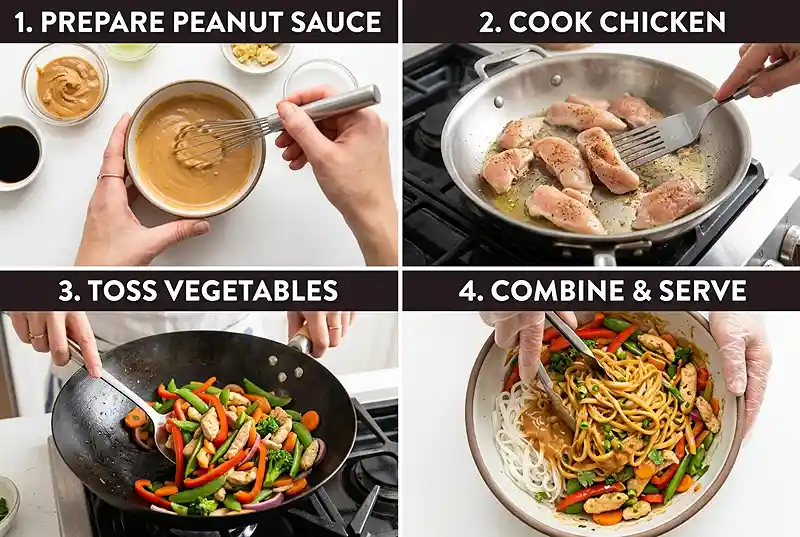
Cook the 8 oz of gluten-free rice noodles according to package directions, pulling them about 1 minute before they’re fully done. Drain, rinse briefly with cold water to stop cooking, and set aside. They’ll finish softening in the skillet with the sauce.
Step 2: Make the Peanut Sauce
In a small bowl, whisk together the ¼ cup peanut butter, 2 tbsp tamari, 1 tbsp lime juice, 1 tbsp honey, 1 tsp sesame oil, and 2 tbsp warm water until completely smooth. The warm water is the key — it helps the peanut butter emulsify into a pourable, clingy sauce rather than a thick paste. Set aside.
Step 3: Sear the Chicken
Heat 1 tbsp olive oil in a large skillet over medium-high heat until it shimmers. Add the thinly sliced chicken breast in a single layer — don’t overcrowd. Cook for 5 to 6 minutes, turning once, until the chicken is golden at the edges and cooked through with no pink remaining.
Pro Tip: Thin, even slices cook faster and more evenly than thick chunks. If your chicken pieces vary in thickness, give the thicker ones a 30-second head start in the pan.
Step 4: Add the Vegetables
Add the 2 cups shredded cabbage, 1 cup shredded carrots, and 1 sliced red bell pepper to the skillet with the chicken. Cook for 2 to 3 minutes, stirring frequently, until the vegetables are slightly tender but still have a little crunch. You want color and texture — not limp, overcooked vegetables.
Step 5: Toss and Coat
Add the drained rice noodles and pour the peanut sauce over everything in the skillet. Toss and fold everything together over medium heat for about 1 to 2 minutes until the sauce evenly coats every noodle, vegetable, and piece of chicken — it should look glossy and deeply golden.
Step 6: Serve
Divide among four bowls and garnish with sliced green onions and ¼ cup chopped peanuts. Serve immediately while the noodles are hot and the peanut sauce is still silky. A wedge of fresh lime on the side lets everyone adjust the brightness to their taste.
Make It Your Own
These make excellent budget peanut chicken noodles exactly as written, but swapping proteins is easy. Use shrimp instead of chicken — they cook in just 2 to 3 minutes per side — or go fully plant-based with firm tofu pressed dry and pan-fried until golden. Both absorb the peanut sauce beautifully.
You know… if you’re building this as a gluten-free noodle meal prep, store the sauce separately and toss it with the noodles and vegetables fresh each day. The components hold their texture much better that way, and you avoid the noodles soaking up all the sauce overnight.
Want more heat? Add 1 teaspoon of chili garlic paste or a drizzle of sriracha directly to the peanut sauce before whisking. Start small — the heat builds. You can always add more, but you can’t take it back once it’s in the bowl.
For a cheap protein lunch that works at the office, pack the noodle bowls in meal prep containers without the peanut garnish (it goes soggy). Keep the chopped peanuts in a small zip bag on the side and add them right before eating for that satisfying crunch. Pair these bowls with this gluten-free BBQ lentil sloppy joe bowl recipe for a full week of packed lunches without repeating yourself.
Common Problems & Solutions
Problem: My rice noodles are clumping together into one solid mass.
Rinse them immediately with cold water after draining and toss with a tiny drizzle of sesame oil to keep them separated. Rice noodles bond together fast once they cool — the rinse stops the cooking and the oil creates a light barrier between the strands.
Problem: My peanut sauce is too thick and won’t coat the noodles evenly.
Add warm water one tablespoon at a time while whisking until it reaches a pourable, honey-like consistency. Natural peanut butter varies in thickness between brands, so you may need up to 3 to 4 tablespoons of water depending on what you’re using. Don’t add cold water — it can seize the sauce.
Man, oh man… this one catches so many people off guard. Problem: The chicken released a lot of water and the skillet is steaming instead of searing.
Your pan wasn’t hot enough before the chicken went in, or the skillet was overcrowded. Pat the chicken slices dry with a paper towel before cooking, make sure the oil is shimmering, and cook in two batches if your skillet is smaller than 12 inches. Moisture is the enemy of browning.
Problem: The noodles soaked up all the sauce and the dish tastes dry.
Make a small extra batch of peanut sauce — it takes less than 2 minutes — and toss it in at the end. This is especially common when reheating leftovers. According to stir-fry technique guidance from Serious Eats, rice noodles absorb sauce aggressively after cooking, so building in a bit of extra sauce from the start is always smart with noodle dishes.
Storage & Meal Prep
| Method | Duration | Notes |
|---|---|---|
| Counter | 2 hours max | Rice noodles and chicken should not sit out long |
| Fridge | 4–5 days | Store in airtight container; noodles will firm up |
| Freezer | Not recommended | Rice noodles become grainy and mushy after freezing |
To reheat, add a splash of water or extra tamari to the bowl and microwave in 45-second bursts, stirring between each, until hot. The stovetop works even better — medium heat, a tablespoon of water, and a quick toss for 2 minutes brings everything back to life.
For no-waste prep, save any extra vegetables and toss them into a quick stir-fry the next day. Leftover peanut sauce keeps in a sealed jar in the fridge for up to a week and doubles as a dipping sauce for this gluten-free apple nacho snack box or as a drizzle over rice bowls.
Your Questions Answered
Can I use a different noodle if I can’t find rice noodles?
Yes — gluten-free soba (100% buckwheat), glass noodles, or certified gluten-free pasta all work well. Each has a slightly different texture, but a medium-width noodle gives the best peanut sauce coverage. Stick to certified gluten-free on all packaging.
How do I make the peanut sauce thinner without watering down the flavor?
Use warm water in small increments and whisk vigorously. Start with the 2 tablespoons in the recipe and add more one tablespoon at a time. A squeeze of extra lime juice also thins the sauce while adding brightness.
Why did my chicken turn out rubbery instead of tender?
It was likely overcooked or sliced too thick. Slice chicken against the grain for shorter muscle fibers and more tender bites. Pull it from the heat the moment there’s no pink remaining inside.
What can I substitute for peanut butter for a nut allergy?
Swap peanut butter for sunflower seed butter and chopped peanuts for toasted pumpkin seeds. The sauce won’t taste identical but sunflower seed butter holds up well with tamari and sesame oil. Verify the product is made in a nut-free facility for severe allergies.
Is this recipe dairy-free?
Yes, this recipe is completely dairy-free. The creamy peanut sauce comes entirely from natural peanut butter emulsified with tamari and warm water — no dairy of any kind. It’s a solid option for households managing both gluten and dairy sensitivities.
Serving Suggestions
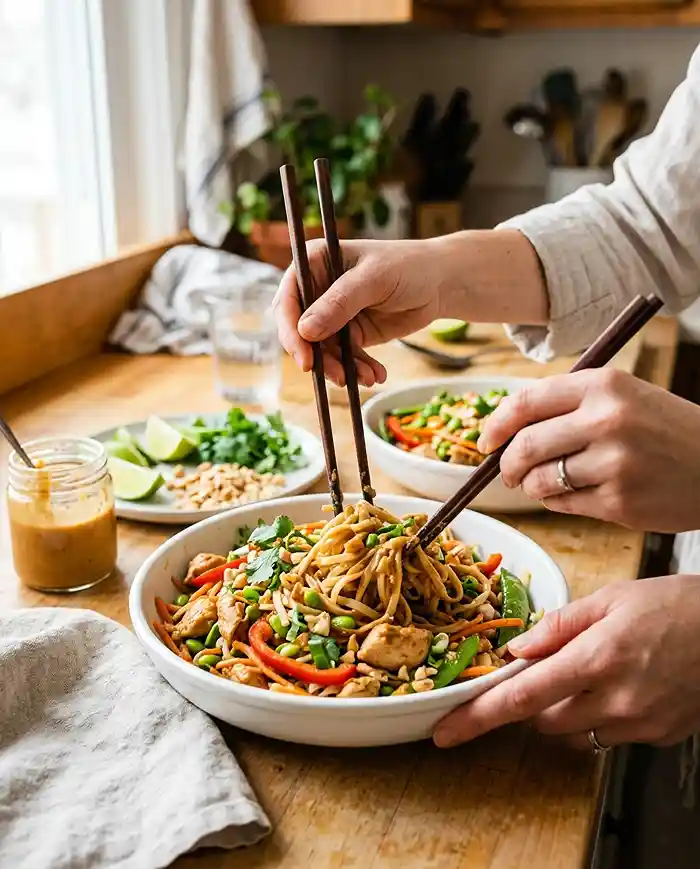
These bowls are filling enough to stand alone, but they pair well with a simple cucumber salad dressed with rice vinegar and a pinch of sesame seeds for a refreshing contrast to the rich peanut sauce. They’re also a natural fit for Fourth of July cookout spreads — set them up as a cold noodle bowl station alongside grilled proteins and let everyone build their own bowl.
For a lighter finish after the bowls, this gluten-free ube taho recipe is a sweet, purple-hued dessert that rounds out an Asian-inspired dinner beautifully without feeling heavy.
Give this recipe a go this week — I’d genuinely love to hear what protein you tried it with or how you tweaked the sauce. Share a photo on Pinterest, leave a comment below with your variation, and a five-star rating goes a long way toward helping other gluten-free families find this one on a busy Tuesday night.
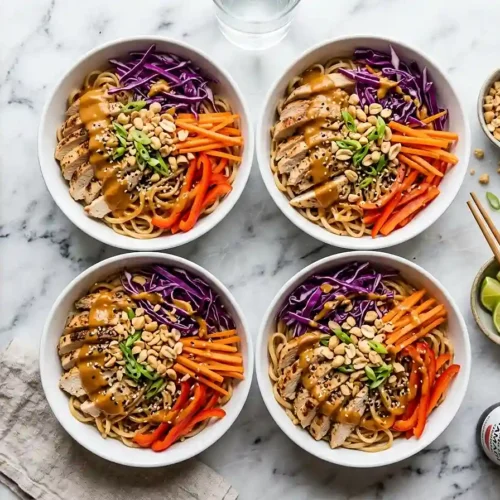
Quick Gluten-Free Peanut Chicken Noodle Bowls
Equipment
- Large skillet
- Pot
- Mixing bowl
- Whisk
Ingredients
Noodles & Protein
- 8 oz Gluten-free rice noodles Medium width works best; follow package directions
- 1 lb Boneless skinless chicken breasts, thinly sliced Slice against the grain for tender pieces
- 1 tbsp Olive oil Or avocado oil for a higher smoke point
Vegetables
- 2 cups Shredded cabbage Green or purple; pre-shredded bag works fine
- 1 cup Shredded carrots Pre-shredded saves prep time
- 1 Red bell pepper, thinly sliced Orange or yellow also work well
Garnish
- 2 Green onions, sliced Add at the end — don’t cook them
- ¼ cup Chopped peanuts Adds crunch; roasted unsalted preferred
Peanut Sauce
- ¼ cup Natural peanut butter Natural, not sweetened — stir well before measuring
- 2 tbsp Gluten-free tamari San-J or Kikkoman gluten-free tamari recommended
- 1 tbsp Lime juice Fresh squeezed gives the brightest flavor
- 1 tbsp Honey Maple syrup works as a vegan swap
- 1 tsp Sesame oil Toasted sesame oil for maximum depth
- 2 tbsp Warm water Loosens the sauce to the right coating consistency
Instructions
- Cook the gluten-free rice noodles according to package directions, removing them about 1 minute before fully done. Drain, rinse briefly with cold water, and set aside.
- Whisk together the peanut butter, tamari, lime juice, honey, sesame oil, and warm water until smooth. Set aside.
- Heat olive oil in a large skillet over medium-high heat. Add the sliced chicken and cook for 5 to 6 minutes, turning once, until golden and fully cooked.
- Add the shredded cabbage, shredded carrots, and sliced red bell pepper to the skillet. Cook for 2 to 3 minutes, stirring frequently, until slightly tender but still crisp.
- Add the cooked noodles to the skillet and pour over the peanut sauce. Toss everything together for 1 to 2 minutes until evenly coated.
- Divide among four bowls and garnish with sliced green onions and chopped peanuts. Serve immediately.