Gluten-Free Ube Taho Recipe
Learn how to make gluten-free ube taho Recipe at home with step-by-step instructions, a dairy-free option, and tips for smooth, never-grainy ube cream.
The first time I tried to recreate taho at home, I burned my arnibal syrup down to a bitter, sticky mess in about ninety seconds flat. I’d walked away to answer the phone, and that was that.
You know… that little disaster taught me something every gluten-free cook eventually learns: sugar syrups need your full attention, gluten-free baking does too, and shortcuts almost never pay off. This gluten-free ube taho recipe is the result of a dozen more attempts after that burnt batch, and it’s the version my own kids now ask for by name.
Ever wondered if you could make that warm, silky Filipino street food classic without a trip to a specialty shop? You absolutely can, and you don’t need a single gluten-containing ingredient to get there.
Why You’ll Love This Gluten-Free Ube Taho
- Silky, spoonable texture: the warm silken tofu slides over your tongue almost like a cool stream of silk being poured through your fingers.
- Beginner-friendly: there’s no baking, no kneading, and no gluten-free flour blends to fuss over.
- Naturally gluten-free and dairy-free adaptable: swap heavy cream for full-fat coconut cream and it’s just as rich.
- Works best: as an after-dinner treat, a warm-weather dessert served chilled, or a make-ahead party dessert for a crowd.
The Secret to Perfect Gluten-Free Ube Taho
Three small techniques separate a gummy, separated taho from a silky one, and they all come down to temperature control and ingredient quality.
- Gentle warming, not boiling: silken tofu is mostly water held together by delicate protein curds, so blasting it with high heat squeezes that water right back out and leaves you with a grainy, weeping texture.
- Slow sugar dissolution: simmering the arnibal syrup low and slow lets the sucrose fully dissolve before it has a chance to crystallize or scorch.
- Constant stirring for the ube cream: continuous stirring keeps the proteins in the cream from clumping as the ube extract is incorporated, which is the same emulsification principle that keeps a custard smooth.
- Pre-cooked sago, rinsed cold: rinsing stops the cooking process immediately, so the pearls stay chewy instead of dissolving into mush by the time you serve.
For readers managing celiac disease alongside recipes like this one, an authoritative gluten-free nutrition guide is worth bookmarking, since cross-contact with gluten can hide in unexpected packaged ingredients like flavored extracts.
Table of Contents
Ingredients
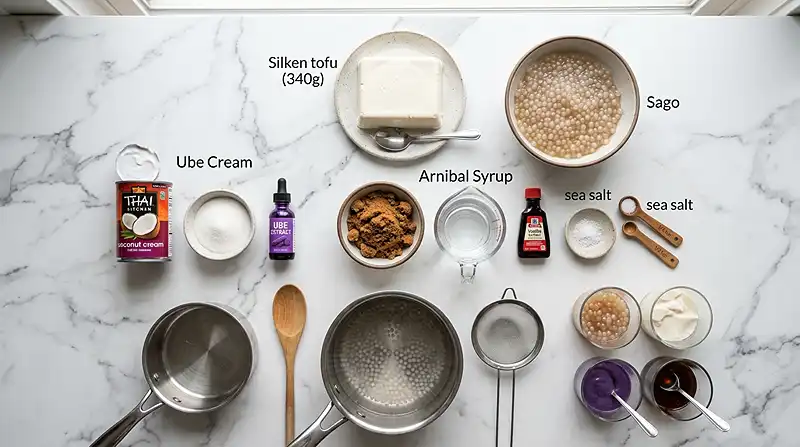
Servings: 4
For the Base
- 14 oz silken tofu
- 2 cups cooked sago pearls, rinsed with cold water
For the Arnibal Syrup
- ½ cup brown sugar
- ¾ cup water
- 1 tsp vanilla extract
- 1 pinch salt
For the Ube Cream
- 1 cup heavy cream (or full-fat coconut cream for a dairy-free version)
- 2 tbsp white sugar or preferred sweetener
- 1 tsp ube extract with color
A quick note on the ube extract: check the label closely, since some brands process it in facilities that also handle wheat-based flavorings. When in doubt, choose a brand that’s certified gluten-free.
Instructions
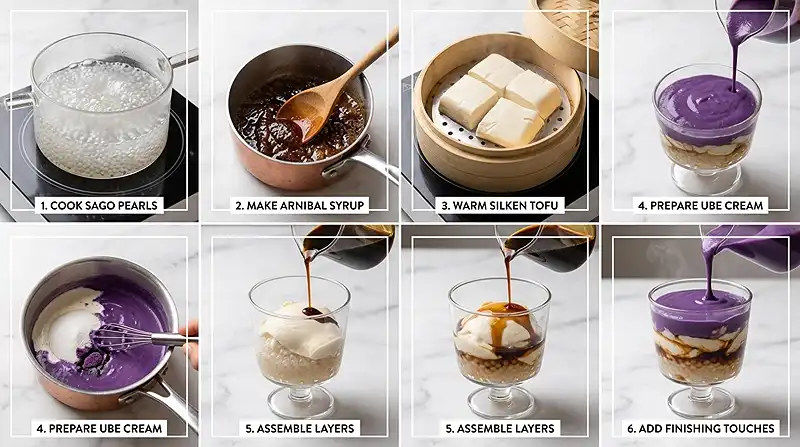
1. Cook the sago pearls. Bring a pot of water to a rolling boil, then cook the sago pearls according to package directions until they’re soft, translucent, and chewy, about 15 to 20 minutes.
Drain the pearls and rinse them thoroughly under cold water to stop the cooking process immediately. Set them aside while you build the rest of the dessert.
2. Make the arnibal syrup. In a small saucepan, combine the brown sugar and water. Simmer over medium heat for 5 to 7 minutes, stirring occasionally, until the sugar fully dissolves and the syrup slightly thickens and turns glossy.
Stir in the vanilla extract and pinch of salt, then remove the pan from heat and keep the syrup warm. Pro tip: step away from the stove for even thirty seconds during this stage and you risk a burnt, bitter batch, so stay close and stir often.
3. Warm the silken tofu. Gently warm the tofu by steaming it for a few minutes, or by microwaving it in 30-second intervals until warm throughout. Avoid overheating, since too much direct heat breaks down the tofu’s delicate structure and leaves it watery instead of smooth.
4. Prepare the ube cream. In a small saucepan over low heat, combine the heavy cream (or coconut cream), white sugar, and ube extract. Stir continuously until the mixture turns smooth, creamy, and an even, vibrant purple, with a faint nutty aroma rising from the warming cream.
Warm the cream gently but never let it come to a boil, or it can separate and turn grainy instead of silky.
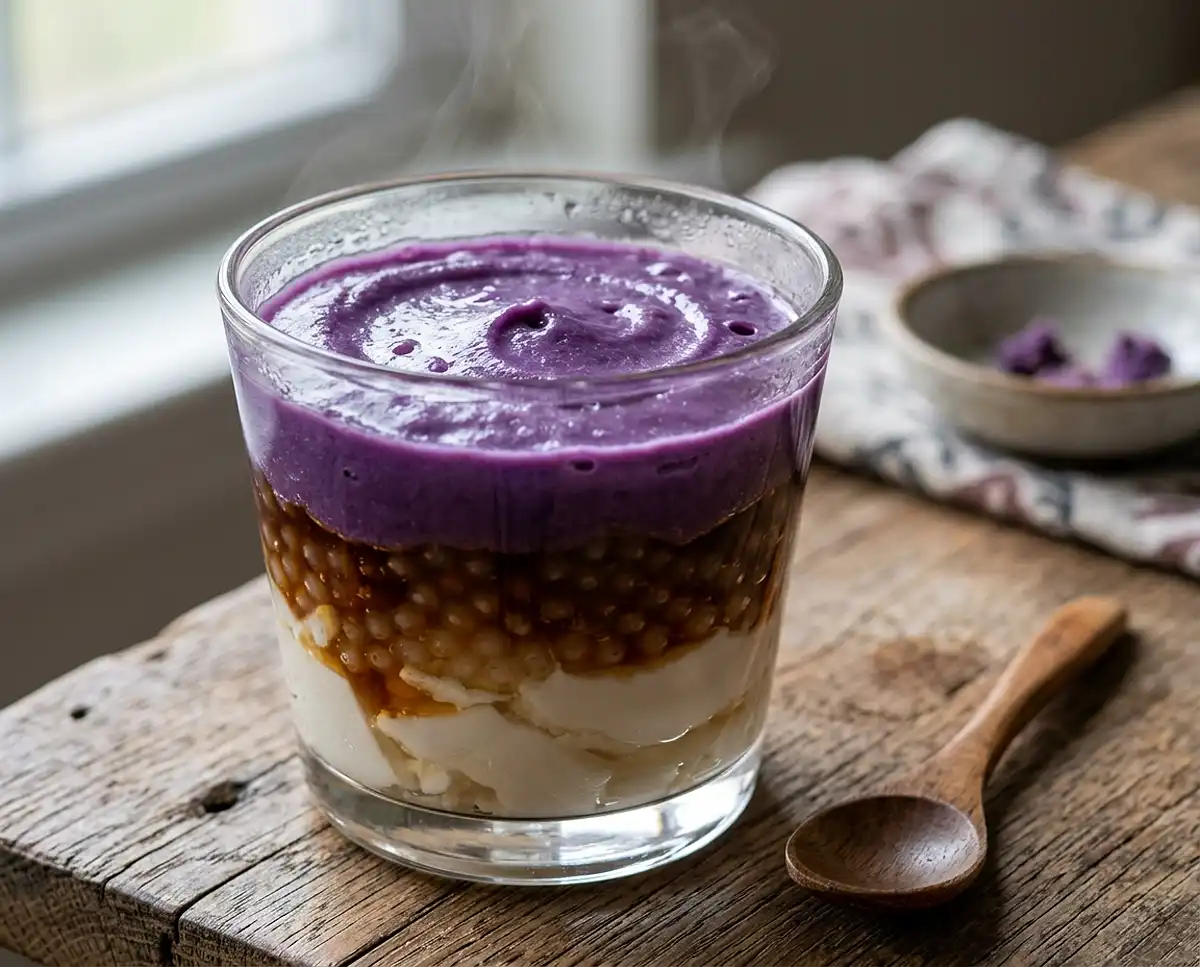
5. Assemble the ube taho. Spoon a layer of cooked sago pearls into serving glasses or bowls, then carefully add the warm silken tofu on top. Drizzle generously with the warm arnibal syrup, and repeat with another layer of sago and tofu if you’d like a taller glass.
Finish each glass with a generous pour of warm ube cream over the top, letting it pool in soft, swirling ribbons of purple against the white tofu.
6. Serve. Serve immediately while everything is still warm, for the most authentic taho experience straight from the glass.
Make It Your Own
If you need a fully dairy-free version, swap the heavy cream for full-fat coconut cream in equal amounts. It adds a subtle coconut note that pairs beautifully with the ube, and it whips up just as smooth when stirred gently over low heat.
Prefer a lighter sweetener than brown sugar? Coconut sugar works as a near one-to-one swap in the arnibal syrup, though it does shift the flavor slightly more caramel-forward and a touch less molasses-y.
Man, oh man, if you happen to have fresh ube on hand instead of extract, you can absolutely fold in a few tablespoons of mashed steamed ube for extra body. Just know the color will be more muted than what bottled ube extract delivers, since the extract is formulated for that signature vivid purple.
If sago pearls aren’t available locally, small tapioca pearls make a reasonable substitute. They cook similarly and offer the same chewy bite, just check the package since cook times can vary by brand.
Common Problems & Solutions
Problem: my tofu turned watery and grainy instead of silky. Solution: lower your heat and warm it in shorter bursts. This usually happens when the tofu is heated too quickly or for too long, which forces the water out of the protein structure and leaves behind a curdled texture.
Problem: my arnibal syrup crystallized or seized up. Solution: add a splash of warm water and gently reheat while stirring. Sugar crystallizes when it cools too fast or when undissolved sugar granules cling to the side of the pan, so stirring constantly during the simmer prevents this from the start.
Problem: my ube cream looks dull instead of vibrant purple. Solution: whisk in a touch more ube extract a half teaspoon at a time. Well, the color intensity depends heavily on the brand of extract you’re using, since some are far more concentrated than others.
Problem: the sago pearls turned mushy and lost their chew. Solution: pull them earlier next time, since overcooking is almost always the culprit. The cold-water rinse is essential too, because it halts the cooking process the instant the pearls hit the colander.
Storage & Meal Prep
| Method | Duration | Notes |
|---|---|---|
| Counter | 2-3 days | Airtight container |
| Fridge | 5-7 days | Bring to room temp |
| Freezer | 2-3 months | Wrap individually |
Because this dessert is mostly soft tofu and a delicate cream, it’s best stored with the components separate when possible. Keep the sago, syrup, and ube cream in their own containers, then reheat each gently on the stovetop or in short microwave bursts before assembling.
Leftover arnibal syrup makes a lovely drizzle over pancakes or oatmeal, so don’t let any go to waste if you have extra.
Gluten-Free Ube Taho Recipe FAQs
Can I make gluten-free ube taho ahead of time?
Yes. Prepare the sago, arnibal syrup, and ube cream up to two days ahead and store them separately in the fridge. Gently rewarm each component before assembling and serving.
How do I know my ube extract is gluten-free?
Check the ingredient label and look for a certified gluten-free seal, since some extract brands are processed in facilities that also handle wheat-based flavorings. When in doubt, contact the manufacturer directly to confirm.
What’s the best way to reheat leftover taho?
Reheat each component separately in short microwave bursts or over low stovetop heat, then reassemble in the glass. Reheating it all together tends to make the tofu break down further than necessary.
Why did my ube cream taste grainy instead of smooth?
Grainy ube cream usually means the mixture boiled instead of simmering gently. Keep the heat low and stir constantly while the cream warms to keep the texture silky.
Can I use a different starch instead of sago pearls?
Small tapioca pearls work well as a substitute and offer a similar chewy bite. Just follow the package cook times, since they can vary from sago.
Serving Suggestions
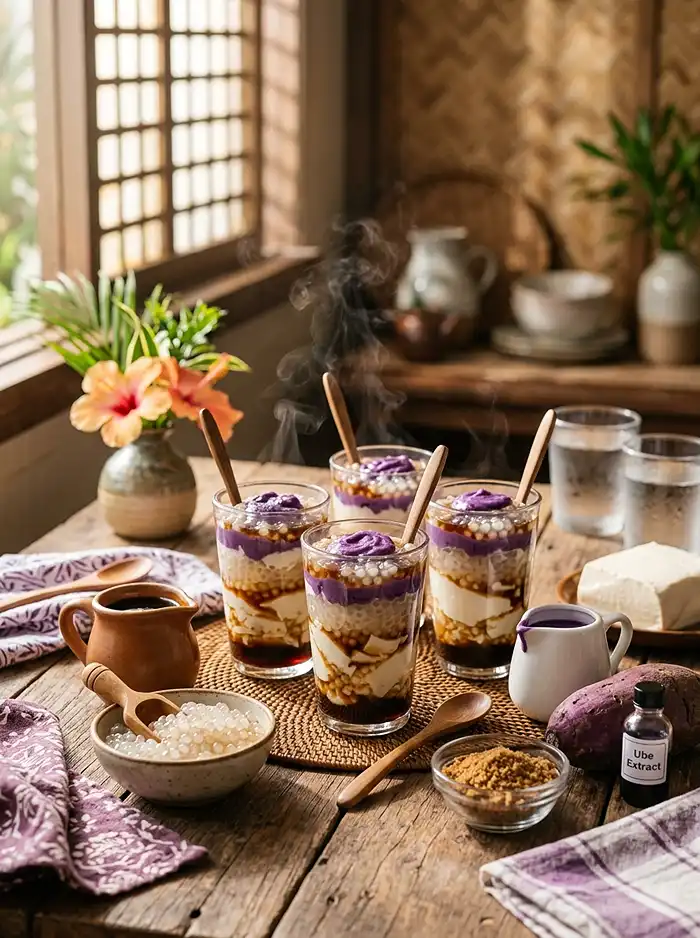
This warm, purple dessert is lovely served on its own in small glasses for portion control, or ladled into bowls for a heartier treat. It’s become our go-to cooling dessert for backyard Fourth of July cookouts, since it’s just as good chilled as it is warm.
If you’re building out a full Filipino-inspired dessert spread, this pairs beautifully alongside gluten-free ube banana pudding for double the purple, double the fun. For a heartier savory course before dessert, our gluten-free chicken tender casserole rounds out a comforting weeknight spread.
And if you’re after a dairy-free butter swap for other recipes in your rotation, check out our gluten-free oat butter guide or the homemade vegan butter recipe for more dairy-free kitchen staples.
Give It a Try
This gluten-free ube taho recipe is forgiving, fast, and genuinely fun to make with kids who love watching that purple cream swirl into the glass. Give it a try this weekend, snap a photo for Pinterest, and let me know in the comments if you tried the coconut cream swap.
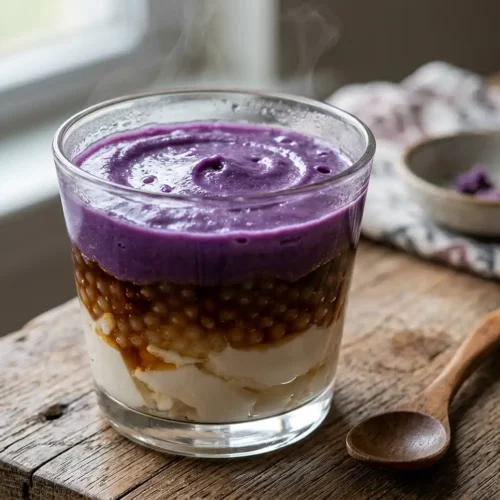
Gluten-Free Ube Taho
Equipment
- Pot
- Small saucepan
- Colander
- Microwave or steamer
- Mixing spoon
- Serving glasses or bowls
Ingredients
For the Base
- 14 oz silken tofu
- 2 cups cooked sago pearls rinsed with cold water
For the Arnibal Syrup
- ½ cup brown sugar
- ¾ cup water
- 1 tsp vanilla extract
- 1 pinch salt
For the Ube Cream
- 1 cup heavy cream or full-fat coconut cream for dairy-free version
- 2 tbsp white sugar or preferred sweetener
- 1 tsp ube extract with color
Instructions
- Bring a pot of water to a rolling boil and cook the sago pearls according to package directions until soft, translucent, and chewy, about 15 to 20 minutes. Drain and rinse thoroughly under cold water, then set aside.
- In a small saucepan, combine the brown sugar and water. Simmer over medium heat for 5 to 7 minutes, stirring occasionally, until the sugar dissolves and the syrup thickens slightly. Stir in the vanilla extract and salt, then remove from heat and keep warm.
- Gently warm the silken tofu by steaming for a few minutes or microwaving in 30-second intervals until heated through. Avoid overheating.
- In a small saucepan over low heat, combine the heavy cream or coconut cream, sugar, and ube extract. Stir continuously until smooth, creamy, and evenly purple. Do not allow the mixture to boil.
- Place a layer of cooked sago pearls into serving glasses or bowls. Add warm silken tofu on top, then drizzle generously with warm arnibal syrup. Repeat layers if desired.
- Finish with a generous pour of warm ube cream over the top and serve immediately while warm.