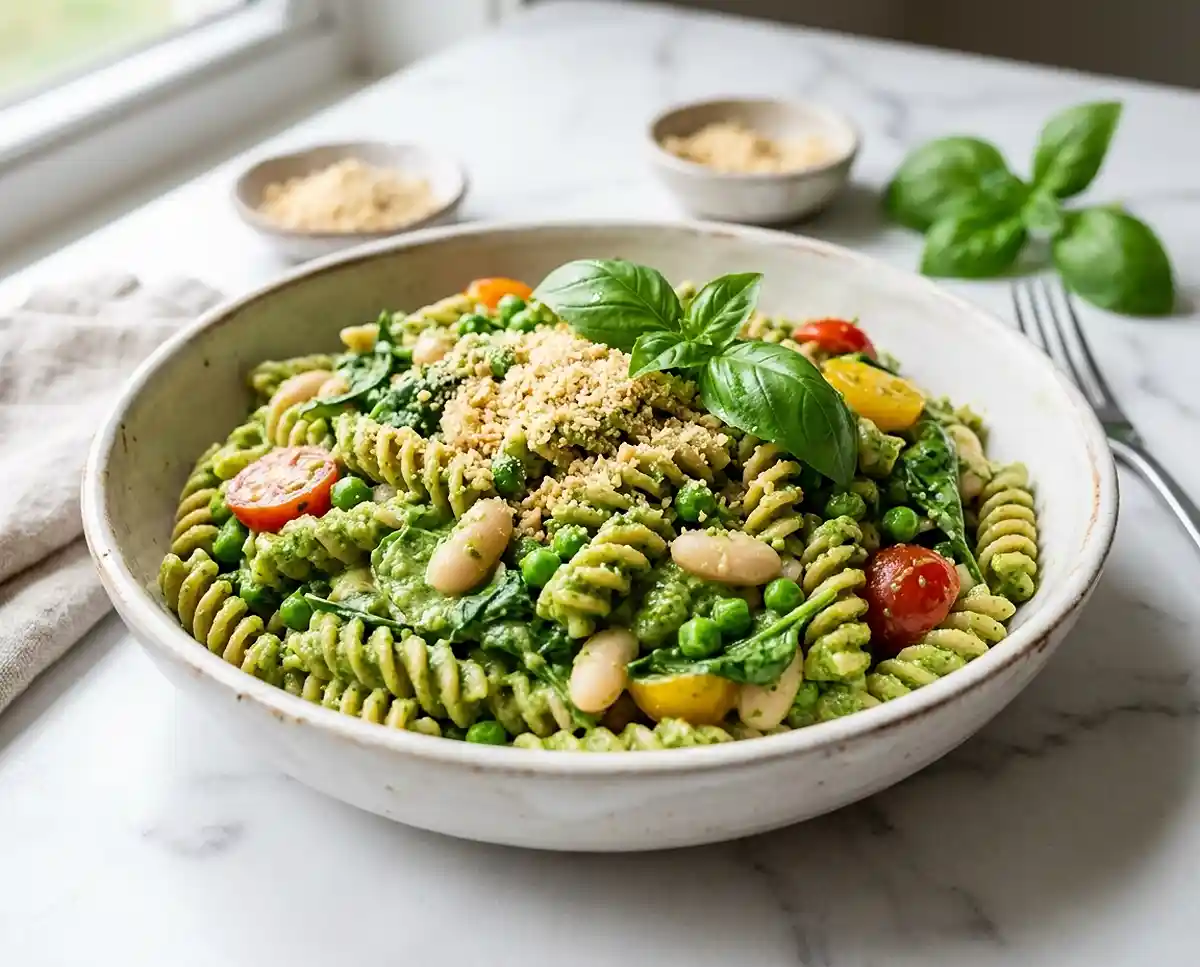
Gluten-Free Pesto White Bean Pasta Salad
This Gluten-Free Pesto White Bean Pasta Salad is creamy, plant-based, and ready in 30 minutes — perfect for meal prep, cold lunches, and summer gatherings.
I’ll be honest — the first time I tried blending white beans into a pesto sauce, I was genuinely unsure it would work. I was expecting something gluey and flat. What came out of the blender was velvety, bright green, and so deeply savory that I stood over the pot eating it straight before it ever hit the pasta.
That batch became the foundation for this Gluten-Free Pesto White Bean Pasta Salad, and it’s been one of my most-requested recipes ever since. So — when was the last time a plant-based dish surprised you into going back for thirds?
Well, this one just might do it. It’s the kind of recipe that looks complicated but comes together in about 30 minutes, with most of the heavy lifting handled by a blender.
Table of Contents
Why You’ll Love This Pesto White Bean Pasta Salad
- Completely dairy-free and easily vegan — the Brazil nut parmesan tastes remarkably close to the real thing
- The white bean base makes the sauce thick and protein-rich without any cream or cheese
- Works as a hot pasta dish or a cold lunch recipe straight from the fridge the next day
- Naturally gluten-free when made with your favorite certified GF rotini — no specialty flour or gums needed
The Secret to Perfect Gluten-Free Pesto White Bean Pasta Salad
- Toasting the pine nuts first is non-negotiable — 2 to 3 minutes in a dry pan unlocks their natural oils and adds a warm, nutty depth that raw pine nuts simply can’t deliver
- Sautéing the onion and garlic before blending removes their sharpness and builds a mellow, sweet base that balances the brightness of the lemon and basil
- Reserving pasta water before draining is the professional trick that keeps the sauce silky — the starch in that water helps the pesto cling to every piece of rotini instead of pooling at the bottom
- Adding spinach and peas after blending (not into the blender) preserves their texture and color, giving the finished dish contrast and freshness in every bite
Ingredients
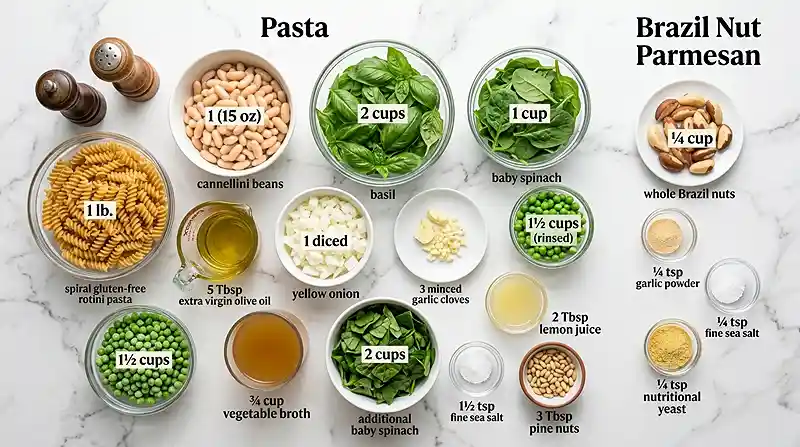
Creamy White Bean Pesto Pasta
- 3 tablespoons pine nuts
- 5 tablespoons extra virgin olive oil, divided use
- 1 medium yellow onion, diced (about 1½ cups)
- 3 cloves garlic, minced
- ¾ cup vegetable broth
- 1 (15 oz / 398 ml) can cannellini beans, rinsed (any white bean works — navy or great northern are fine substitutes)
- 2 cups packed basil (2.8 oz / 80 g)
- 1 cup packed baby spinach (blended into the sauce)
- 2 tablespoons lemon juice
- 1½ teaspoons fine sea salt
- 1 lb dried rotini pasta (use certified gluten-free rotini — Jovial and Tinkyada both hold up well)
- 1 cup chopped baby spinach (stirred in at the end)
- 1½ cups frozen green peas, rinsed
- Salt and black pepper, to taste
Brazil Nut Parmesan
- ¼ cup Brazil nuts
- ¼ tsp garlic powder
- ¼ tsp fine sea salt
- ¼ tsp nutritional yeast
Step-by-Step Instructions
Make the Brazil Nut Parmesan First
- Preheat your oven to 350°F (177°C). Scatter the Brazil nuts in a single layer on a baking sheet. This ensures even toasting — crowding the pan traps steam and prevents browning.
- Bake until golden, about 10 minutes, shaking the pan halfway through. Transfer to a plate to cool completely before the next step.
- Peel the nuts. Using a small knife, flake off as much of the dark skin as you can. It doesn’t need to be perfect — a little skin left on won’t affect the flavor.
- Process until sandy. Add the cooled nuts, garlic powder, fine sea salt, and nutritional yeast to a food processor or blender. Pulse until the mixture resembles coarse sand. Refrigerate any extra — it keeps well for up to two weeks.
Make the Creamy White Bean Pesto
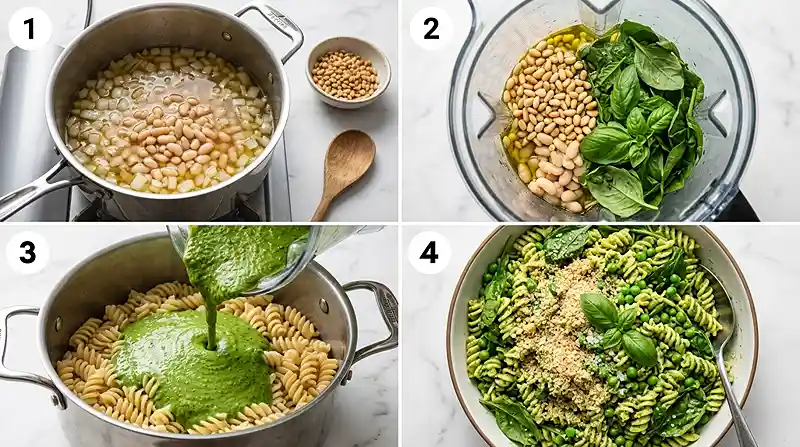
- Toast the pine nuts. Add pine nuts to a large saucepan over medium heat. Stir frequently for 2 to 3 minutes until golden brown and fragrant — they go from golden to burnt quickly, so don’t walk away. Set aside to cool.
- Build the sauce base. Return the pan to the stove and heat 1 tablespoon of olive oil over medium-high heat. Add the diced onion and sauté until translucent, about 3 minutes. Add the garlic and sauté until fragrant, about 1 minute more.
- Simmer the beans. Pour in the vegetable broth and rinsed cannellini beans. Stir to scrape up any brown bits from the bottom of the pan — that’s flavor. Cover, reduce heat to medium-low, and simmer for 5 to 10 minutes until the liquid is absorbed.
- Cook the pasta al dente. While the beans simmer, bring a large pot of well-salted water to a boil. Cook your gluten-free rotini according to package directions for al dente. Before draining, scoop out 1 cup of starchy pasta water and set it aside — this is your sauce insurance.
- Blend the sauce. Add the toasted pine nuts, basil, 1 cup packed baby spinach, remaining 4 tablespoons olive oil, lemon juice, salt, and the full onion-bean mixture to a blender. Blend until smooth and creamy. A few small flecks of basil in the sauce are completely normal and fine.
- Combine and finish. Return the drained noodles to the pot over low heat. Pour in the blended sauce and stir until every piece of rotini is evenly coated — the sauce should cling like a light, creamy coating rather than pool at the bottom. Stir in the chopped spinach and frozen peas.
- Adjust and serve. If the sauce feels too thick, add pasta water a splash at a time until it reaches a silky, spoonable consistency. Cook just until the peas are warmed through. Season with salt and black pepper, then serve hot with Brazil nut parmesan scattered generously on top.
Make It Your Own
Swap the pine nuts for toasted walnuts or cashews if cost is a concern — pine nuts are genuinely expensive, and both alternatives bring their own richness to the sauce. Walnuts add a slightly earthier flavor; cashews keep it mild and buttery.
For a gluten free pasta salad meal prep version, let the pasta cool completely before storing. This dish holds up beautifully cold — the sauce actually thickens overnight, which makes it extra coating and satisfying straight from the fridge the next day.
You know, adding sun-dried tomatoes or roasted red peppers to the finished bowl brings a concentrated sweetness that plays beautifully against the herby pesto. It’s a small addition that makes the whole dish feel more layered and complex.
If you want extra protein, stir in a drained can of chickpeas along with the peas at the end. They add a firm, slightly nutty texture that complements the creamy sauce without changing the flavor profile.
The Brazil nut parmesan can be replaced with a simple blend of toasted sunflower seeds, nutritional yeast, and garlic powder if you can’t find Brazil nuts. It won’t be identical, but it’s a completely satisfying pesto white bean pasta salad topper with a similar savory, cheesy quality.
Common Problems and Solutions
Problem: Sauce is too thick to coat the pasta evenly. Add reserved pasta water, one tablespoon at a time, stirring between additions. The starch in the pasta water emulsifies with the sauce and creates a smooth, clinging consistency — plain tap water won’t do the same job.
Problem: Pesto tastes flat or dull. This almost always means the dish needs more lemon juice or salt. Add lemon in small increments — half a teaspoon at a time — tasting as you go. Acid brightens the entire sauce and makes the basil flavor pop.
Problem: Gluten-free pasta turned mushy. GF pasta overcooks faster than wheat pasta, so pull it 1 to 2 minutes before the package time and taste it. It should have a slight bite in the center. Rinsing it briefly under cold water after draining stops the cooking immediately and helps for cold versions of this dish.
Man, oh man — I cannot count the number of batches I ruined before I learned that gluten-free rotini needs to be watched like a hawk in the last two minutes of cooking. A timer and a fork are your best friends here.
According to nutritional research from Harvard Health on the benefits of legumes, white beans like cannellini are an outstanding source of plant-based protein and fiber — making this pasta significantly more filling than a standard pesto recipe.
Storage and Meal Prep
This dish is a standout for gluten free pasta salad meal prep — it stores well and tastes even better the next day as the flavors deepen and the sauce settles into the pasta.
| Method | Duration | Notes |
|---|---|---|
| Counter | Up to 2 hours | Do not leave out longer — contains cooked beans |
| Fridge | 4–5 days | Airtight container; stir before serving |
| Freezer | Up to 2 months | Freeze sauce separately for best texture |
To reheat, warm gently on the stovetop over low heat with a splash of water or broth, stirring to loosen the sauce. Microwaving works too — cover loosely and heat in 60-second intervals, stirring between each.
Leftover pasta works brilliantly as a cold lunch recipe — just let it come to room temperature for 10 minutes before eating, or eat it straight cold. The sauce firms up overnight into something almost like a creamy pasta salad dressing.
Serving Suggestions
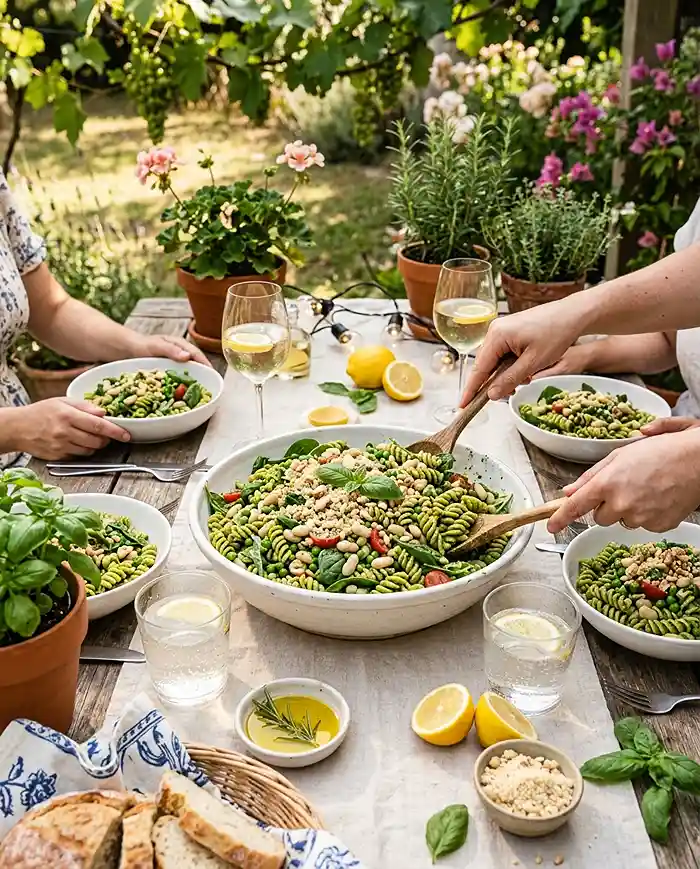
This pasta is a natural centerpiece for an Easter or spring family dinner — the vibrant green color looks stunning on the table and it feeds a crowd without much fuss. Pair it with a simple arugula salad dressed with lemon and olive oil for contrast.
It also pairs well with roasted cherry tomatoes on the side, whose natural acidity balances the richness of the white bean sauce beautifully.
If you love plant-forward bowl meals, our gluten-free Greek meatball orzo lunch bowls bring the same hearty, satisfying energy with a Mediterranean spin. For something completely different on your weekly rotation, the high-protein gluten-free egg roll beef bowls are bold, filling, and endlessly craveable.
And if you want another protein-packed lunch option, our high-protein gluten-free chicken Caesar rice bowls are a crowd-pleaser that comes together just as quickly.
Your Questions Answered
Can pesto pasta be gluten-free?
Yes, pesto pasta is naturally gluten-free as long as you use certified gluten-free pasta. Traditional pesto contains basil, olive oil, nuts, garlic, and cheese — none of which contain gluten. Always verify your pasta brand is processed in a dedicated gluten-free facility to avoid cross-contamination.
Can you make pesto with white beans?
Absolutely — white beans make a creamy, protein-rich pesto base that blends smoothly and adds body without any dairy. Cannellini beans have a mild flavor that doesn’t overpower the basil or lemon. Combined with pine nuts and olive oil, the result is richer and more filling than classic pesto.
Can I use gluten-free pasta to make pasta salad?
Yes, and it works very well when you cook it al dente and rinse briefly under cold water after draining to stop the cooking process. Gluten-free pasta can become sticky if overcooked, but handled correctly it holds its shape in both warm and cold preparations.
Do pesto and beans go together?
They do — the herby brightness of pesto balances the earthy richness of white beans, and together they create a sauce that is both protein-dense and deeply flavorful. It is a pairing rooted in Ligurian Italian cooking, where beans and pesto frequently appear together in soups and pasta dishes.
Which is better — brown beans or white beans?
For a creamy blended sauce like this one, white beans like cannellini are the better choice — their flavor is mild and their texture blends silky smooth. Brown beans (like kidney or pinto) have a denser, earthier profile that can make blended sauces taste heavier. Both are nutritionally excellent, but white beans suit this recipe best.
Final Thoughts
This Gluten-Free Pesto White Bean Pasta Salad proves that dairy-free and gluten-free cooking doesn’t mean sacrificing richness or depth.
The white bean sauce is genuinely creamy without a drop of cream. The Brazil nut parmesan is genuinely cheesy without a gram of cheese. And the whole thing comes together in about 30 minutes.
Give it a try and let me know what you think — did you make the Brazil nut parmesan, or use a shortcut topping? Drop your version in the comments. And if this earned a spot in your meal prep lineup, sharing it on Pinterest helps other gluten-free cooks find it too.
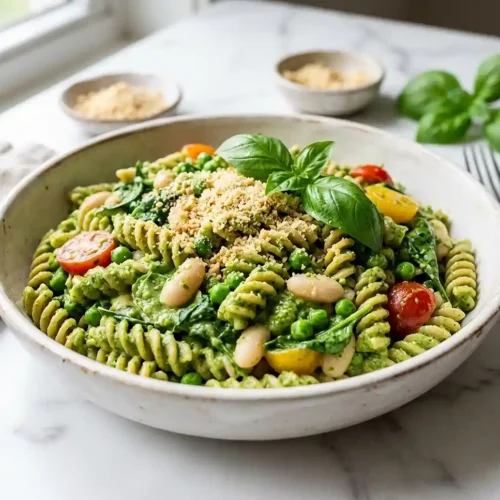
Gluten-Free Pesto White Bean Pasta Salad
Equipment
- Large saucepan or pot
- Large pot for pasta
- Blender
- Food processor
- Baking sheet
Ingredients
Creamy White Bean Pesto Pasta
- 3 tbsp pine nuts
- 5 tbsp extra virgin olive oil divided use
- 1 medium yellow onion diced, about 1½ cups
- 3 cloves garlic minced
- 0.75 cup vegetable broth
- 1 can cannellini beans 15 oz / 398 ml, rinsed
- 2 cup packed basil 2.8 oz / 80 g
- 1 cup packed baby spinach blended into sauce
- 2 tbsp lemon juice
- 1.5 tsp fine sea salt
- 1 lb dried rotini pasta gluten-free certified
- 1 cup chopped baby spinach stirred in at the end
- 1.5 cup frozen green peas rinsed
- salt and black pepper to taste
Brazil Nut Parmesan
- 0.25 cup Brazil nuts
- 0.25 tsp garlic powder
- 0.25 tsp fine sea salt
- 0.25 tsp nutritional yeast
Instructions
- Preheat oven to 350°F (177°C). Scatter Brazil nuts on a baking sheet and bake until golden, about 10 minutes, shaking the pan halfway through. Transfer to a plate to cool, then flake off as much skin as possible using a small knife.
- Add the cooled Brazil nuts, garlic powder, fine sea salt, and nutritional yeast to a food processor or blender. Process until the mixture looks sandy. Set aside and refrigerate any extra.
- Add pine nuts to a large saucepan over medium heat. Toast, stirring frequently, until golden brown, 2 to 3 minutes. Set aside to cool.
- Return the saucepan to the stove and heat 1 tablespoon of olive oil over medium-high heat. Add the diced onion and sauté until translucent, about 3 minutes. Add garlic and sauté until fragrant, about 1 minute.
- Pour in the vegetable broth and rinsed cannellini beans. Stir to incorporate any brown bits from the bottom of the pan. Cover, reduce heat to medium-low, and simmer until liquid has been absorbed, 5 to 10 minutes.
- Bring a large pot of salted water to a boil. Cook the gluten-free rotini al dente according to package directions. Before draining, reserve 1 cup of pasta water, then drain.
- Add the toasted pine nuts, basil, 1 cup packed baby spinach, remaining 4 tablespoons olive oil, lemon juice, salt, and the full onion-bean mixture to a blender. Blend until smooth and creamy. Small flecks of basil are fine.
- Return the drained noodles to the pot over low heat. Pour in the blended sauce and stir until evenly coated. Stir in the chopped spinach and rinsed green peas. Add pasta water a splash at a time if needed to thin the sauce.
- Cook until peas are warmed through. Season with salt and black pepper to taste. Serve hot with Brazil nut parmesan scattered on top.