White Clover Tea Recipe
Learn how to make white clover tea at home with fresh blossoms, step-by-step instructions, optional add-ins, and storage tips for a soothing herbal drink.
I stumbled onto my first cup of gluten-free white clover tea recipe by accident — the best kind of discovery. I was walking through my backyard one morning before Memorial Day, and my neighbor called over the fence asking if I’d ever brewed tea from the clover blooming along the fence line.
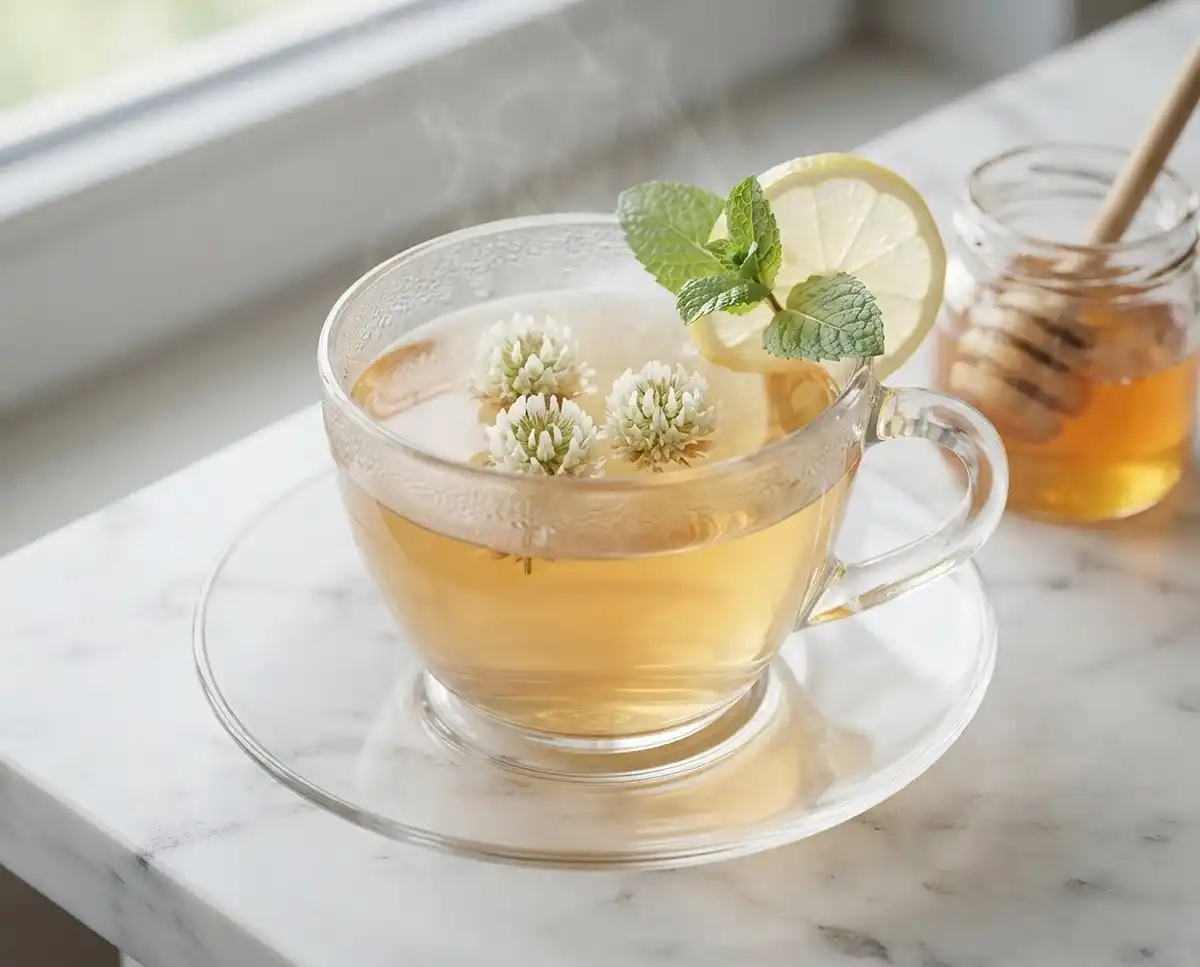
I hadn’t. But twenty minutes later, I was standing in my kitchen pouring hot water over a handful of fresh blossoms, and what came out was one of the gentlest, most subtly floral teas I’d ever tasted. It smelled faintly of honey before I’d added any.
Have you ever thought about making a healing herbal tea from something growing right outside your door? This recipe does exactly that — with zero special equipment, no gluten concerns whatsoever, and total control over every ingredient that goes in your cup.
Why You’ll Love This White Clover Tea
- Naturally caffeine-free and gluten-free — white clover blossoms are pure whole-flower botanicals with no additives, no grains, and no processing risk.
- Ready in under 15 minutes — harvest, rinse, steep, and sip. There’s no elaborate prep, no special tools, and no cooking involved.
- Customizable from mild to complex — drink it plain for a clean floral taste, or layer in mint, lemon balm, chamomile, or honey for a more nuanced herbal blend.
- Forageable and practically free — if you have an untreated lawn or a local park with clover, you have everything you need to make this tea today.
The Secret to Perfect Gluten-Free White Clover Tea
- Source matters more than technique. Only harvest blossoms from areas you know are free of pesticides, herbicides, and chemical fertilizers. If you’re not certain about a patch of clover, don’t use it. Roadsides and heavily maintained lawns are off-limits — look for wild, untreated areas or grow your own.
- Use water just below boiling. Pouring fully boiling water (212°F) over delicate blossoms can scorch the petals and pull out bitter compounds. Target around 200°F / 93°C — just when the bubbles start rising steadily but haven’t broken into a full rolling boil.
- Cover while steeping. Covering your mug or teapot traps the aromatic volatile oils that give white clover tea its subtle honey-floral character. Without a cover, those compounds escape with the steam and your tea loses its most distinctive quality.
- Steep to your preference, not by the clock. Five minutes gives a lighter, more delicate cup. Ten minutes produces a deeper, earthier brew. Taste at five minutes and decide from there — you can always steep longer, but you can’t un-steep.
Table of Contents
Ingredients
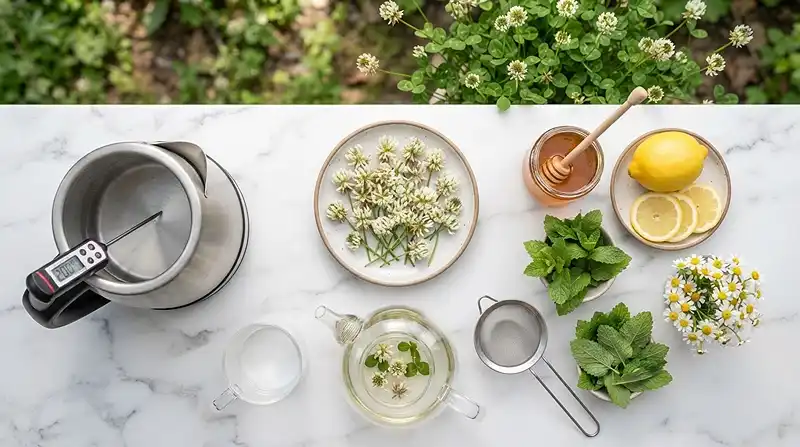
This recipe makes 1 serving. Scale up by doubling or tripling the blossoms and water proportionally.
White Clover Tea
| Ingredient | Amount | Notes |
|---|---|---|
| Fresh white clover blossoms | 15–20 blossoms, fully open | Pesticide-free only; select healthy, undamaged flowers |
| Hot water | 2 cups | Just below boiling — about 200°F / 93°C |
Optional Add-Ins
| Add-In | Amount | Notes |
|---|---|---|
| Honey | To taste | Enhances the natural floral sweetness of the blossoms |
| Fresh lemon juice | A squeeze | Adds brightness and a mild citrus note |
| Fresh mint leaves | A few leaves | Steep alongside the blossoms for a cool herbal layer |
| Lemon balm leaves | A few leaves | Gentle and calming; pairs naturally with clover |
| Chamomile flowers | A small handful | Deepens the floral profile for a more complex blend |
Instructions
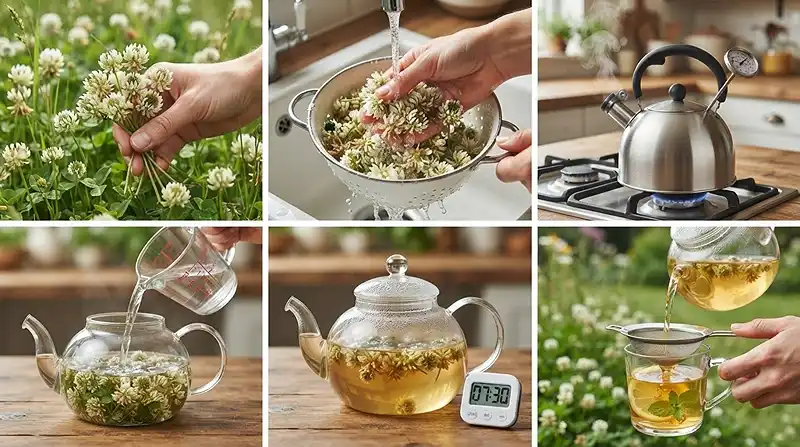
- Harvest the blossoms. Gather 15–20 fresh white clover blossoms from a clean area free of pesticides, herbicides, or chemical fertilizers. Select only fully open, healthy white flowers — avoid any that look wilted, browning, or past their peak.
- Rinse thoroughly. Place the blossoms in a colander or hold them gently under cool running water to remove any dirt, dust, or small insects. Handle them gently to keep the petals intact.
- Heat the water. Bring 2 cups of water to just below a full boil — around 200°F / 93°C. Look for steady rising bubbles that haven’t broken into a full rolling boil. A kitchen thermometer makes this easy if you have one.
- Add blossoms to your vessel. Place the rinsed blossoms into a teapot or a heatproof mug. If you’re adding mint leaves, lemon balm, or chamomile, add them here as well so everything steeps together.
- Pour and cover. Pour the hot water directly over the blossoms. Cover the mug or teapot immediately with a lid, small plate, or saucer to trap the aromatic oils.
- Steep for 5–10 minutes. Let the tea steep undisturbed. Taste at 5 minutes for a lighter cup, or continue to 10 minutes for a fuller, more pronounced herbal flavor.
- Strain the blossoms. Pour the tea through a fine-mesh strainer into a clean mug, leaving all the blossoms and any herb leaves behind.
- Sweeten and brighten. Stir in honey to taste if desired, or add a squeeze of fresh lemon juice. Both are optional — the tea is genuinely pleasant without either.
- Serve warm or over ice. Enjoy immediately as a warm cup, or let the tea cool completely and pour over a glass of ice for an easy homemade white clover herbal iced tea.
Pro Tip: If you’re making iced tea, brew it slightly stronger — steep for the full 10 minutes — since ice will dilute the flavor once it melts.
Make It Your Own
Well… white clover tea is one of the most forgiving herbal teas you can make because the blossom flavor is gentle enough to blend with almost anything. Start with the base recipe, then experiment from there.
Add Chamomile for a Deeper Floral Blend
Steep a small handful of dried or fresh chamomile flowers alongside the clover blossoms. Chamomile adds a slightly apple-like warmth that rounds out the clover’s honey notes beautifully. This combination makes a particularly soothing evening tea — the kind you make when you need to wind down before bed.
Muddle in Fresh Mint
Tear a few fresh mint leaves and add them to your mug before pouring in the hot water. The mint infuses quickly and gives the tea a bright, cooling finish that’s especially good over ice. This is one of the most popular variations for making easy homemade white clover herbal iced tea in summer.
Stir in Lemon Balm for a Calming Cup
Lemon balm is a mild, citrusy herb from the mint family, and it pairs with white clover the way a quiet afternoon pairs with a good book. Add a few fresh leaves alongside the blossoms and let them steep together. According to Healthline’s guide to lemon balm benefits, this herb has been used for centuries as a natural calming botanical — a fitting companion to clover’s already gentle character.
Make a Cold-Brew Version
Place the blossoms and any add-ins in a jar of cold water and refrigerate for 6–8 hours. Cold-brewing extracts the flavors more slowly and produces an even smoother, more delicate tea with less bitterness risk. Pour over ice and add lemon — it tastes like something you’d pay too much for at a café.
Common Problems and Solutions
My Tea Tastes Bitter or Grassy
Solution: Your water was too hot or your steep time was too long. Fully boiling water and extended steeping pull harsh compounds from delicate blossoms. Next time, target 200°F and taste the tea at 5 minutes. For this batch, stir in a small amount of honey — it masks bitterness without overpowering the floral notes.
The Tea Has Almost No Flavor
Solution: Increase your blossom count or steep time. Using fewer than 15 blossoms in 2 cups of water often produces a tea that’s too light to taste. You know… this is one of those situations where more really is more. Try 20 blossoms, cover your mug properly while steeping, and go the full 10 minutes.
There Are Tiny Insects or Debris in My Strained Tea
Solution: Rinse the blossoms more carefully and use a finer strainer. White clover blossoms are made up of dozens of tiny florets, and small insects often hide inside them. Soak the blossoms in a bowl of cool water for a minute or two before rinsing — most debris will float to the surface. A fine-mesh strainer or a strainer lined with cheesecloth catches anything the rinse misses.
I’m Not Sure If My Clover Is Safe to Use
Solution: When in doubt, leave it out. Man, oh man… this is the one non-negotiable rule of foraging. Only harvest from areas you are certain have never been treated with chemicals. The Wild Edible foraging guide for white clover outlines exactly what to look for when identifying safe, harvestable blossoms — a useful reference if you’re new to foraging.
Storage and Meal Prep
| Method | Duration | Notes |
|---|---|---|
| Counter | Up to 4 hours | Keep covered; best served fresh and warm |
| Fridge | Up to 2 days | Store in a sealed jar; serve over ice or reheat gently |
| Freezer | Up to 1 month | Freeze in ice cube trays; add cubes to cold water for instant iced tea |
To reheat refrigerated tea, warm it gently in a small saucepan over low heat — don’t microwave it too aggressively, as high heat can flatten the floral notes. Stir in a fresh squeeze of lemon after reheating to revive the brightness.
The freezer cube method is genuinely clever for batch prep. Brew a double batch, freeze it in trays, and you have instant herbal iced tea all week with zero extra effort.
White Clover Tea Recipe FAQs
Can I use dried white clover blossoms instead of fresh?
Yes, dried white clover blossoms work well for this tea. Use about 1 to 2 teaspoons of dried blossoms per cup of water since drying concentrates the flavor. Steep for the same 5 to 10 minutes and strain well, as dried petals can break apart more easily than fresh ones.
How do I know if white clover is safe to eat?
Only use white clover blossoms from areas you are certain have never been treated with pesticides, herbicides, or chemical fertilizers. Avoid harvesting near roadsides, golf courses, or heavily maintained lawns. When in doubt, skip that patch and find a cleaner source — no cup of tea is worth the risk of chemical exposure.
What does white clover tea taste like?
White clover tea has a mild, lightly floral flavor with a subtle natural sweetness that hints at honey even before any sweetener is added. It is much gentler than chamomile and far less grassy than green tea. The flavor is delicate enough to enjoy plain but versatile enough to blend with mint, lemon, or other herbs.
Why did my white clover tea turn an unusual color?
The color of white clover tea ranges from very pale yellow to a soft golden hue depending on steeping time and blossom freshness. A greenish tint can occur if leaves were accidentally steeped along with the blossoms. A darker brown color usually means the tea was steeped too long or the water was too hot. All of these are safe to drink — color is mostly a visual indicator of strength.
Can I mix white clover tea with other herbal teas?
Absolutely. White clover blends well with chamomile, mint, lemon balm, and even lavender. Because the clover flavor is so mild, it tends to play a supporting role in blends rather than dominating. Start with a base of clover and add one additional herb at a time so you can taste the difference and find your preferred combination.
Serving Suggestions
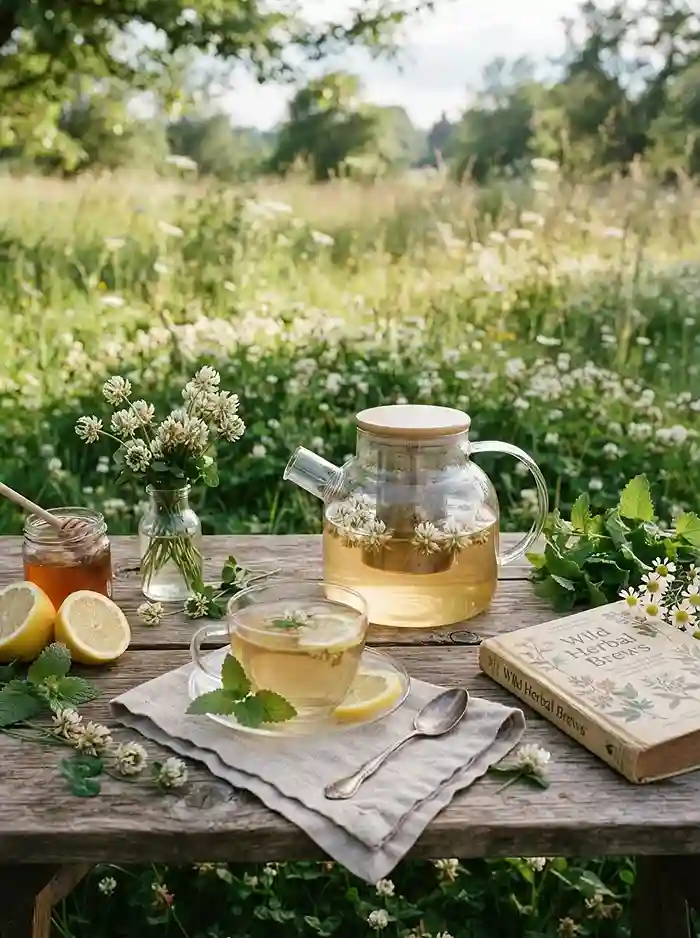
White clover tea is lovely on its own, but it pairs really well with light, subtly sweet snacks. Try it alongside this gluten-free lemon zucchini snacking cake — the citrus notes in the cake echo beautifully with a lemon-brightened cup of clover tea.
This tea also makes a charming addition to a Mother’s Day brunch spread or a slow Sunday morning with family. Set out a small pitcher of warm clover tea alongside a plate of these gluten-free ranch pickle cheese ball bites for a savory-sweet pairing that surprises every time.
For a full summer refreshment spread, serve the iced version of this tea right next to a cold pitcher of this fresh homemade watermelon juice. The two drinks together cover every preference at the table — floral and herbal for some, bright and fruity for others.
Final Thoughts
Making white clover tea at home is one of those small, quiet pleasures that costs almost nothing and delivers something genuinely lovely in return. Ten minutes from backyard to cup — it doesn’t get more from-scratch than that.
If you try this recipe, I’d love to hear which add-ins you used and how it turned out. Drop a comment below and tell me your favorite combination, or share a photo on Pinterest so others can find this recipe too. Every rating helps this little corner of gluten-free cooking reach more people who need it.
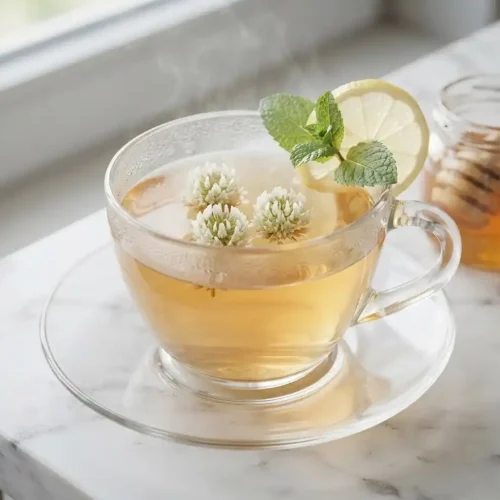
White Clover Tea Recipe: Simple and Naturally Herbal
Equipment
- Teapot or heatproof mug
- Fine mesh strainer
- Kettle or saucepan
- Colander
Ingredients
White Clover Tea
- 15–20 blossoms fresh white clover blossoms fully open; pesticide-free only
- 2 cups hot water just below boiling, about 200°F / 93°C
Optional Add-Ins
- to taste honey optional
- 1 squeeze fresh lemon juice optional
- a few leaves fresh mint leaves optional
- a few leaves lemon balm leaves optional
- 1 small handful chamomile flowers optional
Instructions
- Harvest 15–20 fresh white clover blossoms from a clean area free of pesticides, herbicides, and chemical fertilizers.
- Rinse the blossoms gently under cool running water to remove dirt and insects.
- Heat 2 cups of water to just below boiling, about 200°F (93°C).
- Place the blossoms in a teapot or heatproof mug and add any optional mint, lemon balm, or chamomile if using.
- Pour the hot water over the blossoms and cover immediately.
- Steep for 5 to 10 minutes, depending on your preferred strength.
- Strain the tea into a clean mug using a fine-mesh strainer.
- Sweeten with honey or add a squeeze of fresh lemon juice if desired.
- Serve warm, or cool completely and pour over ice for iced white clover tea.