Gluten-Free Spanakopita Rice Paper Recipe
This gluten-free spanakopita rice paper recipe makes 12 crisp spinach and feta parcels, with step-by-step rolling tips and fixes for tearing and sogginess.
My first attempt at this gluten-free spanakopita rice paper recipe ended with a baking sheet of torn, soggy parcels welded to the parchment. I had soaked every sheet until it went limp, then stuffed it with spinach I had barely squeezed. That first batch taught me that two things matter more than anything else: a brief dip and a bone-dry filling.
Honestly, I nearly gave up and crossed spanakopita off my list for good. Instead I kept testing, through a lot of leaky and gummy trays, until the shell finally baked up thin and crackly around a creamy spinach and feta center.
Table of Contents
What Makes This Gluten-Free Rice Paper Spanakopita Different
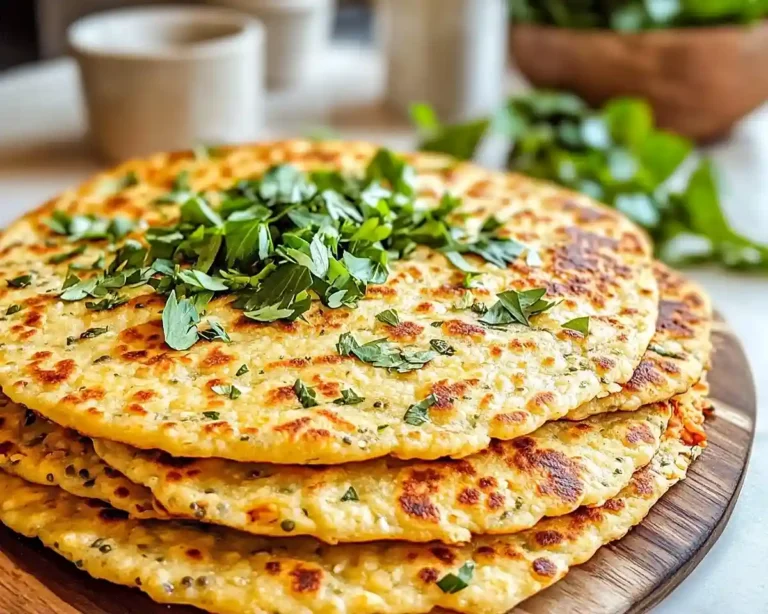
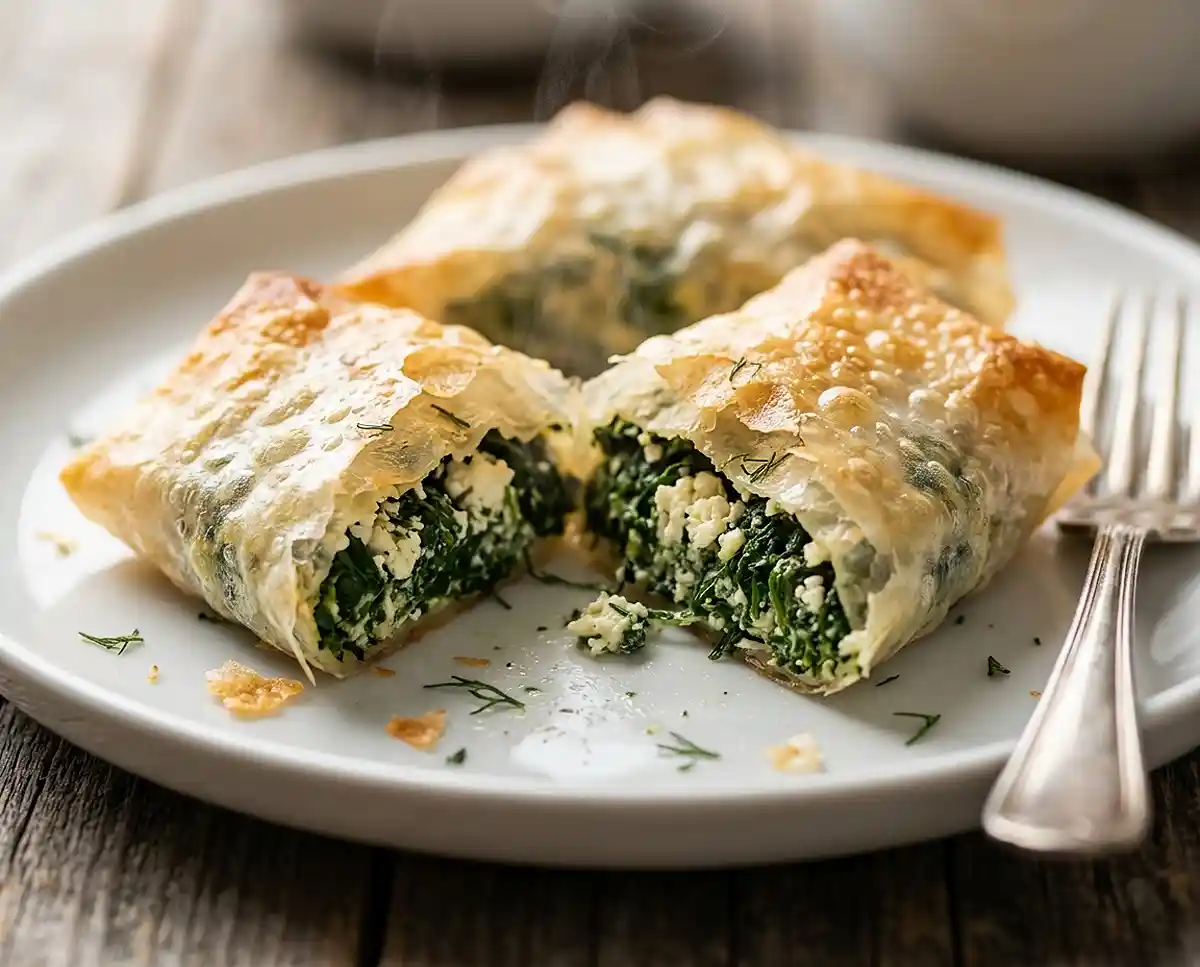
- Texture and flavor: The shell shatters like the top of a crème brûlée, and the filling is creamy, salty, and herby from feta, dill, and parsley.
- Difficulty: Beginner-friendly, with a small learning curve. Expect your first two or three parcels to look a little clumsy while you get a feel for wet rice paper.
- Unique advantages: No wheat flour or phyllo, kid-friendly as a handheld bite, and freezer-friendly once baked. It does contain dairy and egg, so it is not dairy-free.
- When it shines: Appetizer trays, potlucks, and make-ahead lunches, since the parcels reheat well in the oven.
The Fix Behind Every Common Gluten-Free Spanakopita Rice Paper Failure
- Gumminess: Rice paper is mostly starch, and starch swells fast in water. A few seconds in warm water leaves it pliable while it keeps hydrating from the filling’s moisture, so it never turns into glue.
- Soggy bottoms and leaks: Spinach is mostly water, and that water becomes steam in a hot oven. Squeezing the cooked spinach in a towel removes it before it can burst a seam.
- Crumbling filling: The egg sets as it bakes and the ricotta adds body, so the filling holds together when you bite or slice a parcel.
- Pale, dry shells: Rice paper has no fat of its own. Brushing all sides with olive oil is what lets the surface brown and crisp instead of drying out.
Ingredients For Gluten-Free Spanakopita Rice Paper Recipe
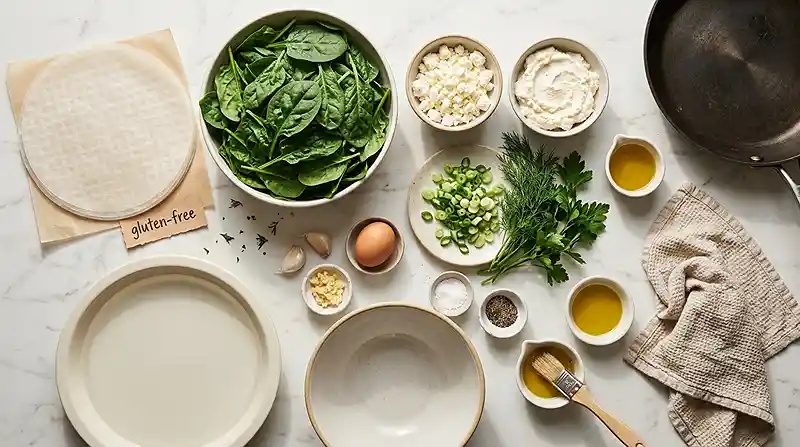
Makes 6 servings (12 small parcels).
For the Wrappers
- 12 sheets rice paper, certified gluten-free
Check the label before you buy. Some rice paper is made in facilities that also process wheat, and the Celiac Disease Foundation’s gluten-free living guidance explains how to read labels and spot cross-contact.
For the Filling
- 10 oz (280 g) fresh spinach, chopped
- 1 cup crumbled feta cheese
- 1/2 cup ricotta cheese
- 2 green onions, finely sliced
- 2 tbsp fresh dill, chopped
- 2 tbsp fresh parsley, chopped
- 1 large egg
- 2 cloves garlic, minced
- 1/4 tsp ground black pepper
- Pinch of salt, to taste
For Cooking and Brushing
- 1 tbsp olive oil
- 2 tbsp olive oil, for brushing
Instructions
Make the Filling
- Preheat the oven to 400°F (200°C). Line a baking sheet with parchment paper.
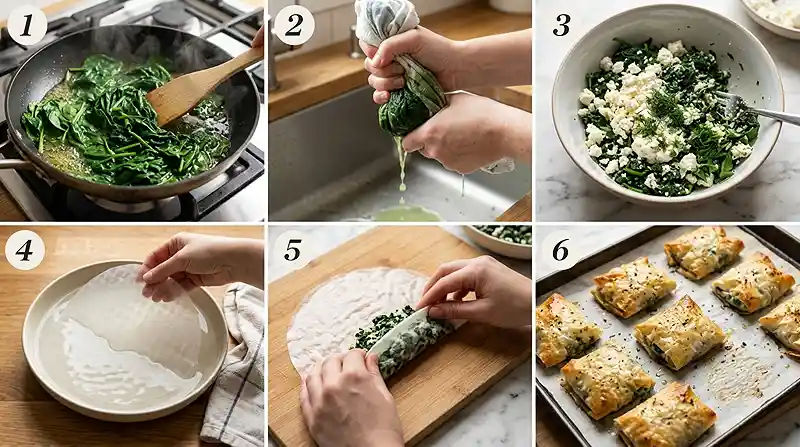
- Heat 1 tablespoon olive oil in a skillet over medium heat. Add the spinach and cook for 2–3 minutes, until wilted and bright green.
- Transfer the spinach to a clean kitchen towel and squeeze out as much liquid as possible. Let it cool slightly.
- In a bowl, combine the spinach, feta, ricotta, green onions, dill, parsley, egg, garlic, black pepper, and salt. The mixture should look thick and scoopable, not wet.
What I learned: I used to squeeze the towel once and call it done. Keep twisting until nothing drips, because every spoonful of leftover water ends up inside your parcel.
Soften and Roll the Parcels
- Fill a shallow dish with warm water. Dip one rice paper sheet into the water for a few seconds, just until pliable. Avoid soaking it until completely soft.
- Place the softened sheet on a clean surface. Add about 2 tablespoons of filling near the bottom center, fold in the sides, and roll tightly into a parcel.
- Repeat with the remaining rice paper sheets and filling. For extra strength, wrap each parcel in a second softened rice paper sheet if desired.
What I learned: A sheet that still feels a little stiff when you lift it from the water is exactly right. It keeps softening on the counter, and by the time you add the filling it has relaxed.
Brush, Bake, and Rest
- Arrange the parcels seam-side down on the prepared baking sheet. Brush all sides lightly with olive oil.
- Bake for 25–30 minutes, turning halfway through, until crisp and golden. The edges should look deeply golden and feel firm when you tap them.
- Let rest for 3–5 minutes before serving.
What I learned: Do not skip the rest. Straight from the oven, the filling is molten and the shell is still setting, and a parcel cut open too early loses its crunch.
Swap It Without Breaking It
Cottage cheese can stand in for the ricotta if you drain it in a fine mesh strainer first. Pressed dry, it gives you a similar mild creaminess in rice paper spanakopita. Straight from the tub it is too loose and will leak through the seams.
Here’s the thing: frozen spinach works, but it holds far more water than fresh. Thaw a 10 oz package, wring it out in a towel twice, then warm it in the skillet for a minute to drive off the last of the moisture. Skipping that second squeeze is how you end up with soggy gluten-free rice paper spanakopita.
Goat cheese can replace the feta for a softer, tangier filling. Dried herbs also work in a pinch, but use roughly a third of the amount, since dried dill and parsley are more concentrated.
Leaving out the egg is the one swap I would not make. Without it the filling loosens as it heats and seeps out of the seams, leaving you with hollow, greasy parcels.
When Things Go Sideways
Problem: the rice paper tears while you roll. Dip it for only a few seconds and let it rest on the counter before filling. It keeps softening after you pull it from the water, so an over-soaked sheet turns fragile fast. A second softened sheet around the outside fixes a weak spot.
Problem: the shell is gummy. Shorten the dip, brush every side with oil, and give each parcel room on the pan. Crowded parcels trap steam against the rice paper, and that steam turns starch gluey instead of crisp.
Problem: the bottoms are soggy. Squeeze the spinach harder and flip the parcels halfway through baking, as the recipe says. Moisture pools underneath the parcel, so turning it lets both sides dry and brown.
Oh boy, if cheese is oozing onto the pan, the parcels were overfilled or rolled loosely. Stick to about 2 tablespoons of filling and roll as tightly as you can, seam-side down. A tight roll leaves no air pocket for the filling to push through as the egg sets.
Problem: the shell is dry and brittle. Pull the tray at 25 minutes instead of 30 and brush a bit more oil on the corners. Rice paper keeps drying out in the oven, and the filling is only protected while it still has moisture.
Storage & Meal Prep
| Method | Duration | Notes |
|---|---|---|
| Counter | Up to 2 hours | Food safety limit for cooked cheese and egg; refrigerate promptly |
| Fridge | 3-4 days | Airtight container; bring to room temp before reheating |
| Freezer | 2-3 months | Wrap individually |
Reheat parcels in a 375°F (190°C) oven until hot and crisp again, about 10 minutes from the fridge. The microwave makes the shell chewy, so save it for emergencies.
For no-waste ideas, crumble any broken parcel into scrambled eggs or an omelet. Leftover filling also spreads nicely onto toasted gluten-free bread.
Straight Answers to Real Questions
Can I make rice paper spanakopita ahead of time?
You can make the filling up to a day ahead, but roll the parcels shortly before baking. Rolled rice paper that sits for hours turns tacky and can stick to itself. Baking first and reheating later is the easier make-ahead route.
How do I keep rice paper from tearing when I roll it?
Dip each sheet in warm water for only a few seconds, until it is just pliable. It keeps softening on the counter, so it will be flexible by the time you fill it. Fold in the sides, roll tightly, and wrap in a second softened sheet if you want extra strength.
What’s the best way to reheat leftover parcels?
Reheat them in a 375°F (190°C) oven for about 10 minutes, until hot and crisp. The oven dries the shell back out, while a microwave steams it and leaves it chewy. Frozen parcels can go straight into the oven, but give them closer to 15 minutes.
Why did my parcels turn out soggy or gummy?
Usually the rice paper soaked too long or the spinach still held water. Squeeze the cooked spinach in a towel until nothing drips, dip the sheets for just a few seconds, and brush every side with olive oil. Leaving space between parcels on the pan also lets steam escape.
Is it worth making rice paper spanakopita instead of using phyllo?
It is worth it if you need a gluten-free spanakopita that turns out crisp and holds together. Who says gluten-free has to mean soft and sad? You will not get buttery, flaky layers, but you will get a crackly shell around a creamy, herby center.
Serving Suggestions

Serve these warm with lemon wedges, a cucumber and tomato salad, or a bowl of tzatziki for dipping. They also work as finger food next to olives and roasted peppers on a holiday appetizer table, which is where I bring them every Thanksgiving.
For a bigger meal, pair them with Asian dumpling lasagna or the frozen lemon four-ingredient pasta.
The one-pot French onion pasta makes a cozy match on cooler nights, with the crisp parcels on the side.
Final Thoughts
Give this gluten-free spanakopita rice paper recipe a try, and pin it so you can find it again before your next gathering. Once you have rolled a few parcels, the rhythm clicks.
Leave a rating and a comment below to tell me how yours turned out. If a batch flopped, tell me that too, because your failures help the next reader as much as mine helped me.
Gluten-Free Spanakopita Rice Paper Recipe, Simple and Crisp
Equipment
- Large skillet
- Large mixing bowl
- Clean kitchen towel
- Shallow dish for warm water
- Baking sheet
- Parchment paper
- Pastry brush
- Knife
- Cutting board
Ingredients
For the Wrappers
- 12 sheets rice paper certified gluten-free
For the Filling
- 10 oz (280 g) fresh spinach chopped
- 1 cup feta cheese crumbled
- ½ cup ricotta cheese
- 2 green onions finely sliced
- 2 tbsp fresh dill chopped
- 2 tbsp fresh parsley chopped
- 1 large egg
- 2 cloves garlic minced
- ¼ tsp ground black pepper
- 1 pinch salt to taste
For Cooking and Brushing
- 1 tbsp olive oil for cooking the spinach
- 2 tbsp olive oil for brushing the parcels
Instructions
- Preheat the oven to 400°F (200°C). Line a baking sheet with parchment paper.
- Heat 1 tablespoon of olive oil in a skillet over medium heat. Add the chopped spinach and cook for 2–3 minutes, until wilted and bright green.
- Transfer the spinach to a clean kitchen towel and squeeze out as much liquid as possible. Let it cool slightly.
- In a mixing bowl, combine the spinach, feta, ricotta, green onions, dill, parsley, egg, garlic, black pepper, and salt. Mix until thick and scoopable, with no excess liquid.
- Fill a shallow dish with warm water. Dip one rice paper sheet for just a few seconds, until pliable but not completely soft.
- Place the softened rice paper on a clean surface. Add about 2 tablespoons of filling near the bottom center. Fold in the sides and roll tightly into a parcel.
- Repeat with the remaining rice paper sheets and filling. If desired, wrap each parcel in a second briefly softened rice paper sheet for extra strength.
- Arrange the parcels seam-side down on the prepared baking sheet, leaving space between them. Brush all sides lightly with olive oil.
- Bake for 25–30 minutes, turning halfway through, until crisp and golden. Let rest for 3–5 minutes before serving.