Gluten-Free Sprouted Whole Grain Bread
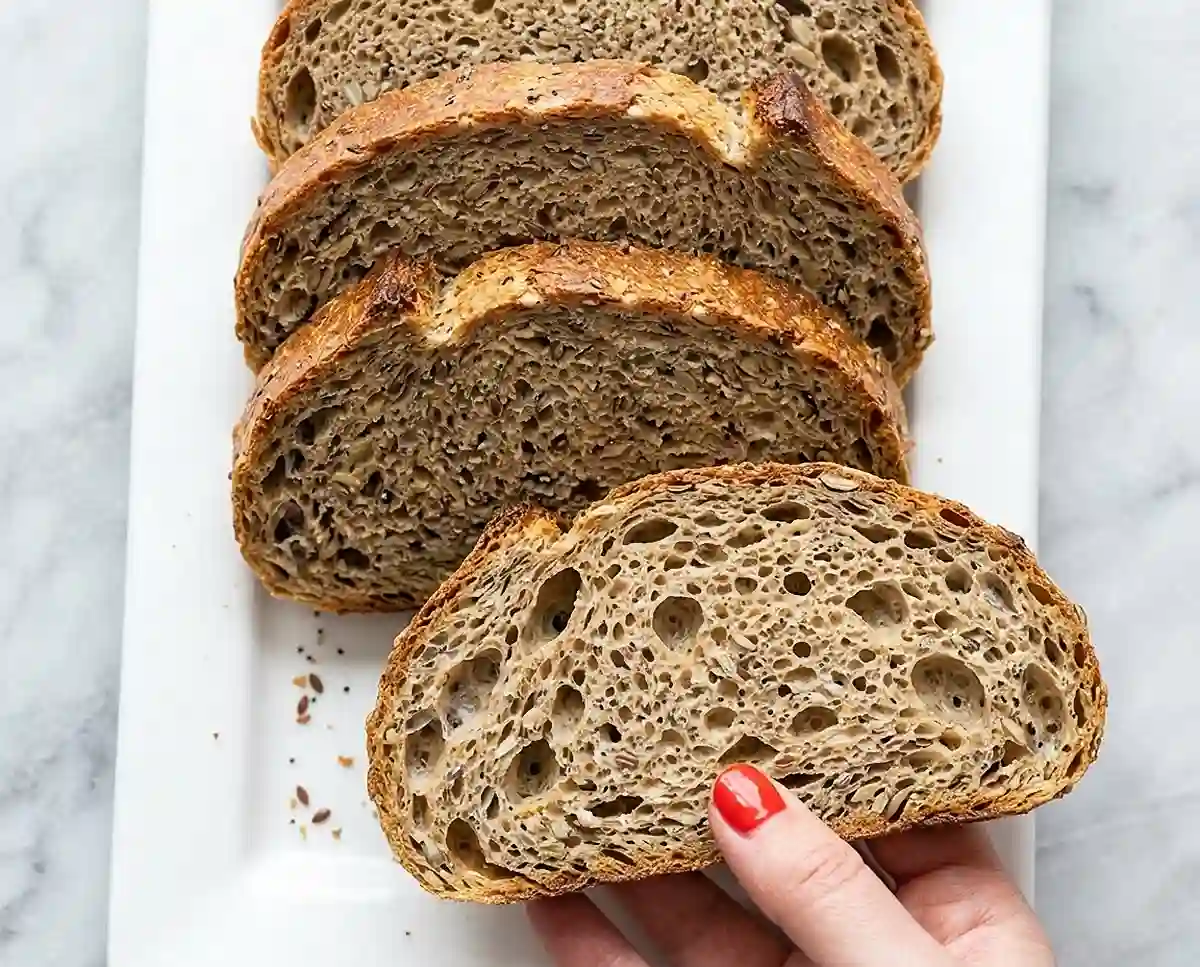
Homemade bread with a crispy crust and soft interior feels like pure magic. This gluten-free sprouted whole grain bread brings that artisan bakery experience to your kitchen using simple ingredients and a hands-off technique. The dutch oven method creates professional results every time.
Traditional sprouted bread recipes rely on wheat flour, but this gluten-free sprouted bread version uses sprouted brown rice flour and sorghum flour instead. These naturally gluten-free grains provide similar nutty, wholesome flavors while keeping the recipe safe for those avoiding gluten.
The beauty of this healthy sprouted bread lies in its simplicity. Mix the ingredients, let time do the work overnight, and bake in a preheated dutch oven. No kneading required, no special skills needed. Just patience and a few quality ingredients create something truly special.
Table of Contents
Why This Gluten-Free Sprouted Whole Grain Bread Recipe Works
The long fermentation time of 12 to 18 hours develops incredible flavor and texture. During this rest, the yeast slowly breaks down starches and creates air pockets throughout the dough. This process also makes the bread easier to digest and enhances nutritional availability.
Sprouted grain flours offer distinct advantages over regular flours. The sprouting process increases nutrient absorption and creates a slightly sweeter, more complex flavor. Using gluten-free sprouted flours maintains these benefits while eliminating gluten entirely.
The dutch oven acts as a miniature professional bread oven. The heavy lid traps steam during the first phase of baking, creating that coveted crispy crust. Removing the lid for the final bake allows the exterior to become deeply golden and crackly.
Psyllium husk powder replaces the gluten that normally provides structure. This fiber-rich ingredient binds the dough together and helps it rise properly. Man, oh man, the difference between gluten-free bread with and without psyllium is remarkable.
Ingredients You Will Need
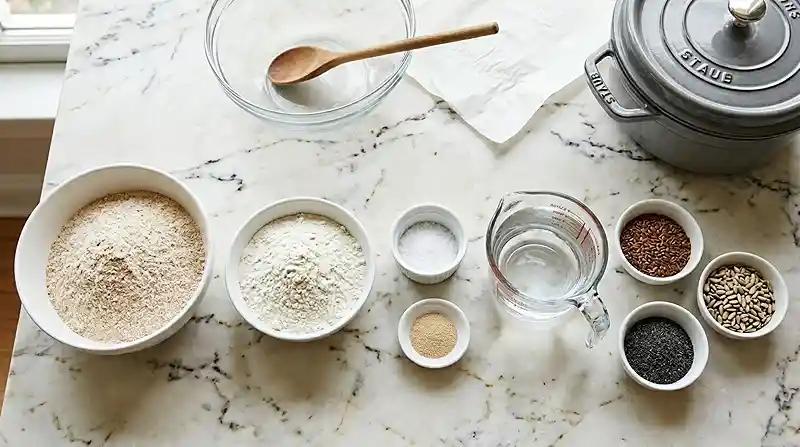
For the Gluten-Free Flour Blend
- 1 cup sprouted brown rice flour
- 1 cup sorghum flour
- 1 cup tapioca starch
- 3 tablespoons psyllium husk powder (whole husk, not powder)
- 2 teaspoons xanthan gum
For the Bread Dough
- 2 teaspoons salt
- 1 teaspoon active dry yeast
- 1 tablespoon honey or maple syrup
- 2 cups warm water (about 110 degrees Fahrenheit)
- 1 tablespoon apple cider vinegar
- 3/4 cup mixed seeds (flax seeds, sunflower seeds, pumpkin seeds)
Step-by-Step Instructions
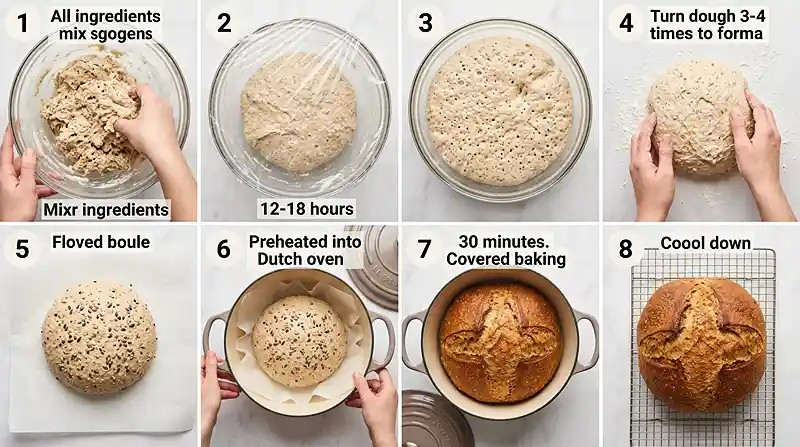
Mix the Dough
In a large mixing bowl, whisk together the sprouted brown rice flour, sorghum flour, tapioca starch, psyllium husk powder, xanthan gum, and salt. Make sure all dry ingredients are evenly distributed with no clumps remaining.
In a separate small bowl or measuring cup, combine the warm water with the honey and active dry yeast. Let this mixture sit for five minutes until the yeast becomes slightly foamy. This confirms your yeast is alive and active.
Pour the yeast mixture and apple cider vinegar into the dry ingredients. Stir with a sturdy wooden spoon or spatula until everything is fully combined. The dough will be sticky and shaggy, more like a thick batter than traditional bread dough.
Fold in the mixed seeds until evenly distributed throughout the dough. The seeds add nutrition, texture, and visual appeal to the finished loaf. Use any combination you prefer or omit them entirely for a plain version.
Let the Dough Rise
Cover the bowl tightly with plastic wrap or a damp kitchen towel. Place in a warm spot away from drafts. Let the dough sit undisturbed for 12 to 18 hours at room temperature.
The dough will rise significantly and develop a slightly tangy aroma. Bubbles will appear on the surface, indicating active fermentation. Longer fermentation times create more complex flavors, so aim for the full 18 hours if possible.
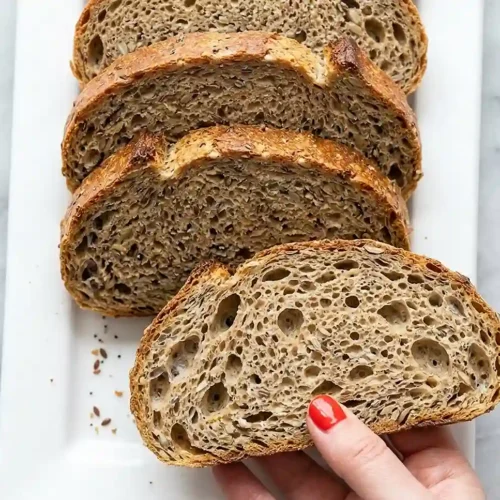
Do not rush this step. The slow rise is what creates the bread’s characteristic open crumb and chewy texture. This hands-off time is when the magic happens.
Shape the Loaf
After the long rise, generously flour a clean work surface with extra tapioca starch or rice flour. Gluten-free dough is stickier than wheat dough, so do not be shy with the flour.
Gently turn the dough out onto the floured surface. The dough will be soft and slightly sticky. Flour your hands well and gently fold the dough over itself three or four times to form a rough ball shape.
Work gently to preserve the air bubbles that developed during fermentation. Do not punch down or knead aggressively. The goal is simply to shape the dough into a round boule without deflating it.
Transfer the shaped dough onto a piece of parchment paper. This makes transferring into the hot dutch oven much easier and safer. Let the dough rest while the oven preheats.
Preheat and Bake
Place your dutch oven with the lid on inside a cold oven. Preheat to 475 degrees Fahrenheit and let it heat for 30 to 45 minutes. The dutch oven must be extremely hot for proper crust development.
Carefully remove the preheated dutch oven using heavy oven mitts. Remove the lid and use the parchment paper to lower the dough gently into the hot pot. Replace the lid immediately.
Bake covered for 30 minutes. The trapped steam creates a crispy, crackly crust that shatters when you slice it. Do not open the lid during this time or the steam will escape.
Remove the lid and reduce the oven temperature to 415 degrees Fahrenheit. Continue baking uncovered for another 15 to 25 minutes until the bread is deep golden brown. The internal temperature should reach about 200 degrees.
Cool Before Slicing
Carefully remove the dutch oven from the oven. Use tongs or the parchment paper to lift the bread out and transfer to a wire cooling rack.
Let the bread cool for at least 30 minutes before cutting. Slicing too early releases steam and can result in a gummy interior. The cooling process allows the crumb to set properly.
Use a serrated bread knife for the cleanest slices. Store at room temperature wrapped in a clean kitchen towel for up to three days or freeze for longer storage.
Understanding Gluten-Free Sprouted Grains
What Makes Sprouted Grains Special
Sprouted grains begin as whole grains that have been soaked and allowed to germinate. This process activates enzymes that break down starches and increase nutrient availability. Many people find sprouted grain products easier to digest.
For gluten-free baking, look for sprouted brown rice flour, sprouted buckwheat flour, or sprouted quinoa flour. These maintain the nutritional benefits of sprouting while remaining completely gluten-free. Health food stores and online retailers stock these specialty flours.
Gluten-Free Flour Substitutions
If you cannot find sprouted gluten-free flours, regular brown rice flour and sorghum flour work well. The bread will still be delicious and nutritious, just without the specific benefits of sprouted grains.
Other gluten-free whole grain options include millet flour, teff flour, and certified gluten-free oat flour. Experiment with different combinations to find your favorite flavor profile. Each grain brings unique characteristics to the final bread.
Tips for Perfect Gluten-Free Bread
Weigh your ingredients rather than measuring by volume for consistent results. Gluten-free flours vary significantly in density, and weight measurements eliminate guesswork. A kitchen scale is invaluable for gluten-free baking.
Water temperature matters significantly for yeast breads. Too hot and you kill the yeast. Too cold and the yeast remains dormant. Aim for 105 to 110 degrees Fahrenheit, which feels warm but not hot on your wrist.
Do not skip the apple cider vinegar. The acidity helps activate the psyllium husk and improves the bread’s rise. It also adds subtle flavor complexity that enhances the finished loaf without being detectable.
Humidity affects gluten-free dough more than traditional wheat dough. On humid days, you may need slightly less water. On dry days, the dough might need a splash more. Adjust based on how the dough feels.
FAQs About Sprouted Bread
Is sprouted whole grain bread better for you?
Sprouted grain products may offer enhanced nutritional benefits compared to regular whole grains. The sprouting process increases availability of certain vitamins, minerals, and antioxidants while reducing antinutrients that can interfere with absorption.
Which bread is better for diabetics?
Breads made with whole grains, including gluten-free whole grain options, typically have lower glycemic impact than refined flour breads. Sprouted grain breads may be even better since sprouting can reduce starch content. Always consult your healthcare provider for personalized advice.
What is the best bread for heart patients?
Whole grain breads with seeds like flax and chia provide fiber and omega-3 fatty acids that support heart health. This gluten-free sprouted bread includes heart-healthy seeds and whole grain flours. Discuss dietary choices with your cardiologist.
What are the top three healthiest breads?
Sprouted grain breads, traditional sourdough, and breads made with whole ancient grains often rank highest nutritionally. For gluten-free options, breads using whole grain flours like brown rice, sorghum, and buckwheat provide similar benefits.
Can I make this bread without a dutch oven?
Yes, though results differ slightly. Use a heavy baking sheet or cast iron skillet. Place a metal pan with water on the lower rack to create steam. The crust will not be quite as crispy but the bread will still be delicious.
Why is my gluten-free bread gummy inside?
Gummy texture usually results from underbaking or cutting too soon. Ensure the internal temperature reaches 200 degrees and always let the bread cool completely before slicing. Gluten-free breads need longer cooling time than wheat breads.
Gluten-Free Alternatives to Bread
Sometimes you want the satisfaction of bread without actually baking a loaf. Whether you are running short on time, looking to reduce your grain intake, or simply want variety in your gluten-free lifestyle, plenty of wholesome alternatives can fill the bread-shaped hole in your meals. These options work beautifully for sandwiches, toast replacements, and everything in between.
Lettuce and Cabbage Wraps
Large leaves of romaine, butter lettuce, or savoy cabbage make crisp, refreshing wrappers for sandwich fillings. They add crunch and freshness while keeping meals light. Cabbage leaves are sturdier and work well for heartier fillings like pulled chicken or taco-style ground meat.
Sweet Potato Toast
Slice a sweet potato lengthwise into quarter-inch planks and toast them twice in your toaster until tender and slightly crisp at the edges. Top with avocado, almond butter, or a fried egg. This naturally sweet base pairs surprisingly well with both savory and sweet toppings.
Cauliflower Bread and Thins
Riced cauliflower mixed with eggs and cheese bakes into flexible flatbreads perfect for wraps or pizza bases. Pre-made cauliflower thins are widely available in grocery stores for those who want convenience without compromising on a low-carb, gluten-free option.
Almond Flour or Coconut Flour Flatbreads
Quick flatbreads made from almond or coconut flour come together in minutes on the stovetop. They have a tender texture similar to soft tortillas and work wonderfully for wraps, quesadillas, or scooping up curries and stews.
Portobello Mushroom Buns
Large portobello caps, roasted until tender, make a meaty, satisfying replacement for burger buns. They add umami depth that traditional bread cannot match and pair especially well with grilled vegetables and savory spreads.
Rice Cakes and Seed Crackers
Brown rice cakes and seed-based crackers offer that crunchy bread substitute experience for snacks and light meals. Look for varieties made with sprouted grains or simple seed-and-nut bases for the most nutritional benefit.
Plantain or Cassava Tortillas
Made from naturally gluten-free starchy vegetables, these tortillas have a soft, pliable texture that holds up beautifully to fillings. They are an excellent everyday swap for sandwich bread when you want something rollable.
Socca and Chickpea Flatbreads
Socca is a traditional French flatbread made simply from chickpea flour, water, olive oil, and salt. It bakes into a savory, protein-rich round that works as bread, pizza crust, or a hearty side. Chickpea flour also makes wonderful pancake-style flatbreads.
Serving Suggestions
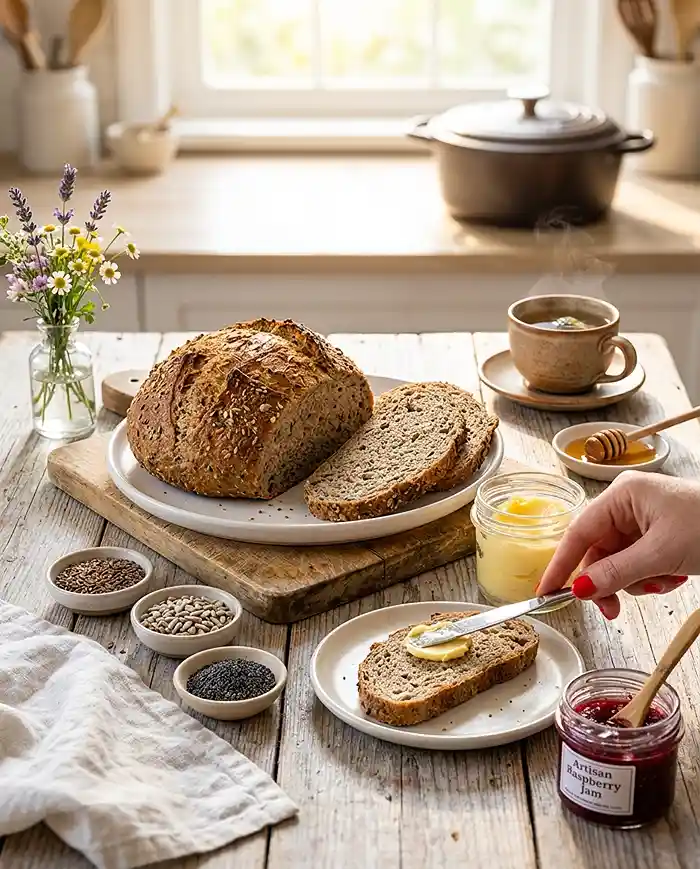
Slice this gluten-free whole grain bread thick for toast topped with avocado or nut butter. The hearty texture stands up beautifully to toppings and makes satisfying breakfast toast. Try it with a drizzle of honey and a sprinkle of cinnamon.
This bread makes excellent sandwiches when sliced thinner. Pair it with your favorite fillings like a classic gluten-free peanut butter and jelly sandwich for a nostalgic lunch.
Serve slices alongside soups, stews, or salads for a complete meal. The nutty whole grain flavor complements both light and hearty dishes. It is especially delicious dunked into a warm bowl of tomato soup.
For a complete gluten-free dinner spread, serve this bread with gluten-free pasta rings in marinara sauce for an Italian-inspired meal the whole family will enjoy.
Enjoy Your Homemade Artisan Bread
This gluten-free sprouted whole grain bread proves that dietary restrictions do not mean sacrificing quality or flavor. The crispy crust, soft interior, and complex whole grain taste rival any traditional artisan loaf. You will be proud to serve it.
The no-knead method makes this bread accessible to bakers of all skill levels. Simply mix, wait, shape, and bake. The dutch oven does the hard work of creating that perfect bakery-style crust.
Bake a loaf this weekend and experience the satisfaction of homemade gluten-free bread. Save this recipe for regular baking sessions and share it with others who miss quality bread on their gluten-free journey.
Gluten-Free Sprouted Whole Grain Bread
Equipment
- Dutch oven with lid
- Large mixing bowl
- Wooden spoon or spatula
- Parchment paper
- Wire cooling rack
- Serrated Bread Knife
- Kitchen scale
Ingredients
Gluten-Free Flour Blend
- 1 cup sprouted brown rice flour
- 1 cup sorghum flour
- 1 cup tapioca starch
- 3 Tbsp psyllium husk powder whole husk, not powder
- 2 tsp xanthan gum
Bread Dough
- 2 tsp salt
- 1 tsp active dry yeast
- 1 Tbsp honey or maple syrup
- 2 cups warm water about 110°F
- 1 Tbsp apple cider vinegar
- ¾ cup mixed seeds flax, sunflower, pumpkin seeds, optional
Instructions
- In a large mixing bowl, whisk together the sprouted brown rice flour, sorghum flour, tapioca starch, psyllium husk powder, xanthan gum, and salt until evenly distributed with no clumps.
- In a small bowl, combine the warm water with honey and active dry yeast. Let sit for 5 minutes until the yeast becomes slightly foamy, confirming it is active.
- Pour the yeast mixture and apple cider vinegar into the dry ingredients. Stir with a sturdy wooden spoon until everything is fully combined. The dough will be sticky and shaggy.
- Fold in the mixed seeds until evenly distributed throughout the dough. Use any combination of flax, sunflower, or pumpkin seeds, or omit entirely for plain bread.
- Cover the bowl tightly with plastic wrap or a damp kitchen towel. Let the dough sit undisturbed in a warm spot for 12 to 18 hours at room temperature.
- After the long rise, place your dutch oven with the lid on inside a cold oven. Preheat to 475°F and let it heat for 30 to 45 minutes until extremely hot.
- Generously flour a clean work surface with tapioca starch. Gently turn the dough out and fold it over itself 3-4 times to form a rough ball, working gently to preserve air bubbles.
- Transfer the shaped dough onto a piece of parchment paper. This makes transferring into the hot dutch oven easier and safer.
- Carefully remove the preheated dutch oven. Use the parchment to lower the dough gently into the hot pot. Replace the lid immediately.
- Bake covered for 30 minutes. The trapped steam creates a crispy crust. Do not open the lid during this time.
- Remove the lid and reduce oven temperature to 415°F. Continue baking uncovered for 15-25 minutes until deep golden brown and the internal temperature reaches about 200°F.
- Carefully remove the bread from the dutch oven and transfer to a wire cooling rack. Let cool for at least 30 minutes before slicing with a serrated knife.