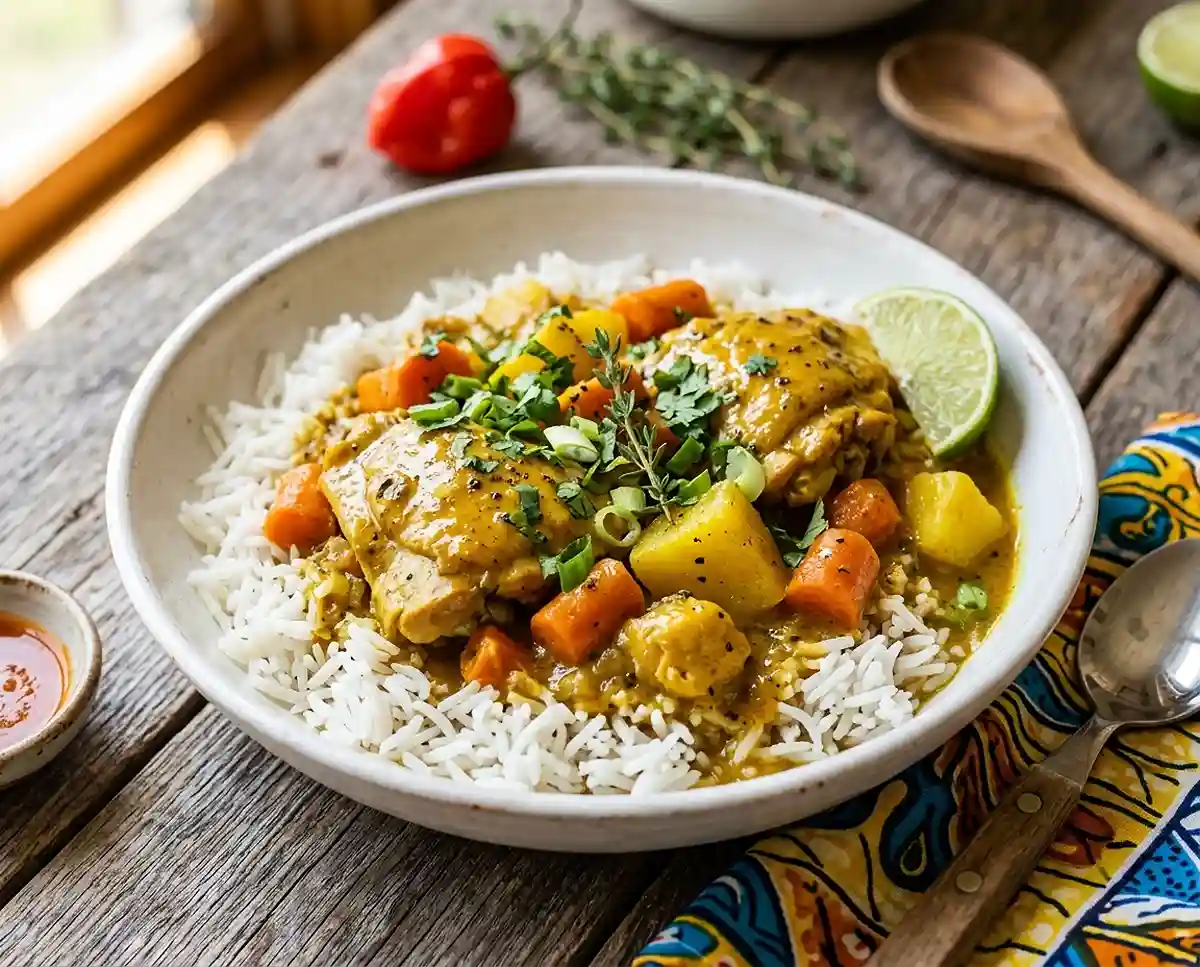
Gluten-Free caribbean curry bowl
This gluten-free Caribbean curry bowl brings bold Jamaican flavor home in under an hour. Coconut-rich, naturally gluten-free, and family-tested.
The first time I made a gluten-free Caribbean curry bowl, I nearly ruined the whole pot by skipping one tiny step. My neighbor Marlene, who grew up in Kingston, watched me dump curry powder straight into coconut milk and gently said, “Sweetheart, you’ve got to burn the curry first.” Well, that single tip changed how I cook island food forever.
Here’s the thing most folks don’t realize about a Gluten-Free Caribbean Curry Recipe: traditional Jamaican curry is naturally wheat-free when you use certified gluten-free broth and a clean curry powder. No gummy thickeners, no weird flour swaps, just deeply spiced coconut sauce hugging tender chicken and potatoes. Have you ever wondered why restaurant curry tastes so much richer than what you make at home?
The answer comes down to technique, not fancy ingredients. I’ve tested this Caribbean-Style Curry Bowl on picky kids, spice-shy in-laws, and one very opinionated Jamaican grandmother who declared it “respectable.” That’s the highest praise I’ve ever earned in my kitchen.
Why You’ll Love This Caribbean Curry Bowl (Gluten-Free)
- Layered, smoky flavor: Toasting the curry powder unlocks earthy depth you simply cannot get from dumping spices into liquid.
- Beginner-friendly one-pot meal: Simple steps and forgiving timing make this doable even on a chaotic weeknight.
- Naturally dairy-free: Full-fat coconut milk creates the creamy sauce, so there’s no butter or cream needed.
- Crowd-pleasing heat control: The whole scotch bonnet adds aroma without searing burn, keeping it kid-approachable.
The Secret to Perfect Gluten-Free Caribbean Curry Bowl
Great Caribbean curry comes down to four techniques most home cooks skip. Once you nail these, your sauce will taste like it simmered all afternoon, even when it didn’t.
- Burning the curry: Toasting curry powder in hot oil for sixty seconds bloom-activates fat-soluble compounds like turmeric and cumin, creating that signature Jamaican depth.
- Marinating with dry spices: Coating the chicken in curry powder before cooking lets the spices penetrate the protein, building flavor from the inside out.
- Whole pepper, not chopped: Floating a whole scotch bonnet releases fruity aroma without capsaicin overload, giving you flavor without fire.
- Full-fat coconut milk only: The fat emulsifies with the curry oils to create a glossy sauce that clings to rice instead of separating into a watery puddle.
According to the Celiac Disease Foundation’s gluten-free guidance, single-ingredient spices and pure coconut milk are naturally safe, but always check curry powder blends for anti-caking additives that may contain wheat starch.
Table of Contents
Ingredients
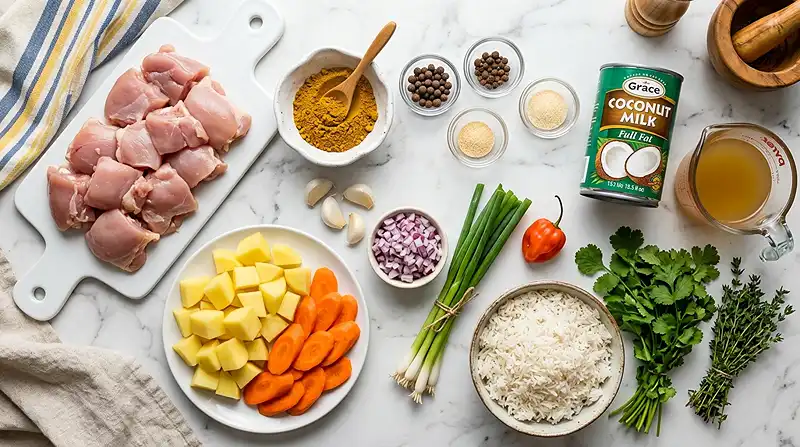
This recipe serves 4 to 5 people generously. Use the exact quantities below for best results, and read my notes on the trickier ingredients.
Protein and Spice Marinade
- 2 lbs boneless, skinless chicken thighs, cut into pieces
- 3 tbsp Jamaican curry powder, divided (look for certified gluten-free brands like Blue Mountain Country)
- 1 tsp allspice (berries or ground; also called pimento in the Caribbean)
- 1 tsp fresh thyme
- 1 tsp garlic powder
- 1 tsp onion powder
- Salt and black pepper, to taste
Aromatics, Sauce, and Vegetables
- 2 tbsp vegetable oil
- 4 garlic cloves, minced
- 1 small red onion, diced
- 3 scallions, sliced
- 1 whole scotch bonnet pepper (or habanero), kept intact
- 1 can (14 oz) full-fat coconut milk
- 1/2 cup chicken broth (certified gluten-free)
- 2 medium potatoes, cubed
- 1 carrot, sliced
- 2 cups cooked white rice
- Fresh cilantro or scallions, for garnish
- Lime wedges, for serving
Step-by-Step Instructions
Follow these steps in order, and don’t rush the burning-the-curry stage. That single minute is what separates flat curry from the real thing.
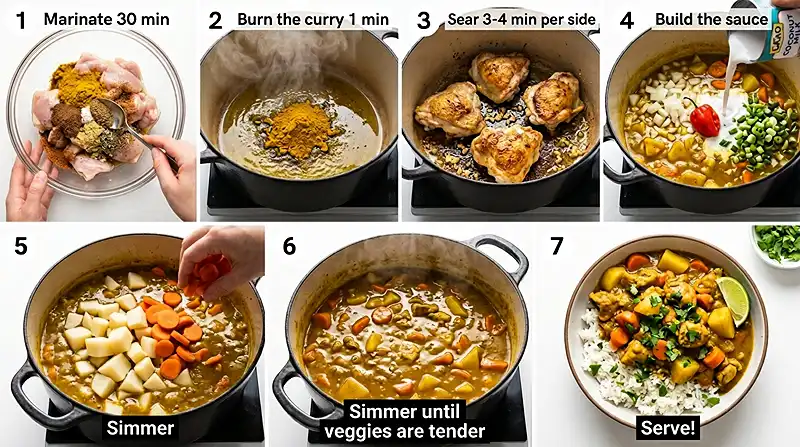
- Marinate the chicken. In a bowl, toss the chicken with 2 tbsp curry powder, allspice, thyme, garlic powder, onion powder, salt, and pepper. Cover and refrigerate for at least 30 minutes, or overnight for deeper, more saturated flavor. Pro tip: A longer marinade tenderizes the thighs and lets the turmeric stain the meat that signature golden hue.
- Burn the curry. Heat the vegetable oil in a heavy pot over medium-high heat until it shimmers. Add the remaining 1 tbsp curry powder and stir constantly for one minute until it smells nutty and toasted, almost like warm popcorn. Pro tip: Don’t walk away. Curry powder goes from fragrant to acrid in about ten seconds.
- Sear the chicken. Stir in the minced garlic for fifteen seconds, then add the chicken in a single layer. Sear 3 to 4 minutes per side until you see deep golden-brown edges. Crowding the pan steams the meat instead of browning it, so work in batches if needed.
- Build the sauce. Add the diced red onion, scallions, and the whole scotch bonnet pepper to the pot. Pour in the coconut milk and chicken broth, stirring to lift any browned bits from the bottom. Bring to a gentle boil.
- Simmer until tender. Add the cubed potatoes and sliced carrot, then reduce the heat to low. Cover and simmer 25 to 30 minutes, stirring occasionally, until the potatoes are fork-tender and the sauce has thickened to coat the back of a spoon.
- Finish the curry. Carefully remove the whole pepper with tongs (don’t burst it!). Taste and adjust salt, then simmer uncovered for a few minutes if you want a thicker sauce.
- Serve and garnish. Spoon warm rice into bowls and ladle the curry generously on top. Shower with fresh cilantro or scallions and serve with lime wedges for that bright citrus pop.
Make It Your Own
One of the things I love about this Caribbean Curry Bowl (Gluten-Free) is how forgiving it is. You know, I’ve swapped almost every ingredient at some point and still landed on something my family devoured.
Swap the protein. Boneless skinless chicken breast works in a pinch but cooks faster, so reduce sear time to 2 minutes per side. Shrimp, firm tofu, or chickpeas also work beautifully; just add them in the last 10 minutes of simmering so they don’t toughen.
Change up the starches. Sweet potatoes, yuca, or green plantains can replace the white potatoes for a more traditional Caribbean spin. Each adds its own subtle sweetness that balances the heat of the scotch bonnet wonderfully.
Make it vegetarian. Replace the chicken with two cans of drained chickpeas and use vegetable broth instead of chicken broth. The curry oil-coconut emulsion still creates that silky sauce, and the chickpeas drink up flavor like little flavor sponges.
Adjust the heat level. If you’re feeding spice-sensitive folks, leave the scotch bonnet whole and remove it after just 10 minutes of simmering. For more heat, pierce the pepper with a fork before adding to release more capsaicin into the sauce.
Common Problems and Solutions
Even a straightforward Gluten-Free Caribbean Curry Recipe has a few pitfalls. Man, oh man, have I made every one of these mistakes so you don’t have to.
Problem: My sauce tastes bitter or harsh. You burned the curry powder past the toasting stage. The fix is to keep the heat at medium-high (not high) and pull the pot off the burner the second the powder smells nutty, not acrid.
Problem: The sauce is too thin and watery. You likely used light coconut milk or didn’t simmer long enough uncovered. Full-fat coconut milk has the fat content needed to emulsify, and an extra 5 to 10 minutes uncovered will reduce the liquid to a glossy, spoon-coating consistency.
Problem: The chicken came out tough and dry. Chicken thighs are forgiving, but boiling them hard or skipping the sear creates rubbery texture. A gentle simmer (small lazy bubbles, not a rolling boil) keeps the collagen melting slowly so the meat stays tender as butter on warm bread.
Problem: My curry is too spicy to eat. The scotch bonnet ruptured during simmering and released its full heat. Stir in an extra splash of coconut milk and a teaspoon of brown sugar to mellow the burn, and next time, handle the pepper gently with tongs.
Storage and Meal Prep
This curry actually tastes better on day two, once the spices have had time to marry. Here’s how to store it for maximum flavor and food safety.
| Method | Duration | Notes |
|---|---|---|
| Counter | Up to 2 hours | Cool fully before storing; do not leave longer |
| Fridge | 4 to 5 days | Airtight container; bring to room temp before reheating |
| Freezer | 2 to 3 months | Freeze curry and rice separately in portioned containers |
To reheat, warm the curry gently on the stovetop over low heat with a splash of broth or water to loosen the sauce. Microwave reheating works too, but stir halfway through to prevent the coconut fat from separating. Leftover curry makes brilliant filling for gluten-free wraps or a topping for baked sweet potatoes.
Gluten-Free caribbean curry bowl FAQs
What Caribbean food is gluten-free?
Many traditional Caribbean dishes are naturally gluten-free, including jerk chicken, rice and peas, callaloo, escovitch fish, and most curries. Caribbean cuisine relies heavily on rice, root vegetables, fresh seafood, and bold spice blends rather than wheat. Just watch out for soy-based marinades, breaded items, and some commercial jerk seasonings that may contain wheat fillers.
Which curry dishes are gluten-free?
Most homemade curries are naturally gluten-free, including Jamaican curry chicken, Thai coconut curries, and South Indian dishes like sambar. The risk lies in pre-made curry pastes, restaurant thickeners, and naan or roti served alongside. Always check labels and ask about cross-contamination when dining out.
Is Jamaican curry gluten-free?
Authentic Jamaican curry is naturally gluten-free since it’s built on turmeric, allspice, coconut milk, and fresh aromatics. The only watch-out is the curry powder itself, as some commercial brands add wheat starch as an anti-caking agent. Look for certified gluten-free Jamaican curry powder or single-ingredient spice blends to stay safe.
Is curry typically gluten-free?
Curry made from scratch is almost always gluten-free, but pre-packaged curry sauces and restaurant versions can contain hidden wheat. Soy sauce, flour-based thickeners, and shared fryers are the most common contamination sources. The Beyond Celiac ingredient database is a helpful resource for checking specific brands.
What is the big 3 of the Caribbean?
The “Big 3” of the Caribbean typically refers to Jamaica, Cuba, and the Dominican Republic, the three largest islands by population and cultural influence. Each has distinct culinary traditions, but all share a love for rice, beans, tropical fruits, and slow-cooked stews. Jamaican cuisine in particular shaped global curry culture through its East Indian heritage.
Serving Suggestions
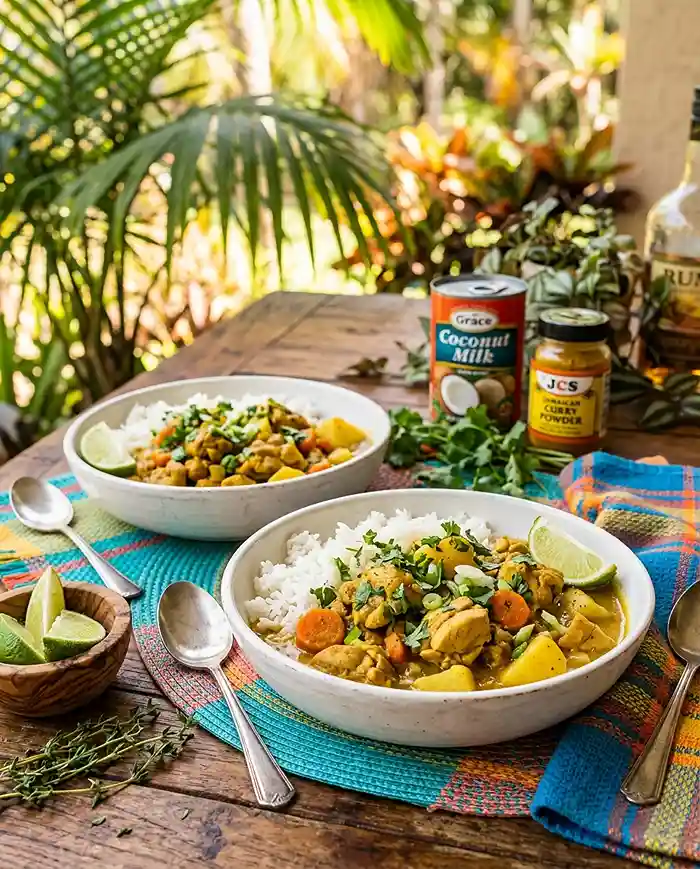
Spoon this curry over fluffy white rice and finish with a generous squeeze of lime to brighten the richness. For a full Caribbean spread (perfect for a Fourth of July cookout or family Sunday dinner), serve alongside these creamy roasted red pepper white bean dip with plantain chips as a starter. Round out the meal with crispy gluten-free rice salmon bites on the side, and finish with refreshing tropical fruit popsicles for dessert to keep the island theme going.
Give It a Try and Share Your Spin
If you make this Caribbean Curry Bowl (Gluten-Free), I’d love to hear how it turned out and which protein or veggie swap you tried. Snap a photo, pin it to your Pinterest dinner board, and tag me so I can cheer you on. Drop a star rating and a comment below with your tweaks, because your kitchen wisdom helps the next reader cook with confidence.
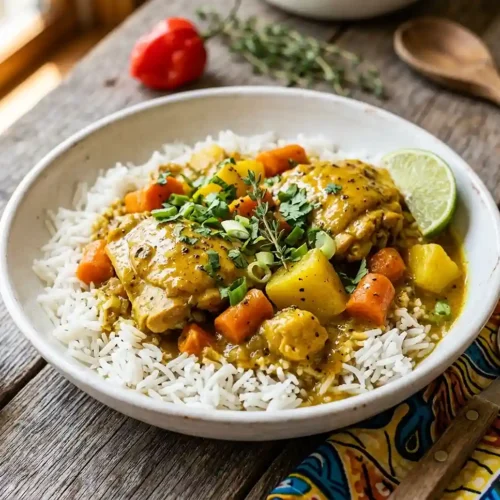
Gluten-Free Caribbean Curry Bowl
Equipment
- Mixing bowl
- Large pot
- Knife
- Cutting board
Ingredients
Protein and Spice Marinade
- 2 lbs boneless skinless chicken thighs cut into pieces
- 3 tbsp Jamaican curry powder divided
- 1 tsp allspice
- 1 tsp fresh thyme
- 1 tsp garlic powder
- 1 tsp onion powder
- salt and black pepper to taste
Aromatics, Sauce, and Vegetables
- 2 tbsp vegetable oil
- 4 cloves garlic minced
- 1 small red onion diced
- 3 scallions sliced
- 1 scotch bonnet pepper kept whole
- 14 oz coconut milk full-fat
- ½ cup chicken broth gluten-free
- 2 medium potatoes cubed
- 1 carrot sliced
- 2 cups white rice cooked
- cilantro or scallions for garnish
- lime wedges for serving
Instructions
- Marinate the chicken with curry powder, allspice, thyme, garlic powder, onion powder, salt, and pepper. Refrigerate for at least 30 minutes.
- Heat oil in a large pot over medium-high heat and toast remaining curry powder for about 1 minute until fragrant.
- Add garlic and cook briefly, then sear the chicken until browned on both sides.
- Add onion, scallions, and whole scotch bonnet pepper. Pour in coconut milk and chicken broth, then bring to a gentle boil.
- Add potatoes and carrot, reduce heat, cover, and simmer for 25 to 30 minutes until vegetables are tender.
- Remove the whole pepper carefully, adjust seasoning, and simmer uncovered if a thicker sauce is desired.
- Serve over cooked rice and garnish with cilantro or scallions and lime wedges.