Gluten-Free Teriyaki Steak Lettuce Wraps
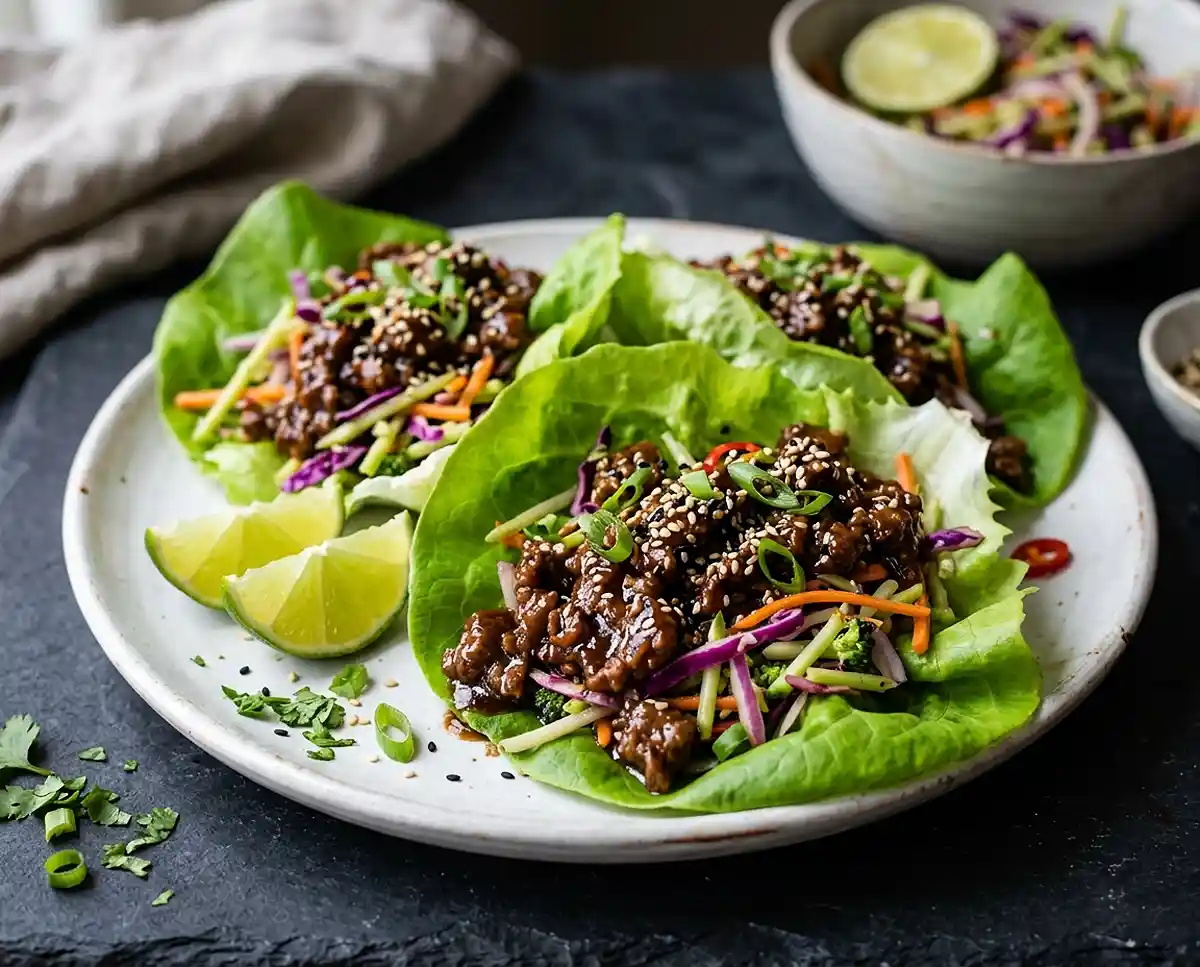
Savory gluten-free teriyaki steak lettuce wraps loaded with seasoned ground beef, broccoli slaw, and glossy teriyaki sauce — all in crisp lettuce cups in about 20 minutes.
I used to overcomplicate lettuce wraps by making homemade teriyaki from scratch, julienning my own vegetables, and trying to balance soy sauce ratios while simultaneously browning meat. The result was usually a sticky mess on the stove, unevenly cooked beef, and vegetables that were either raw or mush. It took me longer to clean up than it did to eat.
The night I simplified everything is the night these Gluten-Free Teriyaki Steak Lettuce Wraps became a permanent part of my rotation. I grabbed a bag of pre-shredded broccoli slaw, a pouch of Kevin’s Teriyaki sauce, and let the wok do the work. One pan, about 20 minutes, and dinner was on the table with almost nothing to wash afterward.
Table of Contents
Why You’ll Love These Gluten-Free Teriyaki Steak Lettuce Wraps
- Big, bold teriyaki flavor with zero fuss: Pre-made gluten-free teriyaki sauce coats the beef and vegetables in a glossy, savory-sweet glaze that tastes like it came from your favorite Asian takeout spot — without measuring a single tablespoon of soy sauce.
- One-pan, 20-minute dinner: Everything cooks in a single wok or large skillet. Brown the beef, toss in the slaw, pour in the sauce, scoop into lettuce cups. This teriyaki steak dinner is genuinely fast enough for the busiest weeknights.
- Naturally low-carb and gluten-free: Crisp lettuce cups replace tortillas or buns, keeping the meal light and carb-conscious. With a certified gluten-free teriyaki sauce, the entire dish is safe for gluten-free diets without any modifications.
- Feeds a crowd easily: Three pounds of ground beef and two bags of broccoli slaw make six generous servings — enough for a full family dinner or easy leftovers for the next day’s lunch.
The Secret to the Best Gluten-Free Teriyaki Steak Lettuce Wraps
- Cooking the beef and onion first without the vegetables lets the meat develop a proper sear and renders out excess fat before the slaw goes in. If you add everything at once, the moisture from the vegetables drops the pan temperature and the beef steams instead of browning. That browned, caramelized surface is where most of the savory depth comes from.
- Pre-shredded broccoli slaw is the ultimate shortcut that doesn’t sacrifice quality. The thin, uniform shreds cook quickly and evenly in 5-7 minutes, absorbing the teriyaki sauce while maintaining a slight crunch. According to Harvard’s School of Public Health guide on vegetables, broccoli-based slaws provide fiber, vitamin C, and sulforaphane — so this shortcut actually boosts the nutritional profile of the dish.
- Adding the teriyaki sauce last prevents it from burning on the hot pan surface during the initial cook. Teriyaki contains sugar that scorches quickly at high heat. By adding it after the beef and vegetables are cooked, the sauce heats through gently and reduces into a glossy coating rather than a burnt, bitter crust.
- Lettuce cups served separately keep the wraps crisp until the moment you eat them. If you scoop the hot filling into the lettuce ahead of time, the heat wilts the leaves within minutes. Serving the filling in a bowl alongside a platter of whole lettuce leaves lets everyone build their own wraps at the table.
Ingredients
Teriyaki Steak Filling
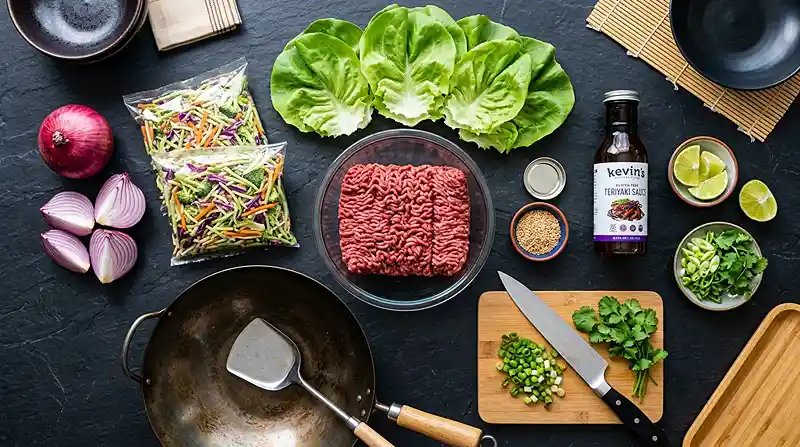
- 3 lbs ground beef
- 1 red onion (diced)
- 2 bags HEB broccoli slaw (or any store-bought coleslaw-type mix of veggies)
- 1 bag Kevin’s Teriyaki sauce (or any gluten-free teriyaki sauce you prefer)
- Lettuce cups (butter lettuce or iceberg recommended)
A note on the teriyaki sauce: Kevin’s Natural Foods Teriyaki is certified gluten-free and paleo-friendly, made with coconut aminos instead of soy sauce. If using a different brand, always check the label for wheat-based soy sauce or hidden gluten.
The Celiac Disease Foundation’s gluten-free food guide is a reliable resource for verifying whether your specific teriyaki brand is safe for a strict gluten-free or celiac diet.
Step-by-Step Instructions
Cook the Beef Base
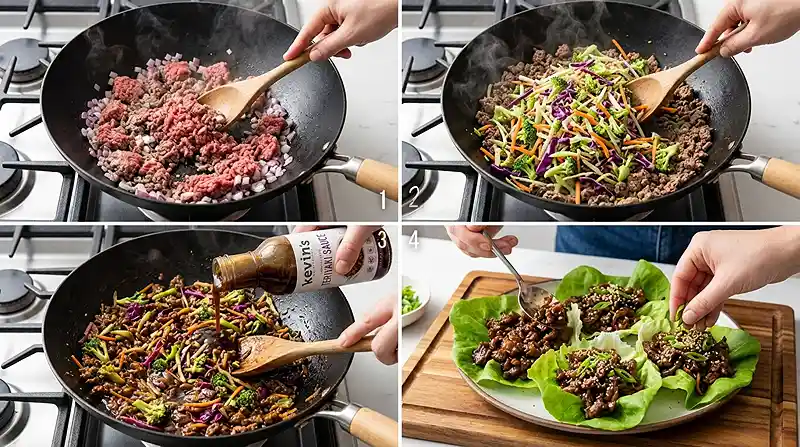
Step 1 — Brown the beef and onion. Place a large wok or pan on your stove and set it to medium-high heat. Add the 3 lbs ground beef and the diced red onion. Break the meat apart with a wooden spoon or spatula as it cooks.
Cook until the beef is mostly browned and the onion is softened and translucent, about 7-8 minutes. You’ll hear the sizzle intensify as the moisture cooks off and the beef starts to develop golden, caramelized bits on the surface — that’s the flavor you want.
Pro Tip: If your beef releases a lot of fat, drain off the excess before adding the vegetables. Too much rendered fat will make the slaw greasy and prevent the teriyaki sauce from coating everything evenly.
Add Vegetables and Sauce
Step 2 — Toss in the broccoli slaw. Add the 2 bags of broccoli slaw to the wok and stir to combine with the beef. Let cook for 5-7 minutes, stirring occasionally, until the slaw is tender but still has a slight crunch. The shreds will shrink down significantly as they cook — like a pile of fresh spinach wilting to a fraction of its original volume.
Step 3 — Pour in the teriyaki sauce. Add the full bag of Kevin’s Teriyaki sauce and stir until everything is evenly coated in a glossy, sticky glaze. Let cook for another 5-7 minutes over medium heat, stirring occasionally, until the sauce thickens slightly and clings to the meat and vegetables.
You’ll know it’s ready when the mixture looks shiny and saucy but not soupy. The sauce should coat a spoon without dripping off immediately.
Assemble and Serve
Step 4 — Serve in lettuce cups. Scoop generous portions of the teriyaki beef filling into crisp lettuce cups and serve immediately. Butter lettuce leaves work best because they’re pliable and cup-shaped, but iceberg lettuce offers a satisfying cold crunch.
You know… the contrast between the warm, savory filling and the cold, crisp lettuce is what makes these lettuce wraps so addictive. It’s a textural experience you just don’t get with a tortilla or a bun.
Make It Your Own
Swap the protein: Ground turkey or ground chicken both work as lighter alternatives to ground beef. Cook time stays the same, but turkey and chicken release less fat, so you won’t need to drain before adding the slaw. These gluten-free steak wraps are just as satisfying with poultry if you’re watching your saturated fat intake.
Use actual steak: For a more traditional teriyaki steak dinner, slice 3 lbs of flank steak or sirloin into thin strips and sear them in the hot wok for 2-3 minutes per side before adding the vegetables. The strips cook faster and develop more caramelized surface area than ground beef, which intensifies the teriyaki flavor.
Man, oh man… if you add a tablespoon of toasted sesame oil and a handful of chopped green onions in the last minute of cooking, the whole dish transforms. The sesame oil adds a deep, nutty aroma and the green onions bring a sharp freshness that cuts through the rich teriyaki glaze.
Change the slaw: Any pre-shredded coleslaw mix, Asian stir-fry vegetable blend, or shredded cabbage bag works in place of the broccoli slaw. Rainbow slaw with purple cabbage and carrots adds color and a slightly sweeter crunch. The key is using pre-shredded vegetables so they cook evenly in the 5-7 minute window.
Make it spicy: Stir in 1-2 teaspoons of sriracha or a drizzle of chili garlic sauce with the teriyaki for a spicy kick. Add it at the sauce stage so the heat distributes evenly. A few thin slices of fresh jalapeno on top of the finished wraps adds controlled, bite-by-bite heat.
Common Problems and How to Fix Them
Problem: The filling is watery and soupy. Too much moisture from the slaw or under-rendered beef fat diluted the sauce. Make sure the beef is fully browned and drained before adding the vegetables, and let the slaw cook for the full 5-7 minutes so its moisture evaporates. If the filling is still wet after adding the sauce, increase the heat slightly and cook for an extra 2-3 minutes uncovered.
Problem: The teriyaki sauce tastes burnt or bitter. The heat was too high when you added the sauce. Teriyaki contains sugar that caramelizes and then scorches quickly at high temperatures. Well… the fix is simple — reduce your burner to medium before pouring in the sauce, and stir frequently to keep it moving across the hot surface rather than sitting in one spot.
Problem: The lettuce cups tear when I fill them. You’re using leaves that are too small or too thin. Butter lettuce and iceberg lettuce produce the sturdiest, most cup-shaped leaves. Separate the leaves carefully from the head by cutting out the core and gently peeling them away under cool running water. Pat them completely dry so the filling doesn’t slide around.
Problem: The broccoli slaw is mushy. You cooked it too long. Five to seven minutes is the target — the shreds should be tender but still offer resistance when you bite through them. If you’re doubling the recipe or using a smaller pan, the slaw takes longer to cook evenly, which can push some pieces past the ideal texture.
Storage and Meal Prep
| Method | Duration | Notes |
|---|---|---|
| Counter | Up to 2 hours | Covered; keep lettuce separate |
| Refrigerator | 3-4 days | Store filling only in airtight container |
| Freezer | Up to 3 months | Freeze filling in portions; thaw overnight in fridge |
Always store the teriyaki beef filling and the lettuce cups separately. Lettuce wilts and turns soggy within minutes of contact with warm or moist food, so keeping them apart until serving time is essential for that crisp, fresh bite.
To reheat, warm the filling in a skillet over medium heat for 3-4 minutes, adding a splash of water or extra teriyaki sauce to loosen the glaze. Microwaving works in a pinch — heat in 60-second bursts, stirring between rounds. Leftover filling is also excellent over steamed rice, cauliflower rice, or tossed with gluten-free noodles for a quick stir-fry bowl.
Your Questions Answered
Can I use a different teriyaki sauce brand?
Yes, any gluten-free teriyaki sauce works. Kevin’s Natural Foods uses coconut aminos and is certified paleo and gluten-free, but brands like Primal Kitchen and San-J also make gluten-free teriyaki options. Always check the label for wheat-based soy sauce, which is the most common source of hidden gluten in teriyaki.
What’s the best lettuce for wraps?
Butter lettuce and iceberg lettuce are the two best options. Butter lettuce leaves are soft, pliable, and naturally cup-shaped, which makes them easy to fold around filling. Iceberg offers a satisfying cold crunch and holds up better under heavier fillings. Romaine works in a pinch but tends to crack rather than cup.
How do I keep the lettuce cups from getting soggy?
Serve the filling and lettuce separately and let everyone assemble their own wraps at the table. Wash and dry the lettuce leaves completely — any residual water accelerates wilting. Never scoop hot filling into the cups more than a minute or two before eating.
Can I make this ahead for meal prep?
Yes — the filling is excellent for meal prep. Cook the full batch, let it cool, and divide into individual airtight containers. Reheat each portion in a skillet or microwave and serve with fresh lettuce cups. The filling keeps for 3-4 days in the fridge and freezes well for up to 3 months.
Why did my filling taste bland?
The most likely cause is not cooking the sauce long enough to reduce and concentrate. Let the teriyaki simmer with the beef and slaw for the full 5-7 minutes so the sugars caramelize and the flavor intensifies. A pinch of salt and a squeeze of fresh lime juice at the end can also brighten a flat-tasting batch significantly.
Serving Suggestions
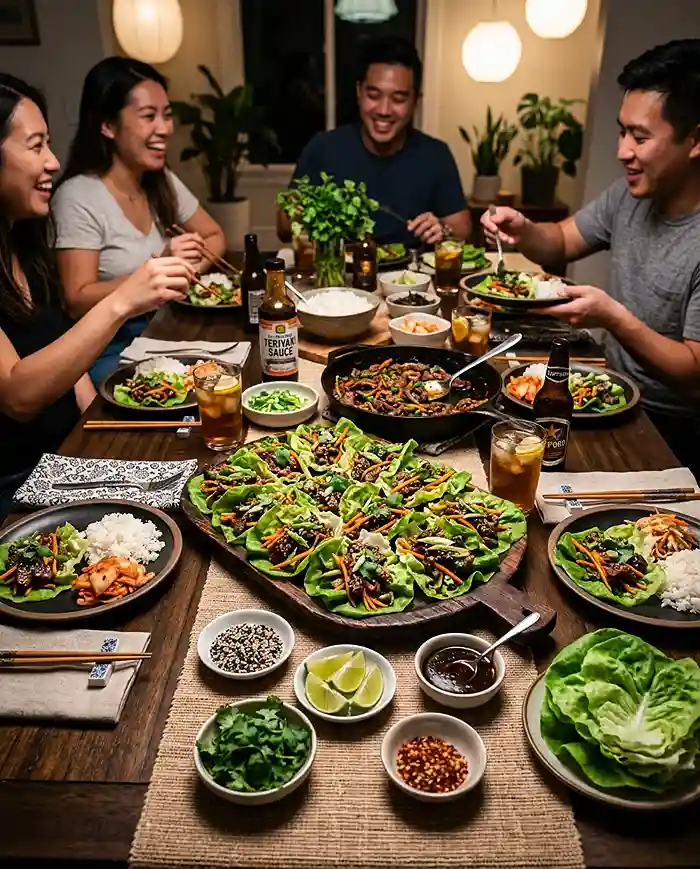
These Gluten-Free Teriyaki Steak Lettuce Wraps are a natural centerpiece for a Super Bowl watch party or casual game-night dinner — set out the filling in a big bowl surrounded by lettuce leaves and let everyone build their own wraps. It’s interactive, fun, and way more satisfying than a bag of chips.
For a complete spread, serve these alongside gluten-free roasted sweet potato rounds as a starchy side that soaks up the extra teriyaki sauce beautifully.
Round out the meal with something cool and refreshing like a gluten-free cherry vanilla smoothie bowl for a light dessert, or go indulgent with gluten-free brown butter blueberry blondies if you want something rich and sweet to close the evening.
Go Make These Tonight
If you need a fast, flavorful, naturally gluten-free dinner that the whole family will actually get excited about, these teriyaki steak lettuce wraps are it. One pan, 20 minutes, six generous servings, and a cleanup that takes less time than eating.
I’d love to hear what toppings or sauce swaps you try — drop a comment below with your favorite combination. And if that glossy, teriyaki-coated filling piled into crisp lettuce cups looks as good on your table as it does on mine, save this recipe to your Pinterest board so it’s ready for your next busy weeknight.
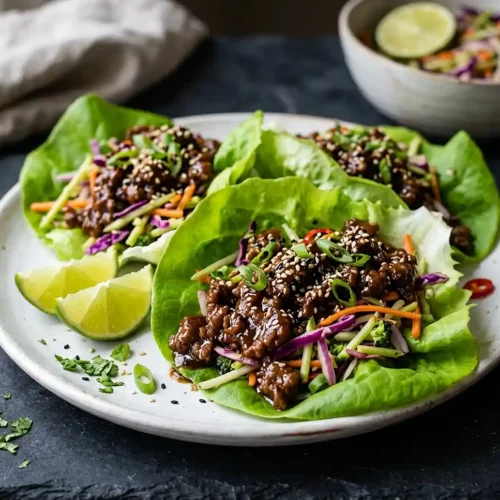
Gluten-Free Teriyaki Steak Lettuce Wraps
Equipment
- Large wok or skillet
- Wooden spoon or spatula
Ingredients
Teriyaki Steak Filling
- 3 lbs ground beef
- 1 red onion diced
- 2 bags HEB broccoli slaw or any store-bought coleslaw-type mix of veggies
- 1 bag Kevin’s Teriyaki sauce or any gluten-free teriyaki sauce you prefer
- lettuce cups butter lettuce or iceberg recommended
Instructions
- Place a large wok or pan on your stove and set it to medium-high heat. Add in the 3 lbs ground beef and the diced red onion. Break the meat apart with a wooden spoon as it cooks until the beef is mostly browned and the onion is softened, about 7-8 minutes. Drain excess fat if needed.
- Once the ground beef is mostly cooked, add in the 2 bags of broccoli slaw and stir to combine. Let cook for 5-7 minutes, stirring occasionally, until the slaw is tender but still has a slight crunch.
- Add in the full bag of Kevin’s Teriyaki sauce and stir until everything is evenly coated in a glossy glaze. Let cook for another 5-7 minutes over medium heat, stirring occasionally, until the sauce thickens slightly and clings to the meat and vegetables.
- Scoop generous portions of the teriyaki beef filling into crisp lettuce cups and serve immediately. Keep the filling and lettuce cups separate until ready to eat for the crispest wraps.