Gluten-Free Tofu Peanut Noodle Bowls
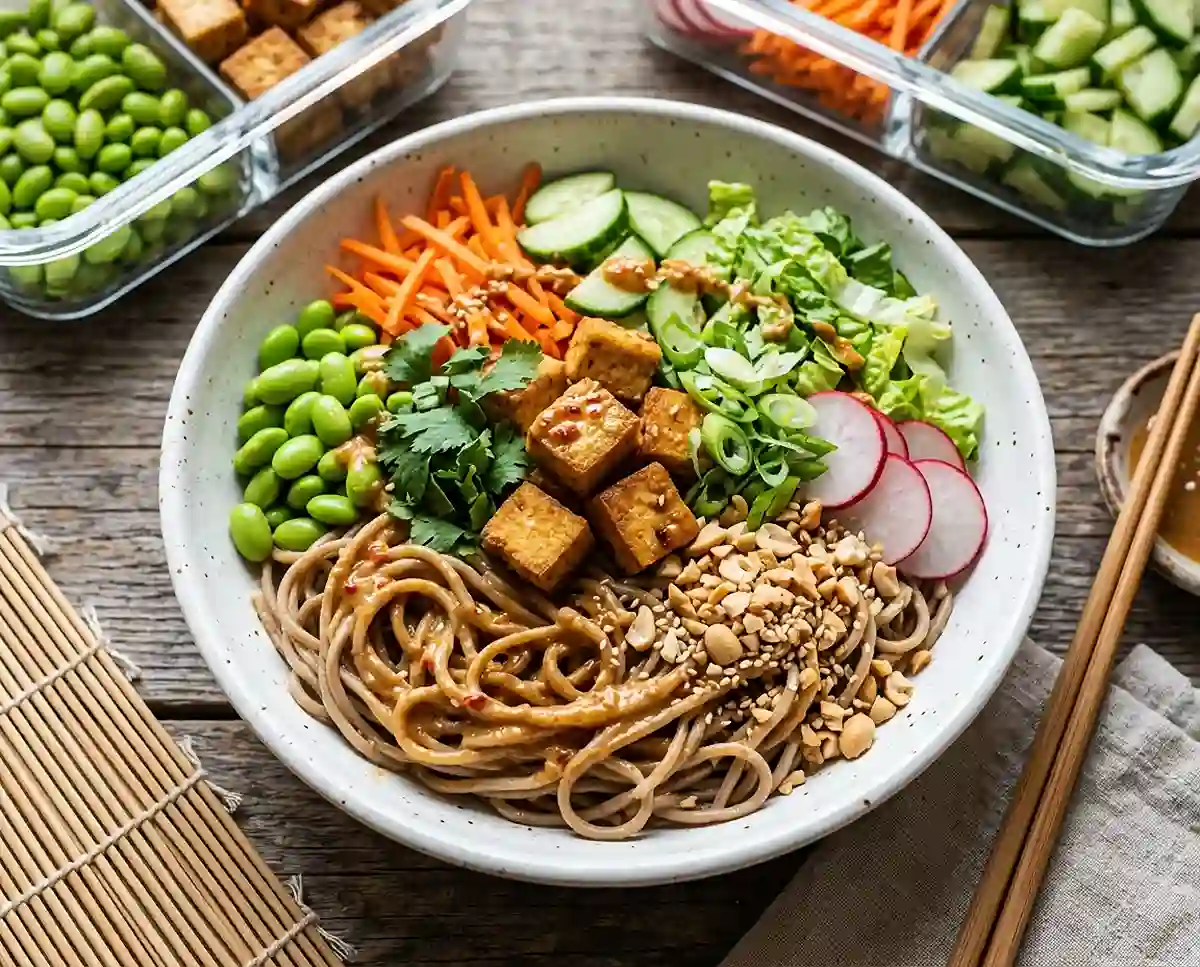
Make gluten-free tofu peanut noodle bowls with crispy baked tofu, fresh vegetables, and a rich homemade peanut sauce. Step-by-step, meal prep friendly.
My first attempt at a gluten-free tofu peanut noodle bowl was a soggy, clumping disaster—the tofu never crisped, the noodles stuck together, and the peanut sauce seized into a thick paste. I almost gave up on the whole idea. Then I figured out the two moves that changed everything: pressing the tofu properly and tearing it instead of cutting it.
Torn tofu has jagged, irregular edges that catch the cornstarch coating and get shatteringly crispy in a hot oven. Smooth cubes just don’t do that. Once I made that switch, these bowls went from frustrating experiment to the most-requested meal in my house.
You know… a bowl this colorful and satisfying is genuinely hard to believe it comes together in under an hour. The peanut sauce alone is worth making—it’s rich, tangy, and just spicy enough to keep you reaching for another forkful.
Table of Contents
Why You’ll Love This Gluten-Free Tofu Peanut Noodle Bowl
- Crispy, golden tofu that stays crunchy even after tossing with the noodles—no soggy bites
- Beginner-friendly—the technique is simple once you know the pressing and tearing trick
- High-protein and fully plant-based—tofu plus edamame makes this a genuinely satisfying meal
- Built for meal prep—store each component separately and assemble fresh bowls all week
The Secret to Perfect Gluten-Free Tofu Peanut Noodle Bowls
- Press the tofu for at least 15 minutes—extra-firm tofu still holds significant moisture. Removing it before coating is what allows the cornstarch to adhere and create a true crisp rather than a steam.
- Cornstarch is your crisping agent—it forms a thin, starchy shell around each piece that dehydrates in the oven heat, producing crunch that holds up even dressed in sauce.
- Toss the noodles in sauce while warm—warm buckwheat soba absorbs the peanut sauce more evenly than cold noodles, preventing clumping and ensuring every strand is coated.
- Thin the peanut sauce gradually—natural peanut butter thickens dramatically when mixed with acid. Adding warm water one tablespoon at a time gives you precise control over consistency.
Ingredients
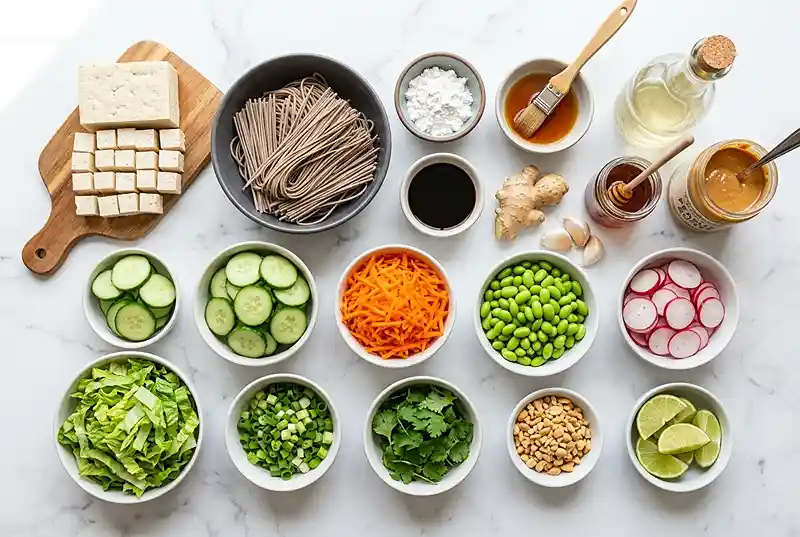
These ingredients are grouped into three components. Prepping all three in parallel cuts your total time significantly.
| Ingredient | Amount | Notes |
|---|---|---|
| Crispy Tofu | ||
| Extra-firm tofu, drained and pressed | 1 (16-oz) block | Press at least 15 minutes; tear into pieces |
| Gluten-free tamari | 1 tablespoon | Not soy sauce—check label for GF certification |
| Cornstarch | 2 tablespoons | Key crisping agent |
| Garlic powder | ½ teaspoon | |
| Onion powder | ½ teaspoon | |
| Salt and black pepper | Pinch each | |
| Avocado oil or olive oil | 1 tablespoon | Avocado oil has a higher smoke point |
| Vegan Peanut Sauce | ||
| Natural creamy peanut butter | ½ cup | Natural (just peanuts + salt) works best |
| Gluten-free tamari | 3 tablespoons | |
| Lime juice | 2 tablespoons | Fresh squeezed preferred |
| Rice vinegar | 2 tablespoons | |
| Maple syrup | 2 tablespoons | |
| Toasted sesame oil | 1 teaspoon | Adds depth—don’t skip |
| Garlic cloves, minced | 1–2 cloves | |
| Fresh ginger, grated | 1 tablespoon | Fresh ginger makes a noticeable difference |
| GF chili garlic sauce or sambal oelek | 2 teaspoons | Adjust for heat preference |
| Warm water | 2–4 tablespoons | Add gradually for desired consistency |
| Salt | Pinch, to taste | |
| Noodle Bowls | ||
| 100% buckwheat soba noodles or GF noodles of choice | 8 ounces | Must say “100% buckwheat”—blended versions contain wheat |
| Mini cucumbers, sliced | 2–3 | |
| Medium carrot, grated | 1 | |
| Shelled edamame | 1 cup | Frozen and thawed works fine |
| Radishes, thinly sliced | 3–4 | |
| Shredded romaine | 1–2 cups | |
| Green onions, thinly sliced | 2 | |
| Fresh cilantro, chopped | ¼ cup | Omit if cilantro-averse |
| Chopped peanuts | ¼ cup | For crunch and garnish |
Instructions
Crispy Tofu
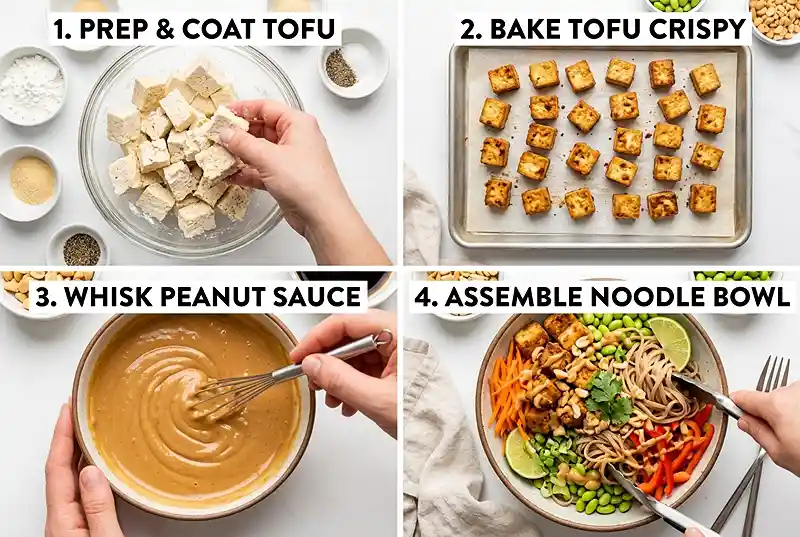
- Press and prep the tofu. Preheat the oven to 400°F and line a baking sheet with parchment paper. Press the tofu block for at least 15 minutes using a tofu press or by wrapping it in a clean towel and setting a heavy pan on top. Then tear it into irregular, bite-sized pieces rather than cutting—those ragged edges are what get crispy.
-
Coat the tofu. Toss the torn tofu pieces with the gluten-free tamari, cornstarch, garlic powder, onion powder, salt, pepper, and oil until every piece is evenly coated. The mixture should look slightly pasty—that coating is what crisps up in the oven.
Pro Tip: Toss in a large bowl rather than the baking sheet so you can really work the coating into every surface.
- Bake until golden. Spread the coated tofu onto the prepared baking sheet in a single layer—no overlapping. Bake for 35–45 minutes, tossing 2–3 times during baking, until the pieces are deep golden and the edges feel firm to the touch. You’re looking for pieces that look dry and slightly puffed, not soft or shiny.
Peanut Sauce & Assembly
- Make the peanut sauce. While the tofu bakes, add all peanut sauce ingredients—peanut butter, gluten-free tamari, lime juice, rice vinegar, maple syrup, sesame oil, minced garlic, grated ginger, and chili garlic sauce—to a medium bowl and whisk until completely smooth. Add warm water one tablespoon at a time until it pours easily but still coats a spoon.
-
Cook the noodles. Cook the 100% buckwheat soba noodles or your gluten-free noodles of choice according to package directions. Rinse briefly under cool water to stop cooking, but don’t over-rinse—a little warmth helps the sauce absorb. While the noodles cook, slice the cucumbers, grate the carrot, and thaw the edamame if needed.
Pro Tip: If using 100% buckwheat soba, check the label carefully—many soba noodles are blended with wheat flour. According to Beyond Celiac’s guidance on soba noodles, only “100% buckwheat” versions are safe for a gluten-free diet.
- Dress the noodles. Divide the noodles between four serving bowls and toss each portion with a few generous spoonfuls of peanut sauce. Do this while the noodles are still slightly warm so they absorb the sauce evenly and don’t clump.
- Build the bowls. Top the sauced noodles with the crispy tofu, sliced cucumber, grated carrot, edamame, sliced radishes, shredded romaine, green onions, chopped cilantro, and chopped peanuts. Drizzle additional peanut sauce over the top and serve immediately.
Make It Your Own
Well… the protein swap here is one of the easiest in any bowl recipe. If tofu isn’t your thing, crispy baked chickpeas work beautifully—toss them in the same cornstarch coating and bake at the same temperature for about 25–30 minutes. They bring a nuttier flavor and slightly different texture while keeping the bowl fully plant-based.
For a nut-free version, sunflower seed butter can replace the peanut butter in the sauce. The flavor profile shifts slightly—earthier and less sweet—so reduce the maple syrup by half and taste as you go. It won’t be identical, but it’s genuinely good and safe for nut allergies.
This recipe already qualifies as a strong vegetarian protein meal prep option, but you can push the protein higher by doubling the edamame or adding a soft-boiled egg on top for non-vegan versions. A jammy egg with a slightly runny center pressed into the peanut noodles is one of those combinations that works better than it sounds.
To make it lower in heat, reduce the chili garlic sauce to 1 teaspoon or skip it entirely and serve a small dish of sriracha on the side so each person can control their own heat level. This makes the bowls genuinely kid-friendly without compromising the adult version.
Common Problems & Solutions
Problem: The tofu isn’t getting crispy—it’s coming out soft and chewy.
The tofu wasn’t pressed long enough, or there was too much moisture left before coating. Press for a full 15 minutes minimum—longer is better. If the tofu still seems wet after pressing, pat each piece dry with a paper towel before tossing in the cornstarch mixture.
Problem: The peanut sauce is too thick and clumpy.
Natural peanut butter seizes when it hits cold acid (lime juice and vinegar). Whisk everything together first without water, then add warm—not cold—water gradually. This loosens the emulsion without breaking it. If it’s still stubborn, a brief 15-second microwave on the peanut butter before mixing helps considerably.
Problem: The noodles are sticking together in a clump.
Man, oh man… this one’s a buckwheat soba classic. Rinse the cooked noodles under cool water immediately after draining, then toss with a tiny drizzle of sesame oil while you finish prepping. Sauce them while still slightly warm—cold noodles grip each other more aggressively and are harder to separate.
Problem: The bowl tastes flat even with all the sauce.
Taste the peanut sauce before assembling. Gluten-free tamari brands vary significantly in saltiness and depth. According to Healthline’s breakdown of tamari versus soy sauce, tamari is naturally richer and less salty than regular soy sauce—so if your sauce tastes thin, a small pinch of salt and an extra squeeze of lime usually brings everything into focus.
Storage & Meal Prep
| Method | Duration | Notes |
|---|---|---|
| Counter | Not recommended | Assemble and eat immediately for best texture |
| Fridge (components separate) | 4–5 days | Store tofu, noodles, sauce, and veggies in separate containers |
| Freezer (tofu only) | Up to 1 month | Re-crisp in oven at 375°F for 10 minutes from frozen |
For meal prep, batch-cook the tofu and noodles on Sunday and store them separately. Keep the peanut sauce in a jar in the fridge—it thickens as it chills, so stir in a splash of warm water before using. The fresh vegetables should be prepped and stored in their own container for easy grab-and-assemble lunches.
Don’t combine the noodles and sauce until you’re ready to eat. Pre-dressed noodles absorb all the sauce overnight and can taste dry the next day. Assembly takes two minutes when everything is prepped—so keep it modular.
Your Questions Answered
Can I make the peanut sauce ahead of time?
Yes. The peanut sauce keeps in a sealed jar in the fridge for up to 7 days. It thickens as it chills, so stir in warm water one tablespoon at a time before serving. The flavor deepens overnight.
How do I make this recipe soy-free?
Replace the gluten-free tamari with coconut aminos in both the tofu coating and the peanut sauce. Coconut aminos are naturally soy-free and slightly sweeter, so reduce the maple syrup by about half a tablespoon to balance.
What gluten-free noodle works best if I cannot find 100% buckwheat soba?
Rice noodles, mung bean glass noodles, or gluten-free brown rice spaghetti all work well. Rice noodles are the most neutral in flavor and absorb the peanut sauce evenly without clumping.
Why did my tofu turn out rubbery instead of crispy?
Rubbery tofu usually means the oven was not fully preheated or the pieces were too crowded on the baking sheet. Give each piece space so moisture can evaporate. Use two baking sheets if needed and bake at a full 400°F.
Can I meal prep these gluten-free peanut noodle bowls for the week?
Yes. Store the tofu, noodles, peanut sauce, and fresh vegetables in separate airtight containers. Do not dress the noodles until ready to eat. Everything keeps in the fridge for 4 to 5 days.
Serving Suggestions
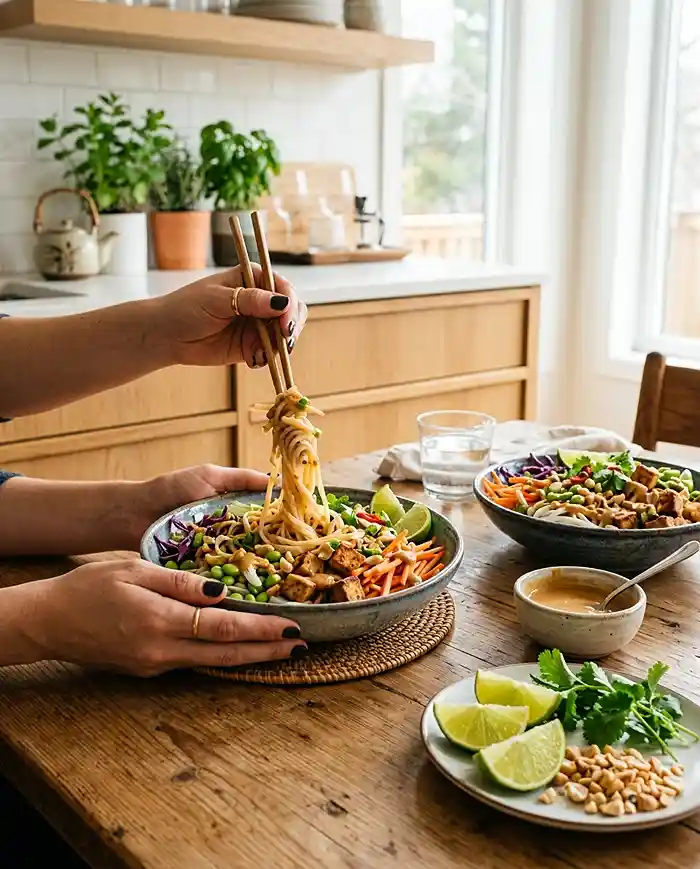
These bowls hold their own as a complete meal, but they pair wonderfully with a simple miso soup or a side of steamed dumplings for a fuller spread. For a summer cookout or a Fourth of July potluck with a crowd that includes vegetarians and gluten-free guests, this bowl checks every box and looks impressive on a buffet table.
If you’re building a weekly bowl rotation, these gluten-free peanut noodles sit naturally alongside this gluten-free miso ginger salmon rice bowl for variety. For a protein-rich non-vegetarian option, this cottage cheese chicken enchilada bowl rounds out a satisfying weekly meal prep lineup. And if you want something lighter and fresh, this gluten-free caprese chicken rice salad makes a great contrast.
Give these bowls a try this week and drop a comment below letting me know which variation you tried—I always love hearing what swaps people make. If you share yours on Pinterest, tag it so others in the gluten-free community can find it too.
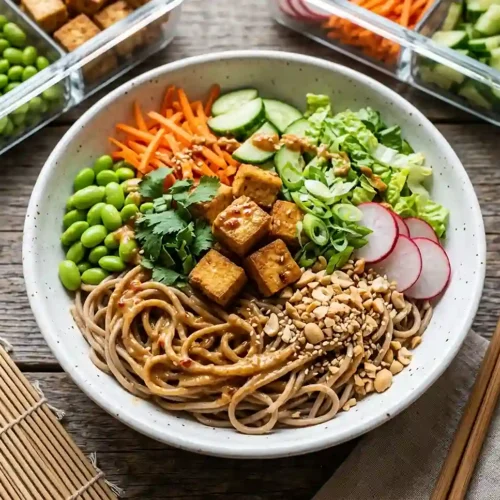
Gluten-Free Tofu Peanut Noodle Bowls with Crispy Baked Tofu
Equipment
- Baking sheet
- Parchment paper
- Large mixing bowl
- Medium bowl
- Whisk
- Pot
- Knife
- Cutting board
Ingredients
Crispy Tofu
- 1 16-oz block Extra-firm tofu, drained and pressed Press at least 15 minutes; tear into pieces
- 1 tbsp Gluten-free tamari Check label for gluten-free certification
- 2 tbsp Cornstarch Key crisping agent
- ½ tsp Garlic powder
- ½ tsp Onion powder
- 1 pinch Salt
- 1 pinch Black pepper
- 1 tbsp Avocado oil or olive oil
Vegan Peanut Sauce
- ½ cup Natural creamy peanut butter Natural peanut butter preferred
- 3 tbsp Gluten-free tamari
- 2 tbsp Lime juice Fresh squeezed preferred
- 2 tbsp Rice vinegar
- 2 tbsp Maple syrup
- 1 tsp Toasted sesame oil
- 1-2 cloves Garlic, minced
- 1 tbsp Fresh ginger, grated
- 2 tsp Gluten-free chili garlic sauce or sambal oelek Adjust to taste
- 2-4 tbsp Warm water Add gradually
- 1 pinch Salt To taste
Noodle Bowls
- 8 oz 100% buckwheat soba noodles or gluten-free noodles Must be 100% buckwheat if using soba
- 2-3 Mini cucumbers, sliced
- 1 Medium carrot, grated
- 1 cup Shelled edamame
- 3-4 Radishes, thinly sliced
- 1-2 cups Shredded romaine
- 2 Green onions, thinly sliced
- ¼ cup Fresh cilantro, chopped Optional
- ¼ cup Chopped peanuts For garnish
Instructions
- Preheat oven to 400°F and line a baking sheet with parchment paper. Press tofu for at least 15 minutes, then tear into irregular bite-sized pieces.
- Toss tofu with tamari, cornstarch, garlic powder, onion powder, salt, pepper, and oil until evenly coated.
- Spread tofu on the baking sheet and bake for 35–45 minutes, tossing 2–3 times, until golden and crispy.
- Whisk together peanut butter, tamari, lime juice, rice vinegar, maple syrup, sesame oil, garlic, ginger, chili garlic sauce, and warm water until smooth.
- Cook gluten-free noodles according to package directions. Prepare cucumbers, carrot, edamame, radishes, romaine, green onions, and cilantro.
- Divide noodles among four bowls and toss with peanut sauce while still warm.
- Top noodles with crispy tofu, vegetables, edamame, herbs, and peanuts. Drizzle with additional peanut sauce and serve immediately.