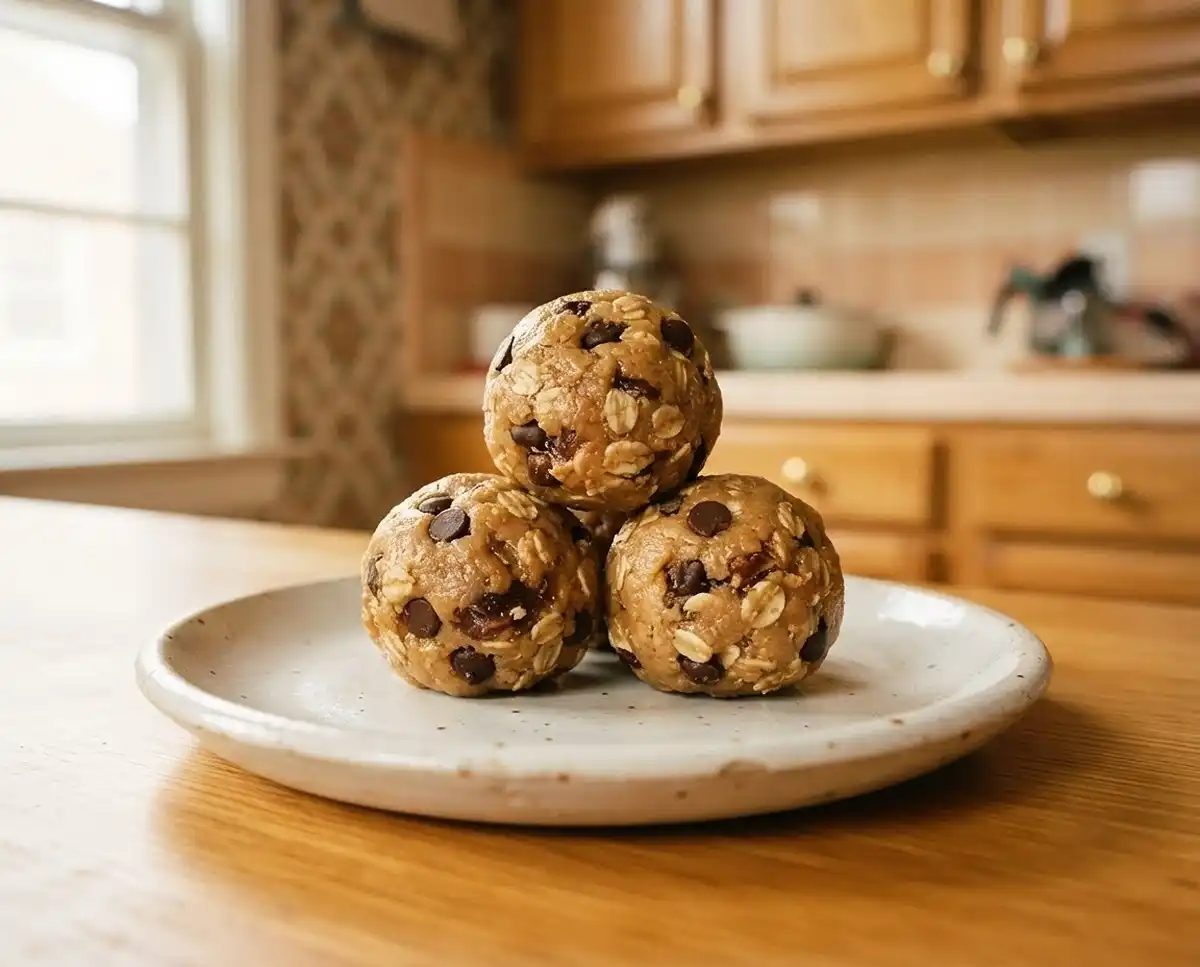
Oatmeal Cookie Dough Balls
Make gluten-free oatmeal cookie dough balls with oats, Medjool dates, peanut butter and mini chocolate chips. Step-by-step, ready after a short chill.
A student in my Saturday workshop once asked why her energy balls crumbled the moment she rolled them. Turns out she’d used hard, dried-out dates from the back of the pantry. That lesson is why this gluten-free oatmeal cookie dough balls recipe starts with soft Medjool dates.
Craving edible cookie dough without the oven or the wait? Discover these no bake gluten free snacks packed with easy, bite-sized treats for satisfying sweet cravings. You might find your next irresistible snack obsession among these fuss-free ideas!
At a Glance: Why These Gluten-Free Oatmeal Cookie Dough Balls Deliver
These no-bake balls give you soft, chewy cookie dough flavor in about 10 minutes of hands-on time.
- Texture and flavor: Soft, chewy, and lightly sweet from dates and maple syrup, with cinnamon and mini chocolate chips throughout.
- Difficulty level: Beginner-friendly. If you can use a food processor and roll a ball, you can make these.
- Unique advantages: No oven, no raw eggs, naturally dairy-free with dairy-free chips, and easy to make with another nut butter.
- When they work best: Make-ahead snacks, lunchboxes, and post-workout bites. They keep in the fridge for up to 1 week.
What Makes These Gluten-Free Oatmeal Cookie Dough Balls Actually Work
These balls hold together because dates and peanut butter act as the binder, so you need no flour, eggs, or gums.
- Medjool dates are the glue. They’re high in natural sugars and pectin, a soluble fiber that turns sticky when blended. That stickiness holds the oats together without any baking.
- The food processor softens the oats. Cutting the oats into smaller pieces lets them absorb moisture from the dates. The dough turns tender instead of dry and chunky.
- Peanut butter adds fat and richness. The fat coats the oat and date particles, which gives the dough its smooth, cookie-dough mouthfeel.
- Chilling firms the dough. The fats in the nut butter solidify in the fridge, so the balls hold their shape and taste cool and dense.
Oats deserve extra care for anyone avoiding gluten, since they often pick up stray gluten during growing and milling. Certified gluten-free oats are the safe choice.
For background, see Health Canada’s position on oats and celiac disease.
A small number of people with celiac disease react even to pure oats. If that’s you, check with your doctor first.
Table of Contents
Ingredients
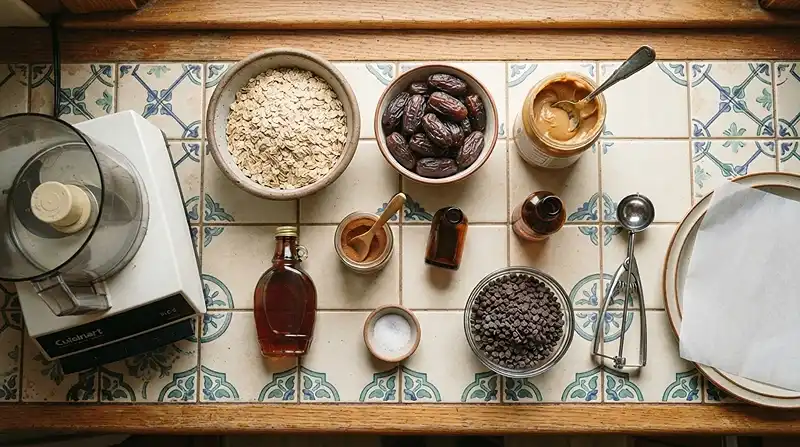
This recipe makes 12 cookie dough balls. Read every label, and the Celiac Disease Foundation’s label reading guide is a helpful refresher.
Dry Ingredients
- 1½ cups rolled oats, certified gluten-free
- ½ teaspoon ground cinnamon, labeled gluten-free
- ½ teaspoon fine sea salt
Wet Ingredients
- 11 large Medjool dates, pitted
- ½ cup creamy peanut butter or another nut butter, labeled gluten-free
- 3 tablespoons pure maple syrup
- 1 teaspoon pure vanilla extract, labeled gluten-free
Mix-In
- ⅓ cup mini chocolate chips, labeled gluten-free and dairy-free
Choose soft, plump Medjool dates. They blend into a smooth, sticky paste, while firmer dates can leave the dough crumbly.
Instructions
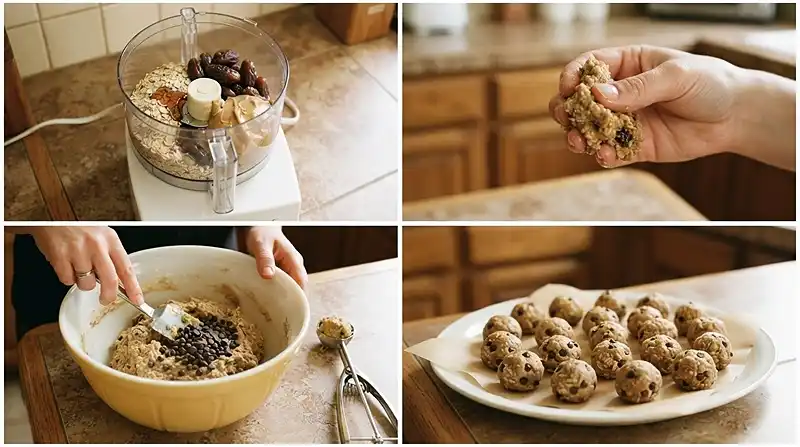
- Process the ingredients. Add the certified gluten-free rolled oats, pitted dates, peanut butter, maple syrup, cinnamon, vanilla extract, and salt to a food processor. Pro Tip: If your dates feel firm, soak them in warm water for 10 minutes and drain well first.
- Blend into dough. Process until the mixture is finely combined and sticky enough to hold together when pressed between your fingers. If it seems too dry, add 1 teaspoon of water at a time and pulse again. Pro Tip: Scrape down the bowl once, since dates tend to clump near the blade.
- Add the chocolate chips. Transfer the dough to a large mixing bowl. Add the mini chocolate chips and fold them in using clean hands or a spatula.
- Shape the balls. Scoop the mixture into 12 equal portions using a cookie scoop or tablespoon. Roll each portion between your palms to form a smooth ball. Pro Tip: Slightly damp palms keep the dough from sticking.
- Chill. Arrange the balls on a parchment-lined plate and refrigerate for 20–30 minutes to firm up. They should feel cool and hold their shape when you pick one up.
- Serve and store. Enjoy chilled or slightly softened at room temperature. Store in an airtight container in the refrigerator for up to 1 week.
Adapting This Recipe to Your Kitchen
Almond butter, cashew butter, or any other nut butter labeled gluten-free works in place of the peanut butter. Stir the jar well first, since a runny, oily top layer can make the dough greasy. Thicker nut butters give a firmer ball.
For an oatmeal raisin cookie flavor, use raisins in place of the mini chocolate chips. Trust me on this one… the cinnamon is what makes the flavor read as oatmeal raisin cookie rather than plain oat. Chop larger raisins so they don’t tear the balls apart.
The chocolate chips are optional. Leave them out for a plainer cookie dough ball, or keep dairy-free chips to make the whole batch dairy-free. Mini chips distribute best because they don’t weigh down any one ball.
Quick oats aren’t a good swap for rolled oats. They’re cut finer and can turn the dough pasty rather than chewy.
If you want a coating, roll the finished balls in a few extra gluten-free oats. It adds a little texture and makes them less sticky to hold.
Troubleshooting: Fixes for the Most Common Issues
Problem: The dough is dry and crumbly. Solution: Add 1 teaspoon of water at a time and pulse again until it holds when pressed. Firm dates release less sugar and moisture, so a tiny bit of water makes up the difference.
Problem: The dough is too sticky to roll. Solution: Chill the dough for 10 minutes, then roll with slightly damp palms. I’ll be straight with you… sticky dough is far easier to fix than crumbly dough, since cold firms the nut butter and dates.
Problem: The dough feels pasty or gummy. Solution: Stop processing as soon as it holds together between your fingers. Over-processing breaks the oats down into a paste and releases more starch.
Problem: The chocolate chips smear into the dough. Solution: Fold the chips in by hand after processing, not in the food processor. The blade chops the chips into streaks, while hand folding keeps them whole.
Storage & Meal Prep
These cookie dough balls keep best in the fridge, where the nut butter stays firm and the texture stays chewy.
| Method | Duration | Notes |
|---|---|---|
| Counter | 1-2 hours | Only to soften before serving |
| Fridge | Up to 1 week | Airtight container |
| Freezer | 2-3 months | Wrap individually |
No reheating is needed. Let a refrigerated ball sit at room temperature for a few minutes if you like a softer bite, or thaw a frozen one in the fridge for about 30 minutes.
Crumbled leftovers make a good topping for yogurt, oatmeal, or ice cream.
Common Questions, Straight Answers
Can I use quick oats instead of rolled oats?
Rolled oats work best. They keep a chewy texture, while quick oats are cut finer and can turn the dough pasty. Whichever you use, make sure they are certified gluten-free.
How do I make the dough hold together?
Use soft Medjool dates and process until the dough sticks when pressed between your fingers. If it still seems dry, add 1 teaspoon of water at a time and pulse again. Chilling the balls for 20 to 30 minutes also helps them firm up.
What’s the best nut butter for these cookie dough balls?
Creamy peanut butter is the most reliable choice. Other nut butters like almond butter also work. Choose a smooth, well-stirred jar labeled gluten-free so the dough blends evenly.
Why did my dough balls turn out sticky?
Sticky dough usually means warm dough or very moist dates. Chill the dough for 10 minutes and roll with slightly damp palms. Cold firms the nut butter, which makes the dough much easier to shape.
Can I freeze them?
Yes, wrap each ball individually and freeze for 2 to 3 months. Thaw in the fridge for about 30 minutes before eating. Wrapping them separately keeps them from freezing into one block.
Serving Suggestions
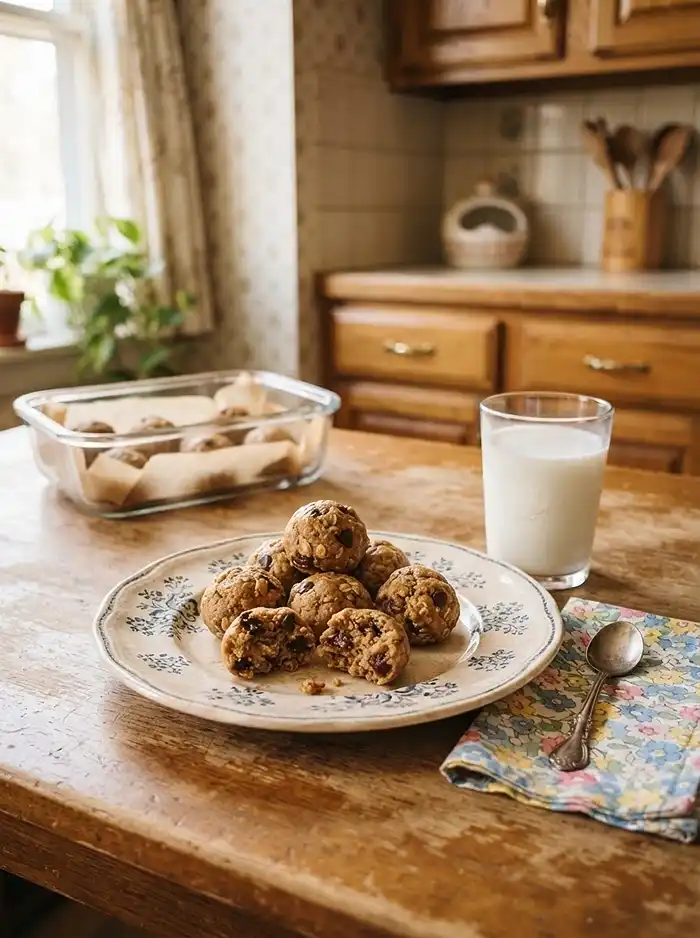
Pack a few in a cooler for a Memorial Day picnic, with ice packs so the nut butter stays firm. They also pair well with a cup of coffee or a glass of cold milk.
For more easy snacks, try this 3-ingredient no-bake coconut crack.
You might also like these gluten-free copycat Heavenly Hunks.
If you prefer a baked option, try these gluten-free flourless oatmeal cookie bars.
If you make these cookie dough balls, I’d love for you to leave a star rating and tell me how they turned out. Questions or swaps from your own kitchen are always welcome in the comments.
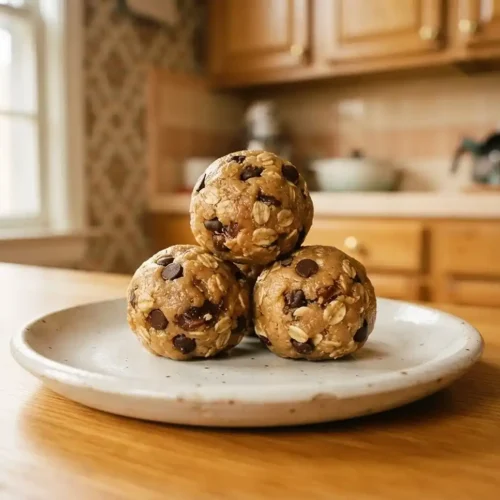
Gluten-Free Oatmeal Cookie Dough Balls
Equipment
- Food processor
- Large mixing bowl
- Spatula
- Cookie scoop or tablespoon
- Parchment paper
- Plate or baking sheet
- Measuring cups and spoons
Ingredients
Dry Ingredients
- 1½ cups Rolled oats Certified gluten-free
- ½ teaspoon Ground cinnamon Labeled gluten-free
- ½ teaspoon Fine sea salt
Wet Ingredients
- 11 large Medjool dates Pitted
- ½ cup Creamy peanut butter Or another nut butter, labeled gluten-free
- 3 tablespoons Pure maple syrup
- 1 teaspoon Pure vanilla extract Labeled gluten-free
Mix-In
- ⅓ cup Mini chocolate chips Labeled gluten-free and dairy-free
Instructions
- Process the ingredients. Add the certified gluten-free rolled oats, pitted dates, peanut butter, maple syrup, cinnamon, vanilla extract, and salt to a food processor. If your dates feel firm, soak them in warm water for 10 minutes and drain well first.
- Blend into dough. Process until the mixture is finely combined and sticky enough to hold together when pressed between your fingers. If it seems too dry, add 1 teaspoon of water at a time and pulse again. Scrape down the bowl once, since dates tend to clump near the blade.
- Add the chocolate chips. Transfer the dough to a large mixing bowl. Add the mini chocolate chips and fold them in using clean hands or a spatula.
- Shape the balls. Scoop the mixture into 12 equal portions using a cookie scoop or tablespoon. Roll each portion between your palms to form a smooth ball. Slightly damp palms keep the dough from sticking.
- Chill. Arrange the balls on a parchment-lined plate and refrigerate for 20–30 minutes to firm up. They should feel cool and hold their shape when you pick one up.
- Serve and store. Enjoy chilled or slightly softened at room temperature. Store in an airtight container in the refrigerator for up to 1 week.