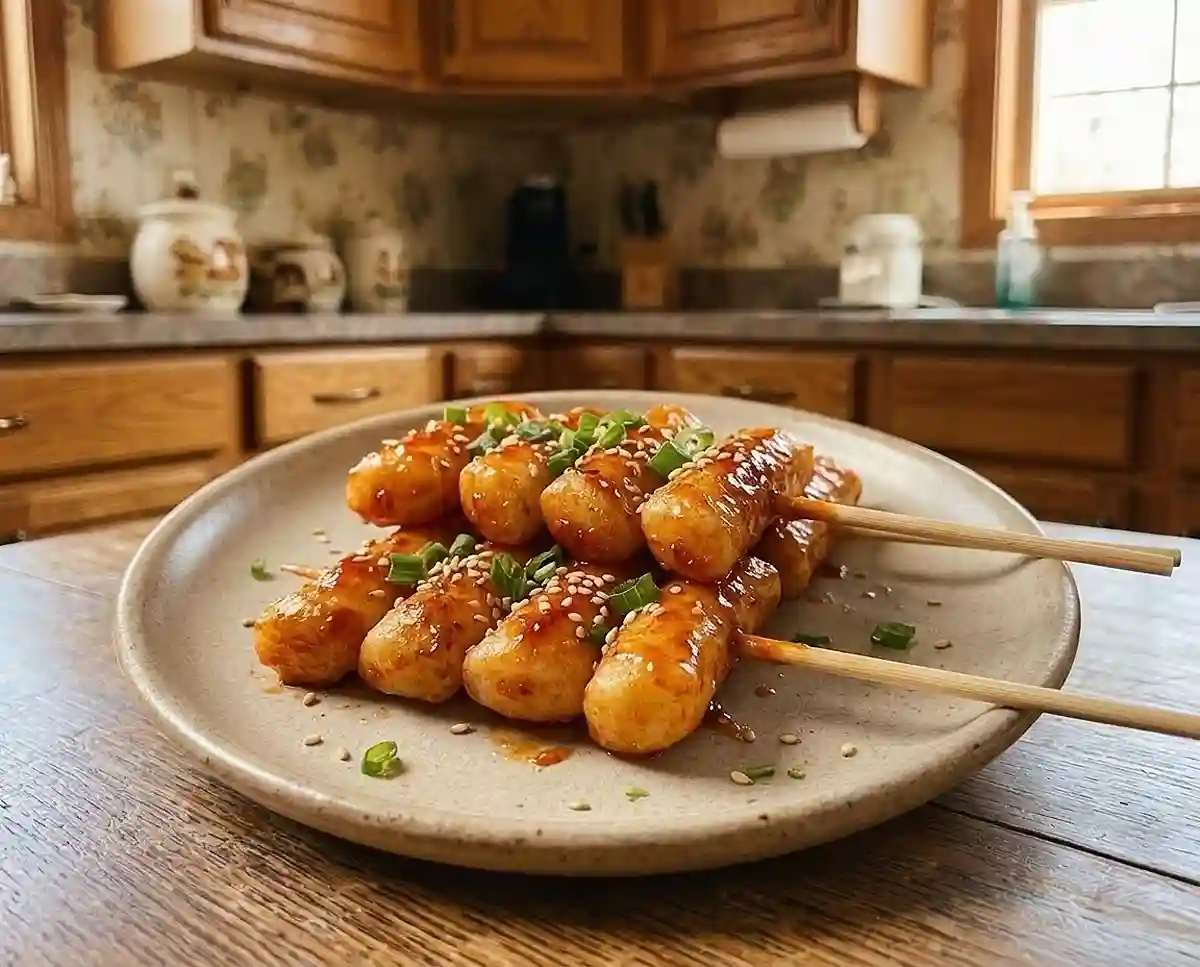
Tteokkochi (Korean Street Food Skewers)
Make Tteokkochi (Korean Street Food Skewers) with crispy gluten-free rice cakes and a sweet, spicy gochujang sauce. Follow easy step-by-step instructions, ingredient swaps, and troubleshooting tips for authentic Korean street food flavor.
Honestly… the first time I made gluten-free tteokkochi, I dropped frozen rice cakes straight into a hot skillet and watched half of them weld to the pan. The unsoaked wooden skewers started to smoke, and my daughter announced that our kitchen smelled like a campfire. Dinner was a very chewy lesson.
I learned the hard way that rice cakes need a quick soak and skewers need a bath before they ever touch heat. Once I fixed that, these Korean street food skewers turned out crisp outside, soft and chewy inside, and glazed in a sticky, spicy sauce. Who says you need a night market trip for street food at home?
The sauce takes a few minutes in one small saucepan, and the skewers cook in a nonstick skillet. Best of all, every ingredient can be gluten free when you read the labels carefully. I’ll show you exactly what to look for.
These Tteokkochi Korean street food skewers bring a sweet, spicy, and crispy twist to your party spread! Discover more gluten-free party snacks for exciting crowd-pleasers your guests won’t expect but won’t stop eating!
What Makes This Gluten-Free Tteokkochi Worth Making
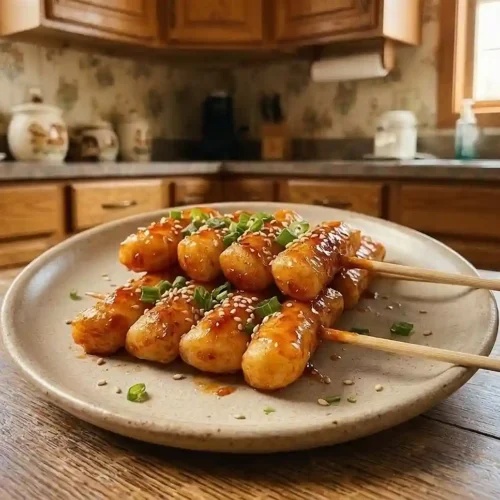
- Crispy outside, chewy inside: the rice cakes brown in a skillet and stay soft in the center, with a glossy gochujang glaze on top.
- Beginner-friendly: eight short steps, one saucepan, one skillet, and no deep fryer.
- Dairy-free and kid-friendly: there’s no dairy in the base recipe, and the sauce can be made milder with a few easy tweaks.
- Best for snack tables: the recipe serves 4, cooks in batches, and is easy to hold and eat.
The Science Behind Great Gluten-Free Tteokkochi
These skewers work because soaking softens the rice cakes before the skillet crisps them. Each technique below solves a common problem.
- Soaking or briefly boiling the rice cakes. Water seeps into the dense rice starch, so the center turns soft and chewy instead of staying hard.
- Tossing them in oil. A light coating keeps the sticky surfaces from gluing together and helps the skillet brown them evenly.
- Pan-frying over medium heat. The surface dries and browns, which creates a crisp shell with that toasty flavor.
- Simmering the sauce. Gentle heat blends the gochujang, tamari, and sugar, and a cornstarch slurry thickens it enough to cling to the skewers.
Gochujang is the biggest gluten trap here, since many brands include barley malt. The Beyond Celiac guide to gochujang explains why glutinous rice is safe but barley malt is not.
The same caution applies to tamari, rice vinegar, and the rice cakes themselves. The Celiac Disease Foundation label-reading guide shows how to check ingredient lists and gluten-free claims.
Table of Contents
Ingredients
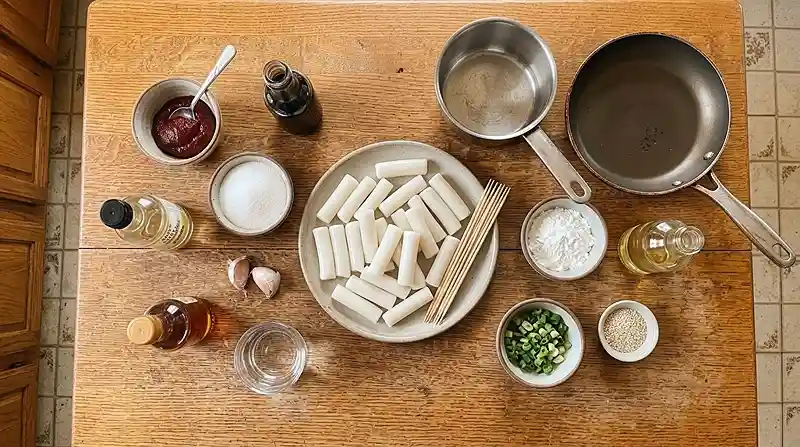
Servings: 4
For the Rice Cake Skewers
- 20 cylinder-shaped Korean rice cakes (tteok), made with rice flour only and labeled gluten-free
- 1 tablespoon neutral cooking oil, for brushing or pan-frying
- Wooden or heat-resistant skewers
For the Spicy Korean Sauce
- 1 tablespoon gochujang, certified gluten-free
- 2 teaspoons gluten-free tamari
- 2 teaspoons granulated sugar
- 1 teaspoon rice vinegar, labeled gluten-free
- 2 cloves garlic, minced, or 1 teaspoon garlic powder labeled gluten-free
- 2 tablespoons water
- 1 tablespoon sesame oil
Optional Sauce Thickener
- 1 teaspoon cornstarch, labeled gluten-free
- 1 tablespoon cold water
For Garnish
- ¼ cup chopped green onions
- 1 tablespoon white sesame seeds
Ingredient notes: Look for tteok in the refrigerated or frozen section of Asian grocery stores. Check that the ingredient list says rice flour only, because some rice cakes contain added starches.
Instructions
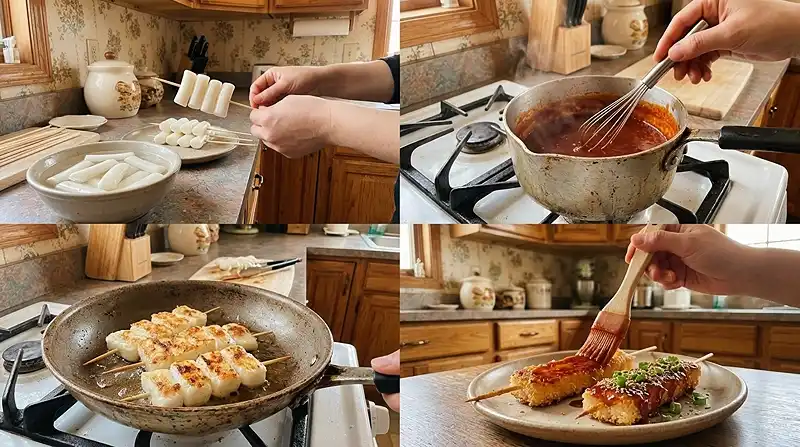
- Prepare the rice cakes: If using frozen rice cakes, soak them in warm water for 3–4 minutes until softened, or briefly boil them for less than 1 minute. Drain thoroughly and toss with a little cooking oil to prevent sticking. Pro Tip: They should feel pliable, like soft clay, before you thread them.
- Prepare the skewers: If using wooden skewers, soak them in water for about 20 minutes. Thread the rice cakes onto the skewers, either lengthwise or in groups of 3–4 pieces per skewer.
- Make the sauce: In a small saucepan, combine the gluten-free gochujang, tamari, sugar, rice vinegar, garlic, water, and sesame oil. Whisk until smooth.
- Simmer the sauce: Place the saucepan over medium heat and bring the mixture to a gentle boil, stirring occasionally. Reduce the heat and simmer for 2–3 minutes. The sauce should smell fragrant and look glossy.
- Thicken if needed: If the sauce is too thin, whisk the cornstarch with 1 tablespoon cold water in a small bowl. Slowly stir the slurry into the simmering sauce until it thickens. Remove from the heat. Pro Tip: You want it thick enough to coat a spoon.
- Cook the rice cakes: Heat the cooking oil in a large nonstick skillet over medium heat. Arrange the skewers in a single layer and cook for 2–3 minutes per side, turning carefully, until golden and crispy on the outside. Work in batches if necessary.
- Brush with sauce: Transfer the crispy rice cake skewers to a serving plate. Brush generously with the warm spicy sauce, coating all sides.
- Garnish and serve: Sprinkle with chopped green onions and white sesame seeds. Serve immediately while the rice cakes are warm and chewy. The shell crackles like thin ice before giving way to the soft center.
Ways to Customize This Recipe
Fried rice cakes are the heart of this recipe, but you can also add a cheesy twist. For grilled cheese tteok, tuck shredded mozzarella between rice cake pieces or melt it on top under the broiler. Check that the cheese is labeled gluten-free, since anti-caking agents vary.
Sausage skewers make a fun mix-and-match version. Alternate a few rice cakes with sliced sausage, but choose a sausage labeled gluten-free, since some contain fillers. The sausage fat adds richness, and the sauce balances it nicely.
Look… not everyone in my house loves heat. For a milder sauce, use a little less gochujang and add a splash more water. For a sweeter finish, stir in a small extra pinch of sugar, taste, and adjust.
If you can’t find heat-resistant skewers, wooden ones work well after soaking. Metal skewers are another option, but they get hot quickly, so use tongs. Skewers are optional too, because the rice cakes cook just as well loose in the pan.
If Something Went Wrong, Start Here
Rice cakes hard in the center → Soak them a little longer or boil them briefly. The dense starch needs time to absorb water before it can turn soft. A short soak in warm water solves this for most packages.
Rice cakes sticking to the pan → Toss them in oil and use a nonstick skillet. Oh wow, I once left them naked and they glued themselves to everything. A thin film of oil keeps the surface from fusing to the pan and to each other.
Sauce too thin → Whisk in the cornstarch slurry. Simmering alone may not thicken a small amount of sauce quickly. The cornstarch swells as it heats, so the sauce clings to the skewers instead of dripping off.
Skewers burning → Soak them longer or use heat-resistant ones. Dry wood catches and chars near a hot pan. Twenty minutes in water gives them a protective buffer.
Storage & Meal Prep
| Method | Duration | Notes |
|---|---|---|
| Counter | Up to 2 hours | Best served fresh, since cooked rice cakes firm up as they cool |
| Fridge (skewers) | 3-4 days | Airtight container; rice cakes harden in the cold, so reheat before eating |
| Fridge (sauce) | 5-7 days | Airtight jar; rewarm gently and whisk |
| Freezer (sauce) | 2-3 months | Freeze in small portions, then thaw and whisk |
To reheat skewers, pan-fry them over medium heat for a minute or two per side until the outside crisps again. A covered microwave works in a pinch, but the rice cakes won’t be as crunchy.
Spoon leftover sauce over rice bowls, fried eggs, or roasted vegetables so nothing goes to waste.
Tteokkochi (Korean Street Food Skewers) FAQs
Can I use frozen rice cakes for tteokkochi?
Yes, frozen rice cakes work well. Soak them in warm water for 3 to 4 minutes, or boil them for less than 1 minute, then drain and toss with oil. This softens the starch so the centers turn chewy instead of hard.
How do I know if my gochujang is gluten-free?
Look for a gluten-free label or certification on the jar. Many brands use barley malt or wheat, so read the ingredient list for barley, wheat, malt, or regular soy sauce. When in doubt, choose a certified gluten-free brand.
What’s the best rice cake for gluten-free tteokkochi?
Cylinder-shaped tteok made with rice flour only and labeled gluten-free is the best choice. The shape threads easily onto skewers and cooks evenly. Always check the ingredient list for added starches.
Why did my rice cakes turn hard?
Rice cakes harden as they cool, especially in the fridge. The starch firms up in the cold, so serve them warm. Reheating in a skillet brings back the chewy texture.
Serving Suggestions
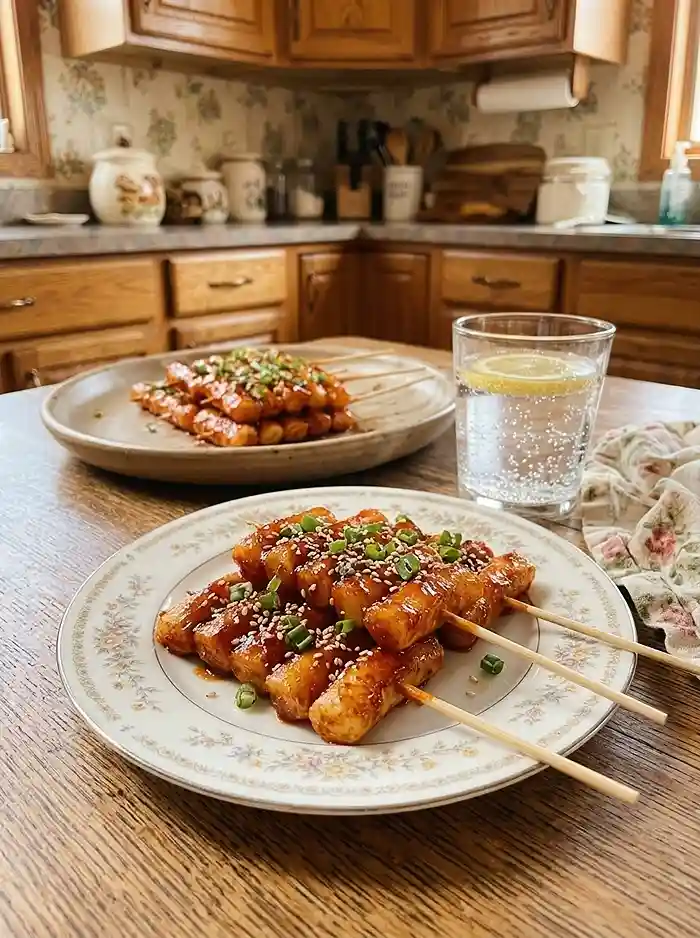
These skewers are a fun addition to a Super Bowl snack table, where guests can eat with one hand and keep watching the game. Serve them hot with extra sauce on the side and a pile of green onions.
For a bigger spread, pair them with these fun gluten-free sushi cups. Finish with a sweet gluten-free caramel apple dip or a tray of no-bake salted caramel pretzel bars.
Final Thoughts
Give this gluten-free tteokkochi a try this week, and let me know how it goes. Did you add cheese, swap in sausage, or turn the heat up or down? Share your tweaks in the comments, and leave a star rating if you enjoyed it.
Tteokkochi (Korean Street Food Skewers)
Equipment
- Food-safe wooden or heat-resistant skewers
- Small saucepan
- Whisk
- Large nonstick skillet
- Small mixing bowl
- Pastry brush
- Tongs
Ingredients
For the Rice Cake Skewers
- 20 cylinder-shaped Korean rice cakes (tteok) made with rice flour only and labeled gluten-free
- 1 tablespoon neutral cooking oil for brushing or pan-frying
- wooden or heat-resistant skewers wooden skewers should be soaked in water for about 20 minutes
For the Spicy Korean Sauce
- 1 tablespoon gochujang certified gluten-free
- 2 teaspoons gluten-free tamari
- 2 teaspoons granulated sugar
- 1 teaspoon rice vinegar labeled gluten-free
- 2 cloves garlic minced; alternatively, use 1 teaspoon garlic powder labeled gluten-free
- 2 tablespoons water
- 1 tablespoon sesame oil
Optional Sauce Thickener
- 1 teaspoon cornstarch labeled gluten-free
- 1 tablespoon cold water for mixing the cornstarch slurry
For Garnish
- ¼ cup green onions chopped
- 1 tablespoon white sesame seeds
Instructions
- Prepare the rice cakes: If using frozen rice cakes, soak them in warm water for 3–4 minutes until softened, or briefly boil them for less than 1 minute. Drain thoroughly and toss with a little cooking oil to prevent sticking. They should feel pliable, like soft clay, before threading.
- Prepare the skewers: If using wooden skewers, soak them in water for about 20 minutes. Thread the rice cakes onto the skewers, either lengthwise or in groups of 3–4 pieces per skewer.
- Make the sauce: In a small saucepan, combine the gluten-free gochujang, tamari, sugar, rice vinegar, minced garlic, water, and sesame oil. Whisk until smooth.
- Simmer the sauce: Place the saucepan over medium heat and bring the mixture to a gentle boil, stirring occasionally. Reduce the heat and simmer for 2–3 minutes until fragrant and glossy.
- Thicken if needed: If the sauce is too thin, whisk the cornstarch with 1 tablespoon cold water in a small bowl. Slowly stir the slurry into the simmering sauce until it thickens. Remove from the heat. The sauce should be thick enough to coat a spoon.
- Cook the rice cakes: Heat the cooking oil in a large nonstick skillet over medium heat. Arrange the skewers in a single layer and cook for 2–3 minutes per side, turning carefully, until golden and crispy on the outside. Work in batches if necessary.
- Brush with sauce: Transfer the crispy rice cake skewers to a serving plate. Brush generously with the warm spicy sauce, coating all sides.
- Garnish and serve: Sprinkle with chopped green onions and white sesame seeds. Serve immediately while the rice cakes are warm and chewy.