Brownie Batter Cottage Cheese Cheesecake
Make this gluten-free brownie batter cottage cheese cheesecake with simple ingredients, step-by-step instructions, and tips for a smooth, fudgy result every time.
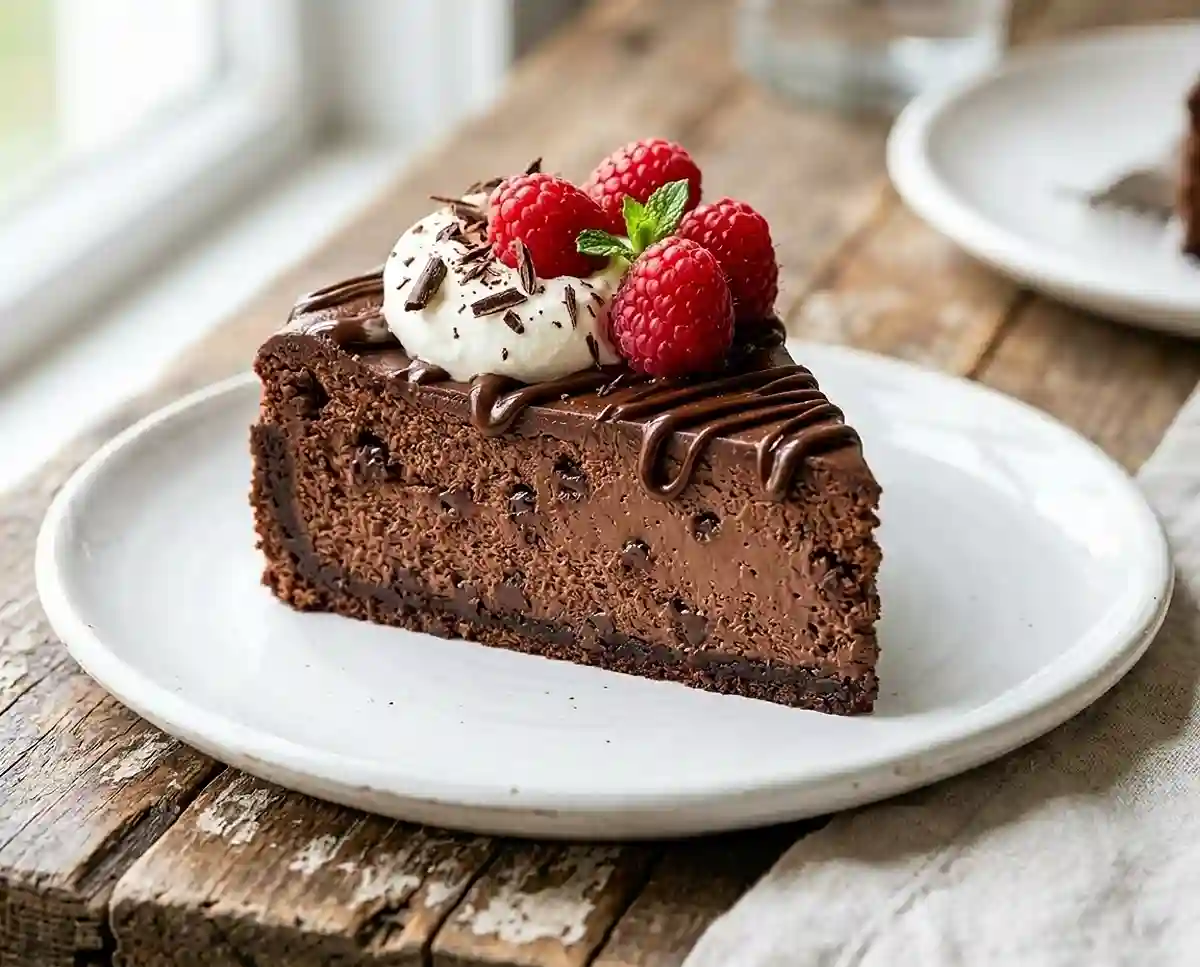
The first time I blended cottage cheese into a cheesecake batter, I was honestly skeptical. I’d been baking gluten-free desserts for years and had tried every hack in the book, but this one felt like a stretch. Then I pulled it out of the oven, chilled it overnight, and took that first slice — rich, fudgy, and dark as midnight — and I was completely hooked.
This gluten-free brownie batter cottage cheese cheesecake is the kind of recipe that earns a permanent spot in your rotation. It hits that sweet spot between a dense brownie and a silky cheesecake, with a depth of chocolate flavor that feels genuinely indulgent. And the best part? It comes together in a blender.
So, what makes a cheesecake actually taste like brownie batter without flour, without a crust, and without a long list of hard-to-find ingredients? The answer is simpler than you’d think — and I’ll walk you through every step.
Why You’ll Love This Brownie Batter Cottage Cheese Cheesecake
- Texture that delivers: The center stays soft and custardy — smooth as a proper New York-style cheesecake, with the dense fudginess of brownie batter baked in.
- Beginner-friendly: No water bath, no crust pressing, no cracking drama. Just blend, pour, and bake.
- High-protein bonus: Cottage cheese and optional protein powder bump the nutrition without compromising taste or texture.
- Naturally gluten-free: Almond flour replaces any traditional flour, making this safe for celiac and gluten-sensitive households alike.
The Secret to Perfect Gluten-Free Brownie Batter Cottage Cheese Cheesecake
- Blend until completely smooth: Cottage cheese has small curds that need to fully break down. Any unblended curds will leave a grainy texture in the final slice — not what we’re after.
- Almond flour as the binder: Traditional cheesecakes use a little flour for structure. Here, almond flour adds body without gluten, and it also contributes a subtle nuttiness that pairs beautifully with cocoa.
- Low and slow baking at 325°F: High heat is the enemy of a smooth cheesecake. The lower temperature gives the eggs and proteins time to set gently, preventing rubbery edges and cracking.
- The overnight chill is non-negotiable: The flavor and texture both improve dramatically after a full chill. Cutting it too early will give you a soft, loose slice that doesn’t hold its shape.
Table of Contents
Ingredients
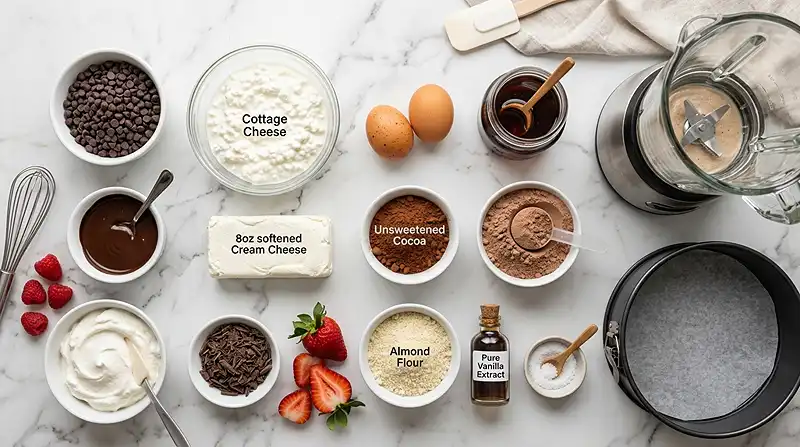
For the Cheesecake
| Ingredient | Amount | Notes |
|---|---|---|
| Cottage cheese | 2 cups | Full-fat blends smoothest; low-fat works too |
| Cream cheese, softened | 8 oz | Room temperature is key for a lump-free blend |
| Large eggs | 2 | Room temperature preferred |
| Pure maple syrup or honey | ⅓ cup | Both work; maple gives a deeper, slightly smoky note |
| Unsweetened cocoa powder | ¼ cup | Dutch-process adds richness; natural cocoa works fine |
| Gluten-free chocolate protein powder (optional) | 2 tbsp | Adds protein without altering flavor much |
| Almond flour | 2 tbsp | Binds the batter; do not substitute with coconut flour |
| Vanilla extract | 1 tsp | Pure vanilla only — imitation dulls the chocolate |
| Salt | ¼ tsp | Enhances and balances the cocoa bitterness |
| Mini gluten-free chocolate chips | ⅓ cup | Folded in after blending for melty pockets of chocolate |
Optional Toppings
- Melted dark chocolate
- Whipped cream
- Chocolate shavings
- Fresh berries
Instructions
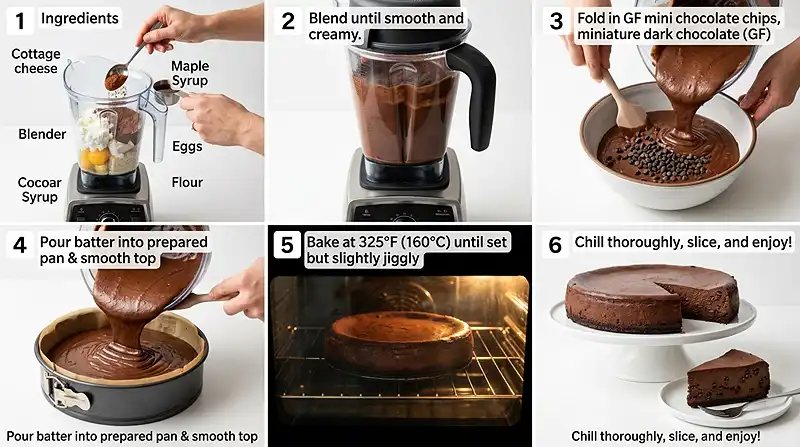
Step 1: Prepare the Oven
Preheat your oven to 325°F (165°C). This lower temperature is intentional — it’s what keeps the texture silky instead of rubbery.
Lightly grease an 8-inch springform pan, or line the bottom with a circle of parchment paper. The parchment makes unmolding completely stress-free.
Step 2: Blend the Batter
Add the cottage cheese, softened cream cheese, eggs, maple syrup, cocoa powder, protein powder (if using), almond flour, vanilla extract, and salt to a blender or food processor.
Blend until the mixture is completely smooth and creamy — no visible curds, no streaks. This usually takes about 60 seconds on high speed. Stop and scrape down the sides once if needed.
Pro Tip: If your cream cheese isn’t fully softened, cut it into small cubes before adding it to the blender. Cold cream cheese can cause lumps that won’t blend out cleanly.
Step 3: Fold In the Chocolate Chips
Pour the blended batter into a mixing bowl. Add the mini gluten-free chocolate chips and fold them in gently with a spatula — don’t stir aggressively or they’ll sink to the bottom during baking.
Step 4: Bake
Pour the batter into your prepared pan. Smooth the top with a spatula so it’s even from edge to center. Bake for 35–40 minutes, or until the edges are set and the center has a slight jiggle when you nudge the pan.
The center should look barely set — almost like it’s still a touch underdone. That’s exactly right. It will firm up fully as it chills.
Pro Tip: Check at 35 minutes. If the edges are pulling away from the sides and the center is nearly set, it’s done. Overbaking dries it out and kills that brownie batter quality we’re going for.
Step 5: Cool and Chill
Let the cheesecake cool completely at room temperature before touching the refrigerator. Rushing this step can cause condensation that makes the top sticky.
Once fully cool, refrigerate for at least 4 hours — but overnight is genuinely worth the wait. The texture transforms as it chills, firming into clean, sliceable pieces that hold their shape beautifully.
Make It Your Own
Well… one of the best things about this recipe is how flexible it is once you understand the base. Swapping the maple syrup for honey is the easiest change — honey adds a floral sweetness that works particularly well with dark cocoa powder.
If you want a dairy-free version, use a plant-based cream cheese (such as one made from cashews or coconut) alongside a high-quality dairy-free cottage cheese alternative. The texture will be slightly less dense, but the chocolate flavor holds up well. This is one of those swaps that works better than expected.
For a richer, more intense chocolate profile, replace the unsweetened cocoa powder with an equal amount of black cocoa powder. Black cocoa is what gives Oreos their distinctive dark color and deep flavor — it takes this cottage cheese dessert from chocolate to dramatically chocolatey.
Want to keep it closer to a traditional brownie batter dessert? Skip the protein powder and add an extra tablespoon of cocoa instead. It intensifies the flavor and leans the final result more toward dessert than high-protein snack territory — both are valid depending on the day.
Common Problems and Solutions
Man, oh man… the number of times I’ve seen people pull a cheesecake from the oven that looks picture-perfect, then cut it too soon and end up with something that slides off the spatula. Patience really is the secret ingredient here.
Problem: The center is too soft or doesn’t set. This usually means it was underbaked or not chilled long enough. Make sure you’re baking until the edges are firmly set with just a slight wobble at the very center. Then chill for the full 4 hours minimum — overnight is more reliable.
Problem: The texture is grainy or curdled. This is a blending issue. Cottage cheese must be blended until every single curd has broken down. If you’re using a standard blender, run it on high for a full 60 seconds and check the texture before adding the remaining ingredients.
Problem: The top cracked. Cracking in cheesecake typically happens from high heat or overbaking. At 325°F this is less common, but if you see cracks forming, cover loosely with foil for the last 10 minutes. Toppings like melted dark chocolate or whipped cream cover any cracks beautifully anyway.
Problem: The cheesecake sticks to the pan. Always grease the pan or use parchment. If using a springform, run a thin knife around the edge before releasing the latch — this prevents tearing on the sides.
For more background on why gluten-free baking behaves differently, the trusted celiac research at Celiac.org is a reliable starting point for understanding how removing gluten changes structure in baked goods.
Storage and Meal Prep
| Method | Duration | Notes |
|---|---|---|
| Counter | 2–3 days | Airtight container; best below 70°F room temp |
| Fridge | 5–7 days | Cover tightly; bring to room temp 15 min before serving |
| Freezer | 2–3 months | Wrap individual slices; thaw overnight in the fridge |
This cheesecake actually tastes better on day two and three as the flavors deepen in the fridge. Make it the night before you need it and you’ll be rewarded.
For no-waste prep, slice the whole cheesecake immediately after the overnight chill. Wrap individual slices in plastic wrap before placing in a freezer-safe bag. That way you can pull one slice at a time without thawing the whole thing.
Brownie Batter Cottage Cheese Cheesecake FAQs
Can I make this cheesecake without a springform pan?
Yes, you can use a standard 8-inch round cake pan lined with parchment paper. Leave enough overhang on the sides to lift the whole cheesecake out after chilling. It won’t have the same clean sides as a springform, but the flavor and texture are identical.
How do I know when the cheesecake is done baking?
The edges should be set and firm, while the very center still has a slight jiggle when you gently shake the pan — similar to a set Jello. It will look slightly underdone, but it continues to firm up as it cools and chills. Overbaking makes it dry and dense rather than silky.
What’s the best way to get a smooth texture with cottage cheese?
Blend everything together for at least 60 full seconds on high speed. The cottage cheese curds need to break down completely. If you’re seeing any texture after 60 seconds, keep blending. A high-powered blender works best, but a standard blender or food processor will work if you give it enough time.
Can I use a different sweetener instead of maple syrup?
Honey works as a 1:1 swap and adds a slightly floral sweetness. Agave nectar also works well for a more neutral flavor. Avoid granulated sugar unless you dissolve it first, since it won’t blend smoothly into the batter and may leave a gritty texture.
Why did my cheesecake crack on top?
Cracking usually comes from overbaking or cooling too quickly. Make sure you’re baking at 325°F, not higher, and let it cool at room temperature before refrigerating. A loose foil tent over the pan for the last 10 minutes can help prevent surface cracking. And honestly, melted dark chocolate drizzled on top covers any crack with style.
Serving Suggestions
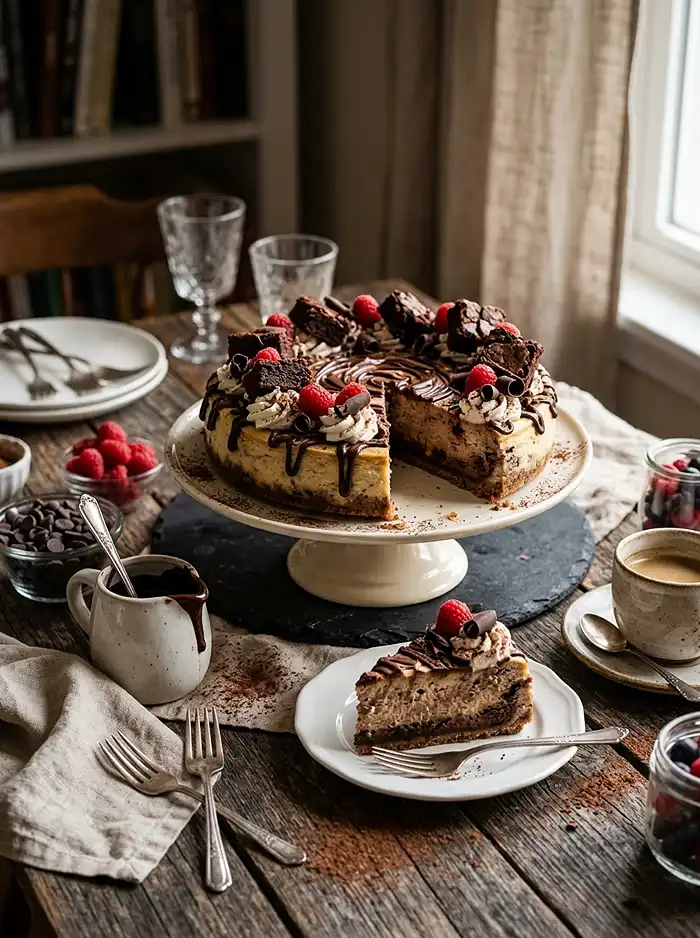
You know… this cheesecake has a natural elegance to it that makes it feel right at home on a holiday dessert table. It’s one of my go-to recipes for Thanksgiving, where the chocolate and the rich, creamy texture feel perfectly suited to the occasion — and it can be made two days ahead, which takes real stress off a busy cooking day.
For everyday serving, a drizzle of melted dark chocolate over each slice adds that final polished touch. Fresh raspberries or strawberries cut through the richness beautifully, and a light dollop of whipped cream makes each slice look like it came from a bakery case.
If you’re building out a full dessert spread, this pairs wonderfully alongside these gluten-free pineapple coconut cream parfaits for a bright contrast to the chocolate. You can also explore the gluten-free red, white, and blue icebox cake for a festive seasonal option.
For more gluten-free entertaining ideas — from appetizers to desserts — check out these gluten-free Mexican street corn nacho cups, which make an excellent savory counterpart before you bring out the cheesecake.
If you try this recipe, I’d genuinely love to hear how it went. Drop a comment below with your results, any swaps you made, or a photo — and if you loved it, save it to Pinterest so other gluten-free bakers can find it too. Rating the recipe takes about five seconds and makes a real difference for a small food blog like this one. Happy baking.
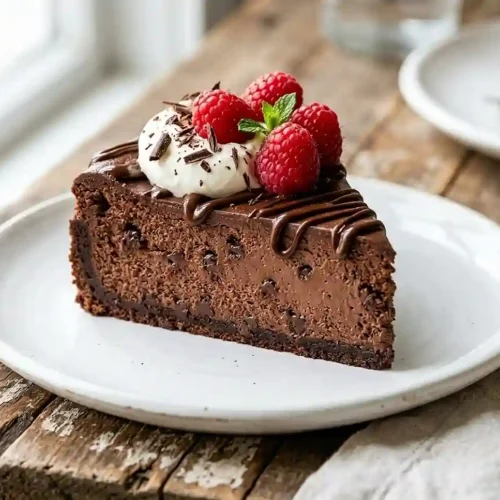
Gluten-Free Brownie Batter Cottage Cheese Cheesecake
Equipment
- Blender or food processor
- 8-inch springform pan
- Mixing bowl
- Spatula
Ingredients
For the Cheesecake
- 2 cups cottage cheese Full-fat blends smoothest; low-fat works too
- 8 oz cream cheese, softened Room temperature is key for a lump-free blend
- 2 large eggs Room temperature preferred
- ⅓ cup pure maple syrup or honey Maple gives a deeper, slightly smoky note
- ¼ cup unsweetened cocoa powder Dutch-process adds richness; natural cocoa works fine
- 2 tbsp gluten-free chocolate protein powder Optional; adds protein without altering flavor much
- 2 tbsp almond flour Do not substitute with coconut flour
- 1 tsp vanilla extract Pure vanilla only
- ¼ tsp salt Enhances and balances the cocoa bitterness
- ⅓ cup mini gluten-free chocolate chips Folded in after blending
Optional Toppings
- melted dark chocolate
- whipped cream
- chocolate shavings
- fresh berries
Instructions
- Preheat oven to 325°F (165°C). Lightly grease an 8-inch springform pan or line the bottom with parchment paper.
- Add the cottage cheese, softened cream cheese, eggs, maple syrup, cocoa powder, protein powder (if using), almond flour, vanilla extract, and salt to a blender or food processor. Blend until completely smooth and creamy with no visible curds — about 60 seconds on high speed. Scrape down the sides once if needed.
- Pour the blended batter into a mixing bowl. Fold in the mini gluten-free chocolate chips gently with a spatula.
- Pour the batter into the prepared pan and smooth the top with a spatula. Bake for 35–40 minutes, or until the edges are set and the center has a slight jiggle when you nudge the pan.
- Allow the cheesecake to cool completely at room temperature. Then refrigerate for at least 4 hours, preferably overnight. Slice and serve chilled.