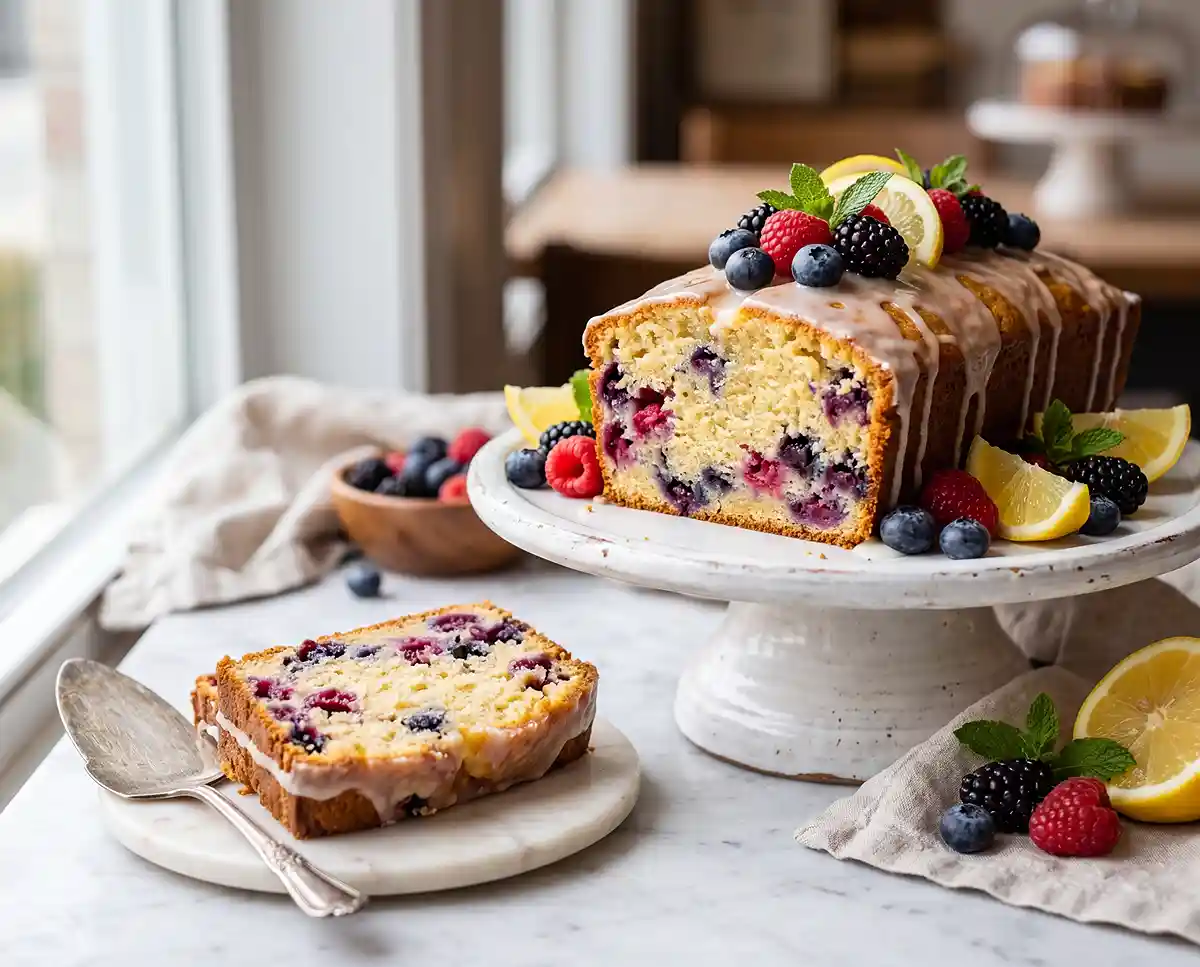
Gluten-Free Greek Yogurt Berry Pound Cake
Make a moist gluten-free Greek yogurt berry pound cake with step-by-step instructions, berry tips, lemon glaze, and storage guidance for a crowd-pleasing slice.
The first time I baked a gluten-free pound cake for my sister’s summer birthday, I pulled it out of the oven looking completely normal — golden top, clean toothpick — and then watched it crumble into pieces the moment I tried to slice it. Two wasted hours, a ruined cake, and a very patient sister. That failure taught me everything I now know about what gluten-free Greek yogurt berry pound cake actually needs to hold together and stay moist.
The solution turned out to be Greek yogurt. Its natural acidity activates the baking soda, its protein structure supports moisture retention, and its fat content keeps the crumb tender from the inside out. Add fresh mixed berries folded into a buttery batter, and you get something that slices like a dream and tastes like summer.
Well… the fact that it’s also naturally gluten-free without tasting like it makes this one a keeper for every occasion, from weekday snacking to holiday dessert tables.
Why You’ll Love This Gluten-Free Greek Yogurt Berry Pound Cake
- A crumb that holds its own: Each slice is dense enough to feel like a true pound cake but tender enough to melt on your tongue — no dry, gritty texture that plagues so many gluten-free loaves.
- Beginner-friendly method: This is a one-bowl mix-and-bake situation. No special equipment beyond a hand or stand mixer, and the steps are forgiving for new bakers.
- Flexible with any berries: Blueberries, raspberries, blackberries, or strawberries all work — use whatever is peak-season fresh or still-frozen from last summer’s haul.
- Optional lemon glaze pays off: The drizzle of powdered sugar, lemon juice, and vanilla pulls every flavor together and makes this look bakery-finished without any decorating skill required.
The Secret to Perfect Gluten-Free Greek Yogurt Berry Pound Cake
- Greek yogurt is doing double duty: It acts as both a humectant (locking in moisture) and a leavening activator. Its acidity reacts with the baking soda to give the crumb a subtle lift — something that plain milk simply can’t replicate. As food science research on Greek yogurt in baking confirms, the protein in yogurt releases moisture slowly during baking for even hydration throughout.
- Xanthan gum is your gluten stand-in: Without gluten’s protein network, gluten-free cakes need a binder to trap air bubbles and prevent crumbling. Using a flour blend that already contains xanthan gum — as King Arthur Baking’s guide to xanthan gum explains — removes all the guesswork and keeps this loaf cohesive and sliceable.
- Flouring the berries prevents sinking: Tossing the berries in 1 tablespoon of gluten-free flour gives each piece a light coating that grips the batter. Without it, berries sink straight to the bottom and you end up with a soggy base and a bare top half.
- Room-temperature eggs and butter matter: Cold eggs can cause the emulsion to break, leaving a greasy, uneven batter. Softened butter creams properly into the sugar, building in the air that gives this loaf its lift.
Table of Contents
Ingredients
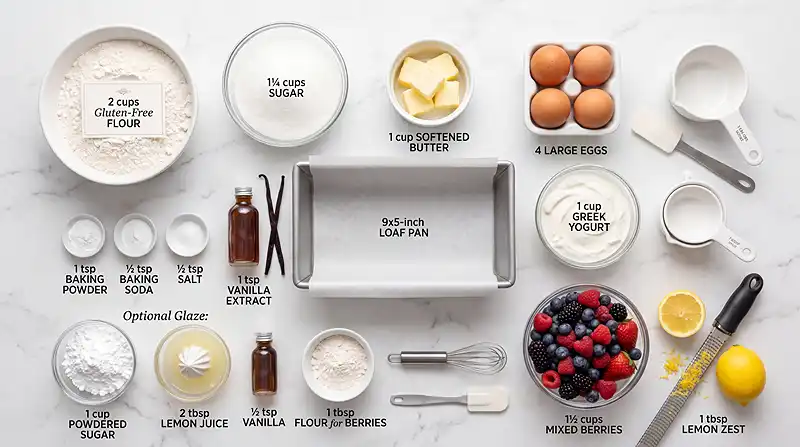
For the Cake
| Ingredient | Amount | Notes |
|---|---|---|
| Gluten-free all-purpose flour (with xanthan gum) | 2 cups | Must include xanthan gum — check the label before you start |
| Baking powder | 1 teaspoon | Check it’s gluten-free certified if needed |
| Baking soda | ½ teaspoon | Works with the yogurt’s acidity for lift |
| Salt | ½ teaspoon | Sharpens all the other flavors |
| Unsalted butter, softened | 1 cup | Room temperature — not melted |
| Granulated sugar | 1¼ cups | |
| Large eggs, room temperature | 4 | Add one at a time; cold eggs break the emulsion |
| Vanilla extract | 1 teaspoon | Pure, not imitation |
| Plain Greek yogurt | 1 cup | Full-fat gives the best texture; don’t use non-fat |
| Lemon zest (optional) | 1 tablespoon | Brightens the berry flavors considerably |
| Mixed berries | 1½ cups | Blueberries, raspberries, blackberries, or strawberries |
| Gluten-free flour (for berries) | 1 tablespoon | Prevents berries from sinking |
Optional Lemon Glaze
| Ingredient | Amount | Notes |
|---|---|---|
| Powdered sugar | 1 cup | Sift to avoid lumps in the glaze |
| Lemon juice | 2 tablespoons | Fresh-squeezed makes a noticeable difference |
| Vanilla extract | ½ teaspoon |
Instructions
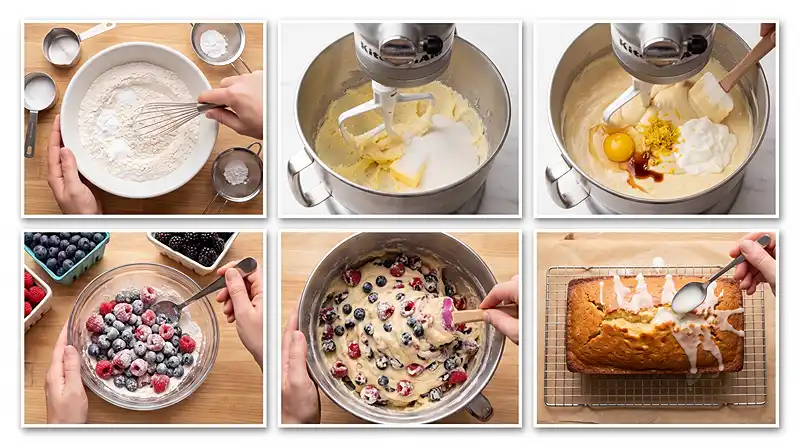
- Preheat and prep your pan: Preheat the oven to 350°F (175°C). Grease a 9×5-inch loaf pan and line it with parchment paper, leaving an overhang on the long sides so you can lift the cake out cleanly after baking.
- Whisk the dry ingredients: In a medium bowl, whisk together the gluten-free flour, baking powder, baking soda, and salt. Whisking instead of stirring distributes the leavening evenly so you don’t get uneven rise spots.
- Cream butter and sugar: In a large mixing bowl, beat the softened butter and granulated sugar together on medium-high speed for 3–4 minutes, until the mixture is pale, light, and noticeably fluffy. Don’t rush this step — the air you build here is what lifts the loaf.
- Add eggs, vanilla, and zest: Add the eggs one at a time, beating well after each addition. Mix in the vanilla extract and lemon zest if using. The batter may look slightly curdled between eggs — keep going and it will come back together.
- Fold in the Greek yogurt: Add the Greek yogurt and mix until just combined. The batter will turn thick and glossy — that’s the yogurt’s protein and fat doing exactly what it should.
- Add the dry ingredients: Gradually add the flour mixture to the wet ingredients, mixing on low just until incorporated. Overmixing at this stage activates the starches too much and can make the loaf dense and gummy.
- Flour and fold the berries: Toss the mixed berries with 1 tablespoon of gluten-free flour until lightly coated, then gently fold them into the batter using a spatula. Two or three slow folds is enough — you want the berries distributed, not broken apart.
- Bake: Pour the batter into the prepared loaf pan and smooth the top. Bake for 55–65 minutes, until a toothpick inserted into the center comes out clean. If the top is browning too fast, loosely tent it with foil during the last 15 minutes.
- Cool and glaze: Let the cake cool in the pan for 15 minutes, then lift it out using the parchment overhang and transfer to a wire rack to cool completely. If you’re adding the glaze, whisk together the powdered sugar, lemon juice, and vanilla until smooth, then drizzle over the fully cooled cake.
Pro Tip: Gluten-free batters benefit from a 10-minute rest in the pan before going into the oven. This gives the xanthan gum and starches time to fully hydrate, which helps suspend the berries and produces a more even crumb.
Make It Your Own
Swap the mixed berries for a single variety if you want a more focused flavor. Blueberries give a classic, jammy bite throughout the loaf. Raspberries add tartness that cuts through the richness of the butter beautifully. Strawberries work best when hulled and chopped small so they distribute evenly rather than creating large wet pockets.
You know… one of the easiest upgrades is adding a teaspoon of almond extract alongside the vanilla. It deepens the flavor in a way that makes people think there’s something more sophisticated going on, even though it costs you nothing in technique. This variation pairs especially well with raspberries or blackberries.
For a dairy-free adaptation, replace the Greek yogurt with a full-fat dairy-free coconut yogurt and use vegan butter in the same quantities. The texture will be slightly less structured, but the flavor holds up well. If you’ve already tried our dairy-free coconut-based desserts, you’ll know that coconut yogurt can carry a bake further than most people expect.
To make this a moist summer dessert for a crowd, double the recipe and bake it in a Bundt pan at 325°F for 65–75 minutes. The presentation is impressive, the glaze pools into every ridge, and it feeds twelve without any extra effort. Just make sure your Bundt pan is very well greased — gluten-free cakes cling more than wheat-based ones.
Common Problems & Solutions
Problem: The center sank after cooling. This usually means the cake was underbaked or the oven door was opened too early. Gluten-free loaves need the full bake time to set — the xanthan gum needs heat to firm up, so a clean toothpick plus a firm-feeling top are both required before pulling it out. Resist opening the oven before the 50-minute mark.
Problem: The texture came out gummy or dense. Overmixing after adding the flour is the most common culprit — once the gluten-free flour hits the wet ingredients, mix on low and stop as soon as the streaks disappear. A gummy center can also result from measuring flour by scooping directly from the bag, which compacts it. Spoon flour into your measuring cup and level it off instead.
Man, oh man… I’ve eaten my share of gummy gluten-free pound cake, and I can tell you the disappointment is real. The spoon-and-level method alone fixed this for me permanently once I started doing it consistently.
Problem: All the berries ended up on the bottom. The flour toss is non-negotiable — without it, the berries are too heavy and wet to stay suspended in the batter. If you’re using frozen berries, don’t thaw them first; add them straight from the freezer after flouring. Thawed frozen berries release too much juice and stain the batter purple while pulling the berries downward.
Problem: The top cracked severely during baking. Some cracking is completely normal for pound cakes and actually signals a good rise. A severe split that exposes raw batter underneath usually means the oven temperature is too high. Use an oven thermometer to verify — many home ovens run 25°F hotter than the dial reads, and gluten-free cakes are more sensitive to heat spikes than wheat-based ones.
Storage & Meal Prep
| Method | Duration | Notes |
|---|---|---|
| Counter | 2-3 days | Airtight container; keep away from direct sunlight |
| Fridge | 5-7 days | Wrap tightly; bring to room temperature before serving |
| Freezer | 2-3 months | Slice first, wrap individually, freeze without the glaze |
This loaf actually improves overnight. The crumb settles and the berry juices redistribute, so day-two slices are often more flavorful than slices cut fresh from the oven. Store unglazed if you plan to freeze — the glaze doesn’t survive freezing well and turns grainy when thawed.
To reheat from frozen, unwrap a slice and let it come to room temperature for 30–45 minutes, or microwave it on 50% power for 45 seconds. Add the glaze fresh after reheating if desired. For a zero-waste no-waste idea, crumble any slightly stale slices over Greek yogurt and fresh berries for a quick parfait breakfast — it works beautifully.
Gluten-Free Greek Yogurt Berry Pound Cake FAQs
Can I use frozen berries instead of fresh?
Yes, frozen berries work well — add them straight from the freezer without thawing first. Thawed berries release too much moisture, which can sink them to the bottom and stain the batter. Toss them in the 1 tablespoon of gluten-free flour just as you would fresh berries before folding in.
How do I keep the pound cake from falling apart when I slice it?
Let the cake cool completely on a wire rack before slicing — at least 1 hour after removing from the pan. Gluten-free baked goods need this full cooling time for the xanthan gum and starches to fully set. A sharp serrated knife used in a gentle sawing motion also helps produce clean slices without crumbling.
What’s the best gluten-free flour for this recipe?
Use a gluten-free all-purpose flour blend that already contains xanthan gum. Blends without xanthan gum will produce a crumbly, structureless loaf. Popular options include King Arthur Measure for Measure and Bob’s Red Mill 1-to-1 — both are widely available and work consistently in this recipe.
Why did my pound cake turn out dry?
Dryness in gluten-free pound cake usually comes from overbaking or using non-fat Greek yogurt. Full-fat yogurt is essential here — its fat content keeps the crumb moist even as it bakes for nearly an hour. Start checking for doneness at the 55-minute mark and pull the cake as soon as the toothpick comes out clean.
Can I make this cake ahead of time?
Absolutely — this cake is actually better the next day. Bake it the evening before, cool completely, and store covered at room temperature overnight. Add the lemon glaze the morning of serving so it stays fresh and glossy. The loaf keeps well for up to 3 days at room temperature in an airtight container.
Serving Suggestions

This pound cake is substantial enough to serve as a standalone dessert, but it shines brightest alongside something light. A dollop of coconut whipped cream or a small scoop of vanilla bean ice cream balances the lemon glaze and lets the berry flavor come forward without competing.
For a Fourth of July spread or any summer cookout, this loaf travels well and slices beautifully at a picnic table without needing refrigeration for a few hours. Pair it with something savory on the table — the gluten-free dill pickle cheeseburger bites make an unexpectedly great pairing when you want both ends of the flavor spectrum covered at one gathering.
If you’re building out a full gluten-free brunch spread, this loaf alongside a bright, fresh crispy rice chicken salad gives you a meal that covers sweet, savory, protein, and produce without any one dish feeling like an afterthought.
Give this gluten-free Greek yogurt berry pound cake a try and let me know how it turns out in the comments below — I especially want to hear which berry combination you went with. If you loved it, sharing it on Pinterest helps other gluten-free bakers find it, and that genuinely means a lot to this little corner of the internet.
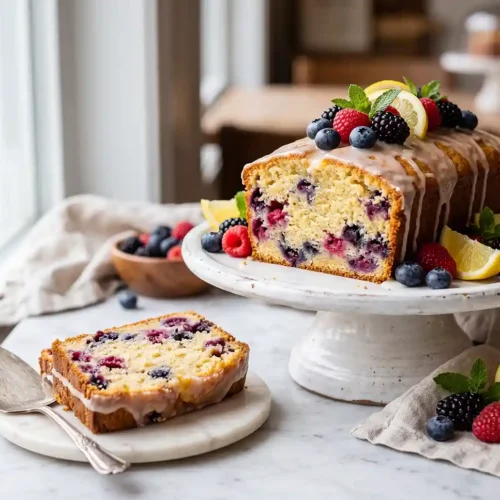
Gluten-Free Greek Yogurt Berry Pound Cake
Equipment
- 9×5-inch loaf pan
- Parchment paper
- Mixing bowls
- Hand mixer or stand mixer
- Whisk
- Spatula
- Wire cooling rack
- Measuring cups and spoons
Ingredients
For the Cake
- 2 cups gluten-free all-purpose flour with xanthan gum
- 1 teaspoon baking powder gluten-free certified if needed
- ½ teaspoon baking soda
- ½ teaspoon salt
- 1 cup unsalted butter softened, room temperature
- 1 ¼ cups granulated sugar
- 4 large eggs room temperature
- 1 teaspoon vanilla extract pure vanilla extract
- 1 cup plain Greek yogurt full-fat preferred
- 1 tablespoon lemon zest optional
- 1 ½ cups mixed berries blueberries, raspberries, blackberries, or strawberries
- 1 tablespoon gluten-free flour for coating berries
Optional Lemon Glaze
- 1 cup powdered sugar sifted
- 2 tablespoons lemon juice freshly squeezed
- ½ teaspoon vanilla extract
Instructions
- Preheat the oven to 350°F (175°C). Grease a 9×5-inch loaf pan and line it with parchment paper.
- In a medium bowl, whisk together the gluten-free flour, baking powder, baking soda, and salt.
- In a large mixing bowl, beat the softened butter and granulated sugar for 3 to 4 minutes until light and fluffy.
- Add the eggs one at a time, beating well after each addition. Mix in the vanilla extract and lemon zest, if using.
- Add the Greek yogurt and mix until just combined.
- Gradually add the dry ingredients to the wet ingredients, mixing on low speed until incorporated.
- Toss the mixed berries with 1 tablespoon of gluten-free flour, then gently fold them into the batter.
- Pour the batter into the prepared loaf pan and smooth the top. Let the batter rest for 10 minutes before baking.
- Bake for 55 to 65 minutes, or until a toothpick inserted in the center comes out clean. Tent loosely with foil if browning too quickly.
- Cool in the pan for 15 minutes, then transfer to a wire rack to cool completely. If desired, whisk together the glaze ingredients and drizzle over the cooled cake.