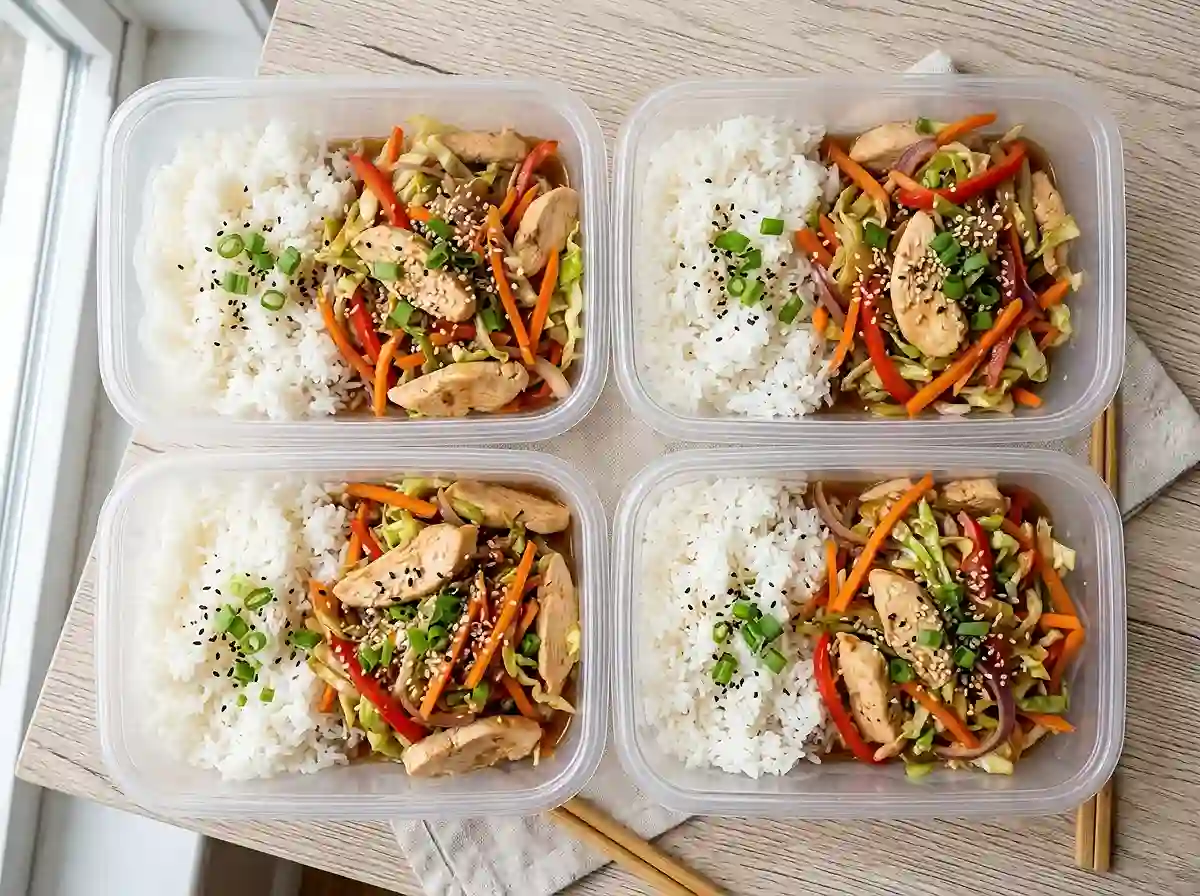
Chicken Cabbage Stir-Fry Lunch Boxes
Step-by-step chicken cabbage stir-fry lunch boxes with gluten-free tamari, fresh veggies, and rice — a budget-friendly meal prep ready in 30 minutes.
The first time I packed these chicken cabbage stir-fry lunch boxes for my family, I’d honestly spent the whole Sunday afternoon dreading it.
I’d tried three different gluten-free meal prep recipes that month that turned out either soggy, bland, or just sad-looking by Tuesday. But this one? It held up beautifully through Friday.
What’s the secret to a lunch box that actually gets you excited at noon instead of making you wish you’d just ordered out? It’s all in the balance — bright vegetables, savory gluten-free tamari, and perfectly cooked chicken that doesn’t dry out by day three.
Well… I’ll be honest: the first batch I made, I overcooked the cabbage into a limp pile. Now I pull it off heat while it still has that satisfying crisp-tender bite, and the difference is night and day.
Table of Contents
Why You’ll Love This Chicken Cabbage Stir-Fry
- Crisp-tender texture — the cabbage and bell pepper stay vibrant, not mushy, even after a few days in the fridge.
- Beginner-friendly — one skillet, nine ingredients, and about 25 minutes of active cooking time.
- Naturally gluten-free — gluten-free tamari replaces soy sauce with zero compromise on flavor depth.
- Budget-friendly meal prep — one pound of chicken feeds four lunches for far less than any takeout option.
The Secret to Perfect Chicken Cabbage Stir-Fry
- High, fast heat — cooking over medium-high keeps the vegetables from steaming and turning soft. A hot skillet or wok locks in that slightly charred, restaurant-style flavor.
- Thin chicken slices — cutting chicken breasts thinly ensures they cook through in 5–6 minutes without drying out or turning rubbery.
- Aromatics first, sauce last — adding garlic and ginger before the vegetables builds a fragrant base. Adding tamari at the very end prevents the sauce from burning and keeps it glossy rather than sticky.
- Rest before sealing — allowing the stir-fry to cool before closing your lunch containers prevents steam condensation that makes rice gummy. According to FDA food safety guidelines for meal prep, cooling cooked food properly before refrigerating also reduces bacterial growth risk.
Ingredients
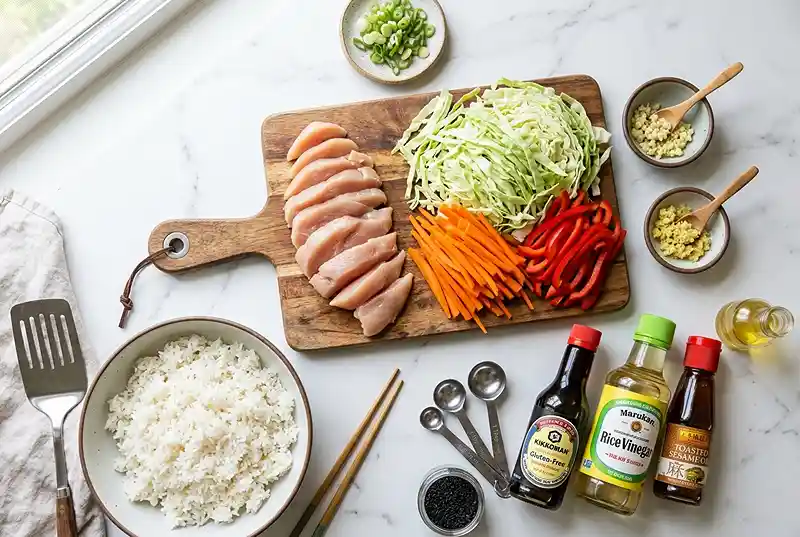
| Category | Ingredient | Amount | Notes |
|---|---|---|---|
| Protein | Boneless skinless chicken breasts, thinly sliced | 1 lb (450 g) | Slice across the grain for tenderness |
| Oil | Olive oil | 1 tbsp | Or avocado oil for higher smoke point |
| Vegetables | Green cabbage, shredded | 4 cups | Pre-shredded bags save time |
| Vegetables | Carrots, julienned | 1 cup | Matchstick cuts cook evenly |
| Vegetables | Red bell pepper, thinly sliced | 1 | Adds sweetness and color |
| Aromatics | Garlic cloves, minced | 3 cloves | Fresh is best here |
| Aromatics | Fresh ginger, grated | 1 tbsp | A microplane gives the finest texture |
| Sauce | Gluten-free tamari | 3 tbsp | Check label — San-J and Kikkoman make certified GF versions |
| Sauce | Rice vinegar | 1 tbsp | Adds brightness and balances the tamari |
| Sauce | Sesame oil | 1 tsp | Toasted sesame oil for deeper flavor |
| Seasoning | Salt | ½ tsp | |
| Seasoning | Black pepper | ¼ tsp | |
| Base | Cooked rice | 2 cups | White or brown rice both work; jasmine adds fragrance |
Instructions
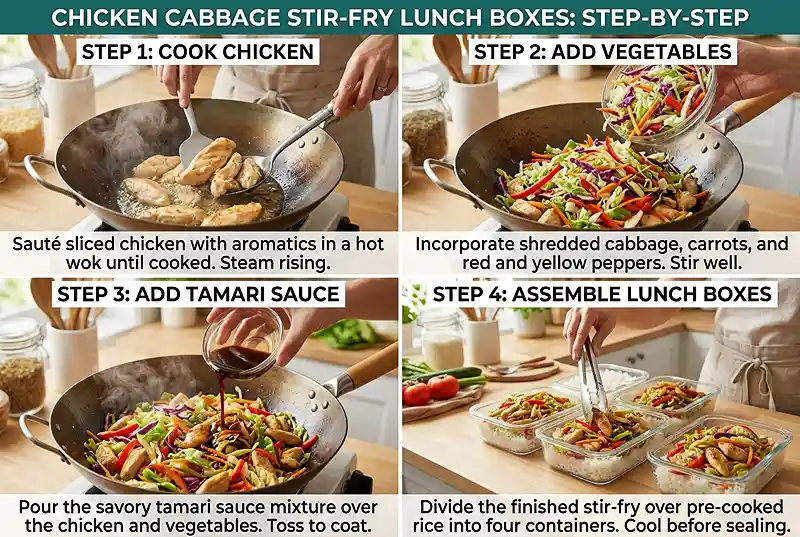
- Heat the oil. Heat 1 tbsp olive oil in a large skillet or wok over medium-high heat. You want the oil shimmering — that’s your cue it’s ready. A cold pan means steamed, not seared, chicken.
- Cook the chicken. Add the thinly sliced chicken breasts and cook for 5–6 minutes, stirring frequently. Look for opaque, lightly golden edges and no visible pink. Remove and set aside if your pan is small so the vegetables don’t get crowded.
- Bloom the aromatics. Add the minced garlic and grated ginger directly to the same pan. Cook for 30 seconds, stirring constantly — you’ll smell that warm, slightly nutty aroma that tells you they’re ready. Don’t walk away here; garlic burns fast.
- Add the vegetables. Stir in the shredded cabbage, julienned carrots, and sliced red bell pepper. Cook for 4–5 minutes, tossing frequently with tongs or a wooden spoon. You want tender-crisp — like a good handshake, firm but yielding — not soft and limp.
- Add the sauce. Pour in the gluten-free tamari, rice vinegar, sesame oil, salt, and black pepper. Stir well to coat every piece of chicken and vegetable evenly.
- Final cook. Cook for 1–2 more minutes until everything is heated through and the sauce clings to the mixture rather than pooling at the bottom. Taste and adjust seasoning here.
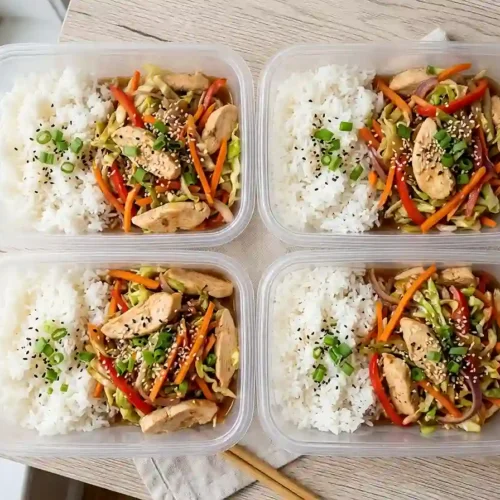
- Assemble the boxes. Divide the 2 cups of cooked rice evenly among four lunch containers. Top each with an equal portion of the chicken and cabbage stir-fry mixture.
- Cool before sealing. Allow containers to cool at room temperature for 15–20 minutes before closing lids and refrigerating. This single step keeps your rice from turning gummy and your vegetables from wilting prematurely.
Pro Tip: If you’re using brown rice, cook it the night before — it reheats better than freshly made and the texture holds up well in meal prep containers.
Make It Your Own
Swap the chicken breasts for boneless thighs if you prefer juicier, more forgiving protein. Thighs have a higher fat content, which means they stay moist even if you accidentally cook them a minute longer than planned — a lifesaver on busy weeknights.
You know… one of my favorite variations is adding a drizzle of chili garlic sauce to the assembled boxes before refrigerating. It infuses a gentle heat into the rice and turns these budget chicken lunch boxes into something that feels almost restaurant-worthy by Monday afternoon.
For a grain-free option, swap the cooked rice for cauliflower rice. It holds up better than you’d expect in the fridge — just sauté it briefly first to drive off excess moisture, or the box will turn watery by day two.
This is also a naturally dairy-free recipe as written, making it a strong fit for anyone following multiple dietary restrictions. For a higher-protein version, increase the chicken to 1.5 lbs and reduce the rice slightly — the tamari and vegetable ratios stay the same.
These cheap meal prep lunches also work beautifully with shrimp instead of chicken. Shrimp cook in just 2–3 minutes per side, so add them after the aromatics and before the vegetables to avoid overcooking them.
Common Problems & Solutions
Problem: Cabbage turns soggy. You likely cooked it too long or over low heat. Cook on medium-high and pull it off when it still has some resistance — it will continue to soften slightly as it cools in the container.
Problem: Chicken is rubbery or dry. Overcooking is usually the culprit. Thin slices are key here; anything thicker than ¼ inch will need longer heat exposure and tends to dry out. Use a meat thermometer — 165°F is your safe internal target.
Problem: The sauce tastes flat. This almost always means the aromatics didn’t get enough heat. Garlic and ginger need that 30-second sizzle to release their volatile compounds — rushing or adding them off-heat skips that flavor-building step entirely.
Man, oh man… I once skipped the rice vinegar thinking it wouldn’t matter, and the whole dish tasted one-dimensional. That small splash of acid cuts through the richness of the tamari and lifts every other flavor in the pan — don’t skip it.
Problem: Rice gets hard in the fridge. Cold temperatures cause starch in rice to retrograde — meaning it firms up and loses that fluffy texture. To reverse this, sprinkle a teaspoon of water over the rice before microwaving and cover the container loosely. According to Harvard’s Nutrition Source guide on rice, reheating with steam is the most effective method for restoring texture.
Storage & Meal Prep
| Method | Duration | Notes |
|---|---|---|
| Counter | 2–3 hours max | Do not leave assembled boxes at room temperature longer than 2 hours |
| Fridge | 4–5 days | Store in airtight containers; bring to room temp or reheat before eating |
| Freezer | Up to 2 months | Freeze rice and stir-fry separately for best texture; thaw overnight in fridge |
To reheat, microwave on medium power for 90 seconds, stir, then heat for another 30–60 seconds until steaming throughout. A splash of water before heating keeps the rice from drying out.
If you have leftover stir-fry without rice, tuck it into lettuce wraps for a completely different meal with zero extra cooking. It also works well stirred into a broth-based soup — just add a cup of chicken broth and simmer for five minutes.
Your Questions Answered
Can I use regular soy sauce instead of gluten-free tamari?
Only if you don’t need this recipe to be gluten-free. Regular soy sauce contains wheat and is unsafe for those with celiac disease or gluten sensitivity. Tamari is brewed differently and is a direct swap with nearly identical flavor — just verify the label says certified gluten-free.
How do I keep the vegetables from getting watery in the lunch box?
Let everything cool completely before sealing the container. Steam trapped inside a warm, closed box is the main cause of watery vegetables. Cooling for at least 15 minutes before sealing, combined with high-heat cooking, prevents excess moisture from building up.
What is the best way to prep this for the whole week in one session?
Cook the rice and stir-fry simultaneously on Sunday using two burners — the process takes under 30 minutes. Assemble four containers right away, cool before sealing, and refrigerate. They stay fresh from Monday through Thursday.
Why did my chicken stick to the pan?
The pan was likely not hot enough before you added the chicken. Always let the oil heat until shimmering before adding protein. If chicken sticks, give it 30 more seconds — it will release naturally once a proper sear forms on the bottom.
Can I freeze these chicken cabbage stir-fry lunch boxes?
Yes, for up to 2 months. For best results, freeze the rice and stir-fry separately in airtight containers or freezer bags. Thaw overnight in the refrigerator, then reheat with a splash of water to restore texture.
Serving Suggestions
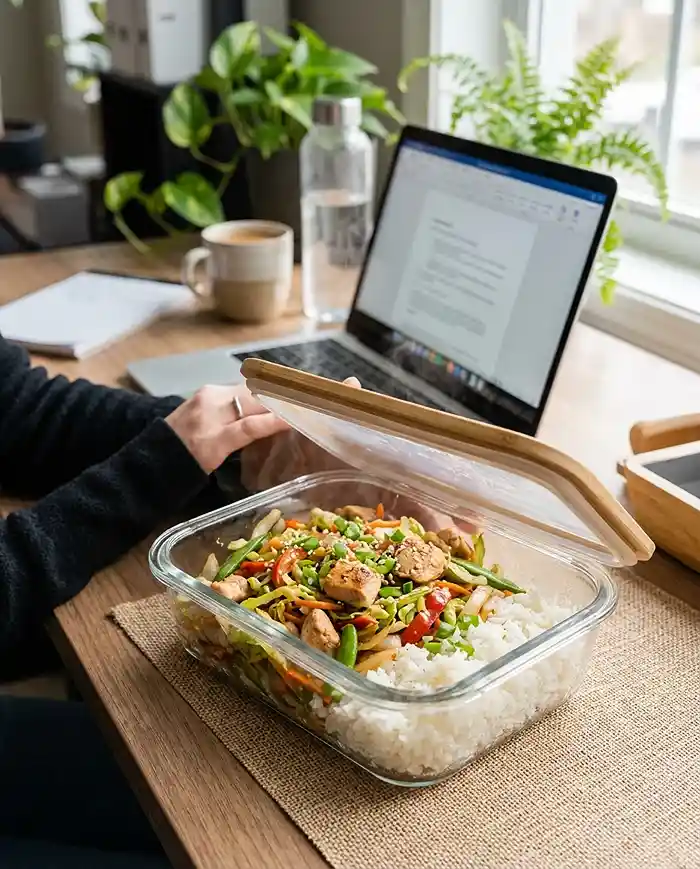
These lunch boxes are complete as-is, but a side of fresh cucumber slices or a handful of edamame turns each portion into something even more satisfying. For a sweeter complement, try my dairy-free key lime pudding cups as a packable dessert that rounds out the meal.
If you’re building out a full week of gluten-free meal prep, pair these lunch boxes with my gluten-free blueberry peach yogurt bark for a refreshing mid-morning snack that travels well.
And when the weekend calls for something a little more celebratory, my blackberry peach upside-down cake is a stunning gluten-free dessert worth every minute.
If you tried these chicken cabbage stir-fry lunch boxes this week, I’d genuinely love to know how they turned out for you. Drop a star rating, leave a comment with any tweaks you made, and share on Pinterest so more meal-preppers can find this recipe.
Chicken Cabbage Stir-Fry Lunch Boxes
Equipment
- Large skillet or wok
- Cutting board
- Sharp knife
- Tongs or Wooden Spoon
- Airtight Lunch Containers
- Microplane or grater
Ingredients
Protein
- 1 lb boneless skinless chicken breasts, thinly sliced Slice across the grain for tenderness; about 450 g
Oil
- 1 tbsp olive oil Or avocado oil for a higher smoke point
Vegetables
- 4 cups green cabbage, shredded Pre-shredded bags save time
- 1 cup carrots, julienned Matchstick cuts cook evenly
- 1 red bell pepper, thinly sliced Adds sweetness and color
Aromatics
- 3 garlic cloves, minced Fresh is best
- 1 tbsp fresh ginger, grated Use a microplane for the finest texture
Sauce
- 3 tbsp gluten-free tamari Check label for certified gluten-free; San-J and Kikkoman make GF versions
- 1 tbsp rice vinegar Adds brightness and balances the tamari
- 1 tsp sesame oil Toasted sesame oil adds deeper flavor
Seasoning
- 0.5 tsp salt
- 0.25 tsp black pepper
Base
- 2 cups cooked rice White or brown rice both work; jasmine adds fragrance
Instructions
- Heat 1 tbsp olive oil in a large skillet or wok over medium-high heat. Wait until the oil is shimmering before adding anything — this ensures a proper sear rather than steaming.
- Add the thinly sliced chicken breasts and cook for 5–6 minutes, stirring frequently, until cooked through with lightly golden edges and no visible pink.
- Add the minced garlic and grated ginger to the same pan. Cook for 30 seconds, stirring constantly, until fragrant and slightly golden. Do not walk away — garlic burns quickly.
- Stir in the shredded cabbage, julienned carrots, and sliced red bell pepper. Cook for 4–5 minutes, tossing frequently, until the vegetables are tender-crisp and still have some resistance when pierced.
- Add the gluten-free tamari, rice vinegar, sesame oil, salt, and black pepper. Stir well to coat every piece of chicken and vegetable evenly with the sauce.
- Cook for 1–2 more minutes until everything is heated through and the sauce clings to the mixture rather than pooling at the bottom. Taste and adjust seasoning as needed.
- Divide the 2 cups of cooked rice evenly among four airtight lunch containers.
- Top each container with an equal portion of the chicken and cabbage stir-fry mixture.
- Allow the containers to cool at room temperature for 15–20 minutes before sealing the lids and refrigerating. This prevents steam condensation that makes rice gummy and vegetables watery.