High-Protein Chicken Parmesan Cottage Cheese Bowls
My High-Protein Chicken Parmesan Cottage Cheese Bowls were born out of a meal prep experiment that I honestly wasn’t sure would work.
I’d been seeing cottage cheese show up in everything from pasta sauces to pancakes, and I finally decided to test it in a savory rice bowl — layered under saucy, Italian-seasoned chicken and finished with freshly grated Parmesan.
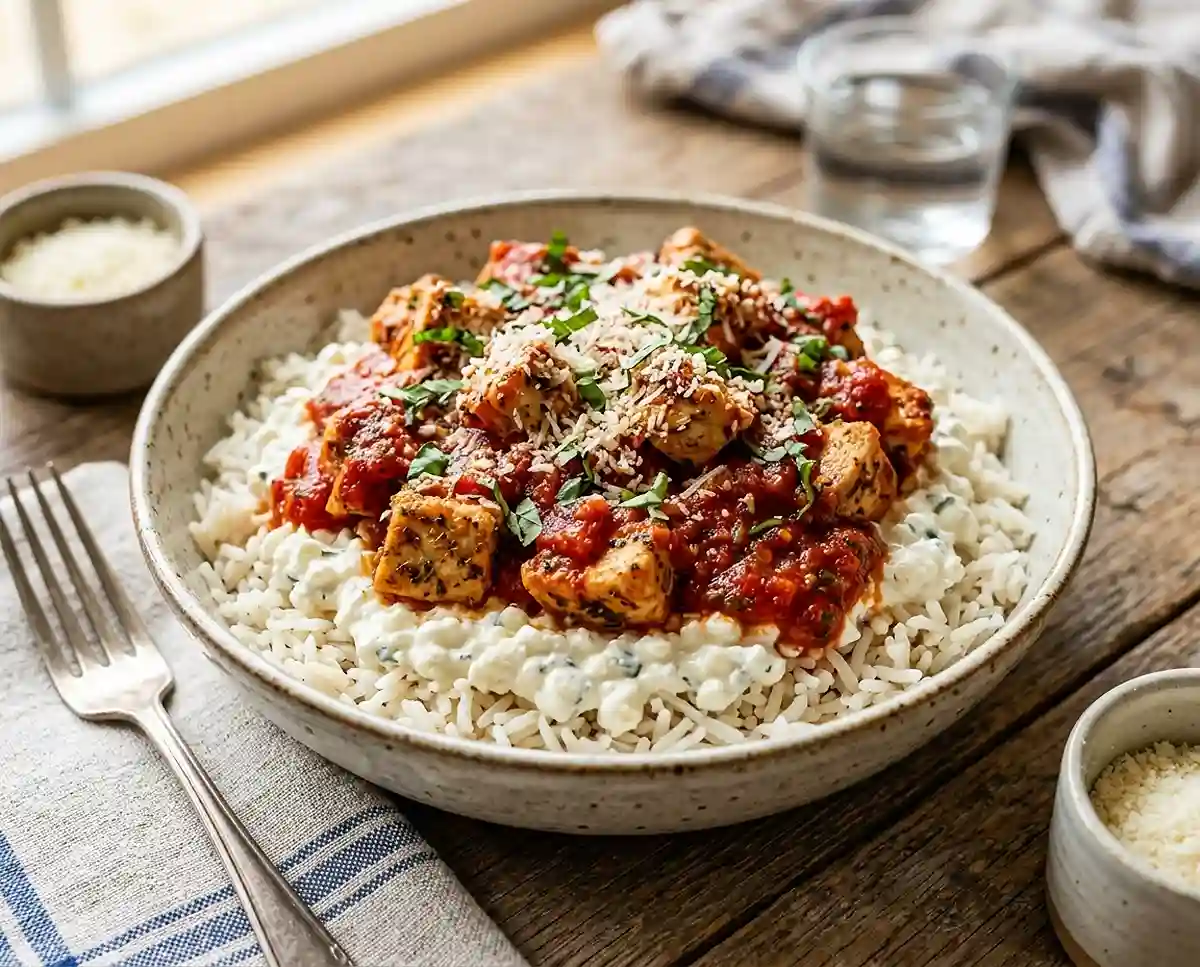
The result was one of those meals that surprises you. The cottage cheese softens slightly under the warm chicken and marinara, turning almost creamy and rich — like a spoonable lasagna filling that adds serious protein without any of the heaviness.Well… who knew that a high-protein cottage cheese bowl could feel this indulgent while still being completely gluten-free and genuinely good for you?
Cheesy, hearty, and seriously protein-packed, these High-Protein Chicken Parmesan Cottage Cheese Bowls bring all the comfort-food vibes to your weeknight. Want more? Check out my full collection of healthy cottage cheese bowl recipes.
Table of Contents
Why You’ll Love These High-Protein Chicken Parmesan Cottage Cheese Bowls
- Each bowl delivers serious protein from both the chicken and the cottage cheese — without protein powder or complicated ingredients
- Ready in about 20 minutes from start to finish, using one skillet and minimal cleanup
- Naturally gluten-free when you use a certified gluten-free marinara — no swaps or specialty products needed
- Holds up beautifully as a chicken parmesan meal prep option — just store the components separately and assemble fresh each day
The Secret to Perfect High-Protein Chicken Parmesan Cottage Cheese Bowls
- Season the chicken directly, not after cooking. Coating each piece with garlic powder, Italian seasoning, salt, and pepper before it hits the pan allows the spices to bloom in the oil. You get a more fragrant, deeply flavored chicken rather than a bland base with sauce carrying all the work.
- Don’t skip the marinara simmer. Two to three minutes of simmering after adding the sauce lets the chicken absorb the tomato flavor and allows the sauce to thicken slightly. Pouring cold marinara straight from the jar and serving immediately gives you a watery, separated bowl.
- Layer cottage cheese under the hot chicken intentionally. The warmth from the rice and chicken gently warms the cottage cheese without making it soupy. This creates that creamy, almost ricotta-like texture that makes the bowl feel indulgent rather than diet-food plain.
- Use low-fat cottage cheese for structure. Full-fat varieties release more liquid when warmed, which can make the bowl wet. Low-fat cottage cheese holds its shape better under heat while still delivering that rich, mild tang that balances the acidic marinara perfectly.
Ingredients
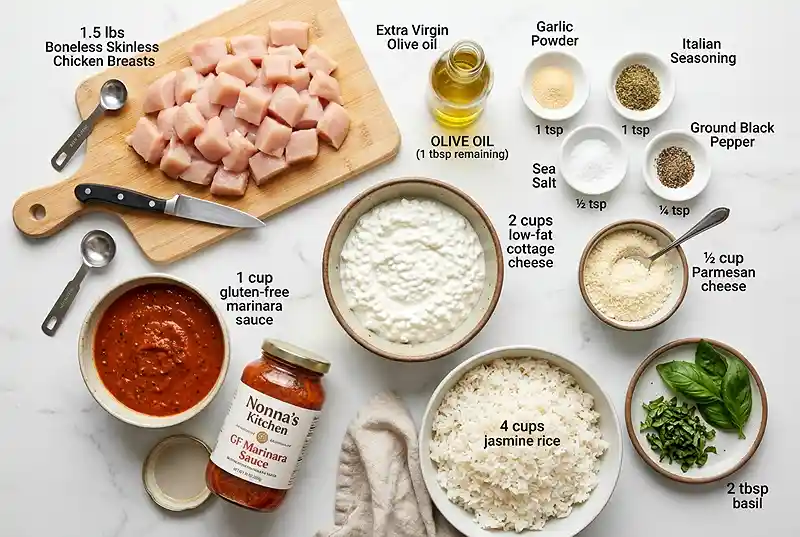
- 1½ lbs (680 g) boneless, skinless chicken breasts, diced
- 1 tbsp olive oil
- 1 tsp garlic powder
- 1 tsp Italian seasoning
- ½ tsp salt
- ¼ tsp black pepper
- 1 cup marinara sauce (gluten-free)
- 2 cups low-fat cottage cheese
- ½ cup grated Parmesan cheese
- 4 cups cooked rice
- 2 tbsp fresh basil, chopped
How to Make High-Protein Chicken Parmesan Cottage Cheese Bowls
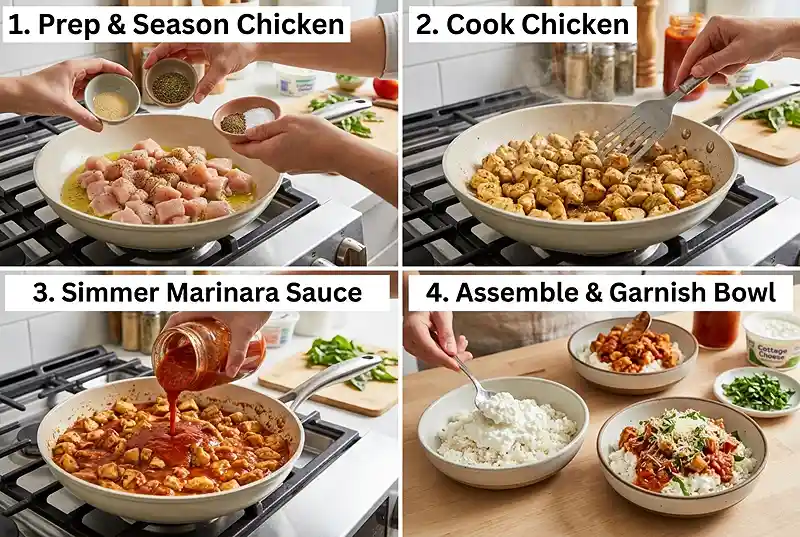
Step 1 — Season the Chicken
Place the diced chicken breast in a bowl or directly on your cutting board. Sprinkle with garlic powder, Italian seasoning, salt, and black pepper.
Toss well to coat every piece evenly — you want the seasoning distributed across the surface of each cube, not clumped in one area. This uniform coating is what gives each bite consistent flavor.
Step 2 — Cook the Chicken
Heat 1 tbsp olive oil in a large skillet over medium-high heat until the oil shimmers. Add the seasoned chicken in a single layer — you should hear an immediate, steady sizzle.
Cook for 6-8 minutes, stirring occasionally, until the chicken is fully cooked through with no pink remaining and the edges show light golden-brown color. The aroma at this point should be warm and herby with a faint garlic sweetness.
Pro Tip: Resist stirring constantly. Letting the chicken sit for 2-3 minutes before the first toss builds better color and seals in the juices. Overcrowding the pan drops the heat and steams the chicken instead of searing it.
Step 3 — Add the Marinara and Simmer
Reduce heat slightly and pour the gluten-free marinara sauce over the cooked chicken. Stir to coat every piece.
Simmer for 2-3 minutes, letting the sauce thicken and cling to the chicken. The mixture should look glossy and cohesive — not watery. Remove from heat and set aside.
Step 4 — Assemble the Bowls
Divide the cooked rice evenly among 4 bowls as the warm base. Spoon ½ cup of cottage cheese over the rice in each bowl.
Top each bowl with the chicken and marinara mixture, then finish with a generous sprinkle of grated Parmesan and fresh chopped basil. Serve immediately while the chicken is still warm — the heat gently softens the cottage cheese into a layer that feels as creamy as ricotta.
Make It Your Own
For a lower-carb version of this gluten-free protein lunch, swap the cooked rice for cauliflower rice or zucchini noodles. Both absorb the marinara well, and the bowl stays just as filling thanks to the chicken and cottage cheese protein combination.
You know, this recipe also works beautifully with ground turkey or ground chicken instead of diced breast. Brown the ground meat the same way — season it, cook it through, drain any excess fat, then add the marinara. The texture is softer and it scoops more like a meat sauce bowl.
If you’re building a true chicken parmesan meal prep rotation, store the cooked chicken and sauce, cottage cheese, and rice in three separate containers in the fridge. Assemble each bowl fresh at lunchtime — this keeps the rice from getting soggy and the cottage cheese from breaking down over several days.
Man, oh man… if you’re feeding kids with this one, skip the fresh basil and add a small handful of shredded mozzarella on top instead of the Parmesan. It melts slightly over the warm chicken and gives a more familiar, pizza-adjacent flavor that picky eaters tend to love at family dinner time.
Common Problems and Solutions
Problem: The cottage cheese is releasing too much liquid into the bowl.
Drain the cottage cheese briefly through a fine mesh strainer before adding it to the bowl. Even 5 minutes of draining removes excess whey. This is especially helpful if you’re using full-fat cottage cheese or a brand that tends to be on the wetter side.
Problem: The chicken is coming out dry and tough.
Diced chicken breast overcooks fast on medium-high heat. Pull it off as soon as there’s no visible pink — it continues cooking slightly in the residual heat and during the marinara simmer. A meat thermometer reading of 165°F is your reliable guide.
Problem: The marinara sauce looks watery and thin after adding it to the pan.
Let it simmer uncovered for the full 2-3 minutes without stirring too aggressively. The liquid evaporates and the natural sugars in the tomatoes help the sauce reduce and cling. If it’s still thin after 3 minutes, give it one more minute — the chicken will also help absorb some of the moisture.
Problem: The bowl tastes flat despite following the seasoning amounts.
Check your marinara. A bland jarred sauce is the most common culprit — not the chicken seasoning. Choose a marinara with visible herb flecks, a rich red color, and a bold tomato aroma. A high-quality sauce does more for this bowl’s overall flavor than any additional seasoning adjustment.
Storage and Meal Prep
| Method | Duration | Notes |
|---|---|---|
| Counter | Same day | Best assembled and served fresh |
| Fridge | 4-5 days | Store components separately for best texture |
| Freezer | Up to 2 months | Freeze chicken and rice only; cottage cheese does not freeze well |
To reheat, warm the chicken and rice separately in the microwave for 60-90 seconds each, covered with a damp paper towel to retain moisture. Add fresh cottage cheese cold or at room temperature directly to the warm components — the contrast actually works well.
For a no-waste lunch strategy, double the chicken and marinara batch and use the extras over pasta, in a wrap, or as a pizza topping on gluten-free flatbread mid-week. The seasoned chicken freezes beautifully in individual portions for fast future meals.
Serving Suggestions
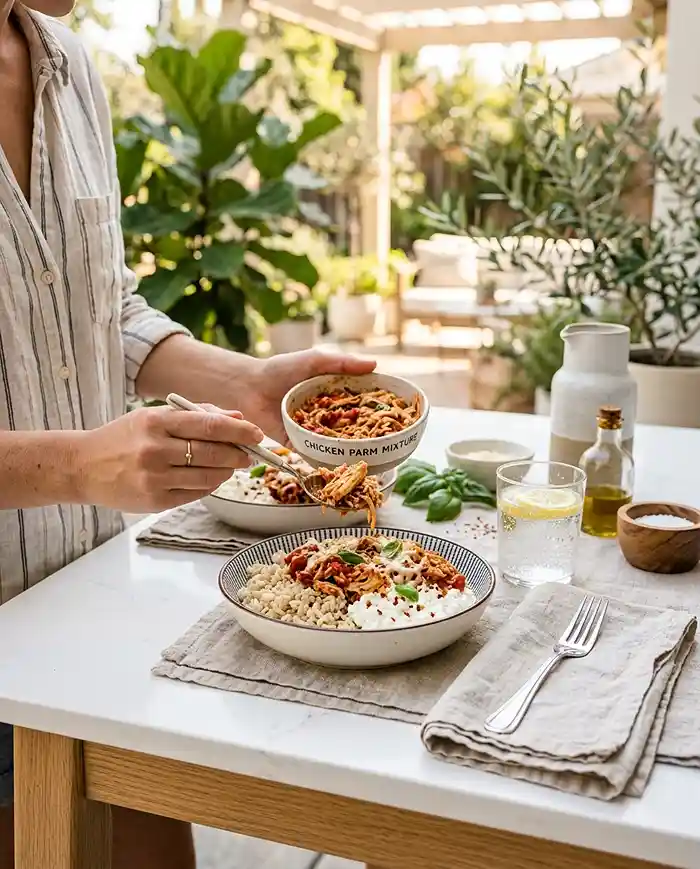
These bowls are a complete meal on their own, but a simple arugula salad dressed with lemon and olive oil alongside cuts through the richness of the cheese and marinara beautifully.
For a full Italian-inspired gluten-free spread at a Sunday family dinner or holiday gathering, serve these bowls with roasted broccolini and a side of crusty gluten-free bread for dipping in any extra marinara.
If you love building out a high-protein bowl rotation, my high-protein GF harissa chicken quinoa bowls bring bold North African-inspired flavor to the weekly lineup.
For something lighter on a busy weekday, the high-protein GF salmon edamame crunch bowls are a seafood-forward option that keeps the protein high without repeating the same base flavors.
FAQs About Chicken Parmesan Cottage Cheese Bowls
Can I use full-fat cottage cheese instead of low-fat?
Yes, but low-fat cottage cheese is recommended for this recipe because it holds its structure better under heat. Full-fat varieties release more liquid when warmed, which can make the bowl watery. If you prefer full-fat, drain it briefly through a fine mesh strainer before assembling.
How do I make this recipe dairy-free?
Swap the cottage cheese for a plain, unsweetened dairy-free yogurt or a firm silken tofu seasoned with a pinch of salt and nutritional yeast. Omit the Parmesan or use a dairy-free hard cheese alternative. The bowl will be less creamy but still protein-rich and satisfying.
Can I meal prep this bowl ahead of time?
Yes, this is an ideal meal prep recipe. Store the cooked chicken and marinara, rice, and cottage cheese in three separate containers in the fridge for up to 4-5 days. Assemble each bowl fresh at serving time to prevent the rice from getting soggy and the cottage cheese from breaking down.
What is the best gluten-free marinara sauce to use?
Look for a marinara labeled certified gluten-free, with simple ingredients like tomatoes, olive oil, garlic, and herbs. Brands like Rao’s Homemade and Primal Kitchen are widely trusted in the gluten-free community. Always read the label, as some jarred sauces contain thickeners or flavorings that introduce hidden gluten.
Why did my cottage cheese turn watery in the bowl?
This happens when the cottage cheese sits too long under warm components or when it contains excess whey. Drain it briefly before using and assemble the bowls just before eating rather than in advance. Keeping the cottage cheese cold and layering it right before serving gives the best texture.
Make These Bowls This Week
If you try these High-Protein Chicken Parmesan Cottage Cheese Bowls, I’d love to hear how they landed for you. Did you add extra Parmesan? Try it with ground turkey? Drop a comment below — the whole community learns from your kitchen experiments.
Save this to Pinterest or leave a star rating so other gluten-free families can find a protein-packed lunch that actually keeps them full. It genuinely helps more than you’d think.
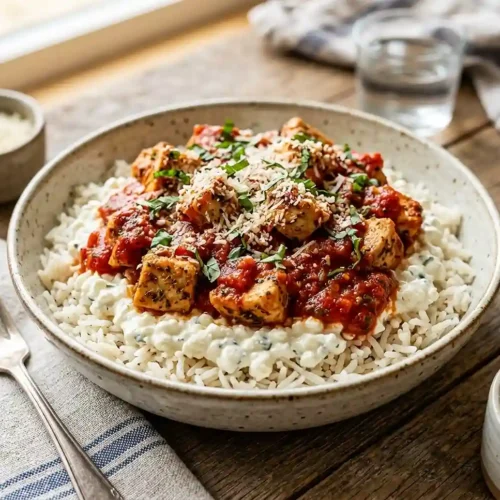
High-Protein Chicken Parmesan Cottage Cheese Bowls
Equipment
- Large skillet
- Cutting board
- Chef’s knife
- Mixing bowl
Ingredients
- 1½ lbs boneless skinless chicken breasts diced, 680g
- 1 tbsp olive oil
- 1 tsp garlic powder
- 1 tsp Italian seasoning
- ½ tsp salt
- ¼ tsp black pepper
- 1 cup marinara sauce gluten-free
- 2 cups low-fat cottage cheese
- ½ cup grated Parmesan cheese
- 4 cups cooked rice
- 2 tbsp fresh basil chopped
Instructions
- Heat the olive oil in a large skillet over medium-high heat until shimmering.
- Season the diced chicken with garlic powder, Italian seasoning, salt, and black pepper. Toss well to coat every piece evenly.
- Add the seasoned chicken to the skillet in a single layer. Cook for 6–8 minutes, stirring occasionally, until fully cooked through with no pink remaining and edges are lightly golden.
- Pour the gluten-free marinara sauce over the cooked chicken and stir to coat. Simmer for 2–3 minutes until the sauce thickens and clings to the chicken. Remove from heat.
- Divide the cooked rice evenly among 4 bowls as the base.
- Spoon ½ cup of cottage cheese over the rice in each bowl.
- Top each bowl with the chicken and marinara mixture.
- Sprinkle each bowl with grated Parmesan cheese and fresh chopped basil. Serve immediately.