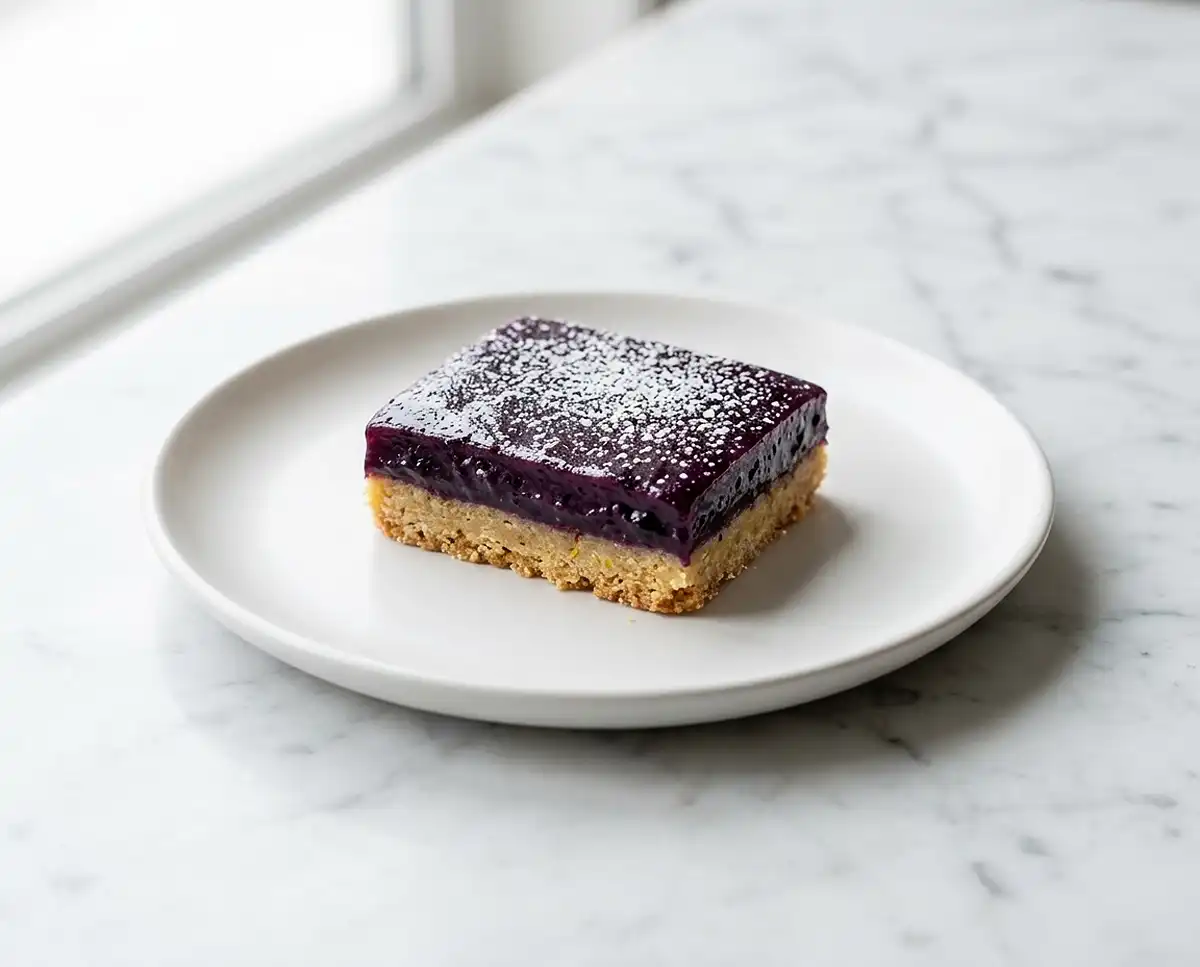
Gluten-Free Blueberry Lemon Curd Bars
Vibrant, tangy, and deeply satisfying — these bars bring real citrus flavor and a stunning purple curd filling to your gluten-free dessert table. Ready in about an hour of active time, with 16 generous servings.
The first time I made gluten-free lemon bars, I pulled them out of the oven feeling pretty proud of myself. Then I cut into them. The crust crumbled into dust, the filling ran everywhere, and the whole thing looked like a crime scene. I stood in my kitchen, fork in hand, wondering if gluten-free baking was just always going to be this hard.
That failure taught me everything. I learned that cold butter is non-negotiable for shortbread. I learned that a proper tapioca-thickened curd sets up firm and sliceable. And I learned that blueberries pressed through a fine-mesh sieve produce a curd so deeply purple it looks almost too beautiful to eat.
So, what makes a gluten-free lemon bar actually worth making? The answer is a crust that holds its shape and a filling with real fruit flavor — not artificial purple food coloring. These Gluten-Free Blueberry Lemon Curd Bars deliver both, and they’ve become my go-to every summer.
Why You’ll Love These Gluten-Free Blueberry Lemon Curd Bars
- Texture that holds up: The thick shortbread crust slices cleanly without crumbling, even after chilling overnight.
- Real fruit flavor: Fresh blueberries and freshly squeezed lemon juice create a curd that tastes genuinely bright, not artificial.
- Naturally gluten-free: No special swaps needed beyond your go-to gluten-free flour blend — no gums or xanthan additions required.
- Make-ahead friendly: These bars actually improve overnight in the fridge, making them ideal for holiday gatherings or weekend prep.
The Secret to Perfect Gluten-Free Blueberry Lemon Curd Bars
Gluten-free bars fail for predictable reasons: sandy crusts, runny fillings, and a gummy layer between the two. Here’s exactly why this recipe sidesteps every one of those problems.
- Cold butter worked in by hand: Cutting cold, cubed butter into the dry ingredients creates small pockets of fat that steam during baking. This is what gives the crust its tender, slightly crispy texture instead of a dense, heavy base.
- Double sugar in the crust: Using both granulated and powdered sugar gives the shortbread structure and a fine crumb. The powdered sugar dissolves into the butter for smoothness; the granulated sugar provides a little crunch.
- Pressing blueberries through a sieve: Cooking the berries with lemon juice and then straining releases pure, concentrated juice — no seeds, no skin, no bitterness. This is the step that makes the curd taste professional.
- Tapioca starch over cornstarch: Tapioca creates a glossy, smooth curd with a silkier texture than cornstarch, and it holds up beautifully after slicing. It’s the same technique used in many trusted celiac-safe baking guides for thickening fruit-based fillings.
- Pouring the curd onto a hot crust: This bonds the two layers together so the filling doesn’t slide off when you cut the bars. Never let the crust cool before adding the curd.
Table of Contents
Ingredients
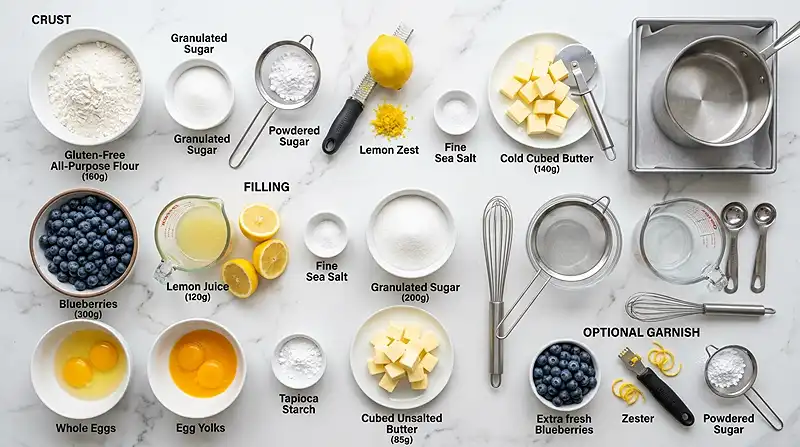
For the Thick Lemon Shortbread Crust
| Ingredient | Amount |
|---|---|
| Gluten-free all-purpose flour | 160g (1¼ cups) |
| Granulated sugar | 50g (¼ cup) |
| Powdered sugar | 3 tbsp |
| Lemon zest | Zest of 1 lemon |
| Fine sea salt | ¼ tsp |
| Unsalted butter, cold and cubed | 140g (10 tbsp) |
For the Blueberry Lemon Curd Filling
| Ingredient | Amount |
|---|---|
| Fresh blueberries | 300g (2 cups) |
| Freshly squeezed lemon juice | 120g (½ cup) |
| Fine sea salt | ¼ tsp |
| Granulated sugar | 200g (1 cup) |
| Large eggs | 2 |
| Egg yolks | 3 |
| Tapioca starch or cornstarch | ½ tbsp |
| Unsalted butter | 85g (6 tbsp) |
Optional Garnish
- Powdered sugar
- Fresh blueberries
- Lemon zest curls
How to Make Gluten-Free Blueberry Lemon Curd Bars
Step 1: Prepare the Pan
Preheat your oven to 325°F (165°C). Line an 8×8-inch square baking pan with parchment paper, leaving enough overhang on two sides to create a sling for easy lifting later.
Step 2: Make the Lemon Shortbread Crust
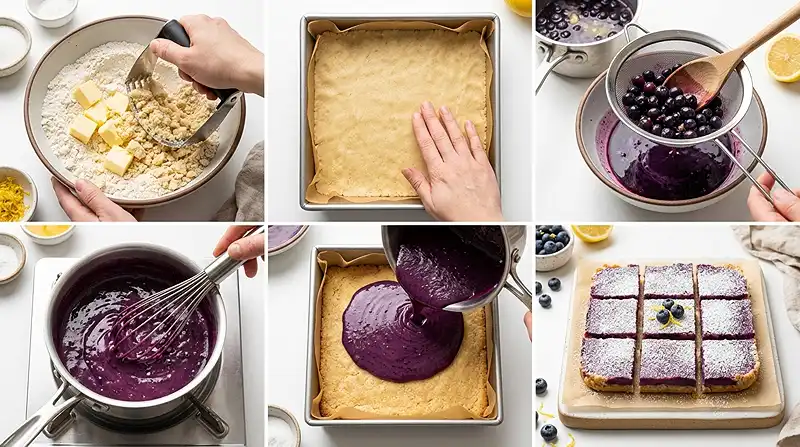
In a large bowl, whisk together the gluten-free flour, granulated sugar, powdered sugar, lemon zest, and sea salt. Cut in the cold cubed butter using a pastry cutter or fork until the mixture resembles coarse, sandy crumbs.
Switch to your hands and gently work the butter into the flour until every crumb is coated. You’re not kneading — just pressing and rubbing until the mixture starts to clump.
Press the dough firmly and evenly into the bottom of the prepared pan. Use the flat bottom of a measuring cup to smooth it out. Bake for 30 minutes, until the edges are lightly golden.
Pro Tip: Don’t rush the 30-minute bake. An underbaked crust will go soggy under the curd. You want it fully set and just starting to turn golden at the edges before you add the filling.
Step 3: Prepare the Blueberry Juice
While the crust bakes, combine the fresh blueberries and lemon juice in a medium saucepan. Cook over medium heat, stirring occasionally, until the berries soften completely and release their deep purple juices — about 8 minutes.
Press the mixture through a fine-mesh sieve into a measuring cup, pressing with a spoon to extract every drop. You need exactly ¾ cup of blueberry juice for the curd. Set the pulp aside (it’s fantastic stirred into yogurt).
Step 4: Make the Blueberry Lemon Curd
Return the strained blueberry juice to the saucepan and let it cool for 2 minutes. Whisk in the salt, granulated sugar, whole eggs, egg yolks, and tapioca starch until smooth and fully combined.
Add the butter and place the pan over medium heat. Whisk frequently as the mixture heats up. You’ll notice it start to thicken after about 5 minutes — keep whisking to prevent any spots from scrambling on the bottom.
Once the curd thickens noticeably, bring it to a gentle boil and cook for 30 seconds, whisking constantly. Remove from heat immediately. The curd at this point is like pourable velvet — glossy, deeply purple, and ribbony when you lift the whisk.
Strain the finished curd through a fine-mesh sieve into a clean bowl. This removes any cooked egg bits and guarantees a silky-smooth filling.
Step 5: Bake the Bars
Remove the crust from the oven the moment it’s done. Working quickly, pour the warm blueberry lemon curd over the hot crust in an even layer. Return the pan to the oven immediately.
Bake for 10–15 minutes. The edges should look set and slightly darker, while the center still has a gentle wobble — like a just-set cheesecake. It will firm up completely during chilling.
Step 6: Chill
Let the bars cool completely at room temperature — at least 1 hour. Then refrigerate for a minimum of 3 hours, but overnight is best. The curd needs that full chill time to set from wobbly to cleanly sliceable.
Use the parchment sling to lift the whole slab out of the pan onto a cutting board. Slice into 16 squares with a sharp knife, wiping the blade clean between cuts for neat edges.
Dust with powdered sugar and top with fresh blueberries and lemon zest curls just before serving. These bars look stunning on any dessert table — they’re the kind of thing that makes people stop mid-conversation.
Make It Your Own
Well… one of the best things about a bar recipe with a shortbread base is how naturally it adapts. The structure is forgiving, and a few simple swaps can take it in an entirely different direction.
Make it dairy-free: Swap the butter in both the crust and the curd for a high-quality vegan butter like Miyoko’s or Earth Balance. Cold vegan butter behaves very similarly to dairy butter in a shortbread crust, so the texture stays consistent. The curd will still set properly — the eggs do most of the thickening work here.
Use frozen blueberries: If fresh blueberries aren’t in season, frozen work well. Thaw them first and drain off any excess liquid before adding the lemon juice. The flavor is slightly less bright than fresh, but still genuinely good.
Swap lemon for lime: These bars work beautifully as a blueberry-lime variation. Use lime juice and lime zest instead of lemon throughout. The flavor becomes a little rounder and less sharp — wonderful in late summer.
Add a raspberry swirl: Press a few teaspoons of seedless raspberry jam into the top of the curd before the second bake. Pull a toothpick through it for a marbled effect. It adds visual drama without changing the bake time.
For more gluten-free fruit-based desserts that follow the same make-ahead philosophy, check out this gluten-free peach melba crumb cake — it’s just as stunning for summer entertaining.
Common Problems and Solutions
Man, oh man… troubleshooting gluten-free baking feels like solving a puzzle sometimes. Here are the problems I’ve seen most often with these bars, and exactly how to fix them.
Problem: The crust is crumbly and falls apart when sliced.
Solution: The butter wasn’t cold enough when you worked it in, or the crust was underbaked. Always start with butter straight from the fridge. Press the dough firmly — it should feel compact, not loose. And bake the crust the full 30 minutes before adding the curd.
Problem: The curd didn’t set and is still runny after chilling.
Solution: The curd needed more time on the stove. It must reach a full gentle boil and cook for at least 30 seconds after thickening. If your curd never boiled, the starch didn’t fully activate. You can actually fix a runny curd by returning it to the stovetop and cooking it longer before pouring over the crust.
Problem: The filling looks grayish-purple instead of vibrant.
Solution: This usually means the blueberries were overcooked during the juice extraction step, or the curd was baked too long in the oven. Cook the berries only until they’re soft and releasing juice, and pull the bars from the oven while the center still wobbles. Overbaking dulls the gorgeous purple color significantly.
Problem: The bars are gummy in the middle even after overnight chilling.
Solution: The curd-to-crust ratio may be off, or the bars weren’t chilled long enough. Make sure you’re collecting exactly ¾ cup of blueberry juice. If you use more, the curd becomes too thick to set properly. If they’re still soft after overnight refrigeration, give them another 4–6 hours.
Understanding the science behind gluten-free flour blends also helps here — not all blends behave the same way in a shortbread application, so sticking to a rice-flour-based blend with a small amount of tapioca gives the most reliable results.
Storage and Meal Prep
| Method | Duration | Notes |
|---|---|---|
| Counter | Up to 4 hours | Only for serving; curd softens at room temp |
| Refrigerator | 5–6 days | Store in an airtight container, single layer |
| Freezer | Up to 2 months | Wrap individually in plastic wrap before freezing |
To freeze, slice the bars and wrap each one individually in plastic wrap before placing in a zip-lock bag. Thaw overnight in the refrigerator — they keep their shape remarkably well and taste just as good as fresh.
These bars are genuinely better on day two. The curd deepens in flavor and the crust absorbs just enough moisture to become tender rather than crumbly. I always bake them the night before a gathering for this reason.
They’re especially good served alongside something savory after a big meal — the brightness cuts through richness beautifully. If you’re planning a full gluten-free spread, these gluten-free parmesan zucchini tots make a wonderful starter before dessert.
Serving Suggestions
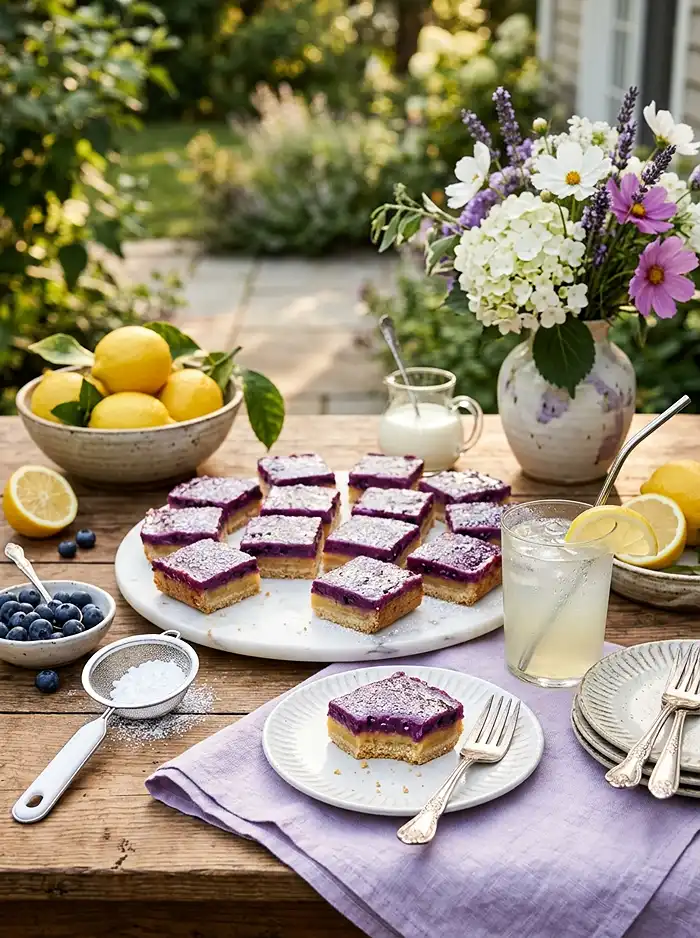
These bars shine brightest at summer gatherings, but they’re honestly just as welcome on a Thanksgiving dessert table when you want something bright and citrusy alongside all the warm spices.
Serve them chilled, straight from the refrigerator. Add powdered sugar, a few fresh blueberries, and a curl of lemon zest right before plating. A small dollop of lightly whipped cream on the side turns each bar into something that feels genuinely special.
They pair beautifully with coffee or a simple Earl Grey tea — the bergamot in the tea echoes the citrus in the curd in a way that feels intentional. If you’re building out a full dessert spread, the flavors here complement this gluten-free hot honey shrimp rice bowls dinner menu as a bright finish to a savory meal.
Blueberry Lemon Curd Bars FAQs
Can I make these bars ahead of time?
Yes — these bars are actually best made a day in advance. The curd sets more firmly and the flavors deepen after an overnight chill. Bake them the evening before your event, refrigerate overnight, and slice in the morning.
Can I use a store-bought lemon curd instead of making my own?
You can, but the color and flavor won’t be the same. Store-bought lemon curd lacks the blueberry component that gives these bars their deep purple color and fruit-forward flavor. If you’re short on time, stir a few tablespoons of blueberry jam into a good-quality store-bought curd to approximate the effect.
What gluten-free flour blend works best for the crust?
A rice-flour-based all-purpose blend works best here — something like Bob’s Red Mill 1-to-1 or King Arthur Measure for Measure. Avoid almond flour or coconut flour blends, as they behave very differently in a butter-based shortbread and will change the texture significantly.
Why did my curd turn out lumpy?
Lumps in curd are cooked egg bits, which happen when the heat is too high or the mixture isn’t whisked constantly. Always cook over medium heat and whisk without stopping. Straining the finished curd through a fine-mesh sieve is a non-negotiable step — it catches any lumps and guarantees a silky result.
How do I get clean slices?
Use a sharp chef’s knife and wipe the blade clean with a damp cloth between every single cut. Make sure the bars are fully chilled — at least 3 hours, preferably overnight. Warm or only partially set bars will drag and smear no matter how sharp your knife is.
Give These Bars a Try
You know… nothing beats watching someone bite into one of these bars for the first time. That moment of surprise when the vibrant purple curd gives way to a buttery, tender crust — it never gets old.
If you make these gluten-free blueberry lemon curd bars, I’d love to hear how they turned out. Leave a comment below and let me know if you tried any of the variations, or if you found a substitution that worked beautifully for you.
And if you snap a photo, share it on Pinterest — it helps other gluten-free bakers find the recipe, and seeing your results genuinely makes my day.
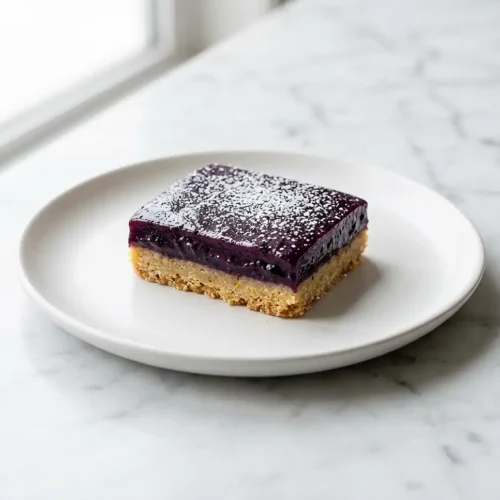
Gluten-Free Blueberry Lemon Curd Bars
Equipment
- 8×8-inch square baking pan
- Parchment paper
- Large mixing bowl
- Pastry cutter or fork
- Medium saucepan
- Fine-mesh sieve
- Whisk
- Measuring cup
Ingredients
For the Thick Lemon Shortbread Crust
- 160 g gluten-free all-purpose flour about 1¼ cups; use a rice-flour-based blend for best results
- 50 g granulated sugar about ¼ cup
- 3 tbsp powdered sugar
- 1 lemon, zested zest only
- ¼ tsp fine sea salt
- 140 g unsalted butter about 10 tbsp; cold and cubed
For the Blueberry Lemon Curd Filling
- 300 g fresh blueberries about 2 cups; frozen works too — thaw and drain first
- 120 g freshly squeezed lemon juice about ½ cup
- ¼ tsp fine sea salt
- 200 g granulated sugar about 1 cup
- 2 large eggs
- 3 egg yolks
- ½ tbsp tapioca starch or cornstarch
- 85 g unsalted butter about 6 tbsp
Optional Garnish
- powdered sugar for dusting
- fresh blueberries
- lemon zest curls
Instructions
- Preheat oven to 325°F (165°C). Line an 8×8-inch square baking pan with parchment paper, leaving overhang on two sides to create a sling for easy removal later.
- In a large bowl, whisk together the gluten-free flour, granulated sugar, powdered sugar, lemon zest, and sea salt. Cut in the cold cubed butter using a pastry cutter or fork until the mixture resembles coarse, sandy crumbs.
- Switch to your hands and gently work the butter into the flour until every crumb is coated and the mixture starts to clump. Press the dough firmly and evenly into the bottom of the prepared pan. Bake for 30 minutes, until the edges are lightly golden.
- While the crust bakes, combine the fresh blueberries and lemon juice in a medium saucepan. Cook over medium heat, stirring occasionally, until the berries soften and release their juices — about 8 minutes. Press the mixture through a fine-mesh sieve and collect exactly ¾ cup of blueberry juice.
- Return the strained blueberry juice to the saucepan and let it cool for 2 minutes. Whisk in the salt, granulated sugar, whole eggs, egg yolks, and tapioca starch until smooth and fully combined. Add the butter.
- Cook over medium heat, whisking frequently, until the curd thickens noticeably — about 5 to 8 minutes. Bring to a gentle boil and cook for 30 seconds, whisking constantly. Remove from heat immediately and strain through a fine-mesh sieve into a clean bowl.
- Remove the baked crust from the oven. Pour the warm blueberry lemon curd over the hot crust in an even layer. Return the pan to the oven and bake for 10 to 15 minutes, until the edges are set and the center still has a gentle wobble.
- Cool completely at room temperature, then refrigerate for at least 3 hours — overnight is best. Use the parchment sling to lift the slab onto a cutting board. Slice into 16 squares, wiping the knife clean between cuts. Garnish with powdered sugar, fresh blueberries, and lemon zest curls before serving.