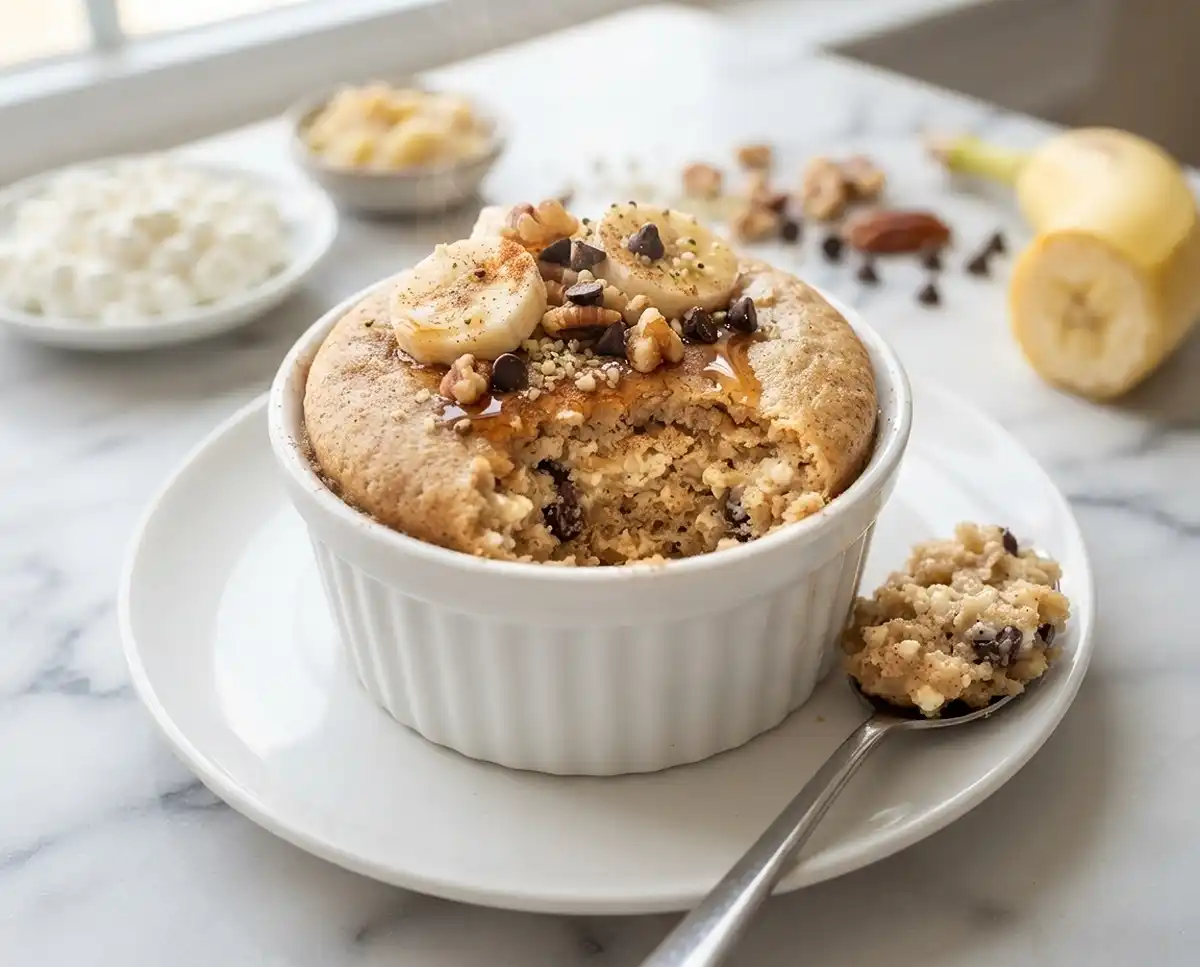
Cottage Cheese Banana Bread Bowl
Make a 30g protein gluten-free cottage cheese banana bread bowl in one ramekin — step-by-step recipe with air fryer option, toppings, and storage tips.
The first time I tested a 30g protein gluten-free cottage cheese banana bread bowl, I was genuinely skeptical. Cottage cheese baked in a ramekin? It sounded like a wellness-blogger experiment that would taste like protein powder and regret.
Twenty-five minutes later, I pulled something out of the oven that smelled exactly like banana bread — warm cinnamon, toasty vanilla, caramelized edges. One bite and I understood why this recipe has become a near-daily ritual in my kitchen.
You know, there aren’t many breakfasts that hit 30 grams of protein, take five minutes of hands-on effort, and actually taste like something you’d want on a slow Saturday morning. Is a warm, custardy banana bread bowl that checks every one of those boxes too good to be true? It isn’t — and I’ll show you exactly why it works.
Why You’ll Love This Cottage Cheese Banana Bread Bowl
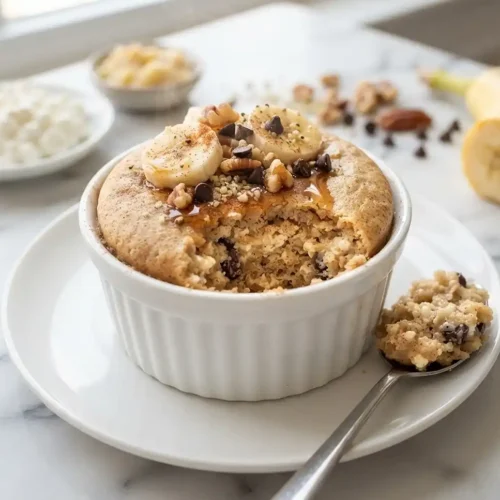
- Warm, custardy texture with golden edges — the inside sets like a soft baked pudding while the top turns lightly golden, almost like the top of a fresh banana loaf.
- Completely beginner-friendly — blend, pour, bake. There’s no folding technique, no resting time, no special equipment beyond a blender and a ramekin.
- Naturally gluten-free with no flour swaps required — oat flour and protein powder carry the structure here, and both are certified gluten-free from the start.
- Built for meal prep and busy weekday mornings — bake it the night before, refrigerate, and reheat in two minutes. Your high-protein breakfast is already done.
The Secret to Perfect 30g Protein Gluten-Free Cottage Cheese Banana Bread Bowl
- Blending the cottage cheese fully is non-negotiable — whole cottage cheese curds won’t incorporate evenly into the batter, leaving pockets of dense, wet texture in the finished bowl. A full 30-second blend until smooth is what gives you that uniform, custardy interior.
- Ripe banana does double duty — a medium ripe banana adds natural sweetness that reduces how much maple syrup you need, and its starches help bind the batter alongside the protein powder. An underripe banana will make the bowl starchy and flat-tasting.
- Certified gluten-free oat flour provides structure without gumminess — unlike rice flour or tapioca starch, oat flour absorbs moisture gradually during baking, which prevents the rubbery, dense texture that plagues many protein-heavy baked goods.
- Low and slow heat protects the protein — baking at 350°F (or 325°F in the air fryer) lets the egg proteins in the powder and the casein in the cottage cheese set gently rather than seize up and turn tough. Higher heat speeds things up but ruins the texture.
Table of Contents
Ingredients
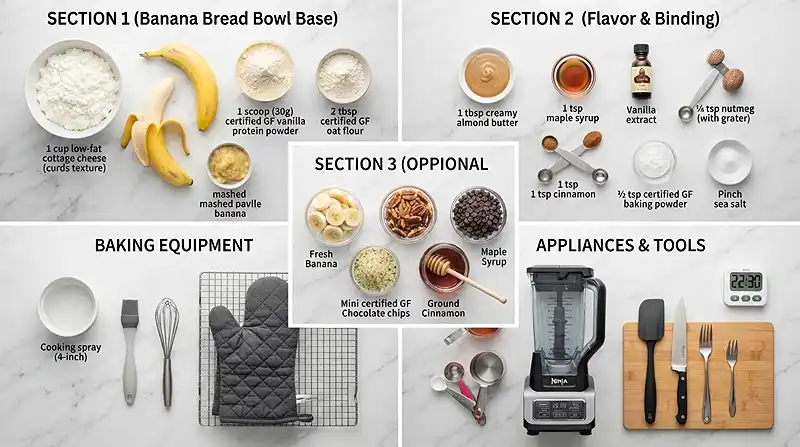
Banana Bread Bowl
| Ingredient | Amount | Notes |
|---|---|---|
| Low-fat cottage cheese | 1 cup | Full-fat works too; low-fat keeps it lighter |
| Medium ripe banana, mashed | 1 | The riper, the sweeter — brown-spotted is ideal |
| Certified gluten-free vanilla protein powder | 1 scoop (about 30 g) | Whey or plant-based both work; check the label |
| Certified gluten-free oat flour | 2 tablespoons | Adds structure without gumminess |
| Almond butter | 1 tablespoon | Adds fat and richness; cashew butter also works |
| Maple syrup or honey (optional) | 1 teaspoon | Skip if your banana is very ripe |
| Vanilla extract | 1 teaspoon | |
| Ground cinnamon | 1 teaspoon | |
| Ground nutmeg | 1/4 teaspoon | A little goes a long way here |
| Certified gluten-free baking powder | 1/2 teaspoon | Check label — some brands use wheat starch |
| Fine sea salt | Pinch | Balances the sweetness |
Optional Toppings
- Banana slices
- Chopped walnuts or pecans
- Mini certified gluten-free chocolate chips
- Hemp hearts
- Cinnamon sprinkle
- Maple syrup drizzle
Instructions
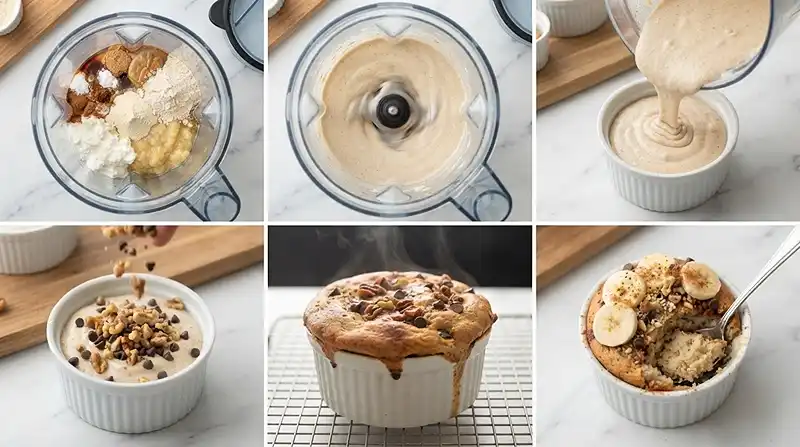
- Preheat your oven to 350°F (175°C), or preheat an air fryer to 325°F (163°C). Let the oven come to full temperature before the ramekin goes in — cold-oven starts affect how evenly the bowl sets.
- Add all ingredients to a blender or food processor: cottage cheese, mashed banana, vanilla protein powder, oat flour, almond butter, maple syrup (if using), vanilla extract, cinnamon, nutmeg, baking powder, and salt. Don’t add the toppings to the blender — those go on after.
- Blend until completely smooth and creamy, about 30-45 seconds. Scrape down the sides halfway through. The batter should look silky with no visible cottage cheese curds remaining.
- Pour the mixture into a lightly greased oven-safe ramekin or small baking dish. A 10-12 oz ramekin is ideal — too small and the batter overflows; too large and the bowl bakes thin and dry.
- Sprinkle with chopped walnuts or chocolate chips if desired. Press them lightly into the surface so they don’t roll off the batter before baking.
- Bake for 20-25 minutes, until the center is set and the top is lightly golden. The edges will pull away from the ramekin slightly when done. A toothpick inserted in the center should come out mostly clean — a few moist crumbs are fine, wet batter is not.
Air Fryer Option
- For the air fryer, cook at 325°F (163°C) for 15-18 minutes. Check at 15 minutes — air fryers vary significantly in heat intensity, and this bowl can go from perfectly set to over-baked quickly. The top should be golden and the center should have just a slight jiggle when you lift the basket.
- Allow the bowl to cool for 5 minutes before serving. The interior continues setting during this time, and cutting in too early will give you a runny center even if the top looked done.
- Top with banana slices, chopped nuts, hemp hearts, or an extra sprinkle of cinnamon before eating. A light drizzle of maple syrup over the finished bowl makes it taste like something from a weekend brunch menu.
Make It Your Own
Well, not every household keeps vanilla protein powder on hand, and this recipe still works beautifully with the right swaps. If you’re using an unflavored protein powder, add an extra 1/2 teaspoon of vanilla extract and a light pinch of extra cinnamon to compensate for the flavor the vanilla powder would have contributed.
For a dairy-free version, swap the cottage cheese for a thick, plain dairy-free coconut yogurt — look for one with at least 15 grams of protein per serving, or the 30g protein breakfast goal gets harder to hit. The texture will be slightly less custardy and a bit more mousse-like, but it still bakes well and tastes like a genuine cottage cheese breakfast substitute.
Want to boost the fat content for a more satiating bowl? Use 2 tablespoons of almond butter instead of one, or stir a tablespoon of chia seeds into the batter before blending. Chia seeds absorb moisture during baking and add a gentle nuttiness without changing the banana bread flavor profile.
If you’re making this for young kids or people who are sensitive to protein powder, you can omit the scoop entirely and replace it with an additional 2 tablespoons of oat flour plus one egg white. The bowl won’t hit 30 grams of protein, but it’ll still be a solid high-protein gluten-free banana bread bowl that holds together cleanly.
Man, oh man — this recipe also adapts to seasonal flavors easily. Swap the cinnamon and nutmeg for 1/2 teaspoon of pumpkin pie spice and fold in 2 tablespoons of pure pumpkin puree alongside the banana for a fall variation that works as well on a Thanksgiving morning as it does on any Tuesday in October.
Common Problems & Solutions
Problem: The center is still wet after the recommended bake time. Add 3-5 minutes and check again. Ramekin size, oven calibration, and how watery your cottage cheese is all affect bake time. A wet center almost always means the bowl needed more time, not that something went wrong with the batter. Cover loosely with foil if the top is darkening but the center isn’t set.
Problem: The bowl tastes chalky or overly protein-forward. The protein powder brand matters more than most people expect. Whey isolate tends to bake cleaner than whey concentrate, and plant-based blends vary wildly in how they taste when heated. According to nutritional research on whey protein types, isolate has less lactose and fewer additives that can create off-flavors during baking. Try switching brands before adjusting the recipe itself.
Problem: The texture is gummy in the middle even when fully baked. This usually points to too much moisture in the batter — either from a very wet cottage cheese brand or an overripe banana with high water content. You know, adding a full tablespoon of oat flour instead of two teaspoons can tighten the batter enough to resolve this without making the bowl dry or dense.
Problem: The top browns too fast before the center sets. Your oven runs hot. Tent the ramekin loosely with foil after the first 15 minutes and continue baking until the center is done. For the air fryer, reduce the temperature to 310°F and extend the cook time by 3-4 minutes — this is especially common in compact air fryer models with strong heating elements.
Storage & Meal Prep
| Method | Duration | Notes |
|---|---|---|
| Counter | Not recommended | Cottage cheese base requires refrigeration |
| Fridge | 3-4 days | Store in the ramekin, covered with plastic wrap or a lid |
| Freezer | Up to 1 month | Cool completely, wrap ramekin tightly, thaw overnight in fridge |
To reheat from the fridge, microwave uncovered for 60-90 seconds or warm in a 300°F oven for 8-10 minutes. The bowl will be slightly denser after refrigeration but still satisfying — add fresh toppings after reheating rather than before storing.
For a full week of gluten-free cottage cheese breakfasts, bake four bowls on Sunday evening and refrigerate them. Each morning is a 90-second reheat away from a warm, high-protein start. This approach pairs especially well with batch-prepping the gluten-free breakfast sausage cornbread muffins for days when you want something savory instead.
Cottage Cheese Banana Bread Bowl FAQs
Can I make this without protein powder?
Yes. Replace the scoop of protein powder with 2 extra tablespoons of certified gluten-free oat flour plus one egg white. The bowl will still bake well and taste like banana bread, but the protein count will drop to roughly 18-20 grams depending on your cottage cheese brand. If you want to keep the protein high without powder, full-fat cottage cheese and an added egg white are your best tools.
How do I know when the bowl is fully baked?
The center should be set and no longer jiggly when you gently shake the ramekin, and a toothpick inserted in the middle should come out with just a few moist crumbs. The edges will pull away slightly from the ramekin sides, and the top will be lightly golden. If the top looks done but the center is still wet, cover loosely with foil and bake for another 5 minutes.
What’s the best protein powder to use for baking?
Whey isolate or a clean plant-based blend with minimal additives bakes most cleanly. Avoid protein powders with artificial sweeteners like sucralose, which can turn bitter when heated. Vanilla flavored powders work best in this recipe since they contribute flavor alongside protein. Always check that your chosen powder is certified gluten-free, as cross-contamination during manufacturing is common.
Can I use a regular muffin tin instead of a ramekin?
Yes, with adjustments. Divide the batter evenly between 2 greased muffin cups and reduce the bake time to 14-17 minutes at 350°F. The texture will be slightly firmer since the batter is shallower, but the flavor stays the same. Let them cool in the tin for 5 minutes before removing, or the centers may still be too soft to hold their shape.
Why did my bowl sink in the middle after baking?
A sunken center almost always means underbaking or opening the oven door too early in the bake. The baking powder creates lift during the first 10-12 minutes, and disrupting the heat during that window collapses the structure before it sets. Resist the urge to check before the 18-minute mark, and make sure your baking powder is certified gluten-free and still active — expired baking powder is a surprisingly common culprit.
Serving Suggestions
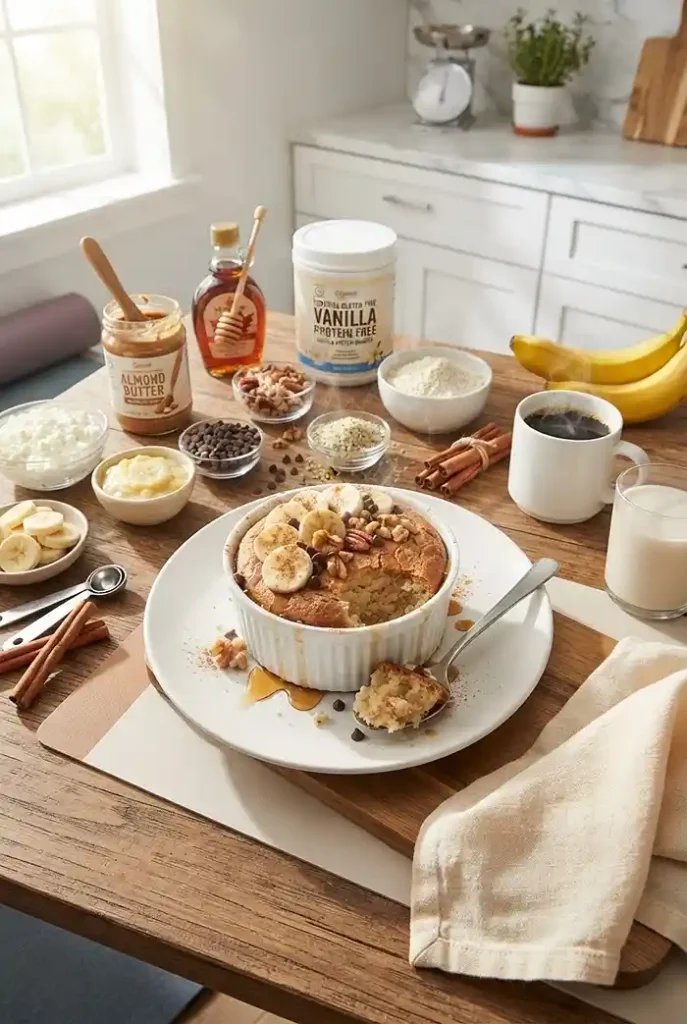
This banana bread bowl is genuinely satisfying on its own, but a small pour of cold oat milk alongside cuts the warmth of the bowl in a way that makes every bite feel more intentional. A double espresso works just as well for the coffee crowd.
For a fuller weekend brunch spread — think Christmas morning or Easter breakfast when everyone’s moving slowly and nobody wants to cook for an hour — pair the bowl with this savory gluten-free sweet potato egg white breakfast stack. One sweet, one savory, both done in under 30 minutes. The combination covers everyone at the table.
If you’re building a meal prep rotation, this bowl, the green chile hash brown egg casserole, and a fresh fruit plate give you a full week of gluten-free breakfasts that actually rotate well without getting monotonous.
Give this recipe a try and drop a comment below — I want to know which toppings you reached for and whether you went oven or air fryer. If you made it your own, I especially want to hear about it.
Quick Gluten-Free Cottage Cheese Banana Bread Bowl
Equipment
- Blender or food processor
- 10-12 oz oven-safe ramekin or small baking dish
- Oven or air fryer
- Measuring cups and spoons
- Spatula
Ingredients
Banana Bread Bowl
- 1 cup low-fat cottage cheese full-fat also works
- 1 medium ripe banana mashed; brown-spotted is ideal
- 1 scoop (about 30 g) certified gluten-free vanilla protein powder whey or plant-based
- 2 tablespoons certified gluten-free oat flour
- 1 tablespoon almond butter cashew butter also works
- 1 teaspoon maple syrup or honey optional
- 1 teaspoon vanilla extract
- 1 teaspoon ground cinnamon
- ¼ teaspoon ground nutmeg
- ½ teaspoon certified gluten-free baking powder
- pinch fine sea salt
Optional Toppings
- banana slices optional
- chopped walnuts or pecans optional
- mini certified gluten-free chocolate chips optional
- hemp hearts optional
- ground cinnamon optional sprinkle
- maple syrup optional drizzle
Instructions
- Preheat the oven to 350°F (175°C) or an air fryer to 325°F (163°C).
- Add the cottage cheese, mashed banana, protein powder, oat flour, almond butter, maple syrup (if using), vanilla extract, cinnamon, nutmeg, baking powder, and salt to a blender or food processor.
- Blend for 30–45 seconds until completely smooth and creamy, scraping down the sides as needed.
- Pour the batter into a lightly greased 10-12 oz oven-safe ramekin or small baking dish.
- Add optional chopped walnuts or chocolate chips to the top if desired.
- Bake for 20–25 minutes, until the center is set and the top is lightly golden.
- For the air fryer, cook at 325°F (163°C) for 15–18 minutes until the center is just set.
- Cool for 5 minutes, then finish with banana slices, nuts, hemp hearts, cinnamon, or a drizzle of maple syrup before serving.