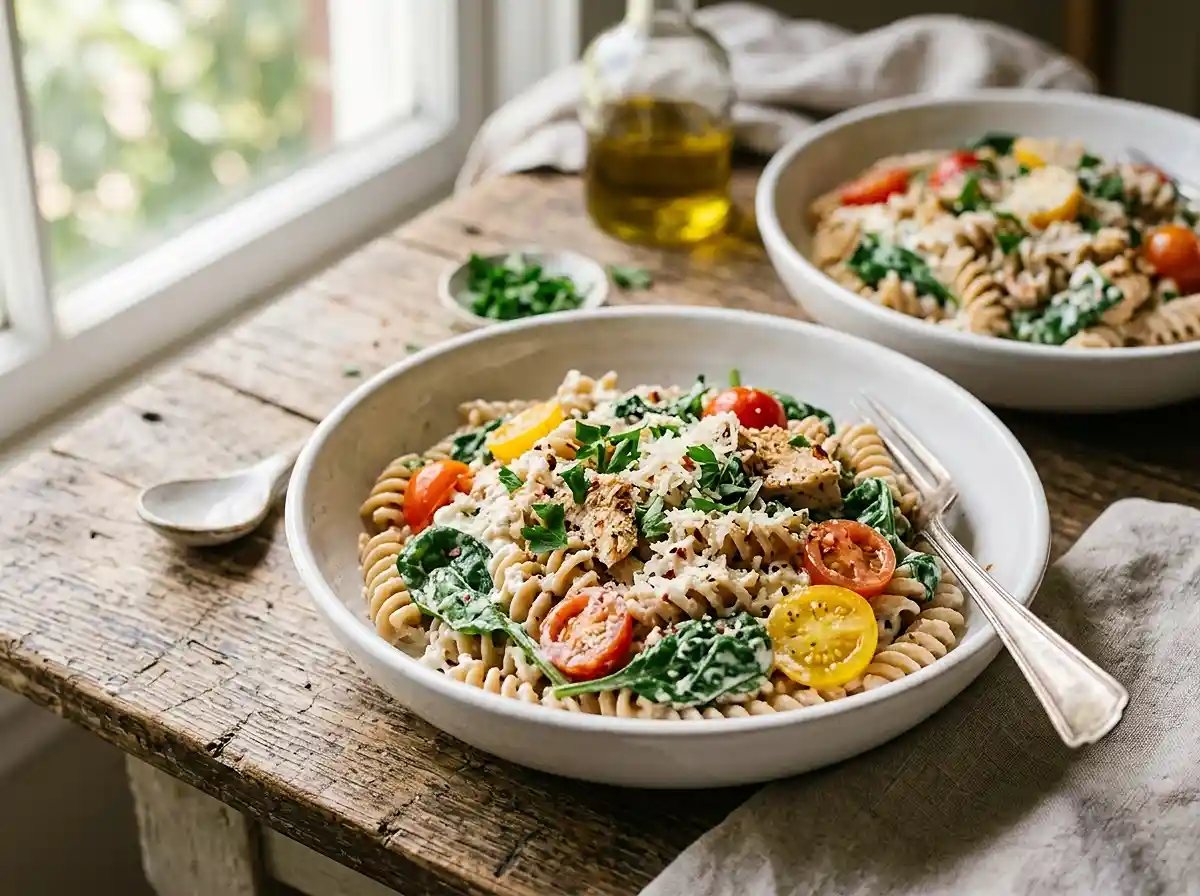
Cottage Cheese Protein Pasta Bowls
Make creamy gluten-free cottage cheese protein pasta bowls in 20 minutes. High-protein, budget-friendly, and meal prep ready — step-by-step recipe inside.
Gluten-free cottage cheese protein pasta bowls weren’t on my radar until a particularly tired Wednesday night when I had half a tub of cottage cheese, a box of gluten-free pasta, and exactly zero motivation to do anything complicated.
I blended the cottage cheese with garlic and Parmesan on a whim, poured it over the pasta, and stood at the stove half-convinced it would be a disaster. It wasn’t. It was one of those quietly satisfying meals that earns a permanent spot in your rotation without fanfare.
Can a high-protein pasta sauce really come together in the time it takes to boil noodles? This one does—and the texture is silky and rich, nothing like the grainy mess you might expect from blended cottage cheese.
Table of Contents
Why You’ll Love This Gluten-Free Cottage Cheese Protein Pasta Bowls Recipe
- Creamy without cream — blended cottage cheese mimics an Alfredo-style sauce with a fraction of the fat and a significant protein boost
- Ready in about 20 minutes — faster than most takeout, and most of that time is just waiting for the pasta water to boil
- Budget-friendly protein — cottage cheese costs a fraction of what chicken or meat adds to a meal, making this one of the most affordable high-protein dinners you can make
- Built for meal prep — the sauce stores well and reheats smoothly with a splash of reserved pasta water
The Secret to Perfect Gluten-Free Cottage Cheese Protein Pasta Bowls
- Blend the sauce completely smooth: any remaining cottage cheese curds in the sauce will become grainy and unpleasant when heated — a high-speed blender gives you the creamiest result; an immersion blender works but takes longer
- Warm the sauce gently over medium-low heat: high heat causes the proteins in cottage cheese to seize and separate — low and slow keeps the sauce cohesive and silky
- Reserve that pasta water: the starch in gluten-free pasta water is what helps the sauce cling evenly to each noodle rather than pooling at the bottom of the bowl
- Add spinach before the pasta: wilting the spinach directly in the warm sauce means it absorbs the garlic and seasoning flavors rather than steaming separately and tasting flat
Ingredients
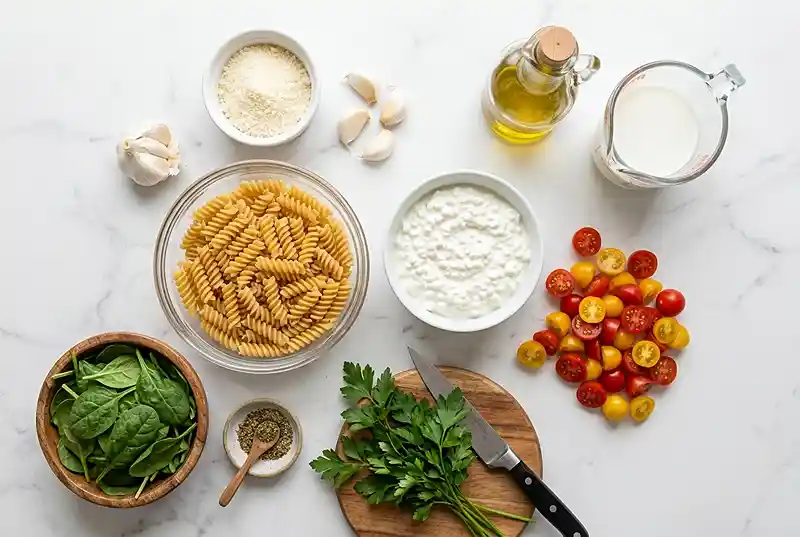
| Ingredient | Amount | Notes |
|---|---|---|
| Gluten-free pasta | 12 oz (340 g) | Penne or rotini hold the sauce best; rice or chickpea-based pasta both work |
| Cottage cheese | 1½ cups | Full-fat gives the creamiest result; low-fat works but produces a thinner sauce |
| Parmesan cheese, grated | ½ cup | Freshly grated melts more smoothly than pre-packaged |
| Garlic, minced | 2 cloves | |
| Olive oil | 2 tbsp | |
| Milk | ½ cup | Any milk works, including unsweetened oat or almond milk for dairy-free |
| Italian seasoning | 1 tsp | |
| Onion powder | ½ tsp | |
| Salt | ½ tsp | |
| Black pepper | ¼ tsp | |
| Baby spinach | 2 cups | Loosely packed; it wilts down significantly |
| Cherry tomatoes, halved | 1 cup | Added at the end so they stay bright and slightly firm |
| Fresh parsley, chopped | 2 tbsp | For garnish |
Instructions
Cook the gluten-free pasta according to the package directions. Before draining, scoop out ½ cup of the cloudy pasta water and set it aside — this step is easy to forget and important enough to do first. Drain the pasta and set it aside.
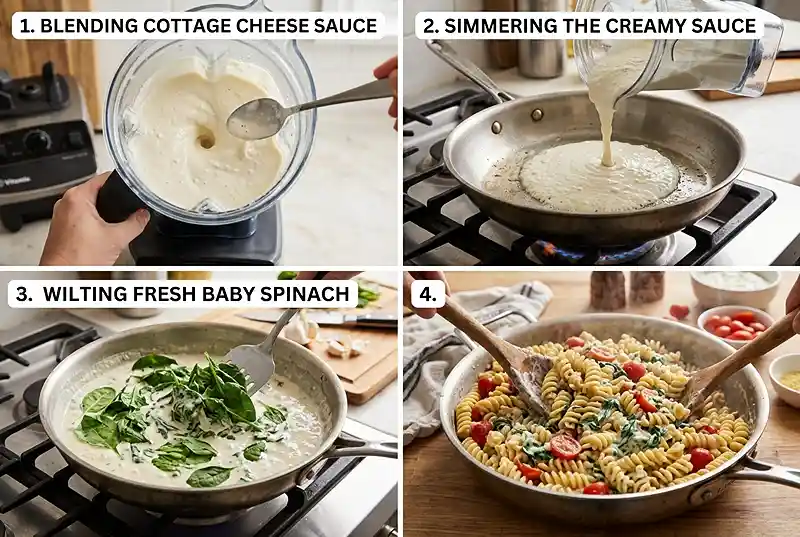
In a blender, combine the cottage cheese, Parmesan cheese, garlic, milk, olive oil, Italian seasoning, onion powder, salt, and pepper. Blend on high until completely smooth — this usually takes about 60 seconds in a standard blender. The sauce should look uniformly creamy with no visible curds.
Pour the blended sauce into a large skillet over medium-low heat. Cook for 2–3 minutes, stirring frequently, until the sauce is warmed through and just beginning to steam. Don’t rush this step or crank the heat — the sauce will break if it gets too hot too fast.
Stir in the baby spinach and cook until fully wilted, about 1–2 minutes. The leaves will collapse quickly and turn a deep, vivid green — that color shift tells you they’re done.
Add the cooked pasta and cherry tomatoes to the skillet. Toss everything together until the pasta is evenly coated, adding a splash of the reserved pasta water as needed to loosen the sauce to a smooth, flowing consistency. Start with 2 tablespoons and add more gradually.
Divide into serving bowls and garnish with fresh parsley. Serve immediately while the sauce is at its creamiest — it will thicken as it cools.
Make It Your Own
Well… the cottage cheese pasta recipe base is genuinely flexible once you’ve got the blending technique down.
Add protein for a heartier bowl: Grilled chicken, shrimp, or white beans all work well here. Stir them in at step 5 along with the pasta. White beans are the most budget-friendly option and keep this a completely plant-based bowl with no extra cooking required.
Dairy-free adaptation: Swap the cottage cheese for a plain, unsweetened dairy-free alternative like Kite Hill almond-based ricotta, and use nutritional yeast in place of the Parmesan. The sauce won’t be quite as creamy, but the flavor is still savory and satisfying. Use oat milk or almond milk for the liquid component.
Swap the vegetables: Zucchini, roasted red peppers, sun-dried tomatoes, or artichoke hearts all fold in well at step 5. If you’re using roasted vegetables, add them at the very end so they don’t break down from too much heat in the skillet.
Spice it up: A pinch of red pepper flakes stirred into the sauce before warming gives the whole bowl a quiet heat that cuts through the richness. For a more pronounced kick, blend in a teaspoon of jarred calabrian chili paste with the cottage cheese.
Common Problems & Solutions
Problem: Sauce turned grainy after heating. The heat was too high. Cottage cheese protein separates above a certain temperature, leaving the sauce with a curdled texture. Lower the heat to medium-low and stir constantly — if it’s already broken, whisk in a tablespoon of cold milk off the heat and stir vigorously until it smooths back out.
Problem: Sauce is too thick and clumping around the pasta. Add the reserved pasta water a tablespoon at a time while tossing over low heat. The starch in that water is specifically what helps reintegrate a sauce that’s tightened up — plain water works in a pinch, but pasta water does a noticeably better job.
Man, oh man… the pasta sticking together after draining is a real frustration with gluten-free varieties. Problem: Gluten-free pasta clumped into a solid mass. Toss the drained pasta with a drizzle of olive oil immediately after draining. This prevents the starches from bonding as the pasta cools while you finish the sauce. It takes 10 seconds and saves the whole dish.
Problem: Sauce tastes bland. Gluten-free cottage cheese pasta bowls need confident seasoning at two points — in the blender and again after tossing with the pasta. Taste before serving and add a pinch more salt or a squeeze of lemon juice, which brightens the whole flavor profile without adding sodium. According to the Harvard T.H. Chan School of Public Health’s nutrition overview on cottage cheese, the protein content in cottage cheese varies by fat level — full-fat versions tend to have a richer flavor that needs less seasoning work.
Storage & Meal Prep
| Method | Duration | Notes |
|---|---|---|
| Counter | Not recommended | Dairy-based sauce should be refrigerated within 2 hours |
| Fridge | 4–5 days | Store in an airtight container; the sauce will thicken when cold |
| Freezer | Not recommended | Cottage cheese-based sauces separate when frozen and thawed |
To reheat, add the pasta to a skillet over medium-low heat with 2–3 tablespoons of milk or water. Stir gently until the sauce loosens and the pasta is warmed through — about 3–4 minutes. The microwave also works; cover loosely and heat in 60-second intervals, stirring between each.
For gluten-free affordable meal prep, portion the finished bowls into individual containers and refrigerate. They’re genuinely one of the easiest grab-and-go lunches in the rotation — the sauce actually absorbs into the pasta overnight and develops more depth by day two.
Your Questions Answered
Can I use low-fat cottage cheese in this pasta recipe?
Yes, but the sauce will be thinner. Low-fat cottage cheese has a higher water content, so reduce the milk to a quarter cup and add an extra tablespoon of Parmesan to compensate. Full-fat cottage cheese gives the richest, most coating sauce.
How do I stop gluten-free pasta from getting mushy in the sauce?
Cook the pasta one minute under the package time and finish it in the sauce over low heat. Gluten-free pasta continues absorbing liquid after draining and softens faster than wheat pasta, so pulling it slightly underdone prevents it from becoming mushy by the time it reaches the bowl.
What is the best gluten-free pasta shape for a creamy cottage cheese sauce?
Penne, rotini, or fusilli work best because the ridges and curves give the sauce more surface area to cling to. Long noodles like spaghetti tend to let the sauce pool at the bottom of the bowl rather than coating each strand evenly.
Can I make the cottage cheese pasta sauce ahead of time?
Yes, up to 3 days in the fridge. Store the blended sauce separately from the cooked pasta. When ready to serve, warm the sauce gently in a skillet over medium-low heat, then toss with freshly cooked pasta for the best texture.
Why did my cottage cheese sauce turn grainy after heating?
The heat was too high. Cottage cheese proteins separate above a gentle simmer, leaving a curdled texture. Keep the burner at medium-low and stir constantly. If the sauce has already broken, pull the pan off the heat and whisk in a tablespoon of cold milk to bring it back together.
Serving Suggestions
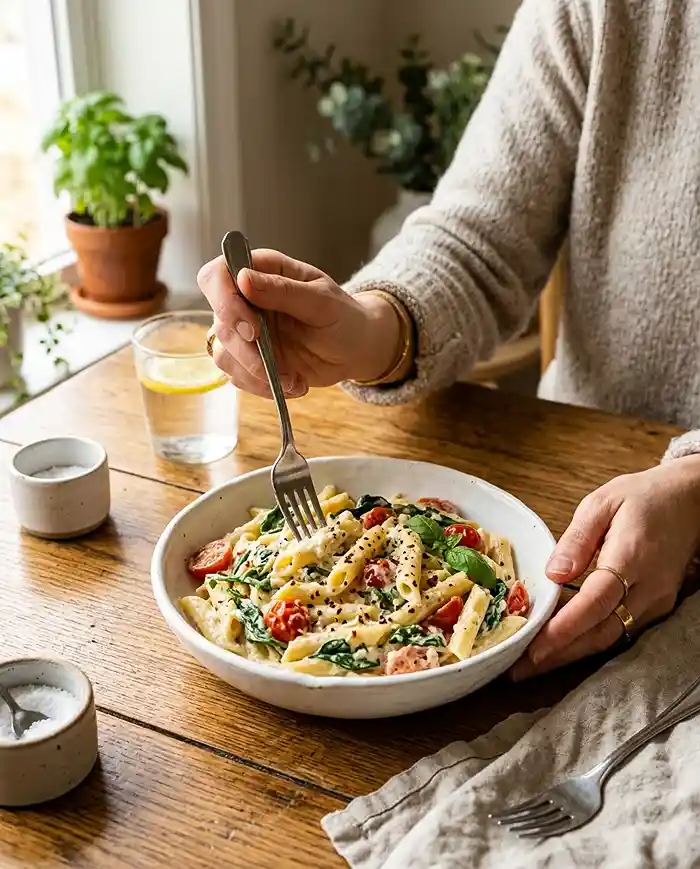
You know… these bowls are flexible enough to serve at a casual weeknight dinner or dress up slightly for a holiday gathering. They make a genuinely satisfying Christmas Eve pasta dish when you add roasted cherry tomatoes and a handful of fresh basil—simple, hands-off, and crowd-pleasing without requiring attention at the last minute.
For a complete spread, pair these bowls with these gluten-free chicken Caesar wrap bites as a starter, or round out a meal prep week by adding these sweet potato black bean burrito bowls as a second protein-forward option.
Finish the meal with something light and refreshing — these gluten-free strawberry yogurt parfait jars are an easy make-ahead dessert that pairs well with any creamy pasta dinner.
If you give these a try, drop a comment below and let me know which pasta shape you used or any additions that worked well in your kitchen. And if this recipe earns a spot in your meal prep rotation, sharing it to Pinterest helps other gluten-free home cooks find a genuinely useful weeknight dinner.
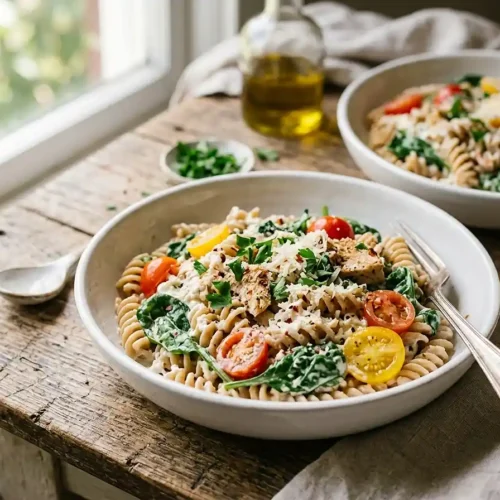
Gluten-Free Cottage Cheese Protein Pasta Bowls
Equipment
- Large pot
- Colander
- Blender
- Large skillet
- Wooden spoon or spatula
- Measuring cups and spoons
Ingredients
Pasta Bowls
- 12 oz (340 g) Gluten-free pasta Penne or rotini hold the sauce best; rice or chickpea-based pasta both work
- 1 ½ cups Cottage cheese Full-fat gives the creamiest result; low-fat produces a thinner sauce
- ½ cup Parmesan cheese, grated Freshly grated melts more smoothly
- 2 cloves Garlic, minced
- 2 tbsp Olive oil
- ½ cup Milk Any milk works, including unsweetened oat or almond milk
- 1 tsp Italian seasoning
- ½ tsp Onion powder
- ½ tsp Salt
- ¼ tsp Black pepper
- 2 cups Baby spinach Loosely packed
- 1 cup Cherry tomatoes, halved Add at the end so they stay bright and slightly firm
- 2 tbsp Fresh parsley, chopped For garnish
Instructions
- Cook the gluten-free pasta according to the package directions. Reserve 1/2 cup of the pasta water before draining, then set the pasta aside.
- Blend the cottage cheese, Parmesan cheese, garlic, milk, olive oil, Italian seasoning, onion powder, salt, and black pepper until completely smooth.
- Pour the blended sauce into a large skillet over medium-low heat and cook for 2–3 minutes, stirring frequently, until warmed through.
- Stir in the baby spinach and cook for 1–2 minutes until wilted.
- Add the cooked pasta and cherry tomatoes. Toss until evenly coated, adding reserved pasta water as needed to loosen the sauce.
- Divide among serving bowls, garnish with chopped parsley, and serve immediately.