Lemon Olive Oil Blackberry Loaf
Make this gluten-free lemon olive oil blackberry loaf with an elderflower glaze — step-by-step ingredients, tips for a moist crumb, and storage advice.
I almost didn’t publish this recipe because it felt too elegant for a weeknight. The first time I made this gluten-free lemon olive oil blackberry loaf, it was for Mother’s Day brunch, and I was terrified the crumb would turn out gummy or dense the way so many gluten-free loaf cakes do.
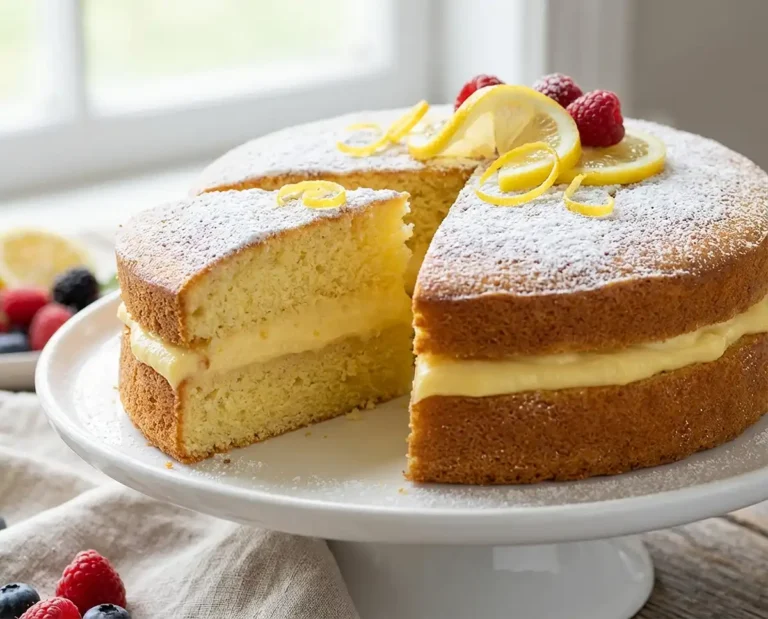
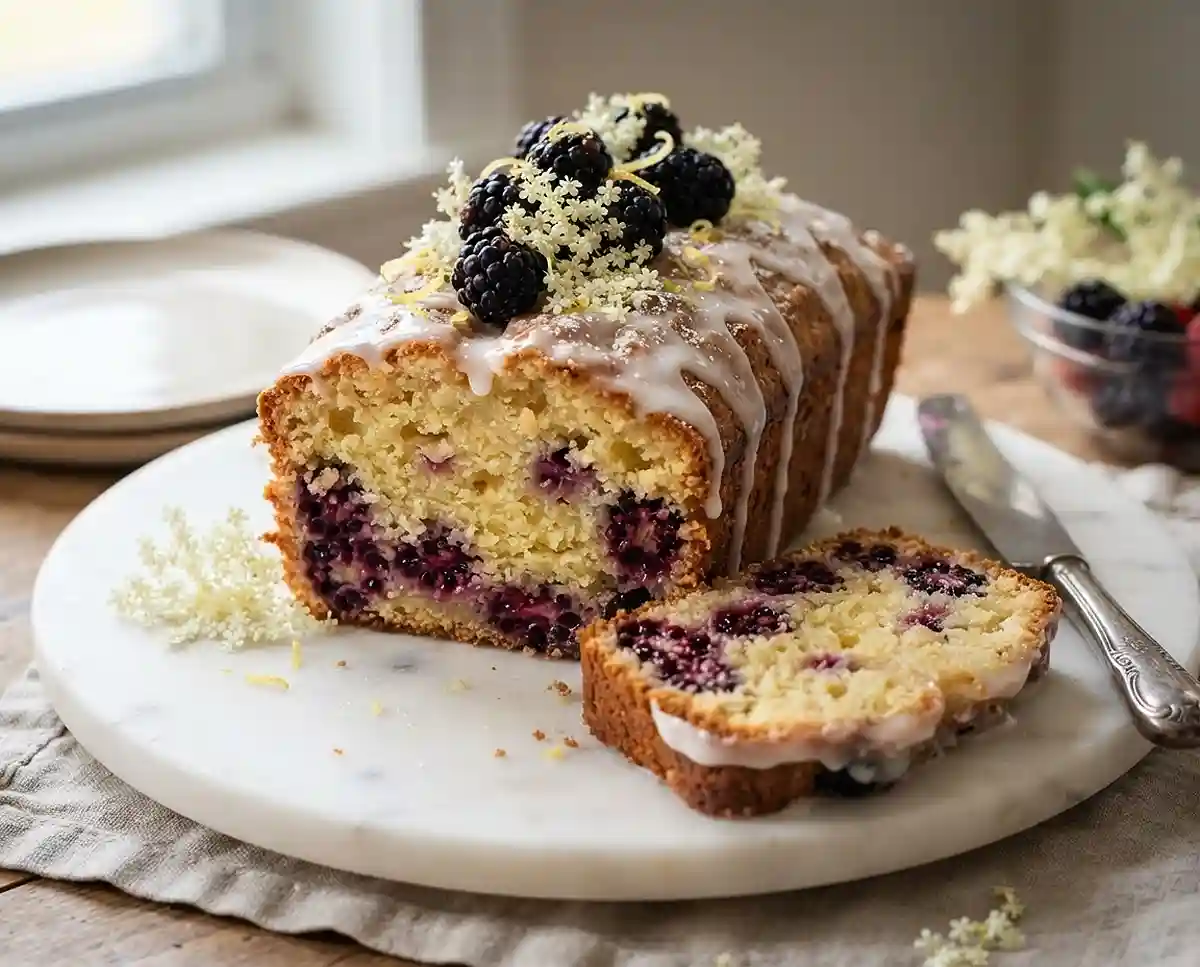
It didn’t. It came out with a golden, fragrant top, plump blackberries suspended through every slice, and a crumb so tender it almost dissolved on the tongue — like the most luxurious lemon pound cake you’ve ever had, but lighter.
What makes a loaf cake this good without butter, without gluten, and without a lot of fuss? The answer starts with the olive oil.
Why You’ll Love This Lemon Olive Oil Blackberry Loaf
- Incredibly moist crumb that lasts: The olive oil coats the flour proteins and keeps this loaf tender for days — no dry, crumbly slices by day two.
- Naturally gluten-free and dairy-free adaptable: Use coconut yogurt in place of Greek yogurt and the whole loaf works beautifully for multiple dietary needs.
- Stunning with minimal effort: The elderflower glaze drips down the sides like something from a bakery case, but it comes together in under two minutes.
- Works for any occasion: Elegant enough for a celebration spread, simple enough for a slow Sunday morning with coffee.
The Secret to Perfect Gluten-Free Lemon Olive Oil Blackberry Loaf
- Pulse the zest into the sugar first: Rubbing or processing lemon zest directly into the caster sugar releases the essential oils locked in the peel, giving you a much more vivid, fragrant lemon flavor than simply adding zest to the batter.
- Extra-virgin olive oil keeps it moist longer: Because olive oil stays liquid at room temperature (unlike butter), it continues to keep the crumb supple even after baking. According to The Mediterranean Dish’s guide to baking with olive oil, liquid fats coat flour proteins more efficiently than solid fats, producing a more tender, longer-lasting crumb.
- Layer the blackberries — don’t stir them in: Folding berries directly into batter causes them to bleed and sink. Layering them between two pours keeps them distributed evenly and preserves their shape and color.
- Don’t overmix the gluten-free batter: Certified gluten-free all-purpose flour blends can become gummy and dense when overworked. Mix just until the batter comes together — a few streaks are fine.
Table of Contents
Ingredients
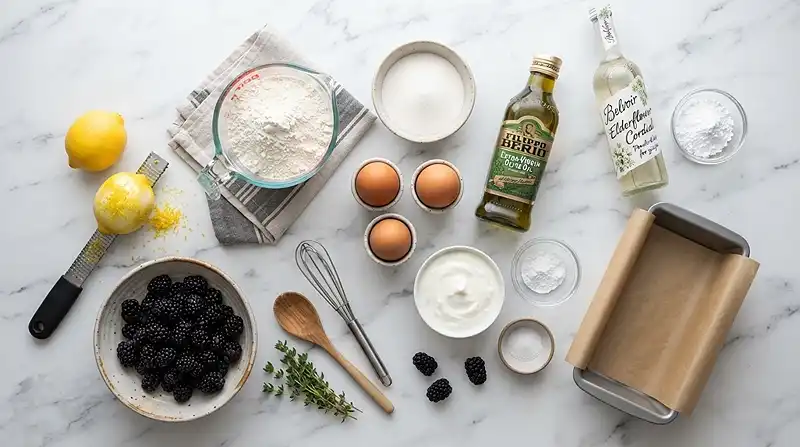
Lemon Blackberry Loaf
| Ingredient | Amount | Notes |
|---|---|---|
| Caster sugar | 1½ cups (330 g) | Fine-grain sugar blends more evenly; granulated sugar works in a pinch |
| Lemons, finely grated zest | 2 large lemons | Zest before juicing |
| Large eggs, room temperature | 2 | Room temp eggs emulsify better with oil |
| Extra-virgin olive oil | 1 cup (240 ml) | Use a mild, fruity EVOO — not light or refined olive oil |
| Fine sea salt | ½ teaspoon | |
| Plain Greek yogurt or natural yogurt | 1 cup (250 g) | Use coconut yogurt to keep the loaf dairy-free |
| Fresh lemon juice | 2–3 tablespoons | Start with 2 tablespoons; add a third for a sharper lemon flavor |
| Certified gluten-free all-purpose flour | 2 cups (250 g) | Check the label — certification matters for celiac households |
| Certified gluten-free baking powder | 3 teaspoons | Standard baking powder often contains gluten as a filler |
| Fresh blackberries | 250–300 g | Ripe but firm; very soft berries bleed too much |
Elderflower Glaze
| Ingredient | Amount | Notes |
|---|---|---|
| Powdered sugar | 1 cup (100 g) | Sift to avoid lumps in the glaze |
| Elderflower cordial | 1–3 tablespoons, added gradually | Add slowly — a little goes a long way. Find it in specialty grocery stores or online. |
Optional Garnish
- Fresh blackberries
- Fresh lemon zest
- Edible elderflowers
If you’ve never baked with elderflower cordial before, it’s worth seeking out. Elderflower’s natural flavor pairings show why it shines alongside lemon and blackberry — its delicate floral sweetness lifts the citrus without competing with it.
Instructions
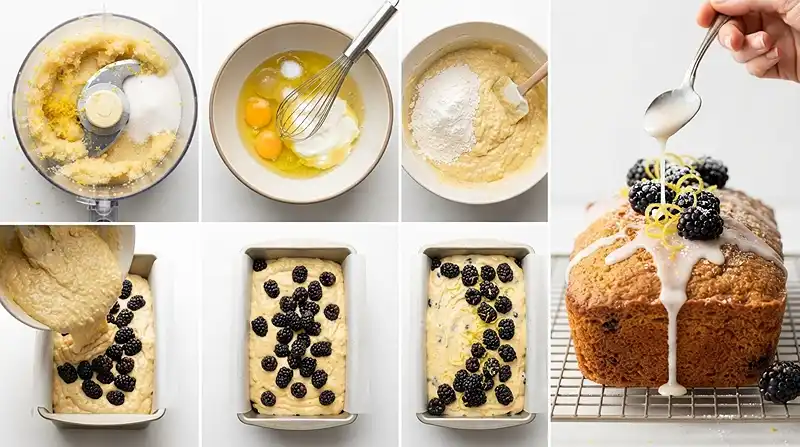
Prepare the Batter
- Preheat and prep the pan. Heat the oven to 350°F (180°C). Grease and line a large 9×5-inch loaf pan with parchment paper, leaving some overhang on the sides so you can lift the loaf out cleanly after baking.
- Infuse the sugar with lemon zest. Add the 1½ cups (330 g) of caster sugar and the finely grated zest of 2 lemons to a food processor. Pulse until the zest is finely distributed and the mixture smells intensely fragrant. No food processor? Rub the zest into the sugar with your fingertips until the sugar looks pale yellow and slightly damp. Pro Tip: This step is the most important one for lemon flavor — don’t skip or rush it.
- Add the wet ingredients. Add the 2 eggs, 1 cup (240 ml) of olive oil, and ½ teaspoon of fine sea salt to the lemon sugar. Process or whisk until the mixture is smooth and cohesive — it should look glossy and slightly thickened.
- Mix in the yogurt and lemon juice. Add the 1 cup (250 g) of Greek yogurt or natural yogurt and 2–3 tablespoons of fresh lemon juice. Mix until fully incorporated and the batter looks creamy and uniform.
- Fold in the dry ingredients. Add the 2 cups (250 g) of certified gluten-free all-purpose flour and 3 teaspoons of certified gluten-free baking powder. Mix just until the batter comes together with no visible dry streaks. Stop there — overmixing a gluten-free batter develops a gummy, heavy texture.
Assemble and Bake
- Add the first batter layer. Pour half of the batter into the prepared loaf pan and spread it level with a spatula.
- Scatter half the blackberries. Gently place half of the 250–300 g of fresh blackberries over the batter in a single, even layer. Don’t press them in — they’ll settle during baking.
- Add the second batter layer. Pour the remaining batter over the blackberries and spread gently to cover them. Scatter the remaining blackberries over the top. Pro Tip: If your loaf pan is small and the batter reaches the rim, set a little aside and bake it separately as a small muffin — don’t overfill or the loaf will overflow.
- Bake until a skewer comes out clean. Bake for 60–75 minutes, until the loaf springs back lightly when you press the top and a skewer inserted into the center comes out clean or with just a few moist crumbs. The top should be deeply golden with a warm, nutty-fruity aroma filling your kitchen. Pro Tip: Start checking at the 60-minute mark. If the top is browning too quickly, tent loosely with foil for the final 15 minutes.
- Cool completely before glazing. Let the loaf cool in the pan for 20 minutes before lifting it out using the parchment overhang. Transfer to a wire rack and allow it to cool completely — pouring glaze onto a warm loaf will make it run off instantly and soak in rather than set.
Make the Elderflower Glaze
- Mix the glaze gradually. Place the 1 cup (100 g) of powdered sugar in a small bowl. Add the elderflower cordial 1 teaspoon at a time, stirring after each addition, until you have a thick but slowly pourable white glaze. The glaze should hold its shape briefly when drizzled, then spread on its own.
- Glaze and garnish. Spoon the glaze over the center of the cooled loaf and gently nudge it toward the edges so it drips naturally down the sides. Decorate immediately with fresh blackberries, a little extra lemon zest, and edible elderflowers if you have them.
Make It Your Own
Well… the beauty of this lemon olive oil blackberry loaf is that it’s already a flexible base. If fresh blackberries aren’t in season, raspberries or halved strawberries work equally well at the same weight. Their natural acidity complements the citrus batter in a similar way, and they hold their shape through the long bake without turning mushy.
To keep this gluten free loaf cake fully dairy-free, swap the Greek yogurt for plain coconut yogurt at a 1:1 ratio. The texture stays rich and moist — you won’t notice the difference in the finished loaf. This is my go-to swap when I’m baking for a crowd with mixed dietary needs.
If elderflower cordial isn’t something you keep on hand, a plain lemon glaze works beautifully as a substitute. Mix the 1 cup (100 g) of powdered sugar with fresh lemon juice instead of cordial, adding it gradually until you hit the right consistency. The result is sharper and more citrus-forward, which is a wonderful contrast to the jammy blackberries inside.
For a richer, nuttier spin on this lemon olive oil blackberry loaf, stir 2 tablespoons of almond flour into the dry ingredients and add a handful of sliced almonds to the top before baking. The almonds toast to a beautiful golden brown and add a satisfying crunch to every slice. Just make sure your almond flour is certified gluten-free.
Common Problems & Solutions
Problem: The loaf is sinking in the center after baking. This usually means it wasn’t fully baked through. A clean toothpick test from the top of the loaf doesn’t catch the center accurately on a deep loaf like this — insert your skewer at an angle toward the very center, deep into the base. If it comes out wet, return the loaf to the oven for another 10 minutes and test again.
Problem: The top is browning too fast before the center is done. Tent the loaf loosely with foil from the 45-minute mark onward. This is especially common when using darker-colored loaf pans, which absorb heat more aggressively. A light-colored or glass pan gives you more control over the browning rate.
Man, oh man… Problem: The crumb turned out gummy and dense. Two culprits here — overmixing or underbaking. Overmixing gluten-free flour blends activates the starches in a way that creates a gluey texture. Mix only until the batter just comes together. If you’re confident you didn’t overmix, add 5–10 more minutes of bake time and test again before pulling it from the oven.
Problem: The blackberries all sank to the bottom. This happens when the berries are very ripe and heavy, or when the batter is too thin. Toss the blackberries in 1 tablespoon of gluten-free flour before layering them into the batter — this light coating helps suspend them. Layering (rather than folding in) is the other key step that keeps the berries distributed.
Storage & Meal Prep
| Method | Duration | Notes |
|---|---|---|
| Counter | 2–3 days | Airtight container; the olive oil keeps the crumb moist longer than a butter-based loaf |
| Fridge | 5–7 days | Bring to room temperature before serving for the best texture |
| Freezer | Up to 2 months | Wrap individual slices tightly; freeze before adding the glaze |
For the best make-ahead results, bake the loaf and freeze it unglazed. When you’re ready to serve, thaw at room temperature for 2–3 hours, then make a fresh batch of elderflower glaze and pour it over just before serving. The glaze takes two minutes to make and looks just-baked every time.
Leftover slices that have dried out slightly are extraordinary lightly toasted and spread with a little cream cheese or coconut yogurt. Nothing gets wasted, and honestly, the toasted version might be even better than the fresh-baked original.
Lemon Olive Oil Blackberry Loaf FAQs
Can I make this loaf without a food processor?
Yes, absolutely. You don’t need a food processor for this recipe. Simply finely grate the lemon zest directly onto the caster sugar, then rub the zest into the sugar with your fingertips for about a minute until the mixture smells fragrant and looks slightly damp. From there, whisk in the remaining wet ingredients by hand in a large mixing bowl.
How do I know when the loaf is fully baked through?
Insert a skewer at an angle deep into the center of the loaf — not just into the top. It should come out clean or with just a few moist crumbs. The loaf should also spring back lightly when you press the center and smell nutty and fragrant rather than raw. If in doubt, give it another 10 minutes and test again. Underbaking is the most common cause of a gummy center.
What’s the best substitute for elderflower cordial in the glaze?
A simple lemon glaze works beautifully as a substitute. Replace the elderflower cordial with fresh lemon juice, adding it to the powdered sugar gradually until you reach a thick, pourable consistency. You can also use rose water for a floral alternative, adding it in very small amounts since it’s more concentrated than cordial.
Can I use a different pan shape?
Yes. This batter works well in a 9-inch round cake pan, a 10-inch ring pan, or a Bundt pan in addition to the standard 9×5-inch loaf pan. Note that baking times will shift — round and ring pans typically bake faster than a deep loaf pan, so start checking for doneness around the 45-minute mark.
Why did my glaze turn out too runny?
Elderflower cordial is thinner than lemon juice, so it’s easy to add too much too quickly. If your glaze becomes too thin, simply stir in more powdered sugar a tablespoon at a time until it thickens back up. Always add the cordial slowly — one teaspoon at a time — and stir thoroughly between additions before deciding whether to add more.
Serving Suggestions
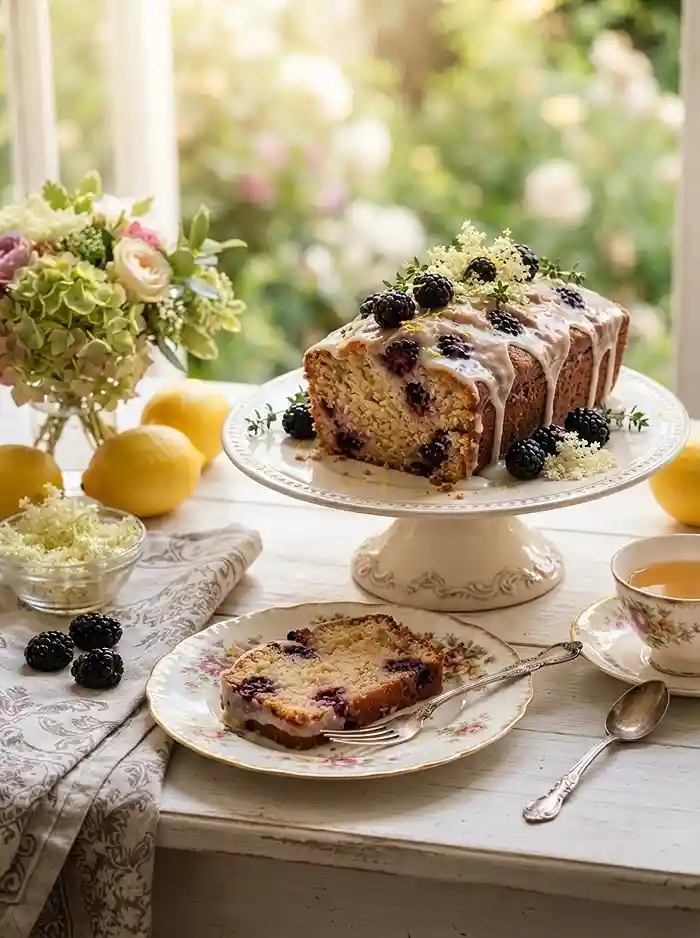
You know… this loaf is one of those rare bakes that works at every point in the day. Serve a slice with morning coffee, offer it as an afternoon treat with tea, or dress it up with a spoonful of whipped cream and fresh blackberries for a proper elegant dessert after dinner.
It’s been my go-to contribution for Easter brunch and spring birthday celebrations — the pale glaze, purple blackberries, and yellow zest make it look almost too pretty to eat. It always disappears faster than anything else on the table.
For a full spread of gluten-free bakes and treats, pair this loaf with our make-ahead blueberry coconut chia freezer cups for a berry-forward dessert table that covers every guest. Or if you need a satisfying savory dish to balance the sweetness, the gluten-free beef taco rice stuffed peppers are hearty and crowd-pleasing alongside a loaf like this. And if you’re hosting and want something light to start, the roasted tomato corn whipped cottage cheese dip is an easy, fresh starter that won’t compete with the loaf’s flavors.
Conclusion
This gluten-free lemon olive oil blackberry loaf is the kind of bake that earns a handwritten recipe card in someone else’s kitchen. It’s genuinely simple, quietly impressive, and stays moist longer than any butter-based loaf I’ve made.
If you bake it, I’d love to hear how it went — drop a comment below with your glaze flavor, any swaps you made, or which pan you used. And if you loved it, sharing it on Pinterest helps other gluten-free bakers find this recipe too. Ratings mean the world and help me keep creating recipes that actually work.
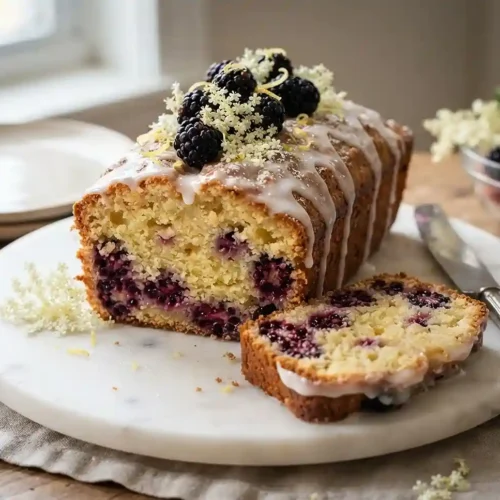
Gluten-Free Lemon Olive Oil Blackberry Loaf
Equipment
- 9×5-inch loaf pan
- Parchment paper
- Food processor
- Large mixing bowl
- Small mixing bowl
- Whisk
- Spatula
- Wire rack
- Skewer
Ingredients
Lemon Blackberry Loaf
- 1 ½ cups (330 g) Caster sugar Fine-grain sugar blends evenly; granulated sugar works in a pinch
- 2 large lemons Finely grated lemon zest Zest before juicing
- 2 Large eggs Room temperature for better emulsification with the oil
- 1 cup (240 ml) Extra-virgin olive oil Use a mild, fruity EVOO rather than light or refined olive oil
- ½ teaspoon Fine sea salt
- 1 cup (250 g) Plain Greek yogurt or natural yogurt Use plain coconut yogurt to make the loaf dairy-free
- 2–3 tablespoons Fresh lemon juice Start with 2 tablespoons and add a third for a sharper lemon flavor
- 2 cups (250 g) Certified gluten-free all-purpose flour Check the label for gluten-free certification
- 3 teaspoons Certified gluten-free baking powder Use certified gluten-free baking powder
- 250–300 g Fresh blackberries Use ripe but firm berries; very soft berries may bleed excessively
Elderflower Glaze
- 1 cup (100 g) Powdered sugar Sift to prevent lumps
- 1–3 tablespoons Elderflower cordial Add gradually, about 1 teaspoon at a time, until thick but pourable
Optional Garnish
- Fresh blackberries Optional
- Fresh lemon zest Optional
- Edible elderflowers Optional
Instructions
- Preheat the oven to 350°F (180°C). Grease and line a large 9×5-inch loaf pan with parchment paper, leaving an overhang on the sides for easy removal.
- Add the caster sugar and finely grated zest of 2 lemons to a food processor. Pulse until the zest is evenly distributed and the sugar is intensely fragrant. Alternatively, rub the zest into the sugar with your fingertips until the sugar looks pale yellow and slightly damp.
- Add the eggs, olive oil, and fine sea salt to the lemon sugar. Process or whisk until smooth, glossy, and slightly thickened.
- Add the Greek yogurt or natural yogurt and 2–3 tablespoons of fresh lemon juice. Mix until fully incorporated and creamy.
- Add the certified gluten-free flour and gluten-free baking powder. Mix just until no visible dry streaks remain. Do not overmix the batter.
- Pour half of the batter into the prepared loaf pan and spread it evenly with a spatula.
- Gently place half of the blackberries over the batter in a single, even layer without pressing them down.
- Pour the remaining batter over the blackberries and gently spread to cover them. Scatter the remaining blackberries over the top. If the pan is too small and the batter reaches the rim, set some batter aside and bake it separately as a small muffin rather than overfilling the pan.
- Bake for 60–75 minutes, starting to check at 60 minutes. The loaf is ready when the top springs back lightly and a skewer inserted deep into the center comes out clean or with a few moist crumbs. If the top browns too quickly, tent it loosely with foil for the final 15 minutes.
- Cool the loaf in the pan for 20 minutes, then lift it out using the parchment overhang and transfer it to a wire rack. Allow it to cool completely before glazing.
- For the glaze, place the powdered sugar in a small bowl. Add the elderflower cordial gradually, about 1 teaspoon at a time, stirring after each addition until the glaze is thick but slowly pourable.
- Spoon the glaze over the center of the cooled loaf and gently nudge it toward the edges so it drips naturally down the sides. Garnish with fresh blackberries, lemon zest, and edible elderflowers if desired.