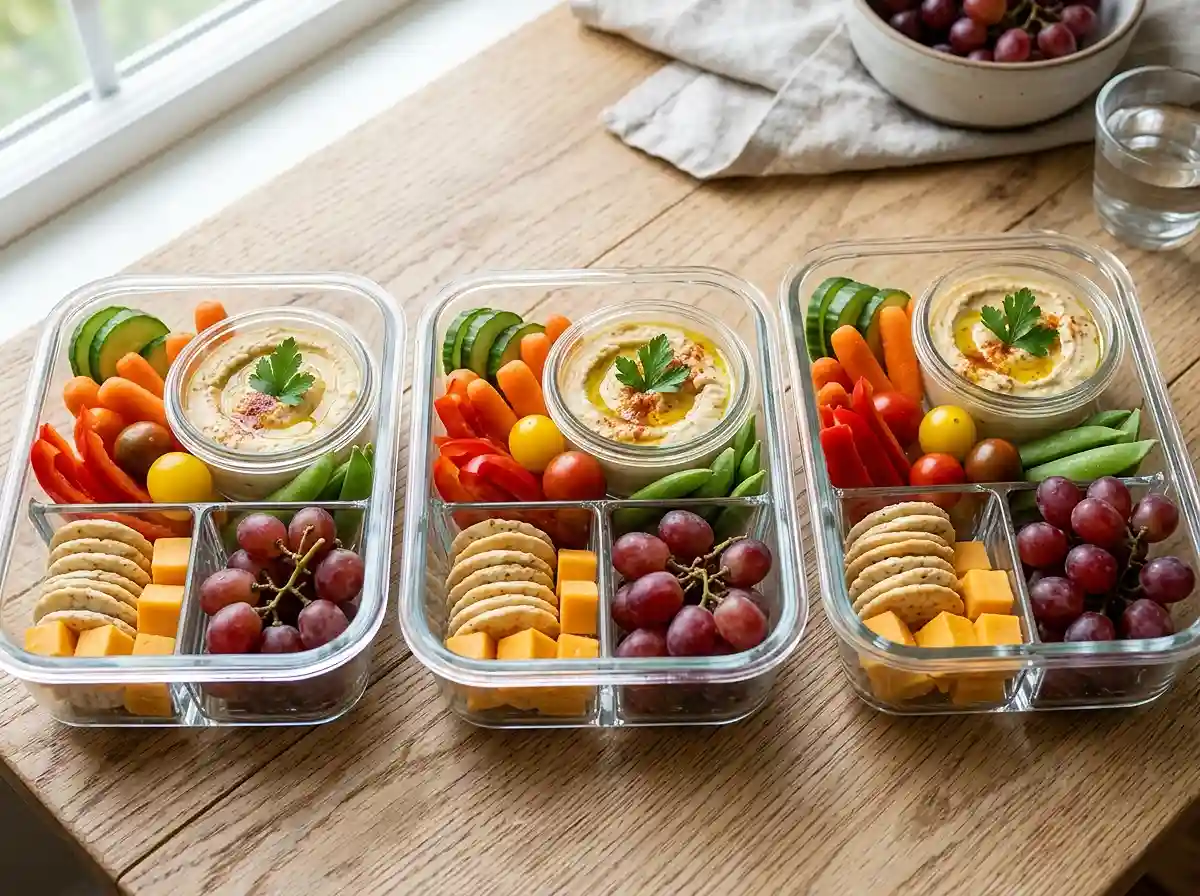
Gluten-Free Hummus Veggie Bento Boxes
Pack gluten-free hummus veggie bento boxes in minutes. Fresh vegetables, crackers, cheese, and grapes — a no-cook lunchbox idea that works for kids and adults.
Gluten-free hummus veggie bento boxes became a weekly staple in our house after one too many mornings scrambling to pack a safe lunch before the school bus arrived.
The first time I put one together — cucumbers, carrots, snap peas, crackers, a scoop of hummus, some grapes — my daughter looked at it and said it looked like a restaurant. She’s eaten one every single week since. That’s the kind of feedback that makes a recipe worth writing down.
What makes this more than just “vegetables in a box” is the balance: crunchy, creamy, sweet, savory, all in one container that takes about five minutes to assemble. How many lunches can honestly say that?
Table of Contents
Why You’ll Love This Gluten-Free Hummus Veggie Bento Boxes Recipe
- Zero cooking required — everything goes in fresh, which means assembly takes minutes and cleanup is minimal
- Naturally gluten-free with the right crackers — no specialty flour or modified recipes needed, just smart ingredient selection
- Kid-friendly and adult-approved — the portion balance works for school lunchboxes and desk lunches equally well
- Fully meal prep ready — assemble up to 4 boxes at once and refrigerate for grab-and-go lunches all week
The Secret to Perfect Gluten-Free Hummus Veggie Bento Boxes
- Keep the hummus in its own sealed compartment: hummus transferred directly onto vegetables makes everything soggy within a few hours — a small lidded container or a compartment with a tight seal keeps everything crisp until lunchtime
- Dry your vegetables thoroughly after washing: excess surface moisture is the number one reason bento boxes go soft before noon — a salad spinner or a few minutes on a paper towel makes a real difference
- Pack crackers last and separately: gluten-free crackers are more moisture-sensitive than wheat-based ones and will soften quickly if placed next to wet produce — a dedicated dry compartment or a small zip bag inside the box protects them
- Use produce that holds texture over time: cucumbers, carrots, snap peas, bell peppers, and cherry tomatoes all stay firm for 3–4 days refrigerated, which is exactly what you need for a Sunday meal prep session that covers the whole week
Ingredients
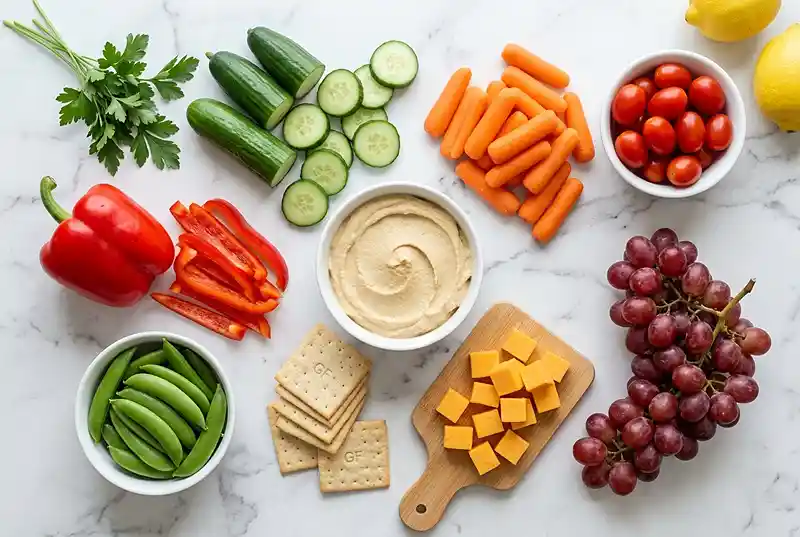
| Ingredient | Amount | Notes |
|---|---|---|
| Hummus | 1½ cups | Store-bought or homemade; divide evenly into 4 portions |
| Cucumbers, sliced | 2 | English cucumbers hold up longest without getting watery |
| Baby carrots | 2 cups | Pre-washed and ready to pack straight from the bag |
| Cherry tomatoes | 2 cups | Leave whole until packing to minimize juice release |
| Red bell pepper, sliced | 1 | Sliced into strips for easy dipping |
| Snap peas | 1 cup | Check the label — most are naturally gluten-free but verify for cross-contamination |
| Gluten-free crackers | 1 cup | Look for certified gluten-free labeling; rice-based or seed crackers work well |
| Cheddar cheese, cubed | ½ cup | Pre-cubed or slice your own; about ½-inch cubes portion well |
| Red grapes | 1 cup | Wash and dry thoroughly before packing |
Instructions
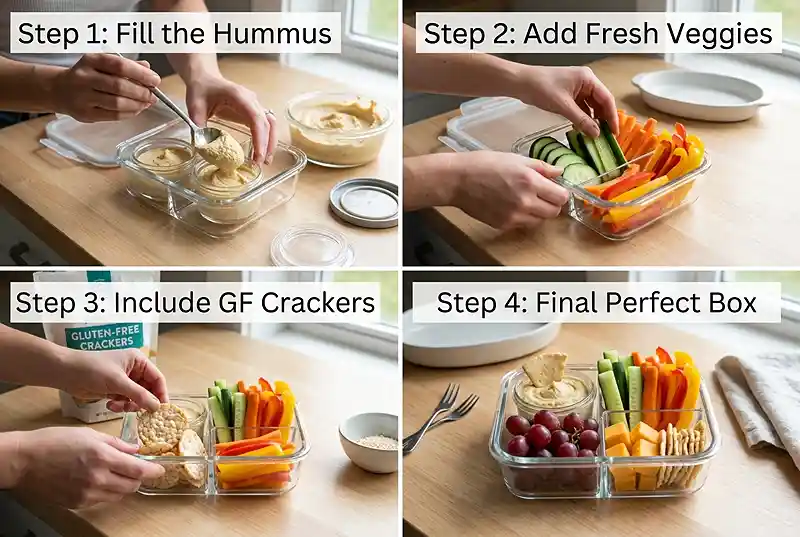
Divide the hummus evenly into 4 small containers or bento compartments — roughly 6 tablespoons per box. Use a small lidded jar or a sealed compartment so the hummus stays separate from the produce and doesn’t transfer moisture.
Arrange the cucumber slices, baby carrots, cherry tomatoes, bell pepper strips, and snap peas into the vegetable compartments of each bento box. Group similar items together so nothing gets crowded or crushed — the visual arrangement matters more than you’d think, especially for kids who eat with their eyes first.
Add the gluten-free crackers to a separate dry compartment or a small zip bag tucked inside the box. Keeping them isolated from the vegetables is the single most important step for maintaining their crunch through lunchtime.
Divide the cheddar cheese cubes and red grapes evenly among the four boxes. Place them in their own compartments rather than layering them over the vegetables, which keeps everything tidy and easy to eat.
Seal the containers and refrigerate until ready to enjoy. These boxes keep well for up to 4 days, making Sunday the ideal day to prep the whole week at once.
Make It Your Own
Well… the lunchbox veggie bento format is really more of a framework than a fixed recipe, and that’s what makes it so practical for real families.
Swap the dip: Guacamole, tzatziki, or a dairy-free cashew-based dip all work in place of hummus. Just make sure any store-bought dip is labeled gluten-free — some flavored dips contain wheat-based thickeners that aren’t obvious from the name alone.
Change the protein source: Hard-boiled eggs, deli turkey slices, or roasted chickpeas make solid additions when you want more staying power. Roasted chickpeas add a satisfying crunch in the same compartment as crackers and hold up well for 2–3 days if stored in a dry spot.
Adjust for nut-free schools: This box is already nut-free as written, which makes it a strong school lunch bento option. If you’re working around a seed allergy as well, rice-based crackers are the safest cracker choice, and sunflower seed hummus is widely available as a nut-and-seed-free dip alternative.
Seasonal swaps for variety: In the fall, swap grapes for sliced apples with a squeeze of lemon juice to prevent browning. In summer, watermelon cubes or blueberries add a hydrating sweetness that works especially well when school lunch boxes sit in a warm backpack.
Common Problems & Solutions
Problem: Crackers went soft by lunchtime. They were stored too close to wet vegetables or the hummus container wasn’t fully sealed. Wrap crackers in a small piece of parchment paper or place them in a separate zip bag inside the bento before closing the lid. Silicone bento boxes with individual locking compartments solve this problem entirely.
Problem: Vegetables look wilted or waterlogged after a day in the fridge. The produce wasn’t dried thoroughly before packing. After washing, spread everything on a clean kitchen towel or run it through a salad spinner, then let it air for a few minutes before assembling. Cucumbers are the most vulnerable — pat the cut sides dry with a paper towel before adding them to the box.
Man, oh man… the soggy cracker problem is the one complaint I hear most from parents trying to make these work for school lunches. The fix is simple but the difference is night and day once you’ve made the switch to a fully compartmentalized box.
Problem: Hummus developed a dry film or crust in the fridge. The container wasn’t airtight. Press a small piece of plastic wrap directly onto the surface of the hummus before sealing the lid — this prevents oxidation and keeps the texture smooth. According to FoodSafety.gov’s guidelines on safe food storage, dairy-based and legume-based dips like hummus should be kept at or below 40°F and consumed within 3–5 days of opening.
Storage & Meal Prep
| Method | Duration | Notes |
|---|---|---|
| Counter | Not recommended | Refrigerate assembled boxes promptly; do not leave at room temperature over 2 hours |
| Fridge | 3–4 days | Keep crackers in a separate dry compartment or bag to maintain crunch |
| Freezer | Not recommended | Fresh vegetables and hummus do not freeze and thaw well |
These boxes are designed to be eaten cold, straight from the fridge — no reheating needed. That’s what makes them such a reliable grab-and-go option for school mornings or busy office days.
For a no-waste meal prep approach, buy a large container of hummus and a bulk bag of baby carrots at the start of the week. You can repurpose leftover hummus as a spread for gluten-free chicken Caesar wrap bites or as a dip for leftover vegetables at dinner — nothing goes to waste.
Your Questions Answered
Can I make gluten-free hummus veggie bento boxes the night before?
Yes, assembling the night before is the ideal approach. Vegetables stay crisp overnight and the boxes are ready to grab in the morning. Store crackers separately in a small bag and add them right before sealing to prevent softening.
How do I keep hummus from leaking onto the other compartments?
Use a small lidded container placed inside the bento box rather than relying on the box’s built-in compartment. A 2-ounce snack cup with a snap lid fits neatly and prevents spills, especially if the box will be carried in a backpack.
What is the best gluten-free cracker for bento boxes?
Certified gluten-free rice crackers or seed-based crackers hold their crunch best. Multigrain gluten-free varieties tend to absorb moisture faster. Always verify the certified gluten-free label to avoid cross-contamination from shared manufacturing lines.
Why did my cherry tomatoes make everything in the bento box wet?
Cherry tomatoes release juice when cut. Keep them whole in the box to prevent this. If you prefer them halved, place a folded paper towel under them in the compartment to absorb the excess moisture before it spreads to nearby foods.
Can I substitute another fruit for the grapes?
Yes. Sliced strawberries, blueberries, apple wedges with a squeeze of lemon, or mandarin orange segments all work well. Avoid high-moisture fruits like watermelon or kiwi for boxes that will sit longer than a few hours, as they release liquid that softens crackers.
Serving Suggestions
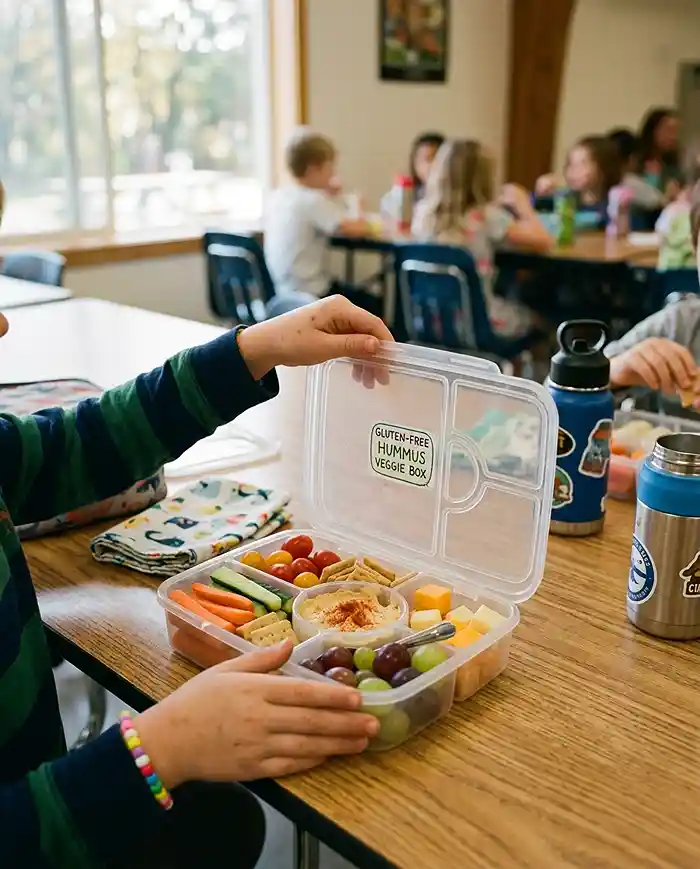
You know… these boxes aren’t just for school days. They make a genuinely satisfying spread for Thanksgiving week when you need quick no-cook lunches between cooking sessions, or as an easy grazing option at a family movie night where everyone wants something light but substantial.
For a full lunch rotation that covers the whole week, pair these veggie bento boxes with these sweet potato black bean burrito bowls for a hot lunch option on cooler days, and finish the week with these gluten-free strawberry yogurt parfait jars as a make-ahead breakfast or afternoon snack.
If you give these boxes a try, drop a comment below and let me know which cracker brand you used or how your kids responded. And if this becomes part of your weekly meal prep, sharing it to Pinterest helps other gluten-free families find a lunchbox idea that actually holds up.
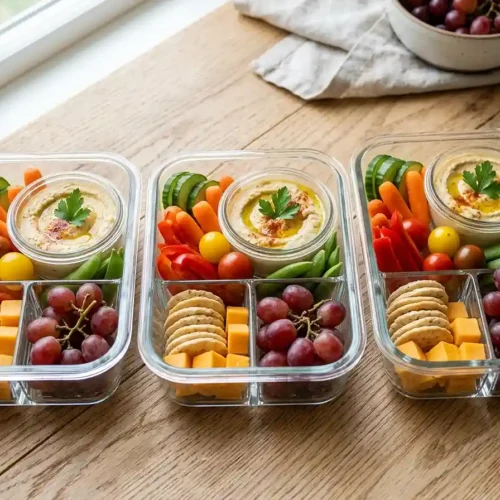
Gluten-Free Hummus Veggie Bento Boxes
Equipment
- Bento lunch boxes
- Small lidded containers
- Knife
- Cutting board
- Salad spinner
Ingredients
Bento Boxes
- 1½ cups Hummus Store-bought or homemade; divide evenly into 4 portions
- 2 Cucumbers, sliced English cucumbers hold up longest without getting watery
- 2 cups Baby carrots Pre-washed and ready to pack straight from the bag
- 2 cups Cherry tomatoes Leave whole until packing to minimize juice release
- 1 Red bell pepper, sliced Sliced into strips for easy dipping
- 1 cup Snap peas Check the label for gluten-free status
- 1 cup Gluten-free crackers Certified gluten-free rice-based or seed crackers
- ½ cup Cheddar cheese, cubed About ½-inch cubes
- 1 cup Red grapes Wash and dry thoroughly before packing
Instructions
- Divide the hummus evenly into 4 small containers or sealed bento compartments, about 6 tablespoons per box.
- Arrange the cucumber slices, baby carrots, cherry tomatoes, bell pepper strips, and snap peas into the vegetable compartments of each bento box.
- Place the gluten-free crackers in a separate dry compartment or a small zip bag to keep them crisp.
- Divide the cheddar cheese cubes and grapes evenly among the four boxes, keeping them in separate compartments.
- Seal the containers and refrigerate until ready to serve. Enjoy within 3 to 4 days.