Gluten-Free 1 Kilo Ube Halaya Recipe
Learn how to make a creamy gluten-free 1 Kilo Ube Halaya Recipe with condensed milk, plus exact ingredient amounts, step-by-step instructions, and storage tips.
The first time I made ube halaya, I stood at the stove for almost an hour, stirring a pot of purple yam like my life depended on it. My arm ached, my kitchen smelled like coconut and vanilla, and I kept wondering if I’d ever get that thick, glossy texture I’d seen in my Filipino neighbor’s kitchen growing up. Have you ever made a recipe so many times that you finally understand why your grandmother never measured anything?
That’s exactly how I feel now about this gluten-free ube halaya recipe with condensed milk. It’s naturally free of gluten since it’s built on purple yam, condensed milk, and butter, so anyone avoiding wheat can dig in without a second thought. Well… once you get the stirring rhythm down, it’s one of the most forgiving desserts you’ll ever make.
This recipe makes a full kilo’s worth, which is perfect for parties, potlucks, or anytime you want a make-ahead dessert sitting in your fridge. I’ll walk you through the exact process I use every single time, including the mistakes that taught me the most.
Why You’ll Love This Ube Halaya
This ube halaya recipe earns a permanent spot in your dessert rotation for a few simple reasons.
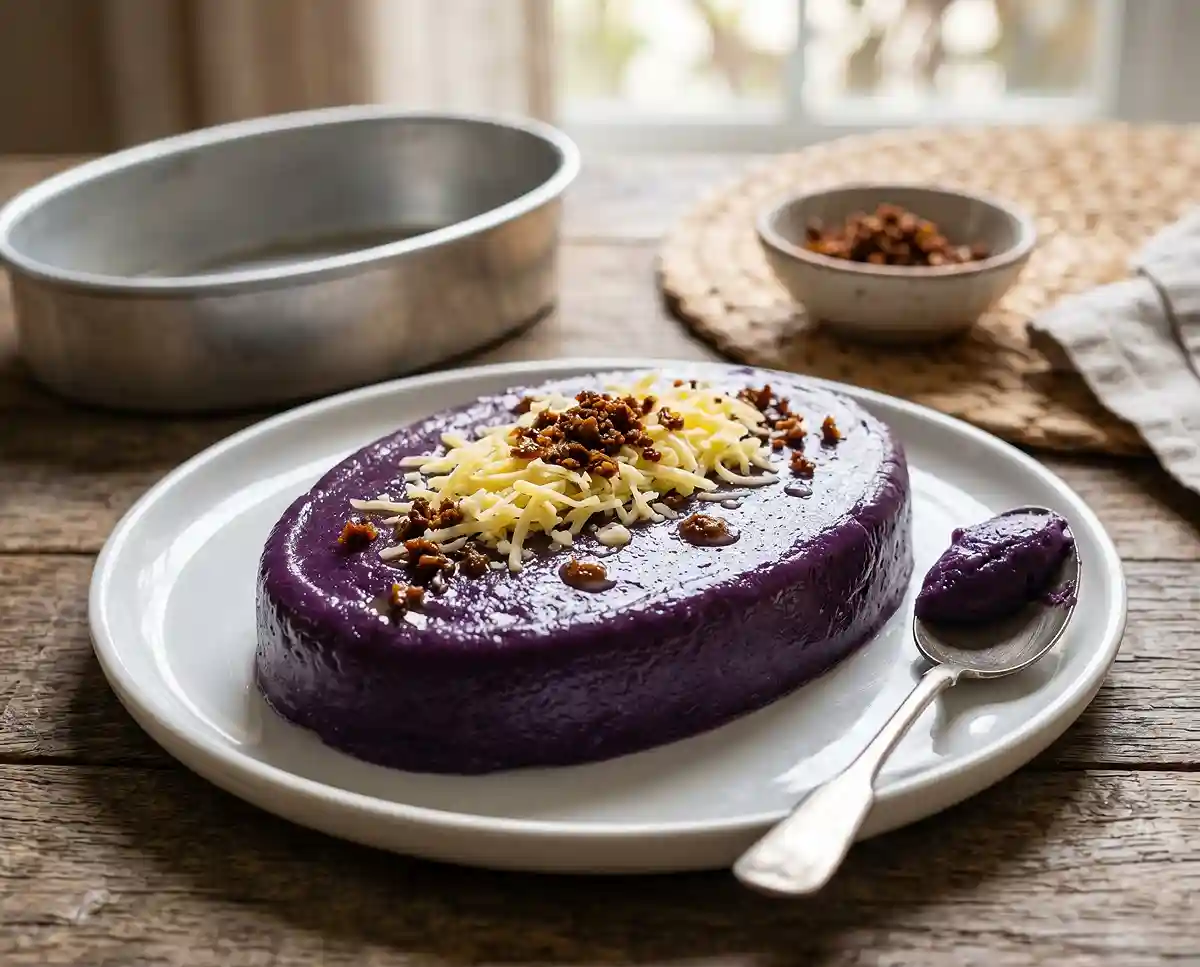
- Texture and flavor: it turns out thick, glossy, and as smooth as a well-made custard, with a naturally sweet, nutty flavor from the purple yam.
- Difficulty level: beginner-friendly, though it does require patience and steady stirring for 30 to 50 minutes.
- Unique advantages: it’s naturally gluten-free, can be made dairy-light with coconut milk, and freezes beautifully for later.
- When it works best: ideal for holiday tables, potlucks, or make-ahead desserts you can portion out over a week.
The Secret to Perfect Gluten-Free Ube Halaya
Most ube halaya problems come down to heat control and patience, not the recipe itself.
- Low, steady heat lets the starches in the ube break down gradually instead of scorching, which is what gives you that deep purple color instead of a dull brown one.
- Constant stirring keeps the sugars in the condensed milk from sticking and burning to the bottom of the pan.
- Folding in the butter slowly helps it emulsify into the mixture rather than separating and pooling on top.
- Cooking until the mixture pulls away from the sides of the pan is the real doneness test, not the clock.
Since this recipe contains no wheat, barley, rye, or oats, it fits naturally into a gluten-free diet without substitutions. If you want a deeper understanding of which foods are naturally safe on a gluten-free diet, the Celiac Disease Foundation’s authoritative gluten-free nutrition guide is a great place to start.
Table of Contents
Ingredients
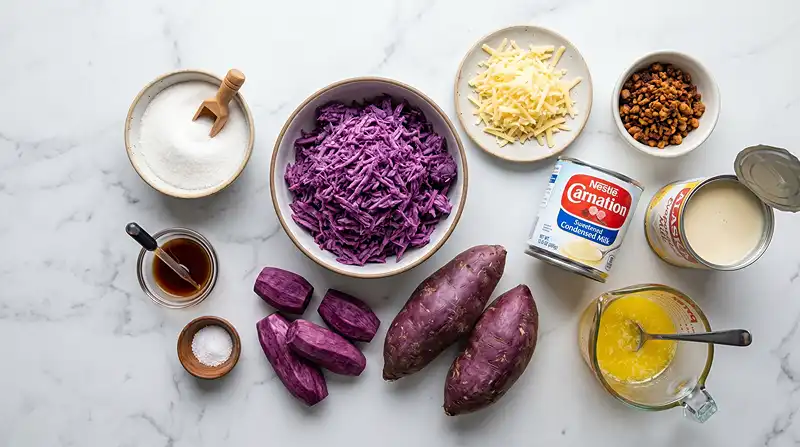
Servings: 10–12 servings
Main
- 1 kilogram (2.2 lbs) ube (purple yam), boiled and grated
Dairy
- 1 can (14 oz / 370 ml) condensed milk
- 1 can (12 oz / 370 ml) evaporated milk or coconut milk (coconut milk creates a richer tropical flavor; evaporated milk keeps it traditional)
Fat
- ½ cup unsalted butter or margarine
Sweetener
- ¾ cup white or brown sugar (optional, adjust to taste)
Flavoring
- 1 teaspoon vanilla extract or ube extract
Seasoning
- 1 pinch salt
Optional Toppings
- Grated cheese
- Latik (toasted coconut curds)
Instructions
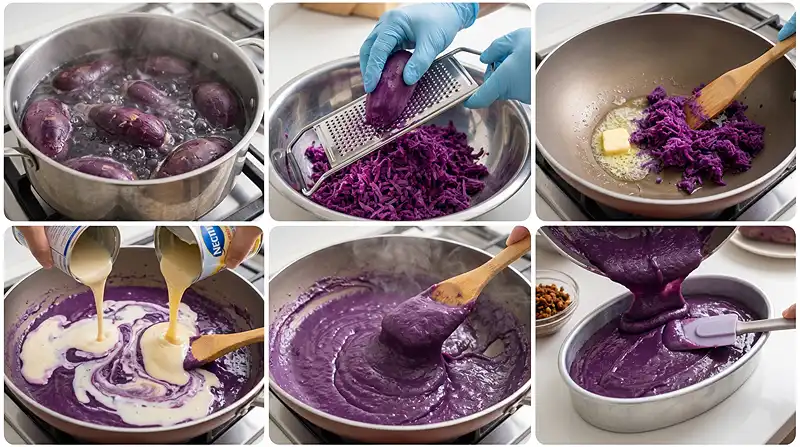
- Prepare the ube. Place the whole ube in a large pot and cover with water, then boil for 30 to 45 minutes, or until fork-tender. While it’s still warm, peel the ube and grate or mash it until smooth. Pro tip: if you’re using frozen grated ube, thaw it completely and skip the boiling step entirely.
- Start cooking. Place a wide, heavy-bottomed pan over low heat and melt the butter slowly until it’s just liquid and starting to smell nutty. Add the grated ube and stir, then pour in the condensed milk and evaporated milk or coconut milk. Add the sugar, salt, and vanilla or ube extract, and stir until everything is evenly combined.
- Cook the halaya. Cook over low to medium heat, stirring constantly for 30 to 50 minutes. You’ll know it’s getting close when the mixture turns thick and glossy, pulls away from the sides of the pan, and holds its shape when you stir. Pro tip: if the mixture starts splattering at you, reduce the heat right away and keep stirring so it doesn’t scorch.
- Check for doneness. Drag your spatula across the bottom of the pan; if the line closes slowly and the mixture holds its shape, your halaya is done. Taste it at this point and adjust the sweetness if needed, since ube varies in natural sweetness from batch to batch.
- Cool and set. Transfer the hot ube halaya into greased containers, such as llanera molds, glass dishes, or silicone loaf pans. Smooth the top with a spatula, then let it cool completely at room temperature before covering and refrigerating until firm.
You know… the moment it sets into that dense, fudge-like texture is when you’ll understand why people fight over the last spoonful.
Make It Your Own
Evaporated milk vs. coconut milk: swap the evaporated milk for coconut milk if you want a richer, more tropical flavor with a subtle coconut aroma running through every bite. Evaporated milk gives you the more traditional, classic ube halaya flavor most Filipino home cooks grew up with.
Butter vs. margarine: unsalted butter gives the richest flavor and the smoothest texture, but margarine works fine if you’re avoiding dairy fat or keeping the recipe more affordable. Man, oh man… the difference is subtle, but butter does win on flavor every time I’ve tested it side by side.
Sugar adjustment: since ube and condensed milk are both naturally sweet, you can reduce or even skip the added sugar if you prefer a less sweet halaya. Start with less than the recipe calls for, taste during step 4, and add more only if it actually needs it.
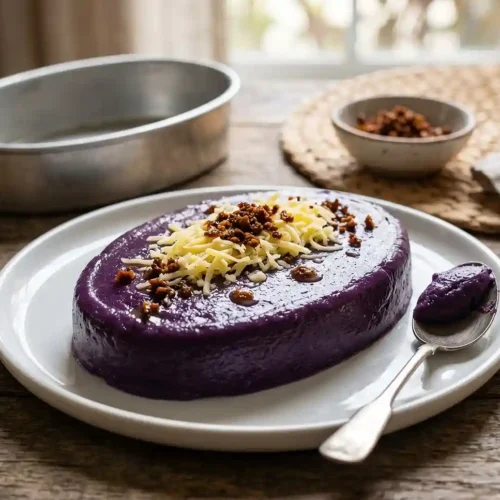
Toppings: grated cheese adds a salty contrast that Filipino desserts often lean on, while latik adds a toasted, nutty crunch on top. Neither is required, but both turn a simple dessert into something that looks and tastes more special.
If you’re building out a wider gluten-free dessert table, this pairs nicely with a few other recipes worth bookmarking, including this 3-ingredient peach chia seed jam for something fruity and lighter.
Common Problems & Solutions
Problem: my halaya turned out gummy and dense. Solution: cook it longer over lower heat next time. This usually happens when the heat was too high and the outside set before the inside finished cooking through, trapping excess moisture inside.
Problem: my halaya is crumbly instead of holding together. Solution: add a splash more evaporated or coconut milk while it’s still warm and stir it back in. Crumbliness usually means the mixture was cooked slightly too long or too dry, since ube halaya needs enough fat and liquid to stay cohesive as it cools.
Problem: my halaya tastes dull instead of deeply purple and fragrant. Solution: increase the vanilla or ube extract slightly, and make sure you’re cooking long enough to develop flavor. Short cooking times can leave the mixture tasting more like plain starch than a developed, caramelized dessert.
Problem: the mixture keeps sticking and scorching on the bottom. Solution: lower your heat and stir more frequently, especially during the last 15 minutes. A heavy-bottomed pan distributes heat more evenly and helps prevent the hot spots that cause scorching in the first place.
Storage & Meal Prep
Method | Duration | Notes Counter | 2-3 days | Airtight container Fridge | 5-7 days | Bring to room temp Freezer | 2-3 months | Wrap individually
Ube halaya is best enjoyed cold or at room temperature, so there’s no real reheating needed beyond letting a frozen portion thaw in the fridge overnight. If you end up with extra, it makes a fantastic filling for gluten-free pastries or a simple spread over toasted gluten-free bread. For more ideas on stretching ingredients without waste, this gluten-free Greek lemon and rice soup is a good example of turning pantry staples into something new.
Gluten-Free 1 Kilo Ube Halaya Recipe FAQs
Can I make this ube halaya recipe ahead of time?
Yes, this recipe is actually better made a day or two ahead. The flavors deepen and the texture firms up nicely in the fridge, which makes it an easy make-ahead dessert for parties or holiday gatherings.
How do I know when my ube halaya is fully cooked?
Drag a spatula across the bottom of the pan and watch how the line closes. If it closes slowly and the mixture holds its shape rather than running back together quickly, it’s done cooking.
What’s the best way to fix overly sweet ube halaya?
Add a small pinch of extra salt and a splash of evaporated milk to balance the sweetness. This won’t undo a heavy hand with sugar, but it does soften the overall impression and make the next batch a useful lesson in tasting as you go.
Why did my ube halaya turn brown instead of staying purple?
It likely cooked over heat that was too high for too long. High heat browns the natural sugars in the ube faster than it should, dulling that bright purple color, so keep the heat low to medium throughout.
Can I use frozen grated ube instead of boiling whole ube?
Yes, frozen grated ube works great and saves you the boiling step entirely. Just thaw it completely and pat off excess moisture before adding it to your butter in step 2.
Serving Suggestions
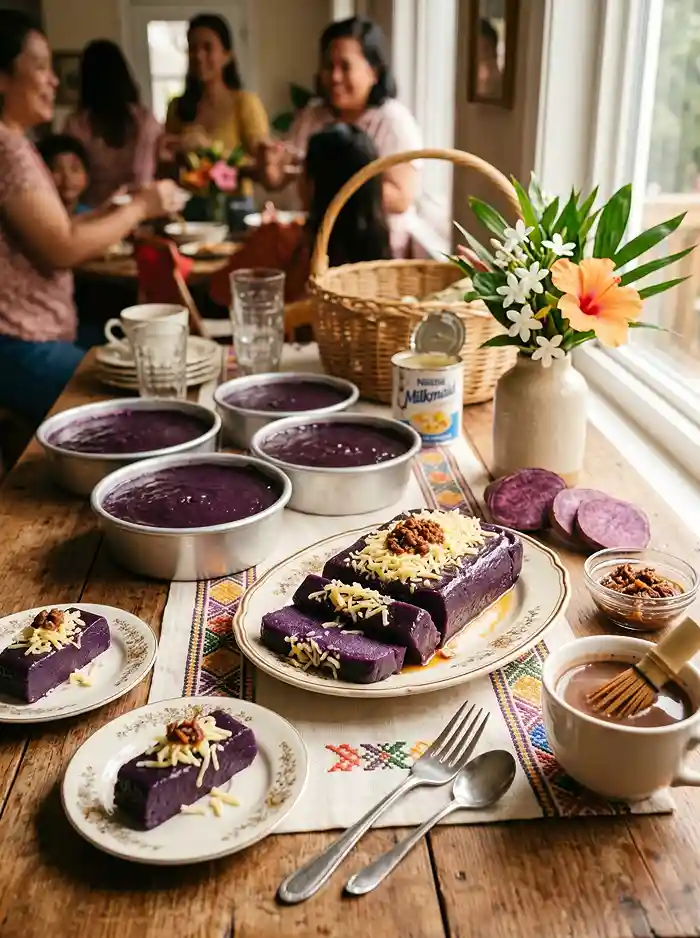
Ube halaya shines on its own in small bowls, but it’s also a natural filling for gluten-free crepes or a topping for gluten-free vanilla ice cream. It’s become a regular fixture on our family’s Christmas dessert table, sitting right next to the pies, since it travels well and holds up at room temperature for hours. For another protein-forward addition to a holiday spread, check out this gluten-free giant chicken cutlet as a savory counterpart. If you or a guest manage celiac disease, it’s worth keeping a copy of NIDDK’s trusted celiac research on hand for cross-contact reminders when you’re cooking for a mixed table.
Let’s Get Cooking
Give this gluten-free ube halaya recipe a try this weekend, and don’t be afraid to stir longer than you think you need to. If you make it, I’d love to see how it turns out, so snap a photo, pin it for later, and let me know in the comments if you tried any of the substitutions.
Easy Gluten-Free Ube Halaya Recipe with Condensed Milk
Equipment
- Large pot
- Wide heavy-bottomed pan
- Grater or masher
- Spatula
- Llanera molds, glass dishes, or silicone loaf pans
Ingredients
Main
- 1 kilogram ube (purple yam) boiled and grated
Dairy
- 1 can (14 oz / 370 ml) condensed milk
- 1 can (12 oz / 370 ml) evaporated milk or coconut milk coconut milk creates a richer tropical flavor; evaporated milk keeps it traditional
Fat
- ½ cup unsalted butter or margarine
Sweetener
- ¾ cup white or brown sugar optional, adjust to taste
Flavoring
- 1 teaspoon vanilla extract or ube extract
Seasoning
- 1 pinch salt
Optional Toppings
- grated cheese optional
- latik (toasted coconut curds) optional
Instructions
- Place the whole ube in a large pot and cover with water. Boil for 30 to 45 minutes, or until fork-tender. While still warm, peel and grate or mash until smooth. If using frozen grated ube, thaw completely and skip the boiling step.
- Place a wide, heavy-bottomed pan over low heat and melt the butter. Add the grated ube, then pour in the condensed milk and evaporated milk or coconut milk. Add sugar, salt, and vanilla or ube extract, stirring until evenly combined.
- Cook over low to medium heat, stirring constantly for 30 to 50 minutes, until the mixture becomes thick and glossy, pulls away from the sides of the pan, and holds its shape.
- Check for doneness by dragging a spatula across the bottom of the pan. If the line closes slowly and the mixture holds its shape, it is done. Taste and adjust sweetness if needed.
- Transfer the hot ube halaya into greased containers. Smooth the top, let cool completely at room temperature, then cover and refrigerate until firm.