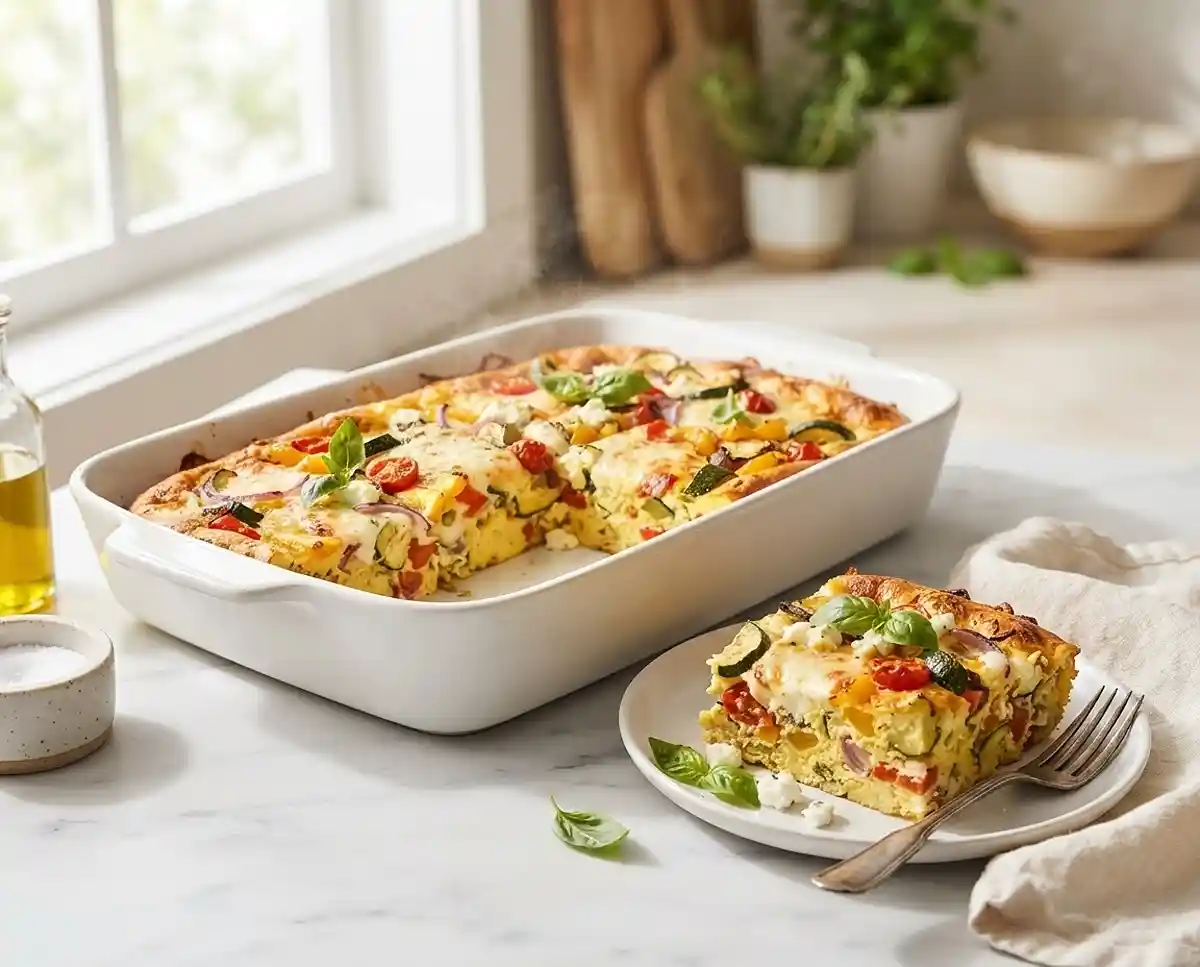
Roasted Veggie Goat Cheese Egg Casserole
Make this gluten-free roasted veggie goat cheese egg casserole with step-by-step instructions. A hearty, make-ahead brunch bake that serves eight.
Easter brunch at my house used to mean a lot of last-minute scrambling—pun intended. Then I tested this gluten-free roasted veggie goat cheese egg casserole the night before, slid it into the oven the next morning, and had exactly zero stress while the whole family showed up hungry.
The first time I made it, I underestimated how much the roasting step matters. I tried skipping it once to save time, adding the raw vegetables directly to the egg mixture instead. The result was watery, the vegetables were half-cooked, and the whole casserole sagged in the middle. Never again—the roast is non-negotiable.
Man, oh man… can a single pan of eggs really pull off a proper brunch spread? With caramelized vegetables, tangy goat cheese, and a custard-like egg base that sets up sliceable and clean, yes—it absolutely can.
Why You’ll Love This Gluten-Free Roasted Veggie Goat Cheese Egg Casserole
- Rich, custardy egg base — Greek yogurt whisked into the eggs creates a set that’s firm enough to slice cleanly but soft and tender, not rubbery or dry.
- Feeds a crowd without fuss — eight generous servings from one 9×13-inch pan, with almost all the work done the night before if needed.
- Naturally gluten-free, no swaps required — every ingredient in this recipe is inherently gluten-free, so there’s no hunting for specialty flour or modified ingredients.
- Infinitely flexible — swap the vegetables based on what’s in your fridge, change the cheese, add meat, or keep it fully vegetarian. The base formula holds up to all of it.
The Secret to Perfect Gluten-Free Roasted Veggie Goat Cheese Egg Casserole
- Roast first, always — raw vegetables release steam as they cook inside a casserole, which dilutes the egg mixture and prevents proper setting. Roasting at 425°F first evaporates that moisture and caramelizes the natural sugars, concentrating flavor before a single egg hits the pan.
- Greek yogurt in the egg base — whisking ½ cup of Greek yogurt into the eggs adds protein and fat that produce a silkier, more stable custard than milk alone. It’s the same principle behind adding cream cheese to cheesecake—fat creates structure.
- Scatter goat cheese on top, not stirred in — soft goat cheese distributed across the surface stays in distinct, creamy pockets rather than melting into invisibility throughout the egg mixture. Those pockets of tangy creaminess are what elevate this from a standard gluten-free egg casserole into something worth making for guests.
- Rest before slicing — the 10-minute rest after baking allows the custard to finish setting from residual heat. Cutting too soon causes clean slices to collapse into a pile. Patience here pays off in presentation.
According to the Celiac Disease Foundation’s authoritative gluten-free cooking guidance, cross-contamination from shared utensils and surfaces is a key risk even with naturally GF ingredients—use dedicated gluten-free cookware if you’re cooking for someone with celiac disease.
Table of Contents
Ingredients
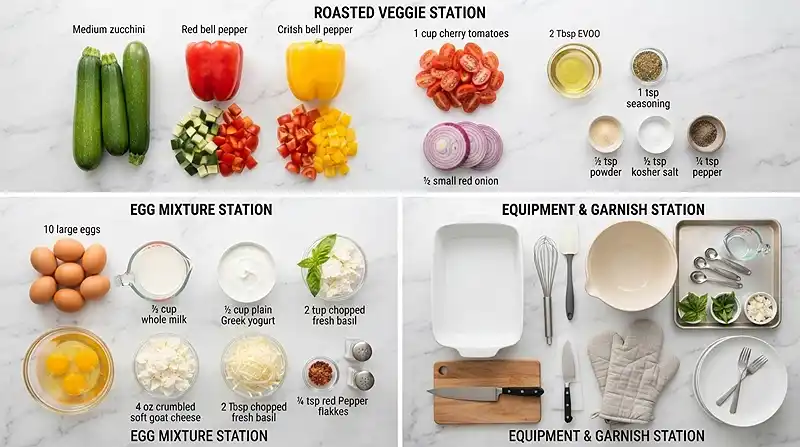
Roasted Vegetables
| Ingredient | Amount | Notes |
|---|---|---|
| Medium zucchini, diced | 1 | Cut into ½-inch pieces for even roasting |
| Red bell pepper, diced | 1 | |
| Yellow bell pepper, diced | 1 | |
| Cherry tomatoes, halved | 1 cup | Halving prevents bursting and speeds roasting |
| Small red onion, sliced | ½ | |
| Extra-virgin olive oil | 2 tablespoons | |
| Italian seasoning | 1 teaspoon | |
| Garlic powder | ½ teaspoon | |
| Kosher salt | ½ teaspoon | |
| Freshly ground black pepper | ¼ teaspoon |
Egg Casserole
| Ingredient | Amount | Notes |
|---|---|---|
| Large eggs | 10 | Room temperature eggs incorporate more evenly |
| Whole milk | ½ cup | |
| Plain Greek yogurt | ½ cup | Full-fat for best custard texture |
| Soft goat cheese, crumbled | 4 ounces | Scatter on top—don’t stir in |
| Shredded mozzarella or Parmesan | ½ cup | Mozzarella melts; Parmesan adds sharper flavor |
| Fresh basil, chopped | 2 tablespoons | Reserve a little for garnish |
| Red pepper flakes, optional | ¼ teaspoon | |
| Salt and black pepper | To taste |
Instructions
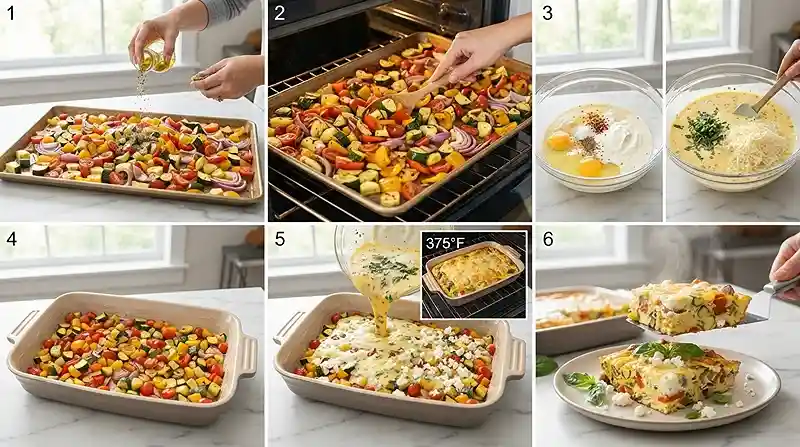
Roast the Vegetables
- Preheat the oven to 425°F (220°C). Lightly grease a 9×13-inch baking dish and set it aside.
- Place the zucchini, bell peppers, cherry tomatoes, and red onion on a large sheet pan in a single layer. Pro Tip: Don’t crowd the pan—overcrowded vegetables steam instead of roast, and you’ll lose the caramelization that makes this casserole worth making.
- Drizzle the vegetables with olive oil and sprinkle with Italian seasoning, garlic powder, salt, and pepper. Toss until evenly coated.
- Roast for 20–25 minutes, stirring once halfway through, until the vegetables are tender and lightly caramelized at the edges. You’re looking for golden-brown color and slightly shrunken, concentrated pieces—not soft mush.
Prepare the Egg Mixture
- Reduce the oven temperature to 375°F (190°C).
- In a large bowl, whisk together the eggs, milk, Greek yogurt, salt, black pepper, and red pepper flakes if using. Whisk until the mixture is fully smooth and slightly frothy—about 60 seconds of active whisking. Pro Tip: A well-whisked egg base incorporates more air and sets with a lighter, more even texture.
- Stir in the chopped basil and shredded mozzarella or Parmesan.
Assemble and Bake
- Spread the roasted vegetables evenly across the prepared baking dish.
- Pour the egg mixture over the vegetables, letting it settle naturally into the gaps between the roasted pieces.
- Scatter the crumbled goat cheese evenly over the top. Those white pockets will melt slightly during baking into creamy, tangy islands throughout every slice.
- Bake for 30–35 minutes, or until the center is set and the edges are lightly golden. The casserole should no longer jiggle noticeably when gently shaken. Pro Tip: If the top is browning too quickly before the center sets, tent loosely with foil and continue baking.
- Let it rest for 10 minutes before slicing. This rest allows the custard to finish firming up from residual heat—skip it and the slices won’t hold their shape.
- Garnish with fresh basil and additional goat cheese if desired, and serve warm.
Make It Your Own
Well… the roasted veggie lineup here is a starting point, not a rulebook. Swap the zucchini and bell peppers for whatever vegetables are in season—asparagus and mushrooms in spring, roasted sweet potato and kale in fall. The technique stays the same; just match your roasting time to the density of the vegetable.
For a meat version, stir in ½ cup of cooked, crumbled sausage or diced ham with the roasted vegetables before pouring the egg mixture over the top. This turns the goat cheese brunch bake into a more substantial main dish that works well as a weeknight dinner too, not just a weekend brunch.
If goat cheese isn’t your thing—or you’re cooking for someone who finds the flavor too sharp—feta makes a near-identical substitute in terms of texture and salt level. Ricotta dolloped on top produces a milder, creamier result that’s especially popular with kids.
To make this dairy-free, replace the whole milk with full-fat oat milk or canned coconut milk, swap the Greek yogurt for a thick, unsweetened coconut yogurt, and use a dairy-free cheese alternative. The texture is slightly less custardy but still very close. If you’re building a full gluten-free breakfast spread, pair it with these gluten-free pear walnut overnight oats for a no-cook sweet option alongside the savory casserole.
Common Problems & Solutions
Problem: The casserole is watery or won’t set properly. This almost always means the vegetables weren’t roasted long enough before going into the dish, and they released excess moisture into the egg mixture during baking. Make sure the roasted vegetables look visibly caramelized and slightly shrunken before you add the eggs. Raw or underdone vegetables will waterlog even the best egg base.
Problem: The center is jiggly but the edges are already browned. Tent the casserole loosely with foil and return it to the oven in 5-minute increments until the center no longer jiggles. This usually means the oven is running slightly hot, which is common with home ovens. An inexpensive oven thermometer takes the guesswork out of this permanently.
Problem: The casserole looks set but collapses when sliced. You need the full 10-minute rest after pulling it from the oven. Egg custards continue cooking from residual heat after you remove them, and cutting into the casserole before that rest disrupts the structure before it finishes setting. You know… patience is genuinely a technique here, not just advice.
Problem: The top is dry and rubbery but the interior is fine. This means the oven temperature was too high or the bake time ran long. Pull the casserole at the first sign that the center is set—a slight jiggle in the very center is okay, as it will firm up during the rest. Covering loosely with foil during the last 10 minutes of baking also prevents the top from over-drying.
For additional guidance on safe egg handling and food temperatures, the USDA food safety temperature guide recommends cooking egg dishes to an internal temperature of 160°F—a quick-read thermometer confirms doneness without guesswork.
Storage & Meal Prep
| Method | Duration | Notes |
|---|---|---|
| Counter | Not recommended | Egg dishes require refrigeration within 2 hours |
| Fridge | 4–5 days | Cover tightly; slice before storing for easy portioning |
| Freezer | 2–3 months | Wrap individual slices; thaw overnight in the fridge |
To reheat from the fridge, microwave individual slices for 60–90 seconds, or warm in a 325°F oven for 10–12 minutes until heated through. The oven method preserves the texture better—the edges stay slightly firm rather than going rubbery from microwave steam.
This casserole is one of the best meal-prep breakfasts in rotation because it slices cleanly from cold, reheats in under two minutes, and holds its flavor well through day four. Bake it Sunday, slice it immediately, and you have a grab-and-go gluten-free egg casserole ready every morning without any extra effort.
Roasted Veggie Goat Cheese Egg Casserole FAQs
Can I assemble this casserole the night before?
Yes, and it actually works better that way. Roast the vegetables, let them cool, spread them in the baking dish, pour the egg mixture over the top, and cover tightly. Refrigerate overnight and bake straight from the fridge the next morning—add 5 minutes to the bake time to account for the cold start. Do not add the goat cheese until just before baking.
How do I know when the casserole is fully set?
The casserole is done when the edges are lightly golden and the center no longer jiggles noticeably when you gently shake the pan. A toothpick inserted into the center should come out without wet egg mixture on it. For certainty, an instant-read thermometer inserted into the center should read 160 degrees Fahrenheit, which is the USDA safe minimum for cooked egg dishes.
What’s the best cheese to use if I don’t have goat cheese?
Feta is the closest substitute—it has a similar crumbly texture and tangy flavor. Ricotta dolloped on top gives a milder, creamier result. Cream cheese cut into small cubes also works and melts into soft pockets throughout the casserole. All three hold up well during the bake time without fully dissolving into the egg mixture.
Why did my egg casserole turn out watery?
Watery casseroles almost always trace back to vegetables that weren’t fully roasted before being added. Raw or undercooked vegetables release steam and liquid as they finish cooking inside the egg mixture, which prevents the custard from setting properly. Always roast until the vegetables are visibly caramelized and any surface moisture has evaporated.
Can I make this casserole without Greek yogurt?
Yes. Replace the Greek yogurt with an equal amount of whole milk, heavy cream, or sour cream. Sour cream produces the closest texture to Greek yogurt because of its similar fat content and slight acidity. Heavy cream makes a richer, slightly denser custard. The casserole will still set properly with any of these substitutions.
Serving Suggestions
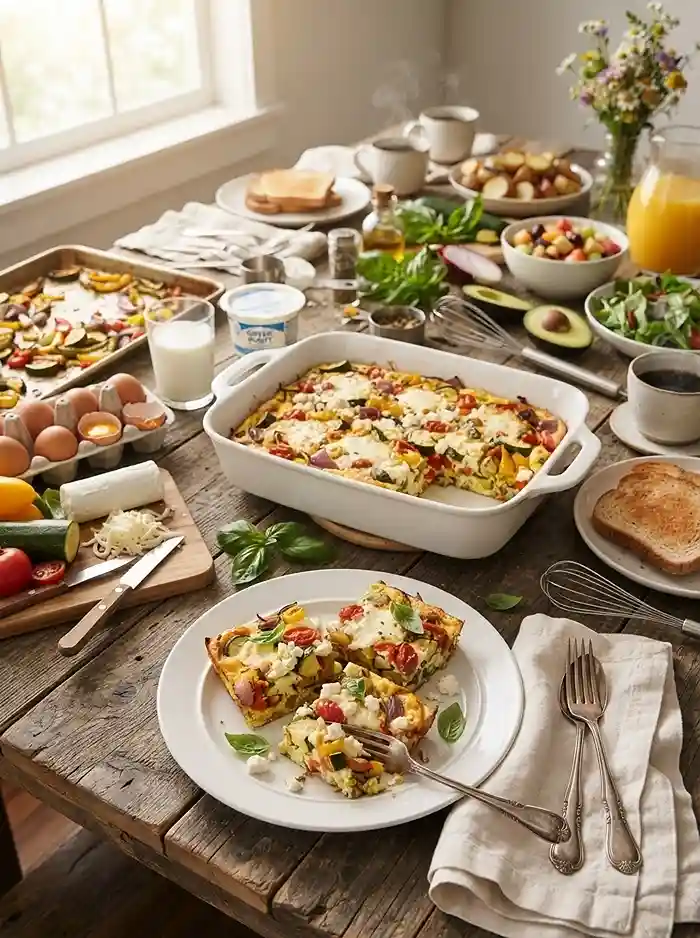
This casserole holds its own as a standalone brunch centerpiece, but it pairs especially well with a simple green salad dressed with lemon and olive oil, or a bowl of fresh fruit on the side. The acidity from both cuts through the richness of the goat cheese and egg base in a way that makes the whole meal feel balanced.
It’s become my go-to for Mother’s Day brunch—I assemble it the night before, bake it while coffee brews, and have exactly zero dishes to wash before guests arrive. Round out the spread with these freezer-ready turkey sausage breakfast burritos for a heartier protein option, or keep it light with the pumpkin cream cold brew protein smoothie as a crowd-pleasing drink.
Conclusion
This gluten-free roasted veggie goat cheese egg casserole is the kind of recipe that quietly earns permanent rotation—reliable, genuinely flavorful, and built for real mornings when you need food for a crowd without standing at the stove.
Try it this weekend and drop a comment below with whatever vegetable combination you used. If you share it on Pinterest, tag the post so I can see your version—I especially love seeing what seasonal swaps people come up with.

Gluten-Free Roasted Veggie Goat Cheese Egg Casserole
Equipment
- 9×13 inch baking dish
- Large sheet pan
- Large mixing bowl
- Whisk
- Spatula
Ingredients
Roasted Vegetables
- 1 Medium zucchini, diced Cut into ½-inch pieces for even roasting
- 1 Red bell pepper, diced
- 1 Yellow bell pepper, diced
- 1 cup Cherry tomatoes, halved Halving prevents bursting and speeds roasting
- ½ Small red onion, sliced
- 2 tablespoons Extra-virgin olive oil
- 1 teaspoon Italian seasoning
- ½ teaspoon Garlic powder
- ½ teaspoon Kosher salt
- ¼ teaspoon Freshly ground black pepper
Egg Casserole
- 10 Large eggs Room temperature eggs incorporate more evenly
- ½ cup Whole milk
- ½ cup Plain Greek yogurt Full-fat for best custard texture
- 4 ounces Soft goat cheese, crumbled Scatter on top—don’t stir in
- ½ cup Shredded mozzarella or Parmesan Mozzarella melts; Parmesan adds sharper flavor
- 2 tablespoons Fresh basil, chopped Reserve a little for garnish
- ¼ teaspoon Red pepper flakes Optional
- Salt and black pepper To taste
Instructions
- Preheat the oven to 425°F (220°C). Lightly grease a 9×13-inch baking dish and set it aside.
- Place the zucchini, bell peppers, cherry tomatoes, and red onion on a large sheet pan in a single layer. Don’t crowd the pan.
- Drizzle the vegetables with olive oil and sprinkle with Italian seasoning, garlic powder, salt, and pepper. Toss until evenly coated.
- Roast for 20–25 minutes, stirring once halfway through, until the vegetables are tender and lightly caramelized at the edges.
- Reduce the oven temperature to 375°F (190°C).
- In a large bowl, whisk together the eggs, milk, Greek yogurt, salt, black pepper, and red pepper flakes if using until fully smooth and slightly frothy.
- Stir in the chopped basil and shredded mozzarella or Parmesan.
- Spread the roasted vegetables evenly across the prepared baking dish.
- Pour the egg mixture over the vegetables, letting it settle naturally into the gaps between the roasted pieces.
- Scatter the crumbled goat cheese evenly over the top.
- Bake for 30–35 minutes, or until the center is set and the edges are lightly golden. If the top is browning too quickly, tent loosely with foil and continue baking.
- Let the casserole rest for 10 minutes before slicing so the custard can finish setting.
- Garnish with fresh basil and additional goat cheese if desired, and serve warm.