
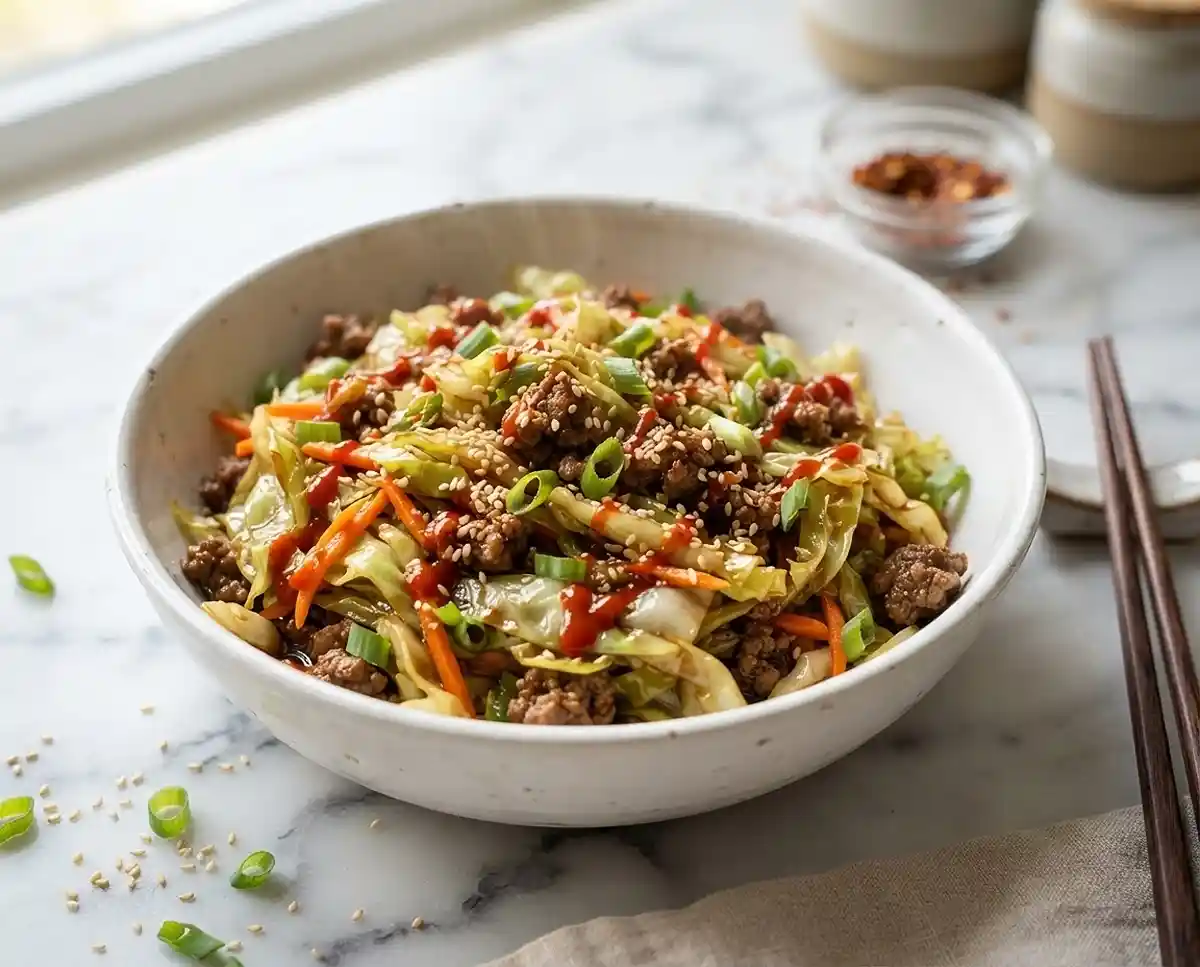
Gluten-Free Beef and Cabbage Stir-Fry
Make this gluten-free beef and cabbage stir-fry in under 30 minutes with simple ingredients, a savory tamari sauce, and one skillet. Step-by-step instructions included.
The first time I made a gluten-free beef and cabbage stir-fry on a Tuesday night with zero plan, I had half a head of cabbage threatening to go bad and about half a pound of ground beef in the fridge. I threw it all in a skillet, whisked together a quick tamari sauce, and honestly expected a disaster.
What I pulled off the stove instead was one of those meals that stops everyone at the table mid-sentence. The sauce coats every shred of cabbage like it was made for it—because it was. Well… sometimes the best recipes come from desperation, not a Pinterest board.
If you’ve ever stared at a bag of shredded cabbage wondering what to do with it, this ground beef and cabbage skillet is your answer. It’s fast, filling, naturally gluten-free, and comes together in one pan. What more could a busy weeknight ask for?
Why You’ll Love This Gluten-Free Beef and Cabbage Stir-Fry
- One-pan cleanup: Everything cooks in a single skillet, which means fewer dishes and more time to actually enjoy dinner.
- Ready in under 30 minutes: From chopping to serving, this ground beef and cabbage recipe is weeknight-fast without cutting corners on flavor.
- Naturally gluten-free: Swap regular soy sauce for gluten-free tamari and you’ve got a safe, satisfying meal the whole table can share.
- Endlessly flexible: Serve it over gluten-free rice, cauliflower rice, or eat it straight from the skillet. It works for meal prep, too.
The Secret to Perfect Gluten-Free Beef and Cabbage Stir-Fry
- Make the sauce first: Whisking the tamari, sesame oil, sriracha, and brown sugar together before you heat the pan means you can pour it in quickly—no scrambling, no burning.
- Shred the cabbage thin: Finely shredded cabbage wilts evenly and absorbs the sauce beautifully. Thick chunks stay crunchy in all the wrong ways and throw off the texture.
- Brown the beef fully before adding veg: Letting the ground beef get properly browned develops a savory depth that cheaper, faster cooking skips entirely. Don’t rush it.
- Stir-fry over medium heat: Too high and the cabbage scorches before it wilts. Medium heat gives you that tender-but-slightly-charred edge that makes this dish so satisfying—almost like roasted cabbage in a pan.
Table of Contents
Ingredients

Stir-Fry Sauce
- 2 tablespoons gluten-free tamari or gluten-free soy sauce
- 1 tablespoon toasted sesame oil
- 1 tablespoon sriracha
- ½ tablespoon brown sugar
Stir-Fry
- ½ medium green cabbage, finely shredded (about 4–6 cups)
- 2 carrots, shredded
- 3 green onions, sliced
- ½ tablespoon neutral cooking oil
- ½ lb lean ground beef
- 2 cloves garlic, minced
- 1 tablespoon fresh ginger, finely grated
- Salt and black pepper, to taste
Optional Garnishes
- 1 tablespoon sesame seeds
- Extra sriracha
- Sliced green onions
Note on tamari: Always check the label. Most tamari is gluten-free, but some brands add wheat. Look for a certified gluten-free label if you’re cooking for someone with celiac disease. The Celiac Disease Foundation’s guide to gluten sources is a helpful resource for navigating condiment labels with confidence.
Instructions
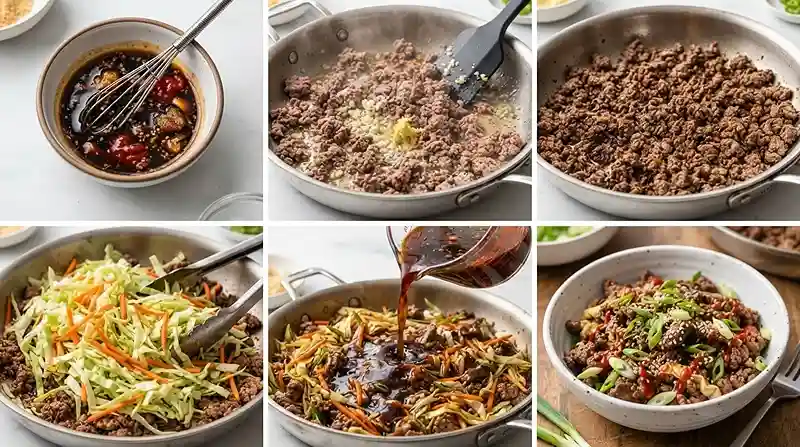
- Make the sauce. In a small bowl, whisk together the gluten-free tamari, toasted sesame oil, sriracha, and brown sugar. Set aside. Having this ready before anything hits the pan is the move.
- Prepare the vegetables. Remove the core from the cabbage and finely shred one half. Peel and shred the carrots. Slice the green onions, mince the garlic, and grate the fresh ginger. Mise en place makes this whole stir-fry flow smoothly.
- Brown the beef. Heat a large skillet over medium heat. Add the neutral oil and ground beef. Add the garlic, ginger, and a pinch of salt and pepper. Cook for about 5 minutes, breaking the beef apart with a spatula, until browned and cooked through.
- Add the vegetables. Add the shredded cabbage and carrots. Stir-fry for 4–6 minutes, until the vegetables are tender and slightly wilted. Cook a little longer if you prefer softer cabbage.
- Add the sauce. Pour the prepared stir-fry sauce over the beef and vegetables. Toss well to coat everything evenly.
- Finish with green onions. Stir in the sliced green onions and cook for another 1–2 minutes.
- Garnish and serve. Remove from the heat and garnish with sesame seeds, extra sriracha, and green onions if desired. Serve immediately on its own or over gluten-free rice or cauliflower rice.
Make It Your Own
You know… this beef and cabbage stir-fry is one of those recipes that plays well with substitutions. If you’re out of ground beef, ground turkey or ground chicken work seamlessly here. The cook time stays almost identical, and the tamari sauce carries the flavor either way.
Want to stretch the meal further? Toss in a handful of frozen edamame, sliced mushrooms, or thinly sliced bell peppers along with the cabbage. They’ll cook through in that same 4–6 minute window and add great color to the pan.
Need it lower in heat? Dial back the sriracha to a teaspoon or skip it entirely. A small splash of rice vinegar in its place adds brightness without any burn—completely family-friendly for a Thanksgiving Eve dinner when the kids need a quick meal before the chaos begins.
Swap the brown sugar for honey or coconut sugar if that’s what you have on hand. The difference is subtle. Just know that honey can make the sauce slightly stickier, so toss quickly once it hits the pan. If you want a deeper dive into building naturally gluten-free Asian-style meals, this homemade gluten-free seasoning blend guide has some great building-block techniques.
Common Problems and Solutions
Problem: The cabbage is releasing too much water and the pan is soupy. Your heat is too low. Increase to medium-high and let the liquid cook off before adding the sauce. Crowding the pan with too much cabbage at once has the same effect—cook in two batches if your skillet is small.
Problem: The beef is sticking to the pan. Make sure the oil heats up before adding the beef, and resist the urge to stir too early. Let it sit for 60–90 seconds to form a crust before breaking it apart. A well-seasoned cast iron or nonstick skillet also makes a huge difference here.
Man, oh man… Problem: The sauce tastes flat. This usually means the brown sugar didn’t fully dissolve, or the sauce hit a cold pan. Whisk the sauce thoroughly before adding it, and make sure the beef mixture is hot when you pour it in. A tiny pinch of salt stirred in right after adding the sauce also wakes everything up fast.
Problem: The cabbage is still crunchy after 6 minutes. Some cabbage varieties hold their texture longer than others. If you prefer it softer, add a tablespoon of water to the pan, cover with a lid for 2 minutes, then uncover and continue cooking. It steams itself tender without getting mushy.
Storage and Meal Prep
| Method | Duration | Notes |
|---|---|---|
| Counter | 2–3 hours max | Not recommended for storage; refrigerate promptly |
| Fridge | 4–5 days | Airtight container; bring to room temp before reheating |
| Freezer | Up to 2 months | Freeze without garnishes; cabbage texture softens slightly |
To reheat, add a splash of water or tamari to a skillet over medium heat and warm the stir-fry through for 3–4 minutes, tossing occasionally. The microwave works in a pinch—cover loosely and heat in 60-second bursts, stirring between each.
This ground beef and cabbage skillet is a solid meal-prep win. Make a double batch on Sunday and you’ve got lunches covered through Thursday. Portion into containers over rice or keep the stir-fry separate for more flexibility during the week.
Gluten-Free Beef and Cabbage Stir-Fry FAQs
Can I use regular soy sauce instead of tamari?
Only if gluten is not a concern for you. Regular soy sauce contains wheat and is not safe for people with celiac disease or gluten sensitivity. For a certified gluten-free version, always use tamari labeled gluten-free or a dedicated gluten-free soy sauce.
How do I keep the cabbage from getting soggy?
Cook over medium to medium-high heat and avoid overcrowding the pan. If too much cabbage goes in at once, it steams instead of stir-frying. Add the sauce only after the vegetables have wilted and any excess liquid has cooked off.
What’s the best way to shred cabbage for stir-fry?
A sharp chef’s knife works well. Halve the cabbage, remove the core, then slice across the grain into thin strips—roughly quarter-inch thick. A mandoline or food processor shredding disc also does the job faster for larger batches.
Why did my sauce turn out too salty?
Tamari varies in sodium content by brand. Taste your sauce before adding it to the pan. If it’s too salty, add a small squeeze of lime juice or a tiny bit more brown sugar to balance it out. Low-sodium tamari is also a reliable fix.
Can I make this stir-fry ahead of time?
Yes. Cook the full recipe and store it in an airtight container in the fridge for up to 4–5 days. The flavors actually deepen overnight. Reheat in a skillet with a splash of water or tamari to freshen it up.
Serving Suggestions

This beef and cabbage stir-fry is a complete meal on its own, but it shines over a bed of fluffy gluten-free jasmine rice or cauliflower rice for something lighter. A drizzle of extra sriracha and a scatter of sesame seeds right before serving take it from weeknight to legitimately impressive.
For a full spread, pair it alongside these crispy gluten-free zucchini corn fritters—they balance the savory richness of the stir-fry beautifully. And if you’re building out a summer cookout menu, this gluten-free Frito corn salad makes a crowd-pleasing side that takes zero effort.
If you’re cooking this for a Labor Day backyard dinner or a low-key family night, double the batch. It reheats beautifully and disappears fast once people realize how good it is straight from the skillet.
Conclusion
This gluten-free beef and cabbage stir-fry proves that a fast, satisfying dinner doesn’t need a long ingredient list or a complicated technique. One skillet, under 30 minutes, and a sauce that coats every bite like it was always meant to be there.
Give it a try this week and let me know how it goes in the comments below. Did you add extra vegetables? Swap the protein? Pin it for later and share your version—I’d genuinely love to see it.
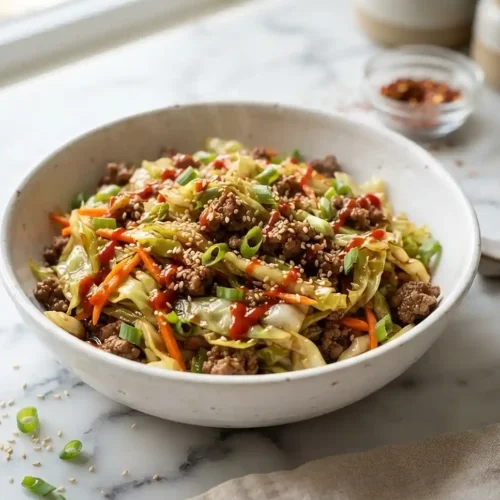
Gluten-Free Beef and Cabbage Stir-Fry
Equipment
- Large skillet
- Small mixing bowl
- Whisk
- Spatula
- Chef’s knife
- Cutting board
Ingredients
Stir-Fry Sauce
- 2 tablespoons gluten-free tamari or gluten-free soy sauce
- 1 tablespoon toasted sesame oil
- 1 tablespoon sriracha
- ½ tablespoon brown sugar
Stir-Fry
- ½ medium green cabbage finely shredded, about 4–6 cups
- 2 carrots shredded
- 3 green onions sliced
- ½ tablespoon neutral cooking oil
- ½ lb lean ground beef
- 2 cloves garlic minced
- 1 tablespoon fresh ginger finely grated
- salt and black pepper to taste
Optional Garnishes
- 1 tablespoon sesame seeds
- extra sriracha optional
- sliced green onions optional
Instructions
- Make the sauce. In a small bowl, whisk together the gluten-free tamari, toasted sesame oil, sriracha, and brown sugar. Set aside.
- Prepare the vegetables. Remove the core from the cabbage and finely shred one half. Peel and shred the carrots. Slice the green onions, mince the garlic, and grate the fresh ginger.
- Brown the beef. Heat a large skillet over medium heat. Add the neutral oil and ground beef. Add the garlic, ginger, and a pinch of salt and pepper. Cook for about 5 minutes, breaking the beef apart with a spatula, until browned and cooked through.
- Add the vegetables. Add the shredded cabbage and carrots. Stir-fry for 4–6 minutes, until the vegetables are tender and slightly wilted. Cook a little longer if you prefer softer cabbage.
- Add the sauce. Pour the prepared stir-fry sauce over the beef and vegetables. Toss well to coat everything evenly.
- Finish with green onions. Stir in the sliced green onions and cook for another 1–2 minutes.
- Garnish and serve. Remove from the heat and garnish with sesame seeds, extra sriracha, and green onions if desired. Serve immediately on its own or over gluten-free rice or cauliflower rice.