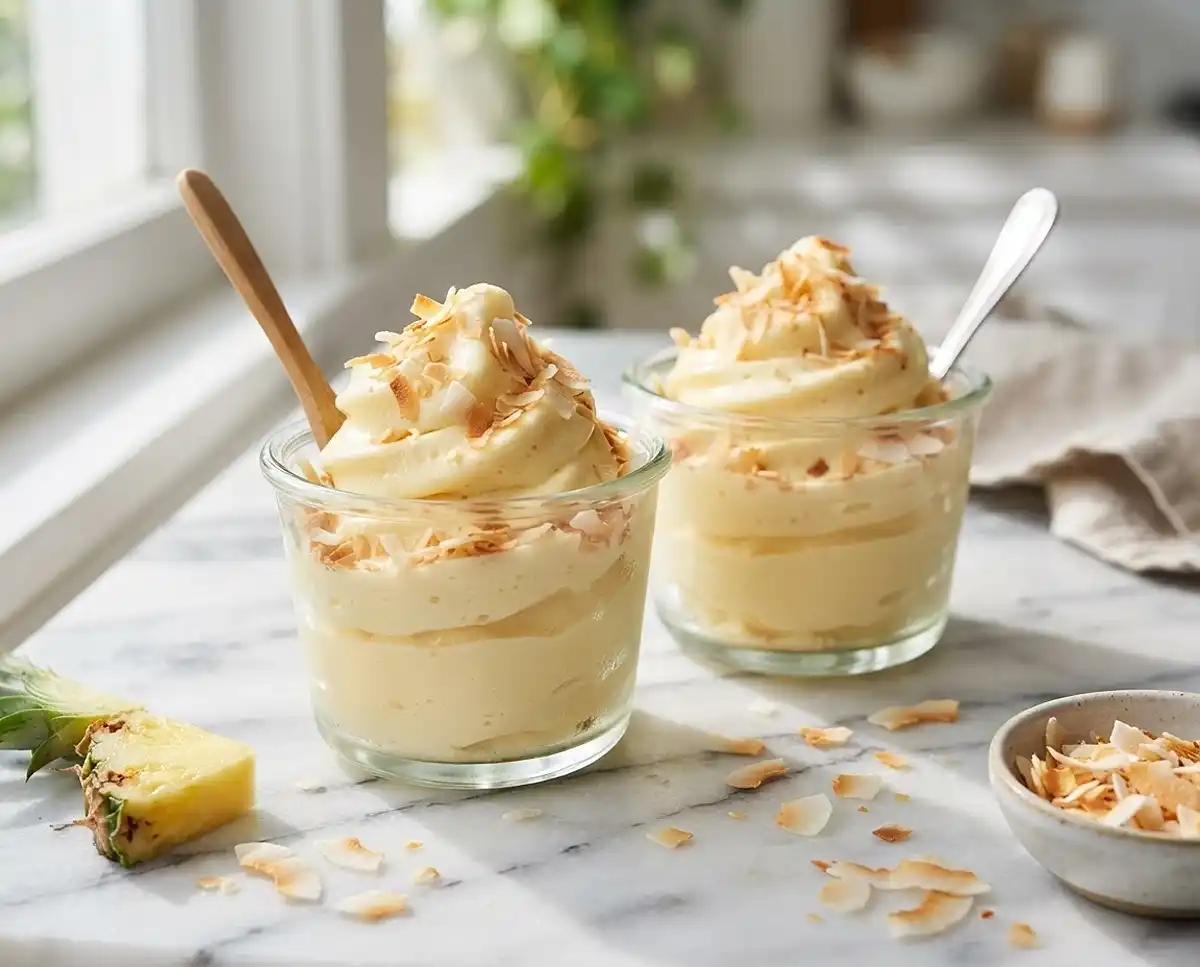
Pineapple Coconut Soft Serve Cups
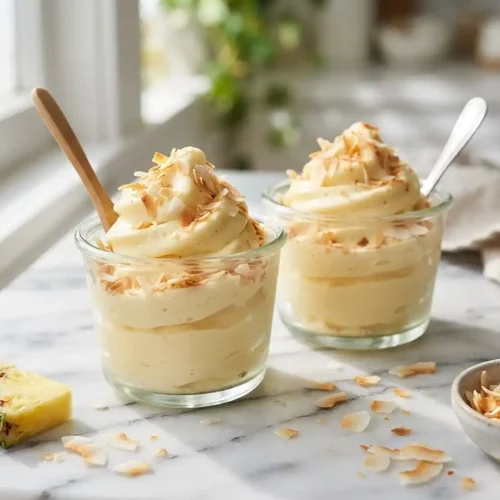
Make these gluten-free pineapple coconut soft serve cups with just 4 ingredients. Dairy-free, no ice cream maker needed, and ready in minutes with a food processor.
Last July Fourth, I needed a frozen dessert that could handle 94-degree heat, a crowd of kids, and at least two guests with dairy restrictions—all at the same time. I’d been testing a gluten-free pineapple coconut soft serve for a few weeks by then, and that backyard cookout was the moment it became a permanent recipe.
Three minutes in the food processor later, I was spooning something so cold and creamy it practically melted into the cup before anyone could grab a spoon. Well… I wasn’t ready for how fast it disappeared. Someone actually asked if I’d ordered it from somewhere.
This tropical frozen treat is made with just four real ingredients—no ice cream maker, no condensed milk, no dairy of any kind. And if you’ve ever wondered whether frozen fruit can really replace the richness of soft serve, this recipe is your answer.
Why You’ll Love This Pineapple Coconut Soft Serve
- Creamy without dairy: Coconut cream does the heavy lifting here, giving this gluten-free dairy-free soft serve the same rich, silky texture you’d expect from a scoop shop—minus the lactose.
- Only 4 ingredients: Fresh pineapple, coconut cream, agave nectar, and a pinch of salt. No stabilizers, no mystery additives, no long shopping list.
- No special equipment needed: A standard food processor handles everything. No ice cream maker, no churning, no babysitting a machine for an hour.
- Works for almost every dietary need: Naturally gluten-free, dairy-free, vegan, and refined-sugar-free. It’s the rare dessert that actually works for the whole table.
The Secret to Perfect Gluten-Free Pineapple Coconut Soft Serve Cups
- Freeze the pineapple completely: Partially frozen pineapple turns watery instead of creamy. You need fully frozen chunks—at least 8 hours, overnight is better—to get that airy, scoopable texture.
- Pulse before you process: Pulsing about 40 times breaks the frozen fruit into smaller pieces before continuous processing begins. Skipping straight to continuous processing strains the motor and leaves chunks behind.
- Scrape the sides consistently: Stopping every 30–45 seconds to scrape down the bowl ensures even blending. The mixture transforms from icy crumbles into smooth, glossy soft serve—don’t rush that last minute of processing.
- Use full-fat coconut cream, not coconut milk: Coconut milk is too thin and produces an icy, grainy result. Full-fat unsweetened coconut cream emulsifies with the frozen pineapple to create real body and creaminess.
Table of Contents
Ingredients
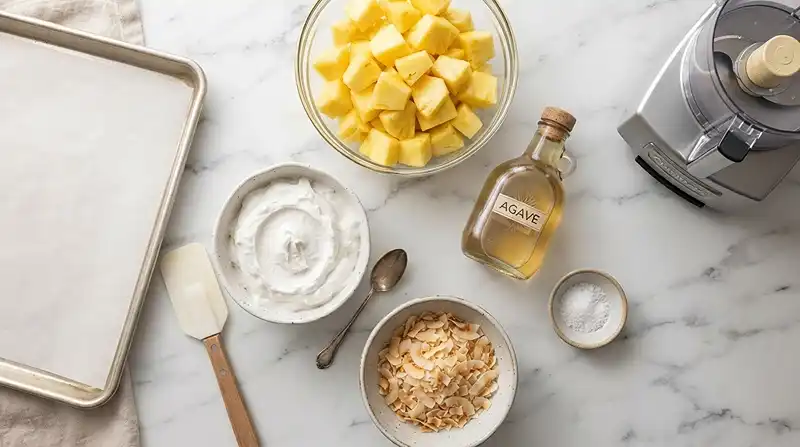
- 1½ pounds fresh pineapple chunks, cut into ½-inch pieces (about 6 cups)
- 1¼ cups unsweetened coconut cream
- ¼ cup light agave nectar
- Pinch of kosher salt
- Toasted unsweetened coconut flakes, for garnish
Ingredient note: Fresh pineapple gives the best flavor and the smoothest result. Canned pineapple chunks can work in a pinch, but drain them thoroughly and pat dry before freezing—excess moisture makes the texture icy. For the coconut cream, shake the can well before opening, or stir until smooth if it has separated.
Instructions
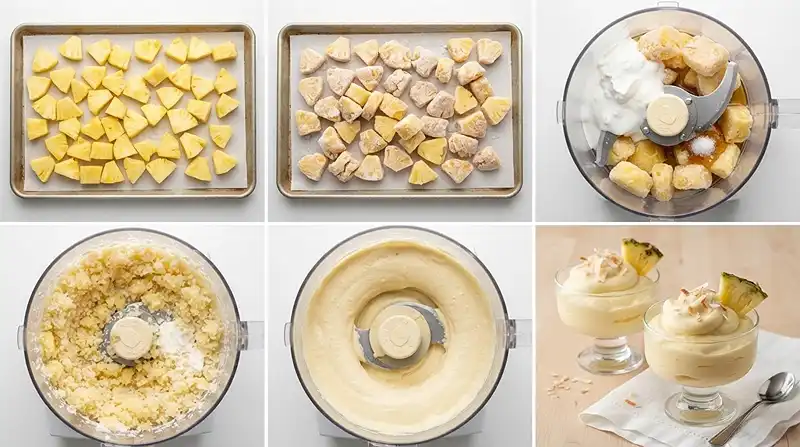
- Freeze the pineapple. Line a baking sheet with parchment paper and spread the pineapple pieces in a single, even layer. Freeze for at least 8 hours or overnight, until completely frozen. Don’t skip the single layer—stacked pieces freeze unevenly and clump together.
- Add to the food processor. Add the frozen pineapple, coconut cream, agave nectar, and salt to a food processor. Make sure everything is measured and ready before you start—once the frozen fruit hits the bowl, you want to move quickly.
- Pulse to break it down. Pulse about 40 times, until the pineapple is finely chopped and the mixture looks like coarse, frosty crumbles. This step protects your motor and sets up a smoother final blend.
- Process until smooth. Process continuously for 3–4 minutes, stopping occasionally to scrape down the sides. The mixture will go from grainy to glossy—keep going until it’s smooth, creamy, and airy with a pale yellow color throughout.
- Serve immediately or firm up slightly. Spoon the pineapple coconut soft serve into small serving cups and enjoy right away for a soft-serve texture. For a slightly firmer scoop, transfer to an airtight container and freeze for approximately 1 hour.
- Garnish and serve. Top with toasted unsweetened coconut flakes just before serving. The flakes add a warm, nutty crunch that plays beautifully against the cold, bright pineapple base.
Make It Your Own
You know… this pineapple coconut dessert is one of the most flexible frozen recipes I’ve made. Swap half the pineapple for frozen mango and you get a completely different tropical profile—same technique, same dreamy texture, whole new flavor direction.
Want a hint of citrus? Add a tablespoon of fresh lime juice and half a teaspoon of lime zest before processing. The acidity brightens the coconut cream and cuts through the sweetness in a way that makes this gluten-free dairy-free soft serve taste almost like a creamy sorbet.
For a lower-sugar version, reduce the agave to 2 tablespoons or replace it with pure maple syrup. The pineapple’s natural sweetness carries a lot of the flavor on its own, so you have room to dial it back without losing anything. According to Healthline’s nutrition breakdown of agave nectar, it’s sweeter than sugar by volume, which means a little genuinely goes a long way here.
Man, oh man… if you want to make this a full tropical frozen treat for a party, layer the soft serve with toasted coconut, fresh pineapple chunks, and a drizzle of extra agave in clear cups. It looks like something from a resort menu and takes about four minutes of assembly.
Common Problems and Solutions
Problem: The mixture is grainy and won’t smooth out. You likely need more processing time. Scrape down the sides thoroughly and run the food processor for another 60–90 seconds. Graininess means the fat from the coconut cream hasn’t fully emulsified with the frozen fruit yet—keep going and it will come together.
Problem: The texture is icy instead of creamy. This usually means the coconut cream was too cold or the ratio was slightly off. Make sure your coconut cream is at room temperature before adding it—straight from a cold fridge, it blends unevenly and leaves an icy, crystalline result instead of smooth soft serve.
Problem: The food processor is struggling or overheating. The pineapple pieces may be too large or packed too tightly. Work in two batches if your processor is smaller than 9 cups, and always pulse first before continuous processing. A struggling motor skips the crucial breakdown phase and produces chunky, uneven results.
Problem: The soft serve is too loose to hold a shape. Serve immediately for a pourable soft-serve style, or freeze the finished mixture for 45–60 minutes to firm it up. Unlike commercial soft serve, this version doesn’t have stabilizers, so it softens faster—plan to scoop and serve within a few minutes of processing.
Storage and Meal Prep
| Method | Duration | Notes |
|---|---|---|
| Counter | Serve immediately | Softens quickly; best eaten right after processing |
| Fridge | Not recommended | Becomes watery; refreeze instead |
| Freezer | Up to 2 weeks | Airtight container; thaw 10 min before scooping |
To re-serve from frozen, let the container sit at room temperature for 8–10 minutes, then scoop directly. Alternatively, break the frozen block into chunks and re-process in the food processor for 60 seconds to restore that fresh soft-serve consistency.
For meal prep, freeze the pineapple chunks up to two weeks ahead and keep them in a zip-close freezer bag. When you’re ready, the actual processing takes under 5 minutes—making this one of the fastest frozen desserts you can pull off on short notice.
Pineapple Coconut Soft Serve Cups FAQs
Can I use canned pineapple instead of fresh?
Yes, but drain it very thoroughly and pat the pieces dry before freezing. Canned pineapple holds more moisture than fresh, which can make the final texture icy rather than creamy. Fresh pineapple consistently gives the smoothest result.
Can I make this without a food processor?
A high-powered blender like a Vitamix can work, but you may need to add a splash more coconut cream to get things moving. A standard blender typically struggles with fully frozen fruit and can overheat. A food processor is the most reliable tool for this recipe.
How do I keep it from melting too fast when serving?
Chill your serving cups in the freezer for 10–15 minutes before scooping. Processing the soft serve as close to serving time as possible also helps. Once it hits a warm cup or sits in a warm room, it softens within a few minutes—serve quickly.
What’s the best coconut cream to use?
Look for full-fat unsweetened coconut cream with no added gums or fillers. Brands that list only coconut and water in the ingredients tend to produce the creamiest results. Light coconut milk or coconut beverage will not give you the right texture.
Why did my soft serve turn out watery?
The most common cause is pineapple that wasn’t fully frozen, or coconut cream that was too cold and didn’t blend smoothly. Make sure the pineapple is frozen solid—at least 8 hours—and let the coconut cream come to room temperature before processing.
Serving Suggestions
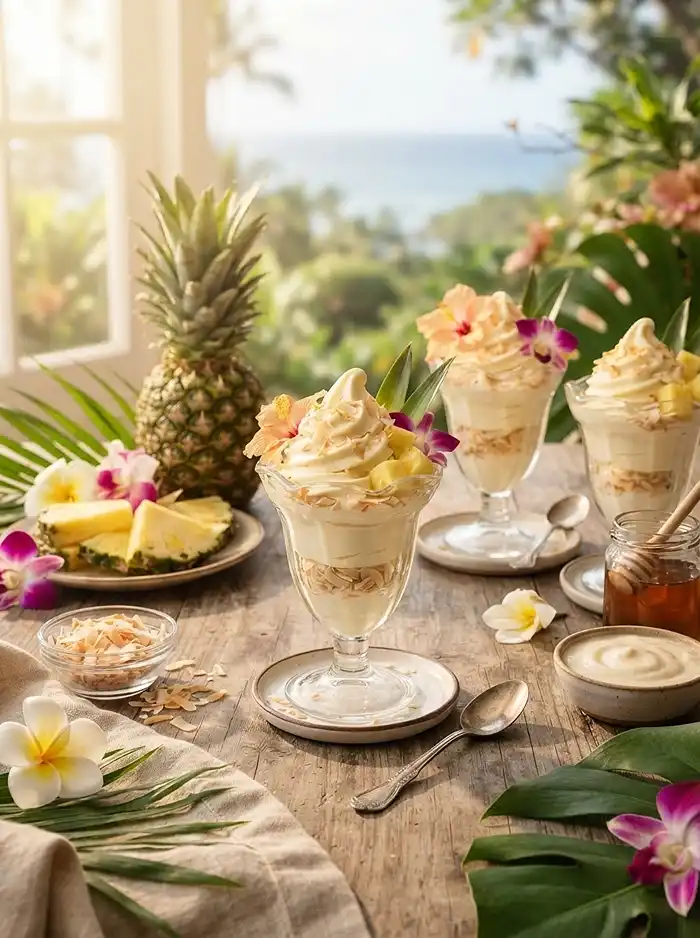
Serve these cups immediately after processing for true soft-serve texture, or firm them up slightly in the freezer for something closer to a dense tropical sorbet. Either way, the toasted coconut flakes on top add a warm, caramelized crunch that makes every spoonful feel layered and intentional—like vacation in a cup.
For a full warm-weather spread, pair these with this savory gluten-free beef and cabbage skillet for a balanced dinner-to-dessert flow. Or serve alongside these crispy gluten-free zucchini corn fritters for a summer cookout spread that covers everyone at the table.
These cups are also a natural fit for a Memorial Day backyard party or a graduation celebration—easy to make in advance, visually impressive in clear cups, and completely safe for guests with gluten or dairy restrictions.
Conclusion
Four ingredients and a food processor are all it takes to make a frozen dessert that genuinely rivals anything from a scoop shop. This gluten-free pineapple coconut soft serve is the kind of recipe you’ll come back to every summer—simple, crowd-pleasing, and endlessly riffable.
Try it this week and leave a comment below telling me what you swapped in or how your family reacted. If you loved it, pin it for later—I’d love to know this one found its way onto your table.
Gluten-Free Pineapple Coconut Soft Serve Cups
Equipment
- Food processor
- Baking sheet
- Parchment paper
- Measuring cups and spoons
- Serving Cups
Ingredients
Pineapple Coconut Soft Serve
- 1 ½ pounds fresh pineapple chunks cut into 1/2-inch pieces, about 6 cups
- 1 ¼ cups unsweetened coconut cream full-fat
- ¼ cup light agave nectar
- 1 pinch kosher salt
- toasted unsweetened coconut flakes for garnish
Instructions
- Freeze the pineapple. Line a baking sheet with parchment paper and spread the pineapple pieces in a single, even layer. Freeze for at least 8 hours or overnight, until completely frozen.
- Add to the food processor. Add the frozen pineapple, coconut cream, agave nectar, and salt to a food processor.
- Pulse to break it down. Pulse about 40 times, until the pineapple is finely chopped and the mixture looks like coarse, frosty crumbles.
- Process until smooth. Process continuously for 3–4 minutes, stopping occasionally to scrape down the sides. Continue until the mixture is smooth, creamy, and airy.
- Serve immediately or firm up slightly. Spoon the pineapple coconut soft serve into small serving cups and enjoy immediately. For a slightly firmer texture, transfer to an airtight container and freeze for approximately 1 hour.
- Garnish and serve. Top with toasted unsweetened coconut flakes just before serving.