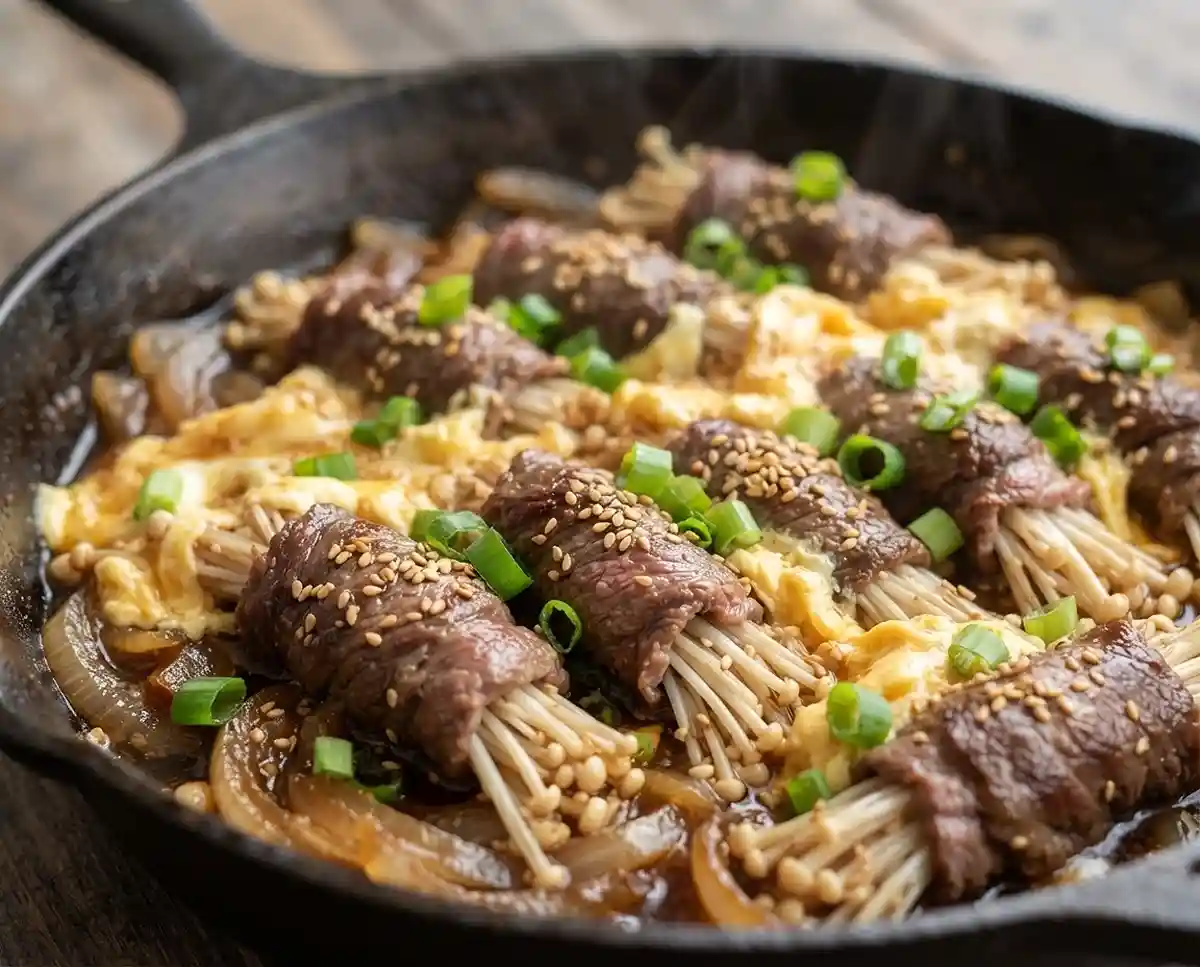
Gluten-Free Enoki Beef Rolls
Step-by-step gluten-free enoki beef rolls with tamari sauce, silky eggs, and tender beef. One skillet, simple ingredients, ready in under 30 minutes.
The first time I made gluten-free enoki beef rolls, I burned the first batch because I didn’t cover the skillet. The mushrooms stayed raw, the beef was chewy, and I stood over the stove wondering what went wrong.
One small adjustment — covering the pan and letting steam do the work — and the whole dish clicked. The beef turned silky, the enoki stayed tender, and the tamari sauce pulled everything together beautifully.
What’s the secret to getting this right every single time? It comes down to three things: thin beef slices, a proper simmer, and a sauce that’s worth eating with a spoon. This gluten-free enoki beef rolls recipe delivers all three.
Why You’ll Love This Enoki Beef Roll Recipe
- One-skillet simplicity — everything cooks in a single pan in under 30 minutes, including cleanup
- Naturally gluten-free — gluten-free tamari replaces soy sauce with zero sacrifice in flavor depth
- Kid-friendly presentation — the rolls look impressive but roll together in seconds
- Weeknight-ready — works beautifully over steamed rice on busy Tuesday nights or as a centerpiece for a casual dinner with friends
The Secret to Perfect Gluten-Free Enoki Beef Rolls
- Thinly sliced beef is non-negotiable — paper-thin ribeye or sirloin cooks through during the short simmer without toughening. Thick cuts will undercook before the mushrooms are done.
- The steam is the cook — covering the skillet traps moisture and creates a gentle environment that cooks the beef evenly and keeps the enoki tender rather than rubbery.
- Gluten-free tamari carries the sauce — unlike standard soy sauce, tamari is brewed with little to no wheat. It’s richer and slightly less sharp, which works perfectly in this sauce.
- The egg finish is intentional — pouring whisked eggs over the rolls at the end creates a silky, savory coating that binds the sauce and adds protein without overpowering the beef.
Table of Contents
Ingredients
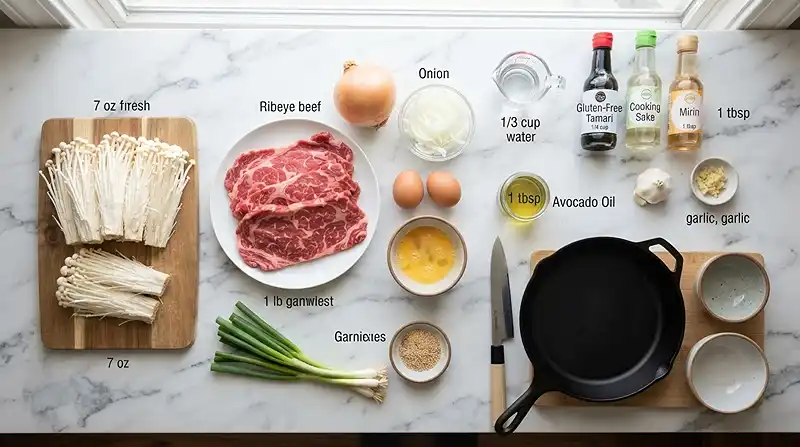
Here’s everything you need for 4 servings. Group your ingredients before you start — this recipe moves quickly once the skillet heats up.
For the Rolls
| Ingredient | Amount | Notes |
|---|---|---|
| Enoki mushrooms | 7 oz | Trim bottoms, rinse gently |
| Thinly sliced beef (ribeye, sirloin, or brisket) | 1 lb | Shabu-shabu style works best |
| Avocado oil or neutral oil | 1 tbsp | Any neutral oil works |
| Onion, thinly sliced | 1 medium | Yellow or white onion preferred |
| Eggs, whisked | 2 large | Whisk well before adding |
| Chopped green onions | To taste | For garnish |
| Sesame seeds | To taste | For garnish |
For the Sauce
| Ingredient | Amount | Notes |
|---|---|---|
| Water | ⅓ cup | Helps thin the sauce for simmering |
| Gluten-free tamari | ¼ cup | Check label — must be certified GF |
| Cooking sake or mirin | 1 tbsp | Adds subtle sweetness and depth |
| Mirin | 1 tbsp | Balances the tamari’s saltiness |
| Garlic clove, minced | 1 clove | Fresh garlic preferred |
For your tamari, look for brands certified gluten-free by a third-party organization. The trusted celiac research at the Celiac Disease Foundation covers which soy sauce alternatives are truly safe for those avoiding gluten.
Instructions
Step 1: Prep the Enoki Mushrooms
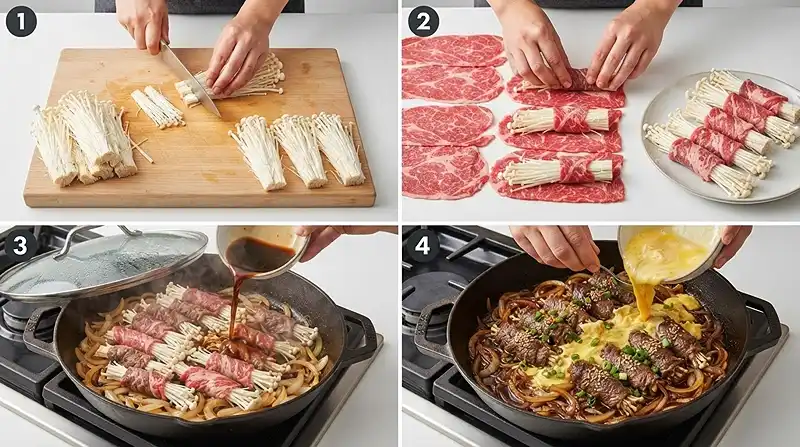
Trim about 1–2 inches from the bottom of the enoki mushrooms and rinse them gently under cold running water. Separate the mushrooms into small, even bundles — roughly the width of your finger works well.
Pro Tip: Don’t over-rinse enoki mushrooms. They absorb water easily, and excess moisture can make the sauce watery during cooking.
Step 2: Roll the Beef
Lay each slice of beef flat on a clean surface. Place an enoki bundle at one end of the slice, then roll the beef tightly around the mushrooms. Repeat with all remaining beef and mushroom bundles.
The rolls should feel snug but not so tight that the mushrooms crush. Think of rolling a small scroll — firm enough to hold, gentle enough to keep the shape intact.
Step 3: Make the Sauce
Combine the water, gluten-free tamari, cooking sake or mirin, mirin, and minced garlic in a small bowl. Stir well until everything is evenly mixed. Set aside — you’ll pour this over the rolls once they’re in the pan.
Step 4: Cook the Onions
Heat the avocado oil in a large skillet over medium-high heat. Add the sliced onion and cook for about 3 minutes, stirring occasionally, until slightly softened and translucent at the edges.
Step 5: Add the Rolls and Sauce
Arrange the enoki beef rolls in a single layer over the softened onions. Pour the sauce evenly over the rolls, making sure each roll gets coated.
Pro Tip: A single layer matters here. Stacking rolls leads to uneven cooking — the bottom ones overcook while the top ones stay underdone.
Step 6: Cover and Simmer
Cover the skillet and bring the sauce to a gentle boil. Reduce the heat to low and simmer for 3–4 minutes, or until the beef is cooked through and no longer pink. The sauce should be bubbling softly around the rolls — a low, steady simmer, not a rolling boil.
Step 7: Add the Eggs
Uncover the skillet and pour the whisked eggs evenly around and over the beef rolls. Cover again and cook for about 1 minute, until the eggs are just set. They should look softly cooked — not rubbery, not raw.
Step 8: Garnish and Serve
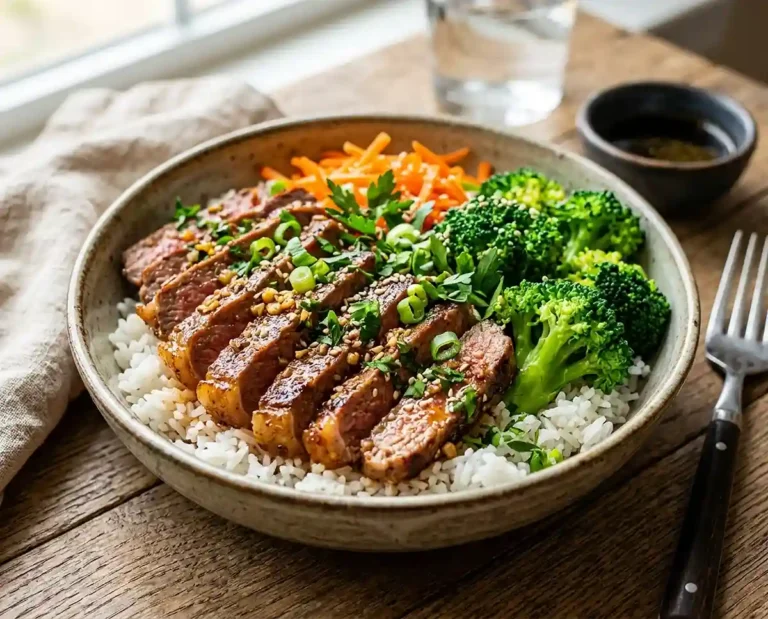
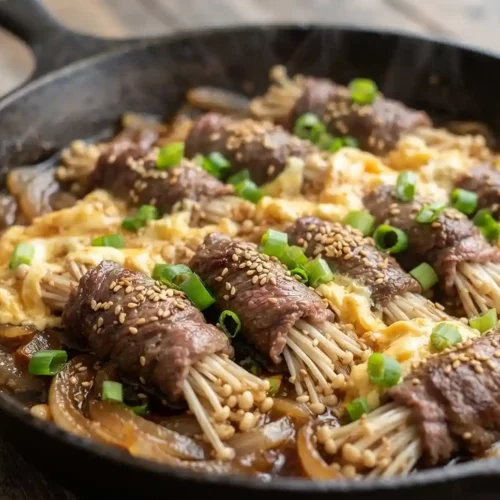
Remove the skillet from the heat. Garnish with chopped green onions and sesame seeds. Serve hot over steamed rice for a complete meal.
The sauce will have thickened slightly during cooking and will coat every roll like a glaze — as rich and savory as a slow-cooked braise, but ready in a fraction of the time.
Make It Your Own
Well… one of the best things about this recipe is how naturally it adapts. The technique stays the same — it’s mostly the fillings and sauce elements you can play with.
Swap the beef cut: Ribeye gives you the most tenderness, but sirloin and brisket work beautifully too. Brisket has a slightly chewier texture that some people prefer. Just make sure whatever cut you use is sliced very thin — pre-sliced shabu-shabu beef from an Asian grocery store is the easiest shortcut.
Try a different mushroom mix: If enoki mushrooms are hard to find at your local store, you can use thin strips of shiitake or oyster mushrooms as the filling. The texture changes — shiitake has a meatier bite — but the rolls hold together just as well.
Make it dairy-free: This recipe is already completely dairy-free as written. No swaps needed. It pairs naturally with our gluten-free crack sauce recipe if you want to drizzle something extra over the finished dish.
Adjust the sweetness: Mirin adds a gentle sweetness that balances the tamari’s saltiness. If you prefer a less sweet sauce, reduce the mirin to 1½ teaspoons total. If you like a deeper savory profile, you can skip the cooking sake and double the water instead.
Add heat: A teaspoon of chili garlic sauce or a pinch of gochugaru (Korean red pepper flakes) stirred into the sauce adds a slow, building heat that works well with the richness of the beef.
Common Problems & Solutions
Man, oh man — even a simple recipe like this has a few spots where things can go sideways. Here’s how to fix the most common issues before they derail your dinner.
Problem: The beef rolls are falling apart. Solution: The rolls are likely too loose, or the beef slices are too thick to grip the mushrooms properly. Roll each bundle tightly before placing it in the pan, and make sure the seam side is facing down when you lay it in the skillet. The heat seals the seam quickly.
Problem: The sauce is too salty. Solution: This usually happens when tamari brands vary in sodium content. Add a tablespoon of water at a time to dilute the sauce, or add a small pinch of sugar to balance the salt. According to authoritative gluten-free nutrition guidance from Healthline, tamari can run higher in sodium than some other soy sauce alternatives, so tasting before you pour is always smart.
Problem: The eggs are rubbery or overcooked. Solution: The skillet retained too much heat when you added the eggs. Remove the pan from direct high heat before pouring in the whisked eggs, then cover and let the residual heat finish them gently. One minute is usually enough — err on the side of slightly underdone, since they’ll continue to cook briefly after the lid comes off.
Problem: The enoki mushrooms are watery or soggy. Solution: Excess moisture from rinsing is the usual culprit. After rinsing, gently pat the mushrooms dry with a clean paper towel before bundling them into the beef rolls. A small amount of moisture is fine, but soaking-wet mushrooms will thin your sauce significantly.
Storage & Meal Prep
| Method | Duration | Notes |
|---|---|---|
| Counter | Not recommended | Contains cooked beef and egg — refrigerate promptly |
| Fridge | 3–4 days | Store in an airtight container with sauce |
| Freezer | Up to 2 months | Freeze without the egg component for best texture |
To reheat from the fridge, warm the rolls in a covered skillet over low heat for 3–4 minutes. Add a splash of water or extra tamari to loosen the sauce if it’s thickened too much overnight.
For meal prep, you can roll the uncooked beef and mushroom bundles up to 24 hours ahead and store them covered in the refrigerator. Make the sauce ahead too — it keeps for up to a week in the fridge. When you’re ready to cook, the whole dish comes together in under 15 minutes.
Gluten-Free Enoki Beef Rolls FAQs
Can I use regular soy sauce instead of gluten-free tamari?
Only if you don’t need the recipe to be gluten-free. Regular soy sauce contains wheat and is not safe for people with celiac disease or gluten sensitivity. Gluten-free tamari is brewed without wheat and delivers the same depth of flavor, making it the correct swap here.
How do I keep the beef rolls from unrolling in the pan?
Place each roll seam-side down in the skillet first. The heat quickly seals the edge of the beef against itself. Avoid moving the rolls during the first minute of cooking — let them sear briefly before you add the sauce and cover the pan.
What’s the best beef cut for enoki beef rolls?
Thinly sliced ribeye is the most forgiving because of its fat content — it stays tender even if the simmer runs a minute longer than planned. Sirloin is leaner and slightly firmer. Brisket has a chewier texture some people prefer. All three work well; the key is that the slices are paper-thin.
Why did my sauce turn watery during cooking?
Watery sauce is almost always caused by excess moisture from the mushrooms. After rinsing the enoki, pat them dry gently before rolling. If the sauce is still thin at the end, uncover the pan, increase the heat slightly, and let it reduce for 1–2 minutes before adding the eggs.
Can I make gluten-free enoki beef rolls without eggs?
Yes. The eggs add a silky coating and extra protein, but the dish is complete without them. Simply skip Steps 7 and 8 — the rolls are fully cooked after the 3–4 minute simmer and are ready to garnish and serve.
Serving Suggestions
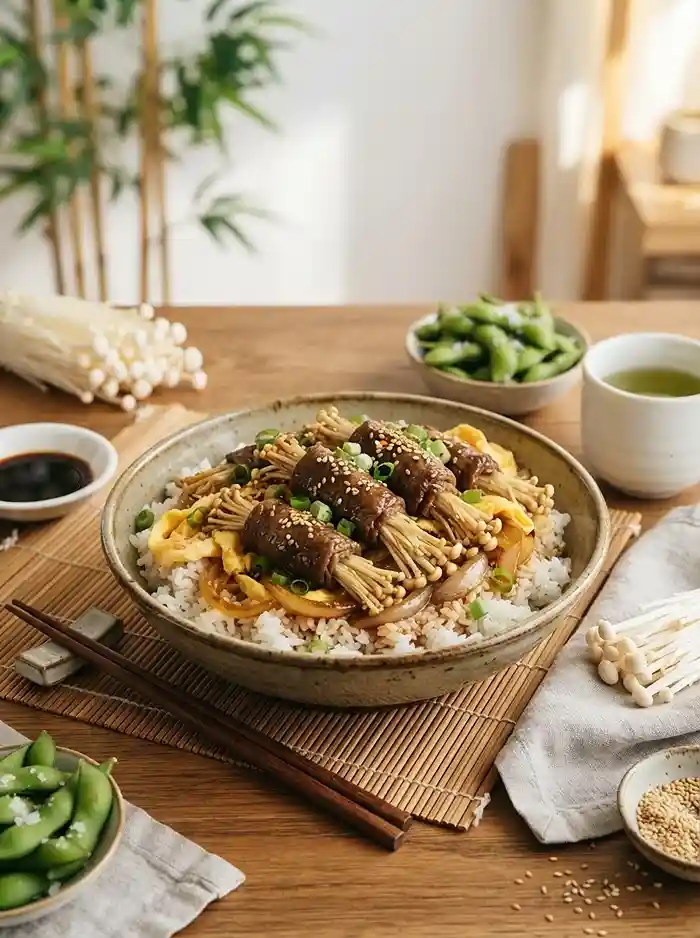
These rolls are designed to be served hot over steamed short-grain or jasmine rice, which soaks up the tamari sauce beautifully. You know… a bowl of these with rice on a cold January evening — after the holiday leftovers are finally gone — hits differently than almost anything else in the rotation.
For a fuller spread, pair them alongside our gluten-free whole wheat breadsticks for something to dip in the extra sauce. If you want a light, naturally sweet finish to the meal, our gluten-free date palm recipe rounds out the table without any fuss.
A simple cucumber salad dressed with rice vinegar and sesame oil makes a bright, refreshing side that cuts through the richness of the beef. No cooking required — just slice, dress, and serve alongside the rolls.
Conclusion
This gluten-free enoki beef rolls recipe is one of those dishes that looks harder than it is. Once you’ve done it once, you’ll have it memorized — and you’ll find yourself coming back to it every time you need dinner on the table fast.
Give it a try and let me know how it turned out in the comments. Did you use ribeye or sirloin? Add extra heat? I genuinely want to hear what variations you landed on — every reader tweak makes this recipe better for the next person who finds it.
If you loved this recipe, save it to Pinterest so other gluten-free home cooks can find it too. And if you have a moment, leaving a star rating below makes a real difference for this site.
Gluten-Free Enoki Beef Rolls Recipe
Equipment
- Large skillet
- Small bowl
- Whisk
- Knife
- Cutting board
Ingredients
For the Rolls
- 7 oz Enoki mushrooms Trim bottoms and rinse gently
- 1 lb Thinly sliced beef Ribeye, sirloin, or brisket; shabu-shabu style works best
- 1 tbsp Avocado oil or neutral oil Any neutral oil works
- 1 medium Onion Thinly sliced; yellow or white preferred
- 2 large Eggs Whisk well before adding
- To taste Chopped green onions For garnish
- To taste Sesame seeds For garnish
For the Sauce
- ⅓ cup Water Helps thin the sauce for simmering
- ¼ cup Gluten-free tamari Check label; must be certified gluten-free
- 1 tbsp Cooking sake or mirin Adds subtle sweetness and depth
- 1 tbsp Mirin Balances the tamari’s saltiness
- 1 clove Garlic Minced; fresh garlic preferred
Instructions
- Trim about 1–2 inches from the bottom of the enoki mushrooms and rinse them gently under cold running water. Separate the mushrooms into small, even bundles, roughly the width of your finger.
- Lay each slice of beef flat on a clean surface. Place an enoki bundle at one end of the slice, then roll the beef tightly around the mushrooms. Repeat with the remaining beef and mushroom bundles.
- Combine the water, gluten-free tamari, cooking sake or mirin, mirin, and minced garlic in a small bowl. Stir well until evenly mixed and set aside.
- Heat the avocado oil in a large skillet over medium-high heat. Add the sliced onion and cook for about 3 minutes, stirring occasionally, until slightly softened and translucent at the edges.
- Arrange the enoki beef rolls in a single layer over the softened onions. Pour the sauce evenly over the rolls, making sure each roll gets coated.
- Cover the skillet and bring the sauce to a gentle boil. Reduce the heat to low and simmer for 3–4 minutes, or until the beef is cooked through and no longer pink.
- Uncover the skillet and pour the whisked eggs evenly around and over the beef rolls. Cover again and cook for about 1 minute, until the eggs are just set.
- Remove the skillet from the heat. Garnish with chopped green onions and sesame seeds. Serve hot over steamed rice.