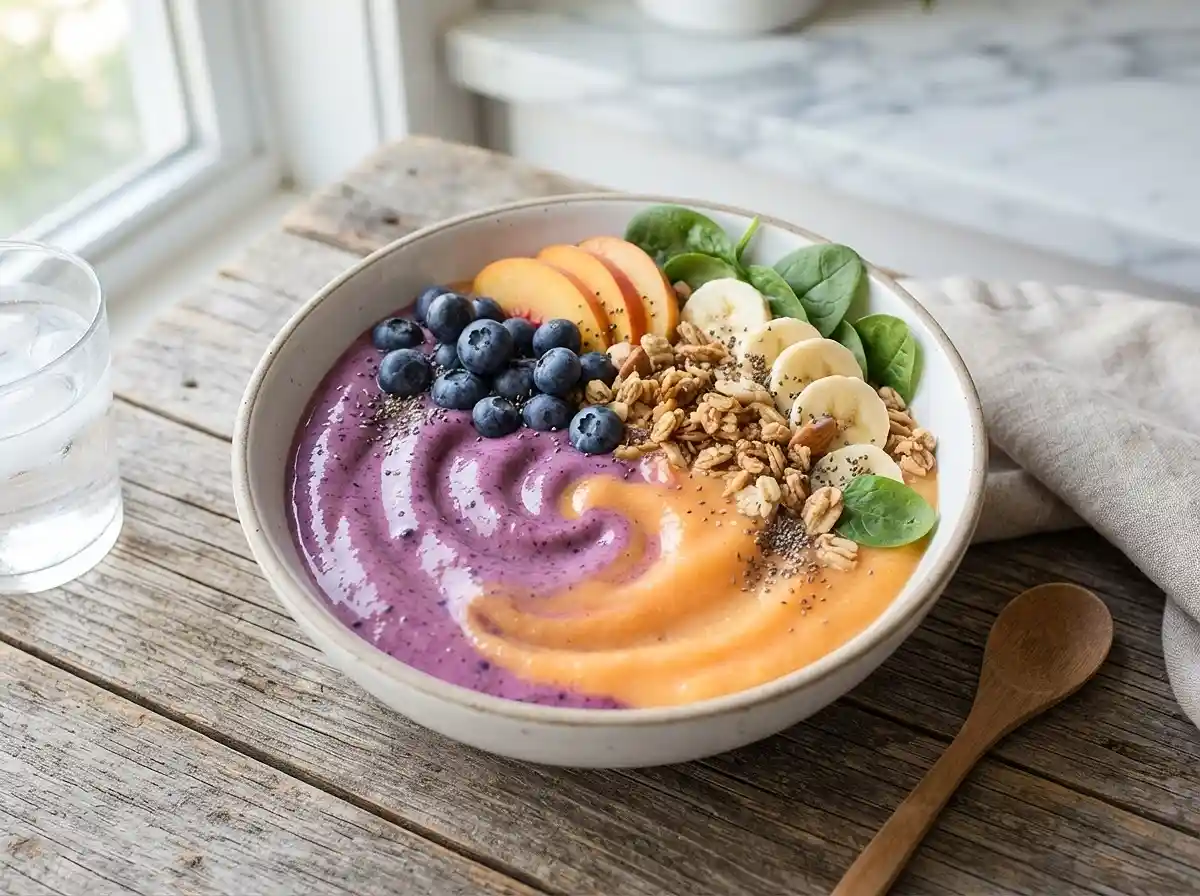
Gluten-Free Blueberry Peach Smoothie Bowl
The first time I made a smoothie bowl, I poured everything into one blender and ended up with a sad, single-color sludge. It tasted fine, but it looked nothing like the gorgeous swirled bowls I’d seen online.
Well… lesson learned. Turns out the secret to a good gluten-free blueberry peach smoothie bowl isn’t the ingredients, it’s keeping the peach and blueberry layers separate until they meet in the bowl.
Ever wonder why smoothie bowls from cafes look so much more vibrant than the ones made at home? It usually comes down to using frozen fruit instead of fresh, plus blending each layer on its own so the colors stay distinct. That’s exactly what this recipe does, and it’s simple enough for a quiet weekday morning or a Fourth of July brunch spread.
Table of Contents
Why You’ll Love This Gluten-Free Blueberry Peach Smoothie Bowl
- Creamy, thick texture from frozen banana and dairy-free yogurt, not watery like a regular smoothie
- Beginner-friendly: two blends, one bowl, done in under 10 minutes
- Naturally gluten-free and dairy-free, so it works for multiple dietary needs at the family table
- Best enjoyed fresh right after blending, when the layers are coldest and hold their shape
The Secret to Perfect Gluten-Free Blueberry Peach Smoothie Bowl
Getting a smoothie bowl to hold a spoon upright, instead of turning into soup, comes down to a few specific techniques.
- Frozen banana is the real thickener here. It emulsifies with the yogurt and milk to create a thick, scoopable base without needing gluten-containing oats or starches.
- Blending each layer separately keeps the peach and blueberry colors from bleeding into a muddy purple-brown. This is the single biggest visual upgrade you can make.
- Using frozen fruit rather than fresh gives you that soft-serve consistency. According to a comparative nutrition analysis on fresh versus frozen produce, frozen fruit can retain antioxidant levels similar to fresh.
- Spinach in the peach layer disappears completely in flavor and color once blended with peach and banana, so it’s an easy way to sneak in extra nutrients.
Ingredients
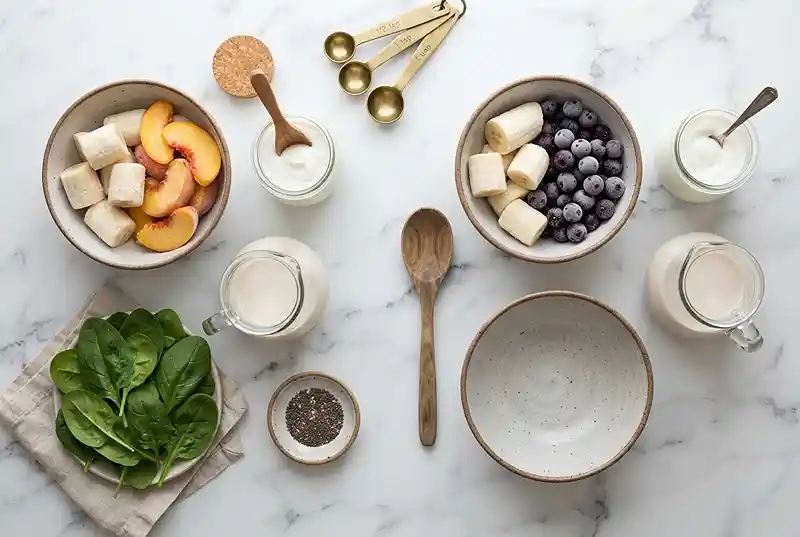
For the peach layer:
- 2⁄3 large banana, frozen
- 75 g peaches, frozen
- 40 g dairy-free yogurt
- 50 ml dairy-free milk
- Large handful of spinach
For the blueberry layer:
- 1⁄3 large banana, frozen
- 65 g blueberries, frozen
- 40 g dairy-free yogurt
- 40 ml dairy-free milk
Instructions
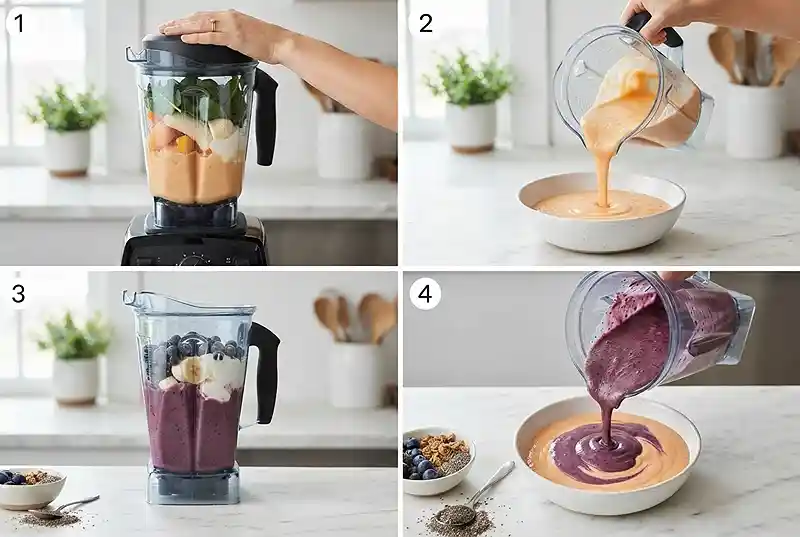
- Place all the ingredients for the peach layer into a blender and blitz until smooth. You’re looking for a thick, uniform consistency with no visible chunks of spinach.
- Pour the peach mixture into a bowl, tilting it slightly so it settles evenly across the base.
- Rinse the blender, then add all the blueberry layer ingredients and blitz until smooth and vibrant purple.
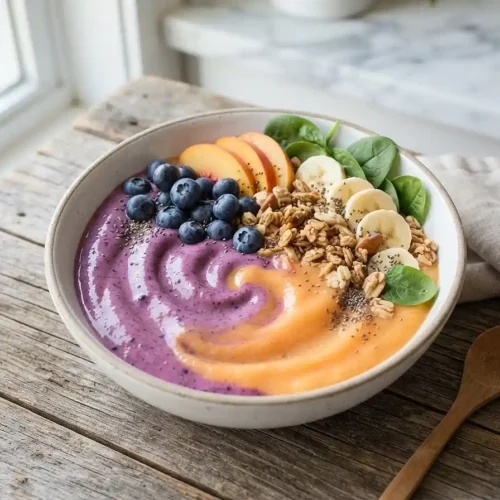
- Pour the blueberry mixture into the middle of the bowl, right on top of the peach layer, letting it spread outward on its own for a marbled effect.
Pro Tip: If either layer looks too thick to pour, add a splash more dairy-free milk, one tablespoon at a time, and blend again.
Make It Your Own
Swap the blueberries for frozen raspberries or blackberries if that’s what you’ve got in the freezer. The texture stays the same, and you’ll still get that gorgeous color contrast against the peach layer.
No spinach on hand? Skip it entirely. It’s there for nutrition, not flavor, so this gluten-free dairy-free smoothie bowl will taste identical without it.
You know… if you want this to lean more like a summer fruit bowl than a breakfast smoothie, top it with fresh sliced peaches and whole blueberries instead of granola. It keeps things gluten-free without needing to double-check a granola label.
Want more protein in this blueberry peach breakfast? Stir a scoop of unflavored dairy-free protein powder into the blueberry layer before blending. It blends in seamlessly without changing the color.
Common Problems & Solutions
Problem: My smoothie bowl turned out runny instead of thick.
Solution: Use more frozen fruit and less liquid.
This usually happens when the banana wasn’t fully frozen or too much milk was added at once. Start with less milk than you think you need, since you can always blend in more.
Problem: The layers mixed together into one muddy color.
Solution: Pour the second layer gently into the center, not around the edges.
Man, oh man… this one gets almost everyone the first time. Pouring around the rim instead of straight into the middle lets the layers spread and swirl instead of collapsing into each other.
Problem: The bowl separated and got watery after a few minutes.
Solution: Eat it immediately after blending.
Smoothie bowls are meant to be eaten fresh. Because there’s no gluten-based stabilizer or gum holding things together, the frozen fruit naturally starts to melt the longer it sits at room temperature.
Storage & Meal Prep
| Method | Duration | Notes |
|---|---|---|
| Counter | Not recommended | Best eaten immediately after blending |
| Fridge | Not recommended | Texture breaks down and separates within an hour |
| Freezer (fruit only) | 2-3 months | Freeze pre-measured fruit portions in bags, ready to blend |
Since this is a fresh-blended bowl rather than a baked good, the smartest meal prep move is freezing pre-portioned bags of the peach mix and blueberry mix separately. Then it’s just a dump-and-blend situation on busy mornings, no measuring required.
Your Questions Answered
Do blueberries and peaches go together in a smoothie?
Yes, blueberries and peaches pair well together because peach brings a soft, mellow sweetness while blueberries add brightness and a slight tartness.
Can acai bowls be gluten free?
Yes, as long as the acai puree has no added gluten-containing ingredients and toppings like granola are certified gluten-free.
How do I make a blueberry smoothie bowl?
Blend frozen banana, frozen blueberries, dairy-free yogurt, and dairy-free milk until thick, then pour into a bowl and add toppings.
Is it okay to eat a fruit smoothie bowl every day?
Yes, for most people a fruit smoothie bowl can be a healthy daily breakfast, though portion size and toppings matter.
What should you not mix with blueberries?
There is no major issue mixing blueberries with most fruits or dairy-free alternatives; very bitter greens or overly acidic citrus are the main flavor clashes to watch for.
Serving Suggestions
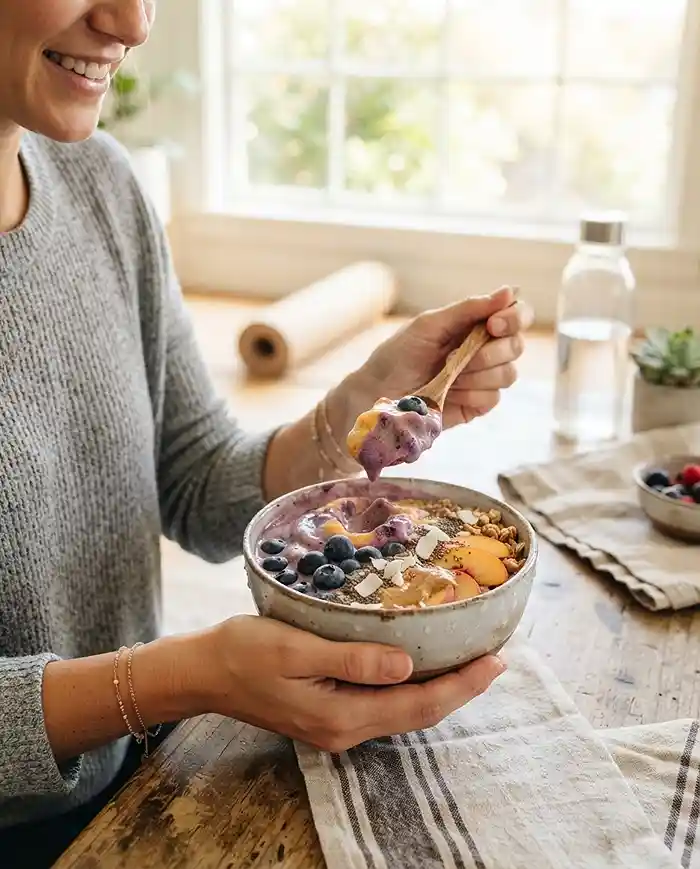
This bowl works beautifully as a light breakfast on its own, but it also makes a refreshing addition to a Memorial Day brunch table alongside savory dishes. Pair it with something protein-forward like this greek yogurt ranch veggie pasta salad, or keep dessert light afterward with these no-bake key lime cheesecake cups. For a savory dinner option later in the day, this coconut curry salmon with pineapple salsa rounds out a full gluten-free menu.
Give This a Try
Give this gluten-free blueberry peach smoothie bowl a try this week and let me know how the layers turned out for you in the comments. If you snap a photo, pin it so other gluten-free breakfast lovers can find it too.
Easy Gluten-Free Blueberry Peach Smoothie Bowl Recipe
Equipment
- Blender
- Mixing bowl
- Measuring cups
- Measuring spoons
Ingredients
Peach Layer
- ⅔ large Frozen banana
- 75 g Frozen peaches
- 40 g Dairy-free yogurt
- 50 ml Dairy-free milk
- 1 large handful Spinach
Blueberry Layer
- ⅓ large Frozen banana
- 65 g Frozen blueberries
- 40 g Dairy-free yogurt
- 40 ml Dairy-free milk
Instructions
- Place all of the peach layer ingredients into a blender and blend until completely smooth and thick with no visible spinach pieces.
- Pour the peach mixture into a serving bowl, tilting the bowl slightly so the mixture settles evenly across the bottom.
- Rinse the blender, then add all of the blueberry layer ingredients and blend until smooth and vibrant.
- Pour the blueberry mixture gently into the center of the peach layer to create a marbled effect. Serve immediately. If needed, add a tablespoon of dairy-free milk to either layer if it is too thick to pour.