Gluten-Free Cottage Cheese Bread Wrap
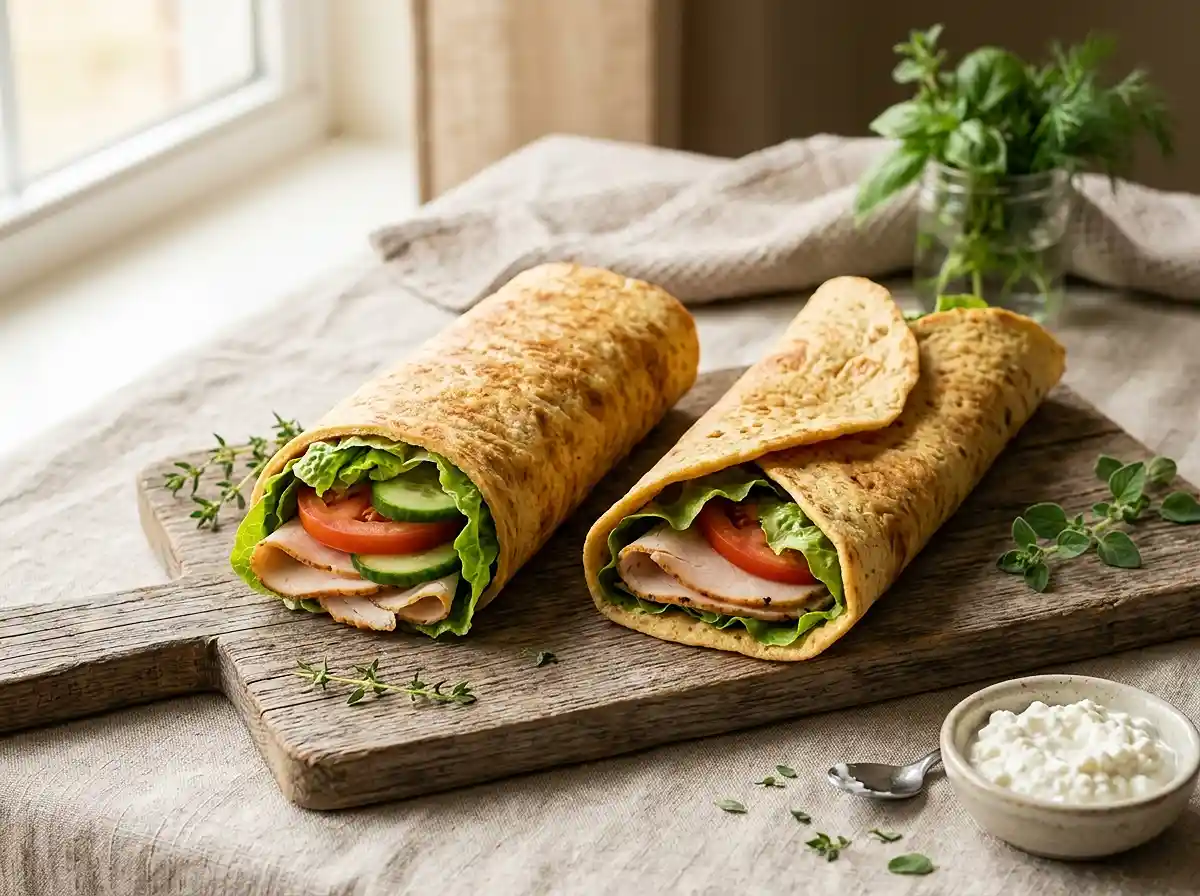
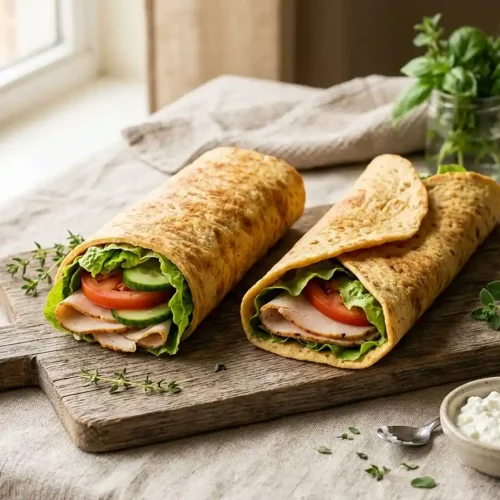
This easy gluten-free cottage cheese bread wrap recipe uses 7 ingredients, bakes in 30 minutes, and rolls up soft and flexible with zero crumbling.
The first time I tried a gluten-free cottage cheese bread wrap, I nearly gave up on it halfway through. My batter looked more like scrambled eggs than a wrap, and it fell apart the second I tried to roll it.
Well, turns out I’d skipped the cornstarch, and that one tiny ingredient makes all the difference between a wrap that holds together and one that shatters like a cracker.
Have you ever wanted a sandwich wrap that’s actually sturdy enough to hold real fillings without falling apart in your hands? That’s exactly what this gluten-free cottage cheese bread wrap delivers, and once you nail the technique, you’ll wonder why you didn’t try it sooner
Table of Contents
Why You’ll Love This Gluten-Free Cottage Cheese Bread Wrap
- Flexible, not brittle: The combination of eggs and cornstarch creates a wrap that bends without tearing—something most store-bought gluten-free wraps can’t promise.
- Beginner-friendly: If you can run a blender and line a baking sheet, you can nail this recipe on the first try.
- Naturally high in protein: cottage cheese is one of the most protein-dense dairy foods available, making each wrap a genuinely filling base before you even add fillings.
- Meal prep approved: Make two wraps on Sunday and use them all week for lunches, snacks, or light dinners.
The Secret to Perfect Gluten-Free Cottage Cheese Bread Wrap
- Blend until truly smooth: Any visible curds left in the batter will create weak spots that crack during peeling. Blend for a full 30–45 seconds and check before pouring.
- Cornstarch is the structural key: It binds moisture and gives the baked wrap that slightly chewy, pliable texture—like a crepe that went to the gym.
- Spread to exactly ¼-inch thick: Too thin and the edges overbake before the center sets. Too thick and the middle stays gummy. A quarter inch is the sweet spot every time.
- Cool completely before peeling: The wrap needs 10 full minutes to firm up after baking. Rushing this step is the number one reason wraps tear. Patience here pays off.
Ingredients
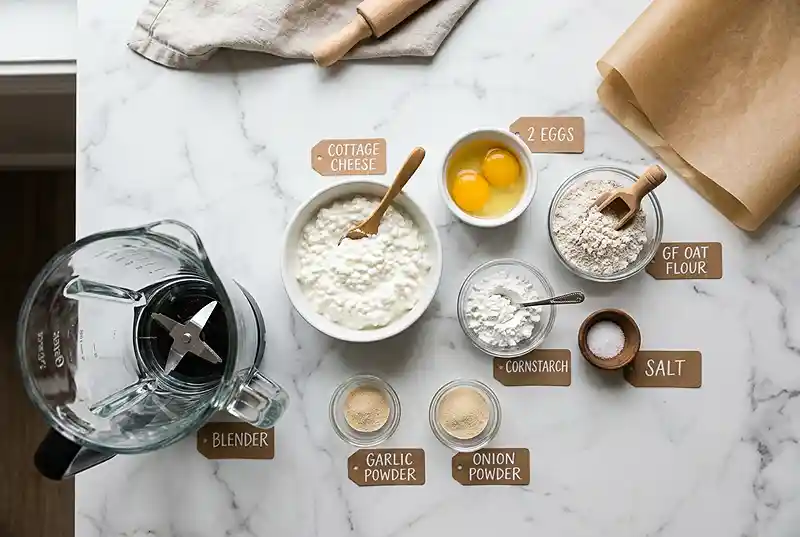
These wraps come together with just a handful of pantry staples. Here’s everything you need for 2 large wraps.
| Ingredient | Amount | Notes |
|---|---|---|
| Cottage cheese | 1 cup | Full-fat gives the best texture; low-fat works but may be slightly softer |
| Large eggs | 2 | Room temperature blends more evenly |
| Gluten-free oat flour | 2 tbsp | Certified GF is essential for celiac-safe prep |
| Cornstarch | 1 tbsp | The key to a flexible, non-crumbly wrap |
| Salt | ¼ tsp | |
| Garlic powder | ¼ tsp | Optional but recommended for savory fillings |
| Onion powder | ¼ tsp | Optional; adds depth without overpowering |
Instructions
Step 1: Prep Your Pan
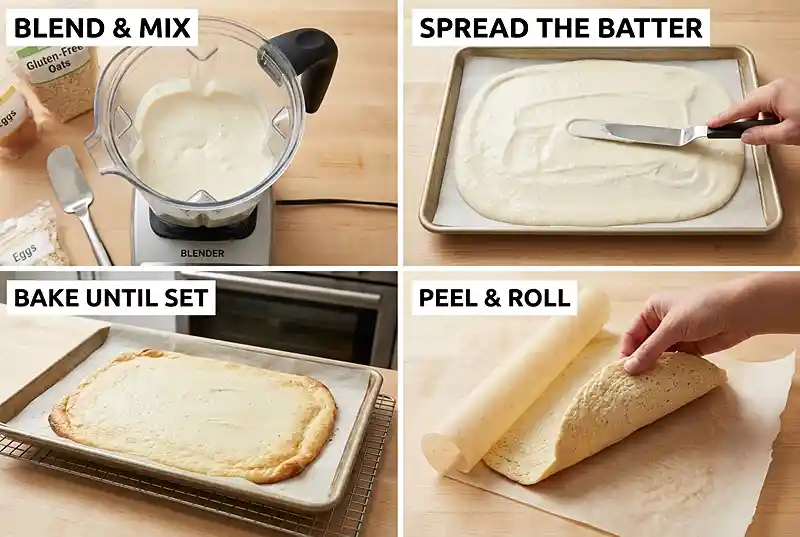
Preheat the oven to 375°F (190°C). Line a baking sheet or small sheet pan with parchment paper. A snug fit matters here—a pan that’s too large will spread the batter too thin.
Step 2: Blend the Batter
Add the cottage cheese, eggs, oat flour, cornstarch, salt, garlic powder, and onion powder to a blender. Blend until completely smooth with no visible curds remaining. This usually takes about 30–45 seconds on high.
Pro Tip: Scrape down the sides once and blend again for 10 seconds. Even one small lump can cause a crack when you peel the wrap.
Step 3: Spread and Bake
Pour the mixture onto the prepared baking sheet and spread into a thin rectangle about ¼-inch thick. Use a silicone spatula to smooth the edges so they’re even with the center—uneven edges brown too fast.
Bake for 25–30 minutes, or until the wrap is set and lightly golden around the edges. The surface should look dry and matte, not shiny or wet in the center.
Step 4: Cool and Peel
Allow the wrap to cool on the pan for 10 minutes. Don’t skip this—the wrap is still setting as it cools. Carefully peel the wrap from the parchment paper starting from one corner and working slowly.
Pro Tip: If the wrap feels sticky, let it cool for an extra 3–5 minutes. It will release much more easily.
Step 5: Fill and Roll
Fill with your favorite sandwich or wrap fillings, roll up, and serve. Slice in half for easier handling, or leave whole for a heartier meal.
Make It Your Own
You know… one of the best things about this gluten-free cottage cheese tortilla wrap is how forgiving it is with swaps. Don’t have oat flour? Swap in the same amount of tapioca flour or arrowroot powder. Both starches behave similarly and keep the texture light and flexible.
Want a dairy-free version? Lactose-free cottage cheese works well here since the protein structure is still intact. True dairy-free cottage cheese alternatives are improving, but results can vary—test a small batch first before committing to a full recipe.
For a sweeter version, skip the garlic and onion powder and add ¼ tsp cinnamon and a tiny pinch of nutmeg. Fill with almond butter, sliced banana, and a drizzle of honey for a wrap that works beautifully as a weekend breakfast—even the kids will ask for seconds.
Craving something herb-forward? Stir 1 tsp of dried Italian seasoning or za’atar into the blended batter before spreading. These subtle additions transform the flavor profile completely without affecting the bake time or texture.

Common Problems & Solutions
Man, oh man… wrap recipes seem simple until something goes sideways. Here are the most common issues and exactly how to fix them.
Problem: The wrap tears when peeling. The most common cause is pulling it off too soon. Let it cool the full 10 minutes and start peeling from a corner, lifting slowly at a low angle rather than pulling straight up.
Problem: The center is gummy or underdone. Your oven may run slightly cool, or the batter was spread too thick. Extend the bake time by 3–5 minutes and check for a matte, dry surface before pulling it out.
Problem: The edges are brown but the center isn’t set. The batter was spread unevenly—thinner around the edges and thicker in the middle. Use a spatula to push the batter from the edges inward slightly before baking so the thickness is consistent throughout.
Problem: The wrap cracks when rolling. This usually means it overbaked or cooled too long before rolling. Roll it while it’s still slightly warm—within 5 minutes of peeling—for maximum flexibility. According to celiac.org’s guidance on gluten-free grains, oats must be certified gluten-free to be safe for celiac disease, so always check your oat flour label.
Storage & Meal Prep
| Method | Duration | Notes |
|---|---|---|
| Counter | 2–3 days | Airtight container; layer with parchment to prevent sticking |
| Fridge | 5–7 days | Bring to room temperature or warm briefly before filling |
| Freezer | 2–3 months | Wrap individually in parchment, then store in a zip-top bag |
To reheat, warm the wrap in a dry skillet over medium-low heat for 30–45 seconds per side. This restores flexibility and brings back that slightly toasted, savory aroma without drying it out.
For a zero-waste approach, use any wrap that’s gone slightly firm as a base for a cottage cheese wrap quiche—check out this cottage cheese wrap quiche recipe for an easy next-day reinvention that’s every bit as satisfying as the original.
Your Questions Answered
Can I make gluten-free cottage cheese bread wraps ahead of time?
Yes! These wraps are perfect for meal prep. Bake, cool completely, then layer between parchment sheets in an airtight container. They keep in the fridge for up to 5-7 days and reheat in a dry skillet in under a minute.
Why did my cottage cheese wrap tear when I peeled it off?
The most common cause is peeling too soon. Let the wrap cool for the full 10 minutes before touching it, and lift from a corner at a low angle rather than pulling straight up. A few extra minutes of cooling makes a big difference.
Can I freeze gluten-free cottage cheese wraps?
Yes, they freeze well for up to 2-3 months. Wrap each one individually in parchment paper, then store in a zip-top bag. Thaw in the fridge overnight and warm briefly in a dry skillet before filling.
What can I substitute for gluten-free oat flour in this recipe?
Tapioca flour or arrowroot powder work well as 1:1 substitutes. Both keep the wrap light and flexible. Almond flour is another option but produces a slightly denser, more tender result.
How do I stop the cottage cheese wrap from sticking to the parchment?
Use non-stick parchment paper and allow the full 10-minute cooling time before peeling. If sticking is still an issue, lightly mist the parchment with cooking spray before spreading the batter.
Serving Suggestions

These wraps shine as a weekday lunch but are equally at home on a holiday table. I’ve served them at our family’s Fourth of July spread filled with grilled chicken, avocado, and a tangy slaw—they held up beautifully through the heat and the crowd.
For a lighter option, fill with hummus, roasted red peppers, baby spinach, and feta. For something heartier, thinly sliced turkey with Dijon mustard and sliced pickles makes a wrap that eats like a deli sandwich without the gluten.
Pair them with a simple side salad or a cup of soup for a complete, balanced meal that takes less than 10 minutes to assemble once the wraps are ready.
If you love this recipe, you’ll also want to explore our full collection of gluten-free cottage cheese tortilla wrap ideas for even more filling inspiration across every meal of the day.
Give this recipe a try this week and see how it fits into your lunch routine. If you make it, leave a comment below and let me know what fillings you used—I genuinely read every response. And if you loved it, a share on Pinterest helps other gluten-free families find recipes that actually work.
Easy Gluten-Free Cottage Cheese Bread Wrap Recipe
Equipment
- Blender
- Baking sheet
- Parchment paper
- Silicone spatula
- Oven
Ingredients
Wrap Batter
- 1 cup Cottage cheese Full-fat gives the best texture; low-fat works but may be slightly softer
- 2 Large eggs Room temperature blends more evenly
- 2 tbsp Gluten-free oat flour Certified GF is essential for celiac-safe prep
- 1 tbsp Cornstarch The key to a flexible, non-crumbly wrap
- ¼ tsp Salt
- ¼ tsp Garlic powder Optional but recommended for savory fillings
- ¼ tsp Onion powder Optional; adds depth without overpowering
Instructions
- Preheat the oven to 375°F (190°C). Line a baking sheet or small sheet pan with parchment paper.
- Add the cottage cheese, eggs, oat flour, cornstarch, salt, garlic powder, and onion powder to a blender. Blend until completely smooth with no visible curds remaining.
- Pour the mixture onto the prepared baking sheet and spread into a thin rectangle about 1/4-inch thick. Smooth the edges evenly.
- Bake for 25–30 minutes, or until the wrap is set and lightly golden around the edges. The surface should look dry and matte.
- Allow the wrap to cool on the pan for 10 minutes. Carefully peel the wrap from the parchment paper.
- Fill with your favorite sandwich or wrap fillings, roll up, and serve.