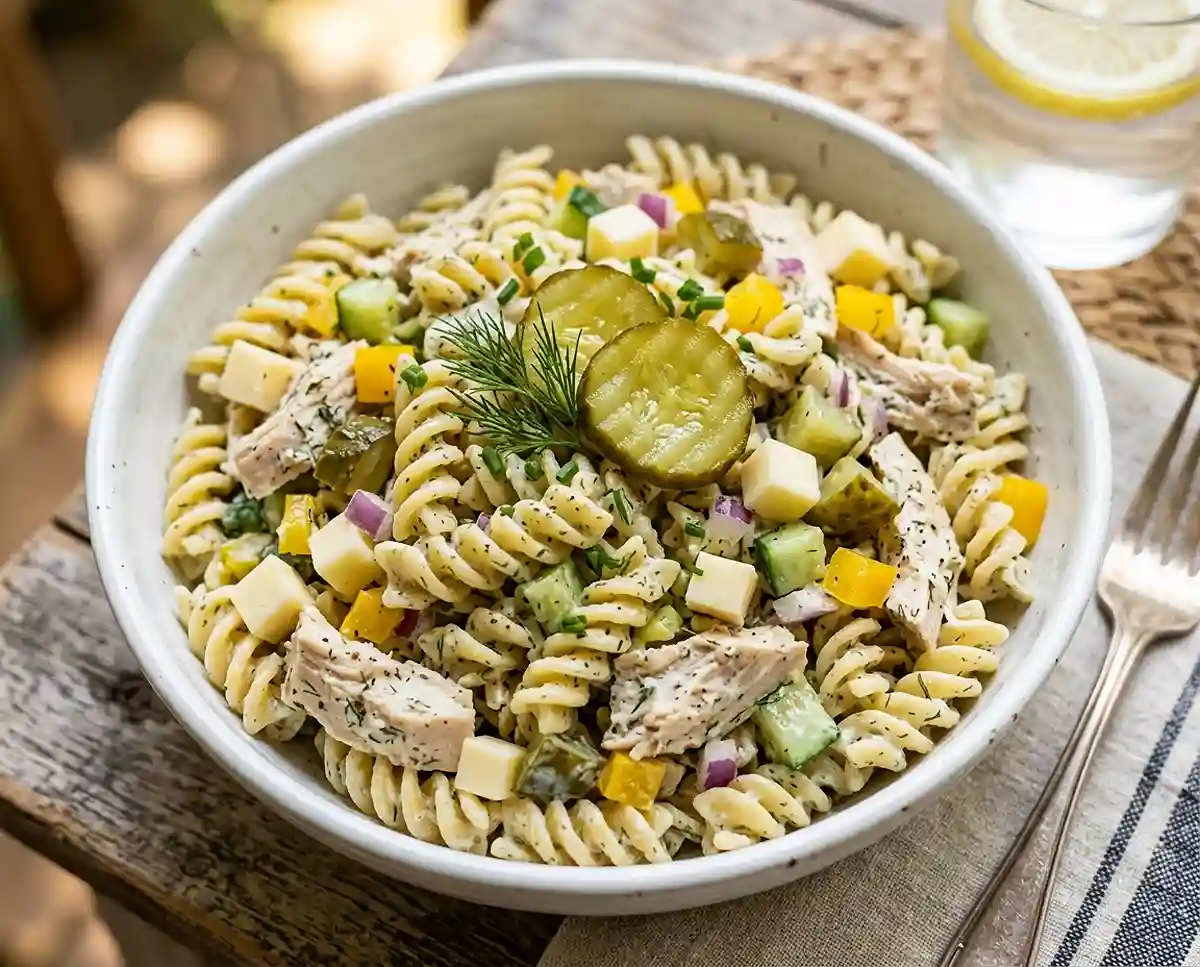
Gluten-Free Dill Pickle Chicken Pasta Salad
Make this gluten-free dill pickle chicken pasta salad with creamy dill dressing, crispy chicken, and fresh veggies. A tangy, protein-packed cold lunch ready to meal prep.
The first time I made a Gluten-Free Dill Pickle Chicken Pasta Salad, I was trying to use up a half-empty jar of pickles and a box of gluten-free pasta sitting in the pantry. I threw it together without much of a plan, and every person at the table asked for the recipe before they’d finished their bowl.
That was the moment I realized pickle-forward pasta salad hits a completely different note than the creamy, mayonnaise-heavy versions most people grew up with. The brine cuts through the richness, the fresh dill makes everything taste alive, and the crispy chicken adds the kind of protein that actually keeps you full until dinner.
Is there anything more satisfying than opening the fridge on a hot afternoon to find a cold, flavor-packed lunch already waiting for you? This is that lunch — and it takes about 20 minutes to put together.
Table of Contents
Why You’ll Love This Dill Pickle Chicken Pasta Salad
- Bold, tangy flavor in every bite — the dill pickle brine goes directly into the dressing, giving the whole salad a bright, vinegary punch that builds with every forkful.
- Genuinely meal-prep friendly — this salad holds up in the fridge for days and actually tastes better the next morning once the dressing has had time to settle into the pasta.
- High-protein and filling — pre-cooked chicken strips and white cheddar make this a complete summer cold lunch, not a side dish pretending to be a meal.
- Flexible for dietary needs — swap the pasta for a different gluten-free variety, use dairy-free cheese, or skip the chicken entirely and it still works beautifully.
The Secret to Perfect Gluten-Free Dill Pickle Chicken Pasta Salad
The dressing is built around pickle brine, and that detail matters more than it sounds. Brine contains salt, vinegar, and dill that have been concentrating in the jar for weeks — it’s essentially a pre-seasoned emulsifier that does more flavor work in one tablespoon than most dressings do in five ingredients.
Cooling the pasta completely before tossing is non-negotiable. Hot pasta absorbs dressing greedily and turns what should be a bright, coated salad into a clumpy, overdressed mass. Rinsing under cold water stops the cooking and removes excess starch that would make the pasta sticky and gummy.
According to the Beyond Celiac gluten-free pasta guide, pasta made from legume flours like those in higher-protein gluten-free varieties can become mushy when overcooked by even 60 seconds. Cooking to the lower end of the package window — then cooling immediately — protects the texture through refrigeration.
Adding only half the dressing when you first toss the salad is the move most recipes skip and shouldn’t. The pasta, cabbage, and cucumbers will continue absorbing liquid as the salad sits. Starting with half means you can dial in the final coat right before serving rather than landing with a dry bowl after an hour in the fridge.
Ingredients
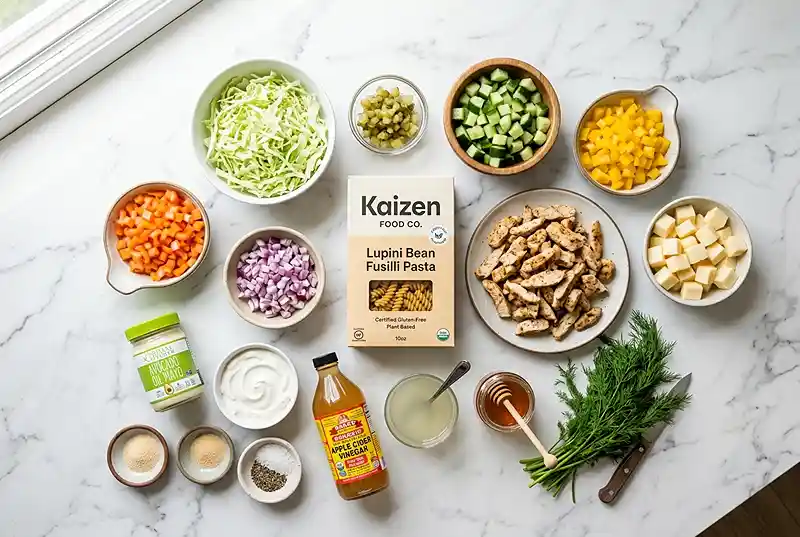
| Ingredient | Amount | Notes |
|---|---|---|
| For the Salad | ||
| Kaizen Fusilli pasta | 1 box (8 ounces) | High-protein, gluten-free; cook 4–5 minutes and cool completely |
| Green cabbage, finely shredded | 1 cup | Adds crunch without wilting quickly |
| Dill pickles, chopped | 3/4 cup | Dill variety only — bread-and-butter pickles will make the salad sweet |
| Persian cucumbers, diced | 2 cucumbers | Less watery than English cucumbers; no need to seed them |
| Yellow bell pepper, diced | 1 pepper | Adds color and mild sweetness to balance the brine |
| Red onion, finely diced | 1/2 red onion | Soak in cold water for 5 minutes to mellow the sharpness if preferred |
| Low-carb chicken strips, pre-cooked and chopped | 1/2 pound | See notes — rotisserie chicken or pan-seared tenders also work |
| White cheddar, cut into small cubes | 2 ounces | Small, uniform cubes distribute evenly; shredded cheddar gets lost in the dressing |
| Fresh dill, finely chopped | 1 large handful | Fresh only — dried dill is flat and bitter here |
| Crushed low-carb chips or crackers | Optional | Add right before serving for crunch; gets soggy if mixed in ahead |
| For the Creamy Dill Dressing | ||
| Avocado oil mayonnaise | 1/4 cup | Lighter than regular mayo with a cleaner flavor |
| Greek yogurt or plain yogurt | 1/4 cup | Adds creaminess and tang; verify gluten-free label |
| Apple cider vinegar | 1 tablespoon | Brightens the dressing and amplifies the pickle flavor |
| Dill pickle brine | 1–2 tablespoons | Start with 1 tbsp, taste, add more for stronger pickle flavor |
| Honey or liquid allulose | 1 tablespoon | Balances the vinegar; allulose keeps it lower carb |
| Onion powder | 1/2 teaspoon | |
| Garlic powder | 1/2 teaspoon | |
| Salt and black pepper | To taste | Taste after adding the brine — you may need very little extra salt |
Instructions
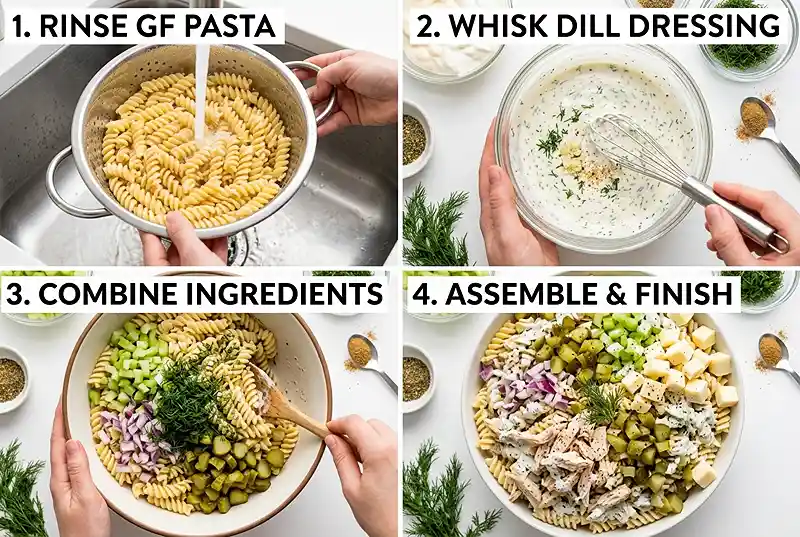
Step 1: Cook and cool the pasta. Bring a large pot of salted water to a boil. Add the Kaizen Fusilli and cook for 4–5 minutes — err toward the shorter end to avoid mushiness. Pour into a colander and run under cold tap water for 2 minutes until completely cool, then transfer to a bowl and refrigerate while you prep everything else.
Step 2: Make the dressing. In a small bowl, whisk together the avocado oil mayonnaise, Greek yogurt, apple cider vinegar, 1 tablespoon of dill pickle brine, honey or allulose, onion powder, and garlic powder. The dressing should be pale, creamy, and pourable — like a thick ranch. Taste and add salt, pepper, and more brine as needed. Set aside.
Step 3: Build the salad base. In a large salad bowl, toss together the dill pickles, diced cucumbers, yellow bell pepper, and red onion. These vegetables are sturdy enough to sit in the bowl while the pasta finishes chilling — they won’t wilt or release excess water in a few minutes.
Step 4: Combine and dress. Add the chilled pasta to the vegetable base and pour in half of the dressing. Toss gently until everything is evenly coated. Add the crispy chicken tender bites, white cheddar cubes, and fresh dill, then toss once more lightly to distribute without breaking up the chicken or cheese.
Step 5: Taste and finish. Taste the salad and add more dressing as needed — the right amount is when every piece glistens but no dressing pools at the bottom of the bowl. If serving immediately, top with crushed low-carb chips or crackers for crunch. If storing, keep the chips separate.
Pro Tip: If the salad seems dry after sitting in the fridge, stir in a splash of pickle brine rather than more dressing — it revives the flavor without adding heaviness.
Make It Your Own
Swap the Kaizen pasta for any certified gluten-free fusilli or rotini. Chickpea pasta, lentil pasta, or brown rice pasta all work, though cook times vary — always follow the package directions and cool immediately. Chickpea pasta holds up especially well to dressing and refrigeration without turning mushy, making it a strong choice for a chicken meal prep salad.
Replace the chicken with hard-boiled eggs or tuna for a different protein profile. Two hard-boiled eggs per serving adds richness and keeps everything vegetarian-friendly. Canned tuna in olive oil (drained) plays beautifully with the dill and pickle brine and turns this into a summer cold lunch that tastes like it came from a proper deli.
You know… the fresh dill in this recipe is one of those ingredients that seems optional until you try it both ways. Dried dill adds a muted, slightly dusty herbal note. Fresh dill tastes like the herb actually grew yesterday — bright, slightly grassy, and almost citrusy. It’s worth picking up a small bunch even if you only use half.
Make it dairy-free by using a plant-based cheddar and swapping the Greek yogurt for plain coconut yogurt in the dressing. Coconut yogurt adds a very mild sweetness that works well with the brine and apple cider vinegar. The texture of the dressing stays creamy and pourable — you won’t notice it’s dairy-free unless you’re looking for it.
Common Problems and Solutions
Problem: The pasta salad turned dry after a night in the fridge. Gluten-free pasta absorbs more liquid than wheat pasta as it sits, especially varieties made from legume flours. Solution: always hold back half the dressing and add it fresh before serving. A splash of pickle brine stirred through the next day revives the salad faster than adding more mayo-based dressing.
Problem: The pasta is gummy or clumped together. This happens when the pasta isn’t rinsed after cooking or when it’s dressed while still warm. Solution: run the cooked pasta under cold water for a full 2 minutes, then refrigerate before adding any dressing. Cold pasta holds its structure and stays separate once dressed.
Man, oh man… if your dressing tastes flat despite adding brine, the fix is almost always a pinch more salt and another half teaspoon of apple cider vinegar. Pickle brine alone can’t do all the seasoning work — the mayo and yogurt base mutes its intensity, so the vinegar and salt have to compensate. Taste the dressing before it goes on the salad, not after.
Problem: The vegetables released water and made the salad soggy. Persian cucumbers are less watery than standard varieties, but if you’re using English cucumbers, scoop out the seeds before dicing. Red onion and bell pepper don’t need treatment. If the salad has been sitting for more than a day, drain any pooled liquid from the bottom of the bowl before adding fresh dressing.
Storage and Meal Prep
| Method | Duration | Notes |
|---|---|---|
| Counter | Not recommended | Contains mayo, yogurt, and chicken — keep refrigerated |
| Fridge | 3–4 days | Store dressing separately if prepping ahead; add chips fresh daily |
| Freezer | Not recommended | Pasta texture and dressing emulsion break down after thawing |
For meal prep, cook the pasta and prep the vegetables on Sunday, then store them separately from the dressing. Combine individual portions each morning so the pasta doesn’t absorb all the dressing by day three. This approach keeps the pickle pasta salad lunch tasting fresh rather than soggy all week.
If you have leftover undressed salad base — pasta and vegetables with no dressing — it keeps for up to four days easily. Dress only what you plan to eat within the next day to get the best texture from the pasta and the crunch from the cabbage.
Your Questions Answered
Is dill pickle pasta salad gluten-free?
It depends on the pasta used — traditional pasta contains wheat and is not gluten-free. This recipe uses certified gluten-free fusilli. All other ingredients, including pickles, condiments, and yogurt, should also be label-checked for hidden gluten sources like malt vinegar or modified starch.
What pickles are celiac safe?
Most plain dill pickles are naturally gluten-free, but the safest choice is a brand with a certified gluten-free label. Avoid pickles made with malt vinegar, which contains gluten. Check that the brine specifies distilled white vinegar or apple cider vinegar in the ingredient list.
Can I make this salad ahead for a party?
Yes — prep the pasta, vegetables, chicken, and dressing up to 24 hours ahead and store them separately. Toss everything together one to two hours before serving and keep chilled. Add fresh dill and any crunchy toppings at the last moment for the best texture.
How do I keep the pasta from getting mushy?
Cook it on the shorter end of the package time, rinse immediately under cold water, and refrigerate before dressing. Gluten-free pasta made from legume flours continues softening after draining, so stopping the cooking process quickly is critical. Never dress warm pasta.
What’s the best way to add more pickle flavor without making the salad too salty?
Add extra pickle brine to the dressing rather than more chopped pickles. Start with 1 tablespoon, taste, and increase to 2 tablespoons for a stronger punch. Reduce any added salt separately since brine is already well-seasoned.
Serving Suggestions
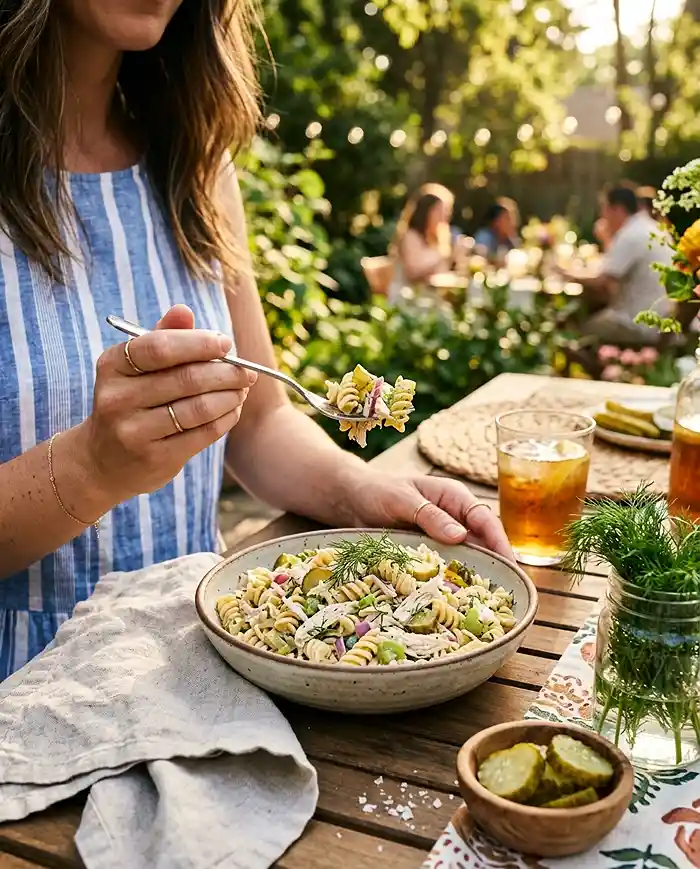
This salad is built for warm-weather eating — it’s the kind of thing you’d bring to a Memorial Day cookout in a big bowl and come home with an empty container. Serve it straight from the fridge alongside grilled proteins or let it stand on its own as a high-protein cold lunch that needs nothing else on the plate.
If you’re building out a full cold lunch rotation for the week, pair this with these roasted veggie hummus lunch boxes for a plant-forward contrast, or add the gluten-free shrimp taco slaw bowls to the weekly lineup for a completely different flavor profile.
For something equally protein-forward and fresh, these cilantro lime shrimp quinoa bowls make an excellent companion recipe that covers your bases from Monday through Friday without repeating flavors.
Give this pickle pasta salad a try and let me know what you thought in the comments — especially if you swapped the chicken or tried it with a different gluten-free pasta. And if it earned a spot in your regular lunch rotation, saving it to Pinterest takes two seconds and helps other people find it too.
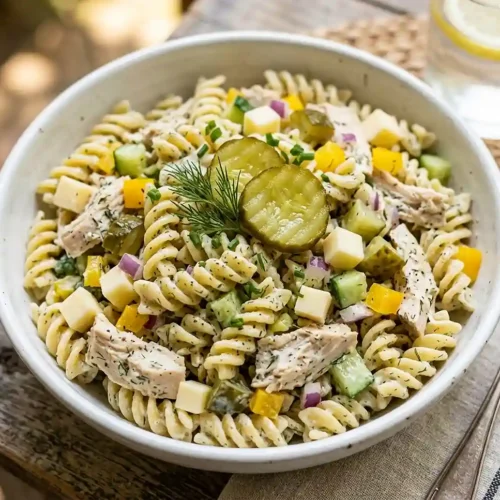
Gluten-Free Dill Pickle Chicken Pasta Salad
Equipment
- Large pot
- Colander
- Large salad bowl
- Small bowl
- Whisk
Ingredients
For the Salad
- 8 oz Kaizen Fusilli pasta 1 box; certified gluten-free; cook 4–5 minutes and cool completely before using
- 1 cup Green cabbage, finely shredded Adds crunch without wilting quickly
- ¾ cup Dill pickles, chopped Dill variety only — bread-and-butter pickles will make the salad sweet
- 2 Persian cucumbers, diced Less watery than English cucumbers; no need to seed
- 1 Yellow bell pepper, diced Adds color and mild sweetness to balance the brine
- ½ Red onion, finely diced Soak in cold water for 5 minutes to mellow sharpness if preferred
- ½ lb Low-carb chicken strips, pre-cooked and chopped into bite-sized pieces See notes — rotisserie chicken or pan-seared tenders also work
- 2 oz White cheddar, cut into small cubes Small uniform cubes distribute more evenly than shredded
- 1 large handful Fresh dill, finely chopped Fresh only — dried dill is flat and bitter here
- Crushed low-carb chips or crackers Optional; add right before serving — gets soggy if mixed in ahead
For the Creamy Dill Dressing
- ¼ cup Avocado oil mayonnaise Lighter than regular mayo with a cleaner flavor
- ¼ cup Greek yogurt or plain yogurt Adds creaminess and tang; verify gluten-free label
- 1 tbsp Apple cider vinegar Brightens the dressing and amplifies pickle flavor
- 1-2 tbsp Dill pickle brine Start with 1 tbsp, taste, add more for stronger pickle flavor
- 1 tbsp Honey or liquid allulose Balances the vinegar; allulose keeps it lower carb
- ½ tsp Onion powder
- ½ tsp Garlic powder
- Salt and black pepper To taste; taste after adding brine — you may need very little extra salt
Instructions
- Bring a large pot of salted water to a boil. Add the Kaizen Fusilli and cook for 4–5 minutes, erring toward the shorter end. Pour into a colander and run under cold tap water for 2 minutes until completely cool. Transfer to a bowl and refrigerate while you prep the remaining ingredients.
- In a small bowl, whisk together the avocado oil mayonnaise, Greek yogurt, apple cider vinegar, 1 tablespoon of dill pickle brine, honey or allulose, onion powder, and garlic powder until smooth and creamy. Taste and add salt, pepper, and more brine as needed. Set aside.
- In a large salad bowl, toss together the dill pickles, diced cucumbers, yellow bell pepper, and red onion.
- Add the chilled pasta to the vegetable base and pour in half of the dressing. Toss gently until evenly coated. Add the crispy chicken tender bites, white cheddar cubes, and fresh dill, then toss once more lightly to distribute without breaking up the chicken or cheese.
- Taste the salad and add more dressing as needed — every piece should glisten but no dressing should pool at the bottom. If serving immediately, top with crushed low-carb chips or crackers. If storing, keep the chips separate and add fresh at serving time.