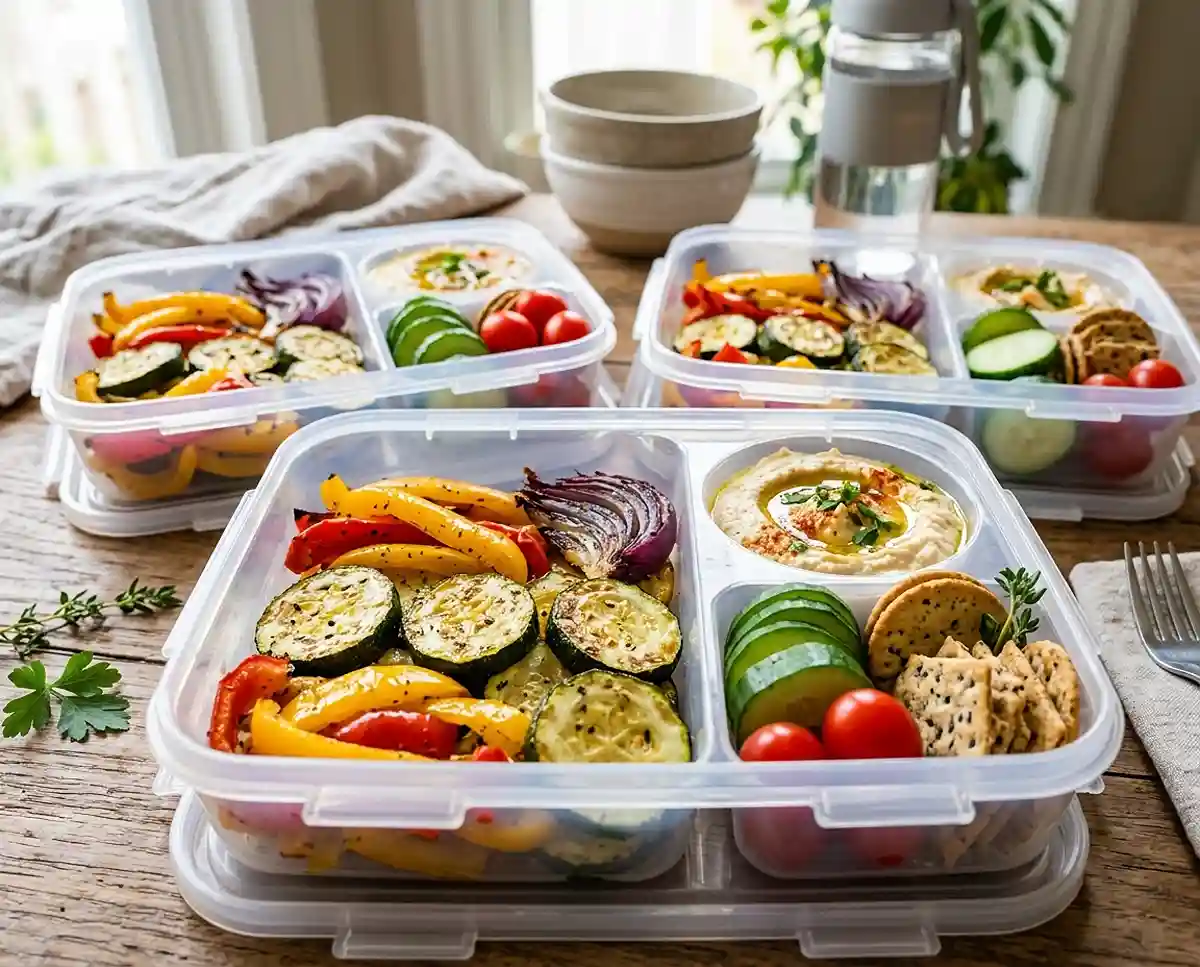
Roasted Veggie Hummus Lunch Boxes
Learn how to make gluten-free Roasted Veggie Hummus Lunch Boxes with simple ingredients, step-by-step instructions, and smart meal prep tips for the week ahead.
The first time I packed a GF roasted veggie hummus lunch box for my daughter, I honestly wasn’t sure she’d eat it. She was eight, freshly diagnosed with celiac, and suspicious of anything that didn’t look like her old favorites.
She cleaned the whole container and asked if I could make it again tomorrow. That was the moment I knew this recipe was a keeper. It’s now a regular in our rotation — especially during busy school weeks when I need something fast and reliable.
What makes these gluten-free roasted veggie hummus lunch boxes so worth making? They come together with almost no fuss, travel beautifully, and feel genuinely satisfying — not like sad diet food. Have you ever wondered why some meal-prep lunches hit differently than others? The secret is the roasting.
Table of Contents
Why You’ll Love This Roasted Veggie Hummus Lunch Box
- Tender, caramelized vegetables — roasting at 425°F draws out natural sweetness and adds a lightly charred depth that raw veggies just can’t match.
- Genuinely beginner-friendly — if you can chop a vegetable and turn on an oven, you can make this. No special equipment, no tricky techniques.
- Naturally dairy-free and gluten-free — just double-check your hummus and crackers labels, and this recipe is safe for multiple dietary needs at once.
- Perfect for Sunday meal prep — roast one big batch, assemble four boxes, and lunches are covered for most of the workweek.
The Secret to Perfect GF Roasted Veggie Hummus Lunch Boxes
- High heat is non-negotiable. Roasting at 425°F (220°C) triggers the Maillard reaction — that beautiful browning process that builds flavor. Lower temps just steam the vegetables and leave them limp.
- Don’t crowd the pan. Overcrowded vegetables trap steam and turn soggy instead of caramelized. Spread them in a single layer with room to breathe.
- Cool completely before packing. This is critical. Warm vegetables release steam inside a sealed container, which softens your crackers and makes everything wet. Full cooling keeps each component at its best texture.
- Certified gluten-free hummus matters. According to trusted celiac research at Beyond Celiac, cross-contamination in dips and spreads is a real risk. Always read the label before buying.
Ingredients
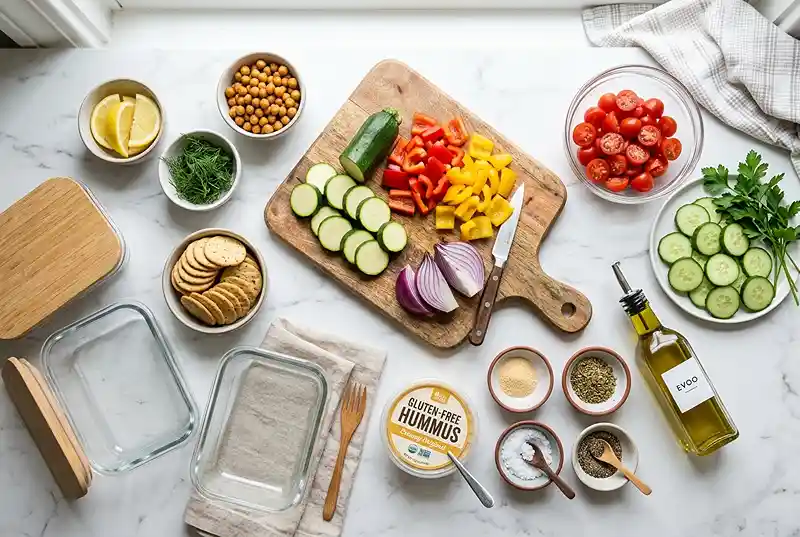
Roasted Vegetables
| Ingredient | Amount | Notes |
|---|---|---|
| Zucchini, sliced | 2 | Medium size, even slices for uniform roasting |
| Red bell pepper, chopped | 1 | Roughly 1-inch pieces |
| Yellow bell pepper, chopped | 1 | Adds color contrast and mild sweetness |
| Red onion, cut into wedges | 1 | Wedges hold together better than diced |
| Olive oil | 1 tbsp | Toss well to coat every piece |
| Garlic powder | 1 tsp | Adds depth without burning like fresh garlic |
| Dried oregano | ½ tsp | Mediterranean flavor that pairs beautifully with hummus |
| Salt | ½ tsp | |
| Black pepper | ¼ tsp |
Lunch Box Assembly
| Ingredient | Amount | Notes |
|---|---|---|
| Hummus (gluten-free) | 1 cup | ¼ cup per box — verify certified GF on label |
| Cucumber slices | 1 cup | No cooking needed — add fresh at assembly |
| Cherry tomatoes | 1 cup | Leave whole for better texture and less moisture |
| Gluten-free crackers | 8 | Pack separately if possible to keep crisp |
Instructions
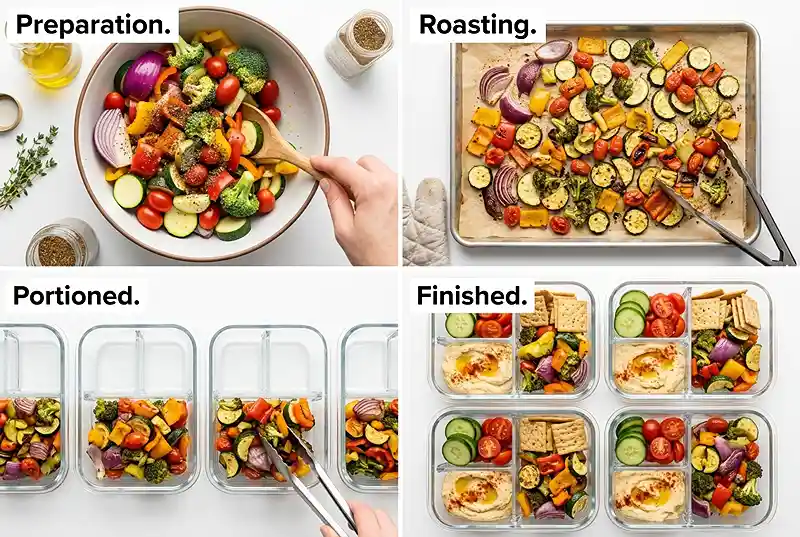
- Preheat the oven to 425°F (220°C). While the oven heats up, prep your vegetables so everything is ready to go on the pan at once.
- Season the vegetables. Toss the zucchini, bell peppers, and red onion with olive oil, garlic powder, oregano, salt, and pepper. Make sure every piece gets coated — this is what builds flavor.
- Roast until tender and lightly browned. Spread the seasoned vegetables on a baking sheet in a single layer. Roast for 20–25 minutes, until the edges are golden and the zucchini is fork-tender. You’ll notice a nutty, savory aroma filling the kitchen — that’s the caramelization you’re after.
- Cool completely. This step is non-negotiable. Let the roasted vegetables cool on the pan for at least 20–30 minutes before packing. Warm vegetables will steam and soften everything in the container.
- Divide the vegetables among 4 lunch containers. Aim for equal portions across all four boxes so each lunch is balanced.
- Add ¼ cup hummus to each container. Use a small compartment or a separate cup if your container has dividers — this keeps the hummus from making the crackers soggy.
- Divide the fresh components. Distribute the cucumber slices, cherry tomatoes, and gluten-free crackers evenly among the four boxes. If your containers don’t have dividers, pack the crackers in a small zip bag inside the box.
- Seal and refrigerate. Store until ready to eat. These boxes keep well for up to 4 days when sealed properly.
Make It Your Own
Well… this is where the recipe really opens up. The basic framework — roasted vegetables, hummus, fresh crunch — works with so many different combinations.
Swap the vegetables: Broccoli florets, cherry tomatoes (roasted instead of fresh), asparagus tips, or baby portobello mushrooms all roast beautifully at this temperature. The key is cutting everything to a similar size so it cooks evenly.
Try a flavored hummus: Roasted red pepper hummus, lemon tahini, or beet hummus all work well here. Just confirm the label reads certified gluten-free — flavored varieties sometimes contain thickeners or additives with hidden gluten. For more ideas on how to build a satisfying no-cook lunch, take a look at this gluten-free caprese chicken rice salad for inspiration.
Add a protein: Hard-boiled eggs, cubed grilled chicken, or a handful of chickpeas tucked alongside the vegetables turns this into a heartier meal. This is especially useful if you’re packing these as no-cook lunch ideas for longer workdays.
Go Mediterranean: Add a few olives, some crumbled dairy-free feta, and a squeeze of lemon to transform the whole flavor profile. It’s a small change that makes the box feel totally different by day three.
You know, the most satisfying part of a recipe like this is how it adapts. One base, endless variations — which means you’re less likely to get bored mid-week. For another easy protein-packed lunch option, check out this recipe for gluten-free tofu peanut noodle bowls that’s just as meal-prep friendly.
Common Problems & Solutions
Problem: Vegetables are soggy, not caramelized.
Solution: The pan was overcrowded. Use two baking sheets and spread vegetables in a single layer with space between pieces. Steam is the enemy of browning — the vegetables need direct hot air contact to develop color and texture.
Problem: Crackers went soft by lunchtime.
Solution: Pack the crackers in a separate small zip bag or compartment away from the hummus and fresh vegetables. Even a small amount of moisture transfer over several hours will soften them significantly.
Problem: Hummus seems watery after a few days.
Solution: This is normal — some hummus separates as it sits. Give it a quick stir before eating. If it’s very watery, your brand may have a high water content. Try a thicker hummus or strain it slightly through a fine mesh before portioning.
Man, oh man — I learned the hard way that not all certified gluten-free crackers stay crispy the same way. Thicker, denser crackers (like seed-based or rice-based varieties) hold up much better than thin, airy ones when packed near humid ingredients. The authoritative gluten-free ingredient guidance at the Celiac Disease Foundation is a great resource for checking ingredients you’re unsure about.
Problem: Red onion tastes too sharp even after roasting.
Solution: Cut the wedges thinner, about ½ inch, so they soften more completely in the oven. You can also soak the cut onion in cold water for 10 minutes before tossing with oil — this mellows the sharpness without affecting how it roasts.
Storage & Meal Prep
| Method | Duration | Notes |
|---|---|---|
| Counter | Not recommended | Hummus and cut vegetables require refrigeration |
| Fridge | 4 days | Keep sealed; bring to room temp 10 minutes before eating |
| Freezer | Not recommended | Cucumber and tomatoes lose texture; hummus separates |
These boxes are at their absolute best on days 1 and 2, when the roasted vegetables still have a slight chew and the fresh components are crisp. By day 3 and 4, the vegetables soften a little more but still taste great.
For no-waste meal prep, use any leftover roasted vegetables as a warm topping for rice or quinoa bowls the next day — they reheat beautifully in a skillet over medium heat for 3–4 minutes. The cilantro lime shrimp quinoa bowls on this site are another great weekday option if you want to mix up your meal-prep rotation: try these cilantro lime shrimp quinoa bowls for a protein-forward alternative.
Your Questions Answered
Can I make these gluten-free lunch boxes ahead for the whole week?
Yes, but 4 days is the sweet spot. The roasted vegetables hold up well through day 4 when stored in a sealed container in the fridge. Beyond that, the texture starts to decline noticeably. Roast the vegetables on Sunday and assemble all four boxes the same night.
How do I keep the crackers from getting soggy in the lunch box?
Pack crackers separately in a small zip bag inside the lunch box. Even a divided container isn’t always enough if the hummus is nearby. This keeps them crisp through lunchtime, especially if you’re not eating until several hours after packing.
What’s the best gluten-free hummus to use for meal prep?
Look for a certified gluten-free label rather than just a gluten-free claim. Certification means the product has been tested and verified. Brands with a thicker, denser consistency also hold up better in a divided container over several days.
Why did my roasted vegetables shrink so much in the oven?
That’s completely normal. Vegetables release a lot of water as they roast, which concentrates their flavor. Zucchini especially loses significant volume. Start with the full ingredient amounts listed and you’ll have plenty for all four boxes.
Can I add protein to make these hummus lunch boxes more filling?
Absolutely. Canned chickpeas, pre-cooked grilled chicken strips, hard-boiled eggs, or edamame all tuck into the box without any extra cooking. Aim for 3 to 4 ounces of protein per box to make it a genuinely satisfying meal.
Serving Suggestions
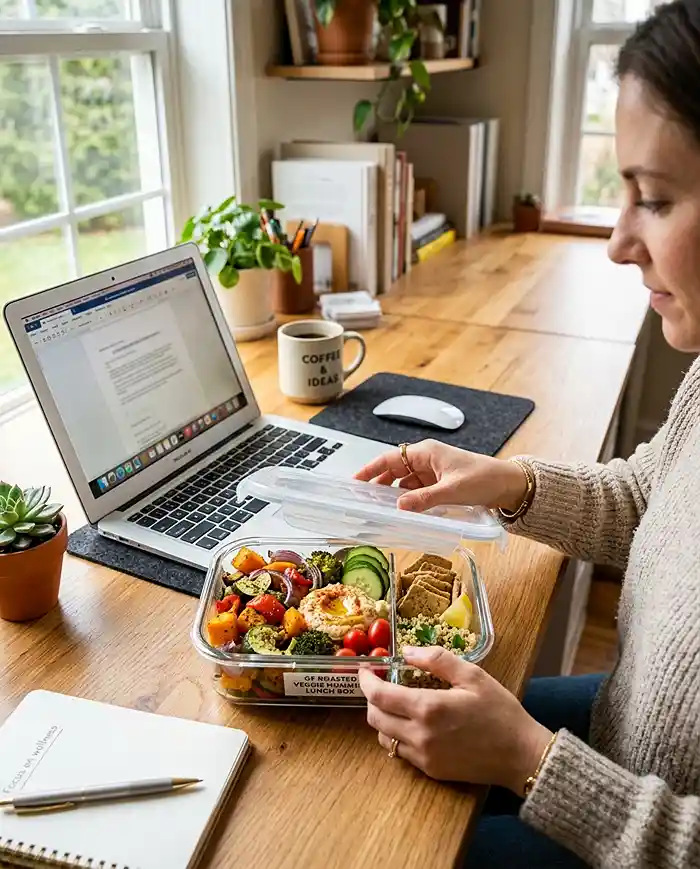
These boxes are honestly perfect as-is for a work or school lunch, but they also shine as a light dinner on warm evenings when you don’t want to turn on the stove again. Pair them with a simple lemon herb olive oil drizzle and a cold sparkling water and it feels like a proper meal.
For Thanksgiving week or back-to-school season, I always double the batch — the roasted vegetables come together so quickly that making eight boxes takes barely more time than four. It’s one of those recipes that rewards you for prepping in bulk.
If you’re building out a full week of gluten-free lunches, these boxes pair well with a rotation of the gluten-free caprese chicken rice salad and the cilantro lime shrimp quinoa bowls — different textures and flavors every day without spending extra time in the kitchen.
These roasted veggie boxes are as satisfying as a restaurant mezze plate — that same combination of warm, savory bites alongside cool, crisp fresh components. It’s a genuinely enjoyable lunch, not just a functional one.
If you try this recipe, I’d love to hear how it went. Did you swap any vegetables? Add a protein? Leave a comment below and let me know what worked for your family. And if you found this helpful, sharing it to Pinterest makes it so much easier for other gluten-free meal preppers to find it.
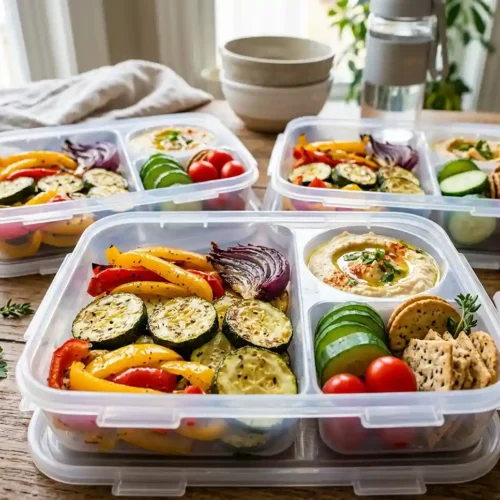
Roasted Veggie Hummus Lunch Boxes
Equipment
- Baking sheet
- Mixing bowl
- 4 Lunch Containers
Ingredients
Roasted Vegetables
- 2 zucchini, sliced medium size, even slices for uniform roasting
- 1 red bell pepper, chopped roughly 1-inch pieces
- 1 yellow bell pepper, chopped roughly 1-inch pieces
- 1 red onion, cut into wedges wedges hold together better than diced
- 1 tbsp olive oil
- 1 tsp garlic powder
- 0.5 tsp dried oregano
- 0.5 tsp salt
- 0.25 tsp black pepper
Lunch Box Assembly
- 1 cup hummus certified gluten-free — verify label before buying
- 1 cup cucumber slices added fresh at assembly
- 1 cup cherry tomatoes leave whole for better texture
- 8 gluten-free crackers pack separately to keep crisp
Instructions
- Preheat the oven to 425°F (220°C). While the oven heats up, prep your vegetables so everything is ready to go on the pan at once.
- Toss the zucchini, bell peppers, and red onion with olive oil, garlic powder, oregano, salt, and pepper. Make sure every piece gets coated — this is what builds flavor.
- Spread the seasoned vegetables on a baking sheet in a single layer. Roast for 20–25 minutes, until the edges are golden and the zucchini is fork-tender.
- Let the vegetables cool completely on the pan for at least 20–30 minutes before packing. Warm vegetables will steam and soften everything in the container.
- Divide the roasted vegetables evenly among 4 lunch containers.
- Add ¼ cup hummus to each container. Use a small compartment or separate cup if your container has dividers to keep the hummus away from the crackers.
- Divide the cucumber slices, cherry tomatoes, and gluten-free crackers evenly among the four boxes. If your containers don’t have dividers, pack the crackers in a small zip bag inside the box.
- Seal and refrigerate until ready to eat. These boxes keep well for up to 4 days when sealed properly.