Gluten-Free Earl Grey Syrup Recipe
Make this gluten-free earl grey syrup with just sugar, water, and tea bags. A silky, bergamot-kissed syrup ready in 20 minutes — perfect for drinks, pancakes, and more.
The first time I steeped Earl Grey into a simple syrup, I left the tea bags in way too long — and ended up with something so bitter it could make your eyes water.
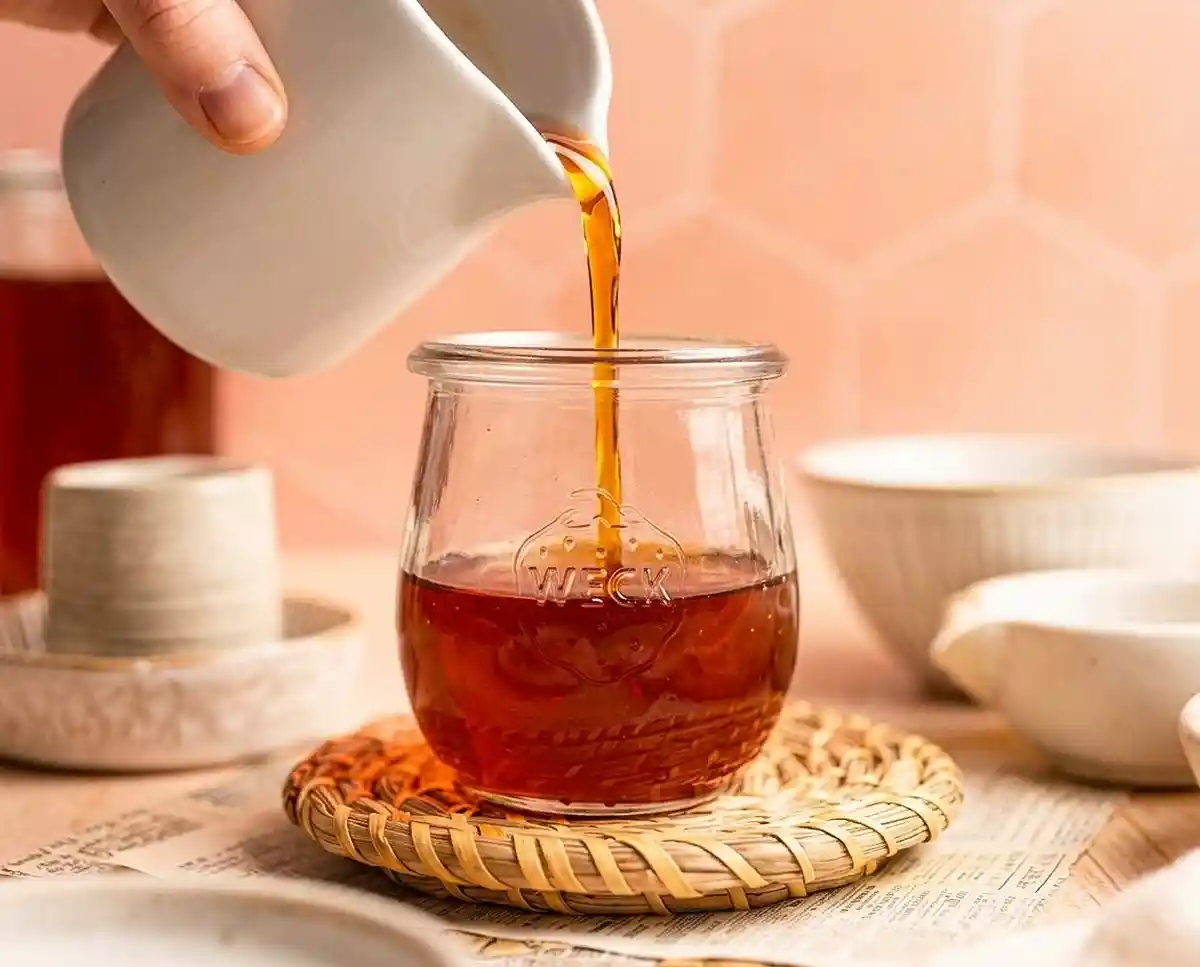
That one mistake taught me everything I needed to know about timing. Pull those bags at exactly 5 minutes, and you get a gluten-free earl grey syrup that’s floral, lightly citrusy, and impossibly smooth.
What could you do with a syrup like this sitting in your fridge? Drizzle it over weekend waffles, swirl it into a latte, or layer it into a Thanksgiving dessert that’ll have guests asking for the recipe.
Table of Contents
Why You’ll Love This Earl Grey Simple Syrup
- Silky-smooth texture — cooked low and slow until it thickens like warm honey
- Beginner-friendly — just one saucepan, a handful of ingredients, and 20 minutes
- Naturally gluten-free — no flour, no thickeners, no hidden grain-based additives
- Endlessly versatile — works in drinks, on breakfast foods, or drizzled over cakes
The Secret to Perfect Gluten-Free Earl Grey Syrup
- 5-minute steep, no more — over-steeping releases harsh tannins that turn the syrup bitter and flat. Set a timer.
- Low and slow simmer — high heat scorches the sugar and kills the bergamot aroma. Keep the flame gentle.
- Equal-parts ratio — a 1:1 sugar-to-water ratio builds the silky body this syrup is known for.
- Vanilla paste as a bridge — it rounds out the bergamot’s citrus edge without competing with it.
Ingredients
| Ingredient | Amount | Notes |
|---|---|---|
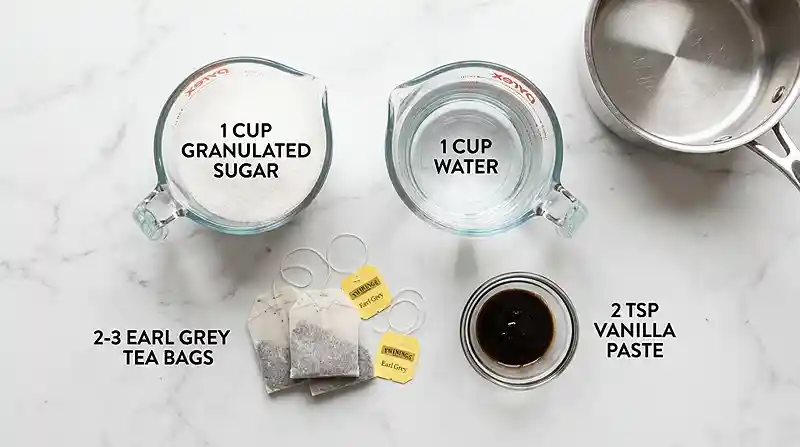
| White sugar | 1 cup (200 g) | Standard granulated white sugar dissolves cleanest |
| Water | 1 cup (235 ml) | Filtered water gives the purest flavor |
| Earl Grey tea bags | 2 or 3 | Or 2 tablespoons loose-leaf; more bags = stronger bergamot |
| Vanilla paste | 2 teaspoons | Optional — adds warmth and depth |
Instructions
-
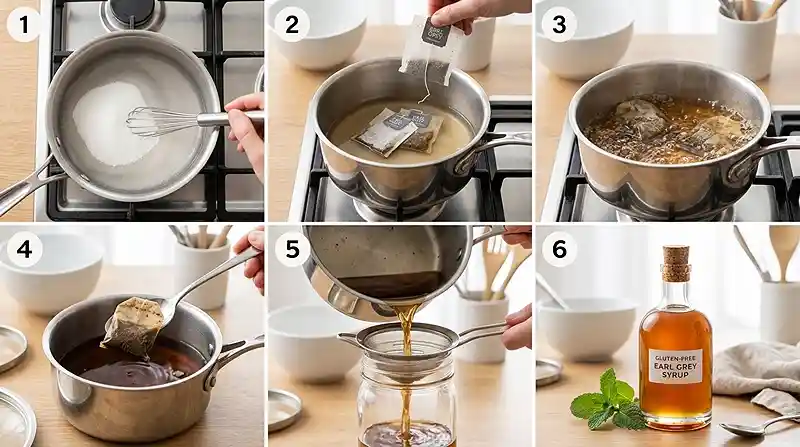
Dissolve the sugar. Combine 1 cup water and 1 cup white sugar in a small saucepan. Stir and heat over medium heat until the sugar dissolves completely. The liquid will go from cloudy to clear — that’s your signal.
-
Steep the tea. Add 2 or 3 Earl Grey tea bags (or 2 tablespoons loose-leaf tea) to the sugar mixture. Add 2 tsp vanilla paste if using. Let the tea steep for exactly 5 minutes, then remove the bags or leaves. Do not squeeze the bags — that releases bitterness.
-
Simmer until silky. Stir gently and let the mixture simmer on low heat for 10 to 15 minutes. You’re looking for the syrup to thicken slightly and coat the back of a spoon like satin ribbon. For a thicker syrup, extend the simmer by 5-minute increments.
-
Cool and strain. Remove the pan from heat and let it cool to room temperature. If you used loose-leaf tea, strain through a fine-mesh sieve to catch any remaining leaves. Pour into a clean glass jar.
- Serve and store. Drizzle over pancakes, waffles, crepes, cake, or stir into drinks. Store in an airtight container for up to one month.
Make It Your Own
Want a deeper, more complex flavor? Use 3 tea bags instead of 2. The extra bag intensifies the bergamot without making the syrup bitter, as long as you still pull them at the 5-minute mark.
If you’d like a sugar-free version, swap the white sugar for a 1:1 granulated erythritol or monk fruit blend. The syrup will be slightly thinner since these sweeteners don’t reduce the same way sugar does — simmer a few extra minutes to compensate.
Well… you can also try this with a flavored Earl Grey like lavender or rose. Those variations add a whole new layer of floral complexity that works beautifully drizzled over vanilla ice cream or stirred into sparkling water.
No vanilla paste on hand? Swap in half a teaspoon of pure vanilla extract added after the syrup comes off the heat. Avoid adding it during simmering — the alcohol cooks off and takes some of the flavor with it.
For a honey-forward version, replace half the white sugar with raw honey. Add the honey off the heat after straining, stirring until it melts in. This keeps its natural enzymes intact and adds a gentle floral sweetness that pairs gorgeously with the bergamot.
Common Problems & Solutions
Problem: My syrup turned bitter. The tea steeped too long. Next time, set a 5-minute timer the moment the bags hit the pan. Bergamot oil is delicate — it gives up its best flavor quickly, then turns sharp.
Problem: The syrup is too thin. It needed more time on low heat. Return it to the stove and simmer gently in 5-minute increments, stirring occasionally, until it coats a spoon. Avoid high heat — it can crystallize the sugar.
Problem: The syrup crystallized after cooling. This usually happens when the heat was too high or the sugar wasn’t fully dissolved before the tea was added. Warm the jar gently in a bowl of hot water and stir — it should smooth right out.
Man, oh man… Problem: The syrup smells flat or has no bergamot aroma. This often means the tea bags were old or low-quality. Earl Grey’s signature scent comes from bergamot oil, which fades with age. Use fresh, quality bags — brands like Harney & Sons or Twinings tend to be consistently aromatic. According to research on bergamot and its flavor compounds in food science, the volatile oils that give Earl Grey its character are especially sensitive to heat and air exposure.
Problem: My syrup has tea residue at the bottom. If you used loose-leaf tea, a fine-mesh sieve alone may not catch everything. Line the sieve with a piece of cheesecloth for a perfectly clear syrup.
Storage & Meal Prep
| Method | Duration | Notes |
|---|---|---|
| Counter | 2–3 days | Airtight container, away from direct light |
| Fridge | Up to 1 month | Glass jar with tight lid; bring to room temp before using |
| Freezer | 2–3 months | Freeze in ice cube trays, then transfer to a bag |
To reheat refrigerated syrup, set the jar in a bowl of hot water for a couple of minutes — it loosens right up without needing the stove.
Freezing in ice cube portions is a smart no-waste move. Drop one cube directly into a hot drink and let it melt in, or thaw overnight in the fridge when you need a full batch.
This syrup also makes a thoughtful homemade gift. Pour it into a small glass jar, tie a ribbon around the lid, and pair it with a bag of quality Earl Grey for a tea lover in your life.
Your Questions Answered
Is Earl Grey tea naturally gluten-free?
Yes. Pure Earl Grey tea contains black tea leaves and bergamot oil — no grains or gluten-containing ingredients. If you have celiac disease, check for any cross-contamination warnings on the packaging, as some teas are processed on shared equipment.
How long does homemade Earl Grey syrup last?
Stored in an airtight glass jar in the refrigerator, this syrup keeps well for up to one month. At room temperature it’s fine for 2 to 3 days. You can also freeze it in ice cube trays for up to 3 months.
Can I use loose-leaf Earl Grey instead of tea bags?
Absolutely. Use 2 tablespoons of loose-leaf Earl Grey in place of 2 to 3 tea bags. After steeping for 5 minutes, strain the syrup through a fine-mesh sieve lined with cheesecloth to remove all the leaves.
What can I use Earl Grey syrup for?
This syrup works beautifully in lattes, iced teas, and cocktails. You can also drizzle it over pancakes, waffles, crepes, or use it as a cake soak. It adds a floral, citrusy note to almost any sweet application.
Can I make this syrup without sugar?
Yes. Substitute the white sugar with a 1:1 granulated erythritol or monk fruit sweetener blend. The syrup will be slightly thinner than the sugar version, so simmer it a few extra minutes to reach your preferred consistency.
Serving Suggestions
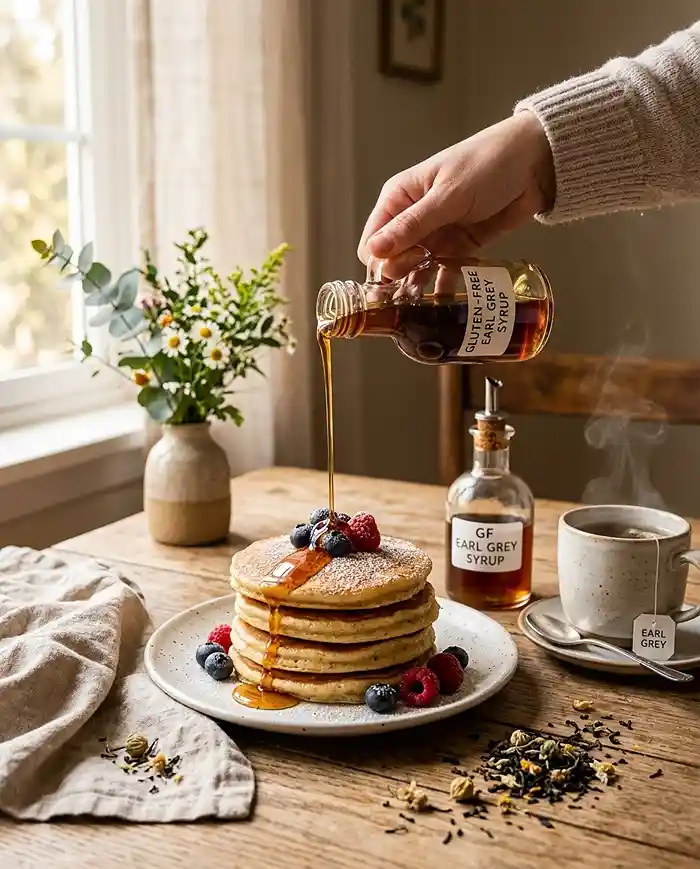
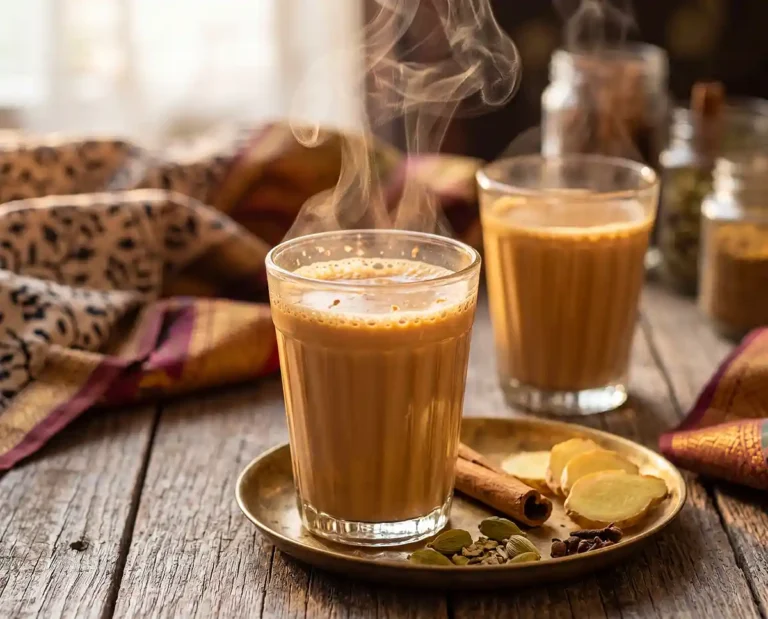
This syrup shines stirred into a London Fog latte — just brew strong Earl Grey, froth some oat milk, and swirl in a tablespoon of syrup. You know… it’s the kind of drink that makes a slow Sunday morning feel like a genuine occasion.
Drizzle it over a stack of fluffy pancakes at your next holiday brunch, or use it as a soak for a simple vanilla cake at your family’s Easter gathering — it adds a sophisticated floral note that feels anything but ordinary.
For more sauces and drizzles that work beautifully alongside this syrup, browse this gluten-free crack sauce recipe for a savory contrast, or check out these gluten-free Fruity Pebbles cookies for a fun treat to serve alongside your Earl Grey drinks.
If you’re putting together a full spread, these gluten-free enoki beef rolls make a savory counterpart that balances the sweet floral notes of this syrup beautifully.
Made this recipe? Drop a star rating and tell me how you used it in the comments below — I genuinely love hearing your creative twists.
If you’re saving this for later, pin it to your drinks or breakfast board on Pinterest so it’s easy to find when you need it.
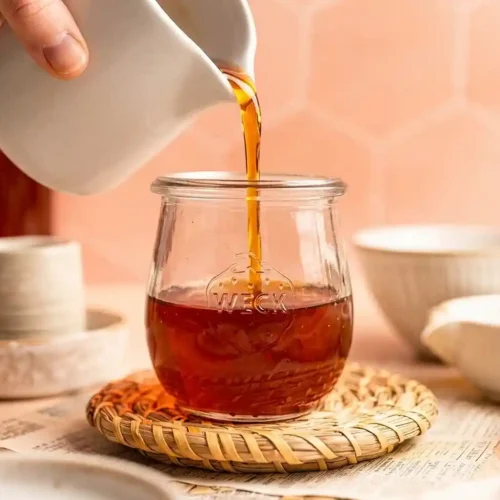
Easy Gluten-Free Earl Grey Syrup Recipe (Ready in 20 Minutes)
Equipment
- Small saucepan
- Measuring cups and spoons
- Spoon
- Fine-mesh sieve
- Glass jar
Ingredients
Earl Grey Syrup
- 1 cup White sugar 200 g; standard granulated white sugar dissolves cleanest
- 1 cup Water 235 ml; filtered water gives the purest flavor
- 2 or 3 tea bags Earl Grey tea Or 2 tablespoons loose-leaf; more bags create stronger bergamot flavor
- 2 teaspoons Vanilla paste Optional; adds warmth and depth
Instructions
- Combine 1 cup water and 1 cup white sugar in a small saucepan. Stir and heat over medium heat until the sugar dissolves completely and the liquid becomes clear.
- Add 2 or 3 Earl Grey tea bags, or 2 tablespoons loose-leaf tea, to the sugar mixture. Add the vanilla paste if using. Steep for exactly 5 minutes, then remove the tea bags or leaves without squeezing them.
- Reduce the heat to low and simmer gently for 10 to 15 minutes, stirring occasionally, until the syrup thickens slightly and coats the back of a spoon. For a thicker syrup, continue simmering in 5-minute increments.
- Remove the saucepan from the heat and cool the syrup to room temperature. If using loose-leaf tea, strain through a fine-mesh sieve, then pour the syrup into a clean glass jar.
- Drizzle over pancakes, waffles, crepes, or cake, or stir into drinks. Store in an airtight container in the refrigerator for up to 1 month.