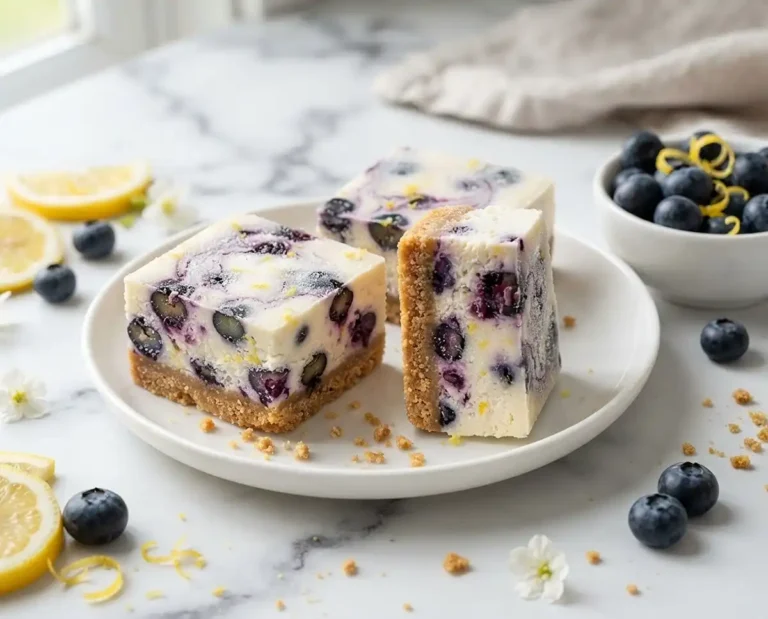
Gluten-Free Lemon Blueberry Sheet Cookies
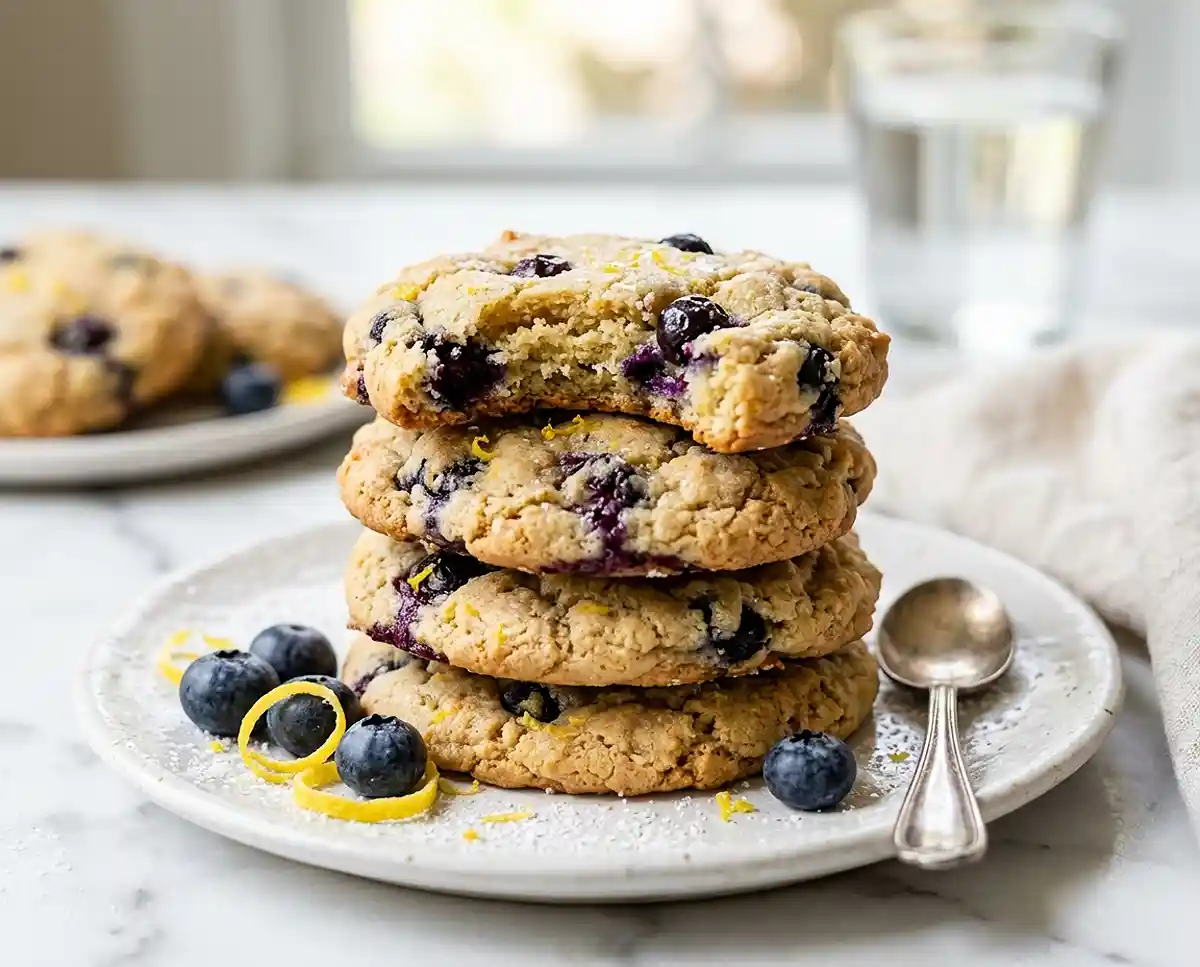
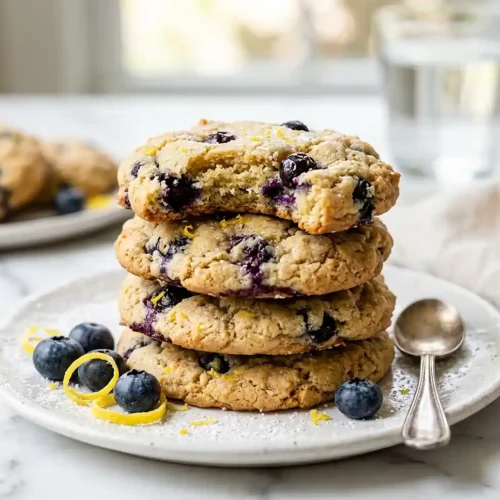
Soft, tender gluten-free lemon blueberry sheet cookies with real fruit, fresh zest, and golden edges — makes 2.5 dozen in a single bake session.
I ruined my first batch of lemon blueberry cookies by doing what seemed logical — tossing all the frozen blueberries straight into the dough at once. The dough turned into a cold, purple-streaked mess that wouldn’t hold its shape, and the cookies spread into flat, soggy discs with ice crystals still visible in the center. It was one of those moments where I stood in front of the oven genuinely confused about what went wrong.
The fix turned out to be splitting the berries into two batches, and that one move is what makes these Gluten-Free Lemon Blueberry Sheet Cookies work so well. Half the frozen wild blueberries get thawed and creamed directly into the butter and sugar, which infuses the entire dough with berry flavor and a gorgeous lavender tint.
Table of Contents
Why You’ll Love These Gluten-Free Lemon Blueberry Sheet Cookies
- Soft, pillowy centers with set edges: These gluten-free sheet cookies bake up tender and cake-like in the middle with just enough structure around the edges to hold together — like biting into a lemon-scented cloud studded with warm blueberries.
- Real fruit and fresh citrus throughout: No artificial flavoring here. Thawed blueberries, fresh lemon juice, and lemon zest deliver genuine, layered flavor that you can taste in every bite.
- Vegan and gluten-free by design: Vegan salted butter and a 1:1 gluten-free flour blend make these naturally free of dairy and gluten without any awkward substitutions or compromise on texture.
- Easy batch baking for crowds: One dough, two sheet pans, 13-15 minutes — you get 2.5 dozen cookies from a single mix session, making this the definition of easy batch baking.
The Secret to the Best Gluten-Free Lemon Blueberry Sheet Cookies
- Splitting the blueberries into two roles is the technique that makes everything work. The first 2/3 cup gets thawed and creamed into the butter-sugar base, where the berries break down and distribute their juice, color, and flavor throughout the entire dough. The second 2/3 cup stays frozen and gets folded in last, preserving whole berry pockets that soften in the oven without bleeding into the surrounding dough.
- Creaming sugar with lemon zest first is a pastry technique called sugar maceration. According to King Arthur Baking’s guide to citrus zest in baking, rubbing zest into sugar ruptures the oils in the zest cells, releasing intense aromatic compounds that dissolve directly into the sugar crystals. This distributes lemon flavor far more evenly than simply adding zest to batter.
- Cornstarch alongside the flour softens the dough’s structure and creates that tender, slightly cakey crumb. The 2 tablespoons of cornstarch inhibit gluten-free flour proteins from forming tough networks, which prevents the dense, gummy texture that plagues many gluten-free cookies.
- Pulling the cookies when the center looks slightly underbaked is essential. Gluten-free cookies continue to set for several minutes on the hot sheet pan after leaving the oven. If the center looks fully done when you pull them, they’ll be dry and crumbly once cooled. A soft, barely-set center at the oven door means a perfectly tender cookie at the table.
Ingredients

Blueberry Lemon Cookies
- 1 1/3 cups (320g) frozen wild blueberries, divided (2/3 cup and 2/3 cup)
- 1 cup (200g) granulated sugar
- 2/3 cup (151g) vegan salted butter, room temperature
- 2 tablespoons lemon juice
- 2 tablespoons lemon zest
- 2 cups (320g) gluten-free flour 1:1 baking blend
- 2 tablespoons cornstarch
- 1 teaspoon baking powder
- 1 teaspoon fine sea salt
- Optional: extra lemon zest for garnish
A note on the blueberries: wild frozen blueberries are smaller and more flavorful than cultivated varieties. Their compact size means they distribute more evenly through the dough and create tighter, less watery pockets when baked.
For the flour, use a gluten-free 1:1 baking blend that already contains xanthan gum, such as Bob’s Red Mill or King Arthur Measure for Measure. The Celiac Disease Foundation’s gluten-free food guide is a helpful resource for verifying that your specific flour brand is certified safe.
Step-by-Step Instructions
Prep the Berries and Pans
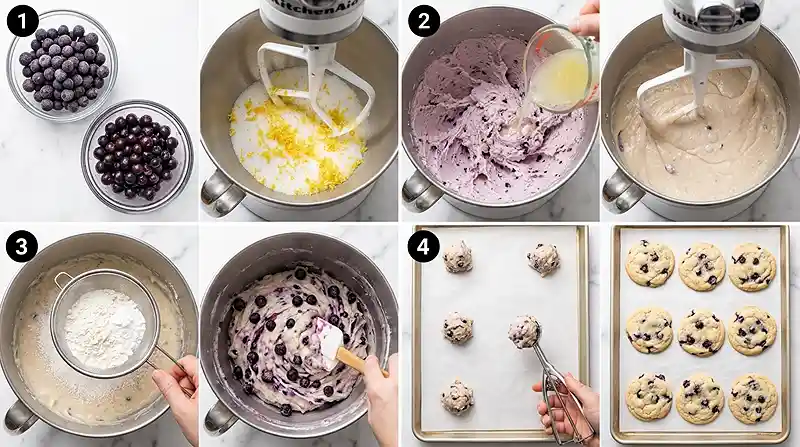
Step 1 — Thaw half the blueberries. Place 2/3 cup of the frozen wild blueberries in a microwave-safe bowl and thaw in the microwave for about 30 seconds. They should be soft and releasing juice but not hot. Set aside. Keep the remaining 2/3 cup frozen.
Step 2 — Preheat and line. Preheat the oven to 350 degrees Fahrenheit. Line two large cookie sheets with parchment paper and set them aside.
Build the Dough
Step 3 — Macerate the sugar and zest. In the bowl of a stand mixer fitted with the flat beater attachment, combine the 1 cup granulated sugar and 2 tablespoons lemon zest. Mix on high for 1 full minute. The sugar will turn slightly damp and fragrant as it absorbs the citrus oils — you’ll smell bright lemon the moment you lift the beater.
Step 4 — Cream the butter and thawed berries. Add the 2/3 cup room-temperature vegan salted butter and the thawed blueberries with their juice to the sugar mixture. Cream together on medium-high until light and fluffy, about 2 minutes. The batter will turn a beautiful pale lavender with visible berry flecks throughout.
Step 5 — Add the lemon juice. Pour in the 2 tablespoons lemon juice and mix until fully combined. Scrape down the sides of the bowl to ensure everything is evenly incorporated.
Step 6 — Add the dry ingredients. Add the 2 cups gluten-free 1:1 baking flour, 2 tablespoons cornstarch, 1 teaspoon baking powder, and 1 teaspoon fine sea salt. Mix on low speed until a cohesive dough forms, scraping down the sides with a spatula as needed. Stop the moment the flour disappears — overmixing toughens the cookies.
Step 7 — Fold in the frozen berries. Using a spatula, gently fold the remaining 2/3 cup of frozen blueberries into the dough until just distributed. Don’t overmix — the frozen berries should stay whole and intact. A few visible streaks of purple are fine.
Scoop and Bake
Step 8 — Scoop the dough. Using a 1.5-tablespoon cookie scoop, portion the dough onto the prepared cookie sheets approximately 2 inches apart. The dough will be soft and slightly sticky — that’s normal. You should get about 30 cookies across both sheets.
Step 9 — Bake. Bake for 13-15 minutes, or until the edges are set and lightly golden but the center still appears slightly underbaked and soft. The cookies will look like they need another minute — they don’t. Pull them now.
Step 10 — Cool on the pan. Remove from the oven and allow the cookies to cool on the tray for 10 full minutes. This resting period lets the centers finish setting from residual heat. After 10 minutes, transfer to a wire rack to cool completely. Garnish with extra lemon zest if desired.
Pro Tip: If you’re baking both sheets at once, rotate them halfway through — swap the top and bottom racks and turn each sheet 180 degrees. This compensates for hot spots and gives you even golden edges on every cookie.
Make It Your Own
Swap the berries: Fresh or frozen raspberries, blackberries, or chopped strawberries can replace the wild blueberries. Keep the total amount at 1 1/3 cups divided, and follow the same thaw-half, freeze-half technique. Raspberries add a tart, rosy flavor that pairs beautifully with the lemon in these gluten-free sheet cookies.
Add a glaze: For a bakery-style finish, whisk together 1 cup of powdered sugar with 1-2 tablespoons of fresh lemon juice until smooth and drizzle over the fully cooled cookies. The glaze adds a sweet-tart shell that cracks when you bite through it. This simple addition transforms an already gorgeous lemon blueberry dessert into something truly special.
Man, oh man… if you’ve never tried folding 1/3 cup of white chocolate chips into this dough alongside the frozen berries, you’re missing a combination that tastes like lemon cheesecake in cookie form. The white chocolate melts into creamy pockets that balance the tartness of the lemon and berries.
Use regular butter: If you’re not eating dairy-free, standard salted butter works as a direct swap for the vegan butter. The cookies will taste slightly richer and the edges will brown a touch more. Both versions produce excellent results, so use whatever fits your dietary needs.
Make them egg-free: This recipe is already egg-free — there are no eggs in the ingredient list. The vegan butter and cornstarch provide all the binding and moisture the dough needs. This makes these cookies naturally friendly for vegan, dairy-free, and egg-free diets without any modifications.
Common Problems and How to Fix Them
Problem: The cookies spread too thin and flat. Your vegan butter was too warm when you started creaming. It should be at room temperature — soft enough to dent with a finger but not greasy or melting. If your kitchen runs warm, chill the scooped dough balls on the sheet pan for 15 minutes before baking. This firms up the fat and helps the cookies hold their shape.
Problem: The dough turned purple and soggy. You added both portions of blueberries at the creaming stage instead of keeping the second half frozen and folding it in last. You know… this is the exact mistake I made my first time, and it’s the most common one I hear about. Only the thawed berries go in early; the frozen berries must be folded in gently at the very end.
Problem: The cookies are dry and crumbly. You overbaked them. At 13-15 minutes, the center should still look slightly soft and underbaked when you pull the sheet from the oven. Gluten-free cookies firm up significantly during the 10-minute pan rest, so what looks underdone at the oven becomes tender and set at the cooling rack.
Problem: The lemon flavor is weak. You likely used bottled lemon juice or didn’t zest enough. Fresh lemon juice and freshly grated zest are non-negotiable for bright citrus flavor. One large lemon typically yields about 2 tablespoons of zest and 2-3 tablespoons of juice — exactly what this recipe needs. Bottled juice tastes flat and muted in baked goods.
Storage and Meal Prep
| Method | Duration | Notes |
|---|---|---|
| Counter | Up to 5 days | Airtight container, single layer or parchment between layers |
| Refrigerator | Up to 7 days | Bring to room temperature 10-15 min before serving |
| Freezer | Up to 6 months | Wrap individually or freeze in single layer, then transfer to bag |
These cookies actually taste better the next day, once the lemon and blueberry flavors have had time to meld and deepen. They stay soft and tender for the full five days at room temperature if your container seals well.
For freezing, place cooled cookies in a single layer on a parchment-lined tray and freeze for 1 hour, then transfer to a zip-top bag. This prevents them from sticking together. Thaw at room temperature for 15-20 minutes or enjoy them straight from the freezer for a chilled, almost ice-cream-like texture.
Your Questions Answered
Can I use fresh blueberries instead of frozen?
Frozen wild blueberries are strongly recommended for this recipe. Fresh blueberries are larger, contain more water, and don’t break down as cleanly during the creaming stage. If you only have fresh, freeze them on a tray for at least 2 hours before using, and mash the thawed portion with a fork before adding it to the butter and sugar.
Why did my cookies turn completely purple?
You likely added all the blueberries at the creaming stage instead of dividing them. Only 2/3 cup goes in thawed with the butter and sugar. The second 2/3 cup must stay frozen and get folded in at the very end. This two-stage approach gives you berry flavor in the dough and whole berry pockets in the finished cookie.
What’s the best gluten-free flour for these cookies?
A 1:1 gluten-free baking flour blend with xanthan gum already included produces the most reliable results. Bob’s Red Mill 1-to-1 and King Arthur Measure for Measure are both consistently tested options. Avoid coconut flour or almond flour — they absorb moisture differently and will change the texture entirely.
How do I know when the cookies are done?
Look for set, lightly golden edges with a center that still appears slightly soft and barely underbaked. The cookies will look like they need one more minute — resist the urge. They continue to firm up during the 10-minute rest on the hot pan. If the centers are fully set in the oven, the cookies will be dry once cooled.
Can I freeze the dough instead of baked cookies?
Yes — scoop the dough into balls on a parchment-lined tray, freeze for 1 hour, then transfer to a zip-top bag. Bake from frozen at 350 degrees Fahrenheit, adding 2-3 extra minutes to the bake time. This is a great option for easy batch baking when you want fresh cookies on demand without making the dough from scratch.
Serving Suggestions
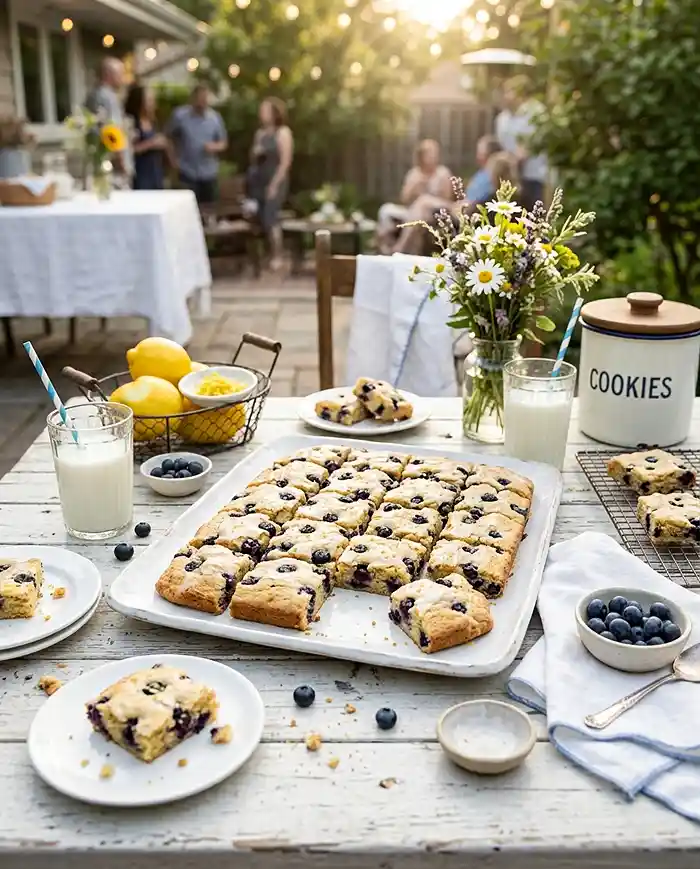
These Gluten-Free Lemon Blueberry Sheet Cookies are a natural fit for a Memorial Day dessert table — the bright purple and yellow tones look festive alongside red and blue decorations, and they’re easy to stack on a platter for grab-and-go eating at outdoor gatherings.
Pair them with a cold glass of lemonade, or serve them alongside a bowl of gluten-free cherry vanilla smoothie bowl for a berry-themed brunch spread.
For a full dessert lineup, combine these cookies with gluten-free brown butter blueberry blondies for a double-blueberry presentation. Start the meal with something savory like gluten-free roasted sweet potato rounds to balance out all that sweetness.
Go Bake a Sheet This Weekend
If you’ve been searching for a gluten-free cookie that delivers real fruit flavor, a soft and tender texture, and enough yield to share with a crowd, this is the recipe. One bowl, two sheet pans, and about 15 minutes in the oven gives you 2.5 dozen cookies that look and taste like they came from a specialty bakery.
I’d love to know how yours turn out — drop a comment below with your favorite variation or any tweaks you tried. And if those lavender-tinted cookies look as gorgeous on your counter as they do on mine, save this recipe to your Pinterest board so it’s ready for your next baking day.
Gluten-Free Lemon Blueberry Sheet Cookies
Equipment
- Stand mixer with flat beater attachment or large bowl with electric mixer
- Silicone spatula
- Two large cookie sheets
- Parchment paper
- 1.5 tablespoon cookie scoop
- Wire cooling rack
- Microwave-safe bowl
Ingredients
Blueberry Lemon Cookies
- 1 ⅓ cups frozen wild blueberries 320g, divided into two 2/3-cup portions
- 1 cup granulated sugar 200g
- ⅔ cup vegan salted butter 151g, room temperature
- 2 tablespoons lemon juice fresh
- 2 tablespoons lemon zest fresh, plus optional extra for garnish
- 2 cups gluten-free flour 1:1 baking blend 320g, with xanthan gum included
- 2 tablespoons cornstarch
- 1 teaspoon baking powder
- 1 teaspoon fine sea salt
Instructions
- Thaw half of the frozen blueberries (2/3 cup) in the microwave for about 30 seconds until soft and releasing juice but not hot. Set aside. Keep the remaining 2/3 cup frozen.
- Preheat the oven to 350 degrees Fahrenheit and line two large cookie sheets with parchment paper.
- In the bowl of a stand mixer fitted with the flat beater attachment, combine the 1 cup granulated sugar and 2 tablespoons lemon zest. Mix on high for 1 full minute until the sugar is fragrant and slightly damp from absorbing the citrus oils.
- Add the 2/3 cup room-temperature vegan salted butter and the thawed blueberries with their juice. Cream together on medium-high until light and fluffy, approximately 2 minutes. The mixture will turn a pale lavender color with visible berry flecks.
- Pour in the 2 tablespoons lemon juice and mix until fully combined. Scrape down the sides of the bowl to ensure even incorporation.
- Add the 2 cups gluten-free 1:1 baking flour, 2 tablespoons cornstarch, 1 teaspoon baking powder, and 1 teaspoon fine sea salt. Mix on low speed until a cohesive dough forms, scraping down the sides with a spatula as needed. Stop as soon as no dry flour streaks remain.
- Using a spatula, gently fold the remaining frozen blueberries (2/3 cup) into the dough until just combined. Do not overmix — the berries should remain whole and intact.
- Using a 1.5-tablespoon cookie scoop, portion the dough onto the prepared cookie sheets approximately 2 inches apart. Bake for 13-15 minutes, or until the edges are set and lightly golden but the center still appears slightly underbaked.
- Remove from the oven and allow the cookies to cool on the tray for 10 full minutes before transferring to a wire rack to cool completely. Garnish with extra lemon zest if desired.