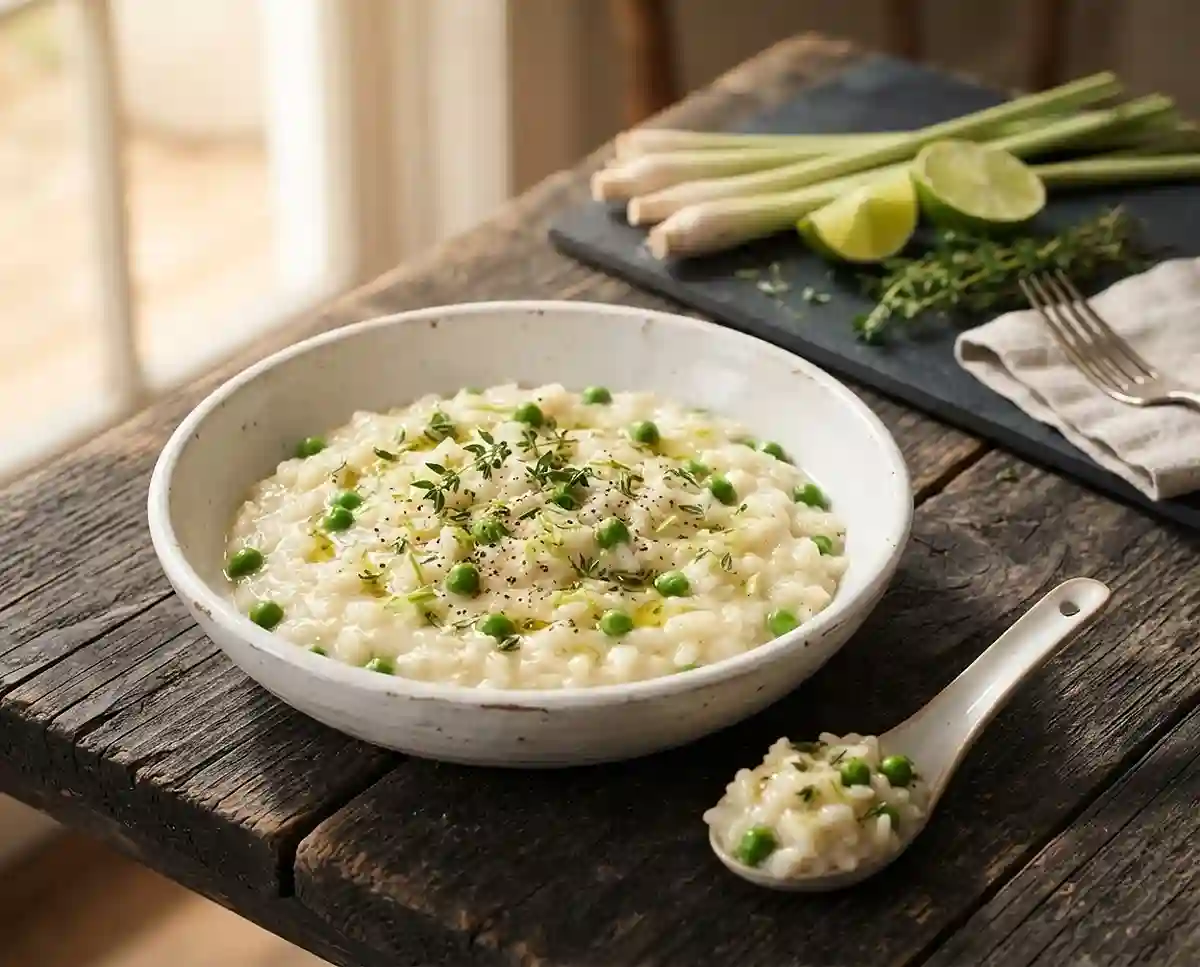
Gluten-Free Lemongrass Risotto
Make a creamy gluten-free lemongrass risotto with step-by-step instructions, coconut milk, fresh lime, and a fragrant homemade stock. Ready in under an hour.
Gluten-free lemongrass risotto was the dish that made me fall back in love with cooking after my diagnosis. I remember standing at the stove, stirring slowly, half-convinced it would taste like a consolation prize — and then that first bite hit. Bright, fragrant, and deeply satisfying.
The lemongrass stock is what sets this recipe apart from any risotto you’ve made before. It infuses every ladle with a citrusy, herbal warmth that’s impossible to get from a store-bought broth.
Is it more work than opening a carton of stock? Yes — and it’s completely worth it. The process is simple, and I’ll show you exactly when to strain, when to stir, and when to step back and let the rice do its thing.
Why You’ll Love This Gluten-Free Lemongrass Risotto
- Texture that earns the name “creamy”: Arborio rice releases starch slowly as you stir, giving you a risotto that coats the back of a spoon like warm velvet — no cream cheese, no heavy cream needed.
- Naturally gluten-free from the first ladle: The homemade lemongrass stock uses certified gluten-free bouillon, so there’s no hidden gluten lurking the way there often is in pre-made broths.
- Dairy-free and weeknight-friendly: Light coconut milk replaces butter and Parmesan without sacrificing richness, making this a great option for anyone avoiding both gluten and dairy.
- Bright enough for a dinner party, simple enough for a Tuesday: The lime zest and fresh thyme finish lift the whole dish and make it feel far more composed than the effort involved.
The Secret to Perfect Gluten-Free Lemongrass Risotto
- Simmer the stock while you cook the risotto. Cold or even warm stock added to hot rice seizes the starches and slows absorption unevenly. Keeping your lemongrass stock at a gentle simmer the entire time is what creates that consistent, creamy result ladle by ladle.
- Toast the rice before adding any liquid. Cooking the Arborio with the onion, peas, and rosemary over low heat for a few minutes — until it just starts to stick slightly to the pot — develops a nutty base flavor and helps the grains absorb stock more evenly throughout the cooking process.
- Add stock gradually, not all at once. Two ladles at a time is the rule here. Each addition should be mostly absorbed before the next goes in. This patient, rhythmic process is what coaxes the starch out of the rice and builds the silky texture risotto is known for. According to Serious Eats’ deep dive into risotto science, constant stirring isn’t strictly required — but steady, attentive stirring in the early stages does matter.
- Warm the coconut milk before stirring it in. Adding cold coconut milk at the end causes the rice to tighten up and can break the creamy consistency you’ve worked to build. Warming it separately takes thirty seconds and protects the final texture.
Table of Contents
Ingredients
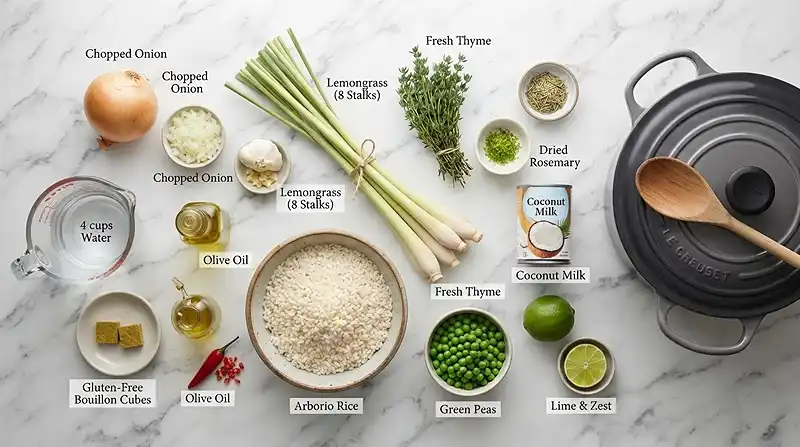
Lemongrass Stock
| Ingredient | Amount | Notes |
|---|---|---|
| Fresh lemongrass, chopped | 8 stalks | Or ¼ cup dried/frozen lemongrass as a substitute |
| Fresh thyme stalks | 6 stalks | Reserve the leaves for finishing the risotto |
| Water | 5 cups | The base for the stock |
| Gluten-free bouillon cubes | 1½ cubes | Check label — must be certified gluten-free |
Risotto
| Ingredient | Amount | Notes |
|---|---|---|
| Olive oil | 1 tablespoon | For sautéing the aromatics |
| Small onion, finely chopped | 1 | Fine dice so it melts into the rice |
| Garlic cloves, minced | 3 | |
| Red chili, finely chopped | 1 | Optional — omit for a milder dish |
| Arborio rice | 1 cup | Do not rinse — the surface starch is essential for creaminess |
| Green peas | ½ cup | Fresh or frozen both work well here |
| Dried rosemary | ½ teaspoon | Complements the lemongrass without competing |
| Light coconut milk | ¾ cup | Warm before adding — full-fat makes it richer |
| Lime zest | 1 tablespoon | Use a Microplane for the finest zest |
| Fresh lime juice | 1 tablespoon | Added at the very end, off the heat |
Instructions
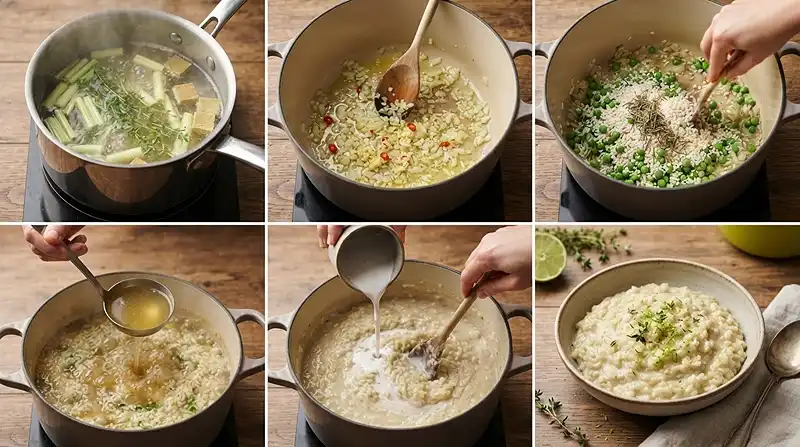
Make the Lemongrass Stock
- Chop the lemongrass into small pieces to release as much flavor as possible. Strip the thyme leaves from the stalks and set the leaves aside — you’ll use them at the end of the risotto.
- Add the chopped lemongrass and bare thyme stalks to 5 cups of water in a large pot. Cover and bring to a full boil over high heat.
- Stir in the gluten-free bouillon cubes until dissolved, then reduce the heat to low. Keep the stock at a steady, gentle simmer throughout the entire risotto process — never let it sit cold on the side.
Build the Risotto Base
- Heat the olive oil in a large, heavy-bottomed pot over medium heat. Add the finely chopped onion and sauté until translucent and soft, about 4–5 minutes. The onion should be tender and slightly sweet-smelling before anything else goes in.
- Add the minced garlic and red chili if using. Cook briefly — about 60 seconds — stirring constantly, just until fragrant. Don’t let the garlic brown or it will turn bitter and overpower the lemongrass.
- Stir in the Arborio rice, green peas, and dried rosemary. Reduce the heat to low and cook for 2–3 minutes, stirring frequently, until the rice begins to stick slightly to the bottom of the pot and smells faintly nutty. This toasting step is what gives the risotto its depth. Pro Tip: Do not rinse the Arborio rice beforehand — the surface starch is exactly what creates that creamy consistency you’re working toward.
Add the Stock and Stir
- Use a fine-mesh strainer held over the pot to add the hot lemongrass stock directly to the rice — about 2 ladles at a time. Stir continuously as the rice absorbs the liquid, keeping the heat at medium-low throughout.
- Continue adding simmering stock 2 ladles at a time, stirring frequently between each addition. Allow most of the liquid to absorb before adding the next round. Keep the remaining stock warm on the adjacent burner — it must stay hot.
- Continue the process until the Arborio rice is al dente — creamy and tender with a slight resistance at the center when you bite through. This typically takes 18–22 minutes total. You may not need every drop of stock, so taste as you go and stop when the texture is right.
Finish and Rest
- Warm the coconut milk in a small saucepan or in the microwave until just hot. Stir it into the risotto and continue stirring until the mixture is creamy and slightly loose — it should flow slowly when you tilt the pot, not sit in a stiff mound.
- Stir in the lime zest and the reserved fresh thyme leaves. Once the risotto begins bubbling gently, turn off the heat. Add the fresh lime juice and give everything one final stir to combine.
- Let the risotto rest, uncovered, for 5 minutes before serving. It will tighten slightly as it rests — that’s normal and expected. Serve immediately while it’s still loose and steaming.
Make It Your Own
Well… lemongrass is the soul of this recipe, but if all you have is dried or frozen lemongrass, don’t let that stop you. The ¼ cup dried or frozen option listed in the ingredients works well — just chop it finely before adding it to the water so the surface area releases maximum flavor into the stock.
If you want a richer, more indulgent result, swap the light coconut milk for full-fat. The risotto will be noticeably thicker and more coating on the palate — closer in texture to a traditional Parmesan-finished risotto. This is the version I serve for a holiday dinner like Thanksgiving, when the table calls for something a little more special.
For a heartier easy gluten-free lemongrass risotto, stir in cooked shrimp, sliced mushrooms, or shredded rotisserie chicken with the coconut milk. These additions bulk out the dish without disrupting the flavor profile. If you enjoy building out complete gluten-free meals, the gluten-free air fryer fish sandwich uses a similar light, citrusy approach and pairs well as a weeknight companion recipe.
You know, the red chili is listed as optional but I genuinely recommend it for adults. It doesn’t make the dish spicy — at just one finely chopped chili, it adds a gentle warmth that lifts the coconut milk and keeps the dish from tasting flat. Remove the seeds for a milder result if you’re cooking for mixed heat preferences.
Common Problems & Solutions
Problem: The risotto turned out starchy and gluey instead of creamy. The fix is almost always heat management — the stock was added too fast or the heat was too high. Creamy gluten-free risotto with lemongrass builds slowly. Each addition of stock should absorb mostly before the next goes in, and the heat should stay at a steady medium-low throughout. Rushing the process breaks the gradual starch release.
Problem: The lemongrass flavor is barely detectable in the finished dish. This usually means the stock didn’t simmer long enough before you started using it, or the lemongrass pieces were too large to release their oils effectively. Chop lemongrass small and let the stock boil before reducing to a simmer — give it at least 5 minutes at temperature before ladling any into the rice.
Problem: The risotto seized up and turned stiff after adding the coconut milk. Man, oh man… this is fixable in real time. If the coconut milk was cold when it went in, the rice tightened up. Add an extra ladle of warm stock and stir vigorously over low heat — the risotto will loosen back up within a minute or two. Going forward, always warm the coconut milk before it touches the rice.
Problem: The risotto dried out before serving. Risotto continues to absorb liquid as it sits, so if it tightens up between the pot and the table, stir in a small splash of warm water or reserved stock just before plating. According to Bon Appétit’s guide to risotto fundamentals, a properly cooked risotto should always flow slowly — if it holds its shape without spreading, it needs more liquid.
Storage & Meal Prep
| Method | Duration | Notes |
|---|---|---|
| Counter | Up to 2 hours | Cover loosely; risotto dries quickly at room temperature |
| Fridge | 3–4 days | Store in an airtight container; it will thicken significantly |
| Freezer | Up to 1 month | Texture changes on thawing — best used in soups or fritters |
To reheat refrigerated risotto, add 2–3 tablespoons of warm water or stock per portion and stir over medium-low heat until it loosens back to a creamy consistency. Avoid the microwave if you can — it heats unevenly and tends to dry out the edges before the center warms through.
Leftover risotto that’s too thick to serve as-is makes excellent risotto fritters. Shape cold risotto into small patties, press them firmly, and pan-fry in a little olive oil until golden and crisp on both sides. They’re a no-waste way to turn yesterday’s dinner into something that feels completely new.
Gluten-Free Lemongrass Risotto FAQs
Can I make this risotto ahead of time?
You can cook it about 75% of the way through — stopping just before al dente — and refrigerate the partially cooked rice with a little extra stock stirred in. When you’re ready to serve, reheat over medium-low and finish with the remaining stock, coconut milk, lime zest, and lime juice. This method works well for dinner parties.
How do I know when the risotto is done?
The rice should be al dente — tender all the way through with just a slight resistance at the very center when you bite into a grain. The risotto itself should flow slowly when you tilt the pot, not hold a stiff shape. If it looks dry or stiff before the rice is fully cooked, add more warm stock and keep stirring.
What’s the best substitute for Arborio rice?
Carnaroli rice is the closest substitute and actually produces an even creamier result because it holds its shape a little better under long cooking. Vialone Nano is another excellent option. Avoid long-grain rice varieties like basmati or jasmine — they don’t release enough starch to create the characteristic creamy texture risotto requires.
Why did my lemongrass stock taste bland?
Lemongrass needs heat and time to release its aromatic oils into the water. If the stock tastes flat, let it boil for a full 5 minutes before reducing to a simmer, and make sure the lemongrass is chopped into small pieces rather than added whole. Gluten-free bouillon cubes also vary widely in flavor — taste the stock before using it and adjust with a pinch of salt if needed.
Can I make this recipe without coconut milk?
Yes. You can substitute an equal amount of warmed oat milk, cashew cream, or even extra warm stock for a lighter result. The risotto will be less rich and slightly less creamy without the fat content coconut milk provides, but the lemongrass and lime flavors will still come through clearly. Avoid cold substitutes — warm whatever you use before stirring it in.
Serving Suggestions
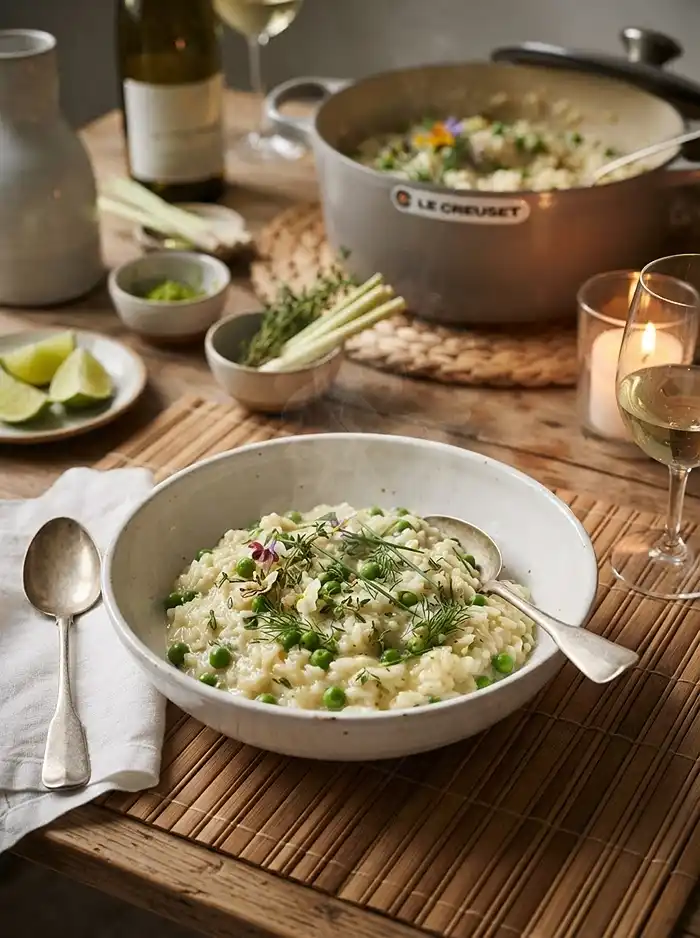
This risotto is a complete meal on its own, but it pairs especially well with simply cooked proteins that won’t compete with the lemongrass. Think pan-seared salmon, grilled prawns, or roasted chicken thighs with a squeeze of lime over the top.
If you’re building out a gluten-free dinner spread, the gluten-free veal Parmesan sandwich makes a bold, satisfying contrast — rich and hearty where the risotto is bright and herbal. For something lighter alongside, the gluten-free honey mustard turkey sandwich keeps the meal feeling fresh without adding much kitchen time.
If you make this recipe, I’d love to know how it turned out for you. Drop a comment below with any swaps you made, save it to Pinterest so others can find it, and don’t forget to leave a rating — it genuinely helps more gluten-free home cooks discover recipes that actually work.
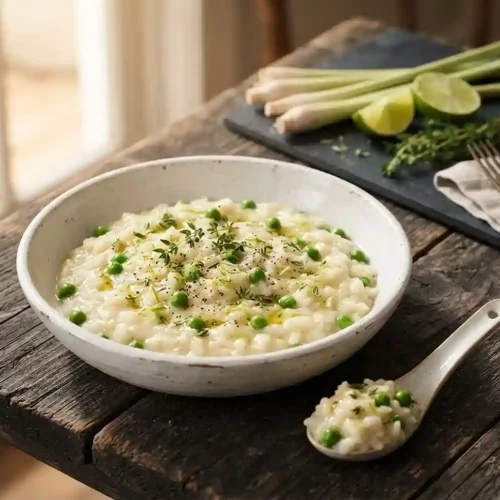
Gluten-Free Lemongrass Risotto
Equipment
- Large pot
- Large heavy-bottomed pot
- Fine mesh strainer
- Small saucepan
- Microwave
Ingredients
Lemongrass Stock
- 8 stalks Fresh lemongrass Chopped; or use 1/4 cup dried/frozen lemongrass
- 6 stalks Fresh thyme Reserve the leaves for finishing the risotto
- 5 cups Water Base for the stock
- 1 ½ cubes Gluten-free bouillon cubes Check the label; must be certified gluten-free
Risotto
- 1 tablespoon Olive oil For sautéing the aromatics
- 1 Small onion Finely chopped
- 3 cloves Garlic Minced
- 1 Red chili Finely chopped; optional
- 1 cup Arborio rice Do not rinse; the surface starch is essential for creaminess
- ½ cup Green peas Fresh or frozen
- ½ teaspoon Dried rosemary Complements the lemongrass
- ¾ cup Light coconut milk Warm before adding; full-fat coconut milk makes it richer
- 1 tablespoon Lime zest Use a Microplane for the finest zest
- 1 tablespoon Fresh lime juice Added at the very end, off the heat
Instructions
- Chop the lemongrass into small pieces to release as much flavor as possible. Strip the thyme leaves from the stalks and set the leaves aside for finishing the risotto.
- Add the chopped lemongrass and bare thyme stalks to 5 cups of water in a large pot. Cover and bring to a full boil over high heat.
- Stir in the gluten-free bouillon cubes until dissolved, then reduce the heat to low. Keep the stock at a steady, gentle simmer throughout the entire risotto process.
- Heat the olive oil in a large, heavy-bottomed pot over medium heat. Add the finely chopped onion and sauté until translucent and soft, about 4–5 minutes.
- Add the minced garlic and red chili if using. Cook for about 60 seconds, stirring constantly, just until fragrant. Do not let the garlic brown.
- Stir in the Arborio rice, green peas, and dried rosemary. Reduce the heat to low and cook for 2–3 minutes, stirring frequently, until the rice begins to stick slightly to the bottom of the pot and smells faintly nutty. Do not rinse the Arborio rice beforehand.
- Use a fine-mesh strainer held over the pot to add the hot lemongrass stock directly to the rice, about 2 ladles at a time. Stir continuously as the rice absorbs the liquid, keeping the heat at medium-low.
- Continue adding simmering stock 2 ladles at a time, stirring frequently between each addition. Allow most of the liquid to absorb before adding the next round, keeping the remaining stock warm.
- Continue until the Arborio rice is al dente, creamy and tender with a slight resistance at the center. This typically takes 18–22 minutes. Taste as you go and stop when the texture is right; you may not need every drop of stock.
- Warm the coconut milk in a small saucepan or microwave until just hot. Stir it into the risotto until the mixture is creamy and slightly loose.
- Stir in the lime zest and reserved fresh thyme leaves. Once the risotto begins bubbling gently, turn off the heat. Add the fresh lime juice and give everything a final stir.
- Let the risotto rest uncovered for 5 minutes before serving. It will tighten slightly as it rests. Serve immediately while it is still loose and steaming.