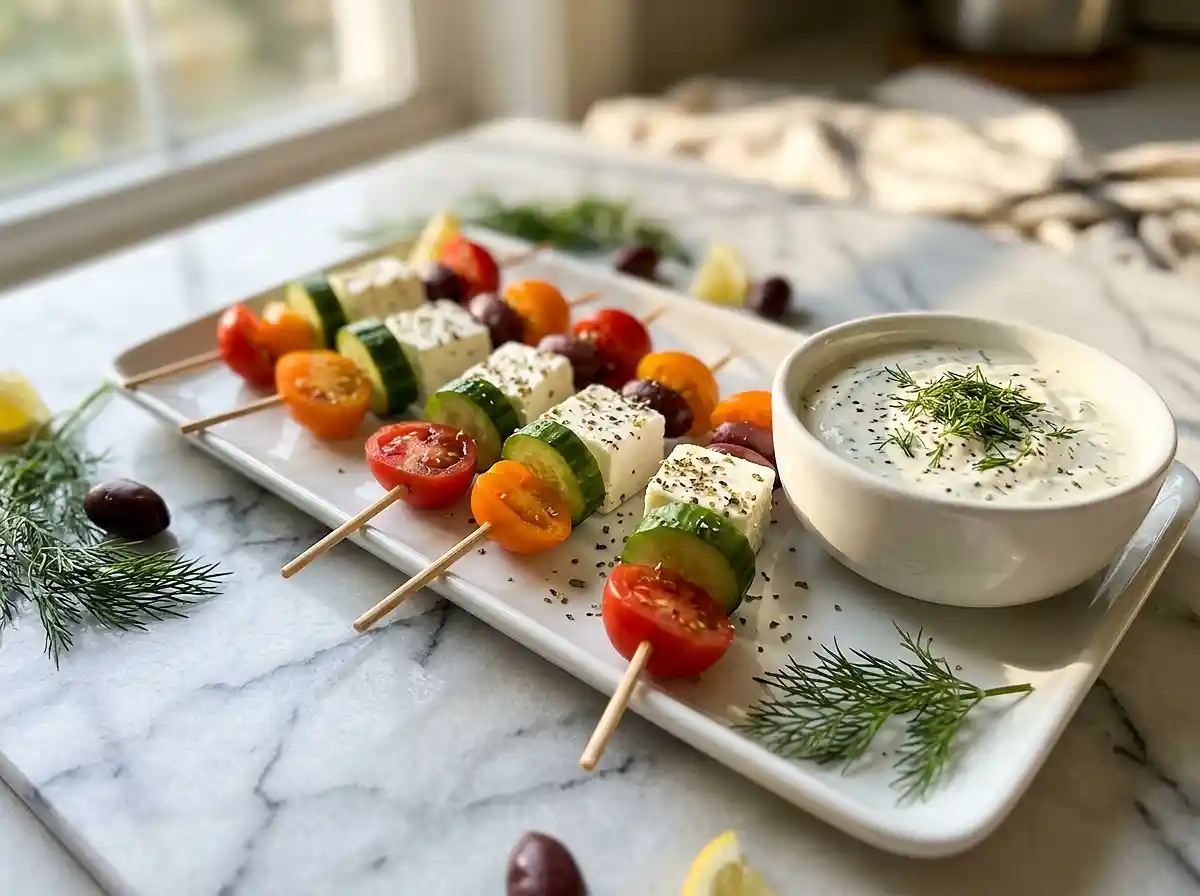
Greek Salad Skewers with Dill Dip
Step-by-step gluten-free Greek salad skewers with dill dip. Fresh ingredients, 15 minutes to assemble, and perfect for parties or meal prep.
The first time I brought these gluten-free Greek salad skewers to a Fourth of July cookout, I set them on the table and walked away for two minutes. By the time I turned back around, half the platter was gone.
That’s the magic of this recipe. There’s no oven, no stove, and no special skills involved—just fresh Mediterranean ingredients threaded onto skewers and a creamy dill dip that pulls it all together.
Ever wonder why some appetizers get passed over while others disappear in minutes? It comes down to how inviting they look and how easy they are to eat. These gluten-free Greek salad skewers tick both boxes without asking much of you at all.
Table of Contents
Why You’ll Love These Greek Salad Skewers
- Completely no-cook — no oven, no stove, just assembling fresh ingredients in under 15 minutes.
- Naturally gluten-free — every single ingredient is safe right out of the package, with no hidden gluten to worry about.
- Kid-friendly and crowd-pleasing — even picky eaters gravitate toward food on a stick.
- Make-ahead friendly — assemble a few hours ahead and refrigerate until your guests arrive.
The Secret to Perfect Gluten-Free Greek Salad Skewers
The biggest challenge with Greek salad skewers is keeping the feta cheese from crumbling when you thread it. Feta that’s too soft will fall apart before it ever reaches the platter.
- Buy block feta, not crumbled — a firm block holds its shape when pierced. Crumbled feta is meant for sprinkling, not skewering.
- Pierce from the tip, not the center — slide just the very tip of the skewer into the feta cube rather than pushing it through. This prevents splitting.
- Keep feta cold until assembly — chilled feta is firmer and far easier to handle. Pull it from the refrigerator right before you thread it.
- Cut cucumber thick — thin slices will wobble and slide off the skewer. A thick, sturdy slice stays put and gives each bite real crunch.
According to Beyond Celiac’s gluten-free living resources, naturally gluten-free whole foods like vegetables, olives, and plain dairy are safe without any label-checking. This recipe uses nothing but those whole-food ingredients, which makes it one of the most stress-free appetizers you can bring to any gathering.
Ingredients
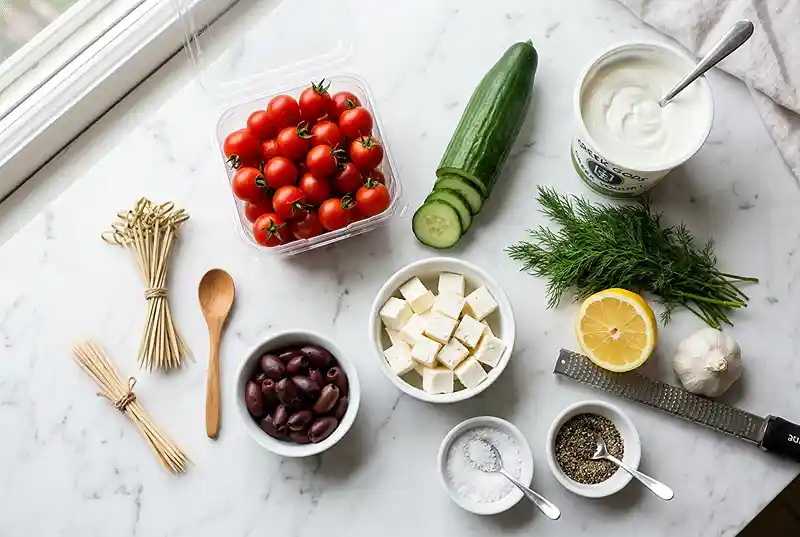
Greek Salad Skewers
| Ingredient | Amount | Notes |
|---|---|---|
| Cherry tomatoes | 1 pint | Firm, ripe tomatoes hold up best on skewers |
| Cucumber | 1, cut into thick slices | English cucumber works well; no need to peel |
| Feta cheese, cubed | 8 oz (225 g) | Use block feta, not pre-crumbled |
| Kalamata olives | ½ cup | Pitted; olive bar olives are firmer than jarred |
| Small skewers or toothpicks | 24 | 4–6 inch bamboo skewers work best |
Dill Dip
| Ingredient | Amount | Notes |
|---|---|---|
| Plain Greek yogurt | 1 cup | Full-fat gives the creamiest texture |
| Fresh dill, chopped | 2 tbsp | Fresh dill makes a big difference here |
| Lemon juice | 1 tbsp | Freshly squeezed preferred |
| Garlic, minced | 1 clove | One clove keeps it mild; add more if you love garlic |
| Salt | ½ tsp | |
| Black pepper | ¼ tsp |
Instructions
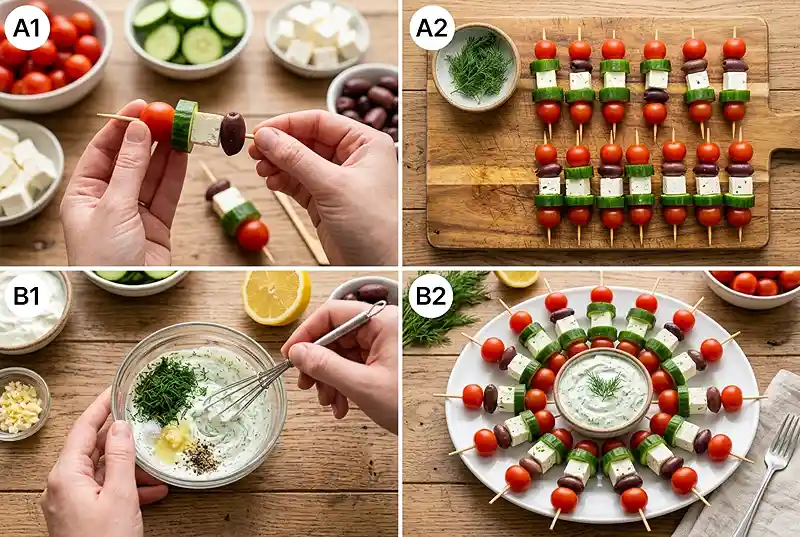
- Thread the skewers. Onto each skewer, slide a cherry tomato, followed by a thick cucumber slice, a cube of feta cheese, and a kalamata olive. Pierce the feta gently from the tip to prevent it from cracking.
- Repeat until all ingredients are used. Continue assembling until you have 24 skewers. Work quickly if your kitchen is warm and return assembled skewers to the refrigerator as you go.
- Make the dill dip. In a small bowl, whisk together the Greek yogurt, fresh dill, lemon juice, minced garlic, salt, and pepper until smooth and fully combined. The dip should smell bright and herbaceous, like a cool garden breeze.
- Transfer and arrange. Pour the dill dip into a serving bowl. Arrange the skewers on a platter around the bowl, or fan them out in a single layer for easy grabbing.
- Serve immediately or chill. Serve the skewers with the dill dip alongside. If making ahead, cover the platter tightly with plastic wrap and refrigerate for up to 4 hours before serving.
Make It Your Own
Well… if you can’t find kalamata olives, any pitted briny olive works here. Black olives from a can are milder, but they’ll still hold their shape on the skewer. Green Castelvetrano olives give a buttery flavor that plays beautifully against the salty feta.
For a dairy-free version, swap the feta for firm cubes of marinated tofu or a plant-based cheese. These options won’t melt or crumble the way feta does, which actually makes them easier to thread. Your dairy-free guests will genuinely appreciate having something they can eat without asking questions.
The dill dip works well with dairy-free yogurt too. Coconut-based Greek-style yogurt is thick enough to hold the dip’s texture, though it adds a very subtle sweetness. Unsweetened cashew yogurt is a closer flavor match if you want to keep the dip savory and tangy.
You can also add a red onion wedge to each skewer for a sharper bite. This turns the appetizer into something closer to a full greek salad appetizer on a stick. Just be aware that red onion can overpower the dip if cut too large—keep the pieces small and thin.
Common Problems & Solutions
Problem: Feta keeps crumbling when I try to thread it. The fix is always to go colder. Pull your feta from the refrigerator just before assembling and pierce from the very tip rather than trying to push the skewer through the center. If it’s still crumbling, your feta block may be too soft—look for a firmer variety or a sheep’s milk feta next time.
Problem: The dip tastes flat or thin. This usually means the yogurt needed more acid. Add an extra squeeze of lemon juice, taste again, and adjust the salt. Greek yogurt varies in tartness by brand, so what works perfectly with one may need a boost with another.
Problem: The skewers are getting soggy before serving. Cucumber releases moisture over time, especially once it’s been cut. Pat the cucumber slices dry with a paper towel before threading and assemble no more than 4 hours ahead. Man, oh man… a soggy skewer is a sad skewer, and it’s completely avoidable.
Problem: The dill dip is too garlicky. Raw garlic sharpens as it sits, so if you’re making the dip hours ahead, use a tiny pinch less than the full clove. You can also substitute garlic powder—about ¼ tsp—for a milder, more evenly distributed flavor that won’t intensify over time.
For anyone managing celiac disease or gluten sensitivity, the peer-reviewed research on gluten-free dietary management reinforces how important it is to stick with naturally gluten-free whole foods whenever possible. This recipe does exactly that.
Storage & Meal Prep
| Method | Duration | Notes |
|---|---|---|
| Counter | Up to 2 hours | Keep covered; not ideal for warm rooms |
| Fridge (assembled) | Up to 4 hours | Wrap tightly; cucumber releases moisture over time |
| Fridge (dip only) | 3–5 days | Store in an airtight container; stir before serving |
| Freezer | Not recommended | Fresh vegetables and feta don’t freeze well |
The dill dip is actually the best make-ahead component here. Whisk it together up to 5 days in advance and store it in the fridge. The flavors deepen overnight, making it even better on day two.
Leftover dip is fantastic as a spread on gluten-free twice baked potato casserole or dolloped onto a German potato salad with eggs in place of dressing.
FAQs About Greek Salad Skewers with Dill Dip
Can I make these Greek salad skewers the night before?
The dill dip can be made up to 5 days ahead and stored in the refrigerator. Assemble the skewers no more than 4 hours before serving to prevent the cucumber from releasing water and making the platter soggy.
How do I keep feta from crumbling on the skewer?
Pierce the feta from the very tip of the skewer rather than through the center. Always keep feta refrigerated until the moment you assemble, since cold feta is much firmer. Buying a firm block of feta rather than pre-crumbled also makes a big difference.
Can I use dried dill instead of fresh dill in the dip?
Yes, but the flavor will be more subtle. Use 1 teaspoon of dried dill in place of the 2 tablespoons of fresh dill called for in the recipe. Fresh dill delivers a brighter, more vibrant flavor that is worth seeking out when possible.
Why did my dill dip turn out watery?
Watery dip is almost always caused by low-fat or thin yogurt. Full-fat Greek yogurt is much thicker and holds its texture better. If your dip is already made and too thin, stir in a tablespoon of cream cheese to tighten it without changing the flavor.
Are these skewers safe for someone with celiac disease?
Yes. Every ingredient in this recipe is naturally gluten-free, including the cherry tomatoes, cucumber, feta cheese, kalamata olives, Greek yogurt, and fresh dill. Always check labels on packaged feta and olives to ensure no gluten-containing additives are present.
Serving Suggestions

These gluten-free skewers work beautifully as a starter before a grilled dinner or arranged on a charcuterie-style board with hummus, olives, and pita crackers. They’re particularly fitting for Thanksgiving appetizer spreads, where guests are always hungry before the main event and appreciate something light and fresh.
For a fuller spread, pair them alongside this stunning angel food cake with lemon pie filling for dessert—the citrus notes echo the lemon in the dill dip and tie the whole menu together.
If you’re building a Mediterranean-inspired grazing table, add warm olives, roasted red peppers, and a bowl of tzatziki to round things out. The skewers are the easiest part of the whole spread to prepare, which frees up your time for everything else.
Tried these gluten-free Greek salad skewers? Leave a rating and let me know how they turned out in the comments below. Pin this recipe to your appetizer board so you can find it the next time a party sneak-attacks your schedule.
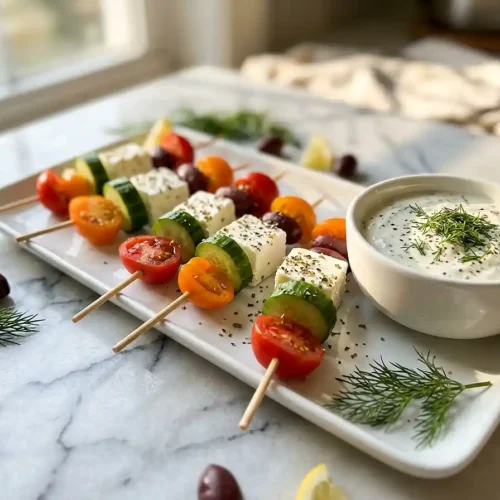
Greek Salad Skewers with Dill Dip
Equipment
- Small skewers or toothpicks
- Mixing bowl
- Whisk
- Serving platter
Ingredients
Greek Salad Skewers
- 1 pint Cherry tomatoes Firm, ripe tomatoes hold up best on skewers
- 1 Cucumber Cut into thick slices; English cucumber works well; no need to peel
- 8 oz Feta cheese, cubed Use block feta, not pre-crumbled
- ½ cup Kalamata olives Pitted; olive bar olives are firmer than jarred
- 24 Small skewers or toothpicks 4–6 inch bamboo skewers work best
Dill Dip
- 1 cup Plain Greek yogurt Full-fat gives the creamiest texture
- 2 tbsp Fresh dill, chopped Fresh dill makes a big difference here
- 1 tbsp Lemon juice Freshly squeezed preferred
- 1 clove Garlic, minced One clove keeps it mild; add more if desired
- ½ tsp Salt
- ¼ tsp Black pepper
Instructions
- Thread a cherry tomato, cucumber slice, feta cube, and kalamata olive onto each skewer. Pierce the feta gently from the tip to prevent cracking.
- Repeat until all ingredients are used, creating approximately 24 skewers. Keep assembled skewers refrigerated if working in a warm kitchen.
- In a small bowl, whisk together the Greek yogurt, dill, lemon juice, garlic, salt, and pepper until smooth and fully combined.
- Transfer the dill dip to a serving bowl and arrange the skewers around it on a serving platter.
- Serve immediately or cover and refrigerate for up to 4 hours before serving.