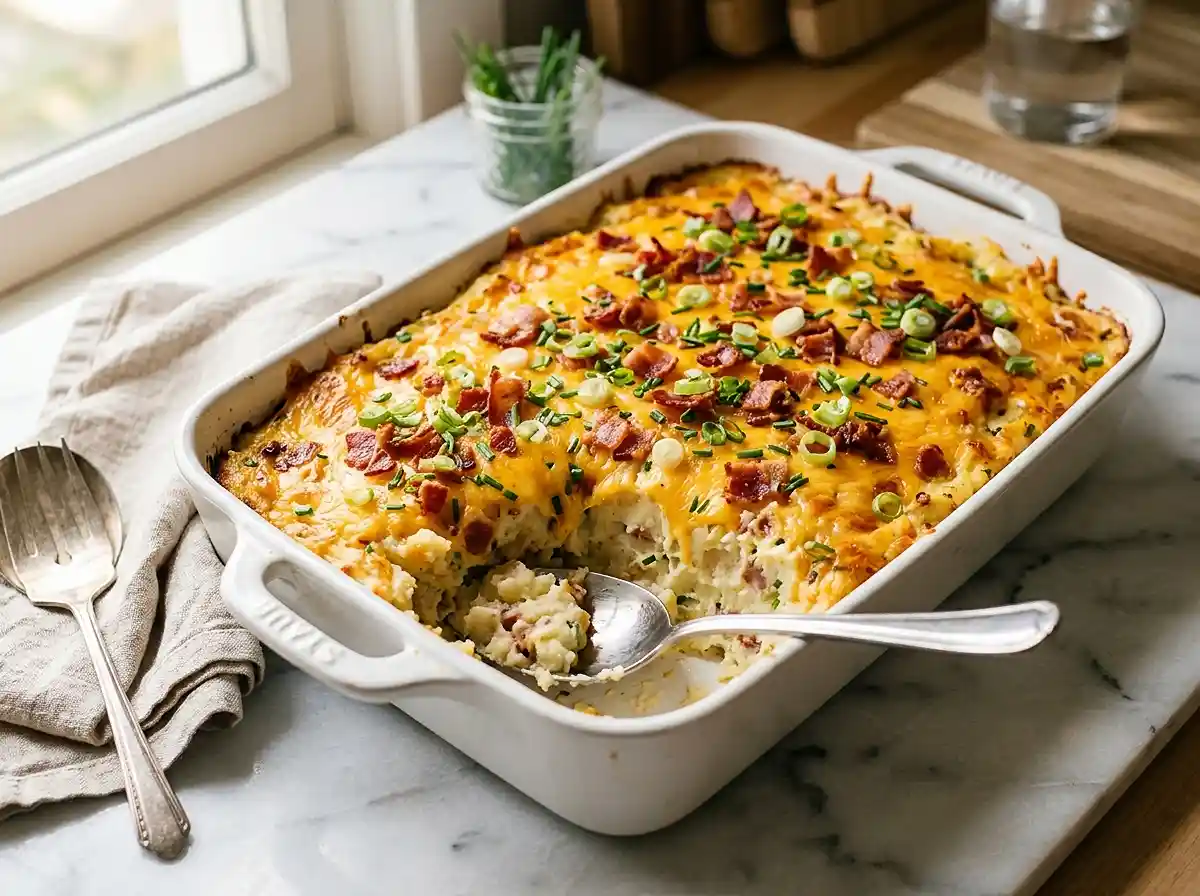
Gluten-Free Twice Baked Potato Casserole
Step-by-step gluten-free twice baked potato casserole with a creamy, cheesy filling and crispy bacon. Naturally gluten-free, make-ahead friendly, and feeds a crowd.
The first time I made a twice baked potato casserole for Thanksgiving, I nearly panicked halfway through. I’d scooped out six enormous russet potatoes, realized my mixing bowl was too small, and ended up folding cream cheese into potato chunks on the stovetop like I was making some kind of rustic mash.
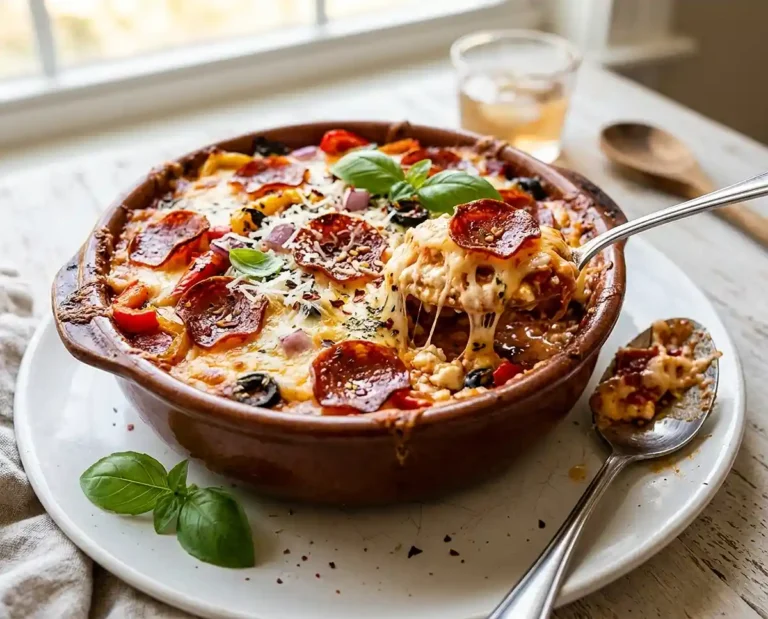
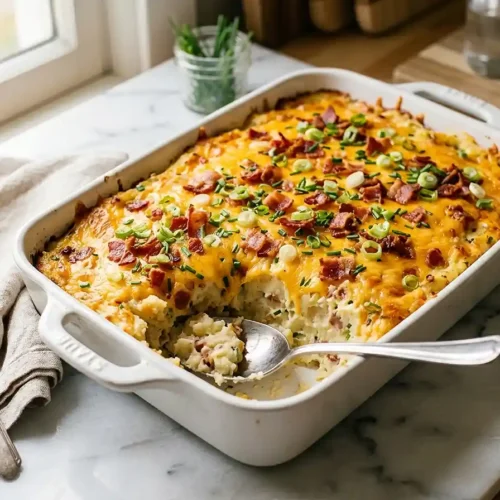
It still turned out incredible — golden cheese bubbling on top, bacon tucked into every creamy bite. That near-disaster taught me everything I now know about making this gluten-free twice baked potato casserole work every single time.
What’s the real difference between a twice baked potato casserole that tastes like a restaurant side dish and one that ends up watery and flat? Technique — and a few smart choices I’ll walk you through right here.
Table of Contents
Why You’ll Love This Twice Baked Potato Casserole
- Naturally gluten-free: Every ingredient in this recipe is gluten-free by nature — no swaps needed, no specialty flours required.
- Crowd-sized servings: This makes 12 generous portions, making it perfect for holidays, potlucks, and big family dinners.
- Make-ahead friendly: You can assemble the casserole the night before and bake it fresh the next day.
- Texture that holds up: Mixing scooped and chopped potatoes gives you a filling that’s creamy but never gluey — it slices and scoops like a dream.
The Secret to Perfect Gluten-Free Twice Baked Potato Casserole
- Oil the skins before baking: Brushing with vegetable oil crisps the potato skins and helps moisture escape evenly during the first bake — drier flesh means a creamier, less watery filling.
- Mix scooped and chopped potatoes: Half the potatoes get scooped (smooth base), and the other half get chopped skin and all (texture and bite). This combo is the reason the casserole feels rustic, not pasty.
- Softened — not melted — dairy: Room-temperature butter and cream cheese blend in without making the filling greasy. Cold dairy fights the mash and creates lumps that don’t smooth out.
- Two-stage cheese and bacon topping: Half goes into the filling, half goes on top. You get savory depth inside and a golden, slightly crispy crown on the outside.
Ingredients
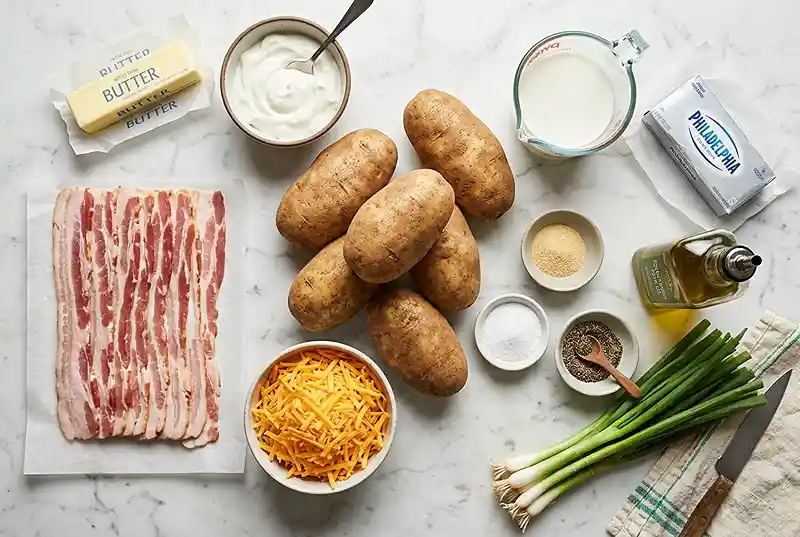
Potatoes
- 6 lbs. russet potatoes (about 6 large), washed and dried
- 2 Tbsp vegetable oil, for brushing the potato skins
Bacon
- ½ lb. bacon, divided — cooked until crispy and crumbled
Creamy Filling
- 1 stick butter (½ cup), softened
- 1 cup sour cream (full-fat works best)
- 1 cup milk (whole milk recommended)
- 8 oz. cream cheese, softened
- 2 cups cheddar cheese, shredded and divided
- 1 tsp garlic powder
- 1 Tbsp salt, adjust to taste
- 1 tsp black pepper, freshly cracked
Pan and Topping
- Nonstick cooking spray, as needed for greasing the dish
- 2 green onions, thinly sliced, for topping
Optional Variations
- Diced ham or crispy pancetta — optional substitute for bacon
- Diced jalapeños — optional, for heat
- Hot sauce — optional, a few dashes for heat
- Smoked paprika — optional
- Fresh chives — optional
- 1 tablespoon extra butter — optional, for a vegetarian version when omitting bacon
- Sautéed mushrooms — optional vegetarian substitute for bacon
Instructions
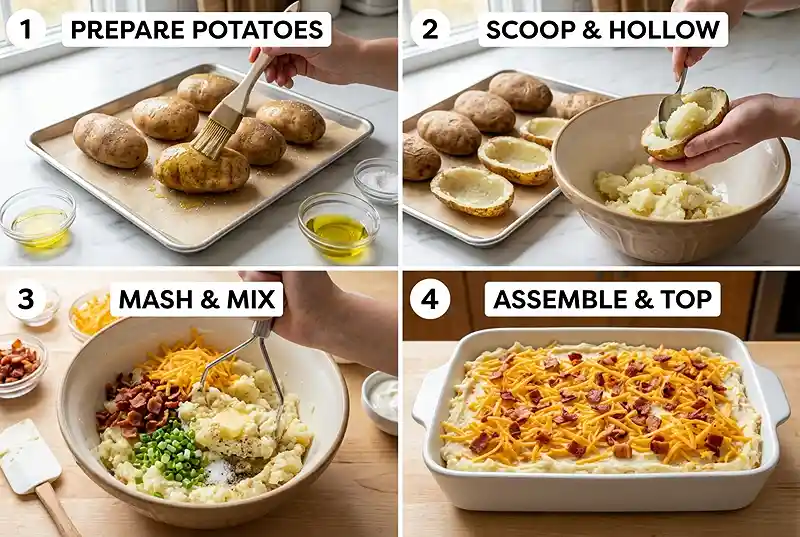
- Preheat your oven to 400°F. Wash and dry the russet potatoes well, then pierce each one a few times with a fork so steam can escape during baking.
- Brush each potato all over with vegetable oil and place them on a parchment-lined baking tray. This step is worth not skipping — the oil helps the skins crisp and lets excess moisture vent.
- Lay the bacon on a separate parchment-lined tray and place it in the oven alongside the potatoes. Cook the bacon for 15 to 20 minutes until crispy, then remove it, let it cool, crumble it, and set it aside.
- Continue baking the potatoes for about 40 minutes more after starting the bacon, or until completely fork-tender. A fork should slide in with zero resistance. Turn the oven down to 375°F.
- Let the potatoes cool for 10 to 15 minutes until safe to handle. Slice three of the potatoes in half lengthwise and scoop the flesh into a large mixing bowl. Save the skins for another use if you’d like.
- Chop the remaining three potatoes — skin and all — into rough chunks and add them to the bowl. This is where that wonderful texture contrast comes from.
- Add half the crumbled bacon, the softened butter, sour cream, milk, softened cream cheese, 1 cup of shredded cheddar, garlic powder, salt, and black pepper to the bowl.
- Mash and fold everything together until well combined and creamy, leaving a little texture. You want it to look like a hearty mash — not completely smooth, not chunky.
- Grease a 9×13 baking dish with nonstick cooking spray. Transfer the potato mixture to the dish and spread it evenly with a spatula.
- Top with the remaining 1 cup of shredded cheddar cheese and the remaining crumbled bacon. Bake uncovered at 375°F for 25 minutes, until the cheese is melted and golden in spots.
- If the cheese isn’t melting evenly, broil for the last 2 to 3 minutes, watching closely so it doesn’t burn. The topping should look like bubbling, golden pockets — as rich and molten as fondue.
- Remove from the oven, scatter the sliced green onions over the top, and let cool for a few minutes before serving.
Make It Your Own
You know, one of the best things about a baked potato casserole is how naturally it adapts to what you have on hand — or what your family loves most.
Swap the bacon for ham or pancetta. Diced ham keeps things a little milder and works beautifully for an Easter brunch spread. Crispy pancetta brings a slightly more savory, Italian-leaning flavor. Either one crumbles nicely over the top.
Make it vegetarian. Skip the bacon entirely and stir in sautéed mushrooms instead. Add an extra tablespoon of butter to the filling to keep the richness in balance. The filling is already so flavorful from the cream cheese and cheddar that you won’t miss the meat.
Add some heat. A handful of diced jalapeños folded into the filling or a few dashes of hot sauce stirred into the mash takes this from cozy side dish to something with real personality. Smoked paprika sprinkled on top before baking adds a subtle warmth and a gorgeous color.
Swap the dairy. Full-fat coconut cream works in place of sour cream if you’re avoiding dairy — the flavor is slightly different, but the texture holds up well. For the cream cheese, there are solid dairy-free options at most grocery stores now that blend in without an issue.
Cheese variations. Sharp white cheddar gives you a more complex bite. Pepper jack melts beautifully and layers in heat. Gruyère makes this feel special-occasion fancy without any extra effort.
Common Problems & Solutions
Problem: The filling is too watery. This usually means the potatoes weren’t fully dry before baking or the dairy was added cold. Solution: make sure you bake the potatoes until completely fork-tender and let them steam dry for a few minutes after scooping. Always use room-temperature butter and cream cheese.
Problem: The casserole is gummy or dense. Over-mashing develops too much starch, which creates that gluey, gummy texture. Solution: fold gently and stop mashing once everything is just combined. A little texture in the mash is a feature, not a flaw — according to food science research on potato starch behavior, overworking breaks down cell walls and releases excess starch that turns the filling sticky.
Problem: The cheese on top isn’t browning. Man, oh man — this one is fixable in minutes. If your oven runs cool or the cheese looks melted but pale, switch on the broiler for 2 to 3 minutes. Stay close to the oven. It goes from perfectly golden to burnt fast.
Problem: The casserole is bland. Potatoes need more salt than most people expect. Taste the filling before spreading it in the dish and adjust. The garlic powder and black pepper are doing important work here, so don’t skip them. If it still tastes flat, a dash of hot sauce folded into the mix wakes everything up.
Problem: The top is browning but the center is still cold. This happens most often when the casserole goes into the oven straight from the fridge. Let it sit at room temperature for 20 to 30 minutes before baking if you’ve made it ahead. The casserole will heat evenly and the center will be just as warm as the edges.
Storage & Meal Prep
| Method | Duration | Notes |
|---|---|---|
| Counter | 2–3 days | Airtight container only |
| Fridge | 5–7 days | Bring to room temp before reheating |
| Freezer | 2–3 months | Wrap individually or freeze the whole dish tightly covered |
To reheat, cover the dish with foil and warm at 350°F for 20 to 25 minutes. Remove the foil for the last 5 minutes to re-crisp the cheese topping. For single portions, a microwave on medium power works fine — just cover loosely and check every 60 seconds.
Leftover potato filling is also excellent stuffed into bell peppers and baked, or rolled into patties and pan-fried until golden. Nothing goes to waste with this one.
FAQs About Gluten-Free twice baked potato casserole
Can I make this gluten-free twice baked potato casserole ahead of time?
Yes — up to 24 hours ahead. Assemble the casserole completely, cover tightly with plastic wrap or foil, and refrigerate. Let it sit at room temperature for 20 to 30 minutes before baking so it heats evenly all the way through.
How do I keep the filling from turning gluey?
Fold gently and stop early. Overworking the potatoes breaks down starch cells and creates a dense, gummy texture. Mash just until everything is combined — a few lumps are perfectly fine and actually improve the final texture.
What is the best potato for twice baked potato casserole?
Russet potatoes are the right choice. They are high in starch, bake up fluffy, and absorb the creamy filling without getting waterlogged. Waxy potatoes like red or Yukon Gold hold more moisture and can make the casserole feel dense.
Why did my cheese not melt evenly on top?
Freshly shredded cheese melts better than pre-bagged. Pre-shredded cheddar is coated with anti-caking agents that prevent smooth melting. Shred from a block when possible, and use the broiler for 2 to 3 minutes at the end if needed.
Can I leave out the bacon or use a substitute?
Both work well. Turkey bacon adds smoky flavor with a slightly softer texture. For a vegetarian version, use sautéed mushrooms or an extra tablespoon of butter in the filling to maintain richness. All core ingredients are naturally gluten-free.
Serving Suggestions
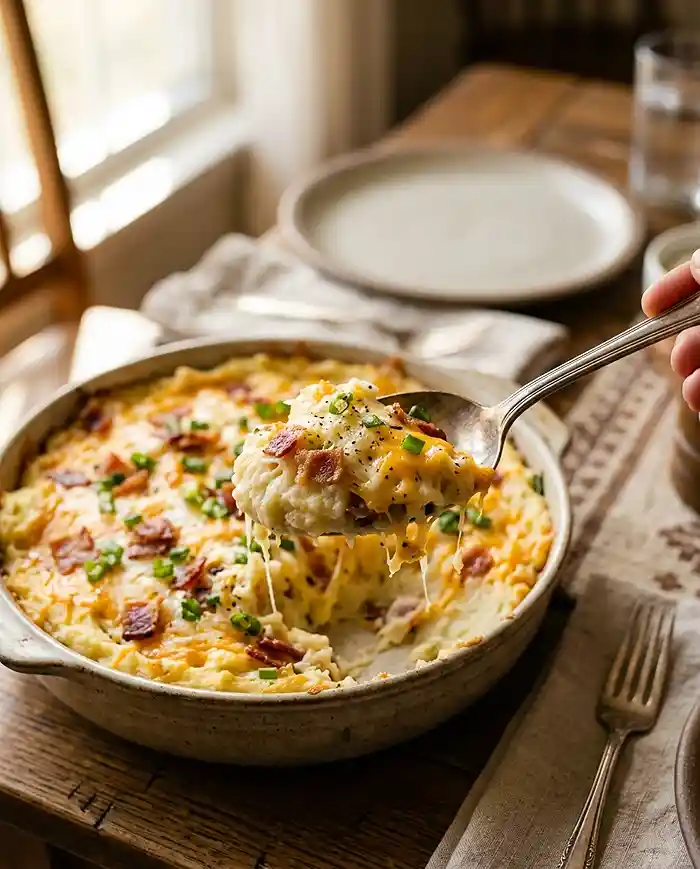
This casserole is the ideal side dish for a classic roast chicken, a glazed holiday ham, or a slow-roasted pork shoulder. It holds its shape when scooped, making it easy to serve alongside other dishes without things getting messy on the plate.
Well… if you’re bringing it to a Christmas dinner or a potluck Thanksgiving table, make the casserole the night before, refrigerate it, and bake it fresh while the main course rests. It frees up oven space and arrives hot and golden without any last-minute scrambling.
For more gluten-free comfort food ideas, try my double chocolate strawberry banana bread for something sweet to round out the meal, or explore the gluten-free strawberry taho recipe if you’re looking for a lighter, unique dessert. And if you love syrups for drinks and breakfasts, the strawberry syrup for matcha is one of my most-used recipes.
If you tried this gluten-free twice baked potato casserole, I’d genuinely love to hear how it went. Drop a comment below, leave a star rating, and if you made any fun variations — jalapeños, a different cheese, the vegetarian mushroom version — share those too. Save it to Pinterest so it’s easy to find next time the craving hits.
Easy Gluten-Free Twice Baked Potato Casserole
Equipment
- Oven
- Large mixing bowl
- Baking sheet
- Parchment paper
- 9×13 baking dish
- Fork
- Spatula
Ingredients
Potatoes
- 6 lbs russet potatoes washed and dried
- 2 Tbsp vegetable oil for brushing potato skins
Bacon
- ½ lb bacon cooked until crispy and crumbled, divided
Creamy Filling
- 1 stick butter softened
- 1 cup sour cream full-fat works best
- 1 cup milk whole milk recommended
- 8 oz cream cheese softened
- 2 cups cheddar cheese shredded and divided
- 1 tsp garlic powder
- 1 Tbsp salt adjust to taste
- 1 tsp black pepper freshly cracked
Pan and Topping
- nonstick cooking spray for greasing dish
- 2 green onions thinly sliced for topping
Optional Variations
- diced ham optional substitute for bacon
- crispy pancetta optional substitute for bacon
- diced jalapeños optional
- hot sauce optional
- smoked paprika optional
- fresh chives optional
- 1 Tbsp butter optional extra for vegetarian version
- sautéed mushrooms optional vegetarian substitute for bacon
Instructions
- Preheat oven to 400°F. Wash and dry the potatoes and pierce each several times with a fork.
- Brush potatoes with vegetable oil and place on a parchment-lined baking sheet.
- Place bacon on a separate parchment-lined tray and bake for 15 to 20 minutes until crispy. Cool, crumble, and set aside.
- Continue baking potatoes for about 40 minutes more, until fork-tender. Reduce oven temperature to 375°F.
- Cool potatoes for 10 to 15 minutes. Slice three potatoes in half and scoop flesh into a large bowl.
- Chop the remaining three potatoes, including the skins, into chunks and add to the bowl.
- Add half the bacon, butter, sour cream, milk, cream cheese, 1 cup cheddar cheese, garlic powder, salt, and black pepper.
- Mash and fold until creamy but still slightly textured.
- Grease a 9×13 baking dish and spread the potato mixture evenly into the dish.
- Top with remaining cheddar cheese and bacon. Bake uncovered at 375°F for 25 minutes until melted and golden.
- Broil for 2 to 3 minutes if needed for additional browning, watching carefully.
- Remove from oven, top with sliced green onions, cool briefly, and serve.