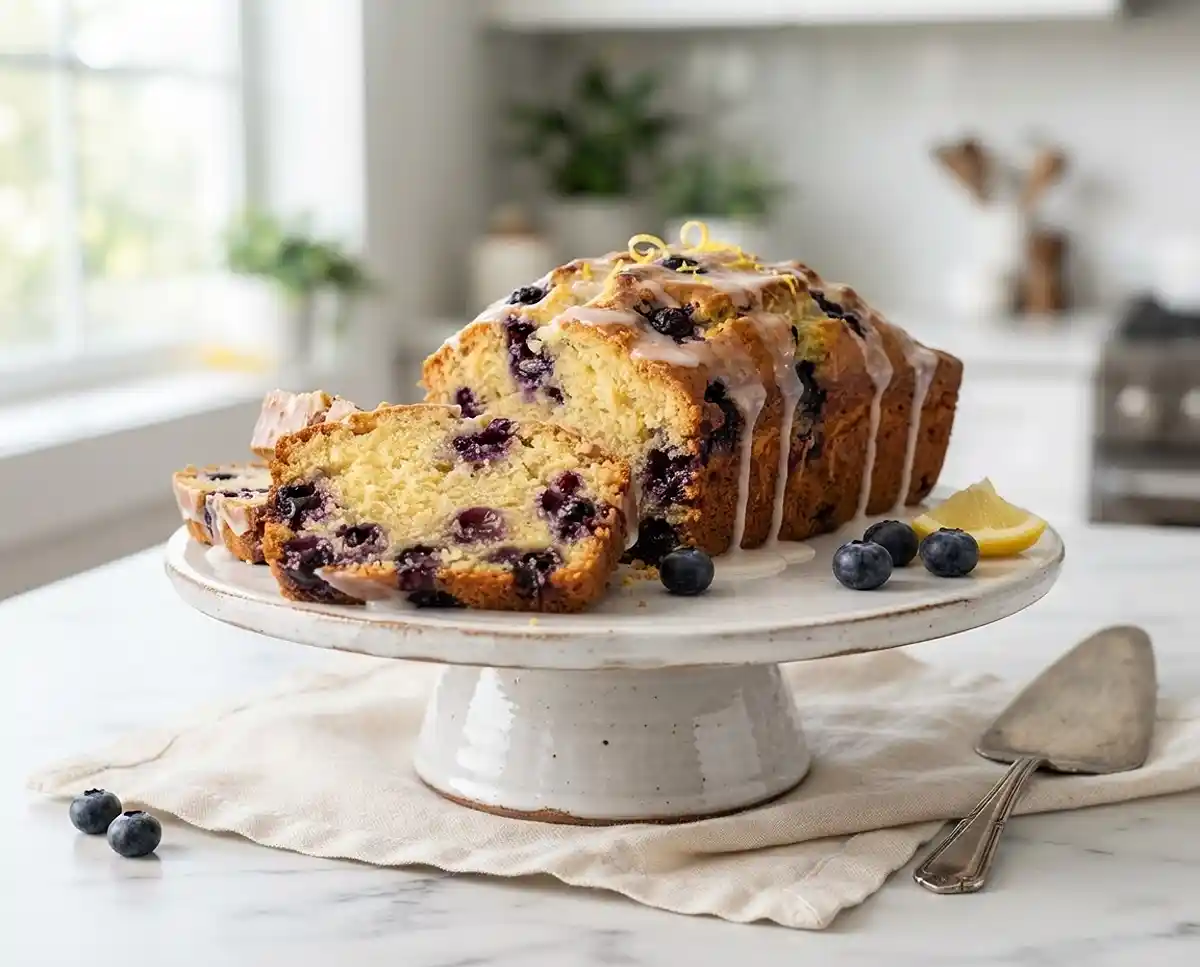
Greek Yogurt Lemon Blueberry Loaf
Make this gluten-free Greek yogurt lemon blueberry loaf with step-by-step instructions. Moist, tender crumb, easy lemon glaze, and no dry texture.
My first attempt at a gluten-free lemon blueberry loaf was a dense, gummy brick that my kids politely ate around. That was the day I started adding Greek yogurt to quick breads — and I haven’t looked back since.
This gluten-free Greek yogurt lemon blueberry loaf has a crumb so soft it practically pulls apart between your fingers, with bright lemon flavor in every bite and little bursts of juicy blueberry throughout. Can you really get that kind of texture without gluten? You absolutely can — and this recipe shows you exactly how.
Well… the secret isn’t a complicated technique or a hard-to-find ingredient. It’s whole Greek yogurt, a smart layering method, and a few key steps that make all the difference in a gluten-free bake.
Why You’ll Love This Lemon Blueberry Loaf with Greek Yogurt
- Exceptionally moist crumb: Greek yogurt locks moisture into every slice, so the loaf stays tender for days — not just the day you bake it.
- Beginner-friendly technique: No stand mixer, no complicated steps. A bowl, a whisk, and a loaf pan are all you need.
- Naturally gluten-free: Uses certified gluten-free flour throughout, with no specialty blends or hard-to-source starches.
- Bright lemon glaze finish: The two-ingredient drizzle adds a sharp, citrusy contrast that balances the sweetness of the blueberries beautifully.
The Secret to Perfect Gluten-Free Greek Yogurt Lemon Blueberry Loaf
- Rubbing zest into sugar releases lemon oils: Working the lemon zest into the granulated sugar for 30 seconds with your fingertips ruptures the oil cells in the zest. Those oils are where the bold lemon flavor lives — skipping this step makes a noticeably flatter-tasting loaf.
- Greek yogurt’s acidity activates lift: Food science research on yogurt in baking confirms that the natural acidity in Greek yogurt reacts with baking powder to create extra lift and a lighter crumb — a critical advantage in gluten-free baking where structure is harder to build.
- Flour-coating keeps blueberries suspended: Tossing the blueberries in a tablespoon of gluten-free flour before layering them in the batter prevents them from sinking to the bottom during baking. The flour creates just enough friction to hold them in place through the oven’s heat.
- Layering batter and berries prevents gummy pockets: Alternating thirds of batter with halved portions of blueberries distributes the fruit evenly. A single dump of berries on top causes them to all settle in one dense, wet layer as the loaf bakes.
Table of Contents
Ingredients

This recipe makes 10 slices. Here’s everything you’ll need:
Lemon Blueberry Loaf
| Ingredient | Amount | Notes |
|---|---|---|
| Granulated sugar | ¾ cup (150 g) | Used to release lemon oils from the zest |
| Fresh lemon zest | 2 tablespoons | Use a microplane for fine, even zest |
| Fresh lemon juice | ¼ cup (59 ml) | About 2 medium lemons |
| Neutral-flavored oil | ½ cup (118 ml) | Avocado or canola oil work well |
| Large eggs, room temperature | 2 | Room temp eggs blend more evenly |
| Plain whole Greek yogurt | ½ cup (113 g) | Whole milk yogurt gives the best moisture |
| Vanilla extract | 1 teaspoon | |
| Certified GF all-purpose flour | 1¾ cups (about 218 g) | Weigh for accuracy |
| Certified GF baking powder | 2 teaspoons | Check the label — not all baking powder is GF |
| Fine salt | ½ teaspoon | |
| Fresh blueberries | 1 cup (148 g) | Fresh works best; see substitution notes for frozen |
| Certified GF all-purpose flour (for coating) | 1 tablespoon | Tossed with blueberries before layering |
Lemon Glaze
| Ingredient | Amount | Notes |
|---|---|---|
| Powdered sugar | ½ cup (65 g) | Sift first to avoid lumps in the glaze |
| Fresh lemon juice | 1 tablespoon | Adjust for a thinner or thicker drizzle |
Instructions

Prep your pan and preheat. Heat the oven to 350°F (175°C). Grease a 9×5-inch loaf pan thoroughly and line it with parchment paper, leaving overhang on both long sides. This sling makes lifting the finished loaf out effortless and prevents sticking along the short ends.
Bloom the lemon flavor. Add the granulated sugar and fresh lemon zest to a large mixing bowl. Rub them together with your fingertips for about 30 seconds until the mixture smells intensely citrusy and looks slightly damp. This step draws the aromatic oils directly out of the zest and into the sugar — it’s the difference between a loaf that tastes lemony and one that just smells lemon-adjacent.
Build the wet base. Pour in the fresh lemon juice, neutral oil, room temperature eggs, Greek yogurt, and vanilla extract. Whisk until the batter is completely smooth, glossy, and uniform. The mixture should look thick and creamy, not streaky — take an extra 20 seconds here if needed.
Add the dry ingredients. Add the certified gluten-free flour, baking powder, and salt directly to the wet mixture. Gently stir with a spatula until just combined. Stop when no dry streaks remain — a few small lumps are completely fine. Overmixing a gluten-free batter develops too much starch structure and leads to a gummy, dense loaf.
Coat the blueberries. In a separate small bowl, toss the fresh blueberries with the remaining 1 tablespoon of certified gluten-free flour. Shake off any excess. This thin coating is what keeps the berries evenly distributed throughout the loaf instead of sinking to the bottom during baking.
Layer the batter and berries. Pour about one-third of the batter into the prepared loaf pan. Gently scatter half the flour-coated blueberries over that layer. Add another third of batter, then the remaining blueberries. Pour the final third of batter over the top and smooth it gently with a spatula. This three-layer system ensures berries in every single slice.
Bake until set through the center. Bake for 45–55 minutes. The loaf is done when the center reads 205–210°F (96–99°C) on an instant-read thermometer, or when a toothpick inserted into the center comes out with just a few moist crumbs — not wet batter. The top should be golden and just slightly domed.
Pro Tip: Avoid overbaking. Greek yogurt makes this loaf wonderfully moist, but that moisture disappears quickly if the loaf goes even 5 minutes too long in the oven. Start checking at the 45-minute mark.
Cool before glazing. Let the loaf rest in the pan for 10 minutes, then transfer it to a wire rack using the parchment overhang. Let it cool for another 10 minutes. While it rests, whisk the powdered sugar and lemon juice together until completely smooth and lump-free.
Glaze and finish cooling. Drizzle the lemon glaze over the warm (not hot) loaf and let it run naturally down the sides. Wait until the loaf has cooled completely before slicing — cutting too early compresses the crumb and makes slices fall apart.
Make It Your Own
Swap fresh blueberries for frozen. Frozen blueberries work in this lemon blueberry loaf with Greek yogurt, but they release more liquid during baking. Don’t thaw them first — use them straight from the freezer and coat them in the tablespoon of flour just as you would fresh. You know… the coating matters even more with frozen berries because they’re wetter and more prone to bleeding color into the batter.
Try a dairy-free version. Replace the Greek yogurt with an equal amount of plain, unsweetened coconut yogurt or oat-based yogurt. The texture shifts slightly — you lose a little of that tangy depth — but the loaf still bakes up tender and moist. Avoid flavored or sweetened yogurt alternatives, which throw off the balance of the recipe.
Add a streusel topping. Before baking, mix 2 tablespoons of certified gluten-free all-purpose flour, 2 tablespoons of brown sugar, and 1 tablespoon of cold butter into coarse crumbs, then scatter it over the top layer of batter. It adds a subtle crunch that contrasts the soft crumb beautifully — especially welcome if you’re serving this at a holiday brunch or making it for a crowd.
Use raspberries instead of blueberries. This blueberry lemon Greek yogurt loaf formula works just as well with fresh raspberries. The tartness of raspberries pairs even more sharply with the lemon, creating a loaf that leans more tart than sweet. Raspberry juice bleeds more than blueberry, so the crumb will have pink streaks — which looks striking on the slice.
If you love lemon-forward drinks to pair with a slice of this, try this refreshing gluten-free sugar-free lemonade — the flavors are a natural match.
Common Problems & Solutions
Problem: The loaf is gummy in the center. The batter was underbaked or the loaf wasn’t cooled fully before slicing. Use an instant-read thermometer and pull the loaf when the center reaches 205–210°F. Then let it cool completely on the wire rack before cutting — at least 30–45 minutes. Gluten-free loaves continue to set up as they cool, and slicing early is the top cause of a gummy interior.
Problem: All the blueberries sank to the bottom. The flour coating was skipped or shaken off too aggressively, or the batter was too thin. Make sure to coat the berries in the full tablespoon of flour and only shake off the very loose excess. Also check that your batter is thick — if it pours like water, your flour may have been under-measured. Weigh your flour at 218 g for accuracy.
Problem: The loaf is dry and crumbly. Man, oh man… this one usually comes down to overbaking or using fat-free yogurt instead of whole milk Greek yogurt. Fat-free yogurt has significantly less moisture, which compounds in a gluten-free bake. Stick with whole milk Greek yogurt and check the loaf early. If your oven runs hot, tent the top loosely with foil at the 40-minute mark to slow browning without drying the inside.
Problem: The top cracked heavily and the loaf domed unevenly. A small crack down the center of a quick bread is normal and even desirable — it’s a sign the loaf rose properly. A dramatic fissure or collapse usually means the oven temperature was too high. Verify your oven temperature with an inexpensive thermometer; many home ovens run 25°F hotter than the dial reads.
Storage & Meal Prep
| Method | Duration | Notes |
|---|---|---|
| Counter | 2–3 days | Airtight container; keep away from direct sunlight |
| Fridge | 5–7 days | Wrap slices individually; bring to room temp before eating |
| Freezer | Up to 2 months | Wrap slices in plastic wrap, then store in a zip bag |
To reheat from frozen, unwrap a slice and microwave it for 25–30 seconds. It comes back to near-fresh softness with no loss of moisture — one of the real advantages of the Greek yogurt base.
For a make-ahead strategy, bake the loaf fully but hold the glaze. Store the unglazed loaf wrapped tightly, then drizzle the lemon glaze fresh right before serving. The glaze is a two-minute job and it always looks better applied the day of.
Greek Yogurt Lemon Blueberry Loaf FAQs
Can I use frozen blueberries in this lemon blueberry loaf with Greek yogurt?
Yes, frozen blueberries work well. Do not thaw them first — use them straight from the freezer and toss them in the tablespoon of gluten-free flour just as you would fresh. Frozen berries release more liquid during baking, so the flour coating is especially important to prevent the crumb from turning purple-gray and soggy around the fruit.
How do I know when the gluten-free loaf is fully baked?
The most reliable method is an instant-read thermometer. The center of the loaf should read 205 to 210 degrees Fahrenheit (96 to 99 degrees Celsius). If you don’t have a thermometer, insert a toothpick into the deepest part of the center — it should come out with a few moist crumbs, not wet batter. Start checking at the 45-minute mark.
What’s the best gluten-free flour for this recipe?
A certified gluten-free all-purpose blend that contains a binding agent like xanthan gum gives the most consistent results. Measure by weight (218 g) rather than volume for accuracy, as different brands pack differently into a cup. Avoid single-ingredient flours like almond or coconut flour — they require entirely different ratios and won’t work as a 1:1 substitute here.
Can I make this loaf dairy-free?
Yes. Substitute the Greek yogurt with an equal amount of plain, unsweetened coconut yogurt or oat-based yogurt. The loaf will still bake up moist and tender, though it loses some of the tangy depth that whole milk Greek yogurt provides. Avoid sweetened or flavored yogurt alternatives, as these alter the flavor balance of the recipe.
Why did my blueberries sink to the bottom?
The flour coating was either skipped or shaken off too firmly before layering. Coat the blueberries in the full tablespoon of certified gluten-free flour and remove only the loosest excess before adding them to the batter. Also make sure to layer — one-third batter, half the berries, another third of batter, remaining berries, final batter — rather than stirring the berries directly into the full bowl.
Serving Suggestions

Serve slices at room temperature with a small pat of softened butter or a spoonful of plain Greek yogurt on the side — the tang echoes what’s already in the loaf and adds a creamy contrast to the bright glaze.
This lemon Greek yogurt loaf is a natural fit for a spring or summer brunch table. It’s become a staple at our family’s Easter morning spread alongside a pitcher of something cold and fizzy — the citrus flavor wakes everything up after the savory dishes.
For a complete spread, pair it with this gluten-free whipped cottage cheese ranch dip for the savory side of the table, or round out a summer afternoon with a frozen peach bellini — the stone fruit and citrus flavors are a natural pair.
Final Thoughts
This gluten-free Greek yogurt lemon blueberry loaf delivers the kind of tender, moist crumb that’s genuinely hard to achieve in gluten-free baking — and now you know exactly why each step works.
Give it a bake and tell me how it went in the comments. Did you try the raspberry swap? Add a streusel? I’d love to know what you changed and how it turned out. And if it earned a spot on your regular rotation, a share or save on Pinterest helps other gluten-free bakers find it too.
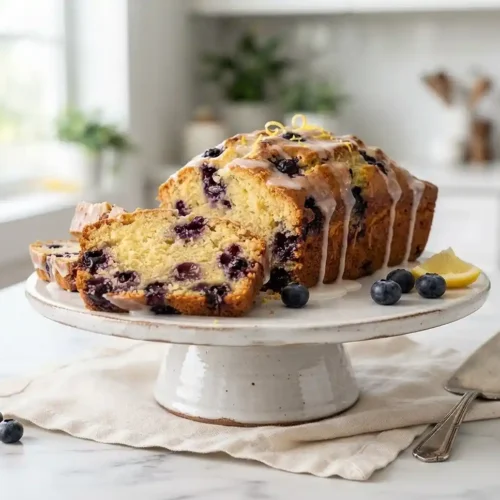
Gluten-Free Greek Yogurt Lemon Blueberry Loaf
Equipment
- 9×5-inch loaf pan
- Parchment paper
- Large mixing bowl
- Whisk
- Spatula
- Small bowl
- Microplane
- Wire rack
- Instant-read thermometer
Ingredients
Lemon Blueberry Loaf
- ¾ cup Granulated sugar 150 g; used to release lemon oils from the zest
- 2 tablespoons Fresh lemon zest Use a microplane for fine, even zest
- ¼ cup Fresh lemon juice 59 ml; about 2 medium lemons
- ½ cup Neutral-flavored oil 118 ml; avocado or canola oil work well
- 2 Large eggs Room temperature
- ½ cup Plain whole Greek yogurt 113 g; whole milk yogurt gives the best moisture
- 1 teaspoon Vanilla extract
- 1¾ cups Certified GF all-purpose flour About 218 g; weigh for accuracy
- 2 teaspoons Certified GF baking powder Check the label because not all baking powder is gluten-free
- ½ teaspoon Fine salt
- 1 cup Fresh blueberries 148 g; fresh works best
- 1 tablespoon Certified GF all-purpose flour For coating the blueberries before layering
Lemon Glaze
- ½ cup Powdered sugar 65 g; sift first to avoid lumps
- 1 tablespoon Fresh lemon juice Adjust for a thinner or thicker drizzle
Instructions
- Prep your pan and preheat. Heat the oven to 350°F (175°C). Grease a 9×5-inch loaf pan thoroughly and line it with parchment paper, leaving overhang on both long sides.
- Bloom the lemon flavor. Add the granulated sugar and fresh lemon zest to a large mixing bowl. Rub them together with your fingertips for about 30 seconds until intensely citrusy and slightly damp.
- Build the wet base. Add the fresh lemon juice, neutral oil, room-temperature eggs, Greek yogurt, and vanilla extract. Whisk until completely smooth, glossy, and uniform.
- Add the dry ingredients. Add the certified gluten-free flour, baking powder, and salt to the wet mixture. Gently stir with a spatula until just combined. Stop when no dry streaks remain.
- Coat the blueberries. In a separate small bowl, toss the fresh blueberries with 1 tablespoon of certified gluten-free flour. Shake off only the loose excess.
- Layer the batter and berries. Pour one-third of the batter into the prepared loaf pan. Scatter half the flour-coated blueberries over it. Add another third of batter, then the remaining blueberries. Finish with the final third of batter and smooth the top gently.
- Bake until set through the center. Bake for 45–55 minutes. The loaf is done when the center reaches 205–210°F (96–99°C), or a toothpick inserted into the center comes out with a few moist crumbs rather than wet batter.
- Cool before glazing. Let the loaf rest in the pan for 10 minutes, then transfer it to a wire rack using the parchment overhang. Let it cool for another 10 minutes. Whisk the powdered sugar and lemon juice together until smooth.
- Glaze and finish cooling. Drizzle the lemon glaze over the warm, not hot, loaf. Let the loaf cool completely before slicing to prevent the crumb from becoming compressed or falling apart.