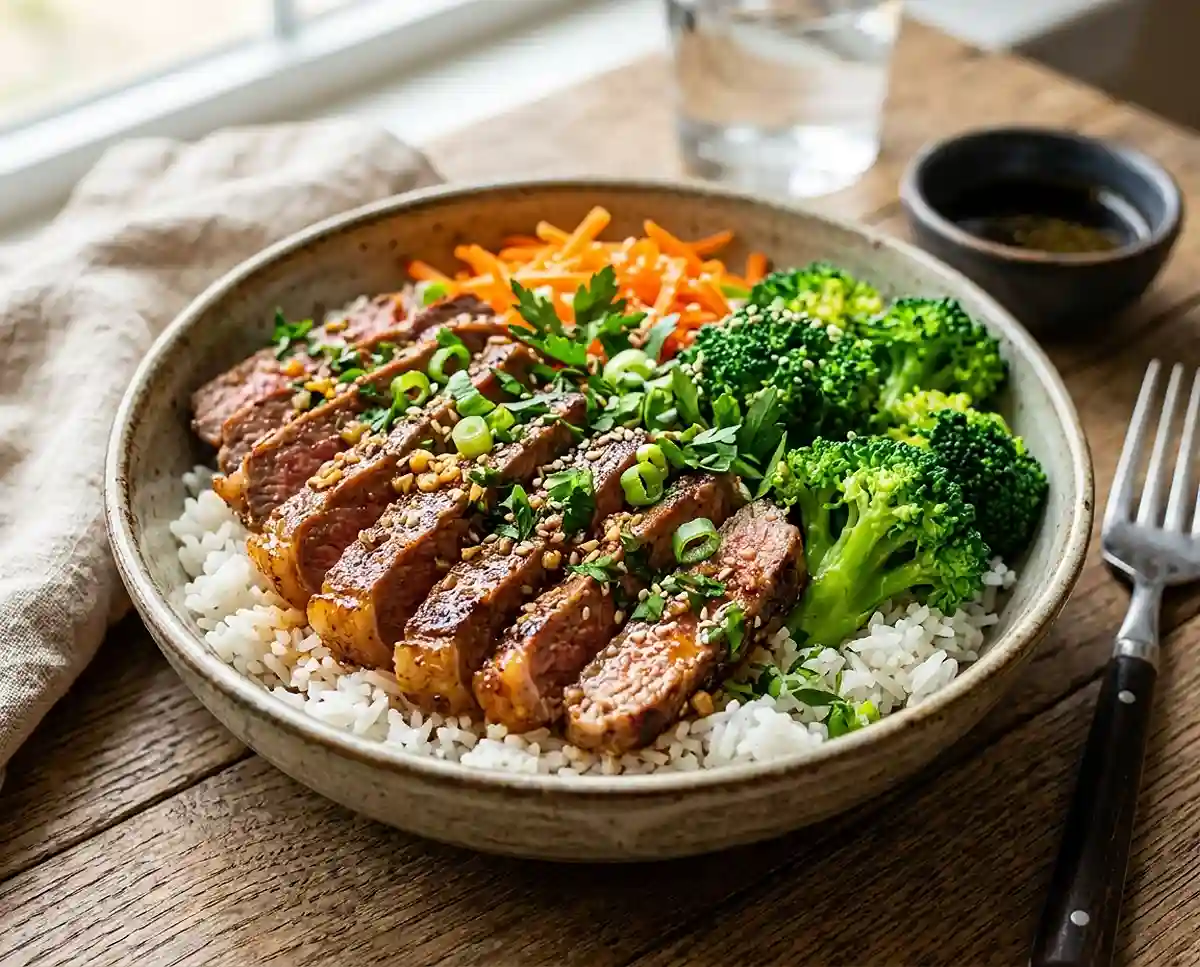
High-Protein GF Garlic Steak Rice Bowls
Discover a hearty, flavor-packed meal that checks every box: High-Protein GF Garlic Steak Rice Bowls, and ready in under 30 minutes.
The first time I made a high-protein GF garlic steak rice bowl, I burned the garlic. Completely. I was distracted, the pan was too hot, and that sharp, bitter smell hit me before I could do anything about it. I started over — and the second attempt was so good it became our most-requested weeknight dinner.
That experience taught me the most important thing about this dish: getting the heat right makes all the difference. Have you ever had a steak bowl that tasted flat, even with all the right ingredients? That’s usually a heat problem, not a seasoning problem. Once you nail it, everything else falls into place.
Well… this recipe is the result of dozens of those test runs, and I’m handing you the version that works every single time.
Table of Contents
Why You’ll Love These High-Protein GF Garlic Steak Rice Bowls
- Big protein hit: Sirloin steak delivers serious staying power — this bowl keeps you full for hours, not minutes.
- Naturally gluten-free: No swaps or substitutions needed. Every ingredient is GF from the start.
- Beginner-friendly: If you can cook rice and use a skillet, you can make this. No special skills required.
- Meal prep champion: Components store separately and reheat beautifully, making it ideal for busy weekday lunches.
The Secret to Perfect High-Protein GF Garlic Steak Rice Bowls
- Thin slices = faster, juicier steak: Thinly sliced sirloin cooks in 3–5 minutes and stays tender instead of chewy. Thick cuts overcook before the outside browns.
- Paprika builds color and depth: It’s not just for looks. Paprika adds a subtle smokiness that makes the garlic flavor pop without overpowering the beef.
- Lemon juice at the end, not the beginning: Adding acid after cooking lifts every flavor in the pan. Put it in too early and it steams the steak instead of finishing it.
- Medium-high heat for that sear: A properly hot pan creates the golden, slightly caramelized edges that make steak bowls taste like restaurant food. A cool pan gives you gray, steamed meat.
Ingredients For High-Protein GF Garlic Steak Rice Bowls
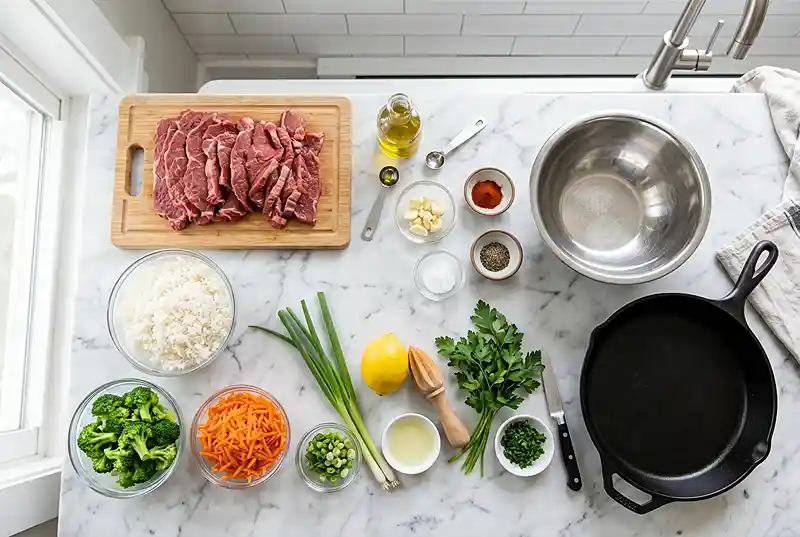
| Category | Ingredient | Amount |
|---|---|---|
| Protein | Sirloin steak, thinly sliced | 1½ lbs (680 g) |
| Fat | Olive oil | 2 tbsp |
| Aromatics | Garlic, minced | 4 cloves |
| Spice | Paprika | 1 tsp |
| Seasoning | Salt | ½ tsp |
| Seasoning | Black pepper | ¼ tsp |
| Base | Cooked rice | 4 cups |
| Vegetables | Broccoli florets, steamed | 1 cup |
| Vegetables | Shredded carrots | 1 cup |
| Garnish | Green onions, sliced | 2 green onions |
| Finish | Lemon juice | 1 tbsp |
| Garnish | Fresh parsley, chopped | 1 tbsp |
Note on rice: White rice, brown rice, and jasmine rice all work beautifully here. For extra protein, swap in cauliflower rice or a mix of both.
Instructions For High-Protein GF Garlic Steak Rice Bowls
Step 1: Season the Steak
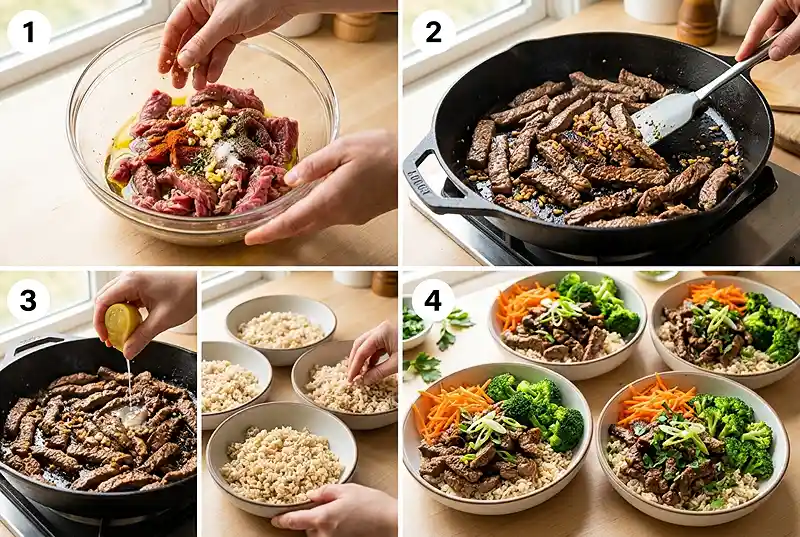
In a large bowl, toss the thinly sliced sirloin with olive oil, minced garlic, paprika, salt, and black pepper. Make sure every piece is coated — you want the garlic pressed directly onto the meat, not floating loose in the bowl.
Pro Tip: Let the steak sit for 5–10 minutes after seasoning. Even a short rest helps the flavors penetrate.
Step 2: Sear the Steak
Heat a large skillet over medium-high heat until it’s genuinely hot — a drop of water should sizzle and evaporate on contact. Add the steak in a single layer and cook for 3–5 minutes, stirring occasionally, until the edges are browned and the meat is cooked to your preferred doneness.
You’re looking for golden-brown edges and a nutty, savory aroma from the garlic. That caramelized smell means you’re on the right track.
Pro Tip: Don’t crowd the pan. If your skillet is small, cook the steak in two batches. Crowding drops the temperature and steams the meat instead of searing it.
Step 3: Add the Lemon Juice
Stir in the lemon juice and immediately remove the skillet from heat. The acid brightens the garlic-beef flavor and pulls everything together. It should sizzle briefly when it hits the hot pan — that’s exactly right.
Step 4: Build the Bowls
Divide the 4 cups of cooked rice evenly among four bowls. Use a fluffy base — rice that’s slightly warm holds up better under the hot steak than cold, dense rice does.
Step 5: Add the Toppings
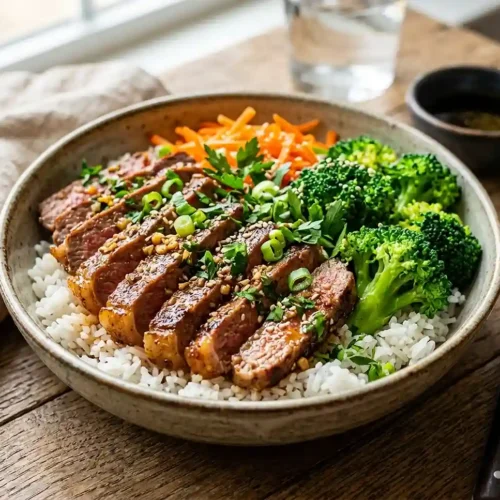
Top each bowl with the garlic steak, steamed broccoli florets, and shredded carrots. Arrange them so each component is visible — this isn’t just presentation, it also makes it easier to get a bit of everything in each bite.
Step 6: Garnish and Serve
Scatter the sliced green onions and fresh parsley over each bowl. Serve immediately while the steak is still warm. The parsley adds a clean, herby brightness — like the final note in a chord that makes the whole thing resolve.
Make It Your Own
For a gluten-free beef lunch that leans lower-carb, swap the white rice for cauliflower rice or a half-and-half mix. Cauliflower rice absorbs the garlic steak juices beautifully and keeps the macro profile tight without sacrificing volume.
You know… not everyone loves broccoli, and that’s fine. Zucchini ribbons, snap peas, or roasted bell peppers all work as direct swaps. They hold up to the warm steak and add color without going limp.
Want a garlic steak meal prep version? Cook the rice and vegetables completely ahead of time and store them separately from the steak. The steak stays juicier when reheated on its own and mixed in right before eating, rather than sitting on top of everything overnight.
For a dairy-free drizzle that adds richness, whisk together 2 tbsp of tahini, 1 tbsp of lemon juice, and a splash of water until pourable. It plays off the paprika in the steak and makes the bowl feel more complete. Tahini is naturally gluten-free and adds healthy fats to the meal.
Prefer a spicier profile? Add a pinch of cayenne or a few dashes of your favorite gluten-free hot sauce directly into the steak marinade. The heat blooms in the oil and distributes evenly through every slice.
Common Problems and Solutions
Problem: The garlic burned before the steak cooked through.
This usually means the heat was too high or the pan was dry before you added the steak. The olive oil in the marinade protects the garlic as long as the steak goes in immediately after the pan heats up. Don’t preheat an empty pan on high — medium-high is the sweet spot.
Problem: The steak turned out gray and chewy instead of browned.
Man, oh man… this is the crowding issue. When too many slices go in at once, the pan temperature drops and the steak steams instead of sears. Work in two batches if needed, and give each piece a little breathing room.
Problem: The bowl tastes flat even after following the recipe.
Check your seasoning after the lemon juice goes in. Acid can make a dish taste like it needs more salt. Add a small pinch right at the end and taste again — it often pulls everything into focus.
Problem: The rice got gummy at the bottom of the bowl.
Gummy rice is usually a washing issue. Rinse your rice until the water runs nearly clear before cooking — this removes excess surface starch. If you’re using leftover rice, warm it in a pan with a tiny splash of water rather than microwaving it dry.
Storage and Meal Prep
| Method | Duration | Notes |
|---|---|---|
| Counter | Up to 2 hours | Keep covered; don’t leave assembled bowls out longer |
| Fridge | 4–5 days | Store steak and rice separately for best texture |
| Freezer | Up to 2 months | Freeze steak only; rice and vegetables are best fresh |
To reheat, warm the steak in a skillet over medium heat for 2–3 minutes with a splash of water to loosen it. Microwave works too, but the skillet method keeps that seared texture alive.
For meal prep, portion the cooked rice into containers at the start of the week. The steak keeps separately in an airtight container. Vegetables are quickest when you steam a big batch of broccoli on Sunday — it takes 5 minutes and saves you time every day.
Serving Suggestions
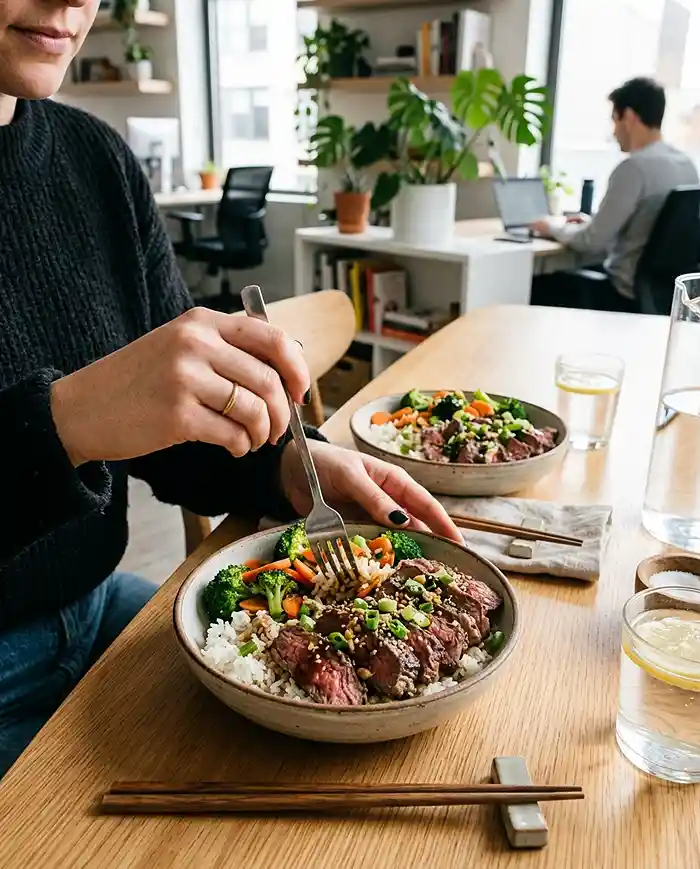
These bowls shine as a weeknight dinner but work just as well packed for lunch the next day. Over the Fourth of July weekend, I started making a double batch on Sunday and portioning it for the week — it became a tradition our whole family looks forward to.
If you’re building a spread, pair these with our high-protein chicken gyro meal prep bowls for variety, or round out the table with our gluten-free chicken parmesan cottage cheese bowls.
Want something lighter on the side? Our GF Mediterranean tuna rice salad jars are a bright, refreshing complement to the bold garlic steak flavor.
FAQs About High-Protein GF Garlic Steak Rice Bowls
Can I use a different cut of beef instead of sirloin?
Yes, flank steak or ribeye both work well here. Flank steak is leaner and slices beautifully when cut against the grain, while ribeye adds more marbling and richness. Just make sure whatever cut you choose is sliced thin so it cooks quickly and stays tender.
How do I keep the steak from getting tough when reheating?
Reheat the steak in a skillet over medium heat with a small splash of water or broth — about 1 to 2 tablespoons. This creates just enough steam to warm it through without drying it out. Avoid high heat on reheating, which is the most common reason leftover steak turns rubbery.
What is the best rice to use for a high-protein steak rice bowl?
Jasmine rice and long-grain white rice both give a fluffy, non-sticky base that holds up under the steak. For higher protein and fiber, brown rice or a blend of white and cauliflower rice are solid options. The key is cooking the rice correctly and rinsing it beforehand to avoid a gummy texture.
Can I make this recipe ahead of time for gluten-free beef lunch meal prep?
Absolutely. Cook all components separately and store them in individual airtight containers in the fridge for up to 5 days. Assemble each bowl fresh at mealtime so the rice stays fluffy and the steak doesn’t get soggy sitting on top of the vegetables overnight.
Why did my garlic burn instead of staying golden?
Burned garlic almost always comes from adding it to a dry, over-hot pan. Because this recipe coats the steak in oil before cooking, the fat protects the garlic during searing. If you notice burning, lower the heat slightly and make sure the steak goes into the pan immediately after it heats up — don’t let the pan sit empty on high heat before adding the meat.
Final Thoughts
A high-protein GF garlic steak rice bowl doesn’t need to be complicated to be satisfying. This recipe proves that a short ingredients list, the right heat, and a finishing squeeze of lemon can produce something genuinely crave-worthy.
Whether you’re cooking for meal prep or a quick family dinner, this bowl delivers on flavor, protein, and ease every single time.
If you try it, leave a comment below — I’d love to hear what variations you tested or how you made it your own. And if it earned a spot in your weekly rotation, sharing it on Pinterest helps other gluten-free home cooks find it too.
High-Protein GF Garlic Steak Rice Bowls
Equipment
- Large skillet
- Mixing bowl
- Steamer or Microwave-Safe Bowl
Ingredients
Steak & Marinade
- 1.5 lbs sirloin steak, thinly sliced 680g
- 2 tbsp olive oil
- 4 garlic cloves, minced
- 1 tsp paprika
- 0.5 tsp salt
- 0.25 tsp black pepper
- 1 tbsp lemon juice
Bowl Base & Toppings
- 4 cups cooked rice white, brown, or jasmine
- 1 cup broccoli florets, steamed
- 1 cup shredded carrots
- 2 green onions, sliced
- 1 tbsp fresh parsley, chopped
Instructions
- In a large bowl, toss the thinly sliced sirloin with olive oil, minced garlic, paprika, salt, and black pepper until every piece is evenly coated.
- Heat a large skillet over medium-high heat until hot. Add the steak in a single layer and cook for 3–5 minutes, stirring occasionally, until the edges are browned and the meat is cooked to your desired doneness.
- Stir in the lemon juice and immediately remove the skillet from heat.
- Divide the cooked rice evenly among 4 bowls.
- Top each bowl with the garlic steak, steamed broccoli florets, and shredded carrots.
- Garnish with sliced green onions and fresh parsley. Serve immediately.