Mango Dragon Fruit Smoothie Bowl
Make a thick gluten-free mango dragon fruit smoothie bowl with step-by-step instructions, dairy-free options, topping ideas, and storage tips. Ready in 10 minutes.
My daughter spotted a smoothie bowl at a cafe and immediately declared it “the most beautiful breakfast she’d ever seen.” The problem? She’s gluten-free and dairy-free, and the menu listed granola with no ingredient details.
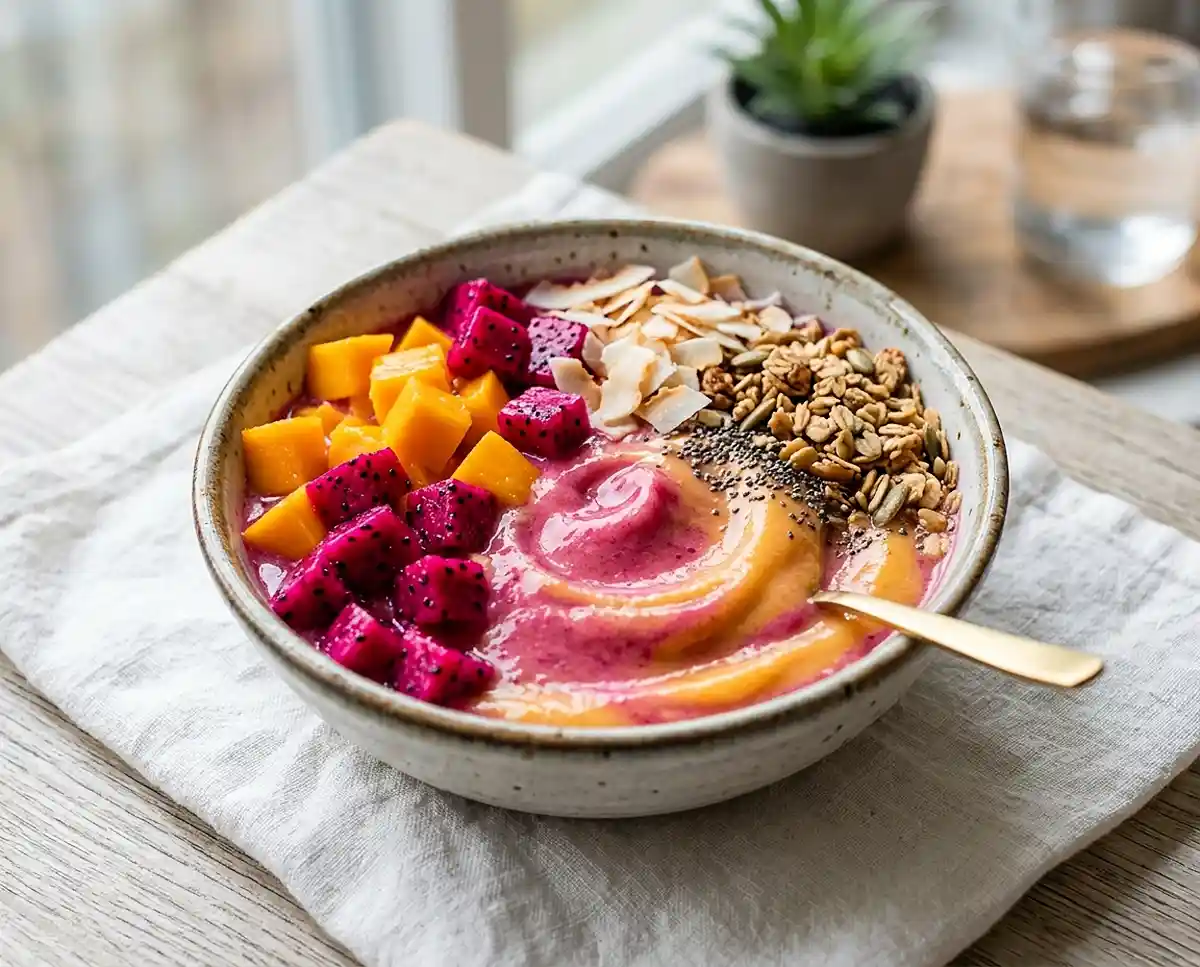
So I went home and built one from scratch. This gluten-free mango dragon fruit smoothie bowl turned out better than anything we’d seen in that cafe — vivid pink-gold, thick enough to hold toppings, and completely free of any ingredient she can’t have.
Can the right frozen fruit really replace yogurt and still give you that spoonable, ice-cream-like texture? Absolutely — and I’ll show you exactly how.
Table of Contents
Why You’ll Love This Gluten-Free Mango Dragon Fruit Smoothie Bowl
- Stunning tropical color: the dragon fruit turns the base a deep rose-pink that contrasts brilliantly with golden mango chunks on top — it looks like a work of art and takes under 10 minutes.
- Naturally gluten-free and dairy-free: built entirely on frozen fruit and coconut or almond milk, so no swaps or label-checking anxiety needed.
- Beginner-friendly: if you can run a blender, you can make this — the only real skill is knowing when to stop adding liquid.
- Flexible for any occasion: works as a quick weekday breakfast, a post-workout recovery bowl, or a showpiece brunch dish for guests.
The Secret to Perfect Gluten-Free Mango Dragon Fruit Smoothie Bowl
- All-frozen fruit base: using frozen mango, frozen dragon fruit, and a frozen banana eliminates the need for ice, which dilutes flavor. Frozen fruit creates that dense, sorbet-like texture that holds toppings without sinking.
- Minimal liquid: starting with just ½ cup of coconut or almond milk forces the blender to work harder, producing a thick blend instead of a pourable smoothie. Add more liquid only in small splashes if the blender stalls.
- The banana as a natural binder: frozen banana adds creaminess and natural sweetness that replaces the dairy yogurt base most smoothie bowls rely on. It also helps emulsify the fruit into one cohesive, smooth texture.
- Toppings added at the last second: gluten-free granola absorbs moisture quickly. Pressing toppings onto the surface just before serving keeps every element distinct and visually clean.
Ingredients
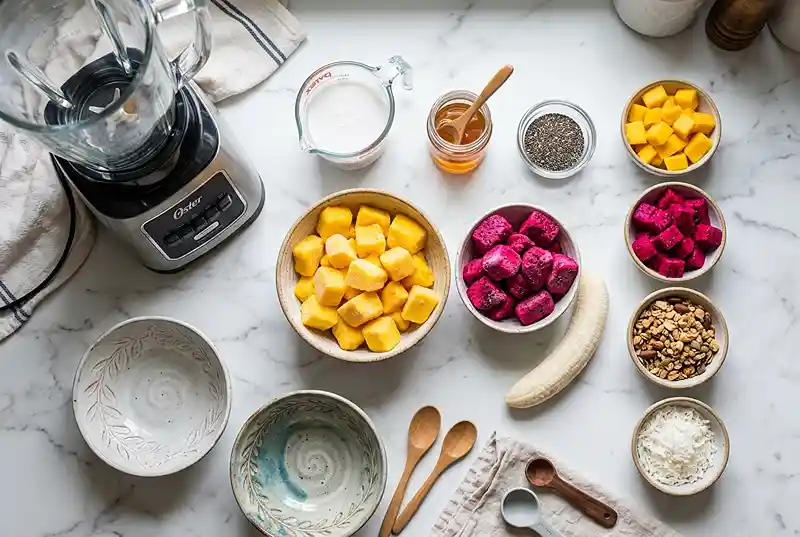
This recipe makes 2 bowls. Everything below is used exactly as listed — no adjustments needed for the base texture to work.
Smoothie Base
- 2 cups frozen mango chunks
- 1 cup frozen dragon fruit (pitaya) chunks (look for frozen pitaya packs in the freezer aisle — pink/red variety gives the best color)
- 1 banana, frozen (peel and freeze overnight for best results)
- ½ cup coconut milk or almond milk
- 1 tbsp honey or maple syrup (optional)
Toppings
- Fresh mango, diced
- Fresh dragon fruit, diced
- Gluten-free granola
- Shredded coconut
- Chia seeds
Instructions
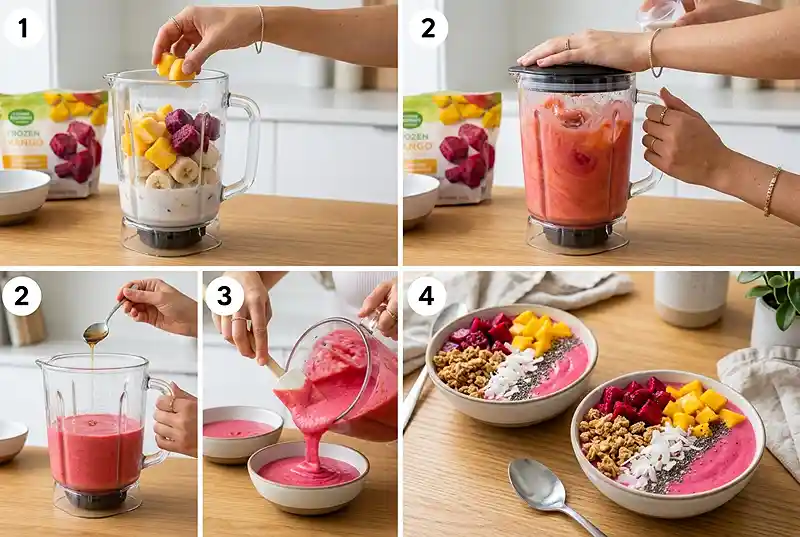
Step 1: Load the blender. Add the frozen mango, frozen dragon fruit, frozen banana, and coconut milk to a blender. Layer the milk in first so it sits closest to the blade — this helps the blender catch on the frozen fruit without stalling immediately.
Step 2: Blend until thick and smooth. Run the blender on high, using the tamper if your blender has one. Add liquid only in 1-tablespoon increments if the mixture won’t move — the goal is a texture like soft-serve, not a pourable drink.
Pro Tip: If your blender struggles, let the fruit thaw for 3-4 minutes before blending. Slightly thawed fruit is easier on the motor while still producing a thick base.
Step 3: Sweeten if needed. Taste the base and add honey or maple syrup if the fruit isn’t naturally sweet enough. Ripe frozen mango is usually sweet on its own — the optional sweetener is there for batches made with less ripe fruit.
Step 4: Pour into bowls. Divide the smoothie mixture between two serving bowls. Use a spoon or spatula to smooth the surface flat — a level base makes the toppings look cleaner and more intentional.
Step 5: Add toppings. Arrange the fresh mango, dragon fruit, gluten-free granola, shredded coconut, and chia seeds across the surface. Work quickly — the base firms up as it sits and toppings press in more easily within the first 2 minutes.
Step 6: Serve immediately. This bowl is at its best the moment it’s assembled. The granola stays crisp, the fruit is cold and firm, and the base holds its thick, almost frozen texture beautifully.
Make It Your Own
Well… not everyone has frozen dragon fruit in their freezer at all times, and that’s completely fine. Frozen strawberries or frozen raspberries make a solid substitute — the color shifts to a deep red-pink rather than the electric rose of pitaya, but the flavor is just as bright. Avoid substituting with fresh fruit, since the frozen texture is what makes the base thick.
For a higher-protein version of this gluten-free dairy-free smoothie bowl, stir 1-2 tablespoons of unflavored or vanilla hemp seeds directly into the base before blending. Hemp seeds blend in invisibly and add around 5 grams of protein per tablespoon without changing the texture or flavor. Collagen peptides (check for a certified gluten-free label) work the same way.
You know… the topping combinations are where you can really make this mango dragon fruit bowl your own. Sliced kiwi, passion fruit pulp, bee pollen, or a drizzle of nut butter all work beautifully. If nut-free is a concern for school mornings, sunflower seed butter drizzled across the top adds richness without any allergen worry.
Coconut milk gives the richest, creamiest base — it’s what I use when I want a proper tropical breakfast experience. Almond milk produces a slightly lighter result that’s lower in calories and still smooth. Oat milk works too, but check the label; not all oat milks are certified gluten-free, and cross-contamination risk varies by brand.
Common Problems & Solutions
Problem: The base is too thin and pourable. Too much liquid was added during blending. Next time, start with the ½ cup listed and add liquid only if the blender completely stalls. If today’s batch is already thin, pour it into a freezer-safe container and freeze for 20-25 minutes to firm it back up before serving.
Problem: The blender won’t catch on the frozen fruit. The fruit is too solid straight from the freezer. Let it sit at room temperature for 3-5 minutes, then try again. If you have a high-speed blender, use the tamper to press fruit toward the blades rather than adding more liquid — that’s almost always the faster fix.
Man, oh man… the number of smoothie bowls I’ve watched turn into smoothie drinks because someone added liquid too fast. One tablespoon at a time. That’s the rule. You can always add more milk; you can’t take it back out.
Problem: The granola gets soggy almost immediately. This is a timing issue. Add granola and other dry toppings right before the bowl goes to the table — not while you’re still plating the second bowl. According to gluten sources guidance from the Celiac Disease Foundation, moisture absorption in GF granola can happen faster than in wheat-based versions due to starch differences, so speed matters here.
Problem: The color is dull or muddy instead of vivid pink. This usually means the dragon fruit variety used was white-fleshed rather than red/pink. Look specifically for red pitaya (also labeled as “strawberry pitaya”) in the frozen section — the white variety tastes similar but produces a pale lavender-gray base that loses its visual impact.
Storage & Meal Prep
| Method | Duration | Notes |
|---|---|---|
| Counter | Serve immediately | Base melts quickly at room temperature |
| Fridge | Not recommended | Texture becomes watery; toppings go soggy |
| Freezer (base only) | Up to 1 month | Freeze in portions; thaw 5 min before serving |
The smartest meal prep move is to blend the base, pour it into individual freezer-safe containers, and freeze without toppings. On busy mornings, pull a container out 5 minutes before you eat — it softens just enough to spoon straight from the container into a bowl.
Keep toppings portioned separately in small jars or bags in the fridge (fresh fruit) and pantry (granola, coconut, chia seeds). That way, assembly takes about 90 seconds even on the most rushed school morning.
Your Questions Answered
Can I make this smoothie bowl without a high-speed blender?
Yes, with one adjustment. Let the frozen fruit thaw for 5-8 minutes before blending to reduce strain on a standard blender motor. Work in short pulses and use a spatula to push fruit toward the blades between pulses. Avoid adding extra liquid — that turns it into a drink instead of a bowl.
How do I keep the base from melting before I finish eating?
Pre-chill your serving bowls in the freezer for 10 minutes before pouring in the base. A cold bowl slows the melt significantly. Also work quickly with toppings — every second the base sits at room temperature, it loses its thick, spoonable structure.
Why did my smoothie bowl turn out icy instead of creamy?
The fruit was likely over-frozen or the blender didn’t fully break down the ice crystals. Fruit stored in the freezer for more than 2-3 months can develop large crystals that don’t blend smoothly. Use fresher frozen fruit and blend on high for an extra 10-15 seconds.
Can I prep this the night before?
You can prep the base but don’t add toppings until morning. Pour the blended base into a freezer-safe container and freeze overnight. In the morning, let it sit for 5 minutes, spoon into a bowl, and top fresh. The texture is nearly identical to freshly made.
What can I use instead of frozen dragon fruit?
Frozen strawberries or frozen raspberries are the best substitutes. The color shifts from vivid pink to deep red, but the flavor stays bright and tropical. Avoid using fresh fruit in place of frozen — the frozen texture is what creates the thick, spoonable base.
Serving Suggestions
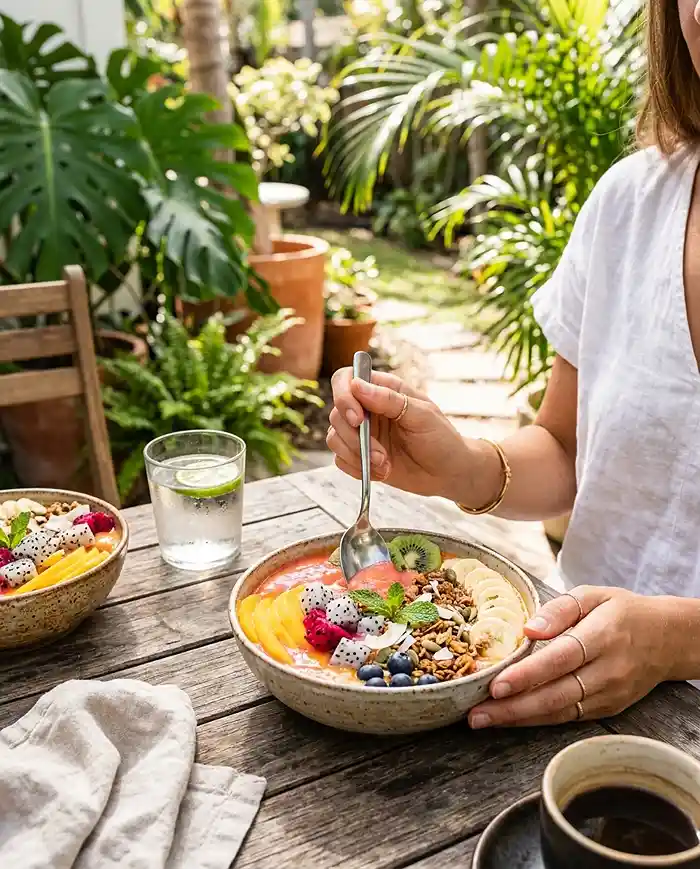
This tropical breakfast bowl is a natural fit for a summer brunch spread — set out all the toppings in small bowls and let guests build their own for a Mother’s Day brunch bar that looks impressive with almost no effort.
If you’re building a full sweet-and-savory brunch menu, pair it with my gluten-free berry goat cheese crostini for a spread that covers every flavor note. For dessert after a lighter meal, my brownie batter cottage cheese cheesecake rounds things out without weighing anyone down.
If you want something savory on the side, my gluten-free lemon dill chicken burgers make a surprisingly satisfying lunch pairing after a light fruit bowl breakfast.
Give this recipe a try and let me know how you topped yours — I love seeing the combinations people come up with. If you’re saving it for later, it photographs beautifully for Pinterest right after the toppings go on, before anything has a chance to shift.
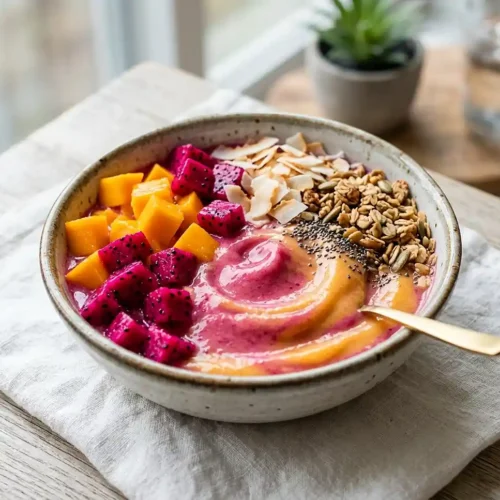
Gluten-Free Mango Dragon Fruit Smoothie Bowl
Equipment
- Blender
- Serving bowls
- Spatula
Ingredients
Smoothie Base
- 2 cups Frozen mango chunks
- 1 cup Frozen dragon fruit (pitaya) chunks pink/red variety preferred
- 1 Frozen banana peeled and frozen
- ½ cup Coconut milk or almond milk
- 1 tbsp Honey or maple syrup optional
Toppings
- Fresh mango diced
- Fresh dragon fruit diced
- Gluten-free granola
- Shredded coconut
- Chia seeds
Instructions
- Add the frozen mango, frozen dragon fruit, frozen banana, and coconut milk to a blender.
- Blend on high until thick and smooth, adding liquid only in small increments if necessary.
- Taste and add honey or maple syrup if additional sweetness is desired.
- Divide the smoothie mixture between two bowls and smooth the surface.
- Top with fresh mango, dragon fruit, gluten-free granola, shredded coconut, and chia seeds.
- Serve immediately for the best texture and flavor.