Sticky Ginger Chicken Rice Bowls
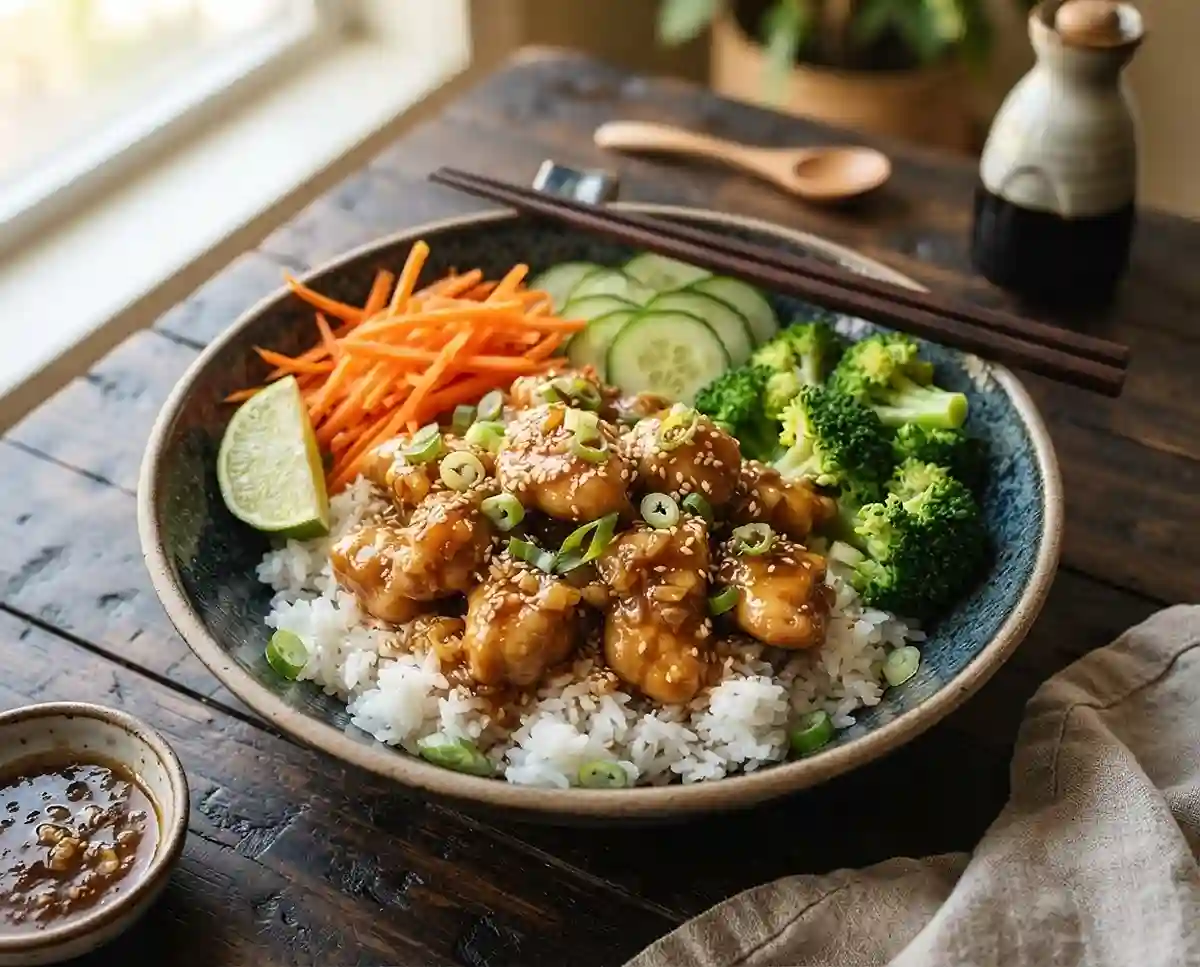
Step-by-step gluten-free sticky ginger chicken rice bowls with a glossy tamari-honey sauce, crisp veggies, and fluffy jasmine rice—ready in 30 minutes.
The first time I made gluten-free sticky ginger chicken rice bowls, I completely burned the sauce. I’d walked away for two minutes—two minutes—and came back to a pan full of bitter, black caramel instead of that gorgeous glossy coating I was after. Lesson learned: this sauce rewards your full attention for those final few minutes.
Once I nailed it, though? These bowls became our Tuesday night ritual. The sauce clings to every piece of chicken like a warm hug, stacking sweet honey, punchy fresh ginger, and deep umami from certified gluten-free tamari into something that tastes like it took all afternoon.
So, what makes a rice bowl go from forgettable to one you actually crave on a weeknight? The answer is almost always the sauce—and this one delivers. Well… let’s get into exactly why.
Why You’ll Love This Sticky Ginger Chicken Rice Bowl
- Texture that delivers: Cornstarch-coated chicken crisps on the outside, stays juicy inside, and soaks up that glossy sauce like a sponge.
- Weeknight-easy: Thirty minutes start to finish, one skillet, minimal cleanup.
- Naturally gluten-free: Built from the ground up for gluten-free families—no awkward substitutions or compromises.
- Customizable: Works with whatever vegetables you have, and easily made dairy-free as written.
The Secret to Perfect Gluten-Free Sticky Ginger Chicken Rice Bowls
- Pat the chicken dry first. Moisture is the enemy of browning. Dry chicken + hot oil = the golden sear that makes this dish. Skip this step and you’ll steam instead of sear.
- Cornstarch is the gluten-free hero. Tossing the chicken in gluten-free cornstarch before cooking creates a light crust that helps the sauce cling and thicken without any flour.
- Stir continuously once the sauce hits the pan. The honey and cornstarch in the sauce can scorch in seconds over high heat. Constant stirring keeps it glossy and even.
- Freshly grated ginger, always. Ground ginger simply won’t give you the same brightness. Fresh ginger releases volatile oils that ground spice loses in drying—the difference is immediate and obvious.
Table of Contents
Ingredients
Chicken
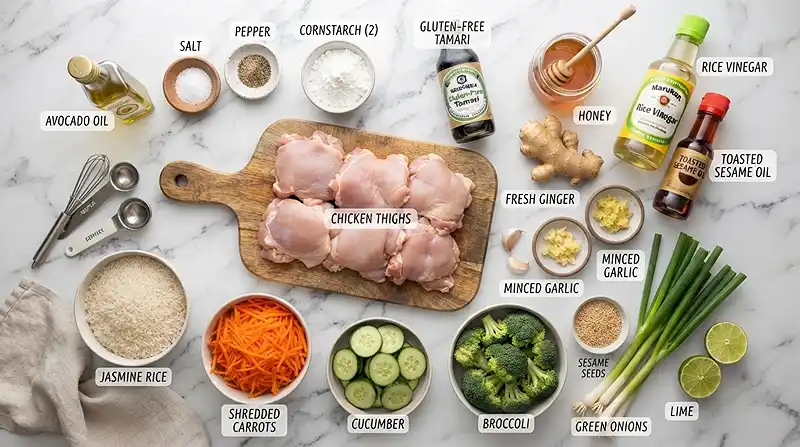
| Ingredient | Amount | Notes |
|---|---|---|
| Boneless, skinless chicken thighs or breasts, cut into bite-size pieces | 1½ lbs | Thighs stay juicier; breasts work well too |
| Avocado or olive oil | 1 tablespoon | Avocado oil handles high heat better |
| Salt | ½ teaspoon | |
| Black pepper | ¼ teaspoon | |
| Gluten-free cornstarch | 2 tablespoons | Creates a light crust that holds the sauce |
Sticky Ginger Sauce
| Ingredient | Amount | Notes |
|---|---|---|
| Gluten-free tamari or soy sauce | ¼ cup | Must be labeled certified gluten-free — see note below |
| Honey | 3 tablespoons | |
| Rice vinegar | 2 tablespoons | Balances sweetness with a gentle tang |
| Toasted sesame oil | 1 tablespoon | Add at whisk step; don’t heat alone |
| Freshly grated ginger | 1 tablespoon | Fresh only — ground won’t deliver the same punch |
| Garlic, minced | 2 cloves | |
| Water | 1 tablespoon | |
| Gluten-free cornstarch | 1 teaspoon | Thickens the sauce to a glossy coating |
Bowls
| Ingredient | Amount | Notes |
|---|---|---|
| Cooked white or jasmine rice | 3 cups | Jasmine adds a subtle floral note |
| Shredded carrots | 1 cup | |
| Thinly sliced cucumber | 1 cup | |
| Steamed broccoli | 1 cup | |
| Green onions, sliced | 2 | |
| Sesame seeds | 1 tablespoon | |
| Lime wedges | For serving | A squeeze right before eating brightens everything |
A note on tamari: Regular soy sauce contains wheat and is not safe for celiac disease. According to Beyond Celiac’s trusted gluten-free ingredient guide, tamari is the most widely available safe substitute—but you must verify the certified gluten-free label, since formulations vary by brand.
Instructions
Step 1: Cook the Rice
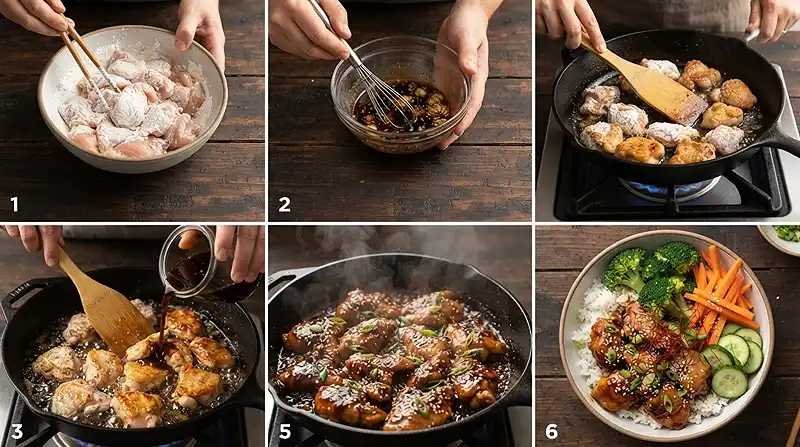
Cook the rice according to package directions and keep it warm. Jasmine rice typically takes 15–18 minutes, so start this first while you prep everything else.
Step 2: Prep and Coat the Chicken
Pat the chicken dry with paper towels and place it in a large bowl. Season with ½ teaspoon salt and ¼ teaspoon black pepper, then toss with 2 tablespoons of gluten-free cornstarch until lightly coated.
The cornstarch should look like a thin, powdery film—not a thick batter. This is what creates that crisp outer layer that holds the sauce so well.
Step 3: Whisk the Ginger Sauce
In a small bowl, whisk together the tamari, honey, rice vinegar, sesame oil, ginger, garlic, water, and 1 teaspoon cornstarch until fully combined. Set it aside within arm’s reach of the stove—you’ll need it quickly once the chicken is done.
Step 4: Sear the Chicken
Heat the oil in a large skillet over medium-high heat. Add the chicken in a single layer—don’t crowd the pan, or you’ll trap steam and lose that golden sear.
Cook for 4–5 minutes, turning occasionally, until the edges are golden brown and the chicken is cooked through. You’re looking for a rich, nutty aroma and edges that have gone from pale to properly caramelized.
Step 5: Add the Sauce
Reduce the heat to medium and pour the ginger sauce over the chicken. Stir continuously for 2–3 minutes as the sauce bubbles and thickens into a glossy, sticky coating that clings to the chicken—it should coat the back of a spoon and look almost lacquered.
Remove from the heat once the chicken is fully coated and the sauce has reached your desired consistency. Don’t walk away during this step.
Step 6: Assemble the Bowls
Divide the warm rice among four bowls. Add the sticky ginger chicken, shredded carrots, sliced cucumber, and steamed broccoli alongside the rice.
Sprinkle with sliced green onions and sesame seeds. Serve with fresh lime wedges and an extra drizzle of gluten-free tamari if desired.
Make It Your Own
Swap the chicken for shrimp if you want a faster cook time—shrimp takes just 2–3 minutes per side and soaks up the sticky ginger sauce beautifully. Make sure your shrimp is peeled and patted dry before tossing in cornstarch, and reduce your pan time accordingly to avoid rubbery texture.
You know… coconut aminos are worth trying if you need a soy-free option. They’re slightly sweeter and milder than tamari, so you may want to add an extra teaspoon of rice vinegar to balance the sauce. The final coating will be a little less deeply savory, but still genuinely good.
For a lower-carb version of these gluten-free chicken bowls, swap the jasmine rice for cauliflower rice. Cook it in the same skillet after removing the chicken—just 3–4 minutes over medium heat with a tiny drizzle of sesame oil—and it picks up all the sticky residue left behind, which means even more flavor in every bite.
To make this a quick rice bowl that works for meal prep, double the sauce batch and store extra in a sealed jar in the fridge for up to a week. It works beautifully as a stir-fry sauce, a grain bowl drizzle, or even a dipping sauce for spring rolls. If you enjoy saucy, bright-flavored dishes, try these easy gluten-free dairy-free recipes from Grainless Life for more inspiration.
Common Problems & Solutions
Problem: The sauce scorched and turned bitter. The honey in this sauce caramelizes fast once it hits a hot pan. If yours burned, reduce the heat to medium before adding the sauce, and stir without stopping. Never walk away during those final 2–3 minutes—this is not the moment for multitasking.
Problem: The sauce isn’t thickening. This usually means the cornstarch wasn’t fully dissolved before the sauce went into the pan. Whisk the sauce mixture thoroughly—including the teaspoon of cornstarch—until no lumps remain before you add it to the skillet. If it still looks thin, give it another 30–60 seconds over heat while stirring.
Problem: The chicken is sticking to the pan. Two likely causes: the oil wasn’t hot enough before you added the chicken, or the pieces were crowded. Man, oh man… a crowded pan is one of the most common reasons home cooks end up with steamed chicken instead of seared. Work in batches if needed, and wait for the oil to shimmer before adding the first piece.
Problem: The chicken is dry and tough. Overcooked chicken thighs or breasts dry out quickly in a hot skillet. Use a meat thermometer—165°F is your target. Pull the chicken off the heat the moment it reaches temperature, and remember the sauce step takes only 2–3 minutes more, so don’t over-sear in step four.
Problem: The gluten-free rice bowls feel bland. Fresh lime juice is the fix. A good squeeze right before eating lifts every flavor in the bowl—the ginger sharpens, the honey sweetens more clearly, and the vegetables taste brighter. Don’t skip the lime wedges; they do real work here.
Storage & Meal Prep
| Method | Duration | Notes |
|---|---|---|
| Counter | 2–3 days | Airtight container; not recommended for assembled bowls |
| Fridge | 5–7 days | Store chicken and rice separately for best texture |
| Freezer | 2–3 months | Freeze chicken only; wrap individually in portions |
To reheat, warm the chicken in a skillet over medium-low heat with a splash of water or extra tamari to loosen the sauce. Microwave works too—cover with a damp paper towel and heat in 60-second intervals to keep moisture in.
For a zero-waste move, use leftover sticky ginger chicken chopped over lettuce cups the next day. The cold vegetables from the bowl—carrots and cucumber especially—hold up well and make a fast, no-cook lunch.
Sticky Ginger Chicken Rice Bowls FAQs
Can I make gluten-free sticky ginger chicken rice bowls ahead of time?
Yes. Cook the chicken and sauce up to 3 days ahead and store in an airtight container in the fridge. Keep the rice and vegetables separate to avoid sogginess. Reheat the chicken in a skillet with a splash of water, then assemble fresh bowls when you’re ready to eat.
How do I know my tamari is actually gluten-free?
Always look for a certified gluten-free label on the bottle—the word ‘tamari’ alone is not enough. Some brands add trace amounts of wheat during production. For celiac-safe cooking, choose products tested to contain fewer than 20 parts per million of gluten, which is the FDA standard for gluten-free labeling.
What’s the best rice for these bowls?
Jasmine rice is the top pick—its subtle floral aroma pairs well with the ginger sauce and gives a slightly sticky texture that holds the bowl together nicely. Long-grain white rice works too. For a lower-carb option, cauliflower rice is a solid swap that cooks directly in the same skillet.
Why did my sauce turn out thin instead of glossy?
The cornstarch in the sauce needs to be fully dissolved before it hits the heat. Whisk the sauce mixture thoroughly until completely smooth, then pour it over the chicken and stir continuously for the full 2–3 minutes. The sauce thickens as it heats—if it’s still thin, add another 30 seconds of stirring over medium heat.
Can I use chicken breasts instead of thighs?
Absolutely. Chicken breasts work well here—just watch the cook time closely, as they can dry out faster than thighs. Pull them from the heat as soon as they reach 165°F internally, and the sauce step will carry them the rest of the way to juicy and flavorful.
Serving Suggestions
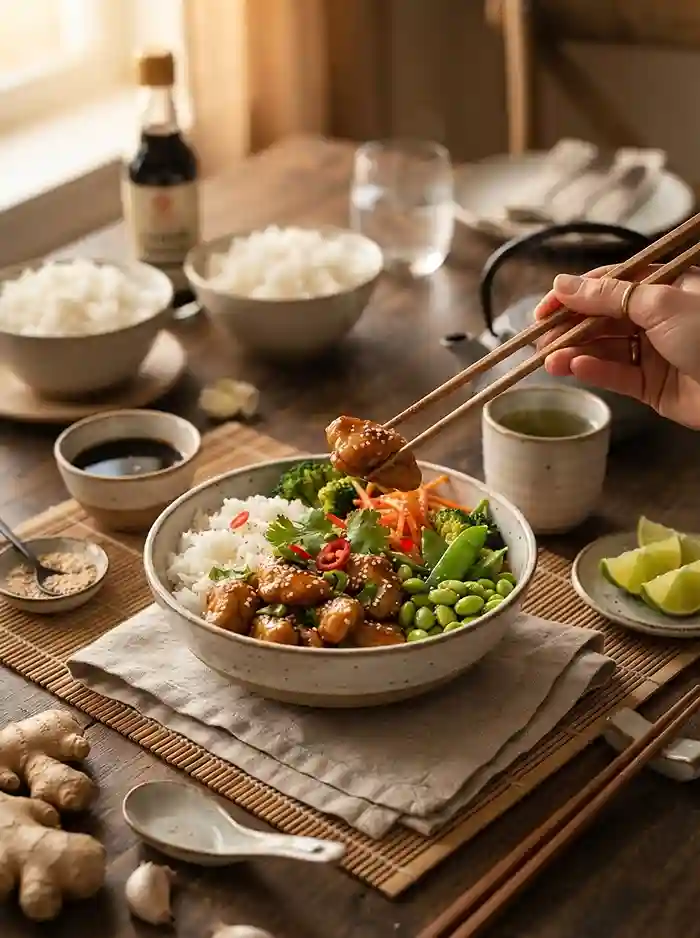
These bowls are a natural fit for a casual summer dinner or a Memorial Day weekend spread—set everything out buffet-style and let people build their own. The combination of warm rice, cool cucumber, crisp carrots, and saucy chicken at different temperatures makes assembly feel interactive and fun.
For drinks, a lightly sparkling water with lime slices echoes the citrus note in the bowl without competing with the ginger. If you want a sweet finish, the tart brightness in these gluten-free blackberry lemon cake bars from Grainless Life makes a wonderful follow-up dessert.
For a heartier spread, these salted maple apple oat squares work as a make-ahead treat that travels well if you’re bringing this meal to a gathering. Everything here is built for sharing.
If you make these gluten-free sticky ginger chicken rice bowls, I’d genuinely love to hear how they turned out. Drop a comment below with any swaps you made or share a photo on Pinterest—seeing your versions always makes my day. And if the sauce convinced someone at your table that gluten-free cooking doesn’t mean missing out, that’s exactly the kind of story worth telling.
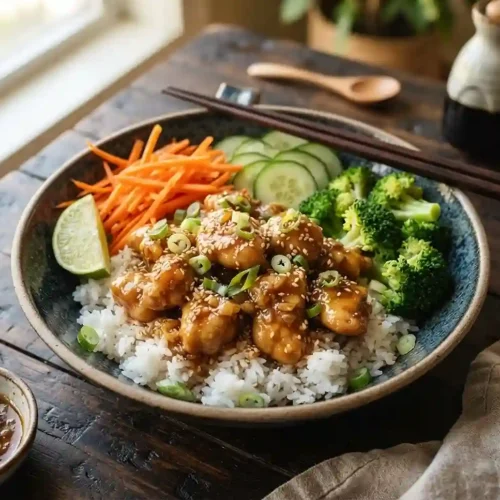
Sticky Ginger Chicken Rice Bowls
Equipment
- Large skillet
- Large mixing bowl
- Small bowl
- Whisk
- Knife
- Cutting board
- Box grater or microplane
- Measuring cups and spoons
- Meat thermometer
Ingredients
Chicken
- 1½ lbs Boneless, skinless chicken thighs or breasts, cut into bite-size pieces Thighs stay juicier; breasts work well too
- 1 tablespoon Avocado or olive oil Avocado oil handles high heat better
- ½ teaspoon Salt
- ¼ teaspoon Black pepper
- 2 tablespoons Gluten-free cornstarch Creates a light crust that holds the sauce
Sticky Ginger Sauce
- ¼ cup Gluten-free tamari or soy sauce Must be labeled certified gluten-free
- 3 tablespoons Honey
- 2 tablespoons Rice vinegar Balances sweetness with a gentle tang
- 1 tablespoon Toasted sesame oil Add at whisk step; don’t heat alone
- 1 tablespoon Freshly grated ginger Fresh only — ground won’t deliver the same punch
- 2 cloves Garlic, minced
- 1 tablespoon Water
- 1 teaspoon Gluten-free cornstarch Thickens the sauce to a glossy coating
Bowls
- 3 cups Cooked white or jasmine rice Jasmine adds a subtle floral note
- 1 cup Shredded carrots
- 1 cup Thinly sliced cucumber
- 1 cup Steamed broccoli
- 2 Green onions, sliced
- 1 tablespoon Sesame seeds
- Lime wedges For serving; a squeeze right before eating brightens everything
Instructions
- Cook the rice according to package directions and keep it warm. Jasmine rice typically takes 15–18 minutes, so start this first while you prep everything else.
- Pat the chicken dry with paper towels and place it in a large bowl. Season with ½ teaspoon salt and ¼ teaspoon black pepper, then toss with 2 tablespoons of gluten-free cornstarch until lightly coated. The cornstarch should look like a thin, powdery film rather than a thick batter.
- In a small bowl, whisk together the tamari, honey, rice vinegar, sesame oil, ginger, garlic, water, and 1 teaspoon cornstarch until fully combined. Set aside.
- Heat the oil in a large skillet over medium-high heat. Add the chicken in a single layer, working in batches if necessary. Cook for 4–5 minutes, turning occasionally, until the edges are golden brown and the chicken is cooked through.
- Reduce the heat to medium and pour the ginger sauce over the chicken. Stir continuously for 2–3 minutes as the sauce bubbles and thickens into a glossy, sticky coating. Remove from the heat once the chicken is fully coated and the sauce reaches the desired consistency.
- Divide the warm rice among four bowls. Add the sticky ginger chicken, shredded carrots, sliced cucumber, and steamed broccoli alongside the rice. Sprinkle with sliced green onions and sesame seeds. Serve with fresh lime wedges and extra gluten-free tamari if desired.