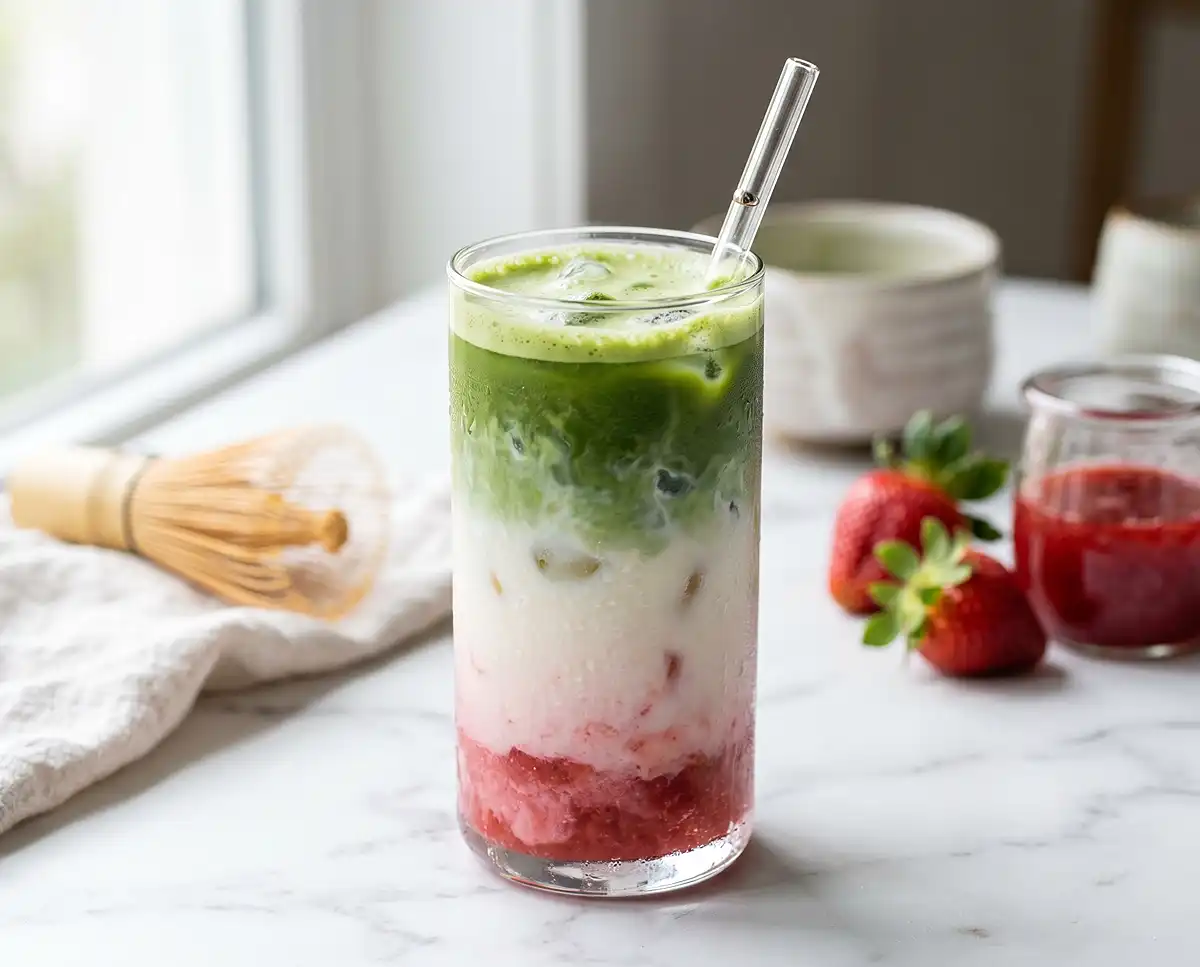
Strawberry Syrup for Matcha
Learn how to make gluten-free strawberry syrup for matcha with three simple methods, step-by-step instructions, and storage tips for a vibrant latte.
My kitchen smelled like a strawberry patch the first time I made this gluten-free strawberry syrup for matcha, and I almost didn’t strain it in time because I kept “testing” spoonfuls straight from the pan.
You know… that’s the thing about a good fruit syrup. It pulls you in before it’s even finished cooking.
Have you ever wondered why your favorite coffee shop’s strawberry matcha tastes so much brighter than the bottled stuff you can buy at the store? It usually comes down to real fruit instead of flavoring syrup loaded with corn syrup and food dye.
This recipe gives you three ways to make that same bright, fresh flavor at home, all naturally gluten-free, so you can build a strawberry matcha latte whenever the craving hits.
Why You’ll Love This Strawberry Syrup for Matcha
- Naturally gluten-free and simple, made with just strawberries, a sweetener, and water, so there’s no hidden flour or thickener to worry about.
- Beginner-friendly, with three methods to choose from depending on your time, equipment, and how sweet you like things.
- Customizable for dietary needs, including a honey-sweetened version and a no-cook option for raw-leaning kitchens.
- Works best for: matcha lattes, iced tea, lemonade, pancakes, yogurt bowls, or anywhere you’d normally reach for a fruity simple syrup.
The Secret to Perfect Gluten-Free Strawberry Syrup
- Gentle simmering preserves color and flavor. A hard boil can dull the strawberries’ color and cook off some of their delicate aroma, while a gentle simmer keeps the syrup vibrant and fragrant.
- Mashing mid-cook releases more juice. Breaking down the berries while they’re warm and soft helps you extract more flavor than mashing cold fruit ever could.
- Straining removes seeds and pulp for a smooth pour. This matters a lot for a matcha latte, since a smooth syrup layers cleanly under the milk instead of clouding it.
- A splash of acid balances sweetness. Lemon juice isn’t just for flavor; it brightens the syrup so it doesn’t taste flat or one-note once it’s chilled.
Gluten itself isn’t usually the issue in homemade fruit syrup, since strawberries, sugar, and water are naturally gluten-free. The real risk shows up in store-bought syrups, where malt flavoring or stabilizers can sneak in gluten you wouldn’t expect. If you’re newer to reading labels for hidden gluten, an authoritative gluten-free nutrition guide from the National Institute of Diabetes and Digestive and Kidney Diseases is a solid place to start.
Table of Contents
Ingredients

Classic Cooked Strawberry Syrup
- 1 cup fresh or frozen strawberries, hulled and sliced
- 1 cup sugar
- 1 cup water
- ½ teaspoon lemon juice (optional, for brightness)
Honey-Sweetened Version
- 200g frozen strawberries
- 50g honey
- A splash of water
No-Cook Macerated Syrup
- 226g fresh strawberries, chopped
- 100g sugar
For a Strawberry Matcha Latte
- 1–2 tablespoons strawberry syrup
- Ice, as needed
- Milk of choice (oat, almond, dairy, etc.)
- Freshly whisked matcha
Optional Flavor Variations
- ½ teaspoon vanilla extract
- 1 thin slice fresh jalapeño
- A few fresh mint leaves
Instructions
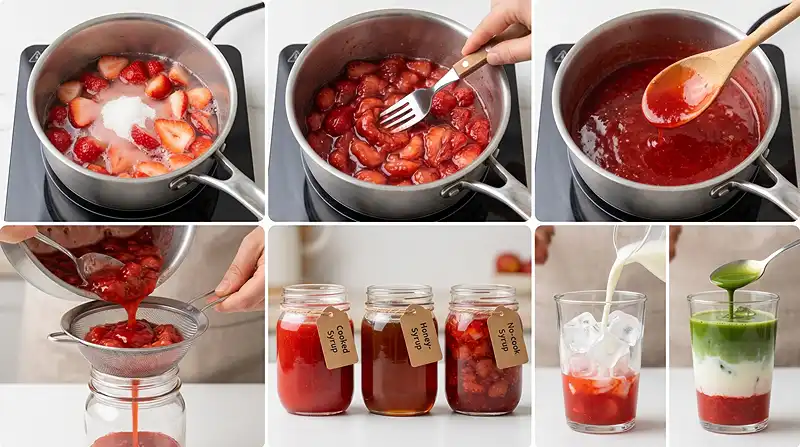
Method 1: Classic Cooked Strawberry Syrup
- Combine ingredients. Add the strawberries, sugar, and water to a small saucepan and stir once to distribute the sugar.
- Simmer. Bring the mixture to a gentle simmer over medium heat, stirring occasionally so nothing scorches on the bottom.
- Mash the berries. Use a fork or spoon to gently mash the strawberries against the side of the pan as they soften.
- Continue cooking. Simmer for 10–15 minutes, until the liquid thickens slightly and turns a deep, vibrant red. Pro tip: you’re looking for a texture close to maple syrup, not jam, so don’t walk away for too long.
- Finish the syrup. Stir in the lemon juice if you’re using it, which sharpens the flavor and keeps the syrup from tasting flat.
- Strain. Remove the pan from heat, let it cool for a few minutes, then pour through a fine-mesh sieve into a clean jar, pressing gently to extract as much syrup as possible.
Method 2: Honey-Sweetened Strawberry Syrup
- Combine the frozen strawberries, honey, and a splash of water in a saucepan.
- Cook over low heat for 10–15 minutes, stirring occasionally as the berries release their juices.
- Mash the berries as they soften, breaking them down to your preferred texture.
- Cool completely before bottling, since warm honey syrup will taste thinner than it actually is.
- Strain for a smooth syrup, or leave it slightly chunky if you like texture in your drinks.
Method 3: No-Cook Macerated Strawberry Syrup
- Toss the chopped strawberries with sugar in a bowl or zip-top bag.
- Refrigerate for at least 2 hours, or overnight for the deepest flavor.
- The sugar will naturally draw out the juices through osmosis, no stove required.
- Strain for a smooth syrup, or keep some fruit pieces if you want a jammy texture.
How to Make a Strawberry Matcha Latte
- Add 1–2 tablespoons of strawberry syrup to the bottom of a tall glass.
- Fill the glass with ice.
- Pour in your favorite milk.
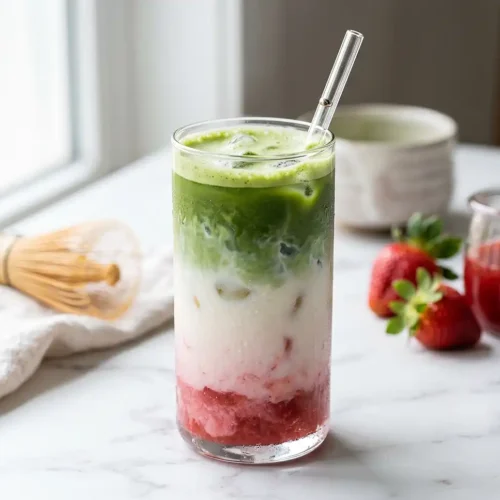
- Slowly pour freshly whisked matcha over the back of a spoon to create distinct, ribboned layers.
- Stir before drinking and adjust sweetness to taste.
Make It Your Own
Honey instead of sugar. Swapping in honey gives the syrup a softer, floral sweetness, though it also makes the final color a touch deeper and less bright red. It’s a nice option if you want something that reads as a little more natural on the label.
No-cook for raw, fresh flavor. Skipping the stove entirely keeps more of that just-picked strawberry flavor intact, since heat can mute some of the brighter, fruitier notes. Man, oh man, this version tastes like biting into a strawberry on a warm afternoon.
Vanilla for warmth. A half teaspoon of vanilla extract rounds out the syrup with a cozy, dessert-like note that pairs especially well with oat milk lattes.
Jalapeño for a kick. One thin slice of fresh jalapeño steeped into the warm syrup adds a gentle heat that plays surprisingly well against the bitterness of matcha. Pull it out before bottling unless you want the spice to keep building.
Mint for a refreshing twist. A few fresh mint leaves added during the last minute of cooking, or during maceration, bring a cool, herbal lift that’s lovely in iced versions.
Common Problems & Solutions
Problem: My syrup turned out watery instead of syrupy. Solution: Simmer it longer, in small five-minute increments, checking the consistency each time. The syrup thickens as the water evaporates, so a watery batch usually just needs more time on low heat, not more sugar.
Problem: My syrup is too sweet and one-note. Solution: Stir in the lemon juice, even if your recipe marked it optional. That small amount of acid cuts through the sweetness and makes the strawberry flavor taste more vivid instead of flat.
Problem: My syrup is cloudy or has bits of pulp floating in it. Solution: Strain it again through a finer mesh sieve or a layer of cheesecloth. You know… a cloudy syrup still tastes great, but a clear one looks far more polished layered into a glass.
Problem: My no-cook version isn’t releasing much juice. Solution: Give it more time in the fridge, ideally overnight, and make sure the strawberries are cut small enough for the sugar to draw out the liquid efficiently.
Problem: I’m worried about cross-contamination with gluten. Solution: Stick to plain granulated sugar and pure honey, since both are naturally gluten-free, and double-check any flavored extracts for hidden additives. The Celiac Disease Foundation’s guidance on naturally gluten-free foods is a helpful trusted celiac research resource if you want to dig deeper into which pantry staples are safe by default.
Storage & Meal Prep
| Method | Duration | Notes |
|---|---|---|
| Counter | 2-3 days | Airtight container |
| Fridge | 5-7 days | Bring to room temp |
| Freezer | 2-3 months | Wrap individually |
This syrup doesn’t need reheating, just give the jar a quick shake or stir if any separation happens in the fridge. If you end up with leftover strained pulp, stir it into yogurt, oatmeal, or a smoothie instead of tossing it, since it still carries plenty of strawberry flavor.
Strawberry Syrup for Matcha FAQs
Can I use frozen strawberries for any of these methods?
Yes, frozen strawberries work well in the cooked and honey-sweetened versions. They release their juices easily once heated, though they’re not ideal for the no-cook method since they need to thaw and turn mushy first, which changes the texture.
How do I make this syrup thicker for drizzling?
Simmer it a few minutes longer than the recipe states, checking consistency as you go. The syrup naturally thickens as water evaporates, so patience matters more than extra sugar here.
What’s the best sweetener if I want this to feel less processed?
Honey is the better choice if you want a less processed feel. It swaps in easily for sugar in the cooked method and brings a softer, rounder sweetness to the finished syrup.
Why did my syrup taste flat after it cooled?
It likely needs the lemon juice, or a little more of it. Flavors mellow as syrup cools, so a touch of acid right before bottling helps the strawberry flavor stay forward instead of fading into the background.
Can I make this ahead for a party or brunch?
Yes, this syrup is genuinely better made a day ahead. The flavor deepens slightly overnight in the fridge, so it’s a smart make-ahead pick for a holiday brunch table.
Serving Suggestions
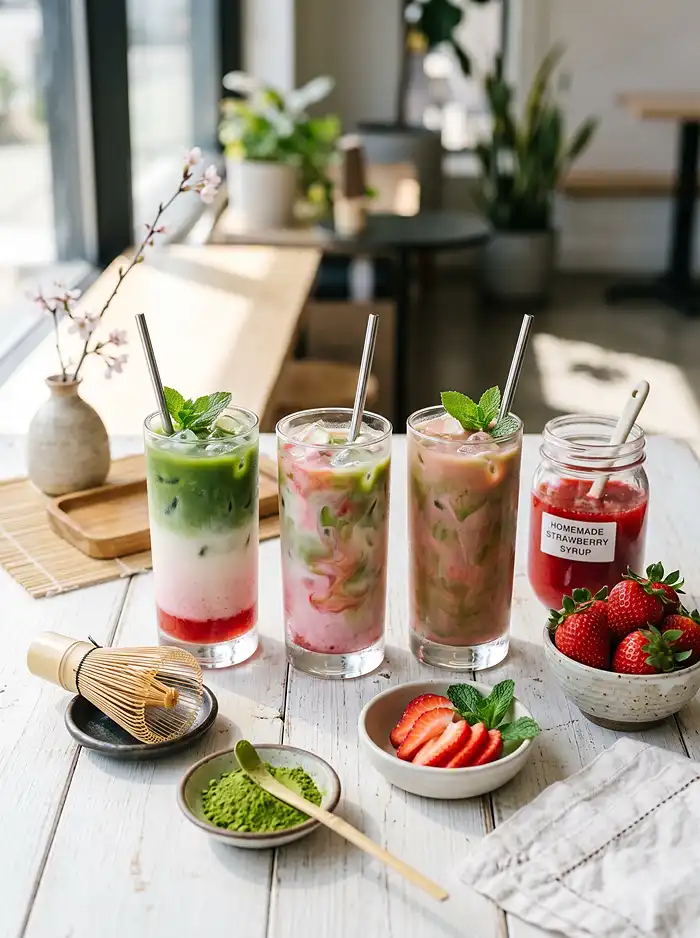
This syrup earns its keep well beyond matcha lattes; it’s lovely drizzled over pancakes, swirled into yogurt, or stirred into sparkling water for a quick mocktail. Well… it also makes a sweet little addition to a Fourth of July dessert table, especially spooned over a simple vanilla cake or fresh berries.
If you’re building out a gluten-free spread for the occasion, this pairs nicely alongside a slice of double chocolate strawberry banana bread or a light silken tofu mousse for dessert. For another fruity, gluten-free treat with a similar strawberry base, my gluten-free strawberry taho is worth a try too.
Give this strawberry syrup a spin in your next matcha latte, and let me know in the comments which method you landed on. If it earns a spot in your regular rotation, a quick recipe rating and a Pinterest save help other home cooks find it too.
Easy Gluten-Free Strawberry Syrup for Matcha at Home
Equipment
- Small saucepan
- Fine-mesh sieve
- Mixing bowl
- Jar or airtight container
- Fork or spoon
- tall glass
Ingredients
Classic Cooked Strawberry Syrup
- 1 cup strawberries fresh or frozen, hulled and sliced
- 1 cup sugar
- 1 cup water
- ½ teaspoon lemon juice optional, for brightness
Honey-Sweetened Version
- 200 g frozen strawberries
- 50 g honey
- water a splash
No-Cook Macerated Syrup
- 226 g fresh strawberries chopped
- 100 g sugar
For a Strawberry Matcha Latte
- 1-2 tablespoons strawberry syrup
- ice as needed
- milk of choice oat, almond, dairy, etc.
- freshly whisked matcha
Optional Flavor Variations
- ½ teaspoon vanilla extract
- 1 slice fresh jalapeño thin slice
- fresh mint leaves a few leaves
Instructions
- For the classic cooked syrup, add strawberries, sugar, and water to a small saucepan and stir to combine.
- Bring the mixture to a gentle simmer over medium heat, stirring occasionally.
- Use a fork or spoon to mash the softened strawberries against the side of the pan.
- Continue simmering for 10 to 15 minutes until the liquid thickens slightly and becomes vibrant red.
- Stir in lemon juice if using.
- Remove from heat, cool slightly, then strain through a fine-mesh sieve into a clean jar.
- For the honey-sweetened version, combine frozen strawberries, honey, and a splash of water in a saucepan.
- Cook over low heat for 10 to 15 minutes, stirring occasionally and mashing the berries as they soften.
- Cool completely, then strain for a smooth syrup or leave slightly chunky if desired.
- For the no-cook version, toss chopped strawberries with sugar in a bowl or zip-top bag.
- Refrigerate for at least 2 hours or overnight until juices are released.
- Strain for a smooth syrup or leave some fruit pieces for texture.
- To make a strawberry matcha latte, add strawberry syrup to the bottom of a tall glass and fill with ice.
- Pour in milk, then slowly pour freshly whisked matcha over the back of a spoon to create layers.
- Stir before drinking and adjust sweetness to taste.