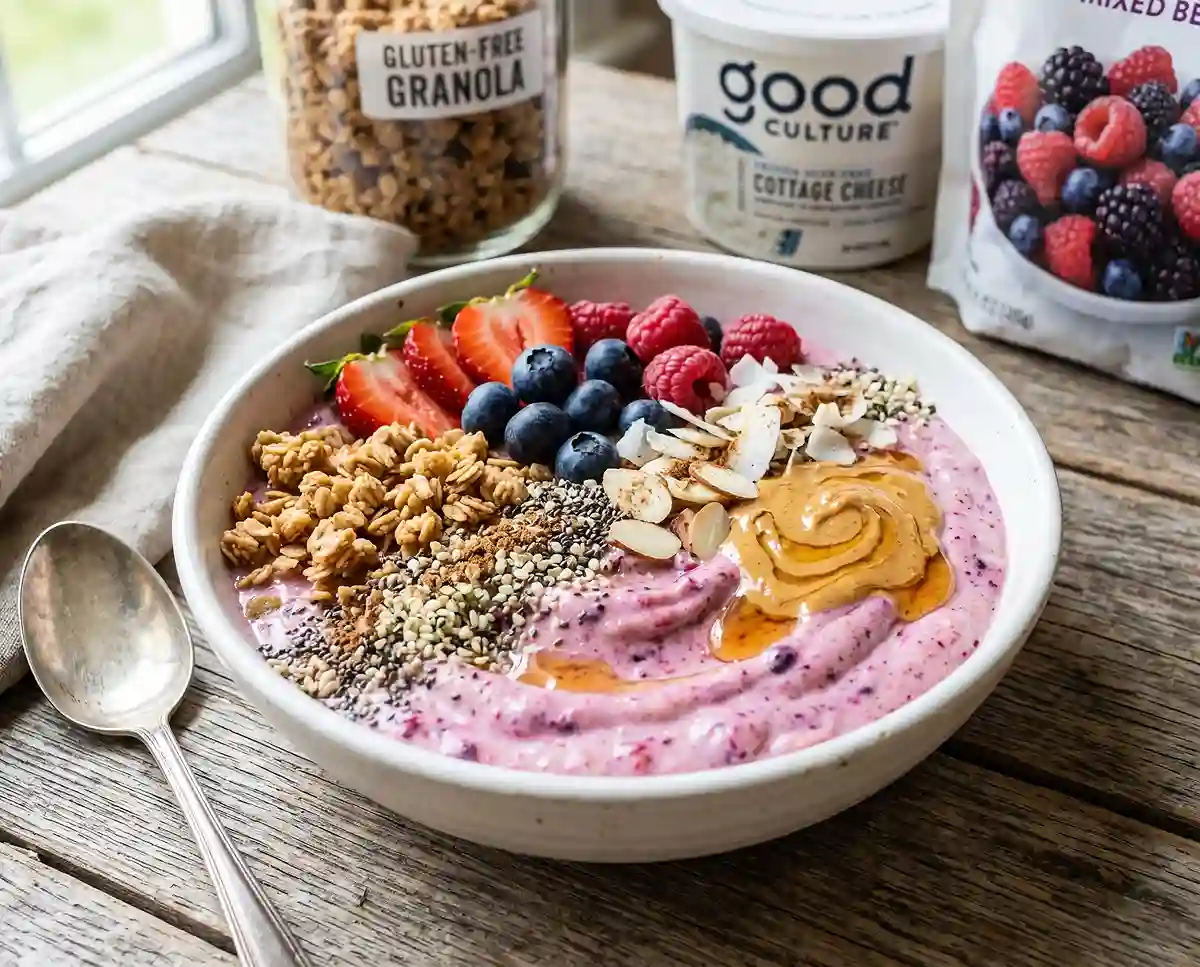
Cottage Cheese Breakfast Bowl
Step-by-step gluten-free cottage cheese breakfast bowl with frozen fruit. High-protein, easy to blend, and ready in minutes with toppings you’ll love.
The first time I made a gluten-free cottage cheese breakfast bowl, I honestly wasn’t sure it would work. I tossed frozen mango, a scoop of cottage cheese, and a splash of coconut water into my little food processor—fully expecting a lumpy mess.
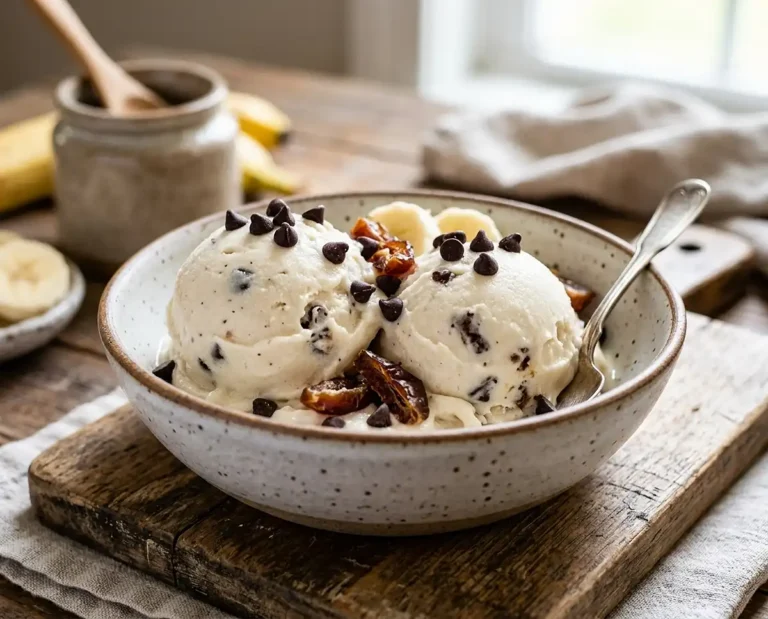
What came out was thick, creamy, and smooth as soft-serve ice cream. I stood there at 7 a.m. in my kitchen, genuinely surprised. That’s when I knew this bowl was going to become a permanent part of my mornings.
Can a two-ingredient base really deliver that much protein and satisfaction before 8 a.m.? It can—and this recipe proves it every single time.
Why You’ll Love This Cottage Cheese Breakfast Bowl
- Thick and creamy texture that holds toppings without turning watery—like a spoonable smoothie made for a bowl
- Ready in under 5 minutes with no cooking, no heat, and almost no cleanup
- Naturally gluten-free from base to bowl when you choose certified gluten-free granola toppings
- Endlessly customizable—works with any frozen fruit you have on hand, any season, any mood
The Secret to Perfect Gluten-Free Cottage Cheese Breakfast Bowl
Most people assume blending cottage cheese will make it grainy or separated. The trick is using frozen fruit—not fresh. The cold temperature chills the cottage cheese as it blends, creating a thick, unified base that doesn’t break down.
- Frozen fruit is non-negotiable: Fresh fruit adds too much liquid and makes the bowl runny. Frozen fruit keeps it thick and frosty.
- Scrape the sides while blending: Cottage cheese curds like to hide in corners. Stop, scrape, and blend again for a truly smooth result.
- Add liquid sparingly: A small splash of milk, juice, or coconut water goes a long way. Add it only if the blender is struggling—not as a default step.
- Chill for extra thickness: Pop the finished bowl in the freezer for 5–10 minutes if you want that dense, frosty texture that makes it feel like a treat rather than just breakfast.
According to peer-reviewed research on high-protein breakfasts, starting your morning with adequate protein helps regulate appetite hormones and sustains energy throughout the morning—making this bowl a smart daily habit.
Table of Contents
Ingredients
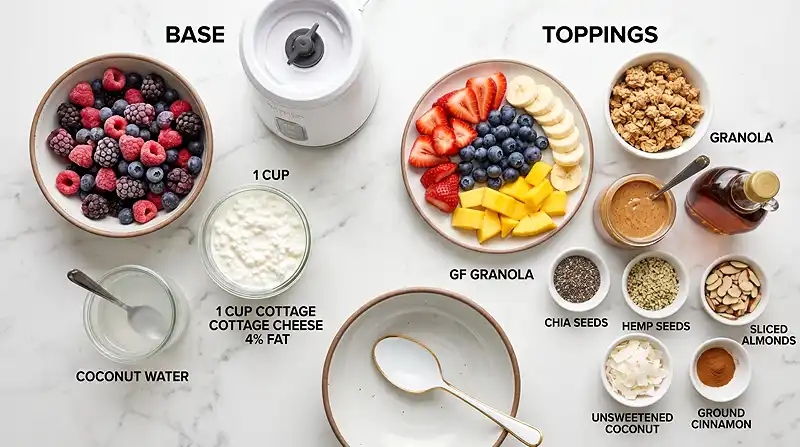
This recipe makes 1 serving. Use certified gluten-free granola and toppings to keep the whole bowl safely gluten-free.
For the Base
| Ingredient | Amount | Notes |
|---|---|---|
| Frozen fruit | 1 cup | Mixed berries, mango, strawberry-banana, peaches, or your favorite combination |
| Whole milk or 2% cottage cheese | ½ cup | Full-fat gives the creamiest texture; 2% works well too |
| Milk, juice, or coconut water | Splash as needed | Only add if the blender is struggling—keep it minimal |
Optional Toppings
- Fresh fruit slices
- Certified gluten-free granola
- Nut butter (peanut, almond, or cashew butter)
- Honey or maple syrup
- Chia seeds
- Hemp seeds
- Sliced almonds or walnuts
- Unsweetened coconut flakes
- Cinnamon
Instructions
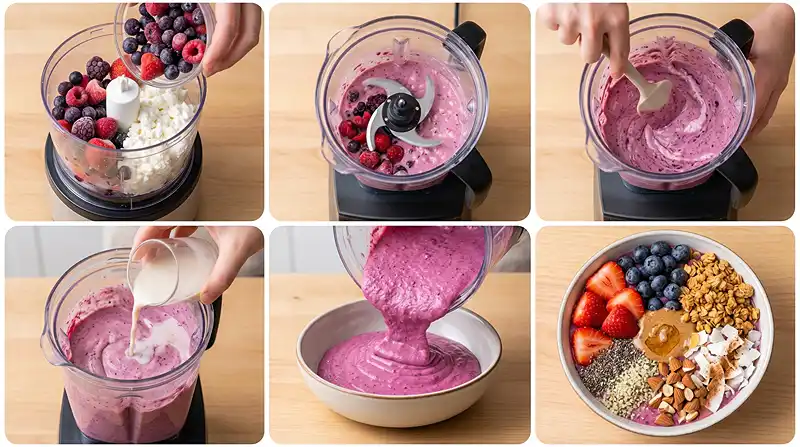
- Add frozen fruit and cottage cheese to a mini food processor or high-speed blender. The frozen fruit will immediately start chilling the cottage cheese—that’s exactly what you want.
- Blend until smooth and creamy, stopping to scrape down the sides as needed. Don’t rush this step—those corners hold onto stubborn curds that need a little help.
- Add liquid only if needed. If the mixture seems too thick or the blender is struggling, add a small splash of milk, juice, or coconut water and continue blending until fully smooth.
- Transfer to a serving bowl. Use a spatula to get every last bit—this base is too good to leave behind.
- Add your toppings. Layer on fresh fruit, certified gluten-free granola, nut butter, honey, chia seeds, hemp seeds, or whatever sounds right today.
- Enjoy immediately—or freeze briefly. For an extra thick, frosty texture, place the bowl in the freezer for 5–10 minutes before topping and eating.
Make It Your Own
Well… the beauty of this bowl is how easily it adapts to whatever you have in the freezer. Mango and coconut water give you tropical vibes. Mixed berries with a drizzle of honey lean antioxidant-rich. Peaches with cinnamon taste like summer pie—without the gluten.
If you’re going dairy-free, swap the cottage cheese for a thick, plain coconut yogurt. The texture changes slightly—a little less protein-dense—but it still blends creamy and holds up well under toppings. Look for one with minimal added sugar so the fruit flavor stays front and center.
Want more protein? Add a tablespoon of hemp seeds directly into the blender with the base ingredients. They blend in invisibly and contribute a meaningful boost of plant-based protein and omega fatty acids without changing the flavor at all.
For a kid-friendly version, use strawberry-banana frozen fruit and add a thin drizzle of peanut butter on top. Serve it on a Saturday morning before soccer and watch it disappear before you’ve finished your own coffee.
If you love experimenting with cottage cheese in gluten-free cooking, my gluten-free cottage cheese bread wrap is another great way to use this ingredient across meals beyond breakfast.
Common Problems & Solutions
Man, oh man… if your bowl comes out watery, the culprit is almost always fresh fruit standing in for frozen. Fresh fruit has a much higher water content and doesn’t keep the base cold enough to stay thick. Switch to frozen and the problem disappears.
Problem: The mixture won’t blend smoothly. Solution: Scrape down the sides and add the smallest splash of liquid possible—just a teaspoon or two at a time. Adding too much at once is the fastest way to turn a thick bowl into a thin smoothie.
Problem: The bowl tastes too tart. Solution: Add a drizzle of honey or maple syrup directly into the blender before blending. A little sweetener during the blend incorporates more evenly than stirring it in after.
Problem: The granola gets soggy immediately. Solution: Add granola right before eating, never before. If you’re meal prepping, keep the granola in a separate small container and add it at the table. This applies especially to certified gluten-free granola, which tends to be slightly more moisture-sensitive than conventional varieties.
If you enjoy using cottage cheese in savory gluten-free dishes too, my cottage cheese wrap quiche recipe is worth bookmarking—it uses the same base ingredient in a completely different direction.
Storage & Meal Prep
| Method | Duration | Notes |
|---|---|---|
| Counter | Not recommended | Best eaten fresh; dairy and frozen fruit don’t hold at room temp |
| Fridge (base only, no toppings) | Up to 24 hours | Cover tightly; stir before serving and add fresh toppings |
| Freezer (base only) | Up to 1 month | Freeze in a sealed container; thaw in the fridge overnight |
This bowl is best made fresh, but the base can be made the night before and stored in the fridge. Expect a slightly looser texture after refrigeration—just give it a good stir. Keep all toppings separate until you’re ready to eat.
You know… batch-prepping the fruit is where the real time savings happen. Portion 1 cup of frozen fruit into individual freezer bags at the start of the week. In the morning, dump one bag into the blender, add cottage cheese, and blend. Breakfast done in under three minutes.
Cottage Cheese Breakfast Bowl FAQs
Can I use fresh fruit instead of frozen?
Fresh fruit will work in a pinch, but frozen fruit is strongly recommended. Frozen fruit keeps the base thick and creamy and helps chill the cottage cheese as it blends. Fresh fruit adds more liquid, which makes the bowl thinner and harder to keep at that satisfying, spoonable consistency.
How do I make this higher in protein?
The cottage cheese base already delivers a strong protein start. To boost it further, blend in a tablespoon of hemp seeds or add a spoonful of nut butter on top. Greek yogurt can also be stirred in after blending for additional protein without changing the texture much.
What’s the best blender for this recipe?
A mini food processor or personal blender works best for single-serving portions. Full-size blenders sometimes struggle with small quantities and leave air pockets. A high-speed personal blender like a NutriBullet handles the thick, frozen base especially well.
Why did my bowl turn out grainy?
Graininess usually comes from under-blending. Stop and scrape the sides of the blender at least once during blending, then continue until completely smooth. Using 2% or whole milk cottage cheese also helps—low-fat varieties can have a less smooth texture when blended.
Can I make this bowl ahead of time for meal prep?
You can blend the base the night before and store it covered in the fridge for up to 24 hours. The texture will be slightly softer the next day, but still satisfying. Keep all toppings separate and add them right before eating to avoid sogginess.
Serving Suggestions
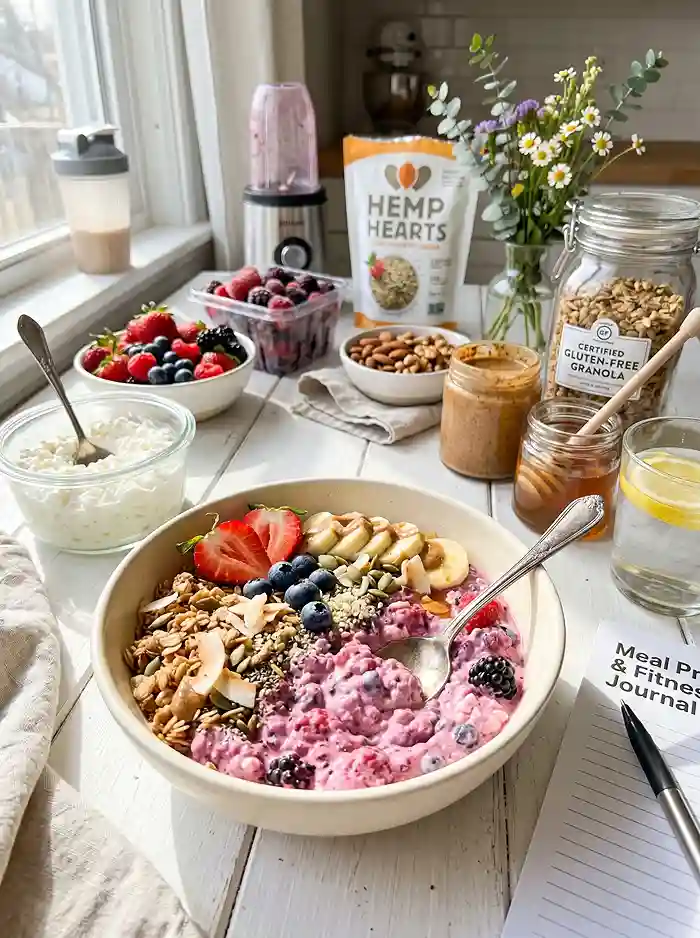
This bowl shines as a standalone breakfast, but it pairs beautifully with a soft-boiled egg or a slice of my gluten-free cottage cheese bread wrap on mornings when you need something more substantial.
For a sweet finish or a lighter dessert option, try pairing it with a slice of my gluten-free eggless vanilla cake—it’s a crowd-pleaser that works beautifully at Easter brunch or any family gathering where you want to keep things gluten-free without anyone feeling like they’re missing out.
Serve the bowl as part of a holiday brunch spread with a toppings bar—little bowls of granola, honey, fresh berries, and nut butters—so everyone can build their own. It turns a simple recipe into an experience guests actually talk about.
If you’re ready to give this recipe a try, I’d love to know how it turns out. Leave a comment below with the fruit combo you used or any topping variations you discovered—your ideas genuinely help other readers. And if you enjoyed this recipe, sharing it on Pinterest helps more gluten-free families find it.
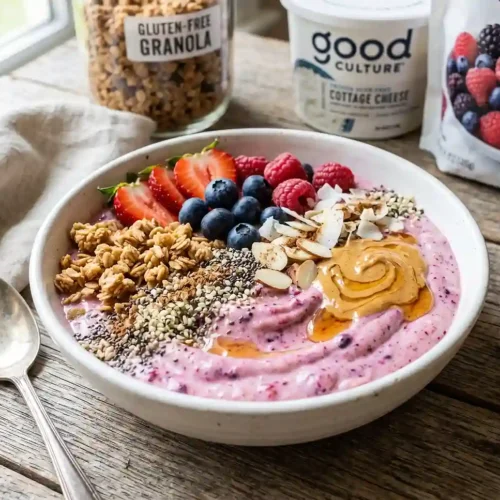
Gluten-Free Cottage Cheese Breakfast Bowl
Equipment
- Mini food processor
- High-speed blender
- Spatula
- Serving bowl
Ingredients
For the Base
- 1 cup Frozen fruit Mixed berries, mango, strawberry-banana, peaches, or favorite combination
- ½ cup Whole milk or 2% cottage cheese Full-fat gives the creamiest texture; 2% works well too
- 1 splash Milk, juice, or coconut water Only add if needed for blending
Optional Toppings
- Fresh fruit slices
- Certified gluten-free granola
- Nut butter Peanut, almond, or cashew butter
- Honey or maple syrup
- Chia seeds
- Hemp seeds
- Sliced almonds or walnuts
- Unsweetened coconut flakes
- Cinnamon
Instructions
- Add frozen fruit and cottage cheese to a mini food processor or high-speed blender.
- Blend until smooth and creamy, stopping to scrape down the sides as needed.
- If the mixture is too thick or the blender struggles, add a small splash of milk, juice, or coconut water and continue blending until smooth.
- Transfer the blended mixture to a serving bowl using a spatula.
- Add desired toppings such as fresh fruit, gluten-free granola, nut butter, honey, chia seeds, or hemp seeds.
- Enjoy immediately, or place the bowl in the freezer for 5–10 minutes for an extra thick, frosty texture before serving.