Espresso Banana Protein Smoothie Bowl
Make a gluten-free espresso banana protein smoothie bowl in 5 minutes. High-protein, thick, and creamy—with ingredients, toppings, and tips for the best texture.
I started making this gluten-free espresso banana protein smoothie bowl during a stretch of mornings when I needed coffee and breakfast but kept running out of time for both. One frozen banana, one shot of espresso, and a blender—that was the accidental start of what’s now become my most-requested breakfast recipe among friends.
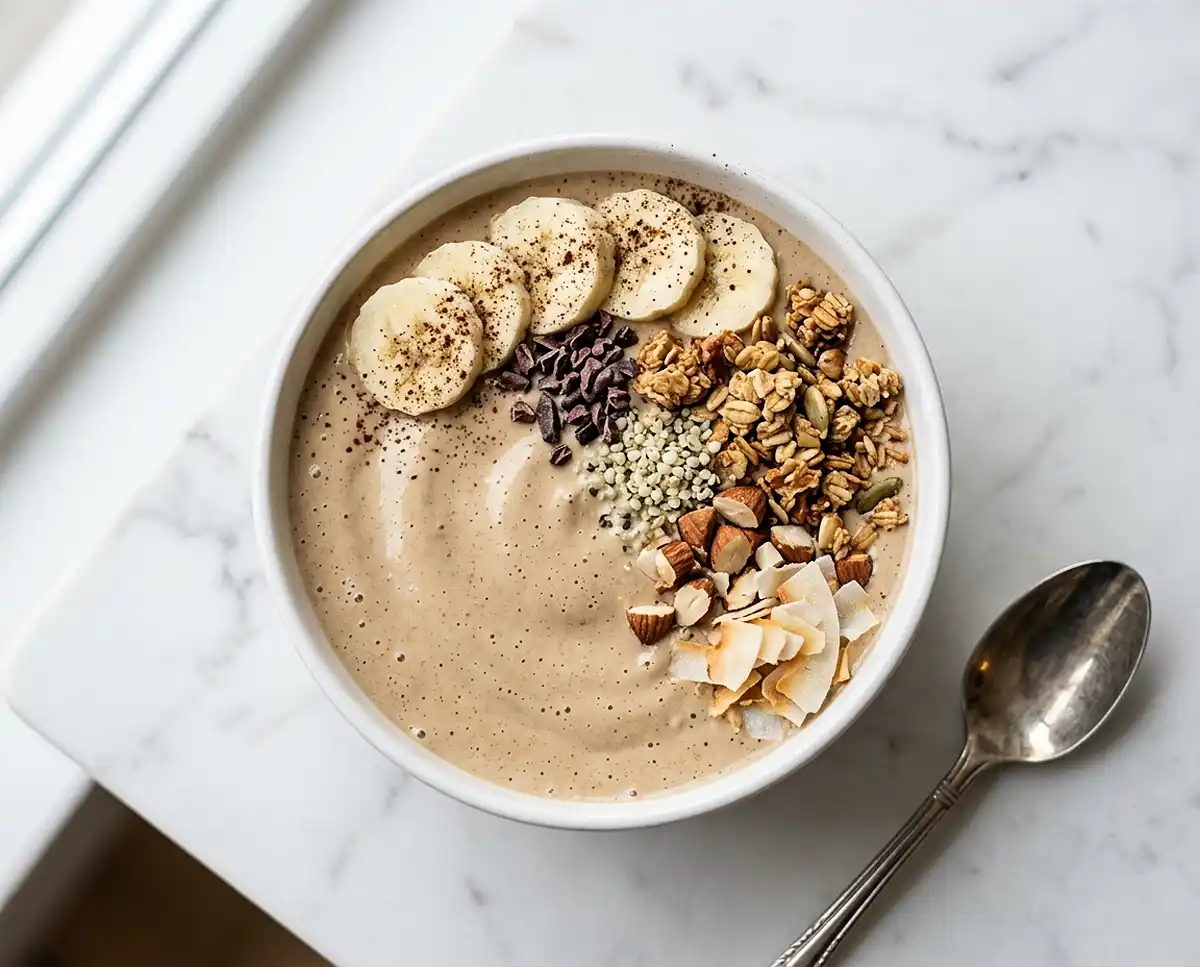
What surprised me most the first time was the texture. I expected something thin and drinkable, but what came out of the blender was thick enough to hold toppings without them sinking—almost like soft-serve ice cream with a coffee punch. Can a five-minute breakfast actually keep you full until lunch? This one can.
Well… if you’ve ever tried to find a high-protein breakfast that’s both gluten-free and genuinely satisfying before 8 a.m., you know how short that list feels. This bowl checks every box without requiring much more than pressing a button.
Why You’ll Love This Espresso Banana Protein Smoothie Bowl
- Thick, spoonable texture — the frozen banana and optional ice cubes create a dense, creamy base that eats like soft-serve rather than a drink.
- Ready in 5 minutes — one blender, five minutes, and breakfast is done. No cooking, no dishes beyond the bowl and blender jar.
- High-protein and genuinely filling — between the Greek yogurt, protein powder, nut butter, and chia seeds, this bowl delivers a serious protein punch that carries you through a full morning.
- Fully customizable toppings — certified gluten-free granola, cacao nibs, hemp hearts, banana slices—build the bowl your way every single time.
The Secret to Perfect Gluten-Free Espresso Banana Protein Smoothie Bowl
Smoothie bowls fail when they’re too thin, too icy, or too flat-tasting. Here’s what prevents all three.
- Freeze the banana before blending — a frozen banana is the structural backbone of this bowl. It chills the mixture, thickens the texture, and adds natural sweetness that reduces the need for added sugar. A fresh banana produces a loose, drink-like consistency that won’t hold toppings.
- Cool the espresso completely before adding — hot espresso melts the frozen banana and Greek yogurt, turning what should be thick and spoonable into something soupy. Pull the shot ahead of time or use cold brew concentrate for the most reliable result.
- Use certified gluten-free protein powder — according to the Celiac Disease Foundation’s guidance on hidden gluten sources, protein powders are one of the most common cross-contamination risks in packaged products. Always check for a certified gluten-free designation on the label, not just “gluten-free” in the marketing copy.
- Blend on high and stop before it thins out — over-blending warms the mixture through friction and breaks down the ice crystals that give the bowl its body. Blend just until smooth—usually 30 to 45 seconds on high—and pour immediately.
Table of Contents
Ingredients
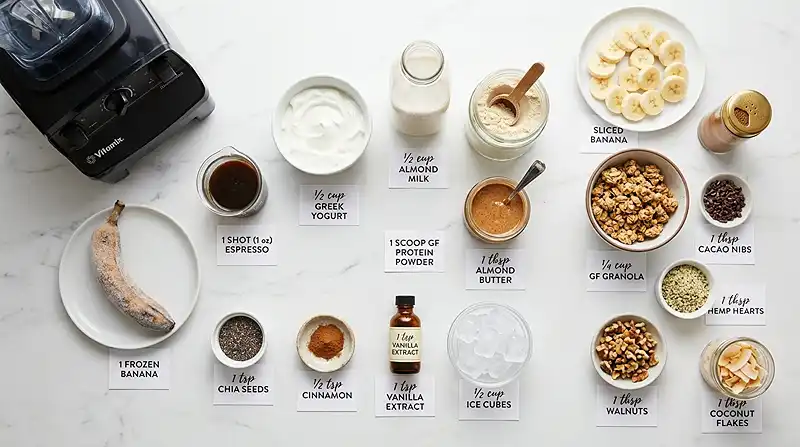
This recipe makes 1 large serving. Measure everything before blending so you can move quickly once the machine is running.
Smoothie Bowl Base
| Ingredient | Amount | Notes |
|---|---|---|
| Frozen banana | 1 | Freeze overnight; peel before freezing for easy blending |
| Espresso (cooled) or strong cold coffee | 1 shot or ¼ cup | Must be fully cooled; warm liquid thins the texture |
| Plain Greek yogurt | ½ cup | Full-fat gives the creamiest result; use dairy-free yogurt to make it vegan |
| Milk of choice | ½ cup | Any milk works; use less for a thicker bowl |
| Certified gluten-free vanilla or coffee protein powder | 1 scoop (about 30 g) | Check label for certified GF—not just marketing language |
| Peanut butter or almond butter | 1 tablespoon | Adds healthy fat and depth; almond butter gives a milder flavor |
| Chia seeds | 1 tablespoon | Adds fiber and omega-3s; also helps thicken the base |
| Ground cinnamon | ½ teaspoon | Enhances the banana and espresso without adding sweetness |
| Vanilla extract | ½ teaspoon | Rounds out the coffee notes; don’t skip it |
| Ice cubes | ½ cup | Optional; use for an even thicker, colder texture |
Optional Toppings
- Banana slices
- Certified gluten-free granola
- Cacao nibs
- Hemp hearts
- Chopped almonds or walnuts
- Toasted coconut flakes
- Espresso powder or cinnamon for dusting
Instructions
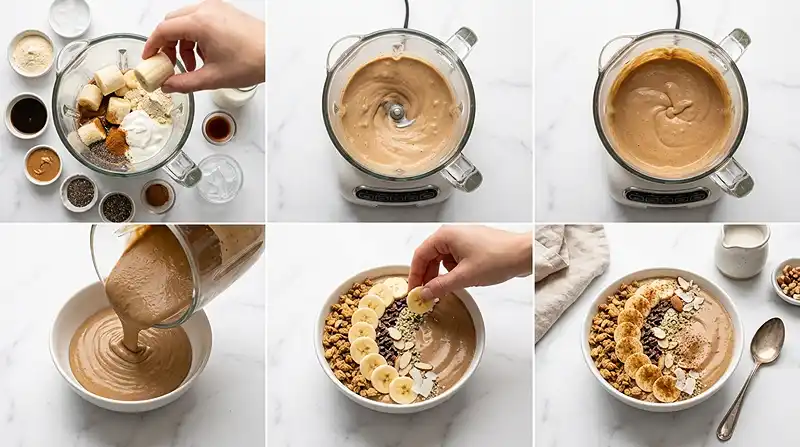
You’ll need a high-powered blender and a wide, shallow bowl for serving. Have your toppings ready before you blend—this bowl is best served the moment it comes out of the machine.
Load the blender. Add the frozen banana, cooled espresso, ½ cup plain Greek yogurt, ½ cup milk of choice, 1 scoop certified gluten-free protein powder, 1 tablespoon nut butter, 1 tablespoon chia seeds, ½ teaspoon ground cinnamon, ½ teaspoon vanilla extract, and ½ cup ice cubes (if using) to the blender. Adding the liquid ingredients first helps the blender catch the frozen banana without straining the motor.
Blend on high until smooth and thick. Run the blender on high speed for 30 to 45 seconds. The mixture should look thick enough to mound slightly in the blender jar—not swirl freely like a liquid. If it’s too thick to blend properly, add a small splash of milk and pulse again. Pro Tip: Avoid adding more than a tablespoon of extra milk at a time. A little goes a long way and it’s very easy to overshoot into drinkable territory.
Pour into a bowl immediately. Tip the blender jar and let the thick smoothie slide out into a wide, shallow bowl. Work quickly—the mixture starts warming and softening the moment it leaves the cold blender environment. Use a spatula to scrape out every bit.
Arrange toppings over the surface. Lay out banana slices, a handful of certified gluten-free granola, a scatter of cacao nibs, and whatever else you’re using. Dust with a pinch of espresso powder or cinnamon for a finishing touch that looks as good as it tastes. Pro Tip: Work in sections rather than dumping everything in one spot—a composed bowl photographs better and makes it easier to get a little of everything in each spoonful.
Serve immediately while cold and creamy. Smoothie bowls don’t hold—they soften and separate within about 10 minutes at room temperature. Eat it right away for the best texture and temperature.
Make It Your Own
Make it dairy-free. Swap the Greek yogurt for a thick coconut yogurt or unsweetened cashew yogurt, and use oat milk or almond milk as your liquid base. The texture stays dense and spoonable as long as your yogurt alternative is thick—thin plant-based yogurts produce a looser bowl. This is the version I make for my sister-in-law, who can’t do dairy, and she can’t tell the difference.
Boost it for a high-protein breakfast. Use a coffee-flavored protein powder instead of vanilla to double down on the espresso note. You can also add a second tablespoon of nut butter for extra healthy fat, which slows digestion and extends how long the bowl keeps you satisfied. According to nutritional research compiled by Healthline, protein and fat together at breakfast significantly reduce mid-morning hunger compared to carbohydrate-only meals.
Skip the caffeine. Replace the espresso with ¼ cup of cold water or an extra splash of milk if you’re making this for kids or if you’re caffeine-sensitive. The banana, cinnamon, and vanilla still give the bowl plenty of flavor depth—it just becomes a banana cream smoothie bowl instead of a coffee-forward one. Man, oh man—the kid-friendly version with peanut butter and banana slices on top disappears in seconds at our house.
You know… the gluten-free smoothie bowl format is so flexible that once you’ve made this base once, you’ll start riffing on it every week. Swap the espresso for cocoa powder, add frozen mango, change the nut butter—the formula holds up to almost anything.
Common Problems & Solutions
Problem: Smoothie bowl came out too thin to hold toppings.
Solution: Add ½ cup of ice cubes and re-blend briefly. Going forward, make sure your banana is fully frozen—a partially thawed banana is the most common cause of a loose bowl. You can also reduce the milk by 2 tablespoons next time to start with a thicker base.
Problem: Bowl tastes bitter or the coffee flavor is too harsh.
Solution: The espresso was likely too strong or still warm when added. Use ¼ cup of cold brew concentrate instead of a hot shot for a smoother, less aggressive coffee flavor. A touch more vanilla extract also rounds out bitterness without adding sweetness.
Problem: Protein powder left lumps or a chalky texture.
Solution: Add the protein powder after the liquid ingredients and blend immediately—don’t let it sit on top of the frozen banana before the machine runs. Some protein powders simply don’t blend as smoothly as others; switching to a whey-based or plant-based powder with a finer grind usually solves it.
Problem: Bowl warmed up too fast before I could eat it.
Solution: Pre-chill your serving bowl in the freezer for 5 minutes before pouring. A cold bowl slows the warming process significantly and keeps the espresso banana breakfast texture firm for several extra minutes—enough time to plate it properly and actually enjoy it.
Storage & Meal Prep
| Method | Duration | Notes |
|---|---|---|
| Counter | Not recommended | Softens and separates within 10 minutes; eat immediately |
| Fridge (blended base only) | Up to 24 hours | Store in an airtight jar; re-blend briefly or stir well before serving |
| Freezer (base only) | Up to 1 month | Freeze in a zip-lock bag flat; thaw in the fridge overnight and re-blend |
The most efficient meal prep approach for this bowl is to pre-portion your dry ingredients. Measure out the chia seeds, cinnamon, and protein powder into small bags or jars for the week, then freeze individual peeled bananas in separate bags. Each morning, everything goes straight into the blender with no measuring required.
Don’t store the bowl with toppings already on it—the granola softens and the banana slices brown. Keep toppings separate and add them fresh each time for the best texture and appearance.
If you’ve blended the base and need to hold it for a few hours, pour it into an airtight jar and refrigerate immediately. It will thicken further as it chills, which is actually a bonus—give it a quick stir or a 10-second re-blend before pouring into your bowl and adding toppings. Pair your morning prep with a look at this gluten-free blackberry cobbler overnight oats recipe for another make-ahead breakfast that keeps your mornings stress-free.
Espresso Banana Protein Smoothie Bowl FAQs
Can I make this smoothie bowl without a high-powered blender?
Yes, but with some adjustments. Let the frozen banana sit at room temperature for 3 to 4 minutes before blending to soften slightly. Cut it into smaller pieces before freezing to reduce the load on a standard blender. Add the liquid ingredients first and use the pulse function rather than running on continuous high to prevent motor strain.
How do I make the bowl thicker without adding more ice?
Use less milk—start with ¼ cup instead of ½ cup and add more only if the blender stalls. A fully frozen banana also makes a significant difference; even a slightly thawed banana will produce a noticeably looser result. Full-fat Greek yogurt adds creaminess and density that low-fat versions simply can’t match.
What’s the best gluten-free protein powder for smoothie bowls?
Look for a certified gluten-free label, not just a marketing claim. Whey-based powders generally blend smoother and don’t leave a chalky aftertaste. For plant-based options, pea protein blends well and has a neutral enough flavor that it doesn’t compete with the espresso and banana. Always check that your brand is certified, not just self-declared.
Why did my smoothie bowl turn brown instead of staying light in color?
Oxidation from the banana is the most likely cause—this happens faster if the banana wasn’t fully frozen or if the bowl sat out for more than a few minutes before you ate it. A squeeze of lemon juice blended into the base slows oxidation noticeably. Pre-chilling your serving bowl also helps slow the process.
Can I use instant coffee instead of espresso?
Yes. Dissolve 1 teaspoon of instant coffee in 2 tablespoons of cold water to approximate a shot of espresso. It won’t have the same depth as a pulled shot, but it delivers the coffee flavor this bowl needs without any brewing equipment. Cold brew concentrate works even better—use ¼ cup in place of the espresso shot.
Serving Suggestions
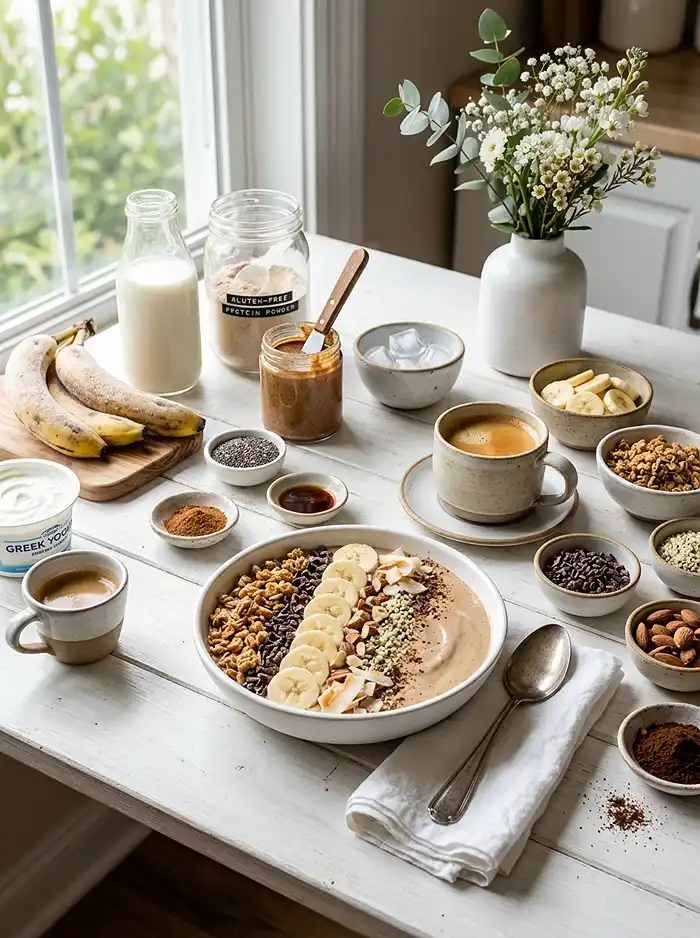
This bowl works best as a standalone breakfast, but it fits naturally into a bigger spread too. Set it out alongside a gluten-free chicken apple sausage burrito for a brunch table that covers both sweet and savory without anyone going hungry.
For a Mother’s Day breakfast in bed or a slow weekend morning, the composed toppings make this bowl feel intentional and special—not like something thrown together in five minutes, even though it is.
If you’re building a full gluten-free breakfast rotation, this pairs well with the gluten-free blackberry peach French toast casserole for days when you have a little more time and want something warm and shareable.
Give this bowl a try tomorrow morning and drop a comment below telling me which toppings you went with—I’m especially curious if anyone tries the toasted coconut flakes with cacao nibs combination. And if it earned a regular spot in your breakfast lineup, sharing it on Pinterest helps other gluten-free families find it on their busiest mornings.
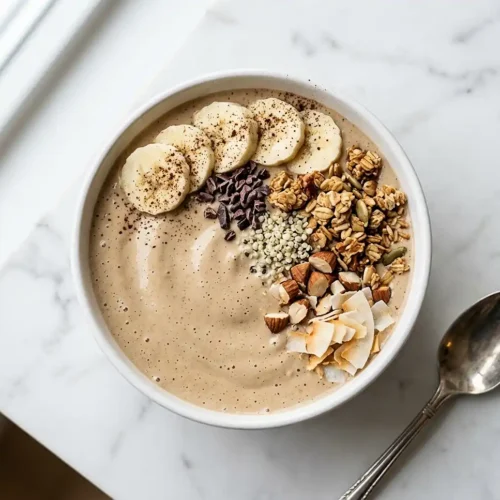
Gluten-Free Espresso Banana Protein Smoothie Bowl
Equipment
- High-Powered Blender
- Wide shallow serving bowl
- Spatula
Ingredients
Smoothie Bowl Base
- 1 Frozen banana Frozen overnight and peeled before freezing
- 1 shot Espresso Cooled, or 1/4 cup strong cold coffee
- ½ cup Plain Greek yogurt Full-fat preferred
- ½ cup Milk of choice Use less for a thicker bowl
- 1 scoop Certified gluten-free vanilla or coffee protein powder About 30 g
- 1 tablespoon Peanut butter or almond butter
- 1 tablespoon Chia seeds
- ½ teaspoon Ground cinnamon
- ½ teaspoon Vanilla extract
- ½ cup Ice cubes Optional
Optional Toppings
- Banana slices
- Certified gluten-free granola
- Cacao nibs
- Hemp hearts
- Chopped almonds or walnuts
- Toasted coconut flakes
- Espresso powder or cinnamon For dusting
Instructions
- Add the frozen banana, cooled espresso, Greek yogurt, milk, protein powder, nut butter, chia seeds, cinnamon, vanilla extract, and optional ice cubes to a high-powered blender.
- Blend on high for 30 to 45 seconds until the mixture is smooth, thick, and creamy. Add a small splash of milk only if necessary.
- Pour the smoothie mixture immediately into a wide, shallow serving bowl, using a spatula to scrape out every bit.
- Arrange your desired toppings, such as banana slices, gluten-free granola, cacao nibs, hemp hearts, chopped nuts, toasted coconut, and a dusting of espresso powder or cinnamon.
- Serve immediately while the smoothie bowl is cold, thick, and creamy.