Lemon Ricotta Protein Pancake Skillet
Make a gluten-free lemon ricotta protein pancake skillet with 30g of protein per serving. Fluffy, golden, and done in under 20 minutes—with step-by-step instructions.
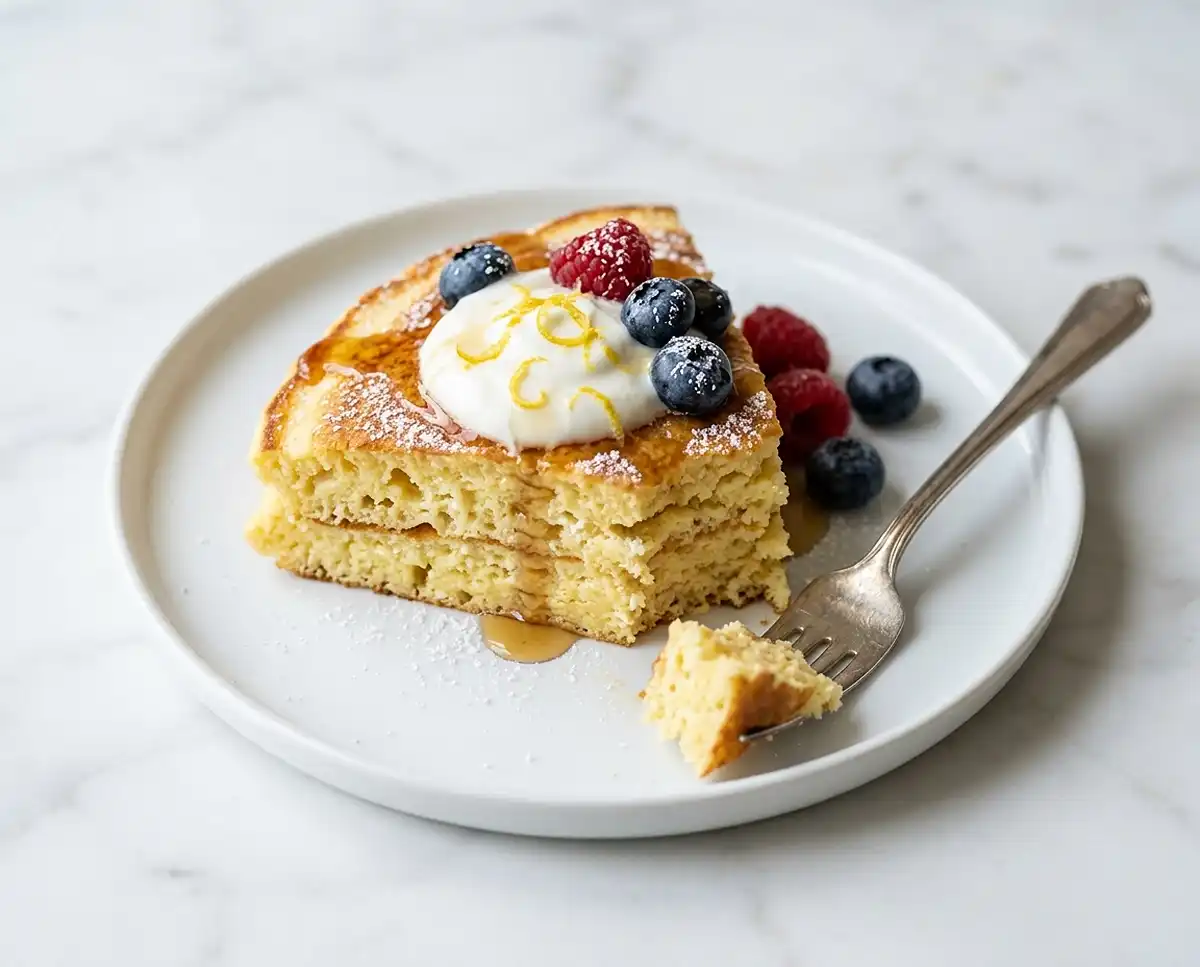
The idea came to me on a Sunday morning when I had ricotta left over from the night before and absolutely no patience for flipping individual pancakes. I’d been experimenting with high-protein gluten-free breakfasts for weeks, and this lemon ricotta protein pancake skillet came together almost by accident—one bowl of batter poured into a hot skillet, finished in the oven, and sliced like a pie. No flipping, no babysitting, no mess.
What I didn’t expect was the texture. The ricotta and Greek yogurt create a center that’s somehow both airy and dense at the same time—as light as a soufflé but substantial enough to keep you full for hours. The lemon zest cuts through the richness in a way that makes the whole thing taste bright and fresh, not heavy.
Well… I’ve made a lot of gluten-free breakfasts that looked good on paper and fell flat at the table. This one has never once disappointed. Is there a better way to get 30 grams of protein into a breakfast that actually tastes like something worth waking up for? I haven’t found it yet.
Why You’ll Love This Lemon Ricotta Protein Pancake Skillet
- 30g of protein per serving — between the eggs, ricotta, Greek yogurt, and protein powder, this skillet delivers serious staying power without any protein bar shortcuts.
- No-flip, oven-finished method — cook the base on the stovetop, slide it into the oven, and let the heat do the rest. No spatula stress, no uneven browning.
- Bright, lemony flavor — fresh lemon juice and zest keep every bite tasting clean and citrusy, not eggy or protein-powder-forward.
- Naturally gluten-free and easily dairy-free — certified gluten-free oat flour is the only flour in this recipe, and the dairy swaps in the substitutions section are seamless.
The Secret to Perfect Lemon Ricotta Protein Pancake Skillet
Getting a skillet pancake to set properly—fluffy in the center, golden at the edges—requires a few intentional technique choices.
- Let the batter rest for 5 minutes before cooking — gluten-free oat flour needs hydration time. Skipping the rest produces a gummy, undercooked center even when the top looks done. Five minutes is enough for the starches to absorb the liquid and for the baking powder to activate properly.
- Use an oven-safe skillet and preheat it before adding batter — a cold skillet produces uneven heat distribution and a pale, soggy bottom. A properly heated skillet creates an immediate crust on contact that sets the base before the batter can spread too thin.
- Don’t overmix the batter — stir the wet and dry ingredients together just until combined, even if a few streaks remain. Overmixing develops the starches in oat flour and produces a tough, dense result instead of a tender crumb. According to pancake technique research by Serious Eats, undermixed batter consistently outperforms overmixed batter in tenderness tests.
- Pull the skillet at the right moment — the pancake is done when it’s puffed, lightly golden at the edges, and a toothpick inserted in the center comes out clean. Overbaking dries out the ricotta and tightens the crumb; check at the 10-minute mark and give it no more than 2 extra minutes if needed.
Table of Contents
Lemon Ricotta Protein Pancake Skillet Ingredients
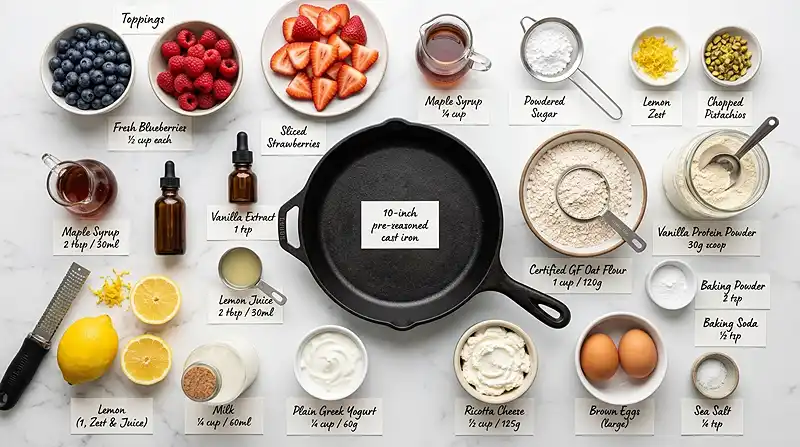
This recipe makes 2 servings. Measure everything before you start—the batter comes together quickly and benefits from moving straight from mixing to the skillet.
Dry Ingredients
| Ingredient | Amount | Notes |
|---|---|---|
| Certified gluten-free oat flour | 1 cup | Must be certified GF—regular oat flour carries cross-contamination risk |
| Certified gluten-free vanilla protein powder | 1 scoop (about 30 g) | Check label for certified GF; whey or pea protein both work |
| Baking powder | ½ teaspoon | Provides lift in the oven; check it’s gluten-free |
| Baking soda | ¼ teaspoon | Works with the lemon juice for extra rise |
| Salt | ¼ teaspoon | Balances the sweetness and brightens the lemon flavor |
Wet Ingredients
| Ingredient | Amount | Notes |
|---|---|---|
| Large eggs | 2 | Room temperature eggs blend more smoothly into the ricotta |
| Ricotta cheese | ½ cup | Full-fat gives the best texture; part-skim works but is slightly drier |
| Plain Greek yogurt | ¼ cup | Adds tang, protein, and moisture; full-fat preferred |
| Milk of choice | ¼ cup | Any milk works; use less for a thicker batter |
| Fresh lemon juice | 2 tablespoons | Fresh only—bottled lemon juice tastes flat and slightly bitter |
| Lemon zest | 1 tablespoon | Where most of the lemon flavor lives; don’t skip it |
| Vanilla extract | 1 teaspoon | Rounds out the protein powder and enhances the citrus |
| Honey or maple syrup | 1 tablespoon | Optional; omit if your protein powder is already sweet |
| Unsalted butter or coconut oil, for the skillet | 1 tablespoon | Butter gives a richer base flavor; coconut oil keeps it dairy-free |
Optional Toppings
- Fresh blueberries or raspberries
- Sliced strawberries
- Plain Greek yogurt
- Maple syrup
- Powdered sugar
- Extra lemon zest
- Chopped pistachios or almonds
Instructions
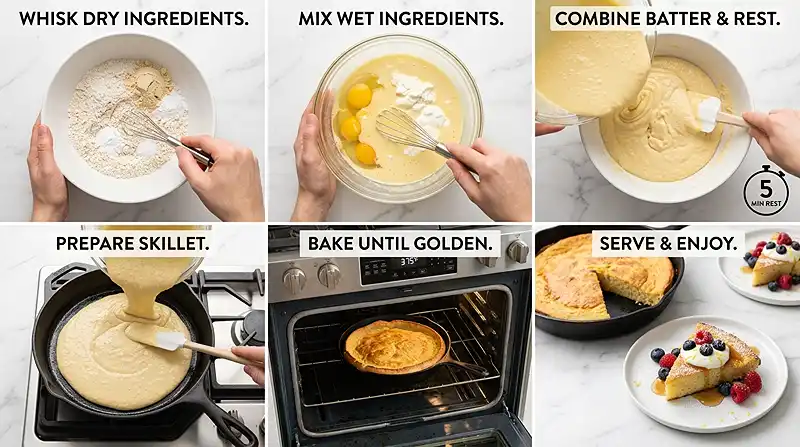
You’ll need a large mixing bowl, a separate bowl for wet ingredients, and a 10-inch oven-safe skillet. Preheat your oven to 375°F (190°C) before you start mixing so it’s ready when the skillet comes off the stove.
Mix the dry ingredients. In a large bowl, whisk together the 1 cup certified gluten-free oat flour, 1 scoop protein powder, ½ teaspoon baking powder, ¼ teaspoon baking soda, and ¼ teaspoon salt until evenly combined. Whisking the dry ingredients first prevents pockets of baking soda or salt from concentrating in one part of the batter.
Whisk the wet ingredients separately. In a second bowl, whisk the 2 large eggs, ½ cup ricotta cheese, ¼ cup plain Greek yogurt, ¼ cup milk, 2 tablespoons fresh lemon juice, 1 tablespoon lemon zest, 1 teaspoon vanilla extract, and 1 tablespoon honey or maple syrup (if using) until smooth. The ricotta should fully incorporate—no visible white lumps. Pro Tip: If your ricotta is particularly thick or grainy, whisk it on its own for 30 seconds first before adding the eggs.
Combine and rest the batter. Pour the wet ingredients into the dry ingredients and stir gently until just combined. A few small streaks are fine—don’t overmix. Let the batter rest for 5 minutes. This rest period is not optional; it allows the oat flour to fully hydrate and the leavening to activate, which directly affects how well the pancake rises in the oven.
Heat and grease the skillet. Place a 10-inch oven-safe skillet over medium heat and add 1 tablespoon unsalted butter or coconut oil. Swirl to coat the bottom and sides evenly. The skillet is ready when the butter is fully melted and just starting to bubble at the edges—not browning, not smoking. Pro Tip: Tilt the skillet so the fat coats the sides partway up—this helps the edges of the pancake release cleanly when you slice it.
Add the batter and spread evenly. Pour the batter into the hot skillet and use a spatula to spread it into an even layer that reaches to within about half an inch of the edge. Work quickly—the bottom will begin setting on contact with the hot pan.
Cook on the stovetop for 3 to 4 minutes. Keep the heat at medium and leave the skillet undisturbed. You’re looking for the edges to turn from shiny to matte and begin pulling slightly away from the sides of the pan. The surface will still look wet in the center—that’s fine. This stovetop stage sets the base before the oven finishes the job.
Transfer to the oven and bake for 10 to 12 minutes. Slide the skillet carefully into the preheated 375°F oven. Bake until the pancake is puffed, lightly golden at the edges, and a toothpick inserted in the center comes out clean. Check at the 10-minute mark—overbaking dries out the ricotta quickly. The top should look set but still slightly soft, not cracked or dry.
Rest, slice, and serve. Remove the skillet from the oven and let it rest for 2 to 3 minutes before slicing into wedges. This resting time lets the center finish setting from residual heat and makes slicing much cleaner. Add your toppings directly in the skillet or plate the wedges individually—both work.
Make It Your Own
Make it dairy-free. Replace the ricotta with a thick, plain dairy-free ricotta alternative—several almond and cashew-based versions are now widely available and blend smoothly into the batter. Swap the Greek yogurt for a thick coconut yogurt and use your preferred plant-based milk. Use coconut oil in the skillet instead of butter. The texture is slightly less rich but still very good as a gluten-free protein pancake.
Swap the lemon for orange. Use 2 tablespoons of fresh orange juice and 1 tablespoon of orange zest in place of the lemon. Orange and ricotta is a classic Italian pairing that works beautifully in this format—warmer and a bit sweeter than the lemon version. It’s a natural fit for a lemon ricotta breakfast swap when you want something a touch less sharp.
You know… a drizzle of warm honey over the top with a handful of chopped pistachios is my personal favorite way to finish this skillet. The honey seeps into the crevices of the wedge and the pistachios add a salty crunch that plays perfectly against the creamy, citrusy center.
Add blueberries to the batter. Fold ½ cup of fresh or frozen blueberries into the batter just before pouring it into the skillet. Frozen blueberries work but will bleed their color into the batter slightly—not a problem for flavor, just a visual note. Fresh blueberries hold their shape better and burst in the oven, leaving pockets of jammy fruit throughout every slice.
Man, oh man—the blueberry version is what I make every Easter morning. It’s impressive enough to feel special but simple enough that I’m not stuck in the kitchen while everyone else is at the table.
Common Problems & Solutions
Problem: Center is still wet or gummy after baking.
Solution: Return the skillet to the oven for 2 additional minutes and check again with a toothpick. The most common cause is skipping the batter rest—oat flour that hasn’t had time to hydrate holds excess liquid through baking. Also confirm your oven is fully preheated before the skillet goes in; an underheated oven adds significant time to the bake.
Problem: Edges are overcooked but the center is still underdone.
Solution: Your stovetop heat was too high during the initial cook. Medium heat means a steady, gentle sizzle—not aggressive bubbling. A lower starting temperature on the stovetop gives the batter more time to begin setting evenly before the oven takes over. Cast iron skillets retain heat particularly well and may need slightly lower heat than stainless or nonstick.
Problem: Pancake sticks to the skillet when slicing.
Solution: The skillet wasn’t greased well enough, or the butter didn’t coat the sides. Next time, add the butter, let it melt fully, and tilt the pan to coat the lower sides before adding batter. A well-seasoned cast iron or a nonstick oven-safe skillet also significantly reduces sticking risk compared to stainless steel.
Problem: Protein powder flavor is too strong and overpowers the lemon.
Solution: Increase the lemon zest to 1½ tablespoons and add an extra teaspoon of vanilla extract. The zest is where most of the bright citrus flavor lives, and a little more of it reliably cuts through the protein powder taste. Switching to an unflavored or lightly flavored protein powder also helps if the issue persists across batches. According to a practical guide to protein powder by Healthline, whey isolate tends to have a milder flavor profile than casein or most plant-based blends, making it the easier choice for baked recipes where subtlety matters.
Storage & Meal Prep
| Method | Duration | Notes |
|---|---|---|
| Counter | Up to 2 hours | Cover loosely; best eaten fresh and warm |
| Fridge | Up to 4 days | Store wedges in an airtight container; bring to room temp before reheating |
| Freezer | Up to 2 months | Wrap individual wedges in parchment, then place in a zip-lock bag |
To reheat from the fridge, place wedges in a dry skillet over low heat for 2 to 3 minutes per side, or microwave on medium power for 45 to 60 seconds. The skillet method preserves the slightly crisp edge better than the microwave, which softens the whole thing evenly.
From frozen, thaw overnight in the fridge before reheating—microwaving directly from frozen makes the center gummy and the edges rubbery. Wedges that have been thawed and reheated in a skillet are genuinely close to fresh-baked in texture.
For meal prep, bake the full skillet on Sunday, slice into wedges, and refrigerate them in an airtight container. Each wedge reheats in under a minute and pairs well with a jar of gluten-free blackberry cobbler overnight oats for a full week of high-protein breakfasts without any morning effort.
Lemon Ricotta Protein Pancake Skillet FAQs
Can I make this without protein powder?
Yes. Replace the protein powder with an additional ¼ cup of certified gluten-free oat flour and increase the ricotta by 2 tablespoons to compensate for the lost moisture. The protein count will drop significantly, but the flavor and texture remain very close to the original. It becomes a straightforward lemon ricotta skillet pancake rather than a high-protein version.
Can I use a different flour instead of oat flour?
Certified gluten-free oat flour is strongly recommended for this recipe because of its mild flavor and how it hydrates during the batter rest. Almond flour can work as a 1:1 swap but produces a denser, moister result. Avoid rice flour or tapioca starch alone—they don’t provide enough structure for a skillet pancake without additional binding agents.
How do I know when the skillet pancake is fully cooked?
Insert a toothpick into the center at the 10-minute mark. It should come out clean or with just a few moist crumbs—not wet batter. The top should look puffed and set, not shiny or jiggly when you gently shake the skillet. If the edges are golden but the center is still soft, give it 2 more minutes and check again.
Why did my pancake deflate after coming out of the oven?
Some deflation is normal as the steam escapes and the proteins set during cooling—this is the same thing that happens with soufflés and Dutch babies. Letting it rest for the full 2 to 3 minutes before slicing gives the structure time to firm up and significantly reduces visible deflation. A dramatic collapse usually means the center was underbaked.
What’s the best skillet to use for this recipe?
A 10-inch cast iron skillet gives the most even heat distribution and the crispest bottom edge. A 10-inch oven-safe nonstick skillet is the easiest option for clean release. Avoid stainless steel unless it’s very well greased—ricotta-based batters tend to stick without a nonstick surface or a seasoned cast iron base.
Serving Suggestions
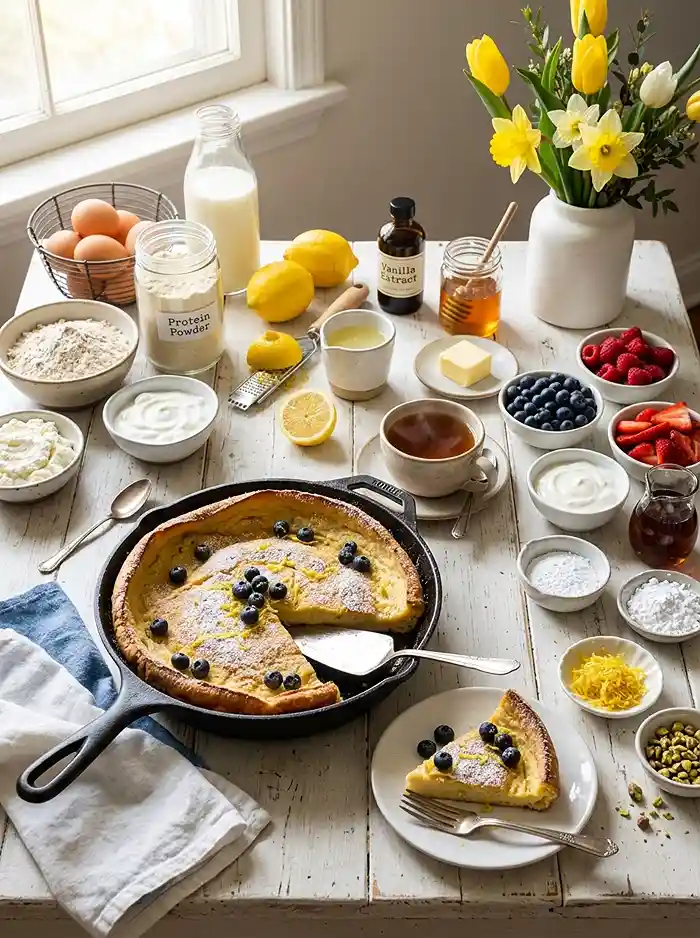
This skillet pancake is a complete breakfast on its own, but a dollop of plain Greek yogurt and a small handful of fresh berries on the side turns it into something that feels restaurant-worthy without any extra effort.
For a holiday brunch spread—think Christmas morning or New Year’s Day when everyone is gathered and nobody wants to cook for an hour—this pairs beautifully with the gluten-free blackberry peach French toast casserole. One skillet, one casserole dish, and breakfast is covered for a full table.
If you’re building a high-protein breakfast rotation, add the gluten-free espresso banana protein smoothie bowl to your weekday lineup alongside this skillet for two completely different mornings that hit the same protein target.
Make this recipe once this week and tell me in the comments what toppings you chose—I’m always curious whether people go the fresh berry route or reach straight for the maple syrup. And if it earns a regular spot in your breakfast rotation, sharing it on Pinterest helps other gluten-free families find it too.
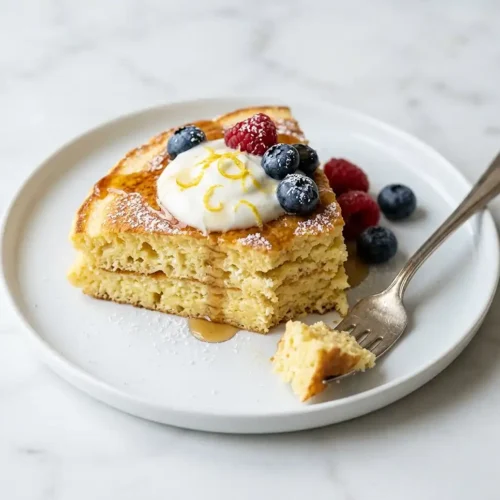
Lemon Ricotta Protein Pancake Skillet
Equipment
- Large mixing bowl
- Medium mixing bowl
- Whisk
- 10-inch oven-safe skillet
- Spatula
Ingredients
Dry Ingredients
- 1 cup Certified gluten-free oat flour
- 1 scoop Certified gluten-free vanilla protein powder About 30 g
- ½ teaspoon Baking powder Gluten-free
- ¼ teaspoon Baking soda
- ¼ teaspoon Salt
Wet Ingredients
- 2 Large eggs Room temperature
- ½ cup Ricotta cheese Full-fat preferred
- ¼ cup Plain Greek yogurt
- ¼ cup Milk of choice
- 2 tablespoons Fresh lemon juice
- 1 tablespoon Lemon zest
- 1 teaspoon Vanilla extract
- 1 tablespoon Honey or maple syrup Optional
- 1 tablespoon Unsalted butter or coconut oil For greasing skillet
Optional Toppings
- Fresh blueberries or raspberries
- Sliced strawberries
- Plain Greek yogurt
- Maple syrup
- Powdered sugar
- Extra lemon zest
- Chopped pistachios or almonds
Instructions
- Whisk together the oat flour, protein powder, baking powder, baking soda, and salt in a large mixing bowl.
- In a separate bowl, whisk the eggs, ricotta, Greek yogurt, milk, lemon juice, lemon zest, vanilla extract, and optional honey or maple syrup until smooth.
- Combine the wet and dry ingredients, stirring gently until just mixed. Let the batter rest for 5 minutes.
- Heat a greased 10-inch oven-safe skillet over medium heat until the butter or oil is melted and the pan is hot.
- Pour the batter into the skillet and spread it evenly with a spatula.
- Cook on the stovetop for 3 to 4 minutes until the edges begin to set.
- Transfer the skillet to a preheated 375°F (190°C) oven and bake for 10 to 12 minutes, or until puffed and a toothpick inserted into the center comes out clean.
- Let the pancake rest for 2 to 3 minutes, then slice into wedges and serve with your favorite toppings.