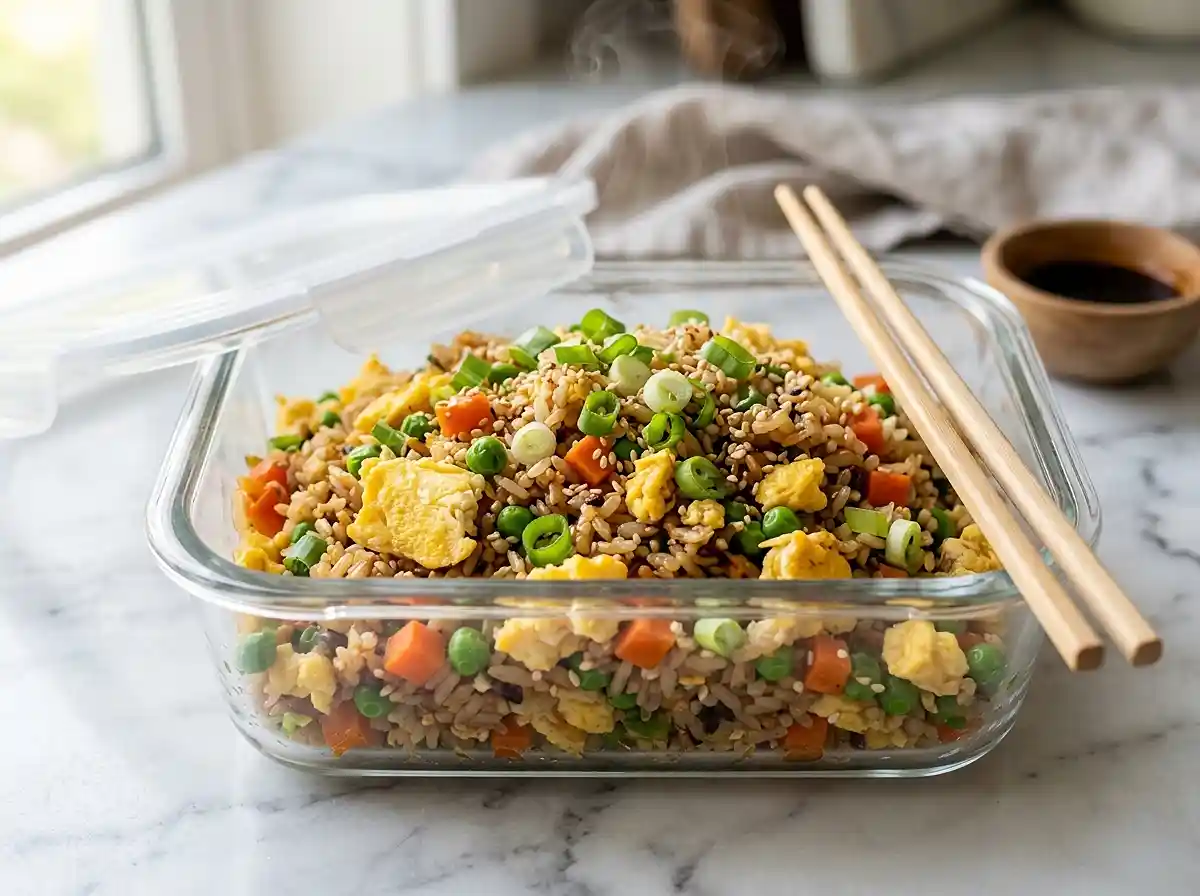
Gluten-Free Egg Fried Rice Meal Prep
Make gluten-free egg fried rice in under 20 minutes with tamari, sesame oil, and one egg. A budget-friendly meal prep lunch with step-by-step instructions and easy variations.
The first time I made egg fried rice after going gluten-free, I grabbed regular soy sauce out of habit and didn’t think twice. One flare-up later, I learned the hard way that standard soy sauce is completely off the table. That’s when I started building this gluten-free egg fried rice meal prep recipe — a version that’s just as fast and satisfying, built entirely around tamari and a few pantry staples.
This is the kind of lunch that costs almost nothing and comes together in under 20 minutes, even on a Monday morning when you’re half asleep. Well… there’s something quietly satisfying about turning 50 grams of rice and a single egg into a proper, filling meal that tastes like it came from a takeout box.
Is there a cheaper gluten-free lunch that actually keeps you full until dinner? I haven’t found one.
Table of Contents
Why You’ll Love This Gluten-Free Egg Fried Rice
- Ready in under 20 minutes from a cold start — faster than most delivery apps can confirm your order
- Genuinely budget-friendly — one serving uses 50g of rice, one egg, and a splash each of tamari and sesame oil
- Naturally dairy-free and gluten-free with no specialty swaps needed beyond using tamari instead of soy sauce
- Completely customizable — works as a plain egg fried rice or a loaded “special” version with meat, seafood, or vegetables
The Secret to Perfect Gluten-Free Egg Fried Rice
- Cold rice fries better than fresh. Freshly cooked rice is too wet and steams instead of frying. Rinsing under cold water immediately after draining removes excess starch and stops the cooking — this is what gives you separate, lightly crispy grains instead of a sticky clump.
- Heat the tamari and sesame oil first. Adding them to a cold pan wastes their flavor. Letting them heat for about 20 seconds before anything else goes in allows the sesame oil to bloom and the tamari to caramelize slightly at the edges of the pan.
- The egg well technique is not optional. Creating a well in the center of the rice and cooking the egg separately before folding it in gives you defined, fluffy egg pieces rather than a rubbery scramble mixed throughout.
- Press and fry at the end. Pressing the finished rice mix gently into the hot pan for a couple of minutes creates light crispy bits on the bottom — the texture that makes restaurant fried rice taste the way it does.
According to Coeliac UK’s authoritative gluten-free food guide, standard soy sauce contains wheat and must be avoided entirely on a gluten-free diet. Tamari is the safe, direct substitute — just check the label for a certified GF seal to be sure.
Ingredients
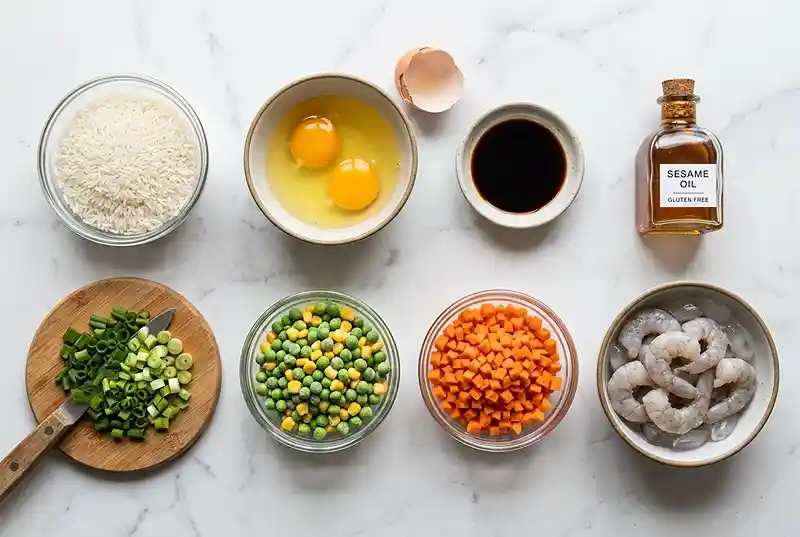
Base Recipe (1 serving)
- 50 grams rice
- 1 egg
- 2 tsp gluten-free soy sauce (tamari)
- 1 tsp sesame oil (essential — do not substitute or skip)
- Sprinkle of spring onion (optional)
For Special Fried Rice (Optional Add-Ins)
- Handful of raw or cooked meat (e.g. 3 prawns or half a chicken breast, chopped small)
- Handful of raw or cooked veg (frozen peas and small cubes of cooked carrot are traditional; see variations below)
Instructions
Step 1 — Cook and Cool the Rice
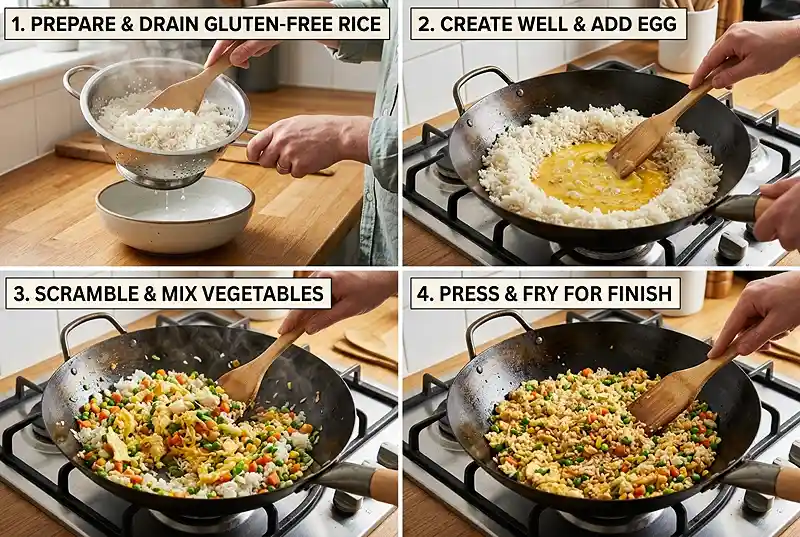
Bring a pan of water to a boil, add the rice, and reduce to a simmer for 7–10 minutes until soft. Drain immediately and rinse under cold running water to stop the cooking process. Set aside — the rice needs to be fully cooled before it hits the pan.
Pro Tip: Don’t skip the cold rinse. It removes surface starch and is what separates sticky rice from properly fried rice.
Step 2 — Beat the Egg
Beat the egg in a small bowl and set it aside within arm’s reach of the stove. You’ll need it ready quickly once the rice goes into the pan.
Step 3 — Heat the Pan
Add the tamari, sesame oil, and spring onion (if using) to a frying pan. Heat over medium-high and leave for about 20 seconds — you want the spring onion to soften and the sesame oil to start releasing its nutty, toasty aroma before anything else goes in.
Step 4 — Cook Any Raw Meat or Fish
If you’re using raw meat or fish, add it to the pan now and cook it through before anything else. Chop it into small pieces so it cooks quickly and evenly. Cooked meat can be added later with the rice.
Step 5 — Add the Rice and Vegetables
Add the cooled rice and any vegetables or pre-cooked meat to the pan. Stir everything together and cook for a few minutes, tossing regularly, until the rice is heated through and starting to look a little glossy from the tamari and oil.
Step 6 — The Egg Well
Push the rice to the sides of the pan to create a clear well in the center. Pour the beaten egg into the well. Do not stir yet — leave it alone until the edges start to set, just like the beginning of an omelette forming.
Once the edges are visibly cooking, stir the egg within the well until it’s fully cooked through. A few grains of rice getting into the egg at this stage is completely fine — don’t worry about it.
Pro Tip: Patience here pays off. Stirring the egg too early gives you thin, stringy bits. Waiting for the edges to set first gives you soft, defined egg pieces that hold their shape when you mix everything together.
Step 7 — Mix and Fry
Once the egg is cooked, mix everything together, breaking up the egg with your spatula as you go. Don’t be delicate — stir it vigorously and get it all combined.
Press the finished rice mix gently into the pan and leave it for a couple of minutes. This light contact with the hot surface creates the slightly crispy edges that make fried rice taste like fried rice, not reheated rice.
Step 8 — Taste and Adjust
Taste the finished rice and add a little more tamari or sesame oil if you’d like more depth or saltiness. Serve immediately for the best texture.
Make It Your Own
Add prawns for a quick seafood version. Three raw prawns cook in under 2 minutes in a hot pan and turn this into a genuinely satisfying special fried rice. You know… this is my personal go-to when I want something that feels a bit more indulgent without any extra effort. Just make sure any pre-cooked frozen prawns are fully thawed before they hit the pan.
Use frozen peas and diced carrot for the classic takeout version. These are the most traditional vegetables for egg fried rice and they work perfectly here. The peas thaw almost instantly in the hot pan, and pre-cooked carrot cubes add a gentle sweetness. This is also one of the most budget gluten-free meal prep combinations you can make.
Try it with leftover roast chicken. Half a chicken breast, shredded or diced small, turns this into a high-protein egg fried rice lunch that keeps you full for hours. Leftover chicken from the night before works just as well as freshly cooked — add it in with the rice at Step 5.
Make it vegetarian by skipping the meat entirely. The egg provides enough protein on its own for a light lunch, and doubling the vegetables keeps the dish filling. A handful of bean sprouts or sliced mushrooms added with the rice both work well as cheap lunch idea additions that need no prep beyond a quick rinse.
For more easy gluten-free lunch ideas that work just as well for meal prep, the roasted veggie hummus lunch boxes are another wallet-friendly option worth bookmarking.
Common Problems & Solutions
Problem: The rice turned out sticky and clumped together. The most likely cause is skipping the cold rinse after draining, or adding the rice to the pan while it was still warm and wet. Always rinse under cold water until the rice is fully cooled, and make sure the pan is properly hot before the rice goes in. A hot pan dries the surface of each grain as it hits the oil.
Problem: The egg turned rubbery and stringy. This happens when the egg is stirred too soon after going into the well. Let the edges visibly set before you touch it — it only takes 20–30 seconds. Man, oh man… the first time I rushed this step, I ended up with thin egg threads throughout the rice instead of soft, defined pieces. Patience is the whole trick.
Problem: The finished rice tastes flat even with tamari and sesame oil. Two teaspoons of tamari for a single serving is the starting point — taste after mixing and add more if needed. Sesame oil is the flavor anchor of this dish; if yours has been sitting open in a warm cupboard for months, it may have gone stale. A fresh bottle makes a noticeable difference.
Problem: The rice isn’t getting any color or crispy bits. The pan may not be hot enough, or there’s too much moisture in the rice. Make sure the pan is at medium-high heat before anything goes in, and ensure the rice was fully drained and cold before using. According to Serious Eats’ food science breakdown of fried rice technique, high heat and dry rice are the two non-negotiable factors for getting proper caramelization in a home kitchen.
Storage & Meal Prep
| Method | Duration | Notes |
|---|---|---|
| Counter | Up to 1 hour | Rice should not sit at room temperature longer than this |
| Fridge | 2–3 days | Airtight container; reheat thoroughly before eating |
| Freezer | Not recommended | Egg texture deteriorates significantly after freezing |
To reheat from the fridge, add the rice to a hot pan with a tiny drizzle of sesame oil and stir-fry for 2–3 minutes until piping hot throughout. Microwave reheating works in a pinch — cover loosely and heat in 60-second bursts, stirring between each one.
For meal prep, cook a larger batch of plain rice in advance and store it in the fridge for up to 3 days. Then assemble and fry individual portions fresh each morning — the whole process takes under 10 minutes when the rice is already cooked and cooled.
Gluten-Free Egg Fried Rice Meal Prep FAQs
Can I use regular soy sauce instead of tamari?
No — regular soy sauce contains wheat and is not safe on a gluten-free diet. Tamari is the direct replacement and tastes virtually identical in this recipe. Always check the label for a certified gluten-free seal before using.
Can I make gluten-free egg fried rice ahead for meal prep?
The rice can be cooked and refrigerated for up to 3 days, but the final frying step is best done fresh each day. Frying a single portion takes under 10 minutes when the rice is already cold and ready. Fully assembled fried rice keeps in the fridge for 2 to 3 days but loses some texture over time.
What’s the best rice to use for egg fried rice?
Long-grain white rice gives the best results — it stays separate and dries out slightly in the fridge, which makes it fry better. Jasmine rice is a close second. Avoid short-grain or sushi rice, which is starchier and more prone to clumping.
Why did my sesame oil lose its flavor during cooking?
Sesame oil has a low smoke point and its flavor compounds break down quickly at very high heat. Add a small amount at the start with the tamari, then drizzle a little more right at the end just before serving to preserve its toasty, nutty character.
How do I scale this recipe up for multiple servings?
Multiply all ingredient quantities by the number of servings, but cook in batches rather than crowding the pan. Overcrowding causes the rice to steam rather than fry. Two servings can be made in one large pan; for three or more, fry in separate batches and combine at the end.
Serving Suggestions

This egg fried rice works best served immediately straight from the pan, while the edges are still slightly crispy. It pairs well with a simple cucumber salad or a small bowl of miso soup on the side for a more complete meal.
It’s also a natural fit for a casual family dinner on a weeknight — scale it up to four portions and set out bowls of toppings like sliced spring onion, extra tamari, and chili flakes so everyone can customize their own. Bring it to a summer family gathering as a quick gluten-free side dish and it disappears fast.
If you’re building out a full gluten-free meal prep week, this pairs well with the gluten-free turkey cheeseburger rice skillet for dinner and the gluten-free dill pickle chicken pasta salad for a cold lunch option on alternate days.
Give this recipe a try this week and let me know how it goes in the comments — I especially want to hear what vegetables or proteins you added to your special fried rice version. If it earns a spot in your regular lunch rotation, sharing it on Pinterest helps other gluten-free home cooks find it too.
Gluten-Free Egg Fried Rice
Equipment
- Medium saucepan
- Frying pan
- Colander
- Small bowl
- Spatula
Ingredients
Base Recipe
- 50 g rice long-grain white or jasmine rice recommended
- 1 egg beaten
- 2 tsp gluten-free soy sauce tamari; check label for certified GF seal
- 1 tsp sesame oil essential — do not skip
- spring onion optional, a small sprinkle
For Special Fried Rice (Optional)
- raw or cooked meat or fish e.g. 3 prawns or half a chicken breast, chopped small
- raw or cooked vegetables e.g. frozen peas and small cubes of cooked carrot; cut into small chunks
Instructions
- Bring a pan of water to a boil, add the rice, and reduce to a simmer for 7–10 minutes until soft. Drain immediately and rinse under cold running water to stop the cooking process. Set aside until fully cooled.
- Beat the egg in a small bowl and set it aside within arm’s reach of the stove.
- Add the tamari, sesame oil, and spring onion (if using) to a frying pan. Heat over medium-high and leave for about 20 seconds until the spring onion softens and the sesame oil releases its nutty aroma.
- If using raw meat or fish, add it to the pan now and cook through before continuing. Chop into small pieces so it cooks quickly and evenly. Pre-cooked meat can be added in the next step.
- Add the cooled rice and any vegetables or pre-cooked meat to the pan. Stir everything together and cook for a few minutes, tossing regularly, until the rice is heated through.
- Push the rice to the sides of the pan to create a clear well in the center. Pour the beaten egg into the well. Do not stir — leave it until the edges start to set like the beginning of an omelette. Once the edges are visibly cooking, stir the egg within the well until fully cooked through.
- Once the egg is cooked, mix everything together, breaking up the egg with your spatula. Stir vigorously to combine everything well.
- Press the finished rice mix gently into the pan and leave for a couple of minutes to lightly fry the rice and create crispy edges. Taste and add more tamari or sesame oil if desired. Serve immediately.