Gluten-Free Egg White Bread
Make gluten-free egg white bread at home with step-by-step instructions, storage tips, and easy swaps. Fluffy, protein-rich, and ready in under 40 minutes.
My first attempt at gluten-free egg white bread came out gummy in the center and paper-thin on the outside — basically a protein-packed disappointment I tried to pass off as focaccia to my kids. They weren’t convinced.
After a few more rounds of testing, I figured out where I was going wrong: overmixing the batter after adding the flour and not letting the loaf cool completely before slicing. Those two fixes changed everything. Now this is the loaf I make every Sunday for the week ahead.
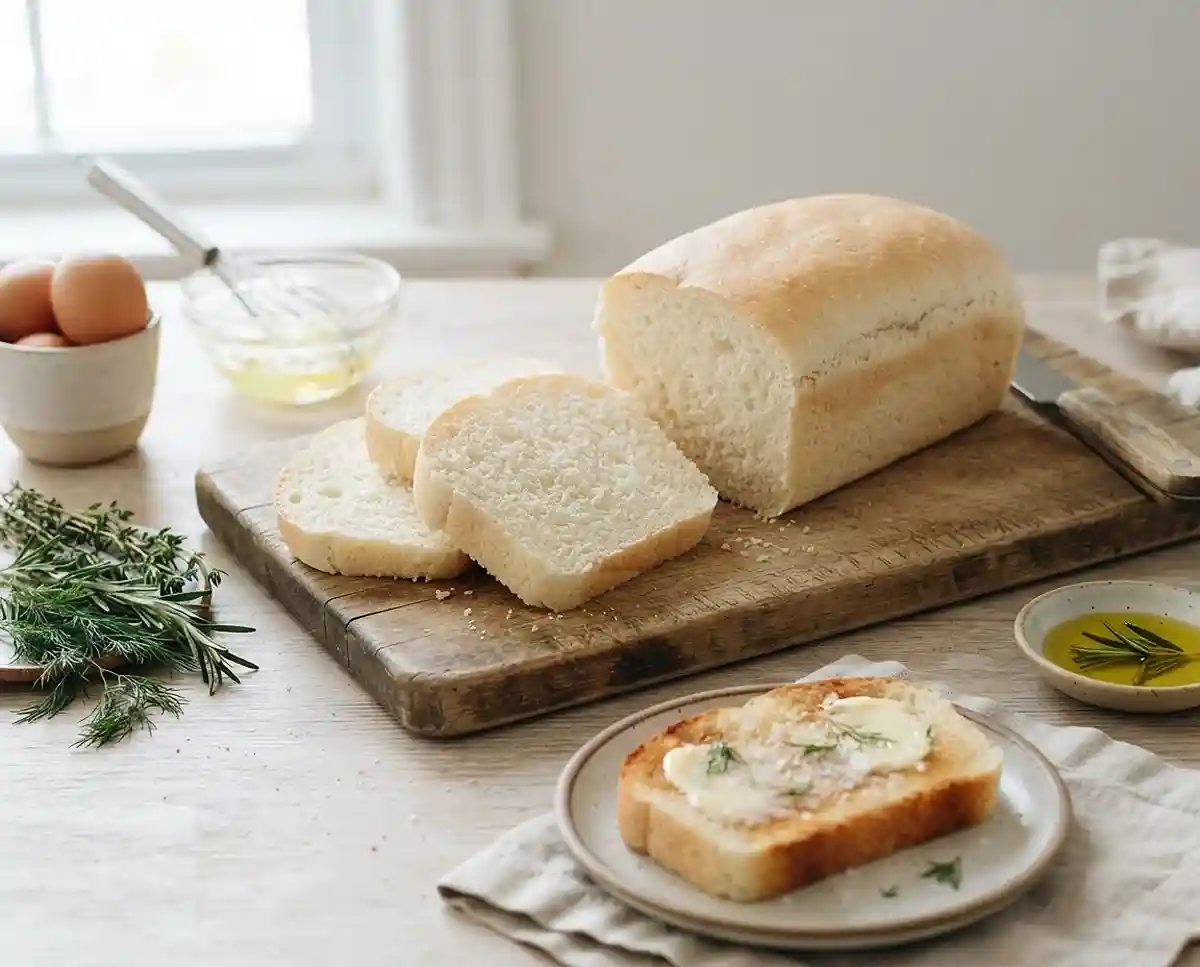
The result is a soft, lightly springy bread that holds together for sandwiches, toasts without crumbling, and doesn’t taste like cardboard — which, honestly, is a low bar that a lot of gluten-free breads still manage to miss. You know… once you’ve had a slice that actually behaves like real bread, it’s hard to go back to the crumbly stuff.
Why You’ll Love This Gluten-Free Egg White Bread
- Soft and sliceable: The whipped egg whites create a texture that’s genuinely light — airy enough to feel like sandwich bread, not a dense protein bar in loaf form.
- Beginner-friendly bake: No stand mixer required and no complicated shaping. If you can fold a batter and line a loaf pan, you’ve got this.
- Naturally high in protein: A full cup of liquid egg whites means every slice packs meaningful protein without any added powders or supplements.
- Meal-prep ready: This loaf bakes in under 40 minutes and stores well all week — perfect for building sandwiches, toast, or a quick breakfast on the go.
The Secret to Perfect Gluten-Free Egg White Bread
- Foamy, not stiff whites: You’re whipping the egg whites until very foamy and increased in volume — not to stiff peaks. Stiff peaks make the crumb too dry and prone to cracking when sliced. Foamy whites give you lift without brittleness.
- Apple cider vinegar does real work here: The acidity reacts with the baking soda to create additional rise, and it helps the gluten-free flour bind more effectively. Don’t skip it — it’s not just flavor.
- Greek yogurt adds structure: The protein and fat in the yogurt give the loaf body that egg whites alone can’t provide. This is especially important in gluten-free baking, where you’re compensating for the missing gluten network.
- Cool completely before cutting: Gluten-free starches continue setting as the bread cools. Cutting too early releases steam and collapses the interior structure — which is exactly what causes that gummy center. According to trusted celiac nutrition guidance from the Celiac Disease Foundation, understanding how gluten-free starches behave during cooling is key to better texture outcomes across all baked goods.
Table of Contents
Ingredients

| Ingredient | Amount | Notes |
|---|---|---|
| Liquid egg whites | 1 cup | Carton egg whites work well here |
| Gluten-free all-purpose flour blend | 1 cup | Use a blend with xanthan gum included |
| Gluten-free baking powder | 1 teaspoon | Check label for gluten-free certification |
| Baking soda | ½ teaspoon | |
| Salt | ¼ teaspoon | |
| Olive oil or neutral oil | 1 tablespoon | Avocado oil also works |
| Apple cider vinegar | 1 tablespoon | Essential for rise and binding |
| Unsweetened plain Greek yogurt | ¼ cup | Full-fat preferred for structure |
| Milk or unsweetened dairy-free milk | 2 tablespoons | Any variety works |
| Garlic powder | ½ teaspoon | Optional — skip for a neutral loaf |
| Honey or maple syrup | 1 teaspoon | Optional — helps browning and softness |
Instructions
- Preheat the oven: Heat the oven to 350°F (175°C). Line a small 8×4-inch loaf pan with parchment paper and lightly grease the sides to prevent sticking.
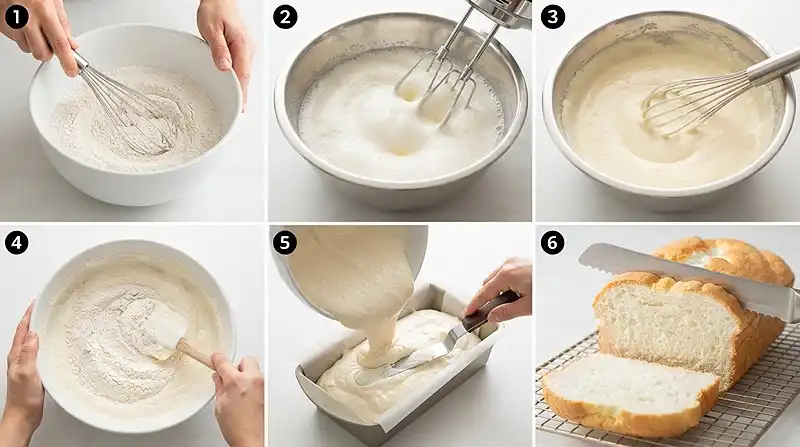
- Mix the dry ingredients: In a medium bowl, whisk together the gluten-free flour blend, baking powder, baking soda, salt, and garlic powder if using. Whisk thoroughly so the leavening agents are evenly distributed throughout the flour.
- Whip the egg whites: Add the 1 cup liquid egg whites to a clean mixing bowl. Beat with an electric mixer on medium-high speed until very foamy and noticeably increased in volume. You’re looking for a thick white foam — not stiff peaks.
- Mix the wet ingredients: Gently whisk the ¼ cup Greek yogurt, 1 tablespoon olive oil, 1 tablespoon apple cider vinegar, 2 tablespoons milk, and honey or maple syrup if using directly into the whipped egg whites. Work quickly and gently to preserve the foam.
- Combine: Gradually fold the dry ingredient mixture into the egg white mixture. Use a spatula with wide, gentle strokes and stop as soon as no dry flour remains visible. Overmixing deflates the batter and leads to a dense loaf.
- Fill the pan: Transfer the batter to the prepared loaf pan and gently smooth the top with a spatula. The batter will be thicker than a standard quick bread batter — that’s expected.
- Bake: Bake for 30–38 minutes, until the top is lightly golden and the center feels firm when pressed. A toothpick inserted into the middle should come out clean with no wet batter attached.
- Cool: Let the bread cool in the pan for about 10 minutes, then transfer it to a wire rack. Allow it to cool completely — at least 45 minutes — before slicing. Cutting too early causes the interior to compress and turn gummy.
- Serve: Slice and enjoy toasted with butter, topped with avocado and eggs, or layered with turkey and your favorite sandwich fillings.
Pro Tip: Use a serrated bread knife for the cleanest slices. A straight-edged knife compresses the soft crumb.
Make It Your Own
Well… if you need a fully dairy-free version, the swap is straightforward. Replace the Greek yogurt with an equal amount of unsweetened coconut yogurt or dairy-free plain yogurt. The structure will be slightly less firm, but the loaf still holds together well for slicing and toasting.
The garlic powder is optional but worth including if you plan to use this bread for savory sandwiches or alongside a soup. For a more herb-forward loaf, try adding ½ teaspoon dried rosemary or thyme along with the garlic — it makes this easy gluten-free egg white bread at home taste like something from a bakery case.
If you want a slightly sweeter profile — more like a soft sandwich bread than a savory loaf — increase the honey or maple syrup to 1 tablespoon. The extra sugar also helps the crust develop a deeper golden color during baking.
For a fluffy gluten-free egg white protein bread with even more protein, stir in 1 tablespoon of unflavored collagen peptides with the dry ingredients. Collagen is flavorless and doesn’t affect the texture, so it’s an easy invisible boost for anyone tracking macros.
Common Problems & Solutions
Problem: The center is gummy even after the full bake time. The most likely cause is slicing before the bread has fully cooled. Gluten-free starches stay soft and wet-looking until they cool and set completely on a wire rack. Give it the full cooling time before you cut in.
Problem: The loaf didn’t rise much and came out flat. This usually means the egg whites weren’t whipped enough before adding the other ingredients, or the batter was overmixed after adding the flour. The foam in the egg whites is your only leavening structure beyond the baking powder — protect it at every step.
Problem: The bread crumbles when sliced. A crumbly texture points to too much flour relative to moisture, or a gluten-free flour blend without xanthan gum. Double-check your blend and make sure all wet ingredients are measured accurately. Using a serrated knife also makes a meaningful difference here.
Man, oh man… the most frustrating problem I’ve seen is a loaf that looks done on the outside but is still raw in the middle. If your oven runs hot, the outside sets before the center cooks through. Tent the pan loosely with foil after 20 minutes and continue baking until the toothpick test passes. According to Beyond Celiac’s gluten-free diet resource, baking at moderate temperatures is especially important for gluten-free loaves, which need consistent heat to cook evenly through.
Storage & Meal Prep
| Method | Duration | Notes |
|---|---|---|
| Counter | 1–2 days | Airtight container; best in a cool kitchen |
| Fridge | 5–7 days | Wrap tightly; toast slices before serving |
| Freezer | 2–3 months | Slice first, wrap individually, freeze flat |
This loaf toasts beautifully straight from the freezer — no need to thaw first. Pop a slice in the toaster on medium and it comes out warm and slightly crisp on the outside within a few minutes.
For meal prep, slice the entire loaf once cooled and layer parchment between slices before freezing. That way you can pull out exactly what you need without the slices sticking together.
Stale slices that are a day or two old make excellent gluten-free croutons. Cube them, toss with olive oil and seasoning, and bake at 375°F for 10–12 minutes. Nothing goes to waste.
Gluten-Free Egg White Bread FAQs
Can I use fresh egg whites instead of liquid carton whites?
Yes, fresh egg whites work just as well. You’ll need about 7-8 large egg whites to equal 1 cup. Make sure your bowl is completely clean and grease-free before whipping — any trace of fat will prevent the whites from foaming properly.
Why did my gluten-free egg white bread turn out dense?
Dense texture almost always comes from deflated egg whites. Either they weren’t whipped to the foamy stage before mixing, or the batter was stirred too aggressively after adding the flour. Fold gently and stop mixing the moment no dry flour is visible.
How do I get a better crust on this bread?
Brush the top lightly with a little olive oil or an egg yolk wash before baking. This promotes browning and gives the crust a slightly firmer finish. Baking on the middle rack also helps the top and bottom brown evenly without burning.
What’s the best gluten-free flour blend for this recipe?
A 1-to-1 blend that already includes xanthan gum gives the most reliable results. Bob’s Red Mill 1-to-1, King Arthur Measure for Measure, and Cup4Cup all work well. Avoid almond flour, coconut flour, or single-grain flours — they absorb moisture differently and will change the texture significantly.
Can I make this bread without Greek yogurt?
Yes — substitute with an equal amount of unsweetened dairy-free yogurt, such as coconut or almond yogurt. The loaf may be slightly less structured but still sliceable. Avoid skipping the yogurt entirely, as it provides protein and fat that the egg whites alone can’t replace.
Serving Suggestions

This bread is genuinely versatile — it holds up to avocado and a fried egg in the morning, and it makes a solid turkey and mustard sandwich at lunch without falling apart mid-bite. Toast it for the best texture; the light crust it develops is one of its best features.
It’s become my go-to contribution to our family’s Fourth of July cookout — I slice it thick, toast it on the grill for about two minutes per side, and use it as the base for grilled chicken sandwiches. Nobody at the table knows it’s gluten-free until I tell them.
If you enjoy building full gluten-free meals, this loaf pairs well with a hearty main — my gluten-free chicken rosemary lasagna is a natural dinner companion when you want something comforting and filling. For a probiotic-rich drink to serve alongside, my gluten-free water kefir recipe is a refreshing, gut-friendly option. And if you’re in the mood to bake a showstopper dessert after your loaf comes out of the oven, check out my gluten-free lotus milk cake — it’s a crowd-pleaser that chills while you eat.
Give this loaf a try this week and let me know how it goes in the comments below — I especially want to hear if you tried any of the variations or added your own twist. If it earned a spot in your regular rotation, sharing it on Pinterest helps other gluten-free home bakers find it too.

Gluten-Free Egg White Bread
Equipment
- 8×4-inch loaf pan
- Parchment paper
- Mixing bowls
- Electric mixer
- Whisk
- Spatula
- Wire rack
- Serrated Bread Knife
Ingredients
Gluten-Free Egg White Bread
- 1 cup Liquid egg whites Carton egg whites work well here
- 1 cup Gluten-free all-purpose flour blend Use a blend with xanthan gum included
- 1 teaspoon Gluten-free baking powder Check label for gluten-free certification
- ½ teaspoon Baking soda
- ¼ teaspoon Salt
- 1 tablespoon Olive oil or neutral oil Avocado oil also works
- 1 tablespoon Apple cider vinegar Essential for rise and binding
- ¼ cup Unsweetened plain Greek yogurt Full-fat preferred for structure
- 2 tablespoons Milk or unsweetened dairy-free milk Any variety works
- ½ teaspoon Garlic powder Optional; skip for a neutral loaf
- 1 teaspoon Honey or maple syrup Optional; helps browning and softness
Instructions
- Preheat the oven: Heat the oven to 350°F (175°C). Line a small 8×4-inch loaf pan with parchment paper and lightly grease the sides to prevent sticking.
- Mix the dry ingredients: In a medium bowl, whisk together the gluten-free flour blend, baking powder, baking soda, salt, and garlic powder if using. Whisk thoroughly so the leavening agents are evenly distributed.
- Whip the egg whites: Add the 1 cup liquid egg whites to a clean mixing bowl. Beat with an electric mixer on medium-high speed until very foamy and noticeably increased in volume. Aim for a thick white foam rather than stiff peaks.
- Mix the wet ingredients: Gently whisk the 1/4 cup Greek yogurt, 1 tablespoon olive oil, 1 tablespoon apple cider vinegar, 2 tablespoons milk, and honey or maple syrup if using into the whipped egg whites. Work quickly and gently to preserve the foam.
- Combine: Gradually fold the dry ingredient mixture into the egg white mixture. Use a spatula with wide, gentle strokes and stop as soon as no dry flour remains visible. Avoid overmixing.
- Fill the pan: Transfer the batter to the prepared loaf pan and gently smooth the top with a spatula. The batter will be thicker than a standard quick bread batter.
- Bake: Bake for 30–38 minutes, until the top is lightly golden and the center feels firm when pressed. A toothpick inserted into the middle should come out clean with no wet batter attached.
- Cool: Let the bread cool in the pan for about 10 minutes, then transfer it to a wire rack. Allow it to cool completely for at least 45 minutes before slicing.
- Serve: Slice and enjoy toasted with butter, topped with avocado and eggs, or layered with turkey and your favorite sandwich fillings.