Gluten-Free Lotus Milk Cake
Step-by-step gluten-free lotus milk cake with a Biscoff-soaked sponge, creamy topping, and rich cookie butter drizzle. Includes storage, swaps, and troubleshooting tips.
The first time I tried making a milk-soaked sponge cake without gluten, I pulled it out of the oven and watched it collapse into a dense, sad little brick. Not my finest moment.
That disaster taught me everything about what gluten-free sponge cake actually needs — whipped egg whites, a gentle fold, and patience. Now this gluten-free lotus milk cake is the dessert my family requests every Eid and holiday gathering.
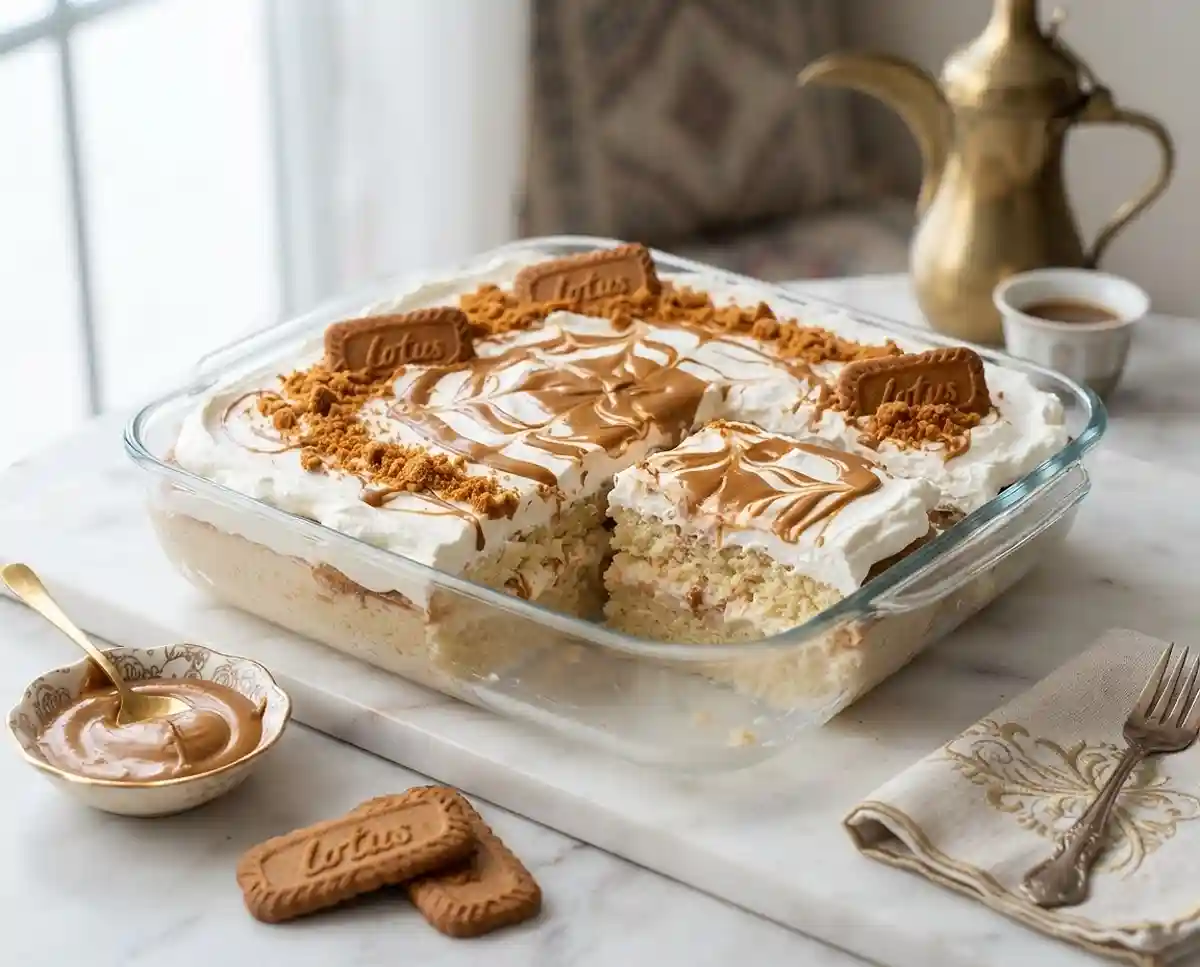
What makes this version special? It’s built around the same whipped-egg-white method used in classic tres leches, but soaked with a cookie butter milk mixture that seeps into every pore of the sponge. Can you really taste the difference from the original? Honestly, most guests can’t.
Why You’ll Love This Gluten-Free Lotus Milk Cake
- Texture that delivers: The sponge soaks up the Lotus milk mixture like a dream — soft, custardy, and melt-in-your-mouth, like biting into a chilled caramel cloud.
- Beginner-friendly technique: No fancy equipment beyond a hand mixer. If you can whip egg whites, you can make this cake.
- Naturally adaptable: Works with dairy-free cream alternatives if needed — see the substitutions section below.
- Make-ahead magic: This cake actually gets better the longer it chills. Perfect for prepping the night before a celebration.
The Secret to Perfect Gluten-Free Lotus Milk Cake
- Whip those whites to stiff peaks: This is your structure. Gluten-free flour can’t build the same network as wheat flour, so air trapped in the whites does that job instead. Don’t skip or rush this step.
- Fold, never stir: Folding the whites in two to three additions preserves the air bubbles that keep the sponge light enough to absorb the milk soak without turning gummy.
- Poke generously and pour slowly: More holes mean more surface area for the milk to travel. Pour in stages and let gravity do the work between each pour.
- Chill for at least 2 hours: The resting time isn’t optional. According to trusted celiac research from the Celiac Disease Foundation, gluten-free starches continue to hydrate and set as they cool, which is exactly what gives this cake its signature custard-like texture.
Table of Contents
Ingredients
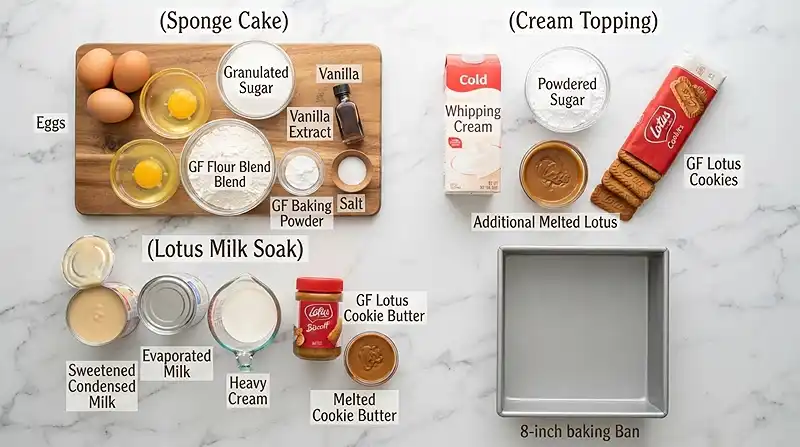
Gluten-Free Sponge Cake
| Ingredient | Amount | Notes |
|---|---|---|
| Large eggs, separated | 3 | Room temperature for better volume |
| Granulated sugar | ¼ cup | |
| Vanilla extract | ½ teaspoon | |
| Gluten-free all-purpose flour blend | ½ cup | Use a blend with xanthan gum |
| Gluten-free baking powder | ½ teaspoon | Check label for gluten-free certification |
| Salt | Pinch | Added to egg whites |
Lotus Milk Soak
| Ingredient | Amount | Notes |
|---|---|---|
| Sweetened condensed milk | ½ can | |
| Evaporated milk | 1 can (400 ml) | |
| Heavy cream or whipping cream | 170 g | |
| Gluten-free Lotus-style cookie butter, melted | ¼ cup | Blend until smooth before adding |
Cream Topping
| Ingredient | Amount | Notes |
|---|---|---|
| Cold whipping cream | 1 cup | Must be cold for proper whipping |
| Powdered sugar | ¼ cup | |
| Gluten-free Lotus-style cookie butter, melted | 2–3 heaped tablespoons | For drizzling over the top |
Instructions
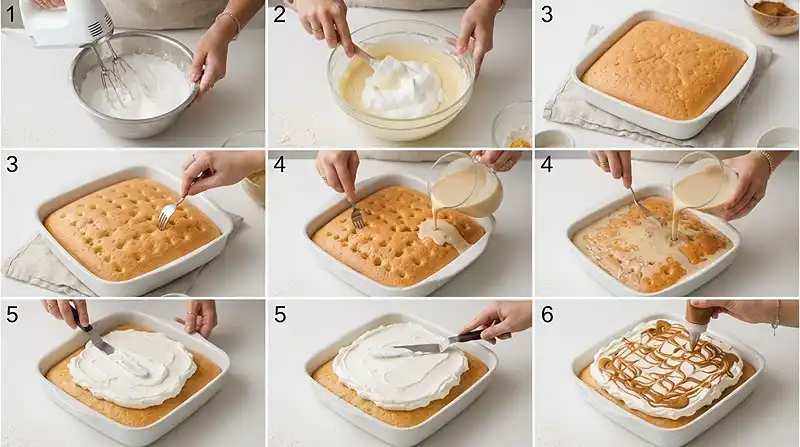
Prepare and Bake the Sponge
- Prepare the pan: Preheat the oven to 350°F (180°C). Grease a small square or rectangular baking pan thoroughly, making sure to coat the corners and sides.
- Whip the egg whites: Place the egg whites in a clean, grease-free bowl with a pinch of salt. Beat until stiff peaks form — when you lift the beaters, the whites should hold a firm point without drooping.
- Beat the yolks: In a separate bowl, beat the egg yolks and ¼ cup granulated sugar until the mixture turns pale, thick, and fluffy. Add the ½ teaspoon vanilla extract and mix briefly to combine.
- Add the flour: Sift the ½ cup gluten-free all-purpose flour blend and ½ teaspoon gluten-free baking powder directly into the egg yolk mixture. Gently fold until just combined — a few small streaks are fine at this stage.
- Fold in the whites: Add the whipped egg whites in two or three additions, folding gently with a spatula using a wide scooping motion. Work carefully to preserve as much air as possible; this is what keeps your sponge light enough to absorb the soak.
- Bake: Pour the batter into the prepared pan and smooth the surface with a spatula. Bake for 18–22 minutes, until the edges pull away slightly from the sides and a toothpick inserted in the center comes out clean.
Make the Soak and Assemble
- Make the milk soak: While the cake bakes, blend the ½ can sweetened condensed milk, 400 ml evaporated milk, 170 g heavy cream, and ¼ cup melted gluten-free Lotus-style spread until completely smooth and uniform.
- Soak the cake: Let the baked cake cool slightly in the pan — about 10 minutes. Using a skewer or fork, poke holes all over the surface. Slowly pour about three-quarters of the milk mixture over the cake, pausing between pours to let it absorb. Reserve the remaining milk for serving.
- Make the cream topping: Beat 1 cup cold whipping cream and ¼ cup powdered sugar together until stiff peaks form. The cream should hold its shape firmly when you lift the beaters.
- Top the cake: Spread or pipe the whipped cream evenly across the top of the soaked cake. Drizzle the 2–3 heaped tablespoons of melted Lotus-style spread over the cream in a freeform pattern.
- Chill: Cover the pan and refrigerate for at least 2 hours. The longer it chills — overnight is ideal — the more the sponge absorbs the milk mixture and the better the texture becomes.
- Serve: Cut into squares and spoon a little of the reserved milk mixture over each slice before serving.
Pro Tip: Use a sharp knife wiped clean between cuts for the cleanest squares.
Make It Your Own
Well… if you need a dairy-free version, it’s more doable than you’d think. Swap the evaporated milk for full-fat oat milk or coconut evaporated milk, and use a dairy-free sweetened condensed milk alternative. The soak won’t be quite as rich, but it still delivers that creamy, custardy effect.
For the heavy cream in the soak, full-fat coconut cream works beautifully. Chill the can overnight, scoop the solid cream from the top, and use it in place of the dairy cream. This swap also works for the whipped topping, though the coconut flavor will come through noticeably.
Want to turn this into a gluten-free Lotus Biscoff milk cake with a little crunch? Crumble a few certified gluten-free Lotus-style biscuits over the whipped cream topping just before serving. They’ll soften slightly as they sit but add a lovely spiced texture contrast.
You know… you can also adjust the sweetness of the soak by reducing the condensed milk slightly and adding an extra splash of evaporated milk. This gives you a less sweet, more balanced soak that lets the cookie butter flavor shine through more clearly.
Common Problems & Solutions
Problem: The sponge turned out dense and flat. This almost always means the egg whites were either under-whipped or deflated during folding. Make sure your bowl and beaters are completely grease-free before whipping, and fold with a wide, gentle scooping motion rather than stirring.
Problem: The cake is soggy or falling apart when cut. The sponge was likely over-soaked or didn’t chill long enough. Pour the soak slowly in stages and always chill for a minimum of 2 hours. The starch in gluten-free flour needs time to firm up as it cools.
Problem: The milk soak pooled at the bottom and didn’t absorb evenly. Poke more holes and make them deeper — you want the liquid to have clear pathways through the sponge. Also, let the cake cool slightly before soaking; a very hot cake can repel liquid rather than absorb it.
Man, oh man… the one that trips up most people is the cream topping sliding off. This happens when the cream isn’t cold enough before whipping, or when the cake isn’t fully chilled when you spread it. Pop your mixing bowl in the freezer for five minutes before whipping and make sure the cake is completely cold first.
For additional guidance on cooking safely for celiac disease and cross-contamination prevention, the Beyond Celiac gluten-free diet resource is an excellent reference when setting up your workspace.
Storage & Meal Prep
| Method | Duration | Notes |
|---|---|---|
| Counter | Not recommended | Dairy content requires refrigeration |
| Fridge | 4–5 days | Covered tightly; serve cold |
| Freezer | Not recommended | The cream topping and soaked texture don’t survive freezing well |
This cake is best served straight from the refrigerator — no reheating needed or recommended. The cold temperature is part of what makes the texture so satisfying.
If you want to prep ahead, bake and soak the cake up to 24 hours before serving, then add the whipped cream topping and drizzle a few hours before cutting. This keeps the topping fresh and the presentation clean.
Leftover reserved milk soak keeps well in the fridge for up to 3 days in a sealed jar. Spoon it over individual slices when serving, or drizzle it over a scoop of vanilla ice cream for a no-waste dessert moment.
Gluten-Free Lotus Milk Cake FAQs
Can I make gluten-free lotus milk cake the night before?
Yes — and it’s actually better that way. The sponge continues to absorb the milk mixture as it chills, so an overnight rest gives you the softest, most custardy texture. Add the whipped cream topping a few hours before serving for the freshest presentation.
How do I know if my Lotus-style cookie butter is certified gluten-free?
Check the label carefully for a certified gluten-free symbol or statement. Some Lotus Biscoff products are made in facilities that also process wheat, so cross-contamination is a real concern. Look for brands that explicitly label their cookie butter as gluten-free and processed in a dedicated facility.
Why did my sponge sink in the middle after baking?
A sunken center usually means the batter was under-baked or the oven door was opened too early. Gluten-free sponges are more fragile than wheat-based ones before they’ve fully set. Bake until the toothpick test is clean and resist the urge to check before the 18-minute mark.
What’s the best gluten-free flour blend for this cake?
A blend that already contains xanthan gum works best here, as it provides some structure to compensate for the lack of gluten. Cup4Cup, Bob’s Red Mill 1-to-1, and King Arthur Measure for Measure are all reliable choices. Avoid single-ingredient flours like almond or coconut flour — they change the texture entirely.
Can I use a different size pan?
Yes, but it will affect baking time. A larger pan produces a thinner sponge that bakes faster and absorbs the soak more quickly. A deeper pan means a thicker sponge and a longer bake time. Adjust in 3-5 minute increments and always use the toothpick test.
Serving Suggestions

Serve this cake ice-cold, cut into neat squares with a little of the reserved milk soak spooned over each piece. It’s rich enough to stand alone but pairs beautifully with a shot of strong espresso or a cup of cardamom tea.
This cake has earned a permanent spot on our Thanksgiving and Eid dessert table — it travels well in its pan, feeds a crowd, and disappears faster than anything else on the table. It’s also a crowd-pleaser for birthdays since you can prep it completely the day before.
Looking for more ideas to round out your dessert spread? My gluten-free dinner party mains pair beautifully with a chilled dessert like this one. And if you’re building a full gluten-free menu, check out how I use fermentation in my gluten-free water kefir recipe for a probiotic-rich drink that balances a sweet finish.
For a fun appetizer before serving this cake at a gathering, my gluten-free street corn cottage cheese dip is always a hit and keeps everyone happy while the main event chills.
If you made this gluten-free lotus milk cake, I’d genuinely love to hear how it turned out. Drop a rating and leave a comment below — tell me if you tried any swaps or made it your own. And if you’re saving it for later, pin it on Pinterest so it’s easy to find when the craving hits.
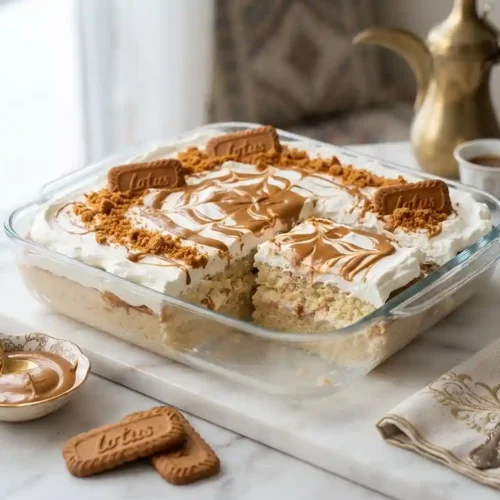
Gluten-Free Lotus Milk Cake
Equipment
- Hand mixer
- Mixing bowls
- Spatula
- Sifter
- Small square or rectangular baking pan
- Skewer or fork
Ingredients
Gluten-Free Sponge Cake
- 3 Large eggs, separated Room temperature for better volume
- ¼ cup Granulated sugar
- ½ teaspoon Vanilla extract
- ½ cup Gluten-free all-purpose flour blend Use a blend with xanthan gum
- ½ teaspoon Gluten-free baking powder Check label for gluten-free certification
- 1 pinch Salt Added to egg whites
Lotus Milk Soak
- ½ can Sweetened condensed milk
- 1 can (400 ml) Evaporated milk
- 170 g Heavy cream or whipping cream
- ¼ cup Gluten-free Lotus-style cookie butter, melted Blend until smooth before adding
Cream Topping
- 1 cup Cold whipping cream Must be cold for proper whipping
- ¼ cup Powdered sugar
- 2–3 heaped tablespoons Gluten-free Lotus-style cookie butter, melted For drizzling over the top
Instructions
- Prepare the pan: Preheat the oven to 350°F (180°C). Grease a small square or rectangular baking pan thoroughly, making sure to coat the corners and sides.
- Whip the egg whites: Place the egg whites in a clean, grease-free bowl with a pinch of salt. Beat until stiff peaks form. The whites should hold a firm point without drooping when the beaters are lifted.
- Beat the yolks: In a separate bowl, beat the egg yolks and 1/4 cup granulated sugar until pale, thick, and fluffy. Add the 1/2 teaspoon vanilla extract and mix briefly.
- Add the flour: Sift the 1/2 cup gluten-free all-purpose flour blend and 1/2 teaspoon gluten-free baking powder into the egg yolk mixture. Gently fold until just combined.
- Fold in the whites: Add the whipped egg whites in two or three additions, folding gently with a spatula using a wide scooping motion to preserve as much air as possible.
- Bake: Pour the batter into the prepared pan and smooth the surface. Bake for 18–22 minutes, until the edges pull away slightly from the sides and a toothpick inserted in the center comes out clean.
- Make the milk soak: While the cake bakes, blend the 1/2 can sweetened condensed milk, 400 ml evaporated milk, 170 g heavy cream, and 1/4 cup melted gluten-free Lotus-style spread until completely smooth and uniform.
- Soak the cake: Let the baked cake cool slightly in the pan for about 10 minutes. Poke holes all over the surface with a skewer or fork. Slowly pour about three-quarters of the milk mixture over the cake, pausing between pours to let it absorb. Reserve the remaining milk for serving.
- Make the cream topping: Beat 1 cup cold whipping cream and 1/4 cup powdered sugar together until stiff peaks form.
- Top the cake: Spread or pipe the whipped cream evenly across the top of the soaked cake. Drizzle the 2–3 heaped tablespoons of melted Lotus-style spread over the cream in a freeform pattern.
- Chill: Cover the pan and refrigerate for at least 2 hours. Overnight is ideal for the best texture.
- Serve: Cut into squares and spoon a little of the reserved milk mixture over each slice before serving.