Pappardelle Burrata Pasta
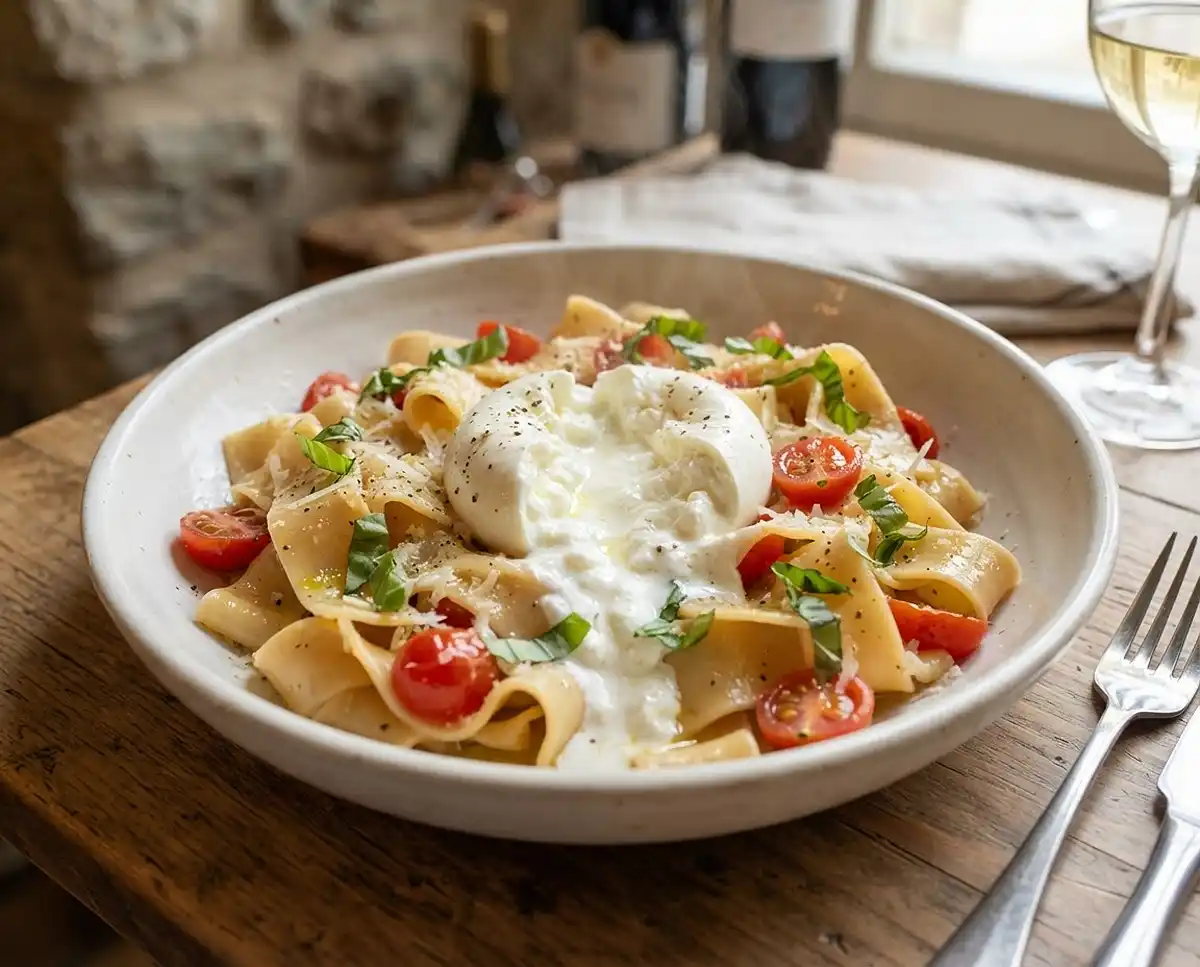
Make gluten-free pappardelle burrata pasta in 30 minutes. Blistered cherry tomatoes, creamy burrata, and a glossy garlic sauce over wide ribbon noodles.
The first time I tried gluten-free pappardelle, I overcooked it by about ninety seconds and ended up with wide, floppy ribbons that fell apart the moment I tossed them.
That batch went in the trash. The next batch—cooked exactly to the package’s al dente window and finished in a hot skillet with pasta water—was a completely different story. This gluten-free pappardelle burrata pasta has been on repeat ever since.
Well… there’s something almost unfair about how good burrata makes a simple pasta feel. What other ingredient can turn cherry tomatoes and garlic into something that looks and tastes like it came from a restaurant kitchen?
Why You’ll Love This Pappardelle Burrata Pasta
- Creamy without any cream — burrata and Parmesan melt into the pasta water to create a sauce that’s genuinely luxurious.
- Ready in about 30 minutes — the sauce comes together while the pasta boils, so there’s almost no downtime.
- Naturally gluten-free adaptable — wide ribbon pasta gives you the full Italian trattoria feel, no compromise needed.
- Impressive enough for guests — torn burrata over pasta is one of those presentations that stops a table mid-conversation.
The Secret to Perfect Gluten-Free Pappardelle Burrata Pasta
- Cook the pasta to the exact al dente window — gluten-free pappardelle has a narrower margin than wheat pasta. Pull it at the lower end of the package time; it finishes cooking in the hot skillet. According to Serious Eats’ authoritative pasta cooking guide, finishing pasta in the sauce is the technique that makes restaurant pasta taste different from home pasta—and it works the same way with gluten-free noodles.
- Reserve the pasta water before draining — that starchy, salted water is what emulsifies the Parmesan and olive oil into a cohesive, glossy sauce. Don’t skip it, and don’t sub plain water.
- Blister the tomatoes until they burst — you’re waiting for them to soften and release their juices, which becomes the base of the sauce. Undercooked tomatoes leave you with a flat, acidic result.
- Add burrata at the very end, off the heat — burrata is best torn and placed over the pasta just before serving. Heat turns it rubbery and causes it to break down unevenly.
Table of Contents
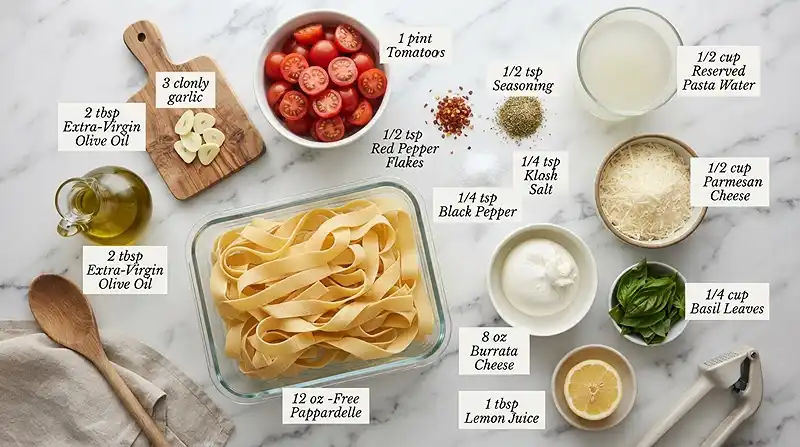
Ingredients
| Ingredient | Amount | Notes |
|---|---|---|
| Gluten-free pappardelle pasta | 12 ounces | Look for rice or corn-based wide ribbons |
| Extra-virgin olive oil | 2 tablespoons | Plus more for finishing |
| Garlic, thinly sliced | 3 cloves | Sliced (not minced) for even cooking |
| Cherry tomatoes, halved | 1 pint | Mixed colors add visual appeal |
| Red pepper flakes | ½ teaspoon | Reduce to ¼ tsp for less heat |
| Italian seasoning | ½ teaspoon | Check label for gluten-free certification |
| Reserved pasta water | ½ cup | Set aside before draining—don’t forget! |
| Freshly grated Parmesan cheese | ½ cup | Freshly grated melts far better than pre-shredded |
| Burrata cheese | 8 ounces | Serve at room temperature for best texture |
| Fresh basil, torn | ¼ cup | Torn, not chopped—keeps it bright |
| Fresh lemon juice | 1 tablespoon | Brightens the whole dish |
| Kosher salt | ½ teaspoon | Plus more for the pasta water |
| Freshly ground black pepper | ¼ teaspoon | Plus more for finishing |
Instructions
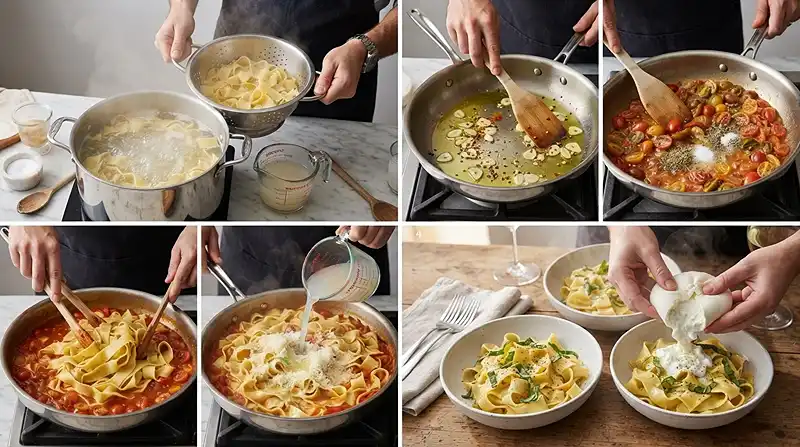
- Boil the pasta. Bring a large pot of generously salted water to a boil. Cook the gluten-free pappardelle according to the package directions until al dente. Before draining, reserve ½ cup of pasta water, then drain the pasta.
- Build the aromatic base. Heat the olive oil in a large skillet over medium heat. Add the garlic and red pepper flakes and cook for about 30 seconds, until fragrant and just beginning to turn golden at the edges. Watch closely—thin-sliced garlic goes from golden to burnt quickly.
- Blister the tomatoes. Add the cherry tomatoes, Italian seasoning, salt, and black pepper. Cook for 5–7 minutes, stirring occasionally, until the tomatoes soften and begin to release their juices. You’re looking for collapsed, jammy tomatoes and a pool of bright liquid in the pan.
- Toss the pasta into the sauce. Add the drained pasta and ¼ cup of the reserved pasta water to the skillet. Toss gently to coat, adding more pasta water as needed to create a glossy, lightly sauced texture. The pasta water is doing the emulsifying work here—use it freely.
- Finish with Parmesan and lemon. Stir in the Parmesan and lemon juice. Toss until the cheese melts into the sauce and the pasta is creamy and well coated. The sauce should cling to each ribbon like a light, sheer glaze—not heavy, not soupy.
- Plate and add burrata. Divide the pasta among four bowls. Tear the burrata over the top and scatter with fresh basil. If the burrata has been refrigerated, let it sit at room temperature for 15 minutes first so it opens up softly rather than staying firm.
- Finish and serve immediately. Finish with a drizzle of olive oil and an extra pinch of black pepper. Serve right away—burrata softens beautifully for the first few minutes but doesn’t hold well once it fully melts into the pasta.
Make It Your Own
You know… this is one of those recipes where the basic formula is so solid that it handles substitutions gracefully. Here’s how to adjust it for different diets, protein needs, and whatever’s in your fridge.
Add a Protein
Seared shrimp or pan-cooked Italian sausage both work beautifully here. Cook the protein in the skillet first, remove it, build the tomato sauce, then return the protein to the pan when you add the pasta. That sequence keeps everything properly cooked without overcrowding the pan.
Make It Dairy-Free
Skip the Parmesan and burrata and replace them with a plant-based ricotta or cashew cream dolloped on top. The pasta water and olive oil still create a cohesive sauce—you’ll just lose some of that rich, milky creaminess. A squeeze of extra lemon helps compensate for the lost fat.
Swap the Pasta Shape
Can’t find gluten-free pappardelle? Tagliatelle or fettuccine are the closest substitutes. The wide, flat surface area is what lets the sauce and burrata nestle into each strand. A skinny noodle like spaghetti won’t hold the sauce the same way.
Turn Up the Vegetables
Add baby spinach, zucchini ribbons, or roasted red pepper directly to the tomato sauce in Step 3. Spinach wilts in about a minute; zucchini and peppers need 3–4 minutes to soften. If you like hearty vegetable-forward pasta nights, this sheet pan maple sausage veggie roast uses the same satisfying approach with less hands-on time.
Common Problems & Solutions
Man, oh man… gluten-free pasta comes with a specific set of challenges that wheat pasta doesn’t have. Here’s how to handle the most common ones.
Problem: The Pasta Is Gummy or Sticky
Solution: Toss the drained pasta immediately with a small drizzle of olive oil, and get it into the hot skillet right away. Gluten-free pasta releases more starch as it sits, which causes that sticky, clumped texture. The hot tomato sauce and pasta water break that stickiness apart and re-coat each ribbon.
Problem: The Sauce Is Too Thin and Watery
Solution: Let the tomatoes cook longer before adding the pasta—you want most of the liquid to reduce and concentrate. If it’s still thin after adding the pasta, toss everything over medium heat for an extra minute or two to tighten it up. The Parmesan added in Step 5 also helps bind and thicken the final sauce.
Problem: The Burrata Melted Into a Puddle
Solution: Add the burrata off the heat, not on it. The residual warmth of the pasta is enough to soften it gently. If you tear it directly onto steaming pasta in the skillet, the heat will cause it to melt unevenly and lose that beautiful creamy center.
Problem: The Pasta Broke Apart When Tossing
Solution: Toss gently with tongs rather than stirring aggressively with a spoon. Gluten-free pappardelle is more fragile than wheat-based pasta, especially when wide and flat. Lower heat and gentle movement keeps the ribbons intact. The Celiac Disease Foundation’s overview of safe gluten-free grains is also a helpful read for understanding which pasta bases hold up best under heat.
Storage & Meal Prep
| Method | Duration | Notes |
|---|---|---|
| Counter | Not recommended | Burrata spoils quickly at room temperature |
| Fridge | 2–3 days | Store without burrata; add fresh when reheating |
| Freezer | Not recommended | Burrata and tomato sauce don’t freeze well |
Reheat the pasta base gently in a skillet over medium-low heat with a splash of water or broth to loosen the sauce. Stir occasionally and avoid high heat, which makes gluten-free pasta go rubbery.
Store the burrata separately and tear fresh pieces over reheated pasta just before serving. This makes leftovers feel almost as good as the first night. For another fresh, no-reheat-needed option to round out the week, these no-bake pumpkin date energy bites are a great gluten-free make-ahead snack.
Pappardelle Burrata Pasta FAQs
Can I make this recipe ahead of time?
The tomato sauce base can be made up to 2 days ahead and stored in the fridge. Cook the pasta fresh when you’re ready to serve—gluten-free pappardelle doesn’t hold well once cooked and cooled. Reheat the sauce in the skillet, add the freshly cooked pasta, and finish with burrata at the table.
How do I keep gluten-free pappardelle from falling apart?
Cook it to the lower end of the package’s al dente range, reserve your pasta water, and finish it in the skillet over gentle heat. Toss with tongs rather than stirring with a spoon—wide ribbon pasta is more fragile than thinner shapes, so gentle handling makes a real difference.
What’s the best substitute for burrata?
Fresh mozzarella is the closest swap—it has a similar milky flavor, though without the creamy center. Ricotta dolloped over the pasta works well too, especially if you want a lighter finish. Goat cheese adds a tangier note that pairs nicely with the lemon in the sauce.
Why did my sauce turn out oily instead of creamy?
This usually means the Parmesan was added over too-high heat, or the pasta water wasn’t incorporated before the cheese. Lower the heat to medium-low before adding Parmesan, and make sure there’s enough pasta water in the pan to help emulsify the fat into a cohesive sauce rather than letting it pool separately.
Can I use a different type of gluten-free pasta?
Yes—tagliatelle or fettuccine are the best alternatives since they’re similarly wide and flat. Avoid thin noodles like spaghetti or angel hair, which won’t catch the sauce the same way. Check that whatever shape you choose is certified gluten-free if cross-contamination is a concern.
Serving Suggestions
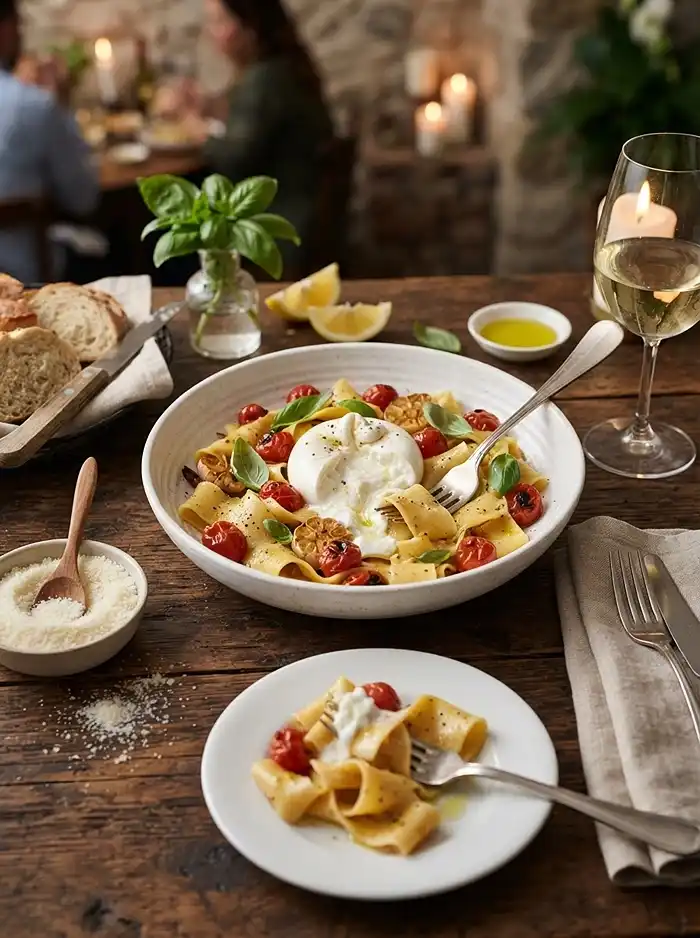
Serve this pasta with a simple arugula salad dressed in lemon and olive oil—the peppery greens cut through the richness of the burrata beautifully. A glass of chilled Pinot Grigio alongside makes it feel like a full Italian dinner without any extra effort.
This dish has become my go-to for Easter Sunday dinner and Mother’s Day lunch, when the table needs something that feels celebratory but doesn’t require hours in the kitchen. Torn burrata over wide ribbons of pasta is the kind of presentation that earns compliments before anyone takes a bite.
If you love weeknight pasta nights, this gluten-free coconut curry soup with cilantro is another bold, satisfying bowl that comes together just as fast on a busy evening.
Conclusion
This gluten-free pappardelle burrata pasta proves that gluten-free cooking doesn’t mean settling for less. Wide ribbons, blistered tomatoes, and creamy burrata make it a dish worth repeating every week.
Tried it? I’d love to hear what protein or vegetables you added—drop a comment below and let me know how it turned out for your family.
If this recipe earned a spot in your rotation, share it on Pinterest so more gluten-free pasta lovers can find it. And if you rate it, even a quick star rating helps others know it’s worth their time.
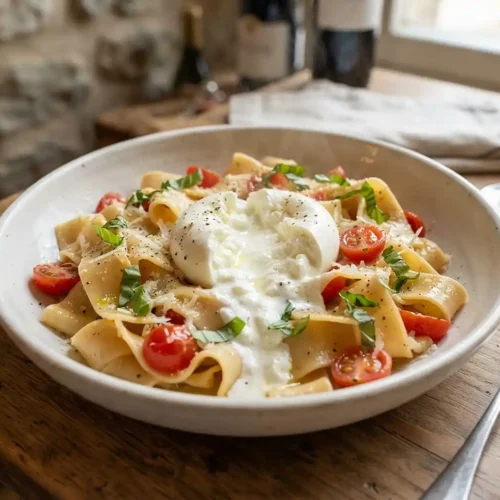
Gluten-Free Pappardelle Burrata Pasta
Equipment
- Large pot
- Large skillet
- Tongs
Ingredients
- 12 ounces Gluten-free pappardelle pasta Look for rice or corn-based wide ribbons
- 2 tablespoons Extra-virgin olive oil Plus more for finishing
- 3 cloves Garlic, thinly sliced Sliced, not minced, for even cooking
- 1 pint Cherry tomatoes, halved Mixed colors add visual appeal
- ½ teaspoon Red pepper flakes Reduce to 1/4 teaspoon for less heat
- ½ teaspoon Italian seasoning Check label for gluten-free certification
- ½ cup Reserved pasta water Set aside before draining
- ½ cup Freshly grated Parmesan cheese Freshly grated melts far better than pre-shredded
- 8 ounces Burrata cheese Serve at room temperature for best texture
- ¼ cup Fresh basil, torn Torn, not chopped, to keep it bright
- 1 tablespoon Fresh lemon juice Brightens the whole dish
- ½ teaspoon Kosher salt Plus more for the pasta water
- ¼ teaspoon Freshly ground black pepper Plus more for finishing
Instructions
- Boil the pasta. Bring a large pot of generously salted water to a boil. Cook the gluten-free pappardelle according to the package directions until al dente. Before draining, reserve 1/2 cup of pasta water, then drain the pasta.
- Build the aromatic base. Heat the olive oil in a large skillet over medium heat. Add the garlic and red pepper flakes and cook for about 30 seconds, until fragrant and just beginning to turn golden at the edges.
- Blister the tomatoes. Add the cherry tomatoes, Italian seasoning, salt, and black pepper. Cook for 5–7 minutes, stirring occasionally, until the tomatoes soften and begin to release their juices.
- Toss the pasta into the sauce. Add the drained pasta and 1/4 cup of the reserved pasta water to the skillet. Toss gently to coat, adding more pasta water as needed to create a glossy, lightly sauced texture.
- Finish with Parmesan and lemon. Stir in the Parmesan and lemon juice. Toss until the cheese melts into the sauce and the pasta is creamy and well coated.
- Plate and add burrata. Divide the pasta among four bowls. Tear the burrata over the top and scatter with fresh basil. If the burrata has been refrigerated, let it sit at room temperature for 15 minutes first.
- Finish and serve immediately. Finish with a drizzle of olive oil and an extra pinch of black pepper. Serve right away.