
Gluten-Free Lemon Herb Salmon Recipe
Step-by-step gluten-free lemon herb salmon recipe with garlic, fresh dill, and parsley. Bakes in under 20 minutes with ingredients you likely already have.
The first time I made a lemon herb salmon for a weeknight dinner, I overcomplicated everything. I used a fancy marinade, soaked the fish for two hours, and somehow still ended up with dry, rubbery fillets. It took a few more tries — and a lot of honest kitchen failures — before I figured out that the best gluten-free lemon herb salmon recipe is actually the simplest one.
What does “simple” really mean here? Just good olive oil, bright lemon, fresh herbs, and a hot oven. That’s genuinely it. No specialty flours, no hidden gluten traps, no fuss.
Table of Contents
Why You’ll Love This Lemon Herb Salmon
- Naturally gluten-free — no substitutions needed, no risk of cross-contamination from flour-based coatings
- Ready in under 25 minutes — from cold oven to dinner table faster than takeout
- Kid-friendly and crowd-pleasing — the herb crust is mild enough for picky eaters
- Dairy-free as written — no butter required; olive oil does the heavy lifting
The Secret to Perfect Gluten-Free Lemon Herb Salmon
- Pat the fillets completely dry before adding the herb mixture. Moisture is the enemy of a good crust — surface water steams the fish instead of roasting it.
- Lemon zest amplifies flavor without adding liquid. The zest carries aromatic oils that juice alone can’t deliver, keeping the herb coating from turning soggy.
- Resting after baking matters. Letting the salmon sit for 2–3 minutes allows the juices to redistribute, so every bite stays moist rather than dry at the edges.
- Internal temperature over time. According to FDA safe cooking guidelines, salmon should reach 145°F (63°C) internally. A reliable instant-read thermometer removes all guesswork.
Ingredients
Serves 4
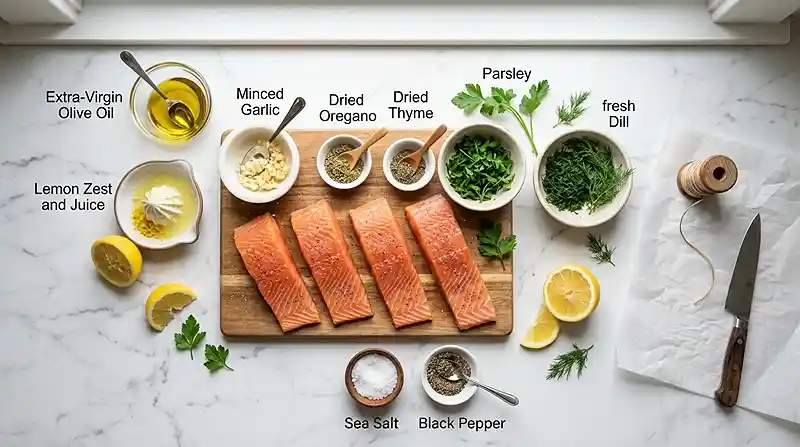
| Ingredient | Amount | Notes |
|---|---|---|
| Salmon fillets (about 6 oz / 170 g each) | 4 | Skin-on preferred for baking stability |
| Extra-virgin olive oil | 2 tablespoons | Use a good-quality oil — you’ll taste it |
| Fresh lemon juice | 2 tablespoons | About 1 medium lemon |
| Lemon zest | 1 teaspoon | Zest before juicing |
| Garlic, minced | 3 cloves | Fresh only — garlic powder won’t give the same depth |
| Dried oregano | 1 teaspoon | |
| Dried thyme | 1 teaspoon | |
| Fresh parsley, finely chopped | 1 tablespoon | Flat-leaf parsley preferred |
| Fresh dill, finely chopped | 1 tablespoon | Don’t skip this — dill is what makes it sing |
| Salt | ½ teaspoon | |
| Black pepper | ¼ teaspoon | |
| Lemon slices | For serving | Garnish |
Instructions
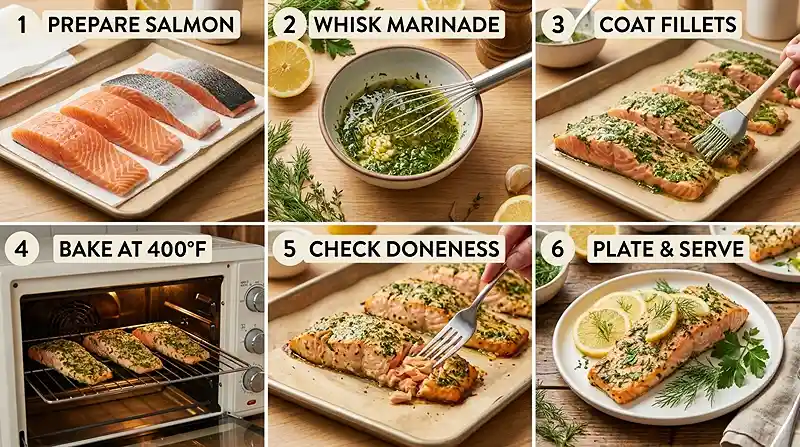
- Preheat the oven to 400°F (200°C). Line a baking sheet with parchment paper. A rimmed sheet pan is ideal — it catches any herb mixture that drips off the sides.
- Pat the salmon fillets dry and place them skin-side down on the prepared baking sheet. Use paper towels and press firmly — this step makes a real difference in texture.
- Whisk together the herb mixture. In a small bowl, combine the olive oil, lemon juice, lemon zest, garlic, oregano, thyme, parsley, dill, salt, and black pepper. Whisk until fully emulsified.
- Coat the salmon. Spoon the lemon herb mixture evenly over the fillets, then gently rub it over the surface so every inch is covered. You’ll smell the garlic immediately — it’s a good sign.
- Bake for 12–16 minutes, depending on the thickness of the fillets. The salmon is done when it flakes easily with a fork and reaches an internal temperature of 145°F (63°C). Thinner fillets (under 1 inch) will be closer to the 12-minute mark.
- Rest before serving. Remove from the oven and let the salmon rest for 2–3 minutes. The flesh will finish cooking gently and the juices will settle — this is what separates moist salmon from dry salmon.
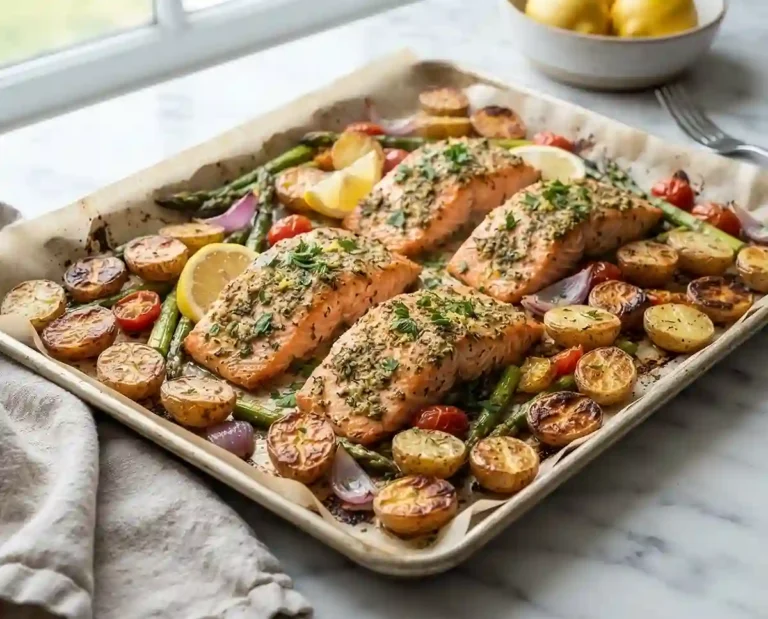
- Garnish and serve. Top with a few sprigs of fresh herbs and tuck lemon slices alongside each fillet. The color contrast — golden-crusted fish against bright green herbs and yellow lemon — is as satisfying as the flavor itself.
Make It Your Own
This garlic herb salmon base is wonderfully flexible. If you want a richer, more Mediterranean direction, add a teaspoon of capers to the herb mixture before spooning it over the fish. The briny punch balances the lemon beautifully.
You know… one of my favorite swaps is replacing the dried oregano and thyme with 1 tablespoon of fresh basil and a pinch of red pepper flakes. The result is closer to an Italian herb-crusted salmon that works brilliantly over zucchini noodles.
For an herb crusted salmon with more texture, press a thin layer of finely chopped walnuts or pecans onto the herb mixture before baking. It creates a satisfying crunch that holds up well without any flour or breadcrumbs — completely gluten-free and naturally impressive.
If you enjoy a baked herb salmon with a honey glaze, whisk 1 teaspoon of raw honey into the herb mixture. It caramelizes at 400°F, creating edges that are almost lacquered — sticky and fragrant, like the edges of a good roast.
No fresh dill on hand? Dried dill works at half the quantity — use ½ teaspoon instead of 1 tablespoon fresh. It’s a fair substitute, though the brightness of the fresh herb is worth seeking out when you can get it.
Common Problems & Solutions
Problem: The salmon is dry and chalky.
Solution: You likely overbaked it. Check with a thermometer at 12 minutes for thinner fillets. The carry-over cooking during the 2–3 minute rest finishes the job — pull it from the oven at 140°F if you’re nervous.
Problem: The herb mixture slides right off the fish.
Solution: The fillets weren’t dry enough before coating. Always pat thoroughly with paper towels. A slightly tacky surface — not wet — allows the olive oil mixture to grip the flesh properly.
Man, oh man… this next one trips up so many home cooks. Problem: Garlic burns before the salmon is cooked through.
Solution: Mince the garlic very finely and press it into the herb mixture rather than leaving it in large pieces. Fine mince distributes the garlic across the coating instead of concentrating it in spots that scorch.
Problem: The skin sticks to the baking sheet.
Solution: Parchment paper is non-negotiable here. Foil can work in a pinch, but parchment releases the skin cleanly every time. If you don’t have parchment, lightly oil the foil before placing the fillets.
For a deeper look at how omega-3 fatty acids in salmon support overall health, this authoritative nutrition guide from Harvard School of Public Health explains the evidence clearly — useful reading if you’re cooking salmon regularly for a family.
Storage & Meal Prep
| Method | Duration | Notes |
|---|---|---|
| Counter | Up to 2 hours | Do not leave fish at room temp longer than 2 hours |
| Fridge | 3–4 days | Airtight container; bring to room temp before reheating |
| Freezer | Up to 2 months | Wrap individually in plastic wrap, then foil |
To reheat without drying out, place the fillet in a covered skillet over low heat with a splash of water or broth — about 3–4 minutes is enough. The steam warms the fish through without continuing to cook it.
Leftover salmon is also excellent eaten cold. Flake it over a salad, tuck it into lettuce wraps, or stir it through scrambled eggs for a protein-packed morning. No reheating required, and it still tastes like you planned it that way.
Gluten-Free Lemon Herb Salmon Recipe FAQs
Can I use frozen salmon fillets for this recipe?
Yes, frozen salmon works well. Thaw completely and pat the fillets very dry before coating. Frozen fish releases extra moisture during thawing, which can cause the herb mixture to slide off or steam instead of roast.
How do I know when the salmon is fully cooked?
The salmon is done when it flakes easily with a fork at the thickest point and the flesh turns opaque. For accuracy, an instant-read thermometer should read 145°F (63°C) internally.
Can I make the herb mixture ahead of time?
Yes. Whisk the olive oil, lemon juice, zest, garlic, and herbs together up to 24 hours ahead and store covered in the fridge. Give it a quick stir before spooning it over the salmon.
Why did my herb coating turn brown instead of golden?
Most likely the garlic was in large pieces or the oven runs hot. Mince garlic very finely and verify your oven temperature with an oven thermometer. Many home ovens run 25°F hotter than the dial shows.
Can I cook this salmon on the stovetop?
Yes. Heat a cast-iron skillet over medium-high heat and sear the salmon herb-side down for 3 to 4 minutes, then flip and cook another 3 to 4 minutes. You will get a crispier crust than the oven method delivers.
Serving Suggestions
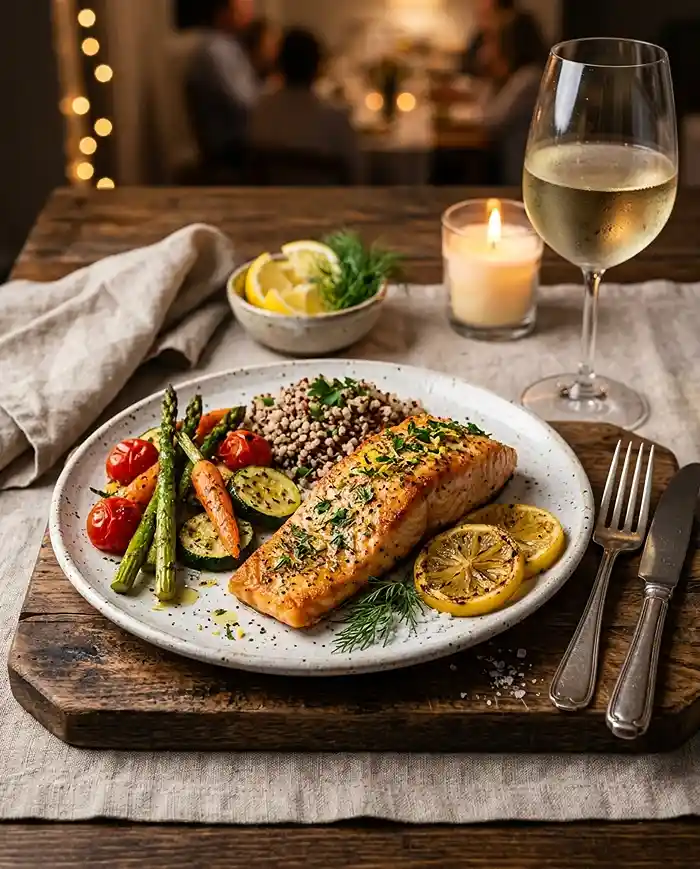
This lemon herb salmon pairs naturally with simple, clean sides that don’t compete with the herb crust. Roasted asparagus, steamed rice, or a simple arugula salad with olive oil and lemon are all ideal companions.
If you’re building a full gluten-free dinner spread, try this salmon alongside dishes from our easy gluten-free chicken main course collection — great for hosting nights when guests have mixed dietary needs.
For a lighter, plant-based starter before the salmon, our gluten-free vegetarian black bean burrito rounds out a weeknight menu with satisfying protein and fiber.
And if you’re looking for a fun, no-cook gluten-free option the kids can help make, our gluten-free banana sushi recipe is a perfect playful dessert to finish the meal.
Give this recipe a try and let me know how it goes in the comments below. Did you add your own twist — maybe a different herb combination or a honey glaze? I’d love to hear what worked for your family. And if it earned a spot in your regular dinner rotation, sharing it on Pinterest helps other gluten-free cooks find it too.

Easy Gluten-Free Lemon Herb Salmon Recipe
Equipment
- Rimmed baking sheet
- Parchment paper
- Small mixing bowl
- Whisk
- Instant-read thermometer
- Paper towels
Ingredients
Salmon
- 4 fillets Salmon fillets About 6 oz (170 g) each; skin-on preferred
- 2 tablespoons Extra-virgin olive oil Use a good-quality oil
- 2 tablespoons Fresh lemon juice About 1 medium lemon
- 1 teaspoon Lemon zest Zest before juicing
- 3 cloves Garlic Minced finely; fresh only
- 1 teaspoon Dried oregano
- 1 teaspoon Dried thyme
- 1 tablespoon Fresh parsley Finely chopped; flat-leaf preferred
- 1 tablespoon Fresh dill Finely chopped
- ½ teaspoon Salt
- ¼ teaspoon Black pepper
- For serving Lemon slices For garnish
Instructions
- Preheat the oven to 400°F (200°C). Line a rimmed baking sheet with parchment paper.
- Pat the salmon fillets completely dry with paper towels and place them skin-side down on the prepared baking sheet.
- In a small bowl, whisk together the olive oil, lemon juice, lemon zest, garlic, oregano, thyme, parsley, dill, salt, and black pepper until combined.
- Spoon the lemon herb mixture evenly over the salmon fillets and gently rub it over the surface.
- Bake for 12–16 minutes, depending on the thickness of the fillets. The salmon is done when it flakes easily with a fork and reaches an internal temperature of 145°F (63°C).
- Remove the salmon from the oven and let it rest for 2–3 minutes so the juices can redistribute.
- Garnish with fresh herbs and lemon slices, then serve immediately.